| Repointing service | What it covers |
|---|---|
| Brick repointing | Rake out failed joints and repoint with mortar matched in color and profile. |
| Historic lime-mortar repointing | Soft lime mortar for period buildings, to Secretary of the Interior standards. |
| Chimney repointing | Repoint the stack and rebuild the crown where it is cracked. |
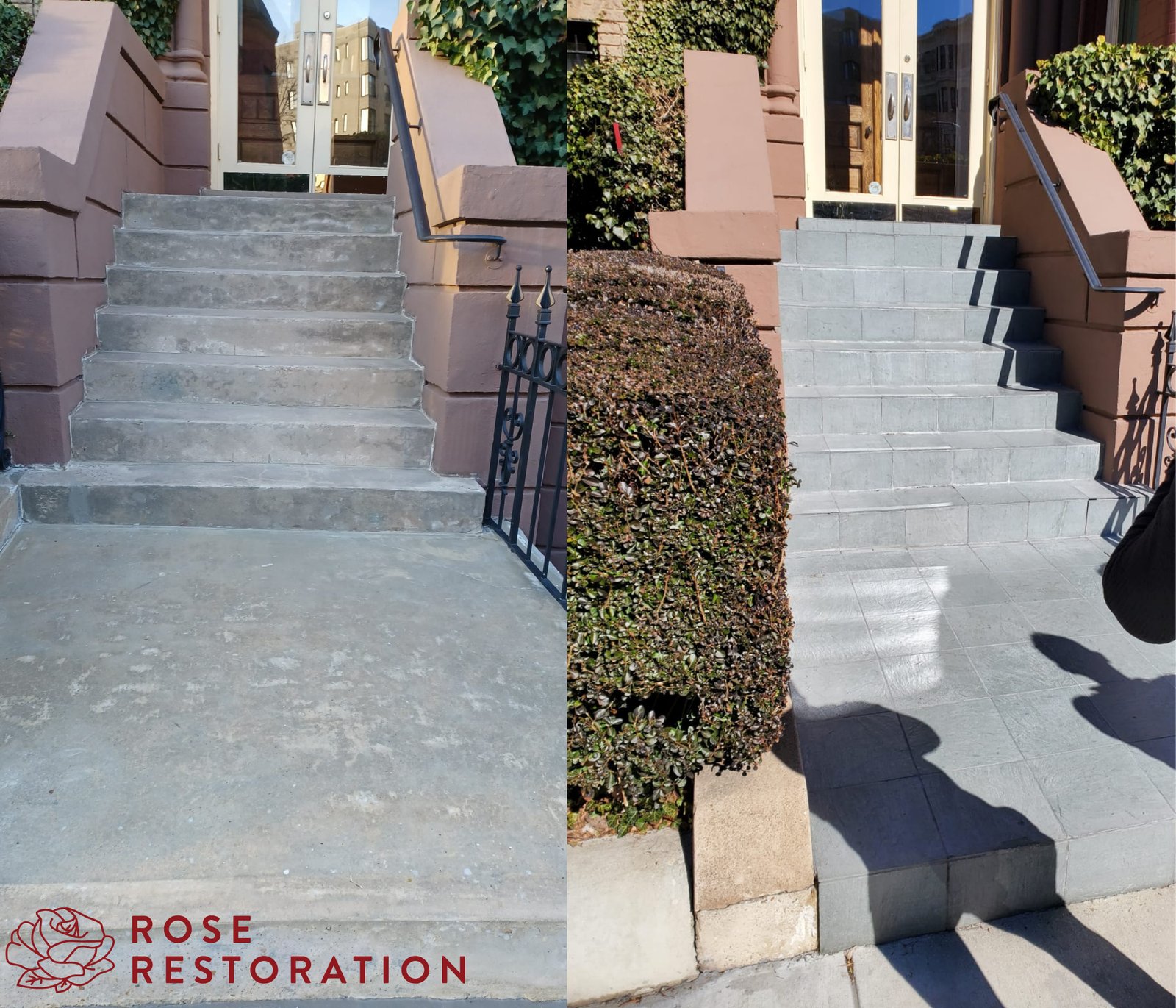
| Brick step & stoop repair | Reset loose treads, repoint the joints, and stop water intrusion. |
| Tuckpointing | A two tone finish that gives aged joints a crisp, uniform appearance. |
| Mortar color matching | Custom mix matched to the existing mortar so repairs blend in. |
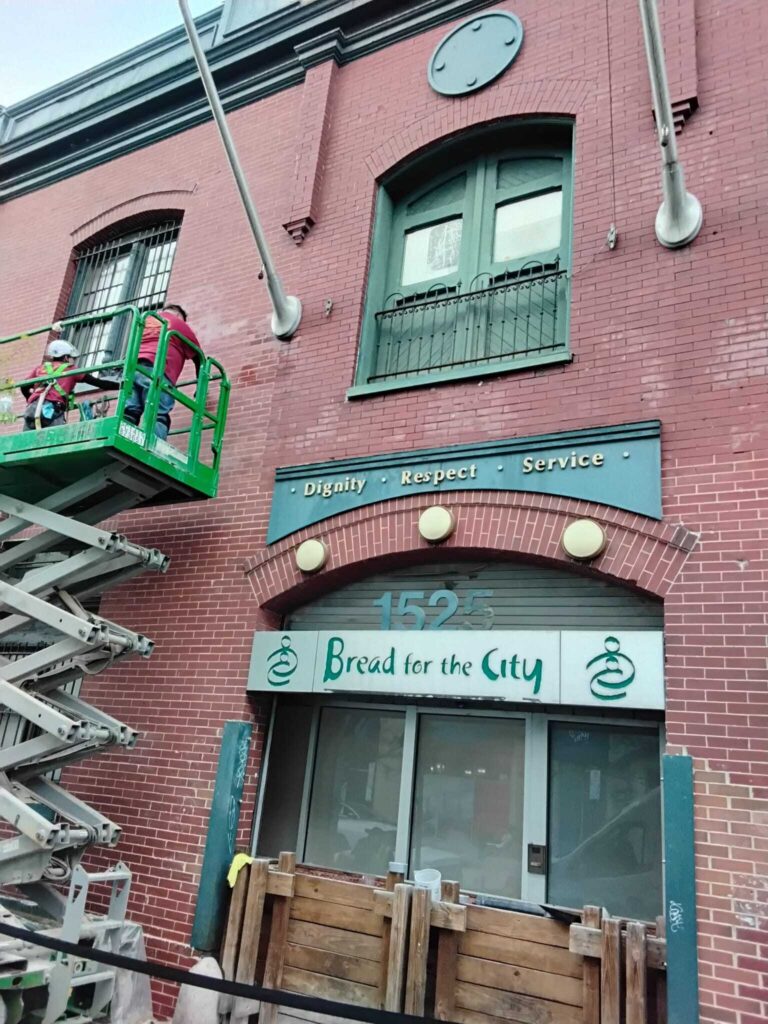
Exterior Masonry
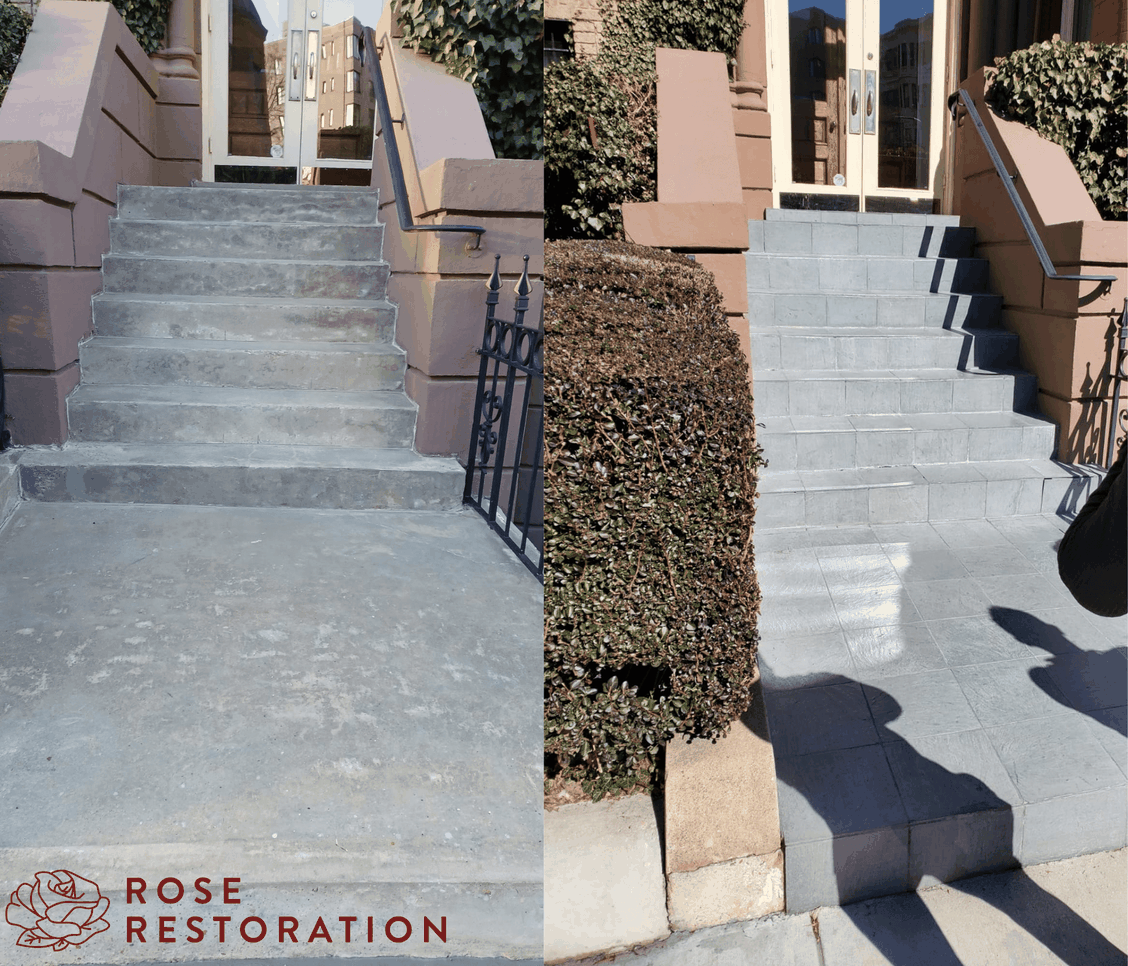
Stairs — Before & After
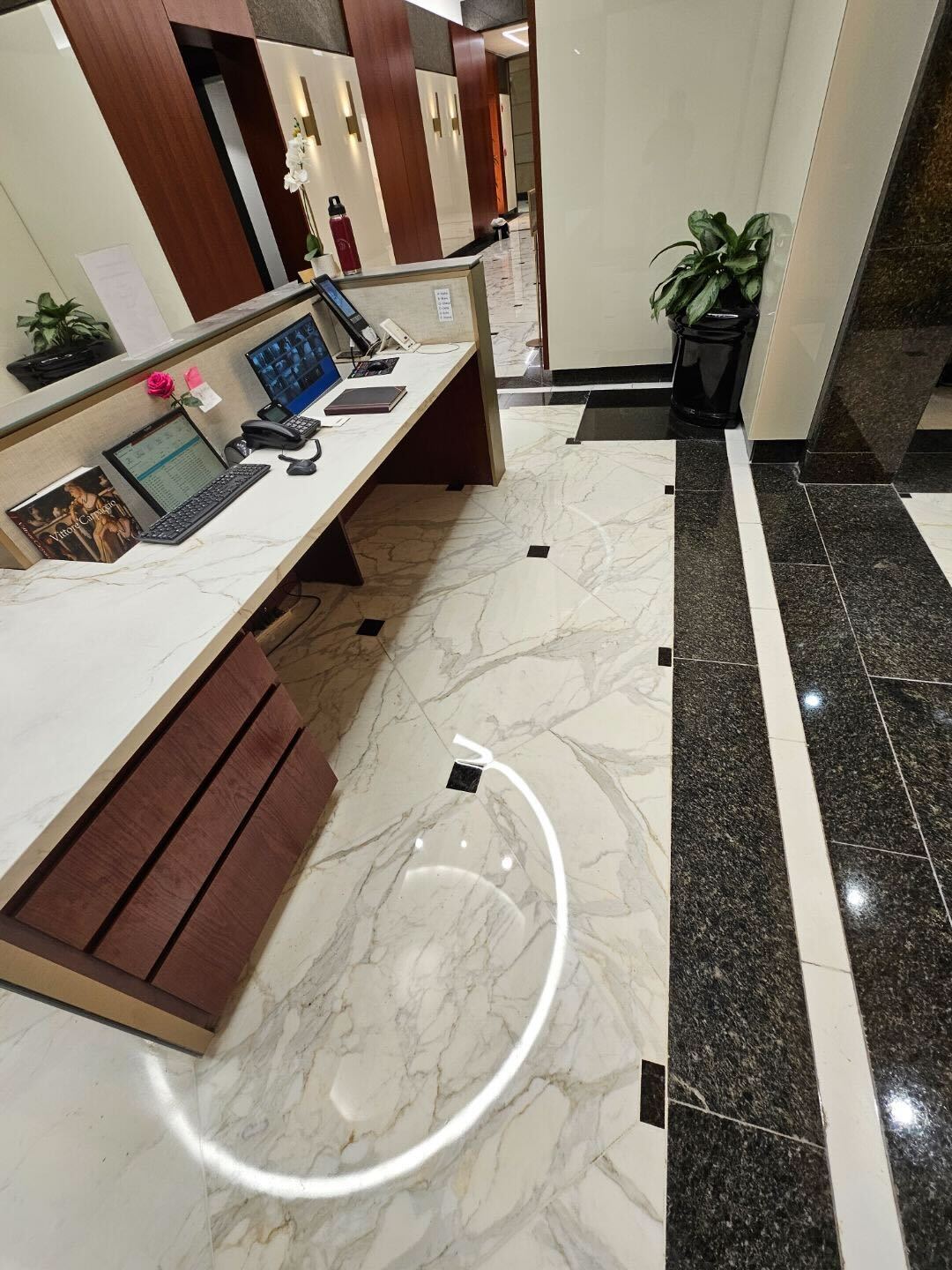
Historic Masonry
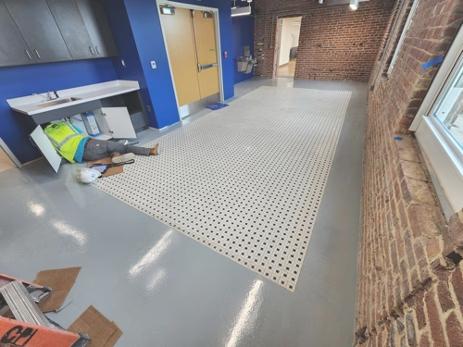
Brick Repointing in Washington DC: Rowhouses, Chimneys & Historic Facades
Washington DC brick repointing has a requirement many contractors ignore: mortar match. Pre-war rowhouses in Capitol Hill, Georgetown, and Dupont were laid with soft lime-based mortar, and repointing them with modern Portland cement traps moisture in the brick and causes spalling within a few winters — damage that costs far more to fix than the original repointing. We analyze the existing mortar and match composition, color, and joint profile, which is also what historic district review expects to see.
Typical DC-area projects include rowhouse facades, chimney repointing above the roofline, brick and stone stairs, retaining walls, and full historic facades for institutional buildings — see our historic restoration work for preservation-grade examples. Budget guidance is published in our masonry repointing cost guide. Licensed and insured in DC, Maryland, and Virginia, with free written estimates.
Historic Brick and Masonry Restoration in Washington DC
Washington’s historic rowhouses, churches, and institutional buildings need masonry work that meets preservation standards, not just structural repair. We restore historic brick and stone with mortar matched to the original in composition, color, sand, and joint profile, gentle cleaning that does not damage soft historic masonry, and replacement brick sourced to match age and color. This is what historic district review boards expect, and it protects soft pre-war brick from the spalling that hard modern cement mortar causes. For institutional and federal projects, see our historic and government building restoration work.
Tuckpointing in Washington DC
Tuckpointing and repointing describe the same core work: removing failed mortar from the joints and replacing it with fresh, properly matched mortar. We rake out deteriorated joints to a sound depth, then repoint with mortar matched to the original in strength, color, sand, and joint profile. On historic DC brick this match is critical — hard modern cement mortar traps moisture and spalls soft historic brick within a few winters. We tuckpoint rowhouses, chimneys, parapets, and full facades across DC, Maryland, and Northern Virginia.
Brick Repair and Brick Step Repair
Beyond repointing, we handle brick repair itself: replacing cracked, spalled, or missing brick with matching units, rebuilding loose or leaning brick steps and stoops, repairing interior exposed-brick walls, and stabilizing brick stairs and chimneys flagged as safety concerns. Brick steps take heavy wear and freeze-thaw damage, and we rebuild them level, solid, and matched to the surrounding masonry. Free written estimates throughout the DC area.
Where We Do This Work
Our crews restore brick and stone masonry across the region every week. Explore brick repointing and masonry restoration in Washington DC, brick repointing and masonry restoration in Arlington, brick repointing and masonry restoration in Bethesda, brick repointing and masonry restoration in McLean, brick repointing and masonry restoration in Alexandria, brick repointing and masonry restoration in Tysons, brick repointing and masonry restoration in Potomac, and brick repointing and masonry restoration in Georgetown.
What does this damage mean?
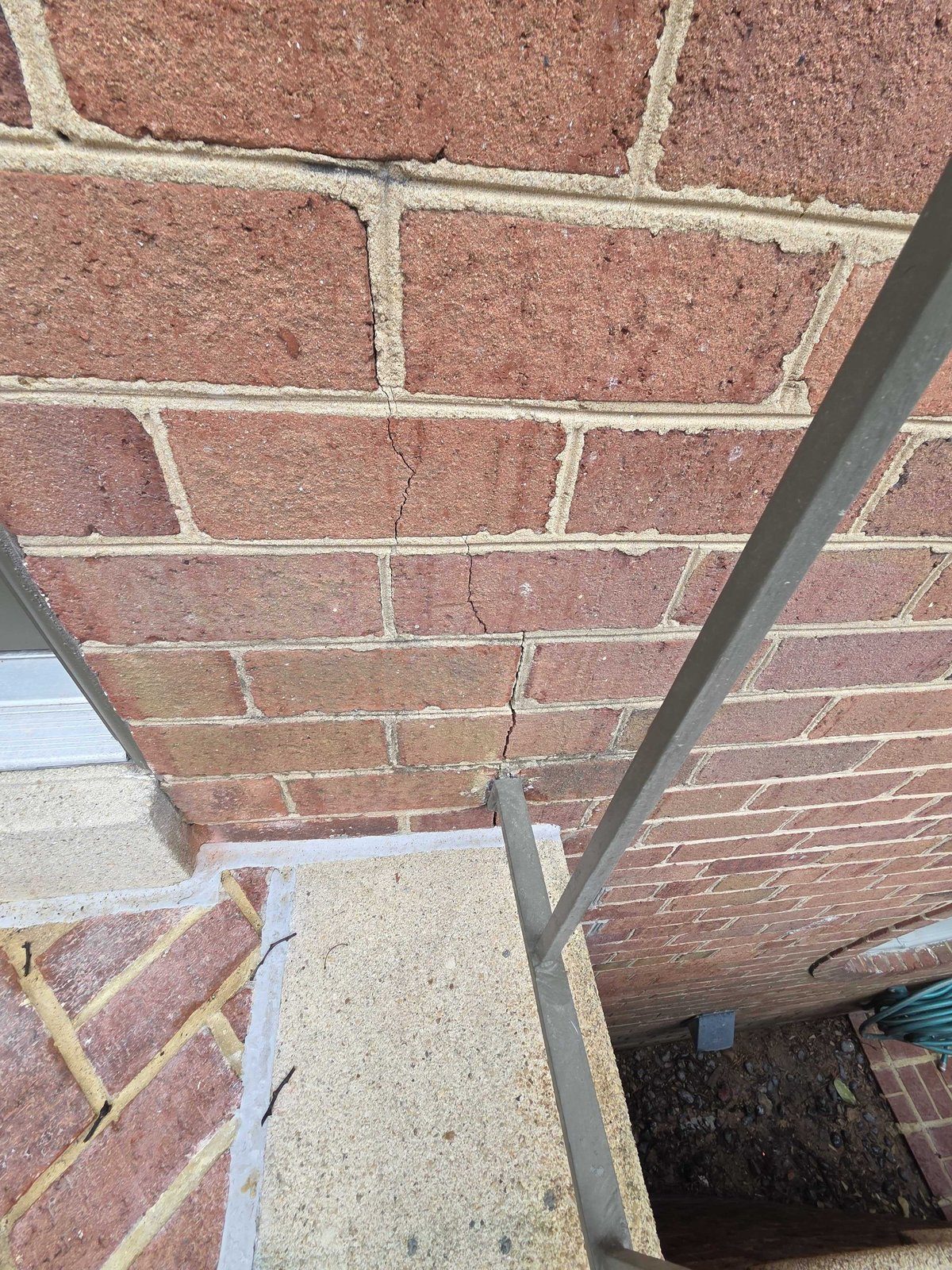
Mortar joints that have eroded or fallen out
- What it looks like
- The mortar sits back behind the face of the brick instead of flush with it. You can often rake it out with a key or a fingernail, and in bad runs there are open gaps you can see daylight or soil through.
- What usually causes it
- Mortar is meant to be the sacrificial layer, softer than the brick around it, so that it wears instead of the masonry. Decades of rain, freeze and thaw eventually take it. It also happens far faster where an earlier repair used a hard modern cement mortar, which traps water and drives the damage into the brick instead.
- Can it be restored
- Yes, and this is one of the most worthwhile repairs there is. The joints are cut back to sound mortar and repointed with a mix matched to the original in strength, colour and sand. The match matters more than most people expect: putting a cement-rich mortar into soft historic brick will look fine for a season and then start spalling the brick faces, which is a far more expensive problem than the one you started with.
Repointing and masonry repair · Send us a photo of yours and we will tell you what it is
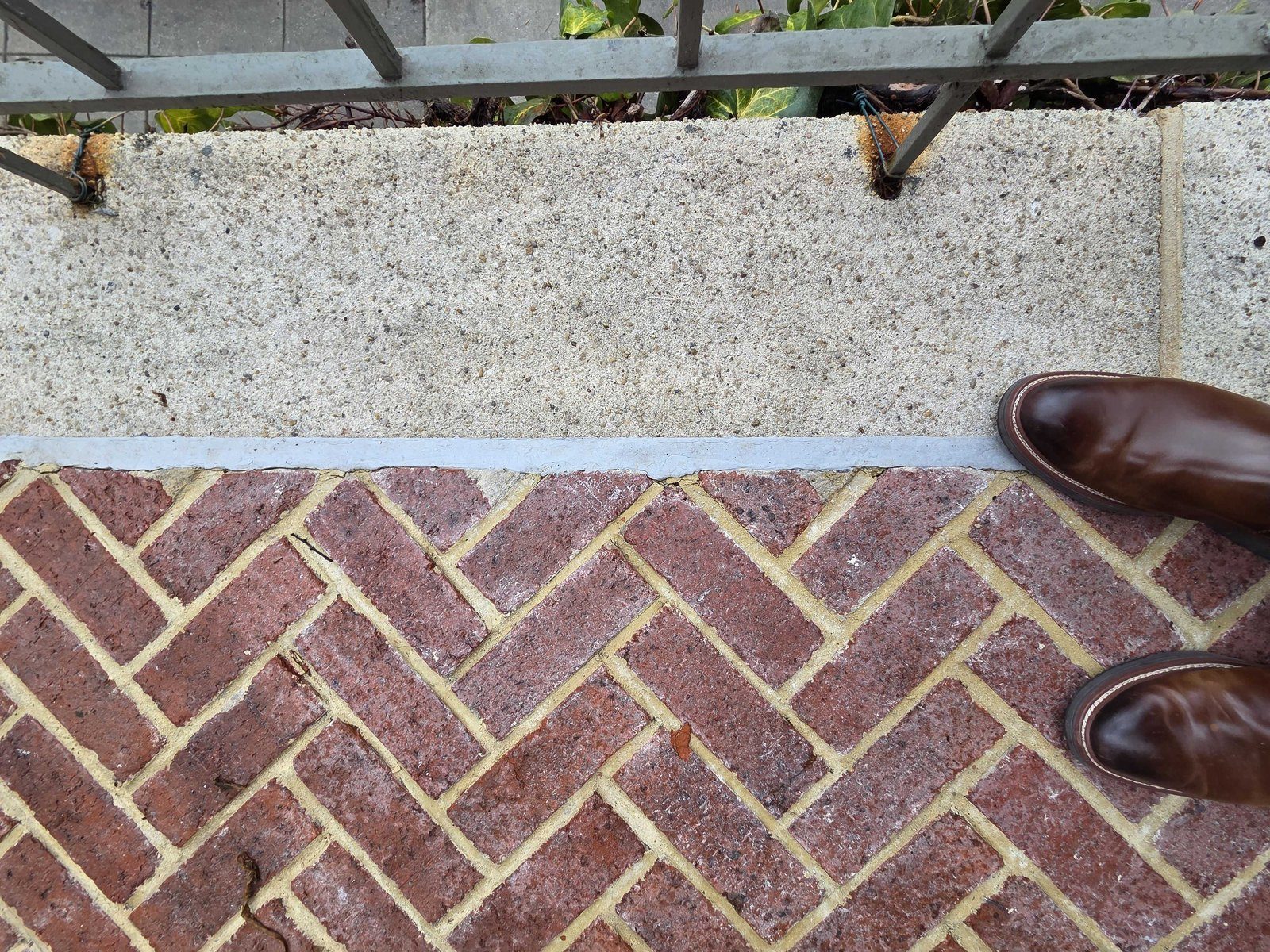
Efflorescence, the white residue on brick and stone
- What it looks like
- A chalky white bloom on the face of brick, pavers or stone, often heaviest after wet weather. It wipes but comes back, and pressure washing tends to make it return faster.
- What usually causes it
- Water moving through the masonry dissolves natural salts and carries them to the surface, where the water evaporates and leaves the salt behind. It is a moisture symptom, which is why it keeps returning until the moisture path is dealt with.
- Can it be restored
- Yes, though it is a two-part job. The deposit is removed with the correct cleaner rather than a pressure washer, and the source of the moisture is addressed. Sealing over active efflorescence traps it and makes the problem worse, so sealing comes after, not instead.
Masonry cleaning and repointing · Send us a photo of yours and we will tell you what it is
Recent projects
Related from Rose Restoration: building facade cleaning services
Northern Virginia service areas
Rose Restoration works throughout Fairfax County, including Fairfax City, Annandale, Burke, Springfield, Centreville, Herndon, Oakton and Dunn Loring.
Custom Mortar Matching for Historic and Architectural Masonry
Mortar matching is one of the most critical — and most commonly botched — aspects of masonry restoration. When mortar joints are repointed with the wrong color, texture, or composition, the result is immediately visible: fresh white lines cutting through aged brick or stone. For historic buildings, landmark properties, and any project where appearance matters, custom mortar matching is essential.
Our Mortar Matching Process
We analyze the existing mortar to determine its composition, aggregate type, color, and joint profile. This includes:
- Color analysis — We match the mortar color to the existing joints, accounting for weathering and patina. This often requires custom pigment blending.
- Aggregate matching — Sand type, grain size, and color all affect the mortar's appearance. We source or blend aggregates to match the original.
- Composition selection — Historic buildings often require lime-based mortar (Type O or Type K) rather than modern Portland cement mixes. Using the wrong mortar type can damage soft historic brick.
- Joint profile replication — Concave, flush, raked, weathered, or struck — we replicate the original joint profile for a seamless result.
Our mortar matching is trusted by general contractors, historic preservation specialists, and property managers throughout Washington DC, Arlington, Alexandria, and the entire DC metro area.
Brick Repointing: When and Why
Brick repointing (also called tuck pointing) is the process of removing deteriorated mortar from the joints of a masonry wall and replacing it with new mortar. In the Washington DC climate, freeze-thaw cycles, driving rain, and UV exposure gradually erode mortar joints. Left unaddressed, failed mortar allows water infiltration, which accelerates brick deterioration and can lead to structural damage.
Signs You Need Repointing
- Mortar crumbling or falling out when touched
- Visible gaps between bricks (daylight or insects visible)
- Water staining on interior walls behind masonry
- Mortar joints recessed more than ¼ inch from the brick face
- Efflorescence (white mineral deposits) appearing on brick surfaces
Our Repointing Process
- Mortar removal — We carefully grind or hand-chisel deteriorated mortar to a depth of at least ¾ inch without damaging the surrounding brick.
- Joint preparation — Joints are cleaned of debris and dampened to ensure proper mortar adhesion.
- Mortar application — Custom-matched mortar is packed into joints in layers, compacted to eliminate air pockets.
- Tooling — Joints are tooled to match the original profile while the mortar is still workable.
- Curing — Proper curing over 72+ hours ensures maximum strength and durability.
What Our Clients Say
"Rose Restoration was my hero — they gave me a quick and reasonable estimate. Mario did a stellar job; he was very professional and went to great lengths to make sure dust was contained. It's rare to be this happy with a result!"
Arlington, VA
via Google Reviews
Efflorescence Removal and Prevention
Efflorescence is the white, chalky deposit that appears on brick, stone, and masonry surfaces when water migrates through the material and deposits dissolved mineral salts on the surface. While efflorescence itself is not structurally harmful, it indicates a moisture problem that can lead to more serious damage over time.
How We Treat Efflorescence
- Surface cleaning — Light efflorescence can be removed with dry brushing or low-pressure washing. Heavy deposits may require chemical treatment with diluted acid solutions appropriate for the stone or brick type.
- Source identification — We assess the moisture source: ground water, rainwater infiltration, failed flashing, or inadequate drainage. Treating the symptom without addressing the source means the efflorescence will return.
- Sealing — After cleaning and source correction, we apply breathable masonry sealers that prevent water from entering while allowing trapped moisture to escape.
Efflorescence removal is common on exterior stone walls, basement masonry, chimneys, and retaining walls throughout the DC area. Our team handles both residential and commercial efflorescence treatment. Contact us for a free assessment →
Related reading
Working on a District property? See our masonry repointing in Washington DC, covering lime mortar matching, chimneys, facades and historic brick across the District.
Featured Projects
Real Rose Restoration projects at trophy DC metro clients — see the full case studies.