Local context — what Washington, DC masonry repointing work looks like. Rose Restoration’s crews work in Washington, DC every week. We plan every visit around the access rules, parking and building hours that shape work in the area. We carry full COI for buildings that require it, we coordinate with property managers and building engineers ahead of every visit, and we schedule around the rules each property sets — quiet hours, freight elevator windows, weekend or after-hours work. restoration practice since 1978 across DC, Maryland, and Northern Virginia means we’ve already solved the access and logistics puzzles that surprise newer contractors.
Washington DC has one of the country’s richest inventories of historic brick and masonry — Federal-era rowhouses in Georgetown, Capitol Hill townhouses, 19th-century commercial buildings throughout downtown, embassy compounds, church and institutional buildings, and significant public monuments with stone masonry facades. Rose Restoration has been restoring DC masonry since 1978.
Free on-site assessment: online form or (703) 327-7676 | Pricing: 2026 masonry repointing cost guide
DC’s Masonry Landscape
DC brick and masonry work spans several distinct building ages, each with its own restoration requirements:
- Federal-era (1790s–1850s). Georgetown, Capitol Hill, and parts of Foggy Bottom have rowhouses and institutional buildings from this period. Very soft handmade brick, lime-based mortar, requires the gentlest restoration methodology.
- Victorian and Gilded Age (1860s–1910s). Dupont Circle, Kalorama, Logan Circle, and older commercial areas. Harder brick than Federal-era but still softer than modern; Type N or Type O lime mortars appropriate.
- Early 20th century (1910s–1940s). Apartment buildings and institutional construction from this period throughout the District. Mix of lime and early portland mortars.
- Mid-century commercial (1950s–1970s). Class A commercial brick facades throughout downtown DC. Modern portland-based mortars, standard repointing.
- Contemporary (1980s+). Modern brick on newer commercial and residential construction — standard portland mortar, straightforward repointing.
- Institutional and church buildings. Significant brick and stone masonry on churches, schools, libraries, and public buildings throughout the District.
Common DC Masonry Projects
- Rowhouse facade repointing. Full or spot repointing on historic Georgetown, Capitol Hill, and Foggy Bottom rowhouses. Requires mortar matching to original.
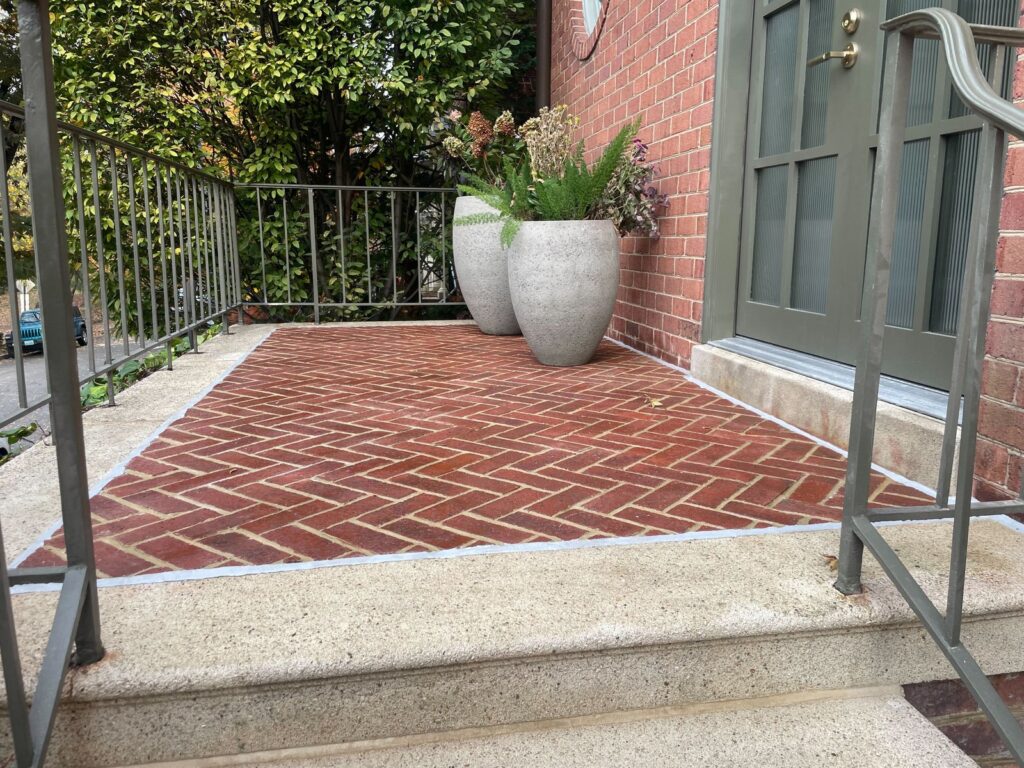
- Front-stoop / entry-stair repair. Brick and stone front stairs are extremely common on DC rowhouses. Failure mode is usually mortar erosion from freeze-thaw.
- Chimney restoration. Historic DC chimneys often have severe deterioration — brick crown rebuilding, repointing, liner integration.
- Garden walls and courtyards. Historic enclosed garden walls, courtyards, and perimeter brick walls.
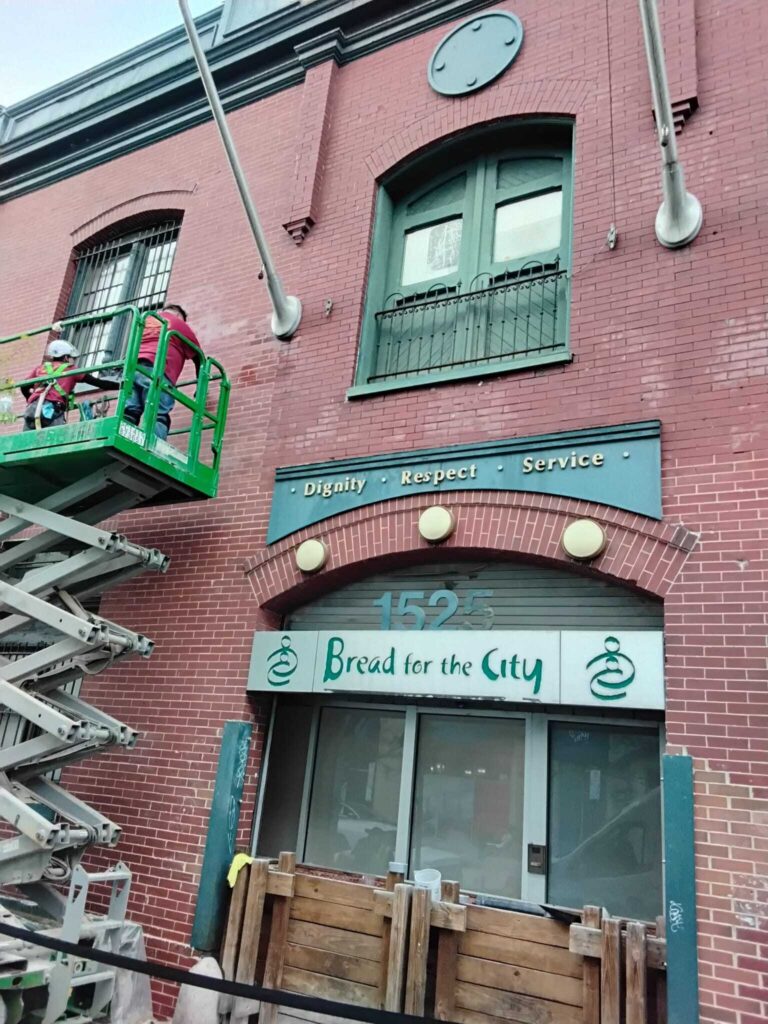
- Commercial facade repointing. Older downtown commercial buildings with brick facades needing facade-wide repointing. Access often requires scaffolding or swing stages.
- Church and institutional stonework. Natural stone masonry on DC’s historic churches, monuments, and public buildings.
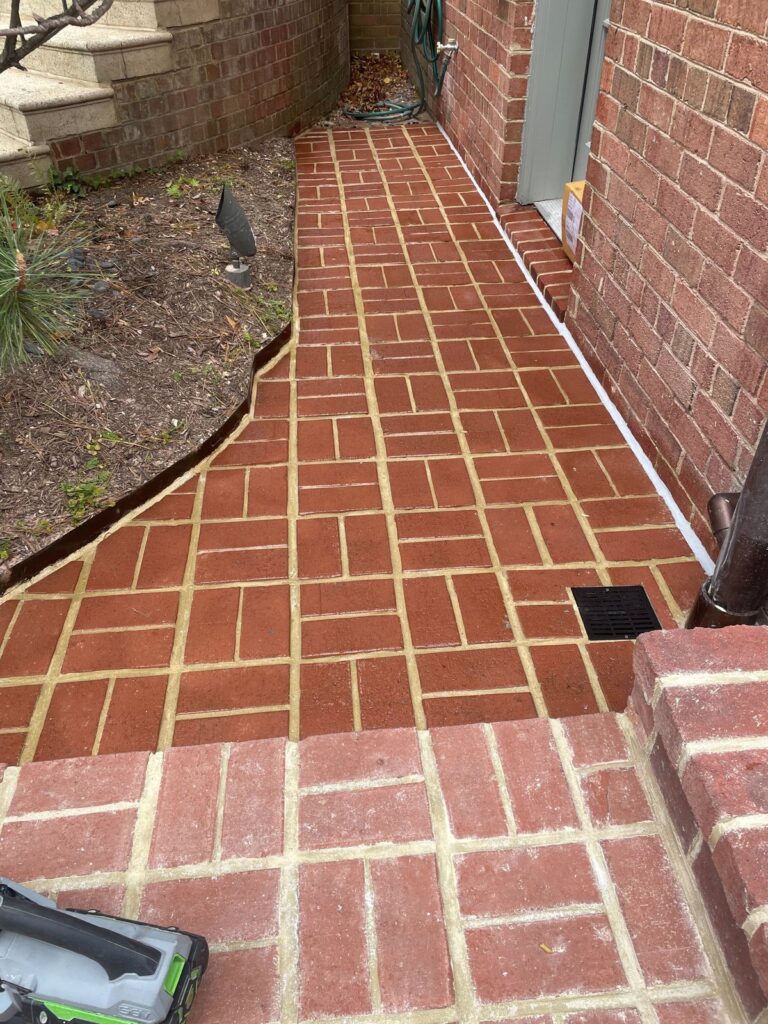
- Patio and walkway brick. Backyard brick patios and walkways with failing mortar joints.
DC Neighborhoods We Regularly Serve
- Georgetown (Federal-era and Victorian rowhouses)
- Capitol Hill (historic townhouses, Senate/House office buildings)
- Foggy Bottom (historic and institutional)
- Dupont Circle (Victorian rowhouses and apartment buildings)
- Kalorama (embassy row, prestige residential)
- Logan Circle
- Shaw
- U Street corridor
- Mount Pleasant
- Adams Morgan
- Columbia Heights
- Petworth
- Brookland
- Eckington
- LeDroit Park
- Bloomingdale
- Anacostia (historic)
- Chevy Chase DC
- Cleveland Park
- Woodley Park
Why DC Masonry Requires Specialists
Three things make DC historic masonry work different from generic bricklaying:
- Mortar matching. Getting the hardness, color, texture, and profile right takes years of experience. Mismatched mortar is worse than no repointing — it damages original brick within 20–40 years.
- Brick preservation. Removing failed mortar without damaging soft historic brick requires the right tools and the right touch. This is hand-work, not machine work.
- Building movement awareness. Historic DC rowhouses have settled, shifted, and flexed for 150+ years. Repointing that doesn’t account for this movement just reopens the same cracks.
DC Masonry Restoration Cost
- Standard repointing: $15–$35 per SF
- Historic lime-mortar repointing: $25–$50 per SF
- Chimney repointing (residential): $2,000–$6,000
- Front-stoop repointing: $1,500–$5,000
- Historic facade (preservation-grade): project-specific; $30–$75 per SF depending on scope and access
See the full 2026 masonry cost guide.
Related DC Work
- Historic Building Restoration Services
- Main Masonry Services
- Government Building Restoration
- Understanding Brick Repointing
- Mortar Types Explained
- Diagnosing Mortar Failure
Ready to Restore Your DC Masonry?
Free on-site assessment for historic, commercial, residential, and institutional masonry projects anywhere in Washington DC.
Call: (703) 327-7676 | Online: request a free assessment
Frequently Asked Questions — Washington, DC
Which Washington, DC neighborhoods does Rose serve for masonry repointing?
We work throughout Washington, DC, including Georgetown, Logan Circle, Dupont Circle, and surrounding areas. Same crew, same craftsmanship standards, and the same one-year written workmanship warranty across the entire service area. For Marble Armor installations, we add a 10-year warranty on the protected surface.
How do I get a quote for masonry repointing work in Washington, DC?
Two ways. For a fast budget range, send photos through our intake form at roserestoration.com/send-photos and we’ll respond within one business day. For a binding written estimate, schedule a free on-site assessment at our contact page or call (703) 327-7676. There’s no charge for the assessment.
Our Work
Also serving: Alexandria, VA · Arlington, VA · Bethesda, MD · McLean, VA — or see all Masonry Restoration & Brick Repointing services.