Commercial Concrete Contractor Services in Washington DC, Maryland & Virginia

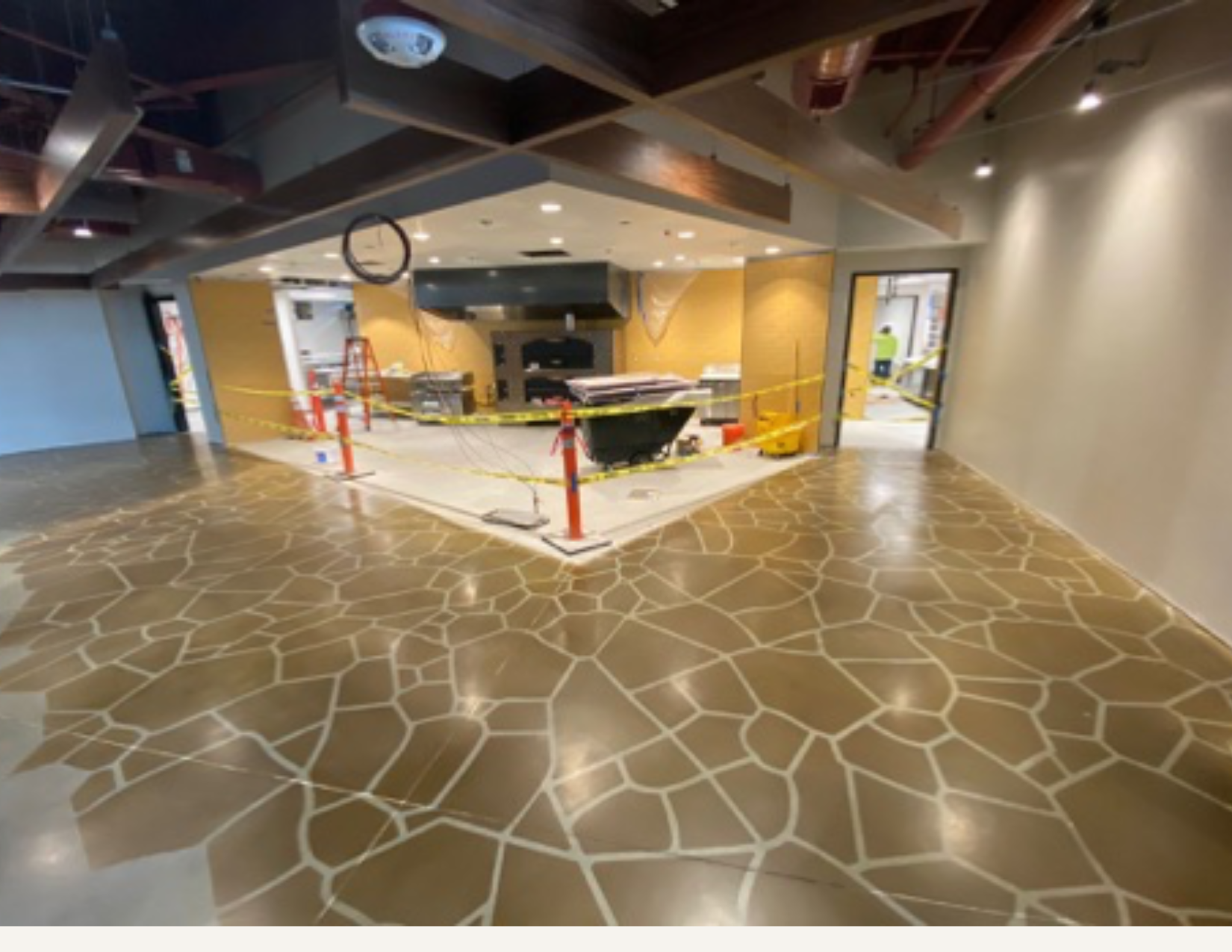
Rose Restoration is a Washington DC commercial concrete contractor — providing polished concrete, grind-and-seal, concrete staining, concrete patching, surface preparation, epoxy floor coatings, decorative stencils, polishable overlays, and joint filling for commercial and industrial facilities across DC, Maryland, and Northern Virginia. Direct-to-owner and GC subcontract work, with 47 years of DC-area surface prep experience and 35+ in-house technicians.

Free in-person assessment — same-week scheduling across DC, MD & VA
Call (703) 327-7676 Request a Quote
47
Years in DC/MD/VA
30+
Technicians on staff
4.8★
118+ Google reviews
DC · MD · VA
Service area

Trusted by DC-area GCs, property managers, and corporate HQs for concrete scopes

Rose Restoration has delivered commercial concrete contractor services and related services for:

Commercial Concrete Contractor Services in Washington DC — Quick Answers

Who is a commercial concrete contractor in Washington DC?

Rose Restoration is a Washington DC commercial concrete contractor serving general contractors, property managers, corporate HQs, retail, and industrial facilities across DC, Maryland, and Virginia. Scopes include polished concrete, grind-and-seal, concrete staining and dyeing, concrete patching, surface preparation, epoxy floor coatings, polishable overlays, decorative stencils, and joint filling. 47 years of DC-area experience. Request a scope walk-through.

What concrete services does Rose Restoration offer?

Rose Restoration offers: polished concrete (cream, salt-and-pepper, full aggregate), grind-and-seal finishes, concrete staining and dyeing (acid stains and water-based), concrete patching and crack repair, surface preparation (diamond grinding, shot blasting, moisture testing), epoxy and resinous flooring systems (epoxy, polyaspartic, urethane cement, MMA), polishable overlays, decorative stencils, and concrete joint filling. Full single-source specialty contracting.

Does Rose Restoration work as a concrete subcontractor for GCs?

Yes. Rose Restoration regularly subcontracts concrete scopes for general contractors on new construction and renovation projects — delivering single-source accountability for concrete polishing, grind-and-seal, resinous flooring, patching, and joint filling. Bonded, insured, and licensed in DC/MD/VA with 47 years of experience on federal, institutional, and commercial projects. Named projects include Amazon WAS17 and the IMF.

How much does commercial concrete work cost in Washington DC?

Commercial concrete scopes in the DC metro typically run: polished concrete $3–$15/sq ft, grind-and-seal $4–$8/sq ft, concrete staining + polish $6–$12/sq ft, epoxy systems $4–$25/sq ft depending on system, polishable overlays $8–$20/sq ft, decorative stencils priced per project, and surface prep $2–$5/sq ft. Detailed pricing is provided after site walk-through and substrate evaluation.

What concrete projects has Rose Restoration completed in Washington DC?

Rose Restoration's Washington DC concrete project portfolio includes Amazon WAS17 (corporate HQ polished concrete and resinous flooring), the International Monetary Fund, Marine Barracks Washington, the Four Seasons Washington DC (back-of-house concrete), and many commercial retail, industrial warehouse, and residential polished concrete projects across the DMV. Rose works both direct-to-owner and as a specialty subcontractor to GCs.

Concrete Contractor Services — Every System, Every Substrate, Done Right

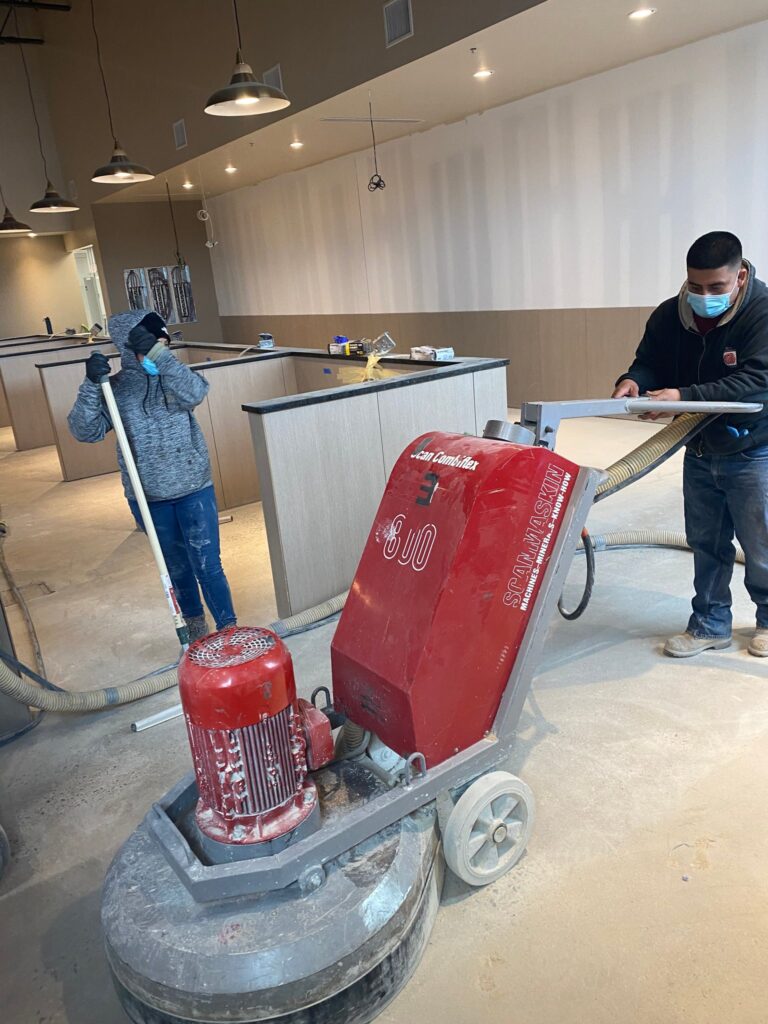
Rose Restoration provides concrete floor grinding, sealing, polishing, joint filling, and restoration services for general contractors, builders, and project teams across Virginia, Maryland, and Washington DC. From warehouse grind-and-seal to high-gloss lobby polish, we execute concrete scopes that meet the schedule, match the spec, and hold up under real-world conditions.

Grind and Seal

Grind and seal is one of the most practical concrete floor systems for contractor-driven projects. The concrete is ground to a flat, consistent surface using diamond tooling, then coated with a topical sealer that provides the sheen, stain resistance, and protection.

The sheen comes from the sealer — not from the concrete itself. This is the key distinction between grind-and-seal and true polished concrete.

When grind and seal makes sense:

  • Warehouses, distribution centers, and back-of-house spaces
  • Budget-conscious specs where appearance matters but lifecycle cost is secondary
  • Slabs with heavy contamination (oil, chemicals) that won’t polish well
  • Fast-track projects where a shorter install time is critical

Limitations: The topical sealer wears under heavy traffic and forklift use. Expect recoating every 3–5 years in high-traffic environments. For spaces where long-term maintenance cost matters, true polished concrete is often the better investment.

Joint Filling

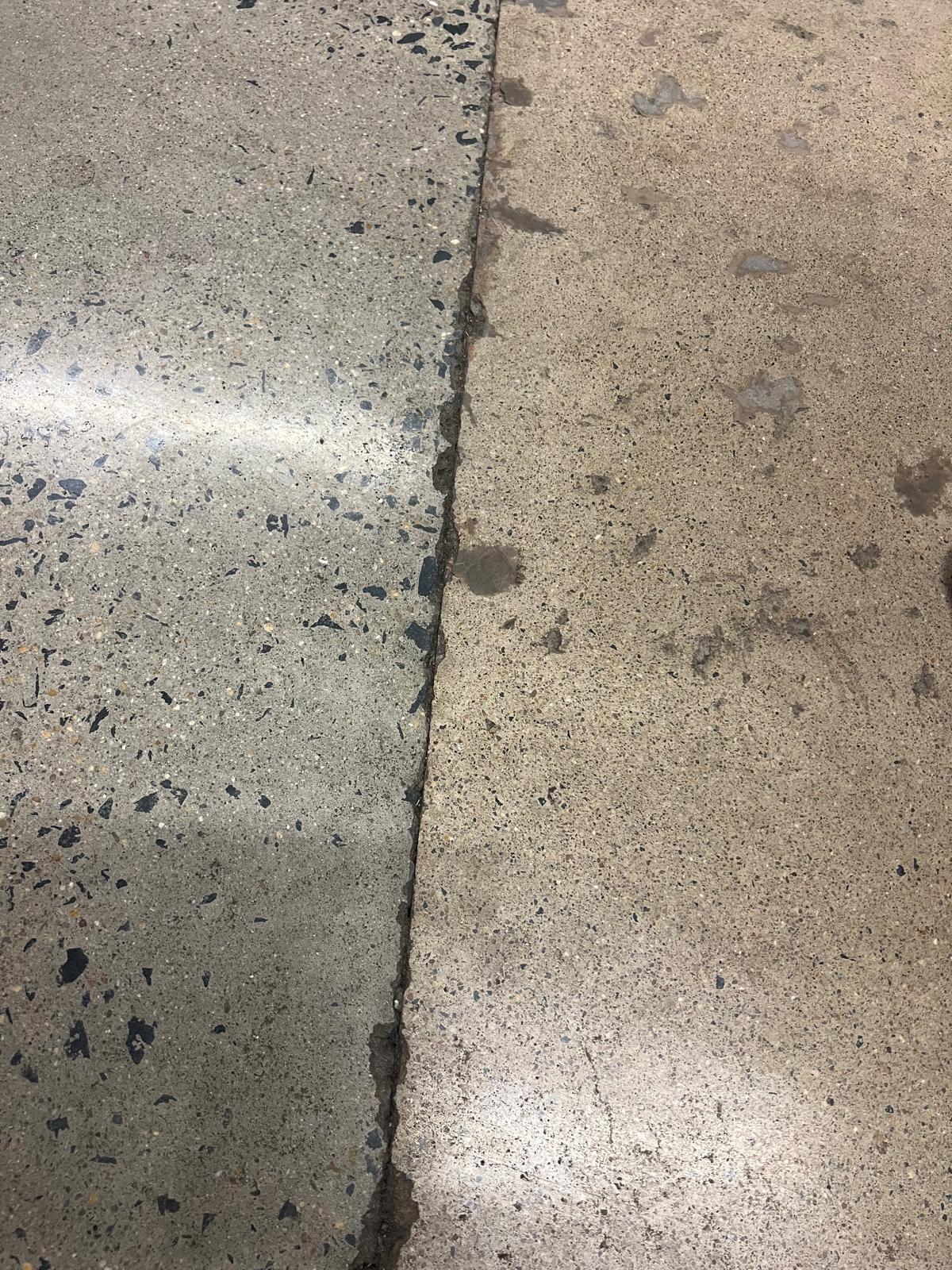
Unfilled control joints and saw cuts are one of the most overlooked — and most consequential — details in commercial concrete flooring. Open joints collect dirt, trap moisture, harbor bacteria, and chip at the edges under wheeled traffic.

Rose Restoration fills joints with semi-rigid polyurea that protects joint edges, creates a smoother floor surface, and supports long-term floor performance. Joint filling is especially critical for:

  • Warehouse and distribution floors with forklift and pallet jack traffic
  • Polished concrete installations (joints must be filled before polishing, not after)
  • Food service and healthcare environments where cleanability matters

Note for estimators: Joint filling is one of the most frequently missed line items in concrete polishing bids. We recommend flagging it during the estimating phase to avoid scope gaps.

Clean and Seal

When a concrete slab doesn’t need grinding or polishing but needs protection and improved appearance, clean and seal is the right scope. The floor is professionally cleaned to remove surface contaminants, then sealed with a penetrating or topical sealer.

Good for: Occupied spaces getting a refresh before new tenants, new construction slabs needing protection before occupancy, parking garages, and utility areas.

What it can do: Protect against stains, reduce dusting, and improve appearance modestly.

What it can’t do: Fix significant surface damage, change the concrete’s character, or create a polished appearance. If the floor needs to look substantially different, grinding or polishing is required.

Patching and Repair

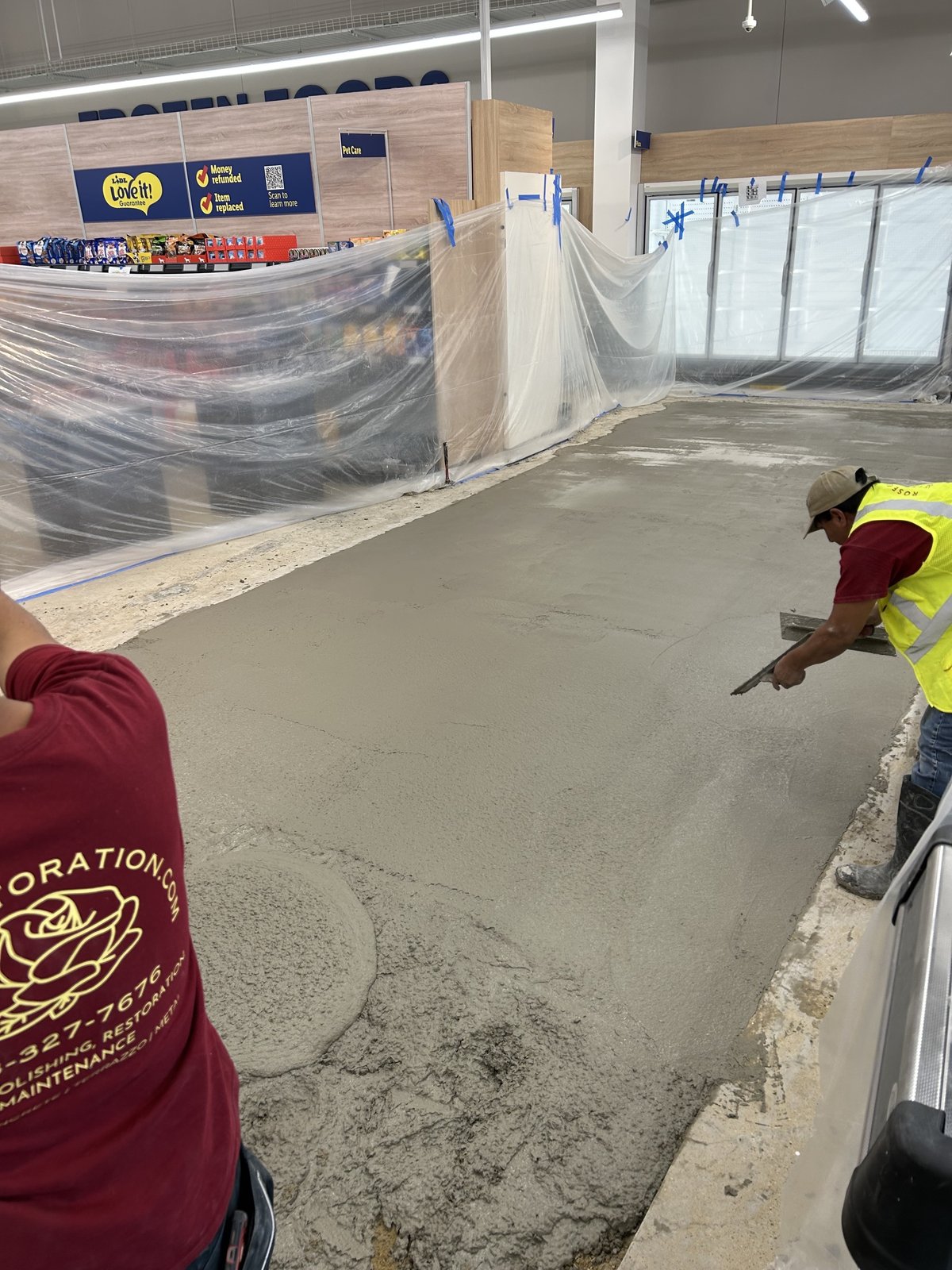
Every commercial concrete slab has a history: cracks from settlement, spalls from impact, bug holes from the pour, prior anchor holes, old patches from plumbing reroutes, and saw cuts that were never properly filled.

The right repair strategy depends entirely on what the final finish will be. A crack fill that’s invisible under a grind-and-seal coating may be clearly visible under a high-gloss polish. Patches from different concrete mixes will always show differently than the surrounding slab under any transparent finish.

Rose Restoration assesses every slab during the estimating phase and sets expectations about what repairs will look like under the specified finish. Good repair work balances structural improvement, appearance, and realistic expectations — it doesn’t promise invisible fixes on visible floors.

Aggregate Exposure Options

  • Cream finish: Minimal grinding. Smooth cement paste surface. Most uniform color. Hides aggregate.
  • Salt-and-pepper: Light aggregate exposure. Small stone chips visible. Most common commercial choice.
  • Medium aggregate: Larger stones visible. More character. Shows the concrete’s natural composition.
  • Full aggregate: Deep grinding. Large stones prominent. Dramatic look — typically specified for feature areas.

Not every slab produces the same aggregate pattern. Mix design, pour quality, and finishing method all affect what’s revealed during grinding. We discuss exposure expectations before production begins and provide mock-ups for approval on spec projects.

Sealer Options

  • Penetrating sealers: Soak into concrete, protect from within, no surface film, natural appearance. Best for polished concrete maintenance.
  • Guard products: Light topical protection, enhance sheen slightly. Good for polished concrete in commercial traffic.
  • Topical sealers: Film-forming surface coating. Provides visible sheen. Needs recoating over time. Used in grind-and-seal systems.
  • High-build coatings: Thicker protective systems (epoxy, urethane) for chemical/abrasion resistance in industrial environments.

The right sealer depends on traffic, chemical exposure, maintenance capacity, and appearance goals. We recommend the system that matches the use — not the most expensive option.

Why Densifier Matters

Lithium silicate densifier penetrates concrete and reacts chemically with calcium hydroxide to form calcium silicate hydrate — a harder, denser crystalline structure within the concrete matrix.

In practical terms: the surface gets harder, dusting stops, abrasion resistance increases, and the concrete accepts a better polish. Densifier is applied during the grinding process (typically at 100–200 grit) and is essential for any polished concrete specification.

It’s one of the most cost-effective treatments in any concrete floor scope — the material cost is low, application adds minimal time, and the performance benefit is significant.

Finish and Polish Levels

  • Matte / Honed (400 grit): Flat, no reflectivity. Contemporary, understated. Lowest maintenance. Good for warehouses, back-of-house, utility spaces.
  • Low sheen (800 grit): Subtle reflectivity. Most popular commercial choice. Clean, professional appearance.
  • Medium sheen (1500 grit): Noticeable reflectivity. Modern, polished look. Retail, offices, restaurants.
  • High gloss (3000 grit): Mirror-like. Maximum reflectivity. Luxury retail, hotel lobbies, showrooms.

Higher sheen is not always the right answer. Sheen level should match the space’s use, maintenance capacity, and design intent. We provide mock-ups so the GC and owner can approve the finish before full production.

Frequently Asked Questions

How much does commercial concrete polishing cost?

Typically $2–$7 per square foot depending on finish level, slab condition, and project size. Grind and seal is at the lower end. High-gloss polished concrete is at the higher end. We provide detailed estimates after reviewing plans or walking the site.

How long does concrete polishing take?

A typical 10,000 SF project takes 5–7 working days. Grind and seal is faster. High-gloss polish takes longer. We provide project-specific schedules as part of every proposal.

Can you work nights and weekends?

Yes. We routinely adjust schedules to meet project timelines and avoid conflicts with other trades.

Do you provide mock-ups?

Yes. On-site mock-ups for finish, sheen, and aggregate approval before full production. Standard on spec projects.

What’s the difference between grind and seal vs polished concrete?

Grind and seal gets its sheen from a topical sealer. Polished concrete gets its sheen from diamond refinement of the concrete itself. Polished is more durable; grind and seal is faster and less expensive upfront.

How often does grind and seal need recoating?

Every 3–5 years in high-traffic commercial environments. Polished concrete does not need recoating.

Do you fill joints?

Yes. Semi-rigid polyurea joint fill is available and recommended for all polished concrete and warehouse floor projects.

What areas do you serve?

Virginia, Maryland, DC, and surrounding states within approximately 100 miles.

Discuss Your Concrete Scope

Send us your plans, specs, or bid documents. We’ll review the scope, walk the site if needed, and deliver a detailed estimate.

Send Bid Documents or call 703-327-7676

Concrete & Epoxy Projects

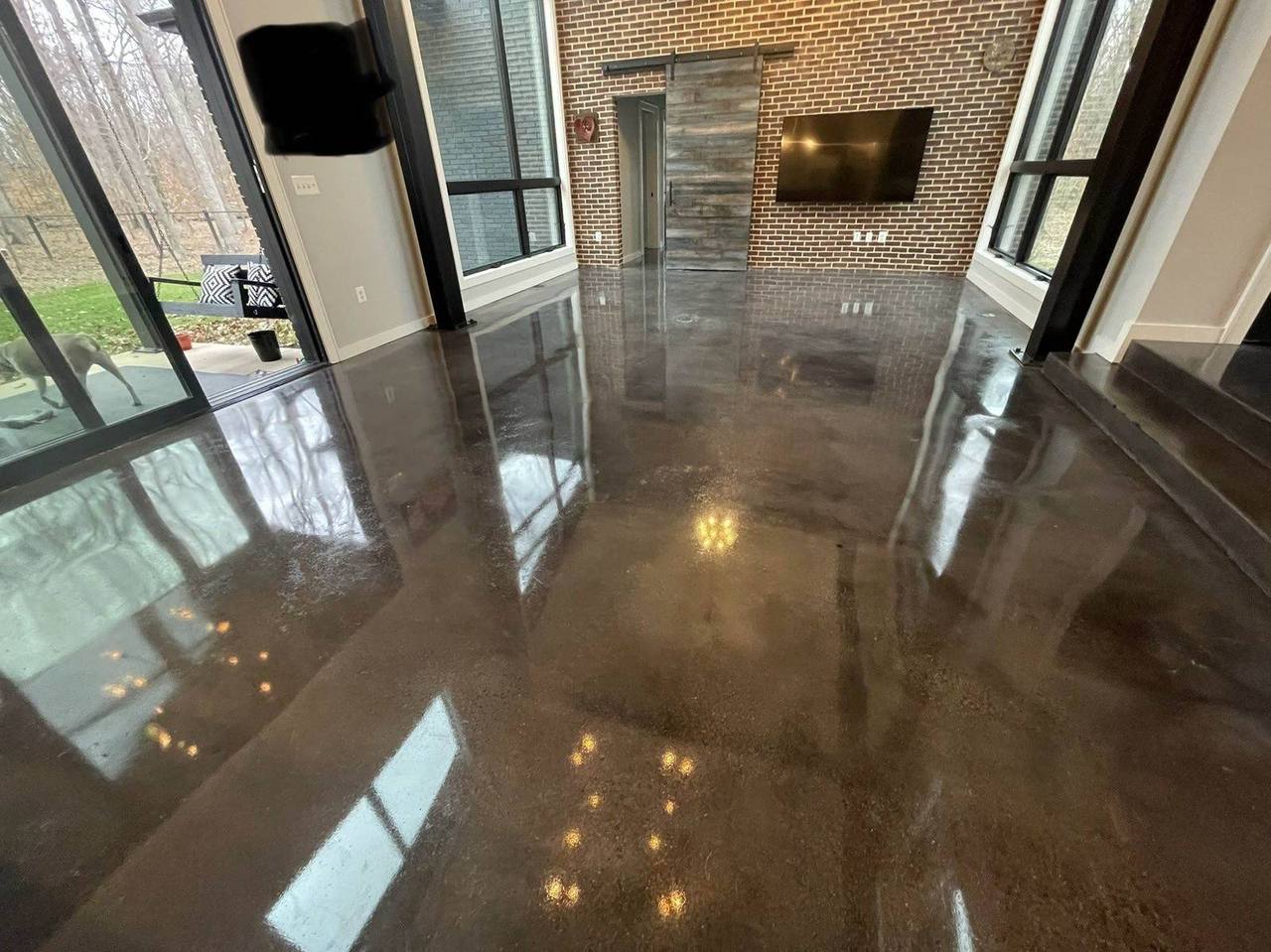
Polished concrete retail floor by Rose Restoration Commercial concrete polishing in progress by Rose Restoration Dyed concrete countertop with mirror finish by Rose Restoration Outdoor polished concrete with brick fountain by Rose Restoration
Schedule Online
BBBACCREDITEDBUSINESSA+
BBB Accredited A+ Rating
ABCVIRGINIAMEMBER
ABC Virginia Member
4.8GOOGLE
4.8 Star Rating 118+ Google Reviews
LICENSED& INSURED
Licensed & Insured VA, MD, DC
Leave a Review
Call Now Schedule a Free Assessment
Call Now Get a Quote