Countertop Restoration in Washington DC, Maryland & Virginia

Rose Restoration is a Washington DC countertop restoration contractor restoring marble, granite, quartzite, travertine, limestone, and natural-stone countertops for residential, hospitality, and commercial clients across DC, Maryland, and Northern Virginia. Services include polishing, honing, etch removal, stain removal, chip repair, seam repair, sealing, and Marble Armor invisible 10-year protection — typically saving 70-90% versus replacement.

Free in-person assessment — same-week scheduling across DC, MD & VA
Call (703) 327-7676 Request a Quote
47
Years in DC/MD/VA
30+
Technicians on staff
4.8★
118+ Google reviews
DC · MD · VA
Service area

Trusted by DC-area homeowners, hotels, and clubs for countertop work

Rose Restoration has delivered countertop restoration and related services for:

Countertop Restoration in Washington DC — Quick Answers

Who restores countertops in Washington DC?

Rose Restoration restores marble, granite, quartzite, travertine, and limestone countertops across Washington DC, Maryland, and Northern Virginia. Services include polishing, honing, etch removal, stain removal, chip repair, seam repair, and sealing. 47 years of experience, 35+ in-house technicians, and named clients including the Four Seasons Washington DC and Congressional Country Club. Request a free in-home estimate.

Can marble countertops with etch marks or stains be restored?

Yes. Etching (common on marble from acidic spills) is removed with professional diamond honing and polishing — DIY etch-remover pastes only mask minor etching. Stains are drawn out with specialized poultice applications and followed by impregnating sealer to prevent recurrence. Most residential marble countertops are fully restored in a single 2-4 hour visit with no demolition.

How do you repair a chip in a granite or marble countertop?

Chips are repaired with color-matched epoxy resin, applied in layers, shaped to match the original edge profile, and polished flush with the surrounding surface. Most chip repairs are completed in under two hours and are virtually undetectable. Large chips at sink edges or seam corners may require additional shaping but are almost always fixable.

How much does countertop restoration cost in Washington DC?

Countertop restoration in the DC metro typically runs: countertop polishing $300-$1,500 per project, chip repair $150-$500 per chip, stain removal $200-$600 per area, seam repair $200-$800, and sealing $1-$3 per sq ft. Whole-kitchen packages typically run $800-$3,000 depending on counter size, stone type, and condition.

Can countertops be protected long-term after restoration?

Yes. Rose Restoration installs Marble Armor — a proprietary invisible 10-year protection treatment that resists etching from acids (lemon, wine, vinegar, coffee) and heat up to about 300°F. Marble Armor is invisible in daily use, fully removable, and popular in luxury kitchens, hotel bars, and commercial hospitality countertops across the DC metro.
Countertop Restoration, Repair & Polishing

Expert care for marble, granite, quartzite, limestone, travertine, engineered quartz, and solid surface countertops.

Recent Countertop Projects

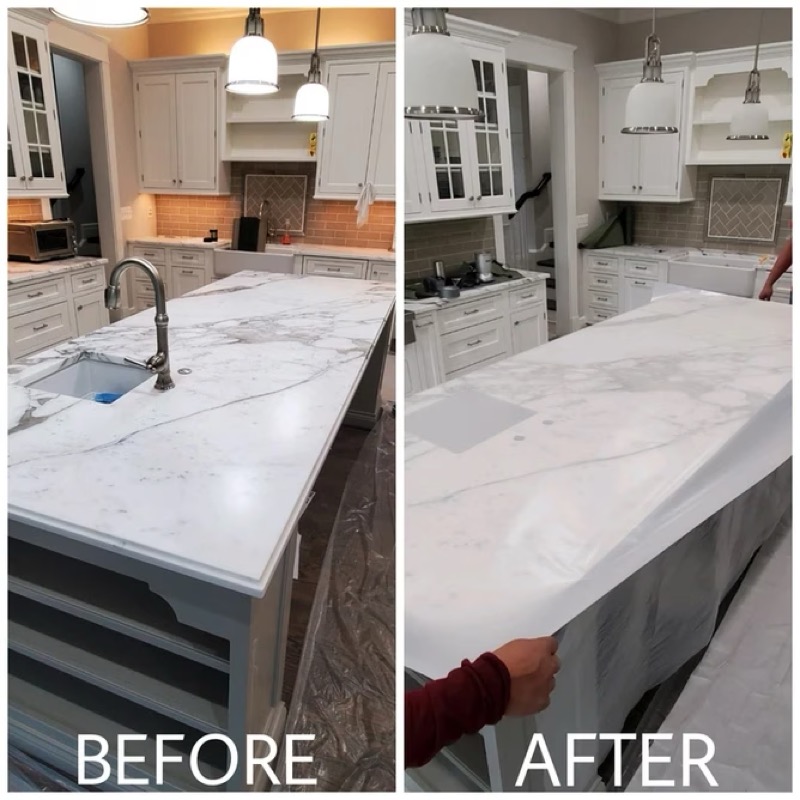
Calacatta marble kitchen island countertop before and after

Calacatta Island — Before & After

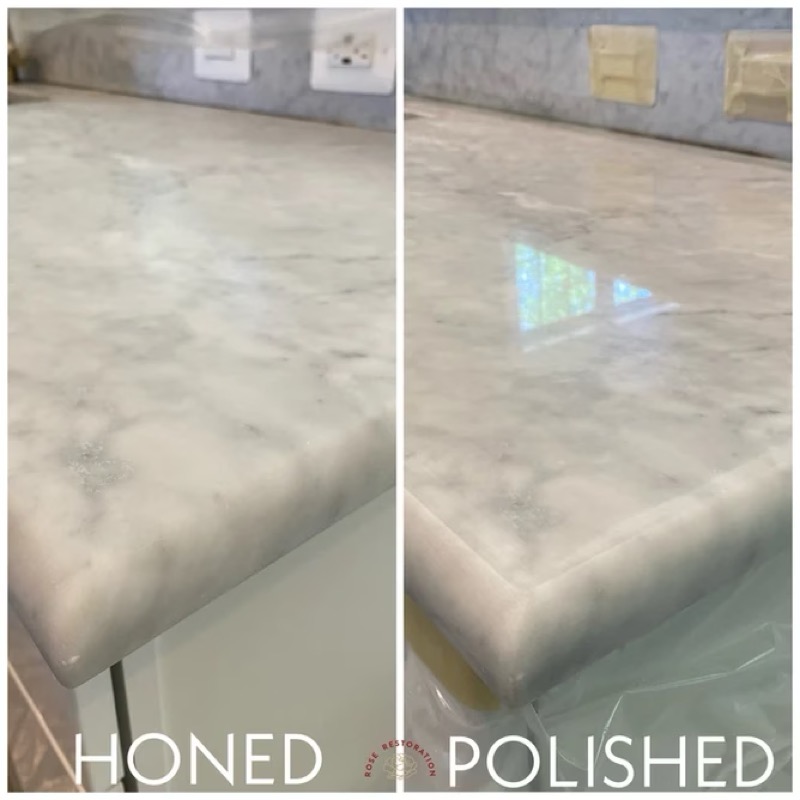
Marble countertop honed vs polished before and after

Honed vs Polished

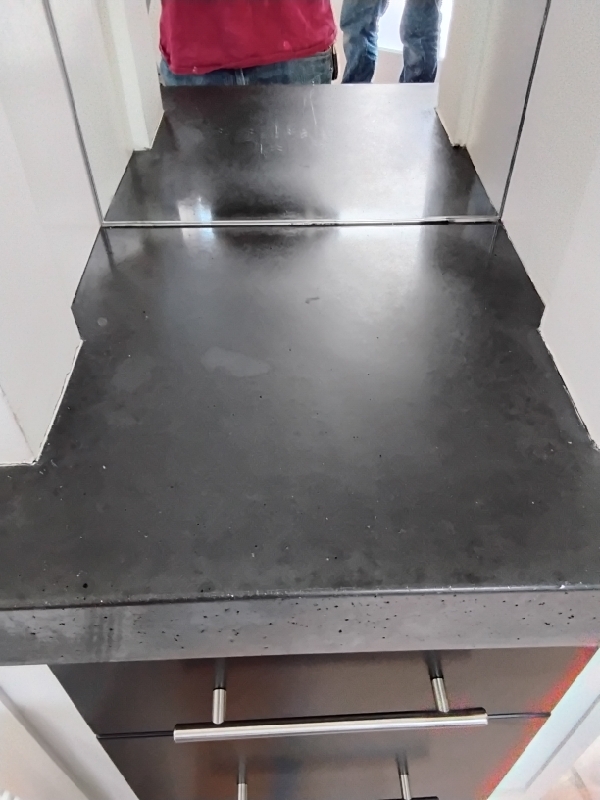
Dyed concrete countertop mirror finish

Dyed Concrete Countertop

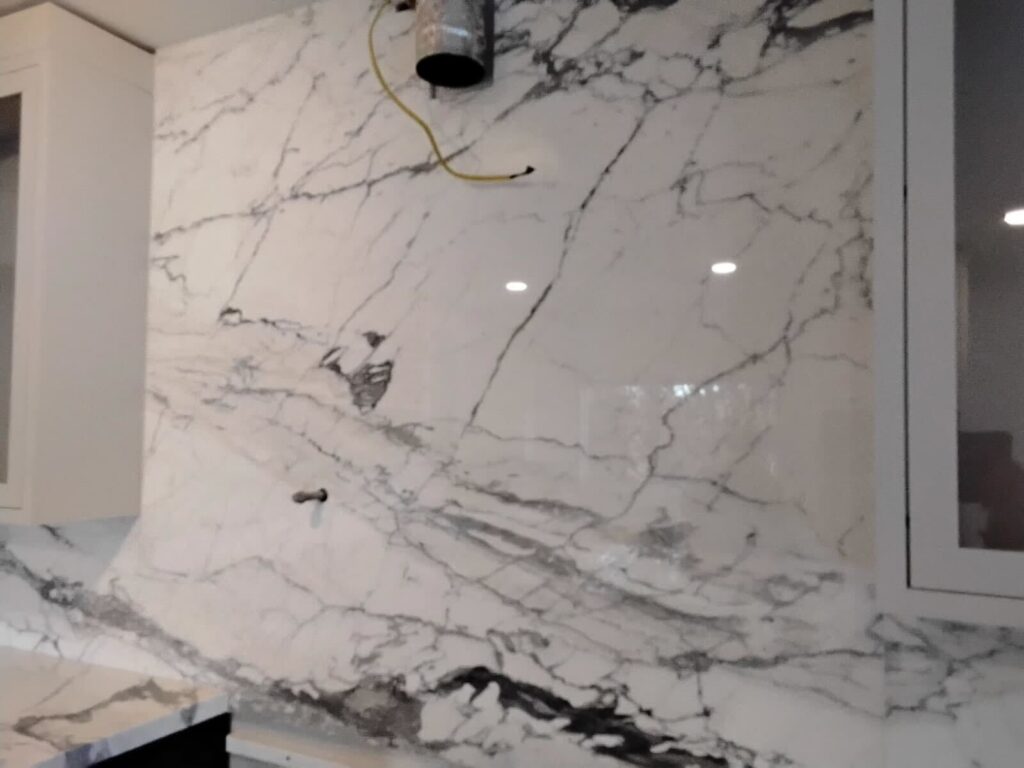
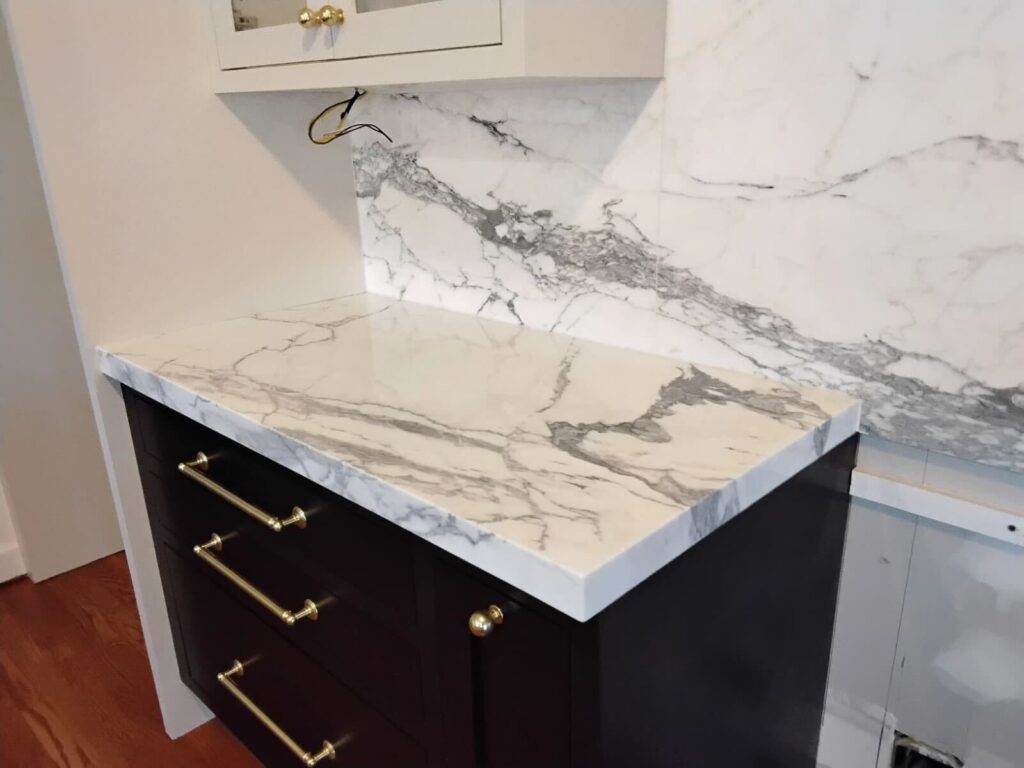
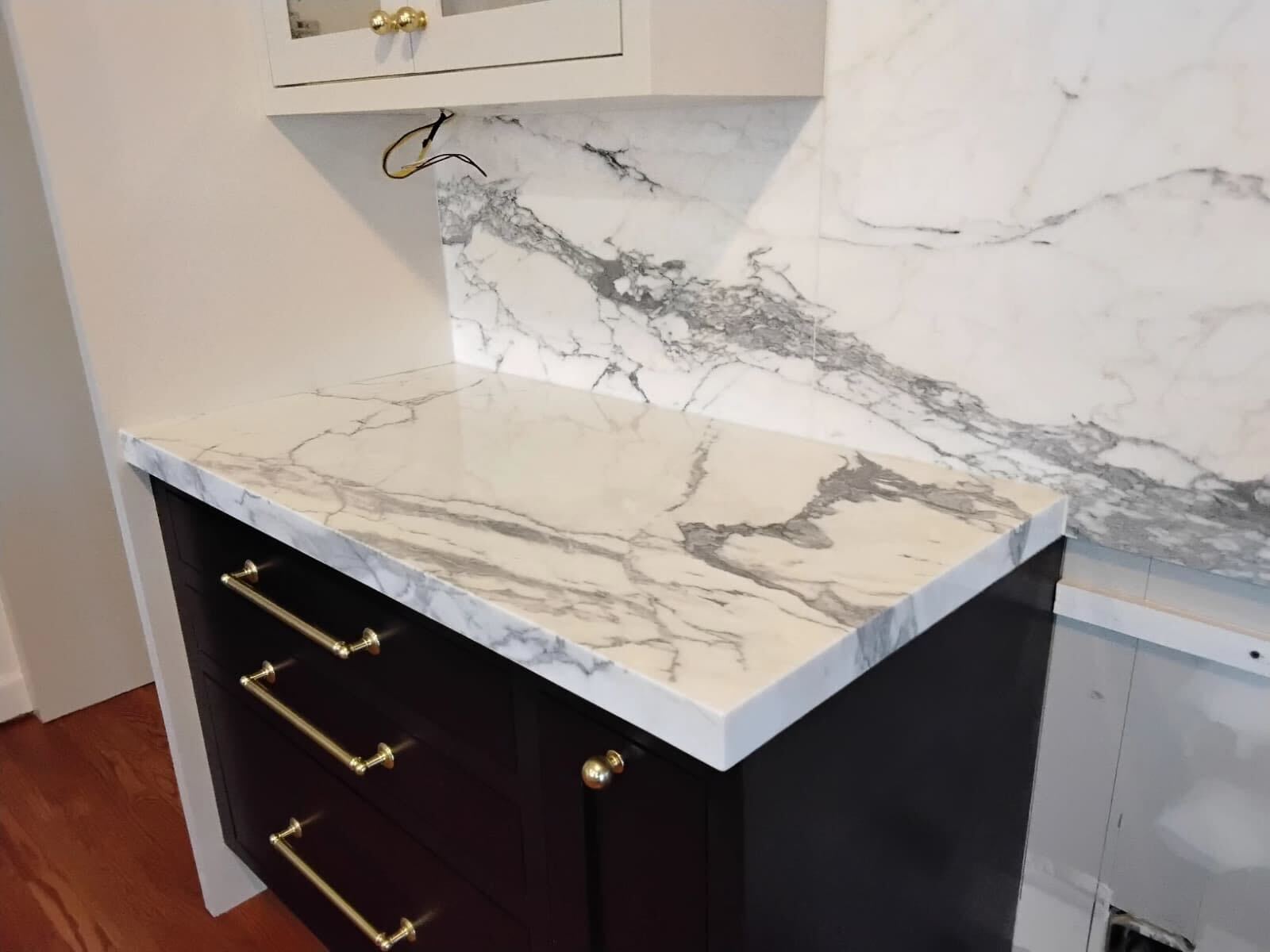
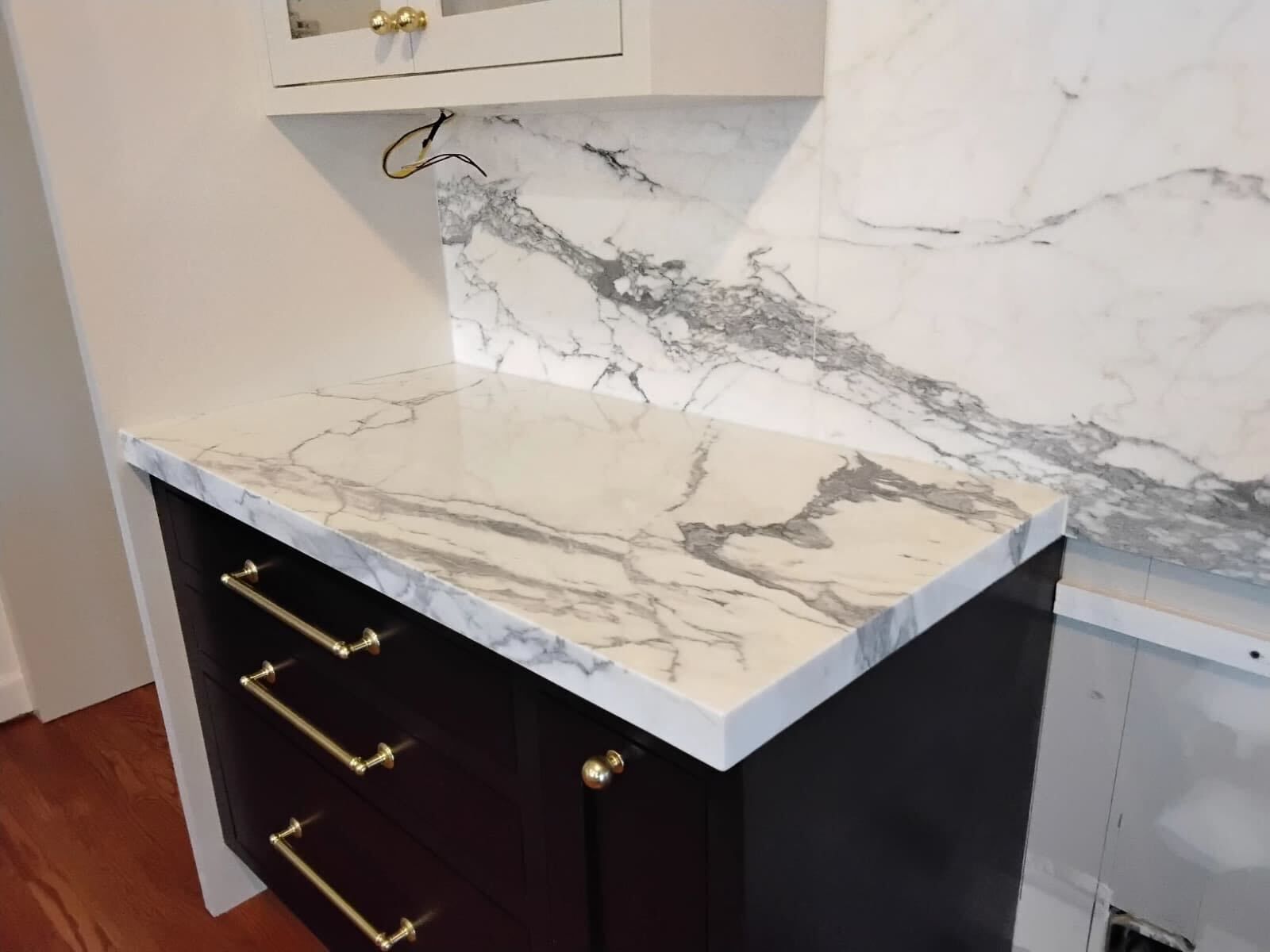
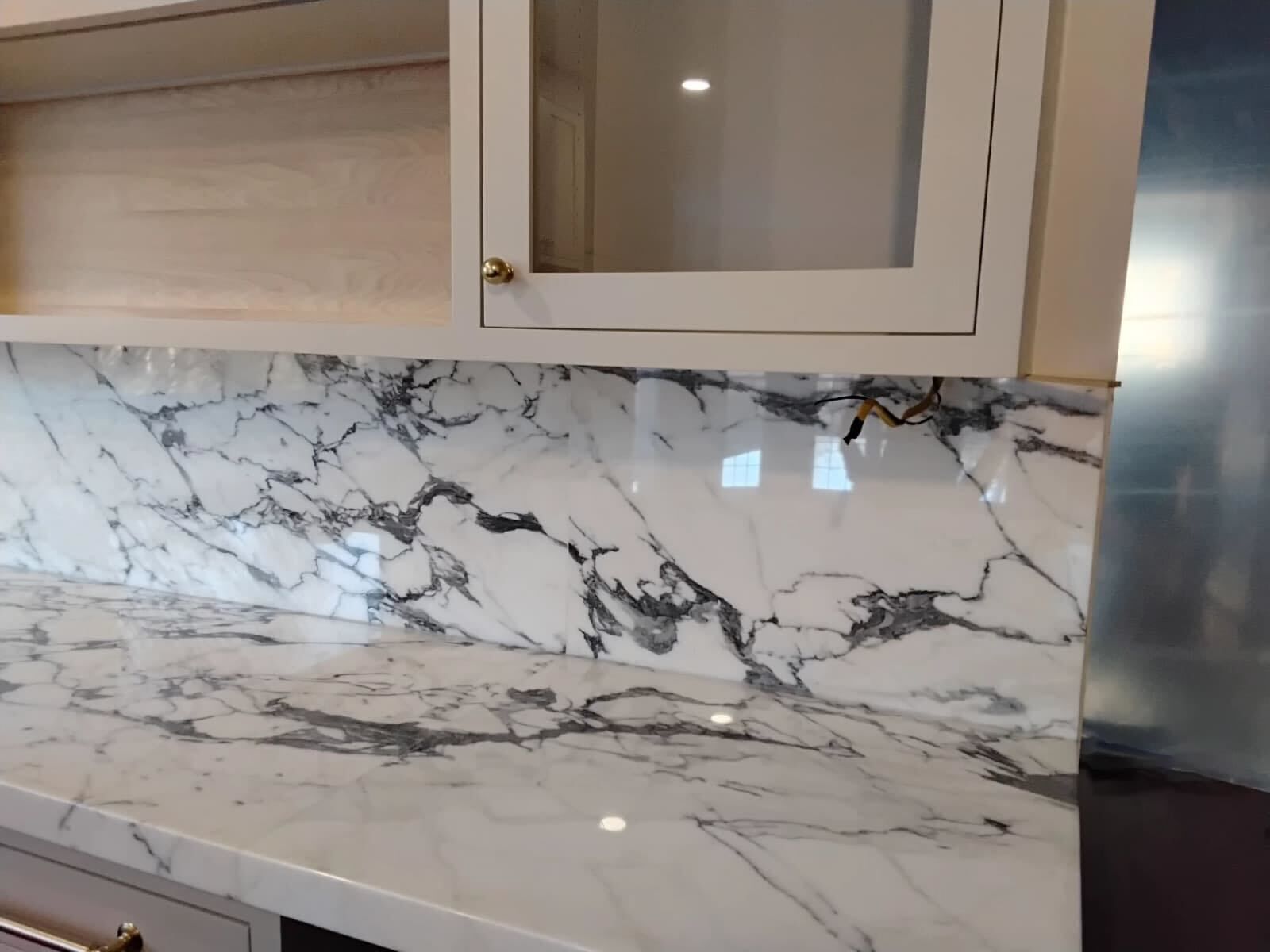
Calacatta marble backsplash restoration

Calacatta Backsplash

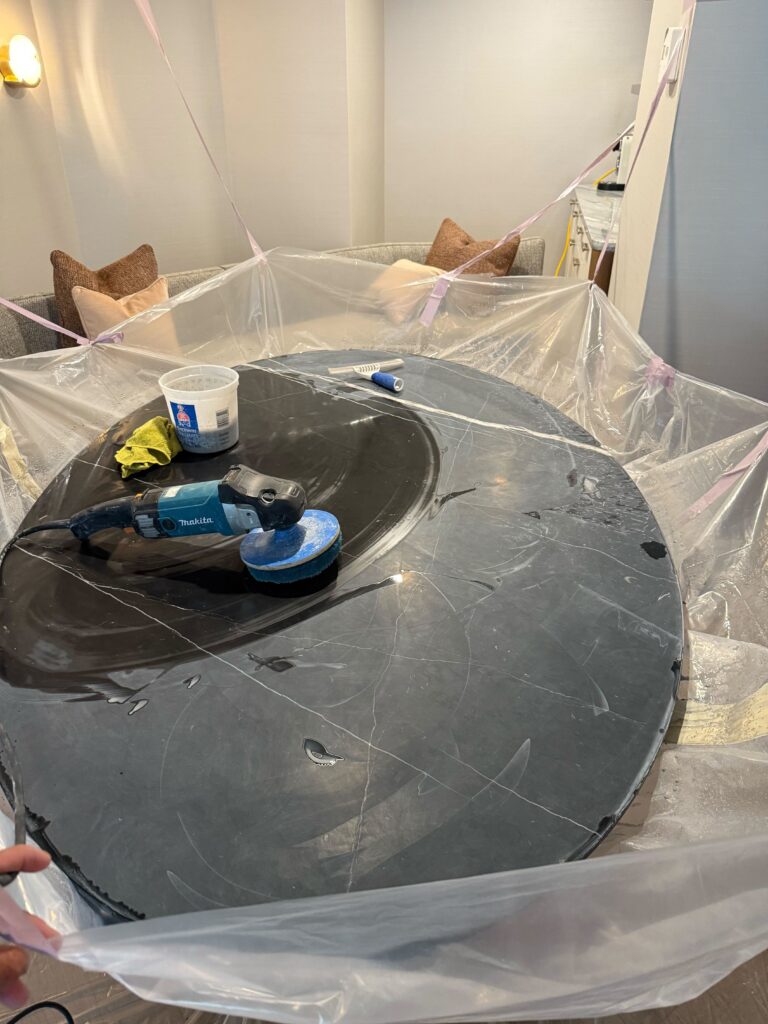
Black marble table restoration

Black Marble Table

Residential marble countertop after restoration

Residential Marble — After

View full gallery | Protect with Marble Armor

Professional Countertop Restoration, Repair & Polishing

Your countertops endure more daily contact than any other stone surface in your home. Every meal prepared, every glass set down, every spill wiped away leaves its mark over time. What once gleamed as the centerpiece of your kitchen or bathroom can gradually lose its luster, develop etch marks, or suffer chips and cracks that detract from both beauty and function.

At Rose Restoration, we have spent more than 40 years restoring countertops throughout Virginia, Maryland, and Washington, D.C. Our team of over 30 skilled technicians works with every major countertop material — from classic marble and granite to quartzite, limestone, travertine, engineered quartz, and Corian solid surface. Rather than living with damaged surfaces or facing the enormous cost of replacement, our clients choose professional countertop restoration to bring their surfaces back to like-new condition at a fraction of the price.

Most countertop restoration projects cost between $10 and $20 per square foot — a small investment compared to the thousands required for new fabrication and installation.

Schedule a free countertop assessment or call us directly at 703-327-7676 to discuss your project.

Why Countertops Need Professional Restoration

No surface in your home takes more abuse than your countertops. Daily mechanical wear from plates, pots, and appliances creates micro-scratches that accumulate into visible dulling. Acidic foods — lemon juice, wine, vinegar, tomato sauce — react chemically with marble and limestone, leaving etch marks that no amount of cleaning can remove. Hot pans cause thermal stress and potential cracking. Dropped objects chip edges and corners. Oils, wine, and coffee penetrate unsealed stone, leaving deep stains that household cleaners cannot reach.

Professional restoration addresses all of these issues using diamond abrasives, specialized compounds, and techniques refined over decades — not the guesswork of DIY kits or general handyman approaches.

Material-Specific Countertop Restoration

Every countertop material has unique properties that demand a tailored restoration approach. Our technicians are trained to identify the specific stone type, assess its condition, and select the appropriate techniques and compounds for optimal results.

Marble Countertop Restoration

Marble is the most common countertop material we restore — and the most susceptible to damage. As a calcium-based stone, marble reacts with acids, producing the dull, whitish etch marks that frustrate homeowners. Our marble restoration process involves diamond honing to remove etch marks and scratches at a uniform depth, followed by progressive polishing to restore the original sheen. The result is a surface that looks and feels as it did when first installed.

Granite Countertop Restoration

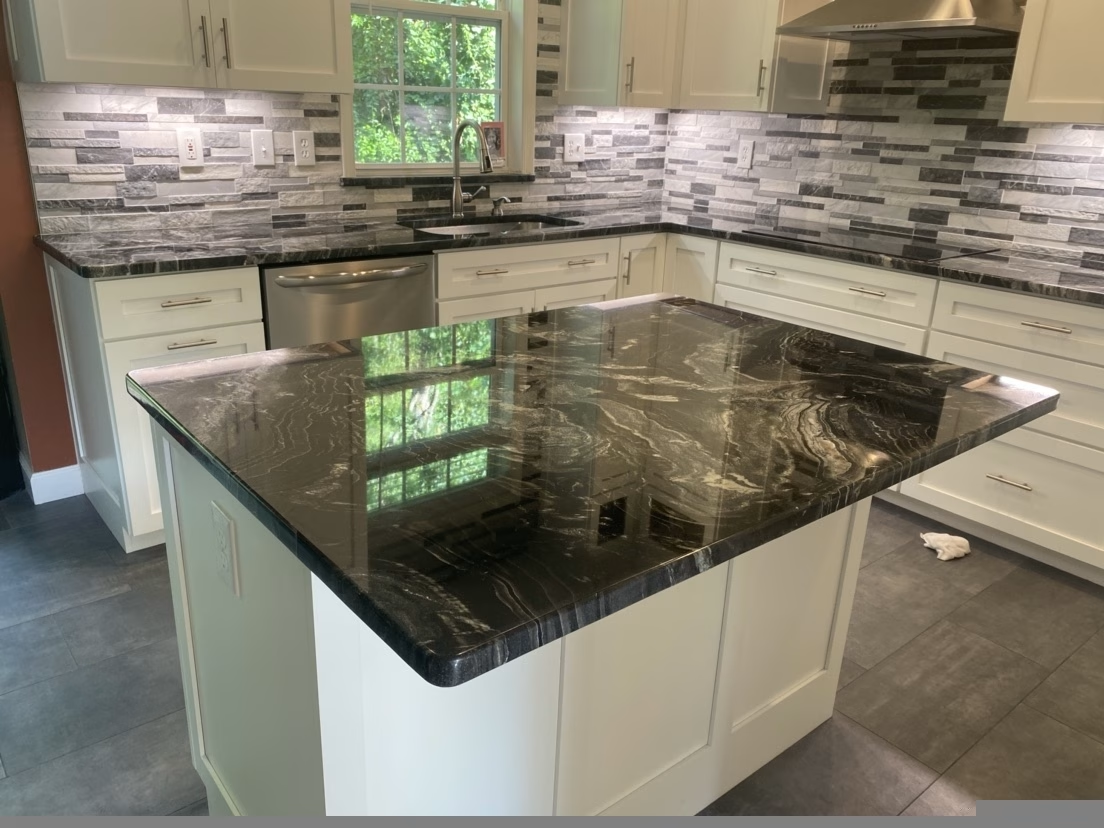
Granite is harder and more resistant to etching than marble, but over time polished granite develops gradual dulling from abrasion — particularly in high-traffic areas around the sink and stove. Our granite countertop restoration process uses diamond abrasives calibrated for granite’s hardness, followed by specialized polishing compounds that restore the deep, reflective finish granite is known for. We also address hard water deposits that cloud surfaces near sinks and faucets.

Quartzite Countertop Restoration

Quartzite is one of the hardest natural stones used for countertops, which means that when chips or cracks do occur, they require expert-level repair. Its crystalline structure can cause chips to fracture unpredictably. Our technicians use color-matched epoxies and careful honing techniques to restore chipped or cracked quartzite, and polish surfaces that have lost their original luster.

Limestone and Travertine Countertop Restoration

Limestone and travertine are softer natural stones, making them vulnerable to scratching, etching, and staining. Travertine’s characteristic pits and voids can also trap debris if the fill material has worn away. Restoration often includes re-filling voids, honing out etch marks, and applying sealers for ongoing protection.

Engineered Quartz Countertop Repair

Engineered quartz (Caesarstone, Silestone, Cambria, and similar brands) does not etch like natural stone, but it can chip, crack, and develop dull spots from abrasion or heat damage. We repair chips and cracks using color-matched adhesives and careful blending techniques. Deep heat discoloration may have limited repairability — we always give you an honest assessment before beginning work.

Corian and Solid Surface Countertop Restoration

Corian and other solid surface materials are among the most restorable countertop options available. Because the color runs through the full thickness, scratches, stains, and minor burns can be sanded out completely and the surface re-finished to any sheen — from soft matte to high gloss. This process can make even a 20-year-old Corian countertop look virtually new.

Chip, Crack & Edge Repair

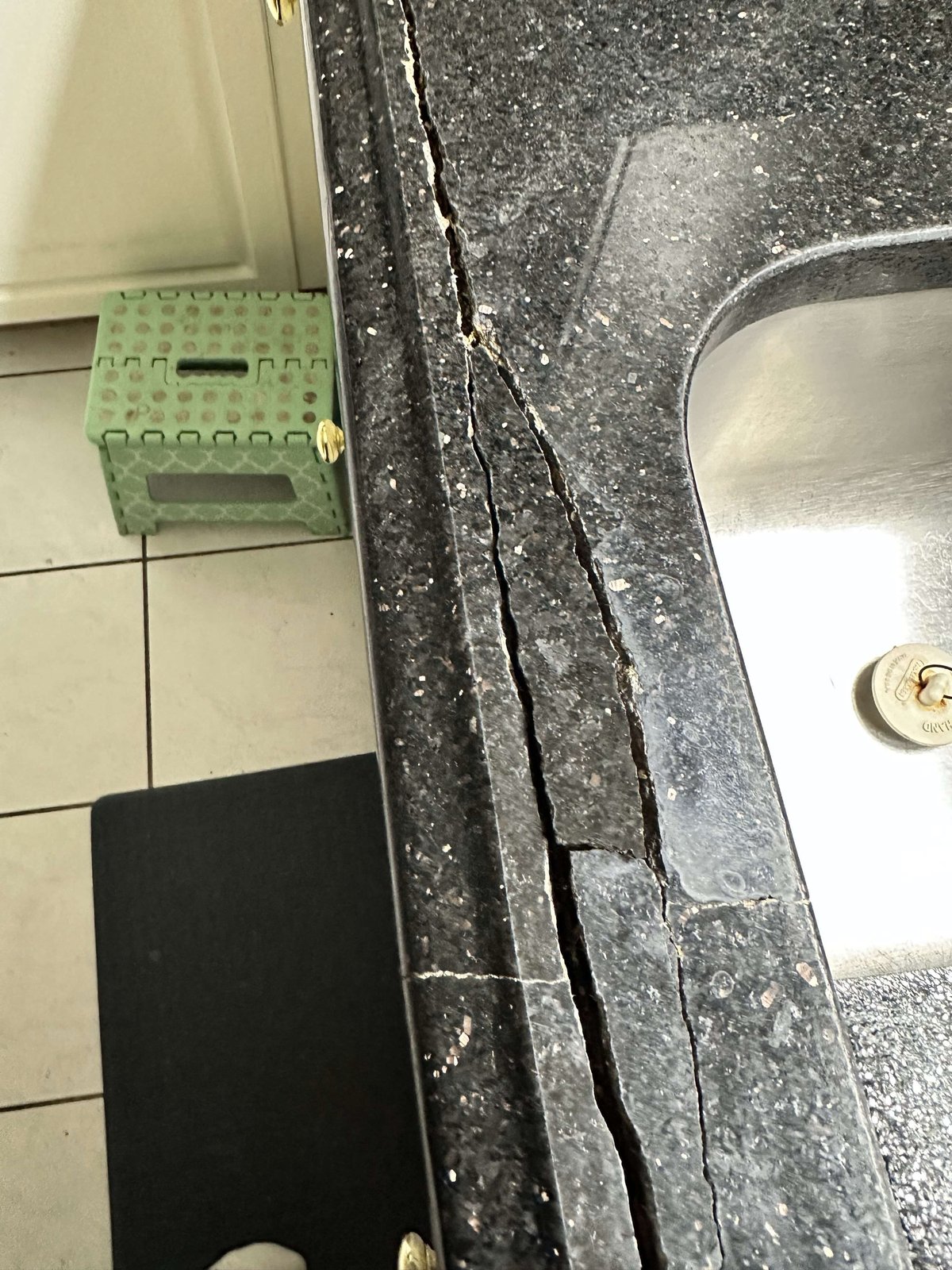
Chips and cracks are more than cosmetic — left untreated, moisture seeps in and temperature changes cause the damage to expand over time.

  • Chip repair: We fill the chip with color-matched epoxy or polyester resin, then shape, hone, and polish the repair to blend with the surrounding surface — matching not just the base color but also the veining pattern.
  • Crack repair: Surface cracks are filled with penetrating adhesives that bond the stone and prevent further separation. Structural cracks may require reinforcement from below before surface finishing. We always assess whether a crack is cosmetic or structural before recommending an approach.
  • Edge repair: Countertop edges — bullnose, beveled, ogee, and other profiles — are especially vulnerable to chipping. We rebuild damaged edges using matched materials, then shape and polish them to match the original profile.

Small chips and cracks addressed early remain simple, affordable repairs. Left unattended, they grow into problems that are significantly more costly to fix.

Seam Repair and Improvement

Most countertop installations require at least one seam, and over time these seams can become eyesores. Epoxy can discolor, adhesive can shrink, lippage (height differences between adjoining slabs) can develop as the substrate shifts, and dirt can accumulate in the seam line.

Our stone countertop seam repair process addresses all of these issues:

  • We remove the old, discolored seam filler and clean the joint thoroughly.
  • We correct any lippage by carefully honing the surface level across the seam.
  • We re-fill the seam with fresh, color-matched epoxy that bonds cleanly to both sides.
  • We hone and polish across the seam to create a smoother, less visible transition.

While no seam in natural stone can be made completely invisible — the stone itself has natural variation — professional seam repair can dramatically reduce the visual impact and restore a clean, uniform surface.

Etch Mark Removal

Etch marks are the most common complaint from marble, limestone, and travertine countertop owners. These dull spots and rings appear wherever acidic substances — lemon juice, wine, vinegar, tomato sauce, carbonated beverages, even certain household cleaners — contact the stone.

Etching is a chemical reaction, not a stain. The acid dissolves calcium carbonate in the stone, roughening the polished surface at a microscopic level. No amount of cleaning will remove an etch mark. The only true remedy is mechanical: re-honing and re-polishing the affected area to restore the smooth, reflective surface.

For isolated etch marks, we can spot-treat the affected areas. For widespread etching — common in kitchens that have gone years without professional care — we recommend a full hone-and-polish to achieve a consistent appearance. Contact us about etch mark removal — most countertops can be fully restored in a single visit.

Deep Stain Removal

Unlike etch marks, stains occur when a substance penetrates into the stone through its pores. Natural stone is more porous than most homeowners realize, and liquids can wick deep into the material if the sealer has worn away.

  • Poulticing: For deep stains, we apply a poultice — a paste of absorbent material and a chemical agent — over the stain. The poultice draws the staining substance out of the stone as it dries over 24 to 48 hours. Multiple applications may be needed for stubborn stains.
  • Chemical treatment: Oil-based stains (cooking oil, grease) respond to different agents than organic stains (coffee, wine) or rust stains. We identify the stain type and select the most effective treatment.
  • Mechanical removal: When staining is shallow, careful honing removes the discolored surface layer and exposes fresh material beneath, followed by re-polishing.

Most stains can be significantly improved or fully eliminated. We will always give you a realistic expectation before we begin.

Honing vs. Polishing: Choosing Your Finish

When we restore a countertop, one of the key decisions is the final finish.

Honed (matte) finish is smooth to the touch with a soft, non-reflective appearance. Etch marks and water spots are far less visible on a honed surface, making this an excellent choice for marble kitchen countertops. It provides a contemporary aesthetic and requires sealing, as honed surfaces are slightly more porous.

Polished (glossy) finish delivers a high-gloss, mirror-like surface that showcases the stone’s color and veining. This classic look is preferred for formal spaces and bathrooms. Etch marks and scratches are more visible, requiring more attentive care. The polishing process itself closes the stone’s pores slightly, providing some natural stain resistance.

Many of our clients with marble kitchen countertops opt to switch from polished to honed during restoration. This single change dramatically reduces the visibility of future etching. We can prepare sample areas on your actual stone so you can see and feel both options before committing.

Protective Sealing After Restoration

Sealing is the final critical step in any countertop restoration. A quality impregnating sealer penetrates into the stone’s pores, creating an invisible barrier that resists staining while allowing the stone to breathe. Important: sealers protect against stains, not etching — acidic substances will still etch marble and limestone through a sealer. We use professional-grade sealers that significantly outlast consumer products, and recommend refreshing every one to three years for kitchen countertops. Engineered quartz and Corian do not require sealing.

For the highest level of protection, we offer Marble Armor protection — an advanced treatment that provides superior resistance to both staining and etching. Marble Armor is particularly well-suited for marble and limestone kitchen countertops where acid exposure is a daily reality.

Countertop Modifications

We also perform precision on-site modifications to existing countertops: drilling holes for new faucets or soap dispensers, cutting or enlarging openings for sinks and cooktops, and trimming slabs to fit altered cabinetry. All work is performed with water-cooled diamond tools to minimize dust and prevent thermal damage. Learn more about our stone modification services, or call 703-327-7676 to discuss your project.

Kitchen vs. Bathroom Countertop Considerations

Kitchen countertops face more acids, oils, and impact damage than any other surface in the home. They often benefit from a honed finish to minimize the appearance of etching, require more frequent sealing, and are ideal candidates for Marble Armor protection. Seams near sinks and cooktops need special attention, as moisture and heat accelerate deterioration.

Bathroom countertops contend primarily with water spots, soap residue, and cosmetic product stains such as hair dye and nail polish. Polished finishes are often preferred in bathrooms for their elegant appearance. Hard water deposits around faucets are a common issue in our region. Bathrooms generally require restoration less frequently than kitchens.

When to Restore vs. When to Replace

Restoration is the right choice when the stone is structurally sound but cosmetically worn, when chips or seam issues can be repaired without compromising stability, when you love your existing stone, or when you want to update the finish. At $10 to $20 per square foot, restoration is a fraction of replacement cost.

Replacement may be necessary when the stone has major structural damage (large cracks, broken sections, or failed substrates), when the countertop layout needs to change for a remodel, or when you want a completely different material.

The vast majority of countertops we evaluate are excellent candidates for restoration. Even surfaces that homeowners assume are beyond help often look remarkable after professional treatment. Request a free assessment before making the decision to replace.

Our Countertop Restoration Process

When you contact Rose Restoration, here is what to expect: an in-person assessment to evaluate the stone type and condition, a clear written proposal with no hidden charges, professional restoration using diamond abrasives and specialized compounds, protective sealing, and a final walkthrough with care recommendations. Most residential countertop projects are completed in a single day.

Frequently Asked Questions

How long does countertop restoration take?

Most kitchen or bathroom countertop restorations are completed in one day, typically within three to six hours depending on the size and condition of the surface. Projects involving deep stain poulticing may require a return visit.

How much does countertop restoration cost?

Most countertop restoration projects fall in the range of $10 to $20 per square foot, depending on the material, the extent of damage, and the services required. We provide a detailed written estimate after an in-person assessment. This is consistently a fraction of the cost of replacing countertops.

Can you remove etch marks from marble countertops?

Yes. Etch mark removal is one of our most common services. We use diamond honing and polishing to mechanically restore the surface where acid has dulled the polish. Whether you have a few etch rings or widespread etching across the entire countertop, we can restore a uniform, beautiful finish.

Will the repaired chips and cracks be visible?

We carefully color-match all fill materials to the surrounding stone, including veining where applicable. Most repairs, once polished, are very difficult to detect under normal viewing conditions.

Should I choose a honed or polished finish for my kitchen marble?

We often recommend a honed finish for marble kitchen countertops. The matte surface does not show etch marks or minor scratches, making it far more practical for daily use. We can show you both options on your actual stone so you can decide.

How often do countertops need to be resealed?

We recommend resealing most natural stone kitchen countertops every one to three years, depending on the stone type and usage. Bathroom countertops can often go longer. Engineered quartz and Corian do not require sealing.

Can you work on engineered quartz countertops?

Yes. We repair chips, cracks, and surface damage in all major engineered quartz brands including Caesarstone, Silestone, and Cambria. We are transparent about what can and cannot be achieved with manufactured materials.

Do you service both Virginia and Maryland?

Yes. Rose Restoration serves homeowners throughout Northern Virginia, Maryland, and the Washington, D.C. metropolitan area. Visit our residential services page to learn more.

Restore Your Countertops Today

Whether your marble kitchen countertop is covered in etch marks, your granite has lost its shine, or your bathroom vanity has a chip that has been bothering you for years — Rose Restoration has the expertise, equipment, and track record to make it right.

With more than four decades of experience and a team of over 30 dedicated technicians serving Virginia, Maryland, and Washington, D.C., we are the region’s trusted name in countertop restoration.

Ready to see what professional restoration can do for your countertops? Request your free assessment online or call 703-327-7676 to schedule a consultation.

Watch: Countertop Protection with Marble Armor

A quick look at how Marble Armor is applied to protect countertops from etching and staining — the most common causes of marble countertop damage.

Restore Your Countertops

Call 703-327-7676 or request a consultation to discuss your countertop project.

Common Questions About Countertop Restoration & Repair

How do you remove etching from marble countertops?

To remove etch from marble, you re-polish the surface with progressively finer diamond pads — typically 200, 400, 800, 1500, and 3000 grit, used wet on a variable-speed rotary tool. The dull etch is leveled with the surrounding stone and re-polished to match the original finish. For a single small etch, a Rose technician can complete the work on site in 30 to 60 minutes. For a fully etched countertop, a complete marble countertop restoration is the better path — re-honing or re-polishing the entire slab in one pass.

Is professional marble countertop restoration worth it compared to replacement?

Almost always. A typical marble countertop restoration costs 15% to 25% of slab replacement, takes one to two days instead of one to two weeks, and produces a surface visually equivalent to new. Replacement is reserved for slabs with structural damage or layout changes that require new fabrication.

What protects marble countertops from etching in the first place?

Impregnating sealers slow staining but do not stop acid etching. The only proven prevention for ongoing kitchen use is a surface coating like Marble Armor — a chemically bonded clear protective film that lasts ten years or more and blocks acids before they can reach the marble.

Featured Projects

Real Rose Restoration projects at trophy DC metro clients — see the full case studies.

Four Seasons Hotel DC — Rose Restoration case study
Four Seasons Hotel DC Luxury hospitality marble program Read case study →

Stone Restoration Projects

Polished marble floor in prestigious DC office building by Rose Restoration Close-up of polished Carrara marble veining by Rose Restoration Polished white marble kitchen island by Rose Restoration Rose Restoration crew polishing commercial lobby floor
Schedule Online
BBBACCREDITEDBUSINESSA+
BBB Accredited A+ Rating
ABCVIRGINIAMEMBER
ABC Virginia Member
4.8GOOGLE
4.8 Star Rating 118+ Google Reviews
LICENSED& INSURED
Licensed & Insured VA, MD, DC
Leave a Review
Call Now Schedule a Free Assessment
Call Now Get a Quote