Concrete Polishing: Transforming Ordinary Slabs into High-Performance Floors
Polished concrete has evolved from an industrial afterthought into one of the most sought-after flooring options in commercial and residential design. When processed correctly, a plain concrete slab becomes a dense, reflective, low-maintenance surface that rivals the appearance of natural stone at a fraction of the lifecycle cost. It is durable, sustainable, and endlessly versatile in its aesthetic options.
Rose Restoration brings surface restoration expertise built since 1978 to concrete polishing. Our team of 35+ in-house technicians understands concrete at a material level — how it cures, how it wears, and how to process it to achieve specific performance and aesthetic targets. Whether you need a matte industrial finish or a mirror-like high gloss, we have the equipment and experience to deliver. For information on our full range of concrete services, visit our main concrete page.
The Concrete Polishing Process
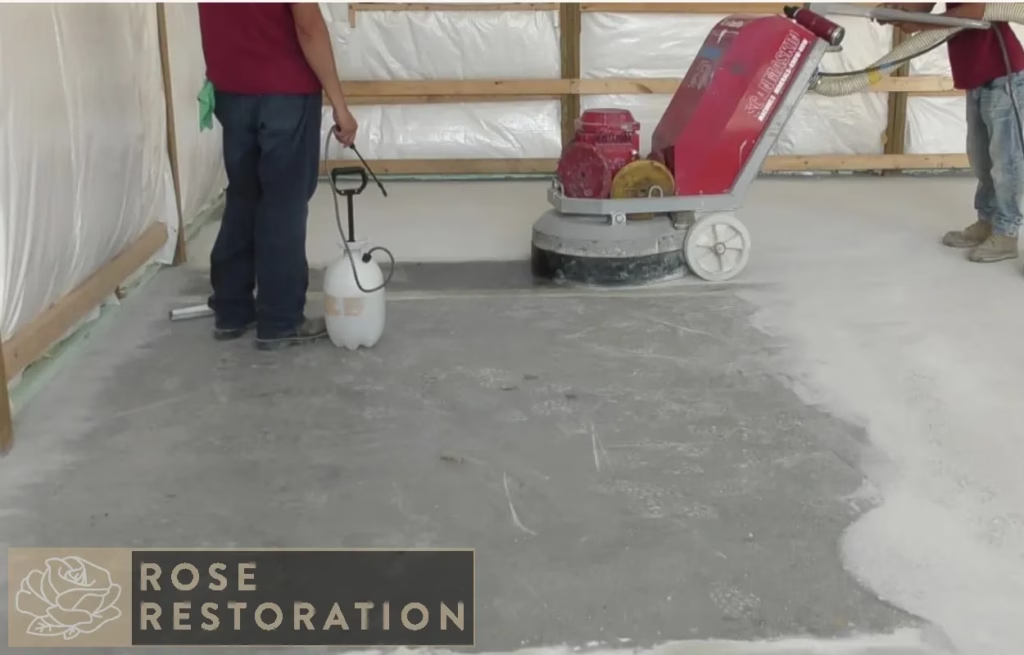
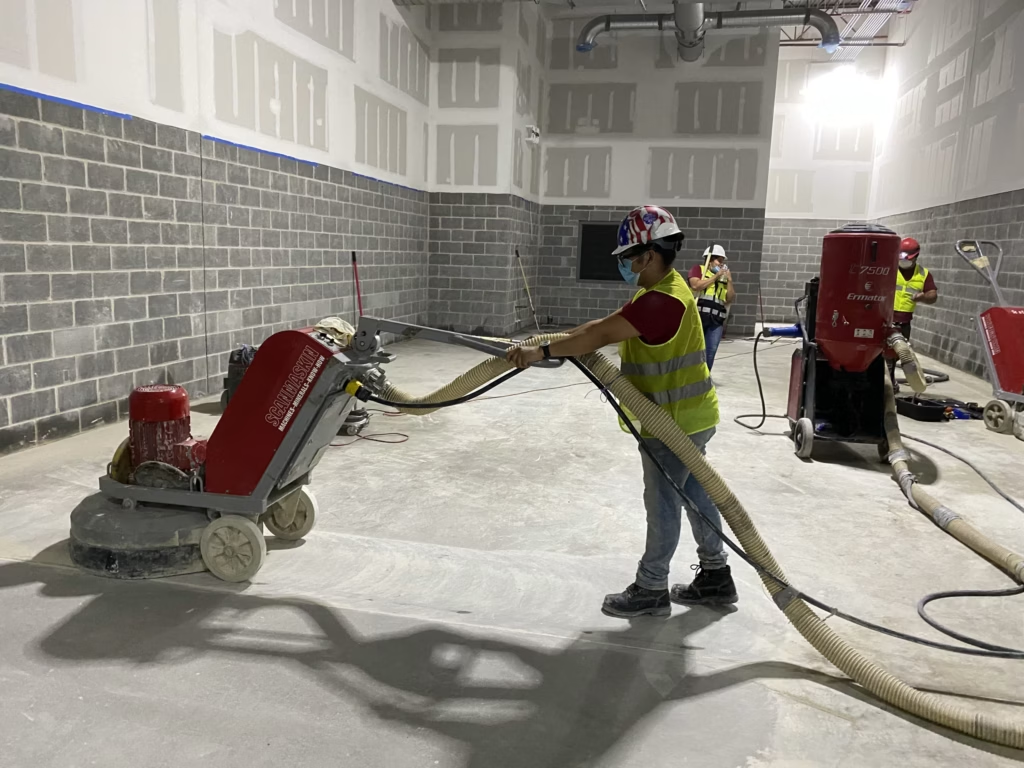
Concrete polishing is a multi-step mechanical process that grinds, hones, densifies, and polishes a concrete slab using progressively finer diamond abrasives. Each step serves a specific purpose in transforming a raw or worn slab into a finished floor. Here is how the process works:
Surface Preparation and Coarse Grinding
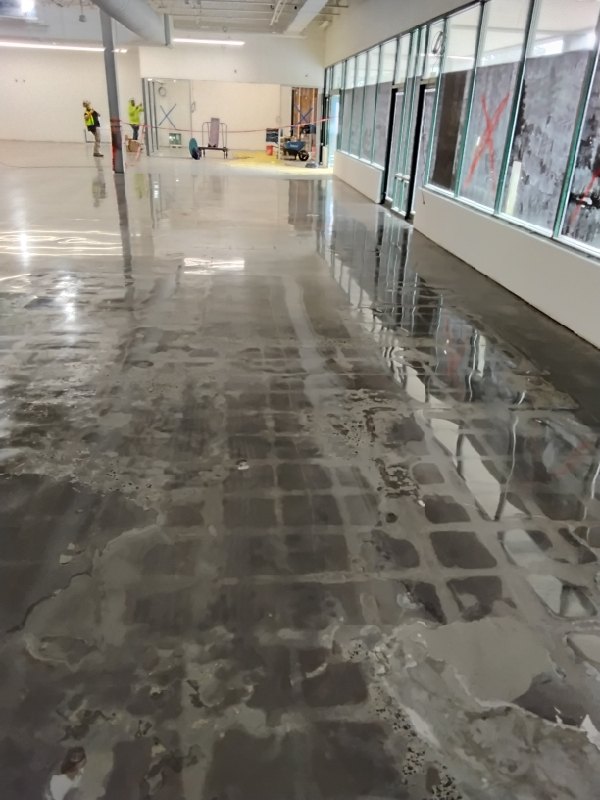
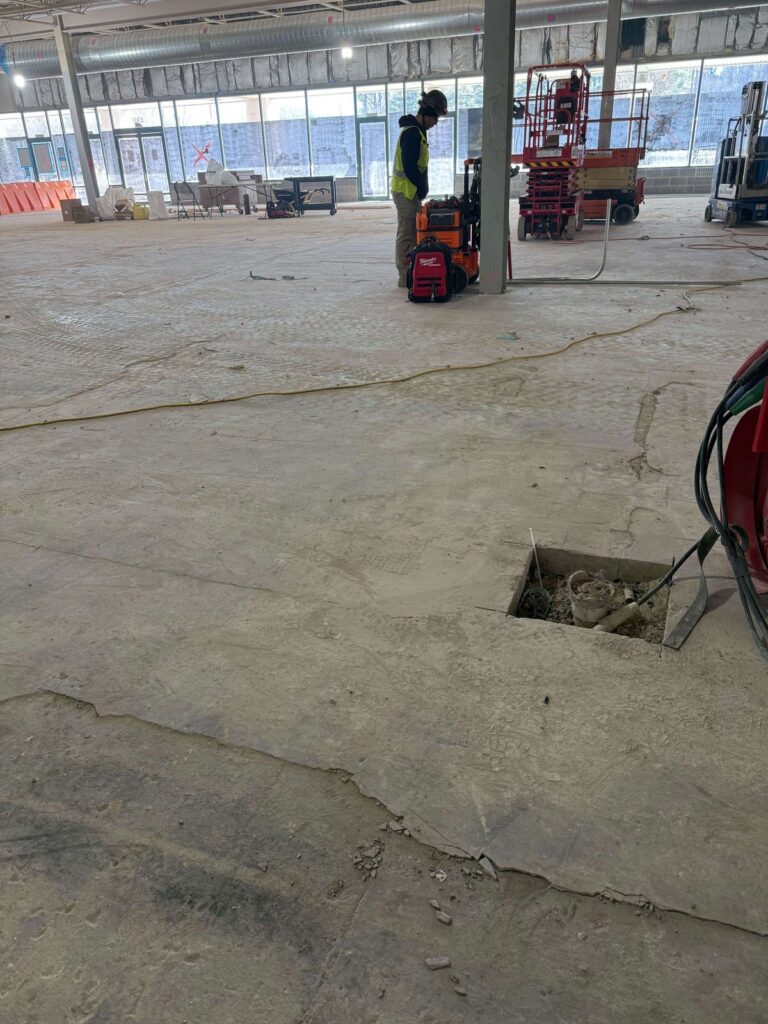
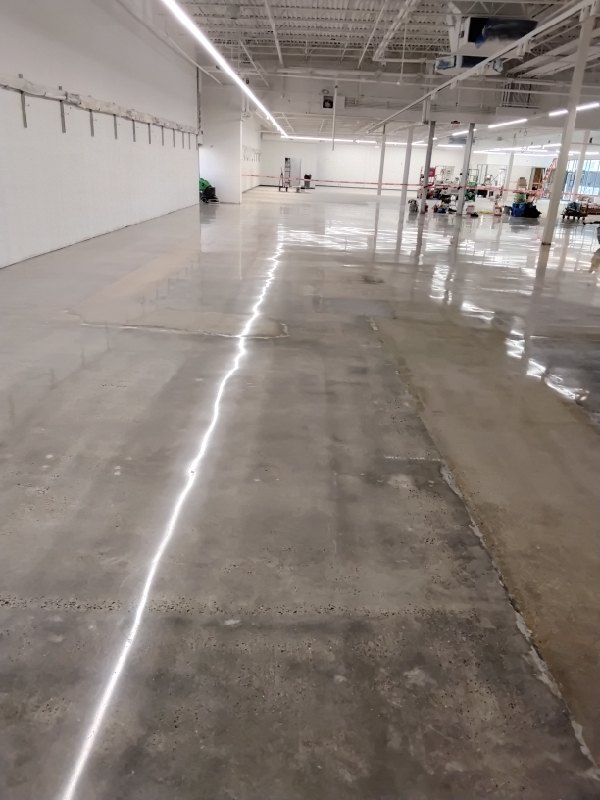
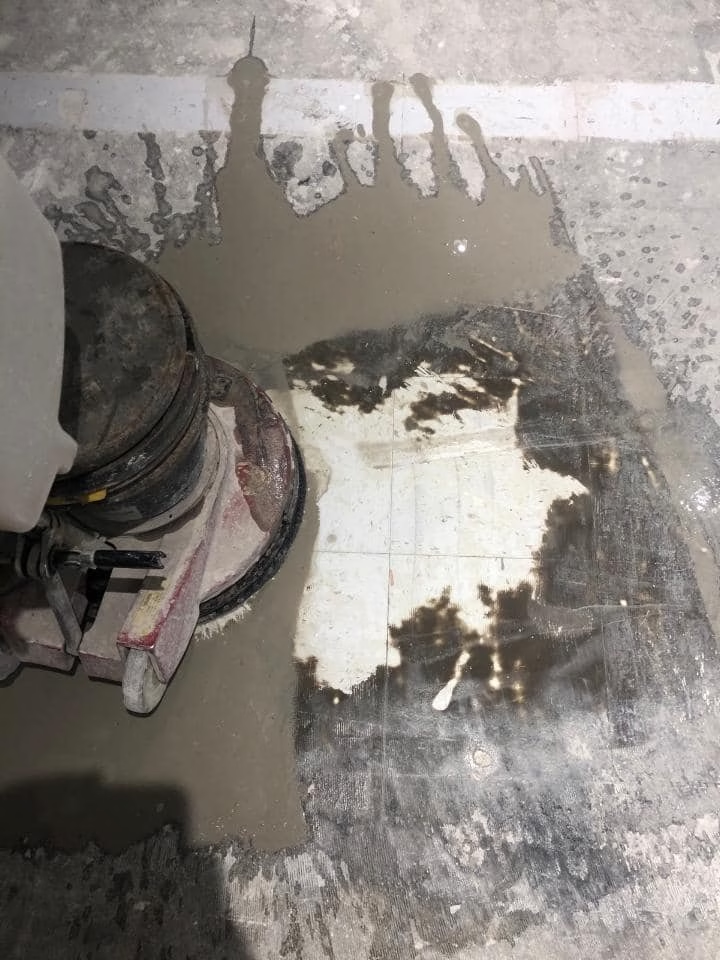
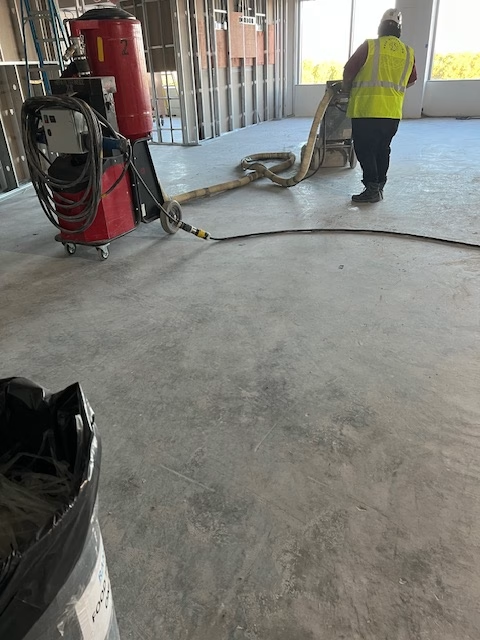
The process begins with an assessment of the existing slab condition. Coatings, adhesives, paints, or other materials on the surface must be removed before polishing can begin. Our technicians use coarse diamond tooling to cut through these materials and begin flattening the slab.
During coarse grinding, imperfections are also addressed — lippage between sections, surface irregularities, and minor damage are ground smooth to create a flat, uniform plane. The aggressiveness of this initial step depends on the slab’s condition and the desired aggregate exposure level.
Aggregate Exposure Levels
One of the most significant design decisions in concrete polishing is how much of the aggregate (the stones and sand within the concrete mix) is exposed. There are generally three levels:
- Cream or salt-and-pepper finish: Minimal grinding that leaves the surface paste largely intact, revealing only the fine sand particles within the mix. This produces a subtle, relatively uniform appearance.
- Medium aggregate exposure: Moderate grinding that cuts through the surface paste to reveal small and medium stones within the mix. This creates a more dynamic, variegated appearance with visible aggregate patterns.
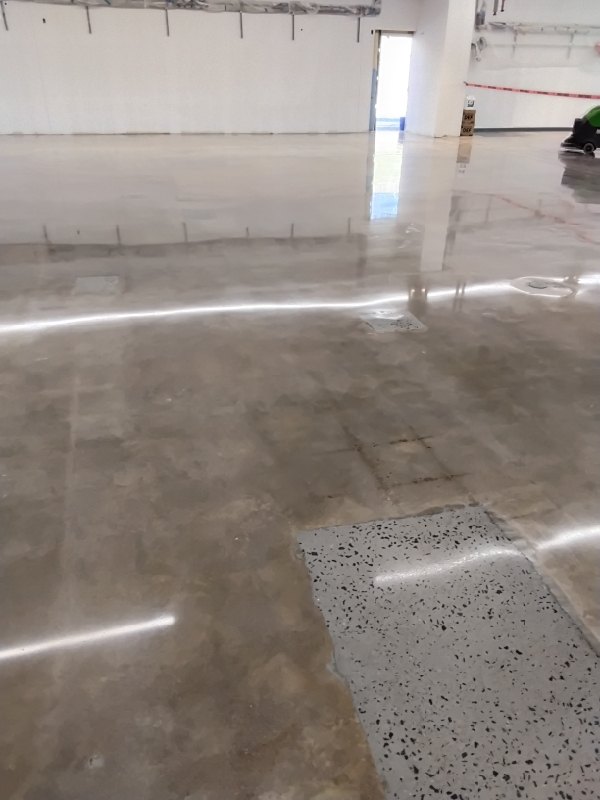
- Full aggregate exposure: Deep grinding that reveals the largest stones in the mix. This produces the most dramatic, terrazzo-like appearance with bold aggregate visibility. It requires sufficient slab depth and consistent aggregate distribution.
The right exposure level depends on the design intent, the concrete mix used, and the condition of the slab. Our team helps clients understand their options and make informed decisions before work begins.
Densification
After the initial grinding steps, a chemical densifier (typically a lithium silicate solution) is applied to the concrete surface. The densifier penetrates the concrete and reacts with the free calcium hydroxide in the slab, forming calcium silicate hydrate — a hard, dense compound that fills the pores of the concrete from within.
Densification serves several important purposes:
- Increases surface hardness, making the floor more resistant to abrasion and wear
- Reduces porosity, making the surface less susceptible to staining
- Improves the concrete’s ability to take and hold a polish
- Reduces dusting — the tendency of untreated concrete to generate fine powder from surface abrasion
Densification is not optional in a quality polished concrete system. It is an integral step that directly affects the floor’s performance and longevity.
Honing and Polishing
Following densification, the floor progresses through a series of increasingly fine diamond steps. These steps transition from resin-bonded diamonds that continue to refine the surface profile to finer grits that develop clarity and reflectivity. Each step builds on the previous one — skipping steps or using improper tooling results in visible scratch patterns and inconsistent sheen.
Gloss Levels
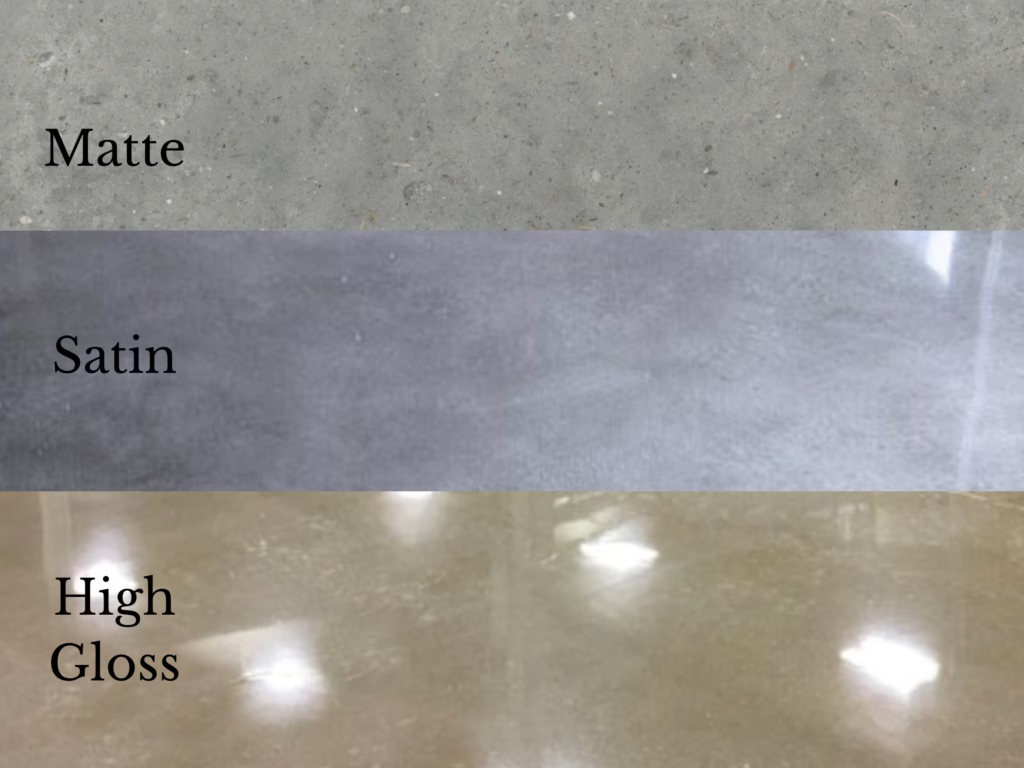
The final appearance of a polished concrete floor is defined by its gloss level, which is measured in units of reflected light. The common categories are:
- Low sheen (matte): A subtle, understated finish that reduces reflectivity. Popular in industrial, retail, and minimalist design applications.
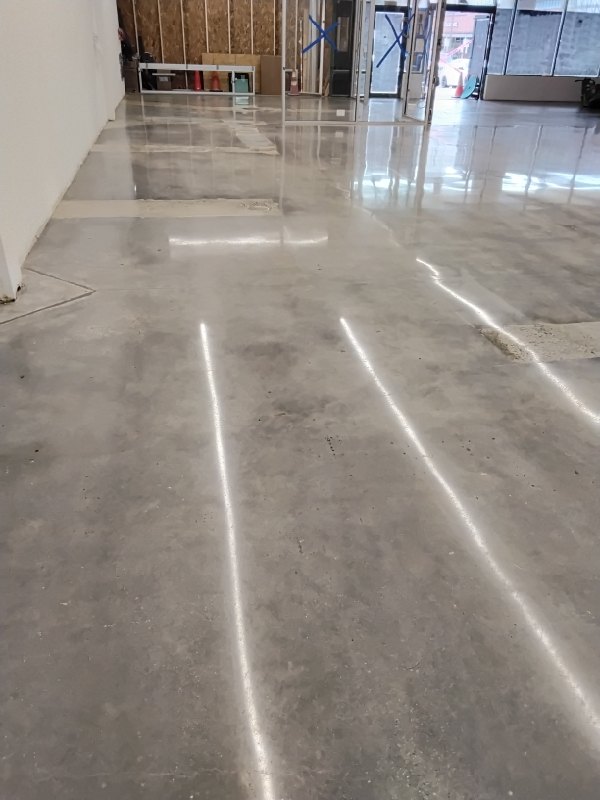
- Medium sheen (satin): A balanced finish that provides some reflectivity without a mirror-like appearance. The most common choice for commercial applications.
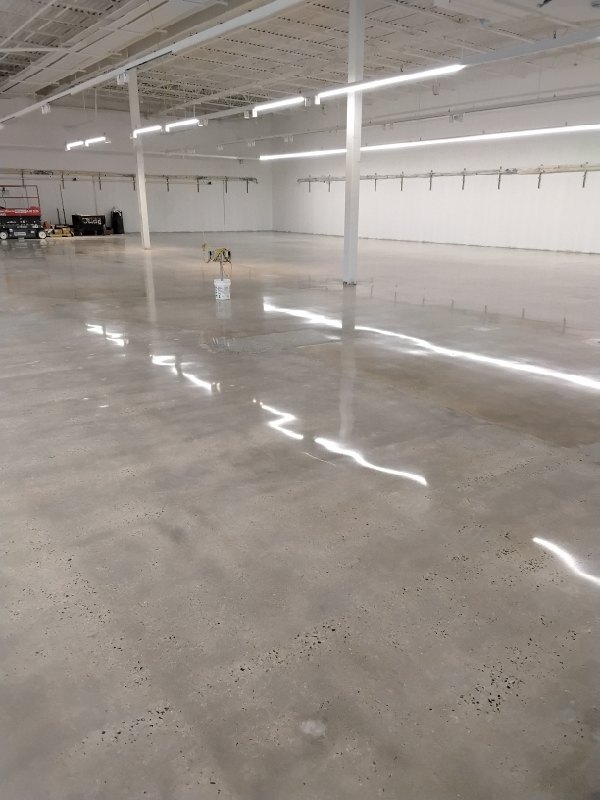
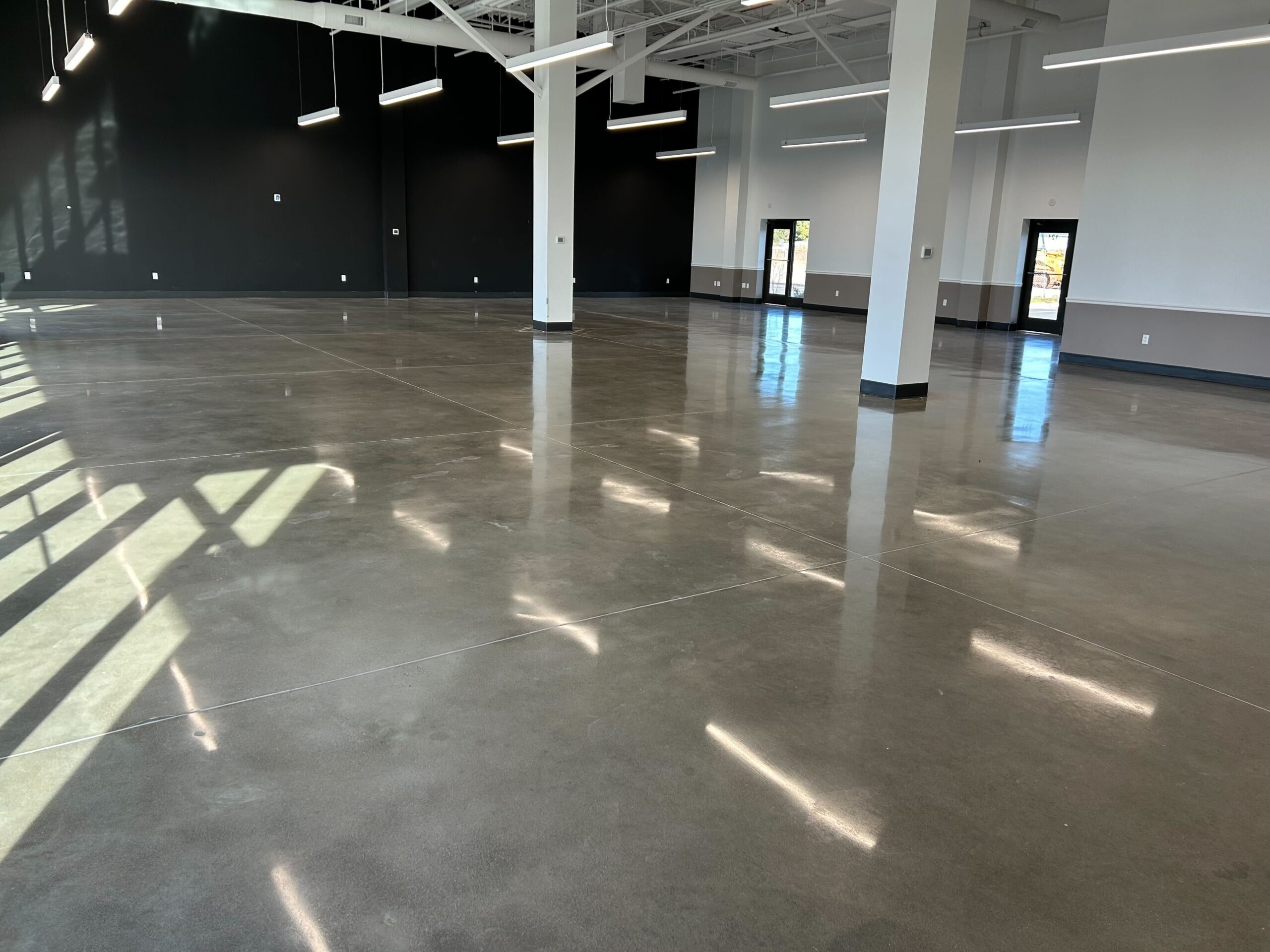
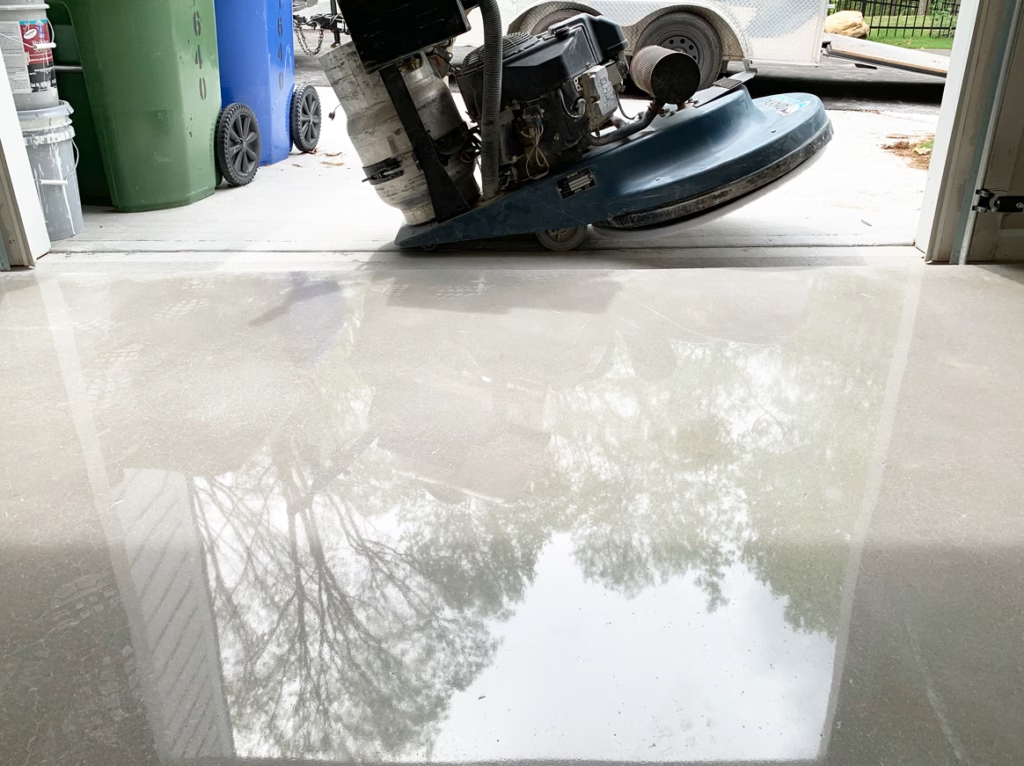
- High sheen (gloss): A highly reflective, mirror-like finish that maximizes light reflection and visual impact. Often chosen for showrooms, lobbies, and high-end retail.
The gloss level is controlled by how many polishing steps are completed and the fineness of the final diamond grit. Higher gloss levels require more steps and more time, which affects project cost and timeline. Our team will recommend a gloss level based on your aesthetic goals, traffic expectations, and maintenance capacity.
Benefits of Polished Concrete
Polished concrete has earned its growing popularity through a combination of practical and aesthetic advantages:
- Durability: A properly polished and densified concrete floor is extremely hard-wearing. It resists abrasion, impact, and heavy traffic far better than most conventional flooring materials.
- Low maintenance: Polished concrete requires only regular dust mopping and periodic damp mopping to maintain its appearance. There are no waxes to strip and reapply, no coatings to refresh, and no grout lines to clean.
- Sustainability: Polishing uses the existing concrete slab — no additional materials are installed on top. This eliminates the waste, adhesives, and manufacturing impact associated with applied flooring products.
- Light reflectivity: Polished concrete floors reflect ambient and artificial light, reducing the need for additional lighting fixtures and lowering energy costs. This benefit is particularly significant in large commercial spaces.
- Allergen reduction: Unlike carpet, polished concrete harbors no allergens, dust mites, or mold. It is an excellent choice for environments where air quality is a priority.
- Longevity: With proper maintenance, a polished concrete floor can perform for decades without requiring replacement or significant intervention.
Commercial Applications
Polished concrete is widely used in commercial environments where durability, appearance, and low maintenance costs intersect. Common applications include:
- Retail stores and showrooms
- Office lobbies and common areas
- Warehouses and distribution centers
- Restaurants and food service facilities
- Educational institutions
- Healthcare facilities
- Government buildings
- Automotive dealerships
For businesses, the lifecycle cost advantage of polished concrete is compelling. The elimination of recurring strip-and-wax cycles, coating reapplications, and premature flooring replacement translates to significant long-term savings. Learn more about our concrete contractor services for commercial projects.
Polished Concrete vs. Coatings and Overlays
It is important to distinguish true mechanically polished concrete from coated or overlaid concrete surfaces. The differences are significant:
- Mechanically polished concrete achieves its sheen through physical refinement of the concrete itself. The shine is in the concrete, not on it. There is no coating to peel, delaminate, or wear through. The surface can be re-polished when it eventually dulls.
- Epoxy and urethane coatings are applied films that sit on top of the concrete. They can provide a glossy appearance initially, but they are subject to peeling, yellowing, scratching, and wear-through. When a coating fails, it must be removed and reapplied — a costly and disruptive process.
- Concrete overlays are thin cementitious or polymer layers applied over existing concrete. They offer aesthetic flexibility but add a layer that can delaminate from the substrate and has a limited lifespan compared to the underlying slab.
For most applications where durability and long-term value are priorities, mechanically polished concrete is the superior choice.
Maintenance of Polished Concrete
One of the most attractive features of polished concrete is its low maintenance requirements. A sound maintenance program includes:
- Daily dust mopping to remove abrasive particles that can dull the surface over time
- Periodic damp mopping with a neutral pH cleaner designed for polished concrete
- Prompt spill cleanup to prevent staining, particularly from acidic or deeply colored substances
- Periodic re-application of a concrete guard or enhancer to maintain stain resistance and surface protection
- Professional burnishing at extended intervals to refresh the sheen in high-traffic areas
Rose Restoration offers maintenance programs for polished concrete floors to help commercial clients protect their investment and maintain consistent appearance over time.
Frequently Asked Questions About Concrete Polishing
Can any concrete floor be polished?
Most concrete floors can be polished, but the results depend on the condition and composition of the slab. Factors like concrete mix, age, existing damage, moisture content, and previous treatments all affect the outcome. Our team evaluates each slab before providing recommendations and setting expectations.
Is polished concrete slippery?
Polished concrete provides slip resistance comparable to other common hard-surface flooring materials. When dry, polished concrete offers good traction. When wet, like any smooth hard surface, it becomes more slippery. In areas where wet conditions are common, we can adjust the finish level or recommend supplemental treatments to enhance traction.
How long does a concrete polishing project take?
Project timelines vary based on floor size, condition, desired finish level, and the extent of preparation work required. A small commercial space might be completed in a few days, while a large facility could take several weeks. We provide detailed timelines during the project planning phase.
Does polished concrete crack?
Concrete can crack due to settling, shrinkage, or structural movement — this is a property of concrete itself, not a result of the polishing process. Existing cracks can be repaired with color-matched epoxy fills as part of the polishing process. Properly installed control joints help manage future cracking.
Can existing coatings or overlays be removed to polish the concrete underneath?
In many cases, yes. Existing coatings, epoxies, and thin overlays can often be removed during the grinding phase, allowing the underlying concrete to be polished. The viability depends on the concrete’s condition beneath the coating. We assess this during our initial evaluation.
Transform your concrete floors with professional polishing. Call Rose Restoration at 703-327-7676 or contact us online to discuss your project. Serving Virginia, Maryland, and Washington, D.C. since 1978.

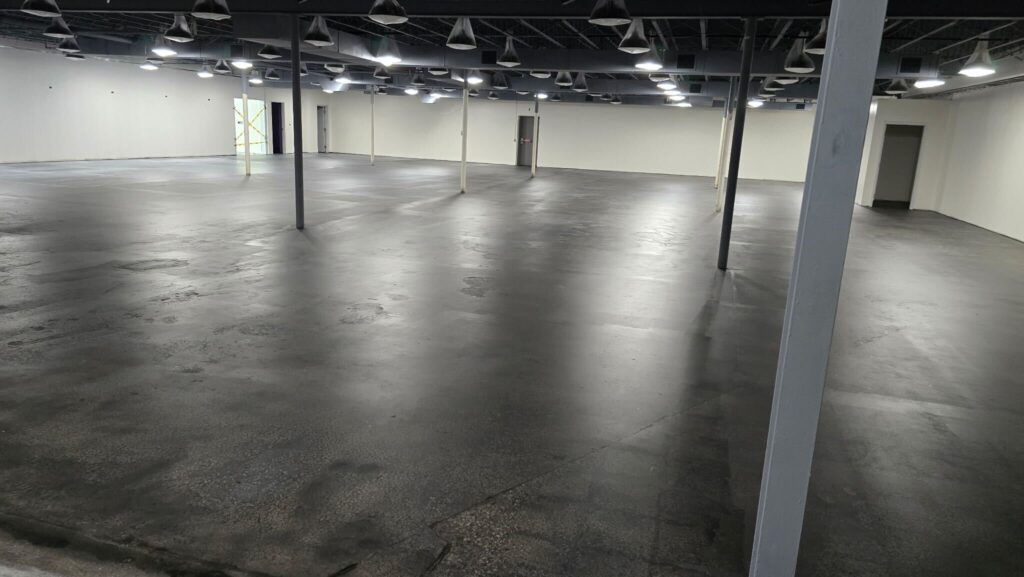
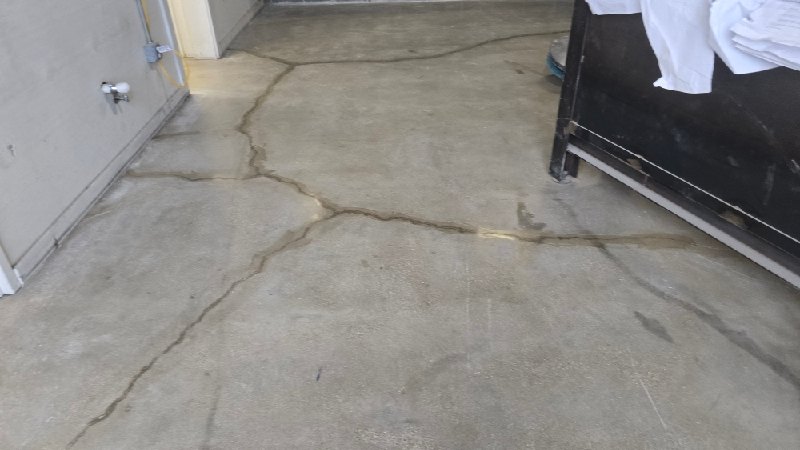 Before
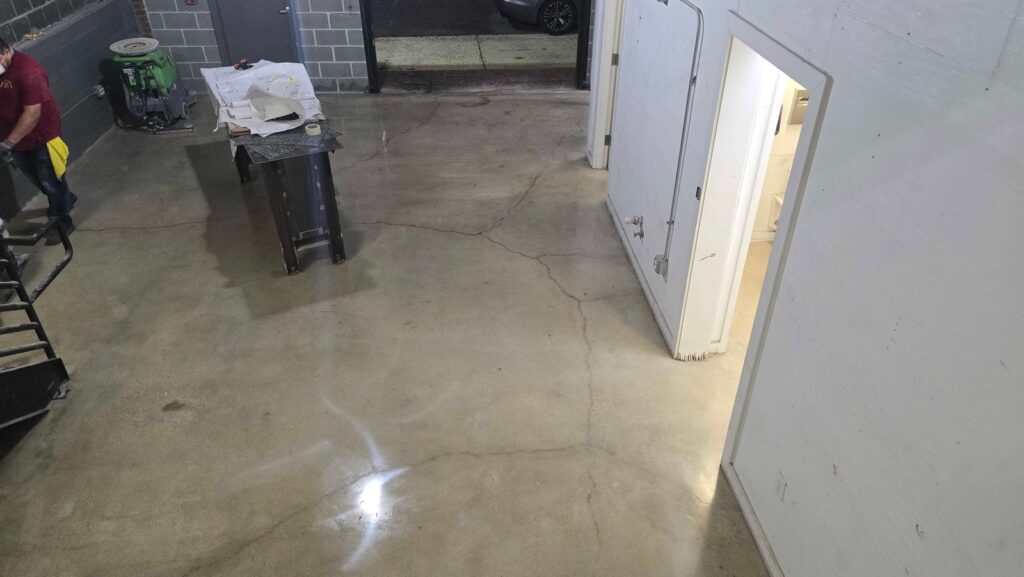 After
After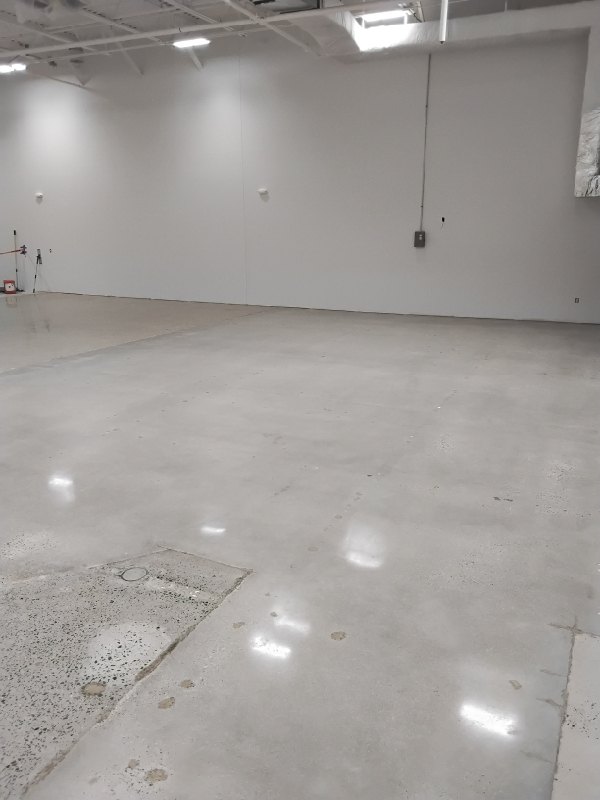 Before
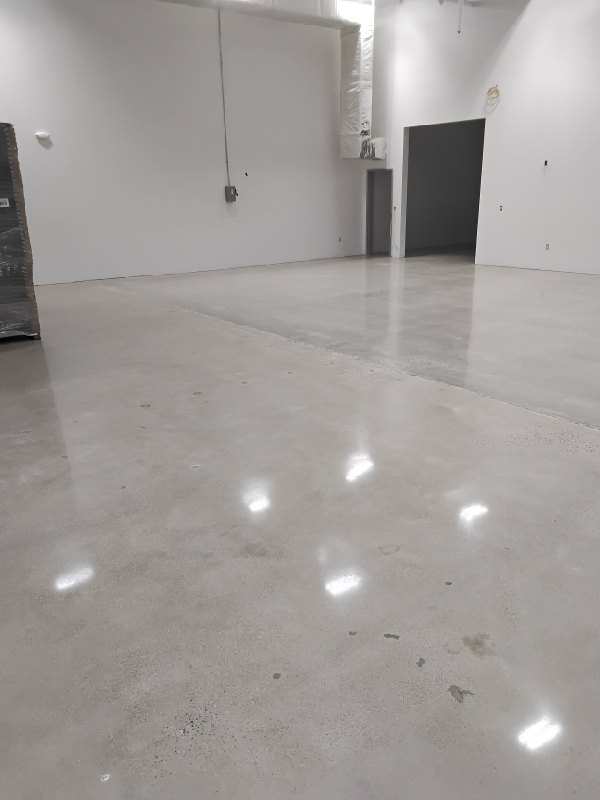 After
After