
Smithsonian Institution — Stone & Terrazzo Restoration
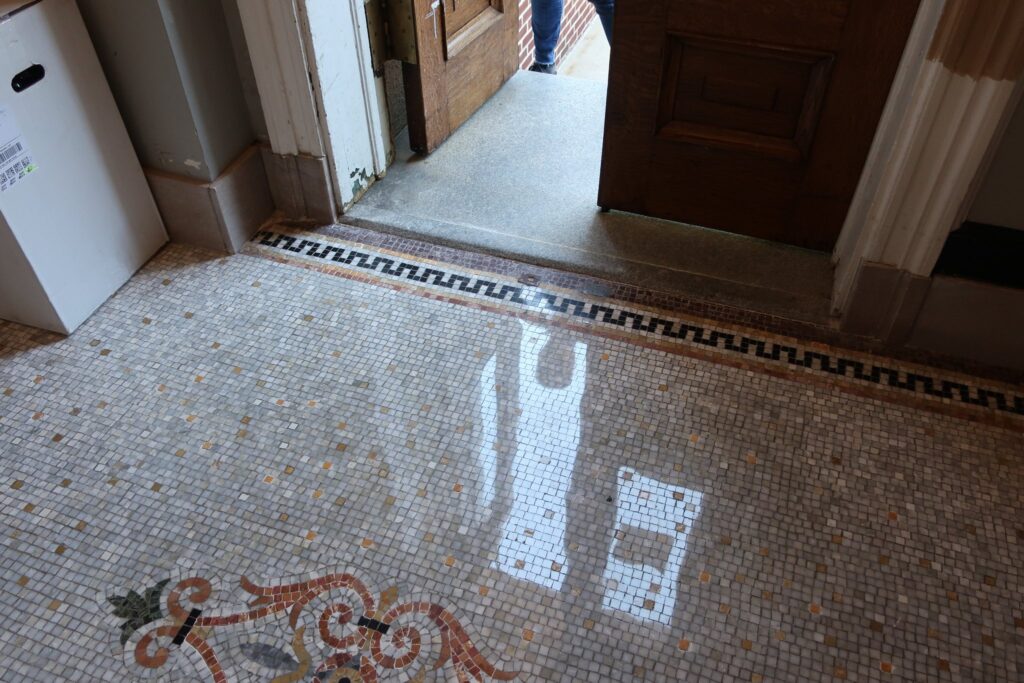
Rose Restoration has delivered historic stone and surface preservation at the Smithsonian Institution in Washington DC — National Mall museums, historic marble, cementitious terrazzo floors, and architectural metal. The Smithsonian complex includes multiple landmark 19th- and 20th-century buildings requiring preservation-appropriate methods on every project.
Related Rose Restoration museum and historic projects
Rose Restoration has delivered Smithsonian Institution restoration and related services for:
- National Gallery of Art — Related museum
- Marine Barracks Washington — Related historic
- Historical restoration — Landmark methods
- Terrazzo restoration — Historic terrazzo
- Facade cleaning — Historic masonry
- All case studies — Project portfolio
Smithsonian Institution — Quick Answers
What did Rose Restoration do at the Smithsonian Institution?
Rose Restoration has delivered historic stone and surface preservation across Smithsonian Institution museums on the National Mall — historic marble floors and walls, cementitious terrazzo restoration, architectural metal refinishing (bronze hardware, decorative metal). All work coordinated with Smithsonian preservation standards and public-access schedules.
How does Rose restore historic Smithsonian terrazzo without damaging it?
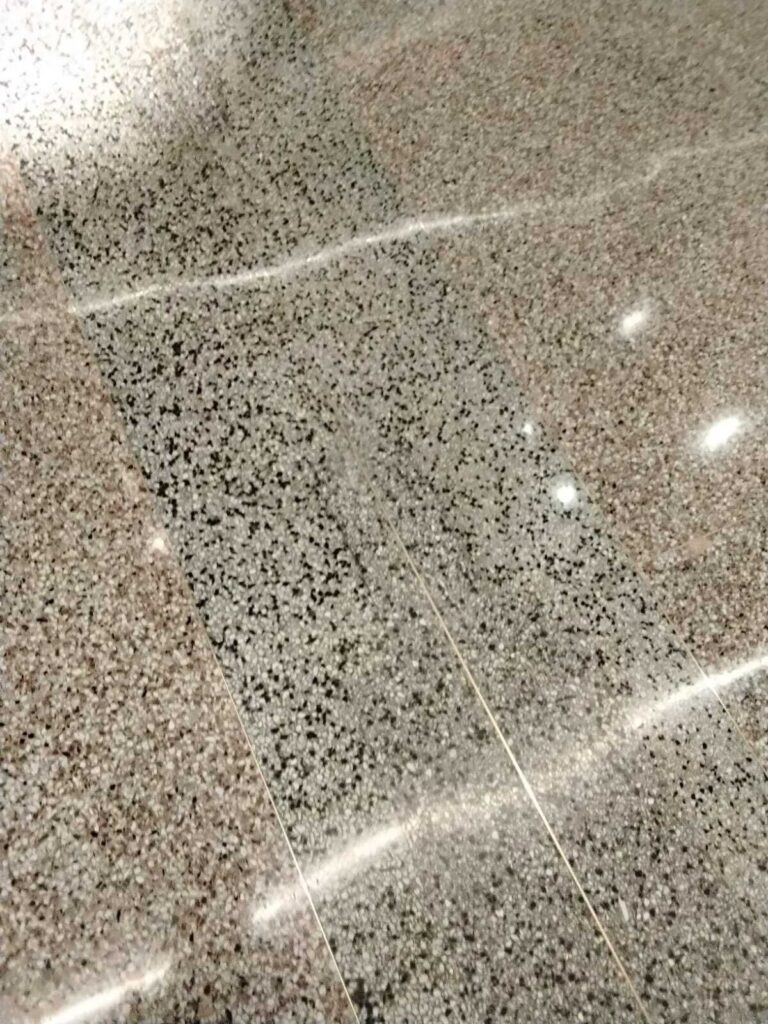
Historic cementitious terrazzo (common in pre-1970s institutional buildings) requires different tooling, chemistry, and techniques than modern epoxy terrazzo. Rose uses pH-neutral chemistry only, matched diamond pads, careful crack repair with color-matched resin, and preservation-appropriate densifiers and sealers. Test patches are performed before full-scale work on every historic terrazzo project.
Does Rose Restoration work on other Washington DC museums?
Yes. Rose Restoration works on historic and contemporary museums across the DC metro, including the Smithsonian Institution, the National Gallery of Art (East and West Buildings), and other Smithsonian-affiliated properties. Rose is familiar with museum-specific requirements: public-access scheduling, exhibit-adjacency care, HVAC and environmental controls, and coordination with curators and preservation teams.
The Smithsonian Institution — the world’s largest museum, education, and research complex — operates 21 museums and the National Zoo, most of them concentrated along the National Mall in Washington DC. Rose Restoration has supported the Smithsonian’s surface restoration needs across its multi-building DC complex, working across marble, terrazzo, stone, and metal finishes that define the Smithsonian visitor experience.
Project type: Museum and cultural institution restoration | Material mix: Marble, terrazzo, stone, metal | Location: Washington DC (National Mall) | Scope: Multi-building preservation and restoration
Why Museum Work Is Different
Restoring surfaces in an active museum is categorically different from commercial or institutional work:
- Conservation-grade standards. The surfaces themselves often have historic and architectural value. Modern aggressive chemistries would damage original materials. Every product, every technique, must be reviewed against conservation standards.
- Artifact protection. Work happens near — sometimes immediately adjacent to — priceless artifacts. Dust containment, vibration management, and humidity control are all part of the scope.
- Visitor operations. Museums don’t close for restoration. Public hours are continuous; our work happens overnight and in carefully phased sections.
- Architectural preservation. Smithsonian buildings include listed structures and buildings of architectural significance. Preservation-grade methodology is standard, not optional.
- Institutional coordination. Working with facilities management, conservation staff, security, and sometimes curatorial staff — all of whom have input on how work is performed.
Materials We Work On in Museum Environments
Marble
Most of the Smithsonian’s iconic museum spaces feature marble — lobbies, rotundas, staircases, and gallery floor accents. Original installations often date back to the early-to-mid 20th century, with specific marble selections that can’t be easily matched today. Restoration (not replacement) is the only path.
Our marble process in museum environments uses conservation-grade chemistry, wet-grinding for dust control, and HEPA extraction. Honing, polishing, and sealing happen overnight so galleries are ready for public visitors the next morning.
Terrazzo
The Smithsonian has extensive mid-century terrazzo across multiple buildings. Original installations from the 1930s–1970s are both architecturally significant and structurally sound — restoration keeps them in service for another generation.
Standard process: grind, hone, polish, seal. Phased overnight scheduling. Humidity-controlled curing for sealers applied near sensitive artifact spaces.
Metal
Bronze and brass door frames, elevator surrounds, display case hardware, and decorative metalwork throughout the Smithsonian. We clean, remove scratches, oxidize to match existing patina, and lacquer to protect. Period-appropriate finish work — the metal shouldn’t look “new” on a historic building; it should look appropriately aged.
Natural Stone
Granite plinths, limestone details, sandstone elements, and other natural stone throughout the museum system. Each material has its own cleaning chemistry and restoration approach.
Our Conservation-Grade Approach
- Pre-work documentation. Before-condition photography, material analysis, and scope documentation for every project.
- Chemistry review. All cleaning products and abrasives reviewed against conservation standards. pH-neutral chemistry only on historic surfaces.
- Vibration-controlled techniques. Near sensitive artifacts or display cases, we modify equipment selection and speeds to reduce vibration transmission.
- Dust containment. HEPA extraction on all grinding equipment. Physical containment barriers to isolate work from occupied gallery spaces.
- Humidity management. Coordinating sealer application timing with building HVAC to avoid excess moisture near sensitive spaces.
- In-progress documentation. Photography and notes during work for conservation file records.
- Post-work verification. Final walkthrough with facilities and conservation staff before demobilizing.
Typical Museum Restoration Scope
- Initial assessment with facilities and conservation staff
- Written scope including preservation methodology, phasing plan, and access schedule
- Mock-up on a non-public or test surface if required
- Containment setup — physical barriers, dust extraction, floor protection
- Phase-by-phase execution — each section complete and cleared for public access before moving to next
- Daily walkthrough with facilities to confirm work quality
- Final sealing and cleanup with gallery-ready finish
- Post-project documentation for conservation records
Why Rose Restoration
- In-house crew of 35+ technicians. Same Rose crew on every visit. Continuity matters on multi-year institutional programs.
- 48 years of museum and institutional work. Our team has worked in most major DC cultural institutions at some point.
- Multi-material capability. Marble, terrazzo, stone, metal, concrete, tile, grout — all under one coordinated team.
- Preservation-grade methodology. We work on listed historic buildings routinely. Conservation standards are built into our default process.
- Discretion. No photography in restricted or sensitive spaces. No social media promotion of museum work.
- Overnight and off-hours scheduling. Zero public-visitor impact during work.
Related Museum & Cultural Institution Work
- National Gallery of Art
- IMF Headquarters
- Virginia State Capitol
- Marine Barracks Washington
- Historic Building Restoration
- Government Building Restoration
- Commercial Restoration Services
Work With Rose Restoration
Free on-site assessment for museum, cultural institution, historic, and government properties throughout the DC metro area.
Call: (703) 327-7676 | Online: request a free assessment
historic building restoration · marble restoration · stone restoration in Washington DC