Surface restoration in active healthcare environments is fundamentally different from commercial work. Infection control is non-negotiable. Dust containment is a patient-safety issue, not a convenience. ICRA (Infection Control Risk Assessment) protocols govern where, when, and how construction activities – including restoration work – take place in hospital and outpatient settings. Patient and staff safety require that work zones be isolated from occupied areas, that noise and vibration be minimized near patient rooms, and that air quality be maintained throughout. Phased work in occupied facilities demands careful coordination with facility managers, infection control teams, and department heads to maintain access at all times.
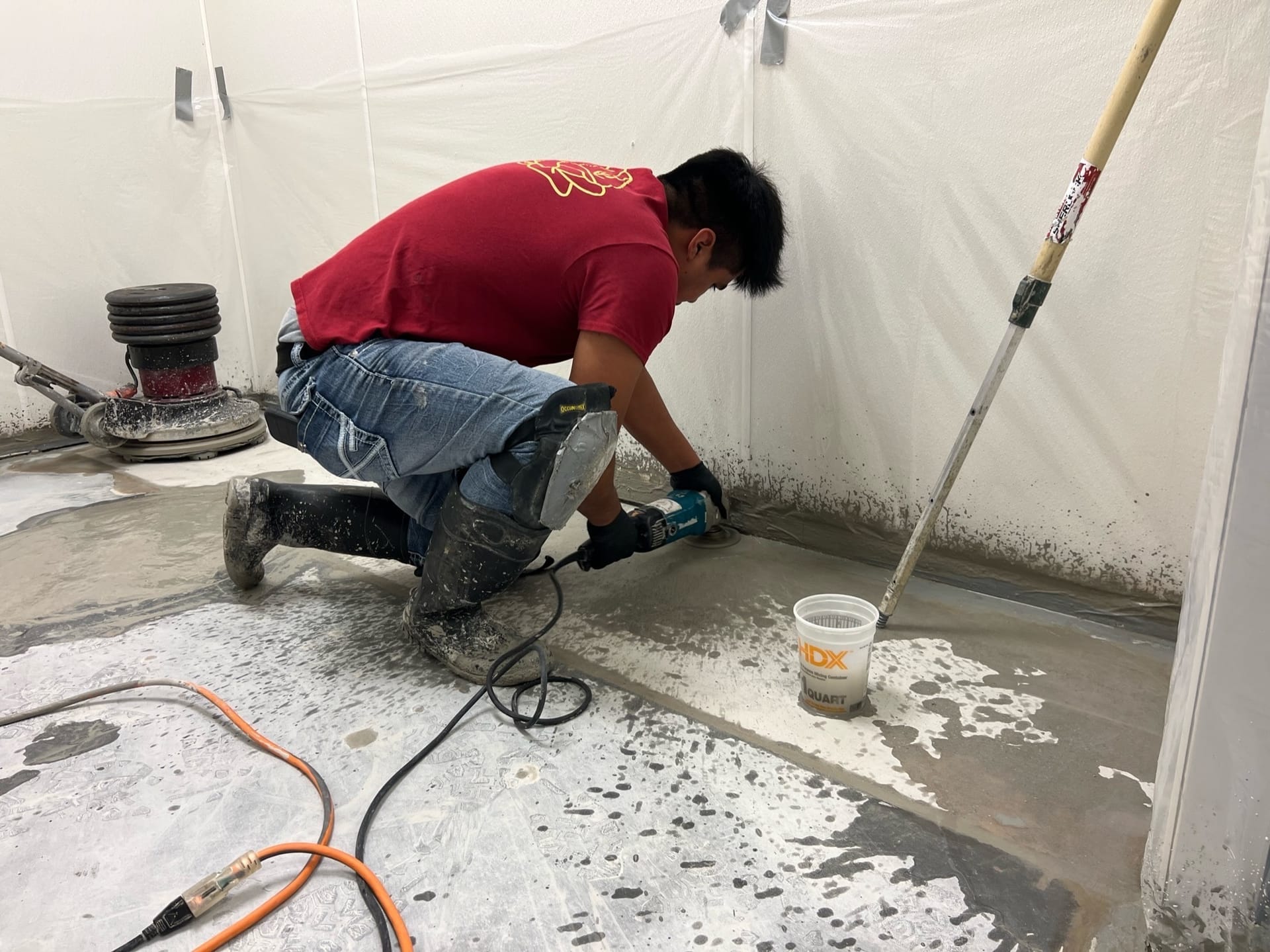
Rose Restoration crews operate with HEPA-filtered equipment on all grinding, polishing, and cutting work. When project scope or facility requirements call for it, we establish negative air pressure containment – isolating the work zone from occupied corridors and patient areas. Barrier construction between work zones and occupied areas follows ICRA Class requirements. Cleanup protocols are completed between each shift, and we coordinate directly with infection control teams on documentation requirements and inspection schedules.
Healthcare facilities rarely have the option to shut down a wing for floor work. Rose Restoration plans and executes projects wing by wing, floor by floor, using off-hours and weekend shifts to minimize impact on active departments. We maintain continuous access for patients and staff throughout the project. Phasing plans are submitted to facility management in advance and updated as the project progresses.
Senior living and assisted living communities present a unique combination of restoration challenges. These facilities operate around the clock with a resident population that is particularly vulnerable to falls, respiratory irritants, and disruption to daily routines. Common areas such as main lobbies, dining rooms, activity rooms, and chapel spaces often feature terrazzo, marble, or polished stone surfaces that have dulled over years of heavy use and aggressive cleaning with institutional chemicals. Corridors connecting resident wings to dining and activity areas see constant foot traffic and wheelchair use, creating wear patterns that compromise both appearance and slip resistance.
Rose Restoration works with assisted living facility managers to restore these surfaces with minimal disruption to residents. We schedule work in phased sections, maintaining clear and safe walking paths at all times. All work is performed with HEPA-filtered dust collection to protect indoor air quality for residents with respiratory sensitivities. Slip-resistant finishes are specified for every surface – this is not optional in senior living. We apply penetrating sealers and finish systems that meet ADA slip-resistance requirements while maintaining an attractive appearance. In memory care units, where routine and environment consistency are critical for resident well-being, we coordinate closely with care staff to schedule work during periods of lowest resident activity and ensure the environment is fully restored before residents return to the area.
Dining rooms in senior living facilities deserve particular attention. These are high-visibility spaces where residents, families, and prospective residents form impressions of the community. Terrazzo and stone dining room floors that are polished, clean, and well-maintained communicate quality of care. We restore dining room surfaces to a level that reflects the standard the facility wants to project, and we apply finishes compatible with the daily mopping and sanitizing schedules that food-service areas require.
Outpatient clinics and medical office buildings may not carry the same ICRA classification requirements as acute-care hospitals, but they still demand professional-grade surface restoration. Lobby and reception areas in medical office buildings often feature marble, granite, or terrazzo floors that see hundreds of patients per day. These surfaces develop wear patterns at entrances, traffic lanes, and check-in areas that make the facility look dated and poorly maintained – a perception that directly impacts patient confidence. Rose Restoration grinds out wear patterns, re-polishes to a uniform finish, and applies penetrating sealers that resist staining from tracked-in dirt, salt, and de-icing chemicals.
Waiting rooms and patient corridors in outpatient facilities benefit from grout color sealing and tile restoration. Grout lines in high-traffic waiting areas discolor quickly from foot traffic, spills, and cleaning chemical residue. Color sealing restores a uniform appearance and creates a non-porous surface that resists future staining, making daily cleaning faster and more effective. For exam rooms and procedure areas, we work with facility managers to schedule restoration after hours or on weekends to avoid any disruption to patient appointments and clinical schedules.
Medical office building property managers overseeing multi-tenant facilities can consolidate corridor, lobby, and common-area restoration into a single phased project. We provide building-wide assessments that identify all surfaces requiring attention, develop a prioritized scope of work, and execute the project in phases that minimize tenant disruption. This approach is more cost-effective than addressing individual complaints as they arise and delivers a consistent appearance across the entire property.
Dental practices and specialty clinics – dermatology, ophthalmology, oral surgery, cosmetic medicine – typically occupy smaller footprints than hospitals or large medical office buildings, but the surfaces in these spaces carry outsized importance. Reception desks and lobby areas often feature polished stone, quartz, or marble that serves as the first impression for patients and a direct reflection of the practice’s quality. Scratched, etched, or dull stone at the front desk undermines the premium image these practices work to maintain. Rose Restoration re-hones and polishes reception desk surfaces, stone accent walls, and lobby floors to restore a pristine appearance.
Operatory and treatment room flooring in dental and specialty clinics must be seamless, non-porous, and easy to disinfect. When existing floors have damaged grout, chipped tile, or worn coatings, we restore or recoat these surfaces to eliminate contamination risks and simplify the cleaning protocols that clinical staff perform between patients. For practices undergoing renovation or buildout, we provide polished concrete and sealed surface installations that meet clinical-grade hygiene standards while delivering the aesthetic quality these practices demand. Work in small clinical spaces is typically completed over a weekend to avoid any interruption to patient scheduling.
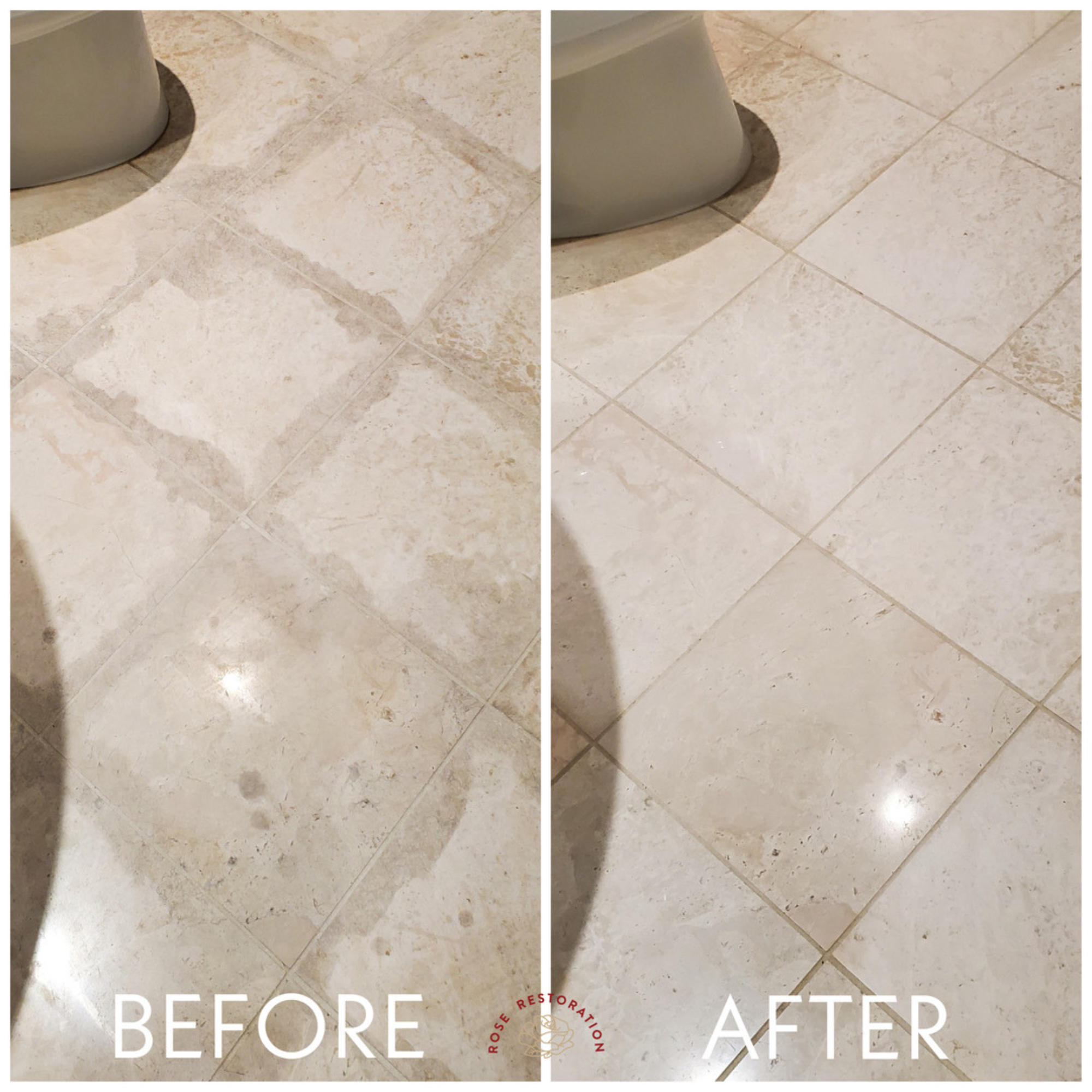
Healthcare facility managers frequently face the decision between restoring existing floor surfaces and replacing them entirely. In most cases, restoration is the superior choice on cost, timeline, sustainability, and operational disruption. A full floor replacement in an active healthcare facility involves demolition, substrate preparation, new material installation, and extended cure times – a process that can take weeks per area and generates significant dust, noise, and waste. Restoration achieves comparable or superior aesthetic results by working with the existing surface: grinding out damage, re-polishing to specification, and applying modern sealers that outperform the original finish.
The cost difference is substantial. Terrazzo restoration typically costs 50 to 70 percent less than terrazzo replacement when factoring in demolition, disposal, new material, and installation labor. For facilities with original terrazzo from the mid-twentieth century, the aggregate and craftsmanship in those floors is often superior to what is available in new terrazzo installations today. Restoring these surfaces preserves their inherent quality while delivering a modern, maintainable finish. The same economics apply to marble, granite, and concrete surfaces – restoration extends the service life of the existing material at a fraction of replacement cost.
From a sustainability perspective, restoration eliminates the waste stream associated with demolition. No material goes to the landfill. No new raw materials are quarried, transported, and fabricated. For healthcare systems reporting on environmental sustainability goals – an increasingly common requirement from boards and regulatory bodies – floor restoration is a measurable, documentable contribution to waste reduction and resource conservation. We provide project documentation that quantifies the waste avoided and the surface life extended, which facility managers can include in sustainability reports and capital planning justifications.
Rose Restoration serves hospitals, medical offices, outpatient facilities, and senior living communities throughout Northern Virginia, Maryland, and Washington DC. Call 703-327-7676 to discuss your project or request a site evaluation.
We operate under ICRA guidelines. All grinding, polishing, and cutting uses HEPA-filtered equipment. When required, we establish negative air pressure containment with barrier construction between work zones and patient areas. Cleanup protocols are completed between each shift, and we provide documentation to infection control teams on request.
All our equipment is fitted with HEPA-filtered dust collection. For higher-risk zones (ICRA Class III-IV), we construct physical barriers and establish negative air pressure to prevent particulate migration into occupied areas. Air quality is monitored before we clear the work zone each shift.
Yes. We phase projects wing by wing, floor by floor, scheduling work during off-hours and weekends to minimize impact on active departments. Barrier construction isolates work zones from patient areas, and noise-generating operations are scheduled away from patient rest periods. We coordinate directly with facility managers and infection control teams throughout the project.
Yes. Terrazzo restoration is one of our core specialties. Many hospitals built before 1980 have original terrazzo corridors and lobbies that can be fully restored to their original condition – no replacement required. Our process removes surface damage, re-grinds the aggregate, polishes, and applies a penetrating sealer compatible with hospital-grade disinfectants.
Rose Restoration serves healthcare facilities throughout Northern Virginia (Fairfax, Arlington, Alexandria, Loudoun, Prince William counties), Maryland (Montgomery, Prince George counties), and Washington DC. Call 703-327-7676 to confirm availability for your facility.
Yes. We regularly restore surfaces in assisted living communities, independent living facilities, and memory care units. Our crews are experienced in working around elderly residents – we maintain safe, clear walking paths at all times, use HEPA-filtered equipment to protect air quality, and schedule work to minimize disruption to resident routines. All finished surfaces meet ADA slip-resistance requirements. We coordinate directly with facility administrators and care staff to ensure resident safety and comfort throughout the project.
Terrazzo installed before 1980 may contain asbestos in the binder or underlying substrate. Before beginning any restoration work, we require that the facility provide an asbestos survey or testing results for the areas to be restored. If asbestos-containing material is identified, we coordinate with licensed abatement contractors to address the asbestos before restoration begins. Our restoration process – surface grinding and polishing – does not proceed until the facility has confirmed the material is either asbestos-free or has been properly abated. We do not perform asbestos abatement, but we work alongside abatement teams regularly and can recommend qualified contractors in the Virginia, Maryland, and DC area.
Yes. We have completed surface restoration projects in hospitals, medical office buildings, outpatient clinics, and senior living facilities throughout the Northern Virginia, Maryland, and Washington DC region. We are happy to provide references from healthcare facility managers and property management teams who can speak to our infection control compliance, dust containment, scheduling reliability, and finished quality. Contact us at 703-327-7676 and we will connect you with references relevant to your facility type and project scope.
Related: Commercial Restoration | Maintenance Programs | Terrazzo Restoration | Grout Services