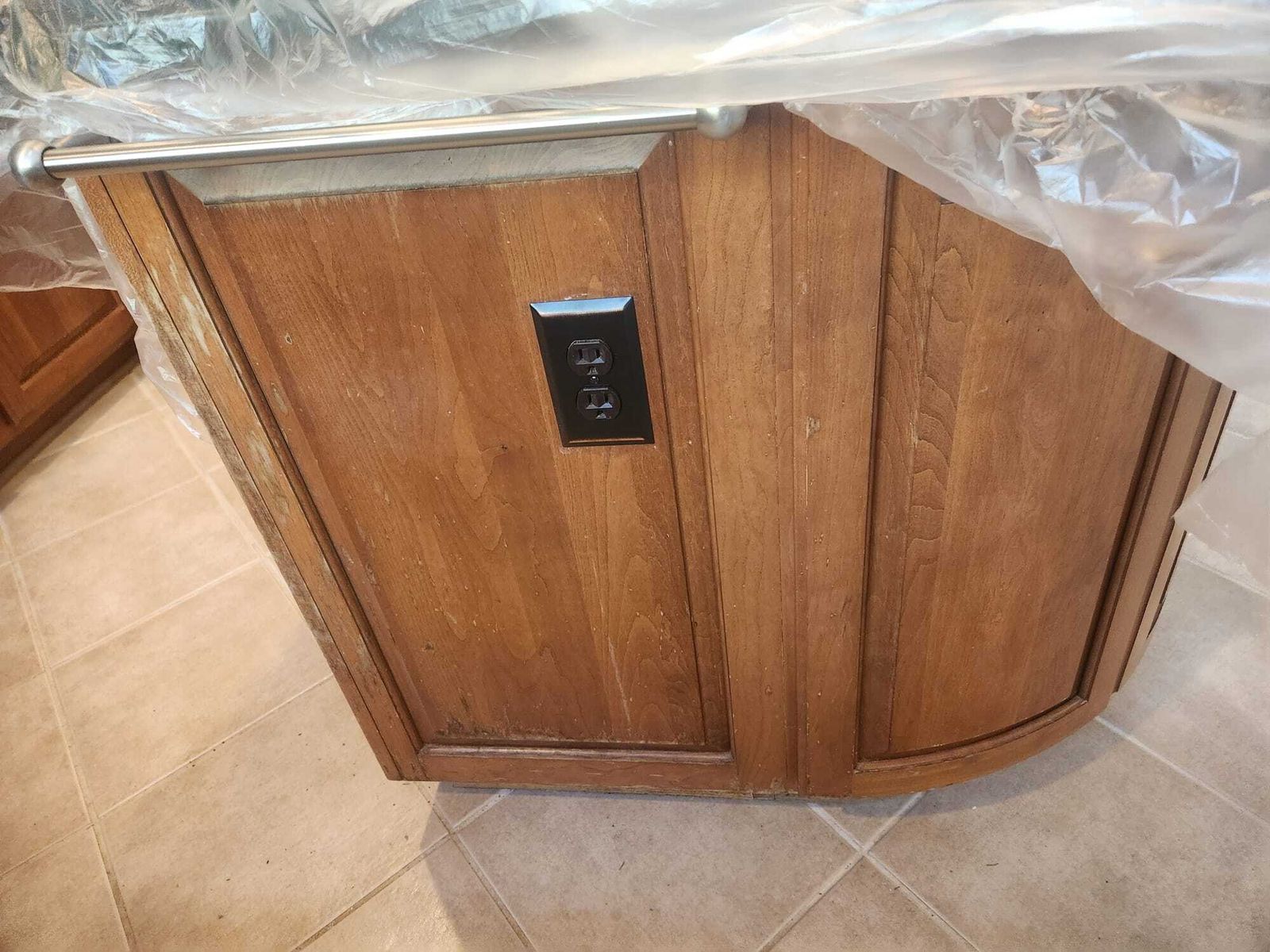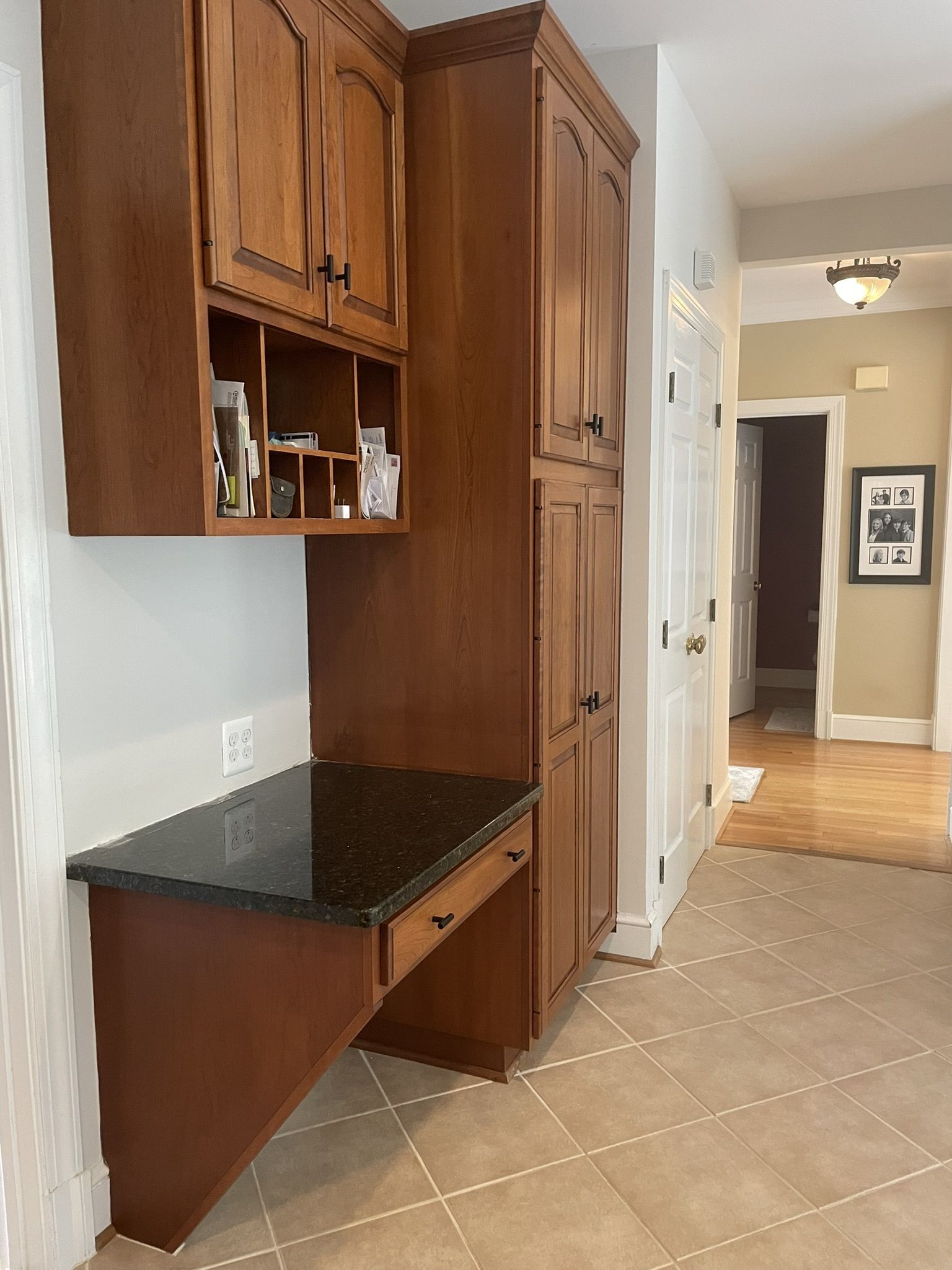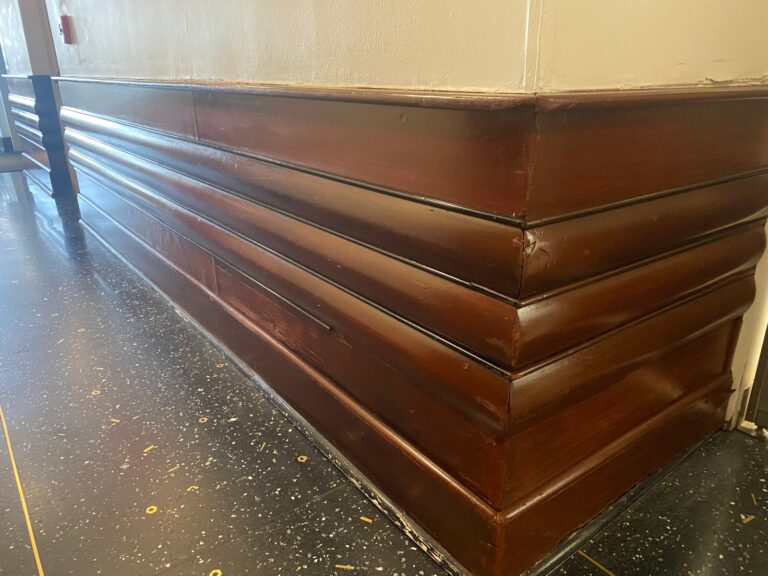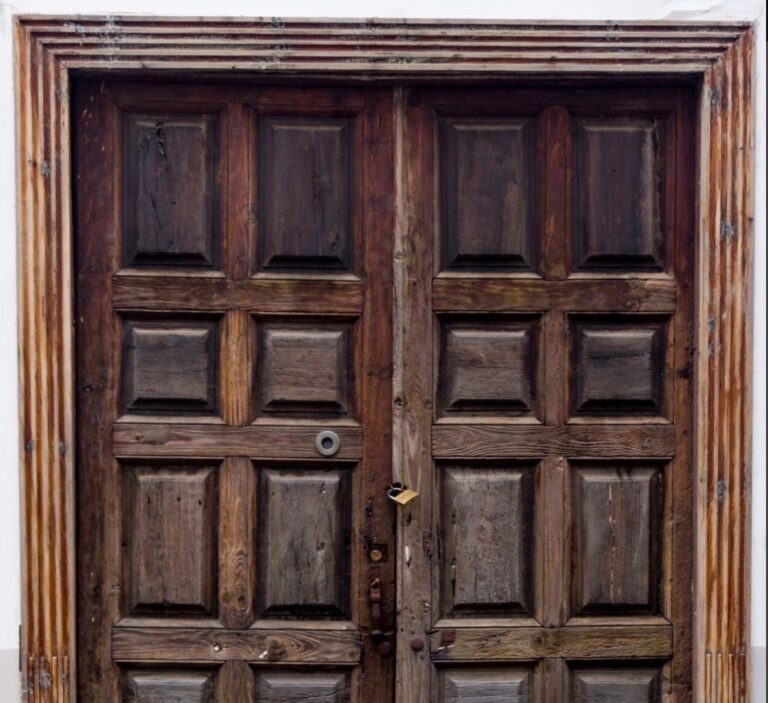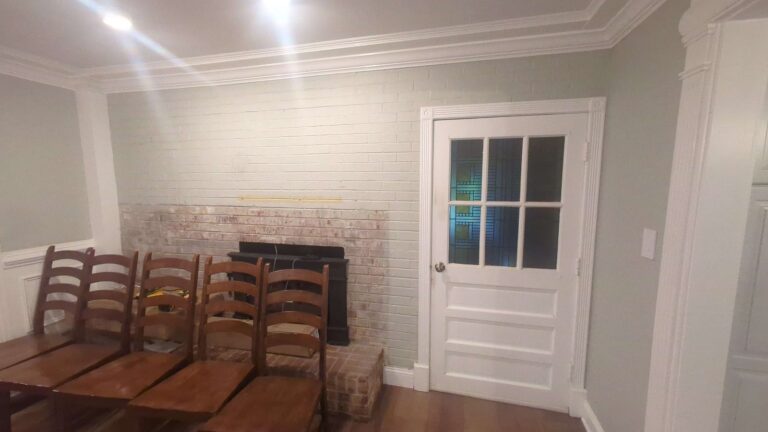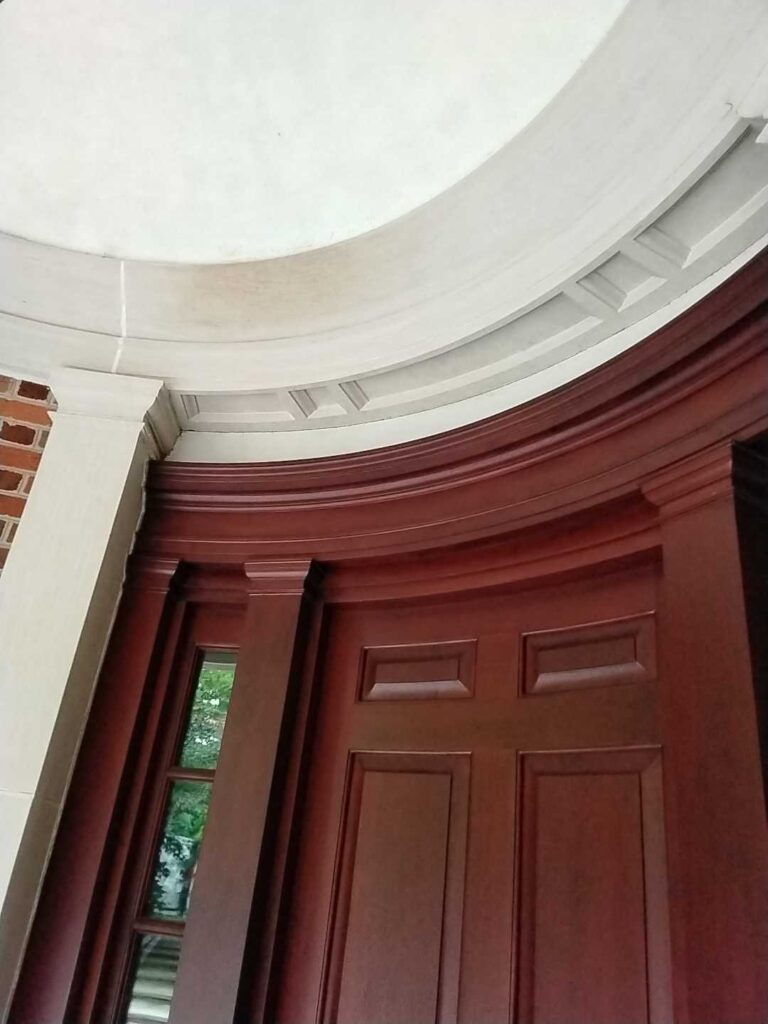
Before and after: dated wood kitchen cabinetry


- Material
- Finished wood cabinetry
- Problem
- The existing finish had dulled and yellowed with age and daily use, leaving the cabinetry looking tired against the rest of the kitchen.
- Process
- The cabinetry was refinished in place rather than replaced, which keeps the existing boxes and doors and avoids a full kitchen tear-out.
- Result
- An even, clean finish across the doors and frames, achieved without replacing any cabinetry.
Wood restoration and refinishing · Send us photos of your surface for an assessment
Architectural Wood Restoration & Refinishing
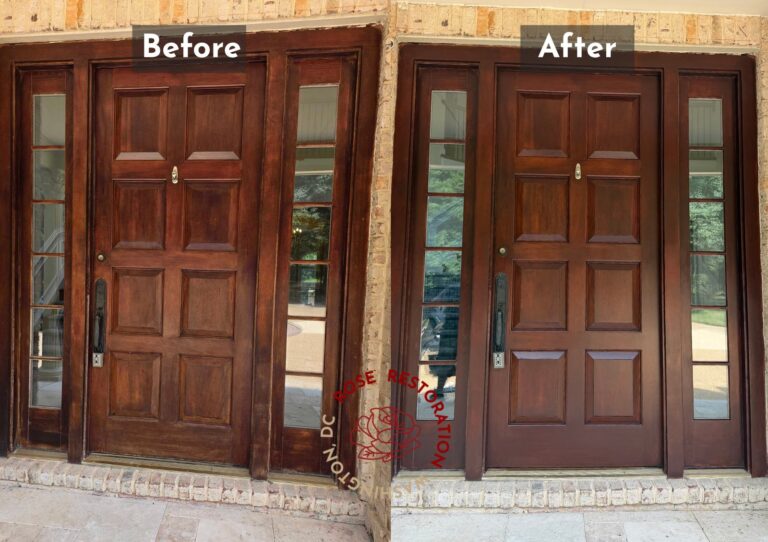
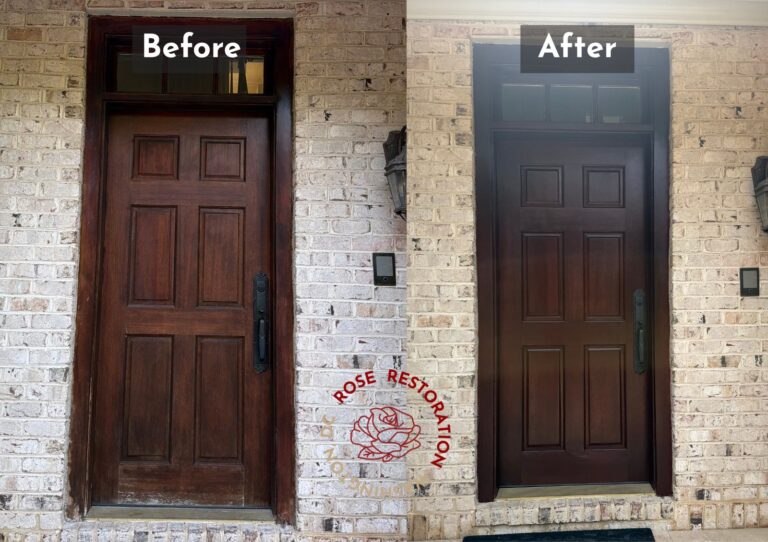
The most-touched wood in any building is a door, and doors show it first — worn edges, finish gone around the handle, dents from carts and luggage. We refinish doors on-site or pull them overnight for workshop restoration, and we give the paneling, millwork, railings, and trim around them the same treatment.
Wood restoration is matching work: stain color, sheen level, grain direction, profile. Done right, a repaired section disappears into the original — which is why conference rooms, hotel corridors, and lobbies across DC, Maryland, and Virginia have trusted our finish crews since 1978.
Get a Free Wood Restoration Assessment
Our team will evaluate your surfaces and provide a detailed written proposal within 48 hours.
Wood Restoration — Project Photos
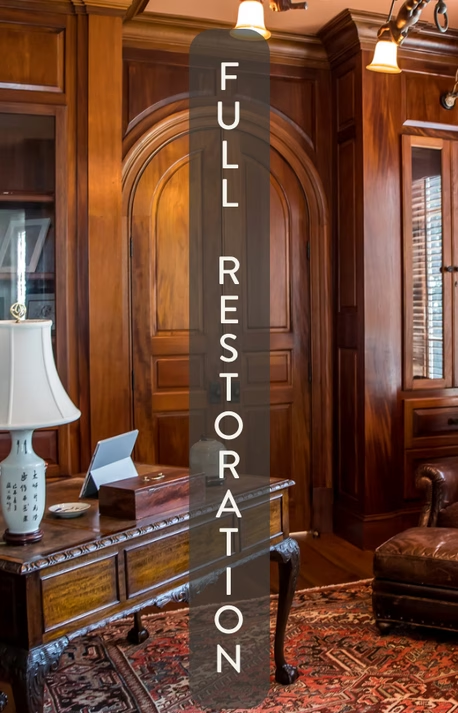
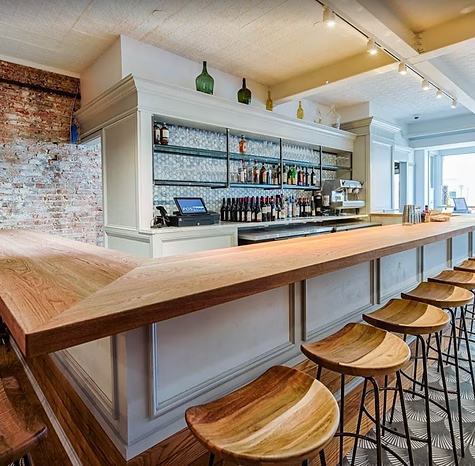
Commercial Wood Restoration in Virginia, Maryland, and DC
Wood surfaces bring warmth, character, and craftsmanship to commercial interiors — but they also take a beating. UV exposure fades and yellows finishes. Foot traffic wears through coatings on stairs, handrails, and door edges. Water damage raises grain and promotes mold. Chemical exposure from cleaning products strips finishes and discolors surfaces. Over time, the wood elements that once defined a building’s character start to look neglected.
Rose Restoration provides professional wood restoration services for commercial properties throughout Virginia, Maryland, and Washington, DC. With experience since 1978 and a team of more than 30 skilled technicians, we refinish and restore the wood surfaces that matter most — doors, millwork, paneling, railings, furniture, trim, and cabinetry. Our work returns these elements to their original quality and protects them for years of continued use.
Types of Commercial Wood Work
Doors
Entry doors, lobby doors, conference room doors, and interior passage doors are among the most visible and most frequently touched wood elements in any building. They show wear faster than almost any other surface. We refinish wood doors on-site or remove them for workshop restoration, depending on the project requirements and the door’s condition. Our process includes stripping damaged finishes, repairing dents, scratches, and delamination, sanding to a smooth substrate, applying stain as needed, and finishing with durable protective coatings suited to the level of use the door will receive.
Millwork and Trim
Crown molding, baseboards, casings, wainscoting, chair rails, and other architectural millwork define the character of a well-appointed commercial interior. We restore millwork that has been damaged by impacts, moisture, paint failure, or simple age. Our team repairs or replaces individual sections to match the existing profiles, then refinishes the full millwork system for a consistent appearance.
Paneling
Wood paneling in conference rooms, executive offices, lobbies, and hospitality spaces creates an atmosphere of quality and permanence. When paneling finishes deteriorate — showing cloudiness, orange peel, scratches, or UV discoloration — the entire room suffers. We strip, sand, and refinish wall paneling in place, matching the original stain color and sheen level. For paneling with structural damage, we can repair or replace individual panels to blend with the existing installation.
Railings and Balustrades
Wood railings in lobbies, atriums, staircases, and mezzanines are high-touch surfaces that show wear quickly. Handrails develop smooth, worn spots and finish failure at contact points. Balusters and newel posts accumulate scuffs and dings. We restore railings by repairing damage, stripping failed finishes, and applying coatings that withstand the constant contact these surfaces receive.
Furniture
Conference tables, reception desks, credenzas, and built-in furnishings represent significant investments in quality and aesthetics. We refinish commercial wood furniture on-site or at our facility, depending on size and logistics. Our furniture restoration addresses surface damage, finish failure, water rings, heat marks, and general wear, returning pieces to their original quality without the cost of replacement.
The Refinishing Process
Every wood restoration project follows a disciplined process designed to produce consistent, durable results:
- Assessment: We evaluate the wood species, existing finish type, damage extent, and desired outcome. We identify whether the surface can be refreshed with recoating or requires full stripping and refinishing.
- Protection: We mask and protect all adjacent surfaces, flooring, hardware, and fixtures to prevent damage during the restoration process.
- Stripping and preparation: We remove the existing finish using chemical strippers, heat, or sanding as appropriate for the surface and the finish type. We repair dents, gouges, scratches, and other surface damage.
- Sanding: We sand through progressively finer grits to create a smooth, uniform substrate that will accept stain and finish evenly. For open-grain woods like oak and mahogany, we fill the grain if a smooth final surface is specified.
- Staining: We apply stain to match the specified color, whether we are matching the original color, adjusting to a new color, or matching adjacent woodwork. We custom-mix stains on site to achieve precise color matches.
- Finishing: We apply protective clear coatings in multiple coats with light sanding between coats. The finish system is selected based on the surface’s use, exposure, and the desired appearance.
- Inspection: We inspect the finished work under multiple lighting conditions to verify color consistency, sheen uniformity, and the absence of defects.
Common Types of Wood Damage
UV Damage
Sunlight fades, yellows, and degrades wood finishes over time. South- and west-facing surfaces in buildings with large windows are particularly vulnerable. UV damage is progressive — the longer it goes unaddressed, the deeper the degradation penetrates. Early intervention through recoating can extend the life of the finish, but once the UV damage reaches the wood substrate, full stripping and refinishing is required.
Water Damage
Water from leaks, condensation, cleaning practices, and spills causes wood to swell, warp, and stain. It promotes mold growth and degrades adhesives in veneered and laminated surfaces. We address water-damaged wood by drying, stabilizing, and repairing the substrate before refinishing. If the wood is structurally compromised, we replace the affected sections.
Wear and Traffic Damage
High-traffic areas develop worn finish, scratches, and dullness over time. This is most visible on stairs, door edges, and handrails. Regular maintenance refinishing — recoating worn areas before the finish fails completely — is the most cost-effective approach to managing traffic wear.
Chemical Damage
Aggressive cleaning products, hand sanitizers, and chemical spills can dissolve, cloud, or discolor wood finishes. Since 2020, increased use of alcohol-based sanitizers has caused widespread finish damage on reception desks, handrails, and door surfaces in commercial buildings. We repair this damage by stripping the affected finish and recoating with chemical-resistant systems where appropriate.
Wood Species Considerations
Different wood species respond differently to refinishing techniques. Hardwoods like oak, maple, walnut, cherry, and mahogany each have distinct grain patterns, porosity, and staining characteristics. Softer woods like pine and cedar are more prone to denting and require more delicate sanding. Exotic species may contain oils or resins that affect finish adhesion. Our technicians understand these differences and adjust their techniques accordingly — because applying a one-size-fits-all approach to wood restoration is a recipe for a poor result.
Historic Wood Restoration
Many commercial and institutional buildings in the Washington, DC area feature historic woodwork — hand-carved trim, century-old paneling, original doors, and irreplaceable architectural details. Restoring historic wood requires a preservation-first mindset: repair rather than replace, match rather than modernize, and retain as much original material as possible. We have the patience and skill to restore damaged historic woodwork to its original condition using techniques and materials compatible with the original construction.
Occupied Building Logistics
Most of our commercial wood restoration work is performed in occupied buildings — offices with employees, hotels with guests, and retail spaces with customers. This requires careful planning around building schedules, ventilation requirements, noise restrictions, and access limitations. We use low-VOC and low-odor finish products when building occupancy requires it. We schedule sanding and stripping work during off-hours or weekends when possible. We set up containment and dust control measures to prevent migration of debris into occupied areas. And we communicate schedules and disruption expectations clearly with building management.
Protective Coatings and Finishes
The longevity of any wood restoration depends on the quality of the protective coating system applied at the end of the process. We select finish systems based on the surface’s use, exposure, and the client’s maintenance preferences:
- Polyurethane (oil and water-based): The most common commercial wood finish, offering good durability and scratch resistance. Water-based polyurethanes dry faster and have lower odor, making them suitable for occupied spaces.
- Conversion varnish: A high-performance catalyzed finish that provides excellent chemical and moisture resistance. Ideal for surfaces exposed to hand sanitizers, cleaning chemicals, and heavy use.
- Lacquer: A fast-drying finish commonly used on furniture and millwork. Lacquer produces a beautiful, clear finish but is less durable than polyurethane in high-traffic applications.
- Penetrating oils and waxes: Used on surfaces where a natural, low-sheen appearance is desired. These finishes require more frequent maintenance but produce a warm, authentic look that film-forming finishes cannot replicate.
Maintenance Programs
The most cost-effective way to protect your investment in wood surfaces is scheduled maintenance. Rather than waiting for finishes to fail completely — requiring full stripping and refinishing — a maintenance program addresses wear incrementally through periodic cleaning, touch-up, and recoating. Rose Restoration offers maintenance programs for commercial wood surfaces, tailored to the type of wood, the finish system, and the level of use the surfaces receive.
Frequently Asked Questions
Can you match the existing stain color on our woodwork?
Yes. Color matching is a core part of our process. We custom-mix stains on site and test them on the actual wood substrate to verify the match before proceeding with the full project. We account for the natural color of the wood species, the existing surrounding woodwork, and the lighting conditions in the space.
How long does commercial wood refinishing take?
The timeline depends on the scope — a single set of doors may take a day or two, while a full lobbied paneling project may take one to two weeks. We provide detailed timelines during the estimating phase and coordinate scheduling with building management to minimize disruption. Multiple coats of finish require dry time between applications, which is the primary driver of project duration.
Can you refinish wood in an occupied building without disrupting tenants?
Yes. We regularly work in occupied buildings and plan our work around building schedules, using low-VOC products, dust containment, and off-hours scheduling to minimize disruption. We discuss logistics with building management before the project starts to develop a plan that works for everyone.
Is it better to refinish or replace damaged woodwork?
In most cases, refinishing is more cost-effective and preserves the character of the original material. Replacement is appropriate when the wood is structurally compromised, severely water-damaged, or when individual pieces are beyond repair. We assess each situation and recommend the approach that provides the best value.
Do you offer ongoing maintenance for wood surfaces?
Yes. We provide scheduled maintenance programs that include periodic cleaning, touch-up, and recoating to extend the life of your wood finishes and avoid the cost of full refinishing. Contact us to discuss a maintenance plan for your property.
Restore the wood surfaces that define your building. Contact Rose Restoration or call 703-327-7676 for a free consultation and estimate.
Specialized Wood Restoration Services
- Wood door refinishing & restoration
- Architectural wood, paneling & millwork
- Antique & fine furniture restoration
Serving Virginia, Maryland, and Washington DC. For homes, see residential wood restoration.
Get a Firm Number for Your Project
Send photos of the woodwork with rough dimensions — a senior crew leader usually replies the same business day.