
Rose Restoration — a Washington DC marble restoration contractor with experience since 1978 — explains the difference between honed and polished marble finishes, when to choose each, and how to convert between them.
| Comparison | Honed Marble | Polished Marble |
|---|---|---|
| Surface look | Matte, satin, low-sheen | High-gloss, mirror-reflective |
| Process (final grit) | Stopped at 200–800 grit | Polished to 1500–3000+ grit |
| Etching visibility | Hides etching well | Shows etching prominently |
| Veining & color | Subdued | Dramatic and saturated |
| Best for | Kitchen counters, baths, high-use floors | Foyers, formal floors, showcase walls |
| Daily care | Easier — minor wear hides | Requires more careful cleaning |
| Convertible | Can be polished later | Can be honed back to matte |
 By Tom Kuhn, CEO, Rose Restoration
Rose Restoration has restored marble, terrazzo, concrete, and natural stone across DC, MD, and VA since 1978.
Honed marble is ground to a flat matte finish with no reflection. Polished marble is taken through finer abrasives until the surface reflects light like a mirror. The stone is identical; only the finish differs, and either finish can be changed to the other on already-installed marble without replacing anything.
Updated June 2026
Honed and polished describe how the stone is finished at the end of the process, not which stone you own. Both finishes come off the same marble honing and polishing service, and a floor that already exists can be taken from one to the other.
This is Rose Restoration’s reference guide for choosing between honed marble and polished marble. If you’re researching the actual marble honing process — grits, equipment, what professionals do step by step — see our Honing Marble: Professional Process & Grits guide. For the comparison and which finish to pick for your space, read on.
Honed vs. Polished Marble — The Short Answer
Honed marble has a smooth, matte finish. It does not reflect light. It looks soft and velvety.
Polished marble has a glossy, mirror-like finish. It reflects light and shows the stone’s veining sharply.
The difference is how the stone is finished. Honing stops before the final polishing passes. Polishing continues until the surface is reflective.
| Feature | Honed | Polished |
|---|---|---|
| Look | Matte, velvety | Glossy, mirror-like |
| Hides scratches | Yes — better | No — shows easily |
| Hides etching | Yes — much better | No — etches are visible |
| Stain resistance | Lower (more porous) | Higher |
| Best for | Floors, busy kitchens | Showcase spaces, bathrooms |
Bottom line: pick honed for a casual matte look that hides wear. Pick polished for a dramatic reflective finish — and commit to maintaining it.
What Is Honed Marble?
Honed marble is ground smooth but not polished to a shine. The surface feels silky. It looks uniform and matte. Light does not bounce off it.
Hone finishes are produced with diamond abrasives between 220 and 400 grit. A full polish continues past 1500 grit. Stopping earlier leaves the softer, warmer look.
Where Honed Marble Works Best
- Floors in high-traffic areas. Hides wear patterns, scuffs, and foot traffic.
- Bathrooms. Less slippery when wet.
- Kitchens with active cooks. Hides etch marks from lemons, tomatoes, and vinegar.
- Outdoor applications. Matte finishes age better outdoors than polished.
What Is Polished Marble?
Polished marble is finished with progressively finer diamond abrasives. The final passes — 1500 to 3000 grit — create the high-gloss look.
Polished marble shows the stone’s veining and color at maximum contrast. It is the finish most people picture when they imagine classical marble.
Where Polished Marble Works Best
- Showcase lobbies. Dramatic, formal, reflective.
- Powder rooms and guest baths. Low traffic, high visual impact.
- Entry foyers in grand homes. First impressions matter.
- Fireplace surrounds and walls. No foot traffic, no etching risk.
Side-by-Side: Which Finish for Which Room?
Here’s how Rose Restoration typically guides DC, Maryland, and Virginia clients:
- Kitchen floor: Honed. Food falls, shoes scuff — matte hides it all.
- Kitchen counter: Polished with Marble Armor. Keeps the classic look without etching risk.
- Master bath floor: Honed. Safer when wet, hides water spots.
- Master bath vanity: Polished. Low traffic, high visual payoff.
- Entry foyer: Polished. It’s the first thing guests see.
- Commercial lobby: Polished, paired with a quarterly maintenance program.
- Hotel guestroom counter: Polished with Marble Armor.
Watch the work
What honing looks like: white marble countertops taken down to an even satin finish, the same step that removes etch marks.
Can You Switch Between Honed and Polished?
Yes, in either direction, and on marble that is already installed. Honing a polished surface means stopping the diamond sequence early; polishing a honed surface means continuing through the finer grits. It is the same stone either way.
Changing a finish is a different decision from choosing one, with its own costs, timings and cases where it is not worth doing. That is covered in full on changing a marble finish after installation, which walks through both directions, the satin finish between them, and what each costs.
How Each Finish Handles Damage
Scratches
Both finishes scratch at the same rate. Marble’s hardness is the same regardless of finish.
The difference is visibility. A scratch on polished marble breaks the reflective surface and stands out. The same scratch on honed marble barely registers.
Etching (Acid Damage)
Etch marks happen when acid dissolves a tiny amount of the marble surface. Common culprits: lemon juice, vinegar, wine, tomato sauce.

On polished marble, an etch shows as a dull spot. It contrasts sharply against the surrounding gloss.
On honed marble, the surface is already matte. The etch barely shows.
This is why honed is the forgiving choice for kitchens.
Staining
Honed marble is slightly more porous than polished. That means it absorbs liquids a little faster.
Proper sealing (every 12–18 months) closes the pores and nearly eliminates the difference. Both finishes stain. Polished is marginally more stain-resistant.
Maintenance Differences
Cleaning
Both finishes use the same routine:
- pH-neutral stone cleaner
- Soft cloth
- No acid cleaners — never vinegar, lemon, or generic bathroom sprays
Sealing
Both finishes benefit from sealing every 12–18 months under normal use.
Honed marble may need it sooner. Countertops more often than floors.
Restoration
Polished marble eventually dulls. Professional polishing restores the finish.
Honed marble doesn’t dull the same way. It can lose its even tone over time. Both are fully restorable.
Marble Armor — The Option That Changes Everything
For kitchen counters where you want polished marble but worry about etching, Marble Armor is a Rose Restoration proprietary treatment that permanently blocks acids and stains.
The marble keeps its polished look. Wine, lemon juice, oil — nothing etches. 10-year warranty.
This is often the right answer when the question is “honed or polished?” for a kitchen.
When to Call Rose Restoration
- You want to change your marble’s finish — polished to honed, or honed to polished
- Your polished marble has lost its shine
- You’re choosing a finish for a new installation and want guidance
- You have etch marks, scratches, or wear that need professional restoration
- You want Marble Armor installed on kitchen counters to avoid the trade-off entirely
48+ years of marble restoration in DC, Maryland, and Virginia. Trusted by Four Seasons, Ritz-Carlton, the Smithsonian, and the U.S. Treasury.
Free on-site estimate within 48 hours. Call (703) 327-7676 or request online.
Related: Marble restoration services · Residential marble · Countertop restoration · Marble Armor
Choosing a Finish for Marble Countertops
For countertops in a kitchen, bath, or bar, the choice comes down to how the surface gets used in real life.
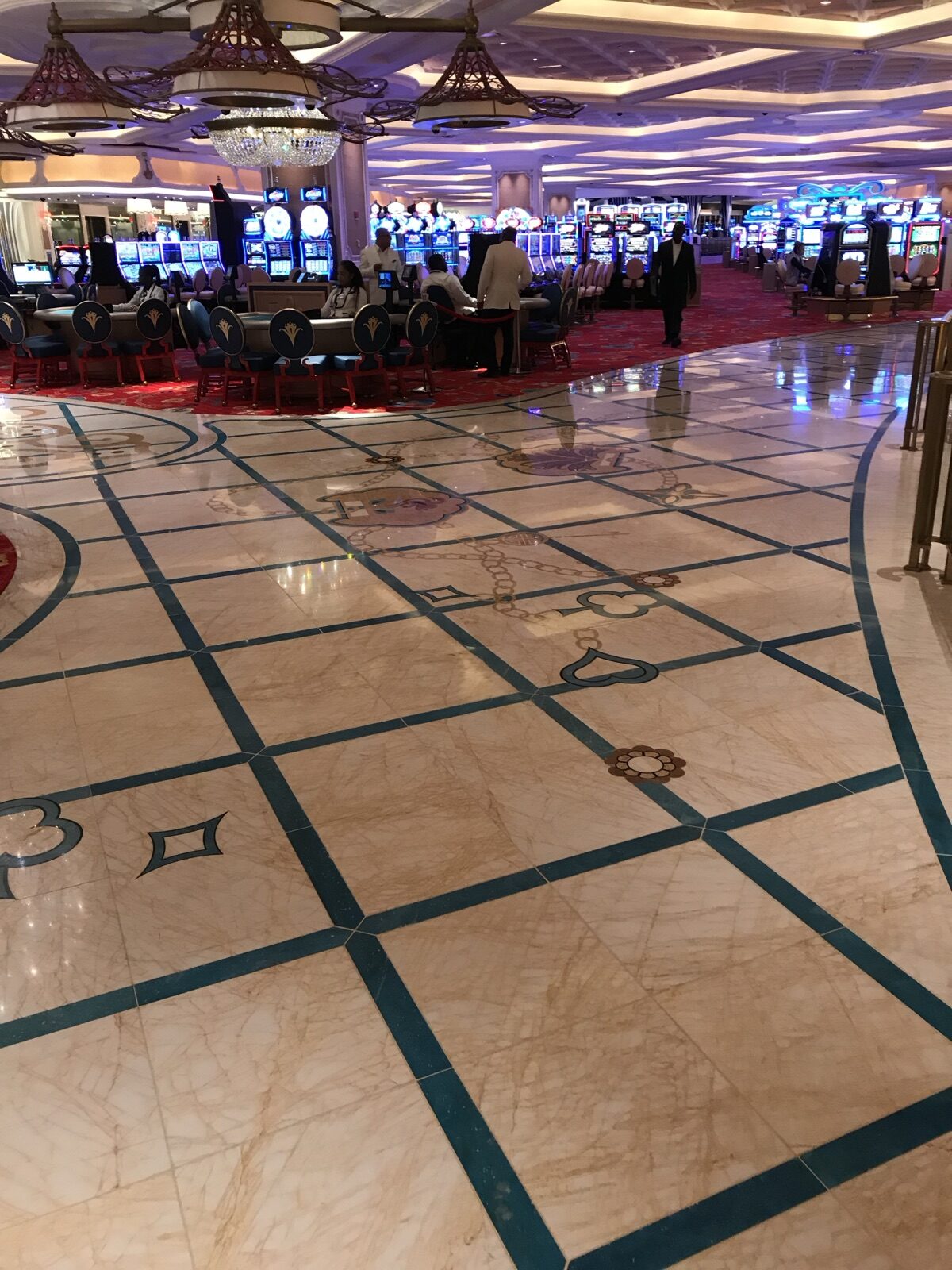
Both finishes use the same stone. Both wear at the same chemical rate. What changes is how visible that wear becomes day to day.
Honed Countertops — The Forgiving Choice
The matte surface scatters light. That means etch marks (dull spots from acidic spills) blend into the existing finish instead of jumping out.
Coffee rings and water spots are still possible. A quick wipe usually clears them.
The downside: honed marble shows oil and food stains a little more readily. The open surface texture lets liquids penetrate slightly faster than a sealed polished finish.
Polished Countertops — The Classic Look
A polished finish creates a mirror-like reflection. It emphasizes the depth and veining of the stone.
It’s the look most people picture when they imagine marble countertops. It’s why polished marble has been the choice in luxury kitchens, lobbies, and showrooms for centuries.
The trade-off: any etch on a polished surface is dramatically visible. It interrupts the reflection.
The fix is straightforward. Rose can polish out an etch in a single visit. But in a busy kitchen, those small repairs become a recurring cost — unless the surface is permanently protected.
The Decision Tree
Most of our designer and homeowner clients land in one of these four buckets:
- Want classic luxury, willing to maintain. Polished marble countertops with annual or semi-annual etch touch-ups.
- Want classic luxury, want it permanent. Polished marble countertops with Marble Armor protection. No acid etching, no stains, 10-year warranty.
- Prefer a softer, contemporary look. Honed finish with a quality impregnating sealer every 12 months.
- Heavy daily kitchen use, no time for upkeep. Honed marble countertops with Marble Armor — the lowest-maintenance combination on natural stone.
Still deciding? Send us a photo of the space and a quick note about how it gets used. We’ll write back with a recommendation, a finish to look at, and a price for the work — usually within one business day.
Not sure which finish your marble has — or which one to choose? Send a photo to roserestoration.com/send-photos or call 703-327-7676. A Rose technician will identify the finish, explain whether it can be changed, and price out the work in writing — typically inside 24 hours, no obligation.
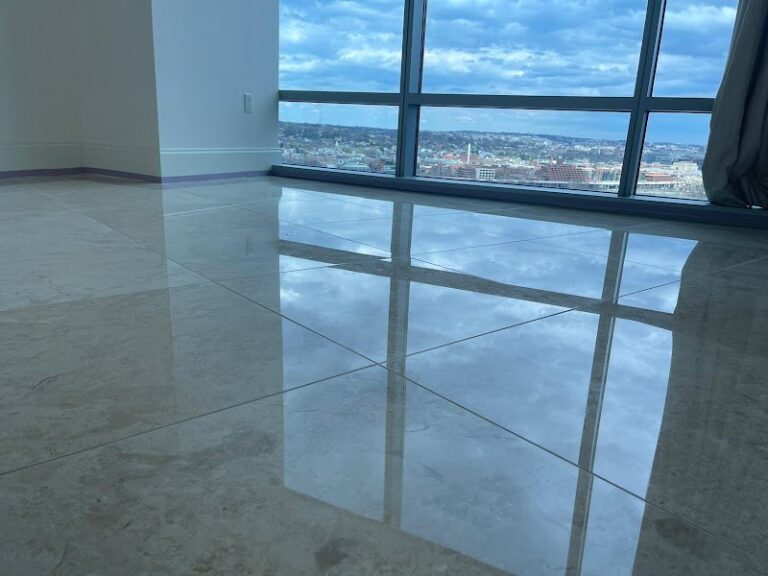
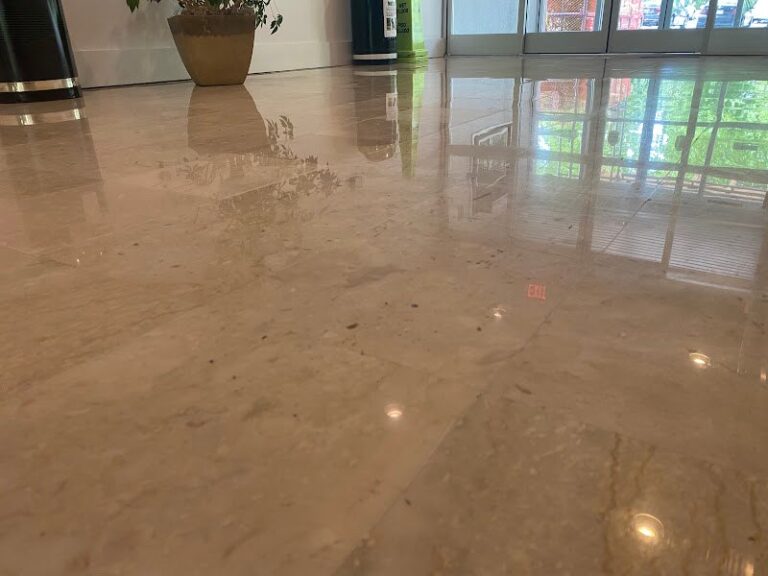
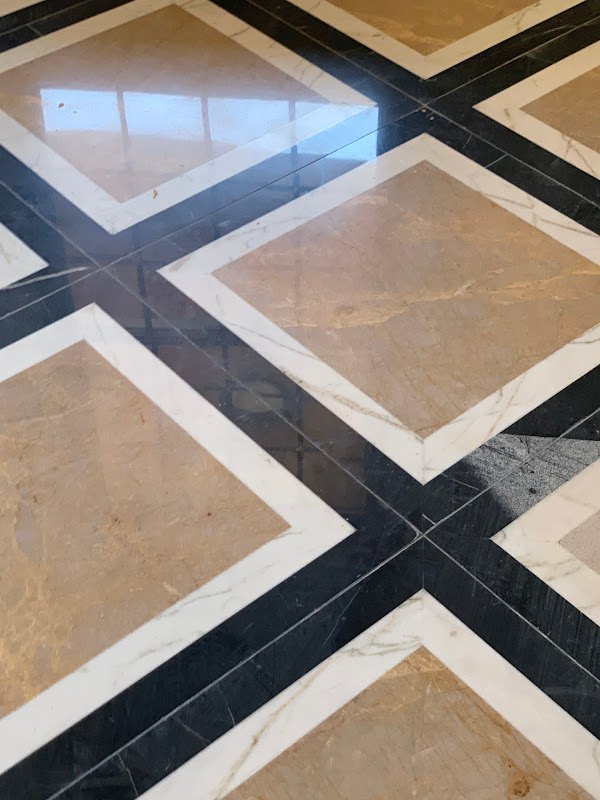
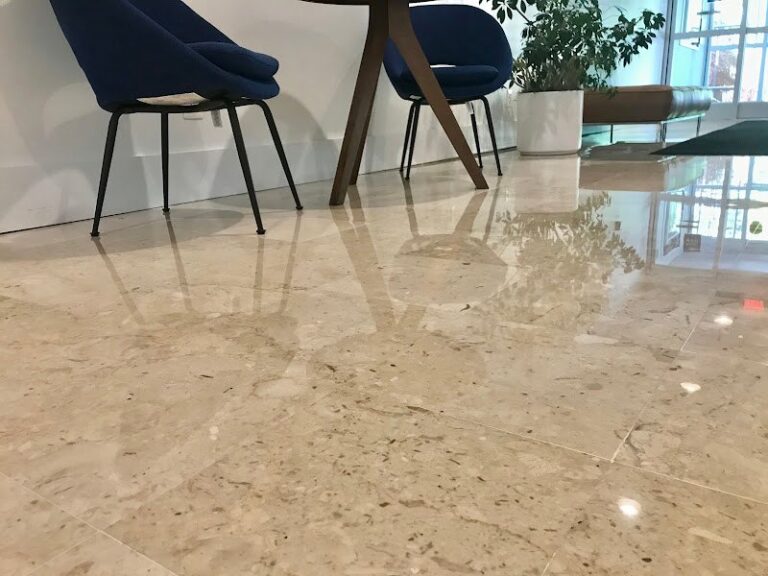
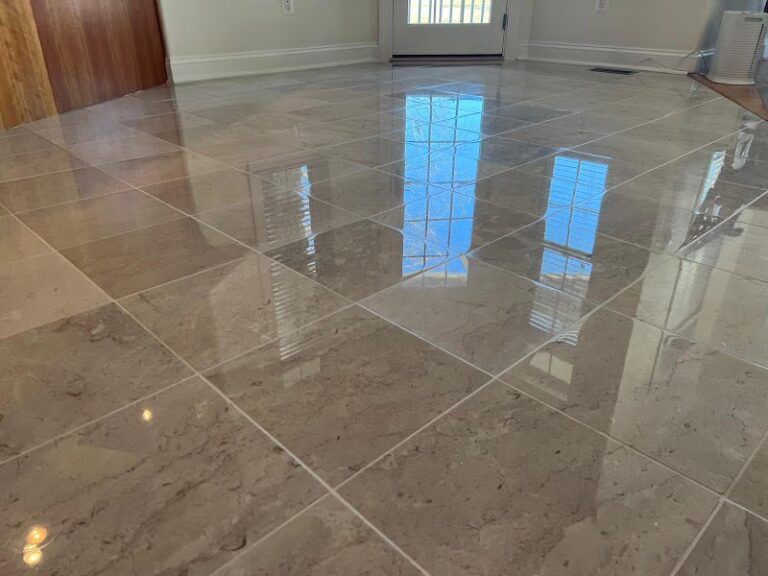
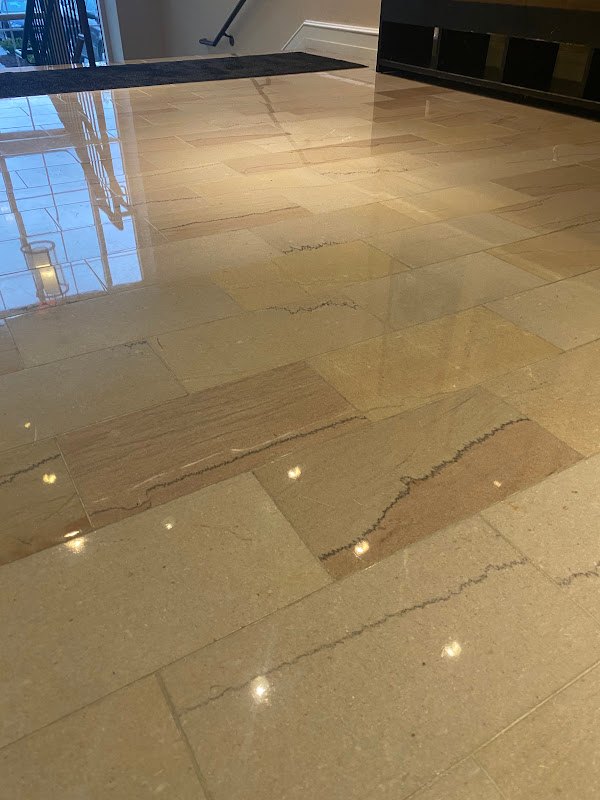
Project photos
Real Rose Restoration jobs, photographed by our crews.
More answers
Unpolished vs polished marble: what is the difference?
"Unpolished" marble usually means honed: the stone is ground smooth with diamond abrasives, but the process stops around 220 to 400 grit, leaving a flat matte surface that does not reflect light. Polished marble continues past 1500 grit to a mirror shine. It is the same stone either way, the shine is not a coating, and the finish can be changed in either direction after installation.
Honed or polished marble for a backsplash?
The trade-off is the same as on a countertop. Honed hides etching better and gives a soft matte look; polished reflects light and shows the stone's color and veining more sharply. It is the same stone either way, and a finish can be changed after installation if you change your mind.
Frequently Asked Questions
Is honed marble easier to maintain than polished marble?
Yes, in the sense that honed marble hides etch marks better.
Professional Marble Honing & Polishing
Whether you want a honed matte finish or a high-gloss polish, our team can achieve any finish level on your marble surfaces. We serve homes and commercial properties throughout Northern Virginia, DC, and Maryland.
Both finishes use the same cleaning routine (pH-neutral cleaner, no acids). Honed marble is slightly more porous, so it may need sealing every 12 months instead of every 18.
Can you change polished marble to honed?
Yes. Rose Restoration can hone an existing polished marble floor or countertop in a single day for most residential jobs.
The process uses diamond abrasives to stop the finish at a matte stage. The reverse (honed to polished) is also routine.
Which is better for kitchen countertops?
Honed hides etching better. Polished looks more classic.
The best answer for a marble kitchen counter is often “polished with Marble Armor” — you get the traditional look with permanent protection against acids and stains.
Does honed marble scratch more easily?
No — both finishes scratch at the same rate. Scratches are just less visible on honed marble because the surface is already matte.
How often does marble need to be resealed?
Every 12–18 months for normal residential use.
Kitchen counters may need it annually. High-traffic commercial floors may need it quarterly. Honed marble tends to need sealing slightly more often than polished.
How do you tell honed marble from polished marble?
Look at the surface under a light.
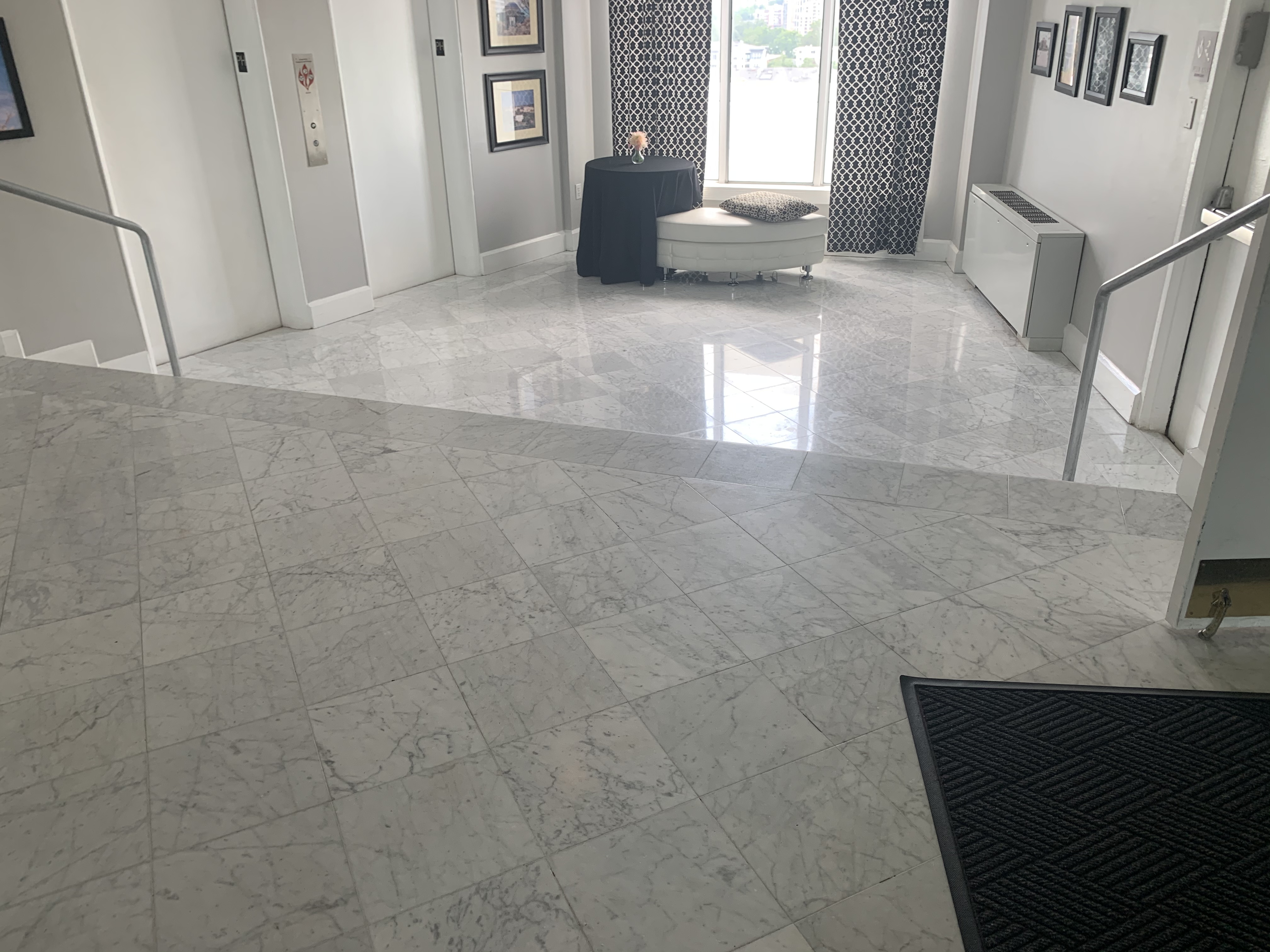
Polished marble reflects your face like a mirror. Honed marble reflects only a soft glow. If you can read text reflected in the surface, it’s polished. If you see only a glow, it’s honed.
Is honed or polished marble more expensive to install?
Polished usually costs slightly more. It requires additional polishing passes and more labor.
The stone itself is the same price. Expect polished installation to run 10–20% higher than honed for comparable scope.
Updated for 2026
Related Rose Restoration Resources
Since this article was first published, Rose Restoration has expanded our published library with detailed case studies, an industry glossary, and topic-specific service pages. The most relevant resources for this article:
- Honed vs Polished Marble — full guide →
- Marble Honing Explained →
- Calacatta Marble Restoration →
- Carrara Marble Restoration →
- Recent project: Marble foyer floor honed and polished in Georgetown DC →
- Stone Care Glossary — Honing definition →
For project consultation: 703-327-7676 or info@roserestoration.com.
Looking for something else?
Rose Restoration — local service areas
For professional marble polishing, Rose Restoration serves: Marble polishing in Washington, DC · McLean, VA · marble restoration & polishing.
Get a Free Assessment from Rose Restoration
Tell us about your marble, stone, terrazzo, or concrete and our senior technicians will recommend the right restoration approach. Family-run and trusted across Washington DC, Maryland, and Virginia since 1978.
Call (703) 327-7676 · Email info@roserestoration.com · schedule a time · or send us photos.
Restore. Don't replace.
48 years of polishing marble, terrazzo, concrete, and tile across Washington DC, Northern Virginia, and Maryland. IMF, Four Seasons, Smithsonian, and the Virginia State Capitol trust us — you can too.
Watch the Process
Real Rose Restoration projects on video — no stock footage, no staged demonstrations.