
 By Tom Kuhn, CEO, Rose Restoration
Rose Restoration has restored marble, terrazzo, concrete, and natural stone across DC, MD, and VA since 1978.
Patio and Sidewalk Repairs: A Complete Guide for Washington DC, Maryland, and Northern Virginia Homeowners
Outdoor masonry surfaces take a beating in the Washington DC metro area. The region’s climate — hot, humid summers followed by freezing winters — creates ideal conditions for accelerating wear and damage to patios, walkways, and sidewalks. What begins as a small crack or a slightly sunken paver can quickly become a tripping hazard, a drainage problem, or a structurally compromised surface that costs significantly more to address if left unattended.
Rose Restoration has repaired and restored outdoor masonry across Washington DC, Maryland, and Northern Virginia for decades. In that time, we have worked on everything from century-old bluestone walkways in Georgetown to contemporary flagstone patios in McLean and brick sidewalks in historic Annapolis neighborhoods. This guide covers the most common forms of patio and sidewalk damage, the materials involved, and what a proper professional repair actually entails.
Common Types of Patio and Sidewalk Damage
Understanding the nature of damage is the first step toward repairing it correctly. Not all cracks are alike, and the appropriate repair method depends heavily on what caused the damage in the first place.
Cracked and Broken Pavers or Flagstone
Individual stones or pavers can crack from impact, freeze-thaw cycling, or pressure from tree roots and soil movement underneath. A single cracked paver is often a cosmetic issue, but when multiple units are cracking in a pattern, it usually signals a base failure — meaning the compacted gravel and sand sub-base has shifted, eroded, or was never installed correctly in the first place. Replacing a stone without addressing the underlying cause means the replacement will crack again within a season or two.
Loose or Missing Mortar Joints
Mortar joints are the material packed between stones, pavers, and bricks. Over time, mortar deteriorates through normal weathering, water infiltration, and thermal expansion and contraction. When mortar is crumbling, hollow, or missing entirely, water penetrates beneath the surface and destabilizes the entire installation. Loose mortar on a patio or sidewalk is not merely an aesthetic flaw — it allows moisture to get under the stones and accelerate settling and heaving.
Settling and Heaving
Settling occurs when the base material compresses or washes away, causing surface stones to sink below their intended level. Heaving is the opposite: soil expansion — often from frost or tree root pressure — pushes stones upward, creating raised edges and uneven surfaces. Both conditions create tripping hazards. In the DC area, where frost depth can reach 14 to 20 inches in a severe winter, heaving is a common problem on patios and sidewalks that were installed without adequate frost protection in the base.
Efflorescence
Efflorescence is the white, powdery or crusty deposit that appears on the surface of masonry when water-soluble salts migrate to the surface and crystallize as moisture evaporates. It is a sign of moisture movement through the material. While efflorescence itself does not destroy masonry, it indicates that water is actively traveling through the stone or mortar — and that process, left unchecked, will eventually cause spalling and structural deterioration. On patios, efflorescence is commonly found on bluestone, concrete pavers, and brick.
Spalling
Spalling refers to the flaking, chipping, or pitting of stone or concrete surfaces. It is caused by moisture trapped beneath the surface that freezes and expands, breaking off the outer layer of material. Spalling is particularly common on concrete pavers, bluestone steps, and brick surfaces that have been exposed to road salts or de-icing chemicals — a significant issue for sidewalks adjacent to streets in the DC metro area. Once spalling begins, it tends to accelerate if the surface is not treated and sealed.
Materials: What Your Patio or Sidewalk Is Made Of Matters
Different materials require different repair approaches, and using the wrong technique or product on a given stone type can cause more damage than it prevents.
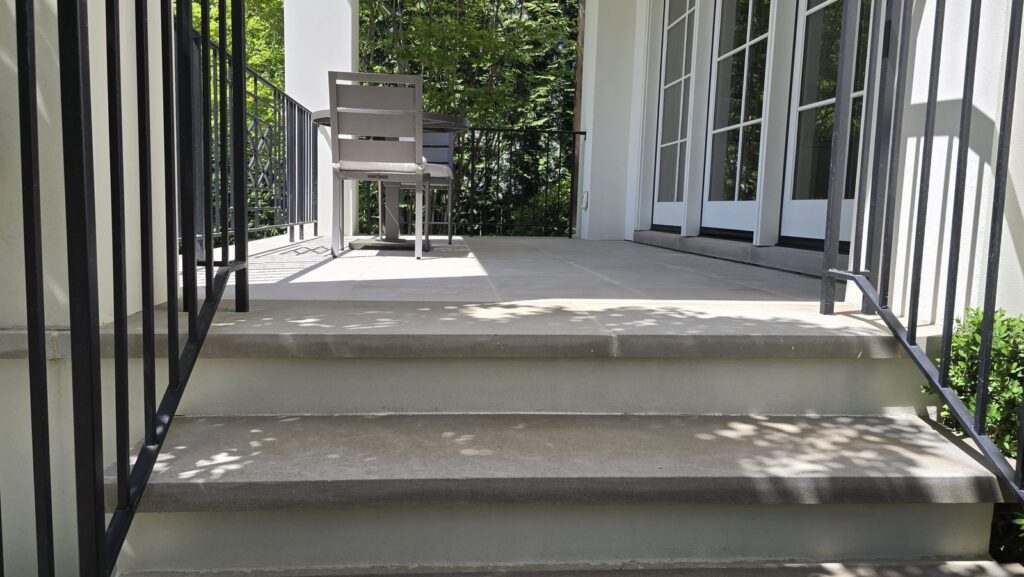
Bluestone
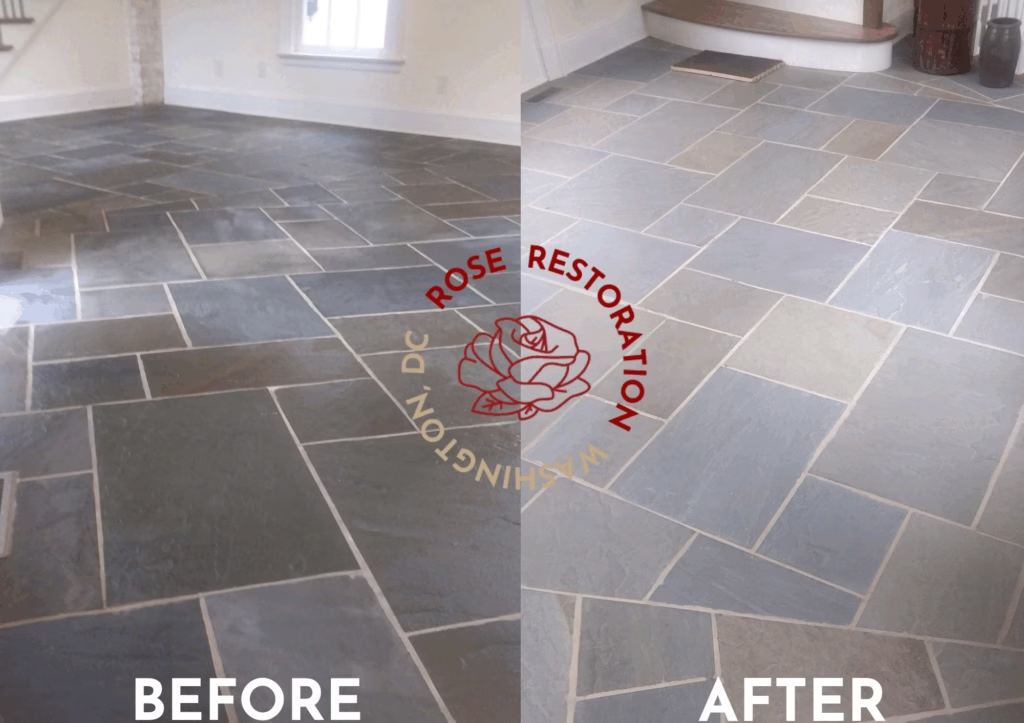
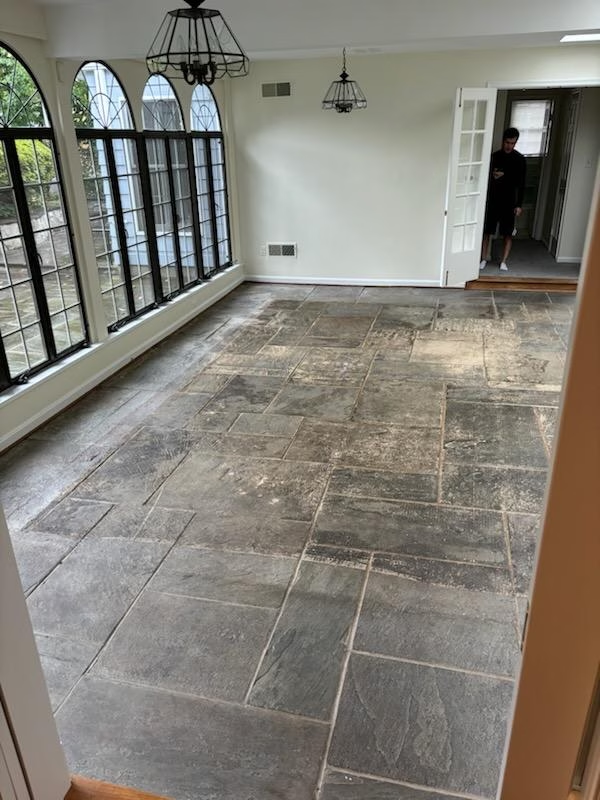
Bluestone is a dense, fine-grained sandstone that has been a staple of Washington DC-area patios and walkways for generations. It is durable, attractive, and relatively resistant to wear, but it is not impervious to damage. Bluestone can develop surface scaling in freeze-thaw conditions, and it is particularly susceptible to surface staining and efflorescence if drainage beneath the installation is poor. Repairing bluestone typically involves releveling settled pieces, repointing joints with a compatible mortar, and — in cases of significant surface degradation — honing or resurfacing the stone. We go into significant detail on bluestone-specific restoration processes in our post on how we restore slate, flagstone, and bluestone.
Flagstone
Flagstone is a broad category that includes various sedimentary and metamorphic stones cut or split into flat pieces for use in paving. Slate, limestone, and quartzite are all used as flagstone. Each has its own hardness, porosity, and response to weathering. Slate flagstone, for example, is prone to delamination — splitting along its natural cleavage planes — while limestone flagstone can be dissolved over time by acidic rain. Matching the repair mortar and any sealants to the specific stone type is essential.
Brick
Brick patios and sidewalks are common throughout the historic neighborhoods of DC, Alexandria, and Annapolis. Over time, the mortar joints between bricks erode, bricks settle or heave, and individual units can crack or spall. Brick repairs require careful attention to mortar composition — using a mortar that is harder than the brick itself can cause the bricks to crack and spall as thermal movement occurs. A proper repair uses a mortar that is softer and more flexible than the brick, allowing the joint to absorb movement rather than transmitting stress into the masonry unit.
Concrete Pavers
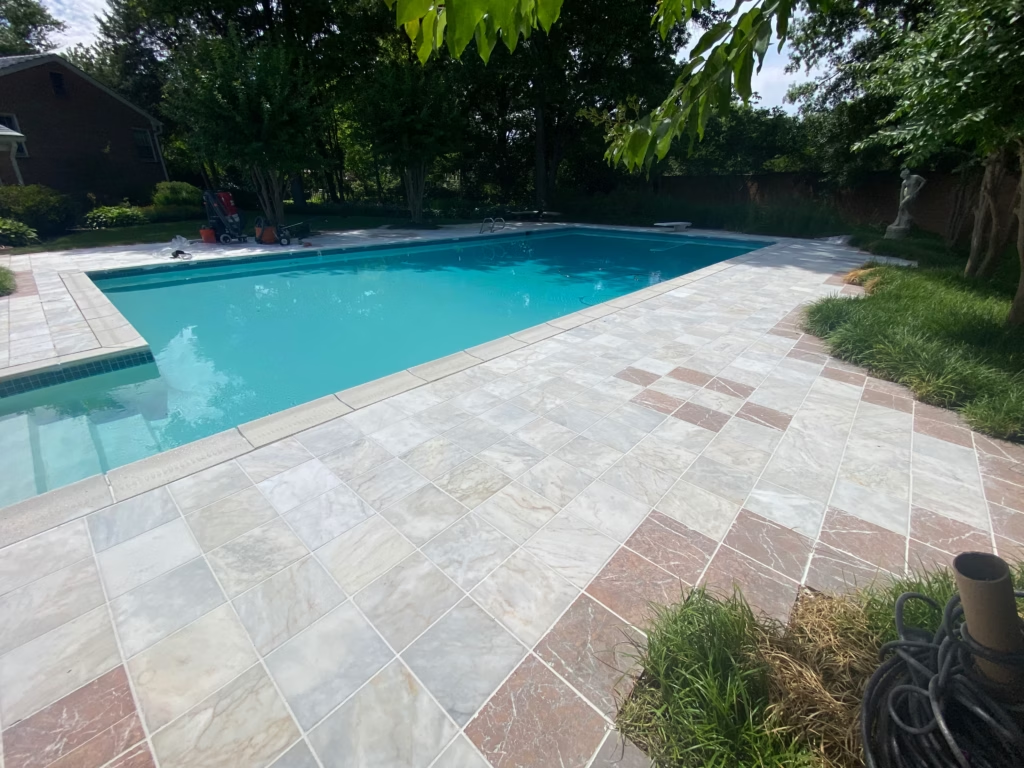
Manufactured concrete pavers are a common choice for modern patios and driveways across Northern Virginia and suburban Maryland. They are durable and modular — individual units can be removed and replaced without disturbing the surrounding surface. However, they are vulnerable to salt damage, and their interlocking sand-set installation means that base erosion causes widespread settling. Repairing a concrete paver surface often involves lifting and releveling an entire section rather than addressing isolated units.
Repair Processes: What Professional Masonry Repair Actually Involves
Repointing
Repointing is the process of removing deteriorated mortar from between masonry units to a depth of approximately three-quarters of an inch to one inch, then packing new mortar into the joint in carefully controlled layers. It is methodical, skilled work. The old mortar must be removed cleanly — typically with angle grinders fitted with tuck-pointing blades, or with oscillating tools for more delicate work — without damaging the edges of adjacent stones or bricks. The new mortar must be matched to the color, texture, and compressive strength of the original material. Applying mortar that is too stiff can crack the adjacent masonry; applying mortar that is too wet will not bond properly and will crumble within a season.
We have written extensively about the importance of mortar selection in our post on mortar types and how we match color, sand, and strength for masonry repointing. Getting this right is one of the most consequential decisions in any masonry repair project.
Releveling and Stone Replacement
When individual flagstones, pavers, or bricks have settled significantly or been heaved out of plane, they must be lifted, the base material below them corrected, and the units reset at the proper elevation. On a sand-set patio, this means pulling the affected units, adding or redistributing the bedding sand, and resetting and re-leveling the stones. On a mortar-set installation, the process is more involved: the units must be carefully extracted without breaking them, the old mortar bed chipped away from the substrate, the base evaluated and corrected if necessary, and a new mortar bed prepared before the stones are reset.
When a stone or brick is broken beyond reuse, a matching replacement must be sourced. This is often the most challenging part of a repair on older installations — bluestone, in particular, varies significantly in color and character from quarry to quarry and from decade to decade, and finding a visually compatible replacement for a 40-year-old installation requires experience and good supplier relationships.
Mortar Color and Texture Matching
On any visible masonry surface, a repair that uses poorly matched mortar is immediately obvious and can look worse than the original damage. Matching mortar color requires adjusting the proportions of cement, lime, sand, and any pigments in the mix. Sand selection is particularly important — the aggregate in the mortar gives it most of its visual texture and a significant part of its color. Using the wrong sand in a repair joint on a bluestone patio will produce a stark, out-of-place seam that ages differently from the surrounding joints.
Patio vs. Sidewalk: Different Considerations
While patios and sidewalks share many of the same failure modes and repair techniques, there are important differences that affect how repairs should be approached.
Patios are typically private property with more flexible standards. Homeowners have greater latitude in choosing repair methods and materials, and the primary concerns are aesthetics, drainage, and durability. Patios are also often larger surfaces with more uniform base conditions, which makes systematic releveling and repointing more straightforward.
Sidewalks — particularly those in the public right-of-way or adjacent to streets — are subject to local jurisdiction requirements. In Washington DC and many Maryland and Northern Virginia municipalities, property owners are responsible for maintaining the sidewalk in front of their property. Repairs must often meet specific standards for grade, cross-slope, and surface texture to comply with ADA requirements and local codes. For shared or municipal sidewalks, permits may be required before work can begin.
Sidewalks also experience different loading patterns than patios. Foot traffic is more concentrated along specific paths, delivery vehicles occasionally mount the curb, and snow removal equipment can chip and gouge surfaces. Sidewalks adjacent to street trees frequently suffer from root heaving — a problem that requires addressing the root system in coordination with arborists before any lasting repair can be made.
When to Repair vs. When to Replace
One of the most common questions we hear from homeowners is whether to repair an existing patio or sidewalk or to remove and replace it entirely. The honest answer depends on the extent of the damage, the condition of the base, and the homeowner’s budget and expectations.
Repair is appropriate when the damage is isolated — a section of cracked or settled pavers here, deteriorated mortar joints there — and the base is fundamentally sound. If the majority of a patio’s surface is intact and the sub-base has not eroded or shifted significantly, targeted repairs can extend the life of the installation by many years at a fraction of the cost of full replacement.
Replacement is the better choice when widespread base failure has occurred — when the sub-base has shifted, eroded, or was never adequately prepared — or when more than 30 to 40 percent of the surface requires intervention. Continuing to make piecemeal repairs on a failing base is an exercise in diminishing returns: each new repair destabilizes adjacent areas, and the pattern of settlement and heaving will continue until the base is corrected.
An intermediate option is partial reconstruction: removing and properly rebuilding the affected section of a patio while leaving intact sections undisturbed. This is often the most cost-effective approach when failure is concentrated in one area — around a drain, at the edge where a tree root is causing heaving, or along a wall where poor drainage has caused chronic moisture problems.
Seasonal Timing for Masonry Repairs in the DC Area
Mortar and other cementitious repair materials require adequate temperature to cure properly. Most mortar manufacturers specify a minimum ambient temperature of 40 degrees Fahrenheit for placement, with temperatures ideally remaining above that threshold for at least 24 to 48 hours after the work is completed. In the Washington DC area, this means that mortar-based repairs — repointing, mortar-bed resets, crack repairs — are best performed from late spring through early fall, with some flexibility in mild shoulder-season weather.
The practical window in the DC metro area is roughly April through October, though experienced crews can work in cooler conditions with appropriate precautions: using heated enclosures for freshly placed mortar, selecting accelerated mortar formulations for cold-weather work, and avoiding placement when frost is forecast within 24 hours. Work performed in freezing conditions without these precautions will fail — the mortar will freeze before it cures and will crumble when it thaws.
Sand-set paver work has somewhat more flexibility because it does not rely on mortar curing, but excavation and compaction work is significantly more difficult when ground is frozen or saturated. In general, scheduling patio and sidewalk repairs for the spring or fall — after the freeze-thaw cycle has run its course but before temperature extremes limit the workable window — produces the best results.
The Importance of Proper Drainage
More outdoor masonry failures trace back to drainage problems than to any other single cause. Water is the primary agent of masonry deterioration. It carries soluble salts to the surface, causing efflorescence. It erodes base material, causing settlement. It freezes in joints and beneath surfaces, causing heaving and spalling. A patio or sidewalk that drains well — sloped appropriately away from the house, with sub-base material that does not retain water and joints or drainage channels that allow surface water to escape — will outlast an identical installation with poor drainage by decades.
When we approach a patio or sidewalk repair, drainage assessment is always part of the evaluation. If we observe that water is pooling on the surface, that the grade runs toward the house, or that the sub-base material is waterlogged when we excavate, we address those conditions as part of the repair scope. Installing a drainage solution after the fact — channel drains, French drains, grading corrections — adds cost, but it is far less expensive than repeatedly repairing masonry that continues to fail because water management was never resolved.
Frequently Asked Questions
How do I know if my patio needs repair or full replacement?
The key indicators for replacement over repair are widespread base failure and extensive surface damage across more than a third of the patio. If individual stones or pavers are cracked, joints are eroding, or isolated sections have settled, targeted repairs are usually the right choice. If the entire patio is uneven, if water consistently pools in multiple areas, or if the base material has significantly eroded, a full rebuild with a properly prepared sub-base will be more cost-effective in the long run. A professional assessment can determine which category your patio falls into.
Can I repoint my patio mortar joints myself?
Homeowners can successfully address minor mortar joint repairs if they are willing to take the time to properly prepare the joints — removing old mortar to a depth of at least three-quarters of an inch — and to select the right mortar type for the stone and application. The most common DIY errors are using mortar that is too hard for the application (which causes cracking and spalling in adjacent masonry), inadequate joint preparation (which causes the new mortar to delaminate quickly), and poor color matching. For a small, inconspicuous area, DIY repointing is reasonable. For a large or highly visible surface, the investment in professional work usually pays for itself in longevity and appearance.
Why does efflorescence keep coming back on my patio?
Efflorescence is a symptom of moisture movement through masonry, not a surface condition that can be permanently solved with a surface treatment alone. Surface efflorescence removers and sealers can reduce or temporarily eliminate the deposit, but if the underlying moisture source is not addressed — poor drainage, inadequate flashing, water infiltrating from above or below — the salts will continue to migrate and the efflorescence will return. A lasting solution requires identifying and correcting the moisture source. This often involves improving drainage around the patio, addressing low spots where water pools, and in some cases improving the sub-base to prevent moisture wicking up from below.
How long will patio or sidewalk repairs last?
Properly executed repairs — using the correct mortar type, with adequate joint preparation, on a sound base, with appropriate drainage — should last 15 to 25 years or more before requiring significant attention again. Repairs that skimp on joint preparation, use the wrong mortar, or fail to address underlying base or drainage issues may begin to fail within a few seasons. The longevity of any masonry repair is ultimately determined more by the quality of the installation and the conditions it is subjected to than by the specific materials used.
What is the best time of year to schedule patio repairs in Northern Virginia or Maryland?
The ideal window for mortar-based patio and sidewalk repairs in the Washington DC metro area is April through October. Spring repairs allow work to cure through the summer before the first freeze. Fall repairs are also effective if they are completed early enough to allow adequate curing time before temperatures drop consistently below 40 degrees Fahrenheit. Summer scheduling is possible but requires attention to keeping fresh mortar from drying too quickly in high heat — a condition that causes shrinkage cracking. Contact Rose Restoration at 703-327-7676 to discuss scheduling options and to get an assessment before the season fills up.
Updated for 2026
Related Rose Restoration Resources
Since this article was first published, Rose Restoration has expanded our published library with detailed case studies, an industry glossary, and topic-specific service pages. The most relevant resources for this article:
- Patios & Pool Decks Restoration →
- Concrete Polishing Services →
- Stone Care Glossary — Spalling definition →
- Concrete Restoration in Washington DC →
For project consultation: 703-327-7676 or info@roserestoration.com.
Looking for something else?
Get a Free Assessment from Rose Restoration
Tell us about your marble, stone, terrazzo, or concrete and our senior technicians will recommend the right restoration approach. Family-run and trusted across Washington DC, Maryland, and Virginia since 1978.
Call (703) 327-7676 · Email info@roserestoration.com · schedule a time · or send us photos.
Restore. Don't replace.
48 years of polishing marble, terrazzo, concrete, and tile across Washington DC, Northern Virginia, and Maryland. IMF, Four Seasons, Smithsonian, and the Virginia State Capitol trust us — you can too.