
 By Tom Kuhn, CEO, Rose Restoration
Rose Restoration has restored marble, terrazzo, concrete, and natural stone across DC, MD, and VA since 1978.
Water damage is the one wood problem where the honest answer is sometimes replacement, and telling the two cases apart is straightforward once you know what to look at.
The test is depth. Almost everything that sits in the finish restores. Most of what has reached the wood restores. Very little that has reached the core does. Rose Restoration has restored architectural wood across DC, Maryland and Virginia since 1978. Request a free assessment or call (703) 327-7676.
Read the colour before anything else
A white or cloudy ring means the water is in the finish, not the wood. Moisture has been trapped in the coating layer and is scattering light. This is the best case and it is common on conference tables, bar tops and window sills. It restores completely, and on a light ring it can often be done without stripping the whole surface.
A dark or grey stain means the water reached the wood. The wood fibres have absorbed moisture and, usually, minerals with it. This restores, but it requires going into the wood rather than the coating, which means stripping and sanding the affected area and blending the repair outward.
A black stain usually means tannin has reacted with metal. Water plus iron, from a fixing, a fitting or a can left standing, produces a dark reaction in oak especially. It restores, but it has to be chemically neutralised before sanding or it bleeds back through the new finish weeks later. This is the failure mode behind most “we fixed it and it came back” complaints.
Swelling, cupping or separated layers mean the core is involved. This is where restoration stops being reliable.
The three cases where replacement wins
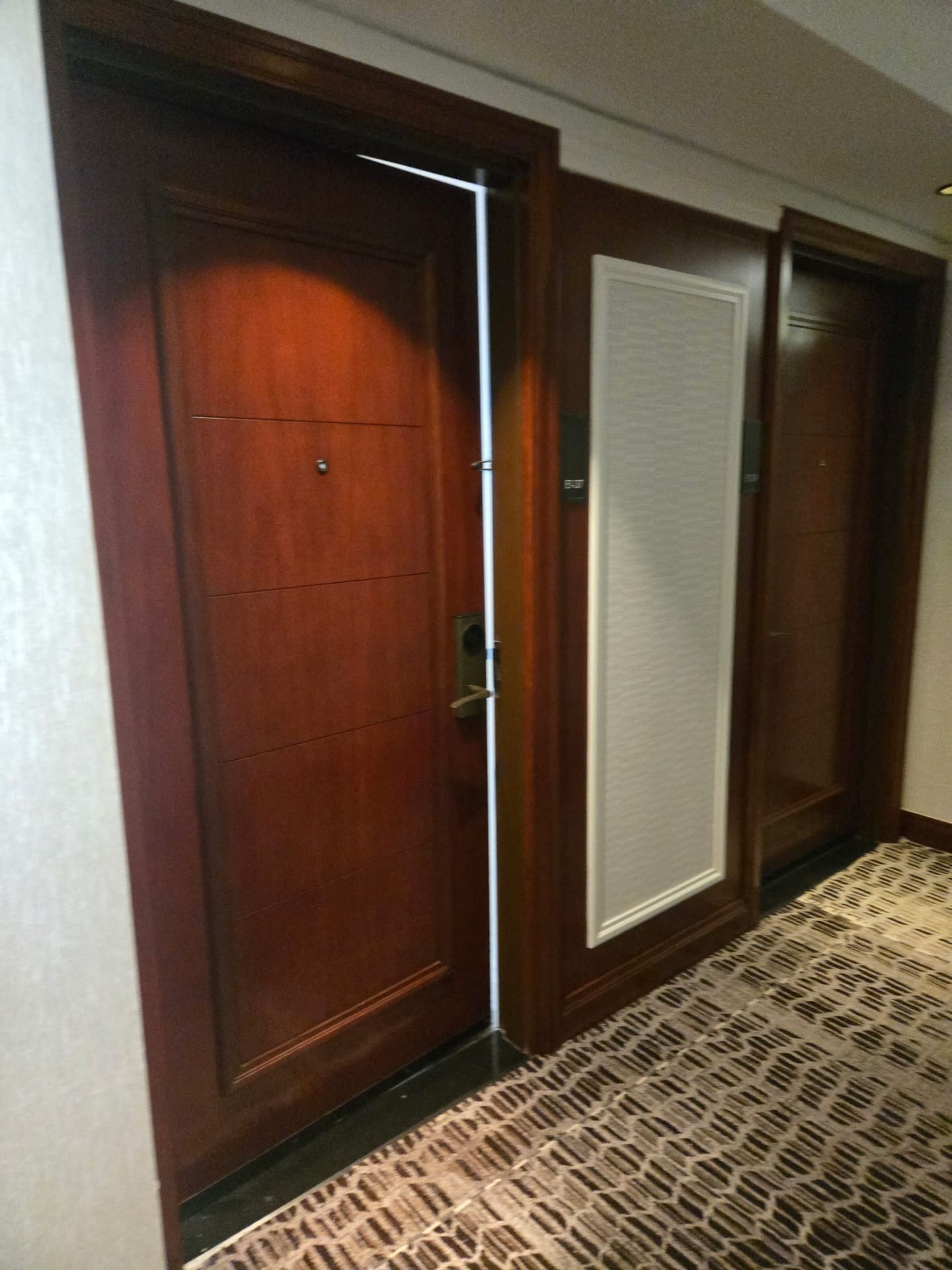
Delamination. On veneered panels, doors and casework, sustained moisture separates the veneer from the substrate. A small lifted edge can be re-adhered. A face that has bubbled across most of its area cannot be made to lie flat and match, and patching it reads as a patch.
A swollen core. Engineered substrates, particleboard and MDF especially, expand irreversibly when saturated. The material does not return to dimension when it dries. Sanding a swollen panel flat removes the face and leaves a thin spot.
Active rot or mould in the substrate. This is a remediation question before it is a finish question. Refinishing over it buries a problem that will return, and in an occupied building that is the wrong trade-off regardless of cost.
Find the source before scoping the repair
This is the step most often skipped and it determines whether the work lasts.
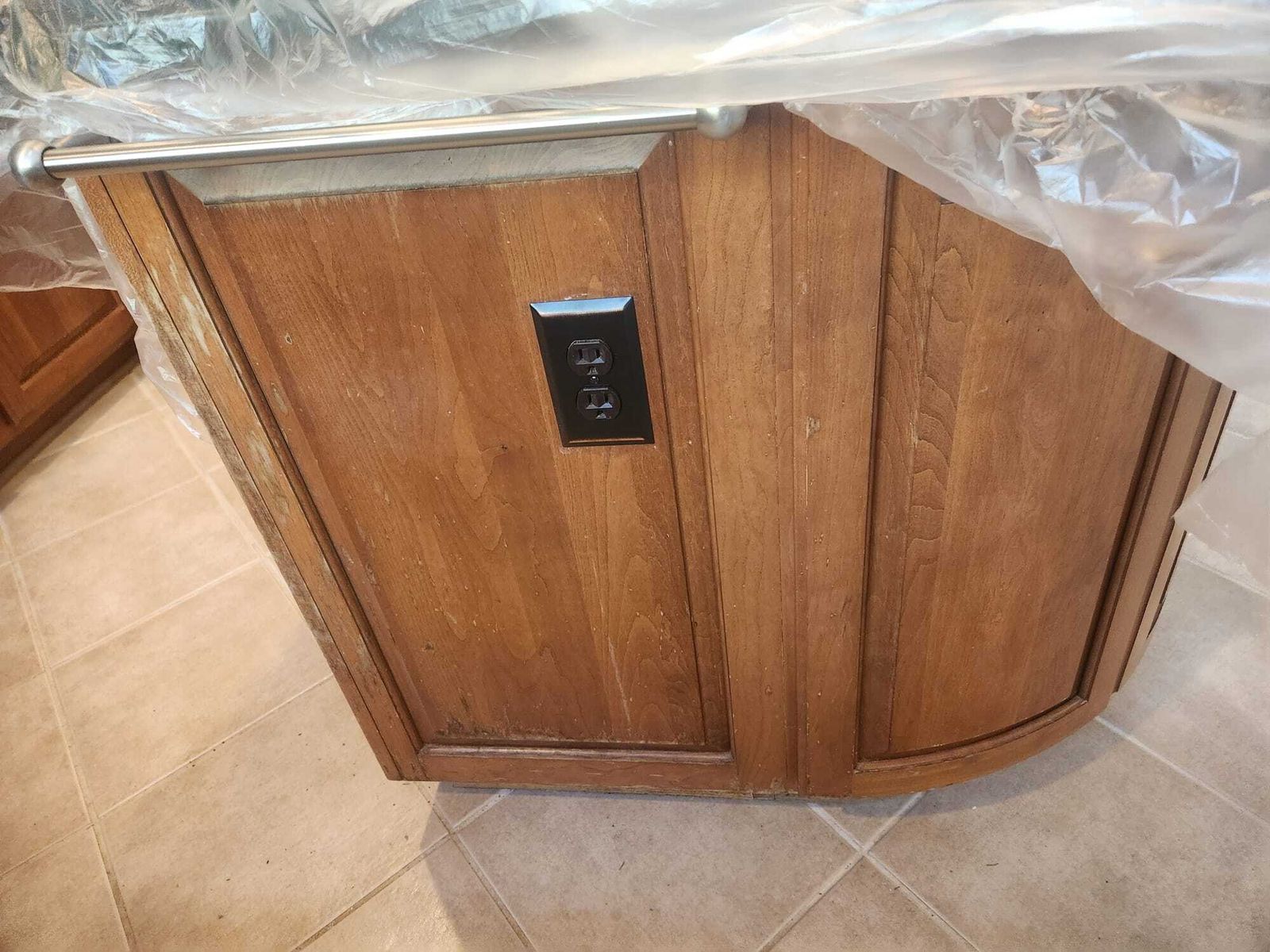
Water damage on wood has a source, and the source is frequently still active. A window sill that stains every spring, a bar top under a leaking tap, paneling below a chilled-water riser, a door at the bottom of a stair that takes wet umbrellas. Restoring the wood without addressing the source produces the same damage on a slower clock.
Rose will say so at assessment rather than after. Where the source is still live, the sequence is fix, dry, then restore, and the drying step needs real time. Wood that is refinished before it has returned to equilibrium moisture content will move under the new finish and crack it.
What restoration involves
- Dry to equilibrium. Not to the touch. Wood that feels dry can still be well above the moisture content of the surrounding material.
- Strip the affected area and enough of the surrounding surface to blend. Spot repairs that stop at the edge of the stain almost always show.
- Neutralise chemical staining where tannin and metal have reacted, before sanding.
- Sand back the affected fibres, with the grain, to sound material.
- Rebuild colour in stages. A repaired area that has been sanded deeper than its surroundings will take stain differently, so colour is built up and checked rather than applied once.
- Finish the whole surface, not the patch. This is what separates an invisible repair from a visible one. A recoat that covers only the repaired zone leaves a sheen boundary.
Frequently asked questions
Can a white ring be removed from a conference table?
Usually yes, and often without refinishing the whole table. A white ring is moisture trapped in the finish rather than damage to the wood, which is the most recoverable form of water damage there is.
Why did a previous repair come back?
The two common causes are a chemical stain that was sanded rather than neutralised, so it bled back through the new finish, and wood that was refinished before it had fully dried, so it moved under the coating. Both are avoidable and both take time rather than money.
Can water-damaged veneer be saved?
A lifted edge or a small blister, generally yes. A face that has delaminated across most of its area, generally no. The deciding factor is how much of the face is still bonded.
Does insurance usually cover this?
That is a question for the carrier and the policy, not for a finish contractor. What Rose can supply is a written assessment describing the damage, its likely cause and the scope required, which is normally what a carrier asks for.
Have it assessed before it spreads. Rose Restoration has restored water-damaged architectural wood and furniture across DC, Maryland and Virginia since 1978. Request a free on-site assessment or call 703-327-7676.
Related: Architectural wood restoration · Furniture restoration · Mould and stain removal · Wood restoration cost guide
Looking for something else?
Get a Free Assessment from Rose Restoration
Tell us about your marble, stone, terrazzo, or concrete and our senior technicians will recommend the right restoration approach. Family-run and trusted across Washington DC, Maryland, and Virginia since 1978.
Call (703) 327-7676 · Email info@roserestoration.com · schedule a time · or send us photos.
Restore. Don't replace.
48 years of polishing marble, terrazzo, concrete, and tile across Washington DC, Northern Virginia, and Maryland. IMF, Four Seasons, Smithsonian, and the Virginia State Capitol trust us — you can too.