
 By Tom Kuhn, CEO, Rose Restoration
Rose Restoration has restored marble, terrazzo, concrete, and natural stone across DC, MD, and VA since 1978.
Walk into a panelled boardroom that has not been touched in fifteen years and one wall will look noticeably worse than the rest. It is almost always the wall with the windows.
Paneling does not age evenly, and that is the single most useful thing to understand before scoping a restoration. Rose Restoration has restored architectural wood across DC, Maryland and Virginia since 1978. Request a free assessment or call (703) 327-7676.
Paneling fails in zones, not uniformly
UV does the most damage and gets the least attention. Sunlight through glass both fades the stain and yellows the clear coat above it. Two effects, opposite directions: the wood goes lighter, the finish goes amber. A south or west wall can drift several shades from a north wall in the same room over a decade, and neither wall looks wrong until you see them together.
The bottom eight inches take mechanical damage. Vacuum heads, chair backs, cleaning carts and feet. This band is usually scuffed, chipped and stripped of finish while the panel above it is intact.
Event damage is concentrated and recent. Tape, adhesive hooks and command strips used for signage pull finish off in clean rectangles. In a hotel or conference centre this is often the most visible damage in the room and the newest.
Joints and seams open. Panels move with humidity. Over years the reveals between them widen unevenly, and filler applied in a previous repair shrinks and cracks.
What restoration involves, zone by zone
A good scope treats these as separate problems inside one job rather than sanding the whole room to the same depth.
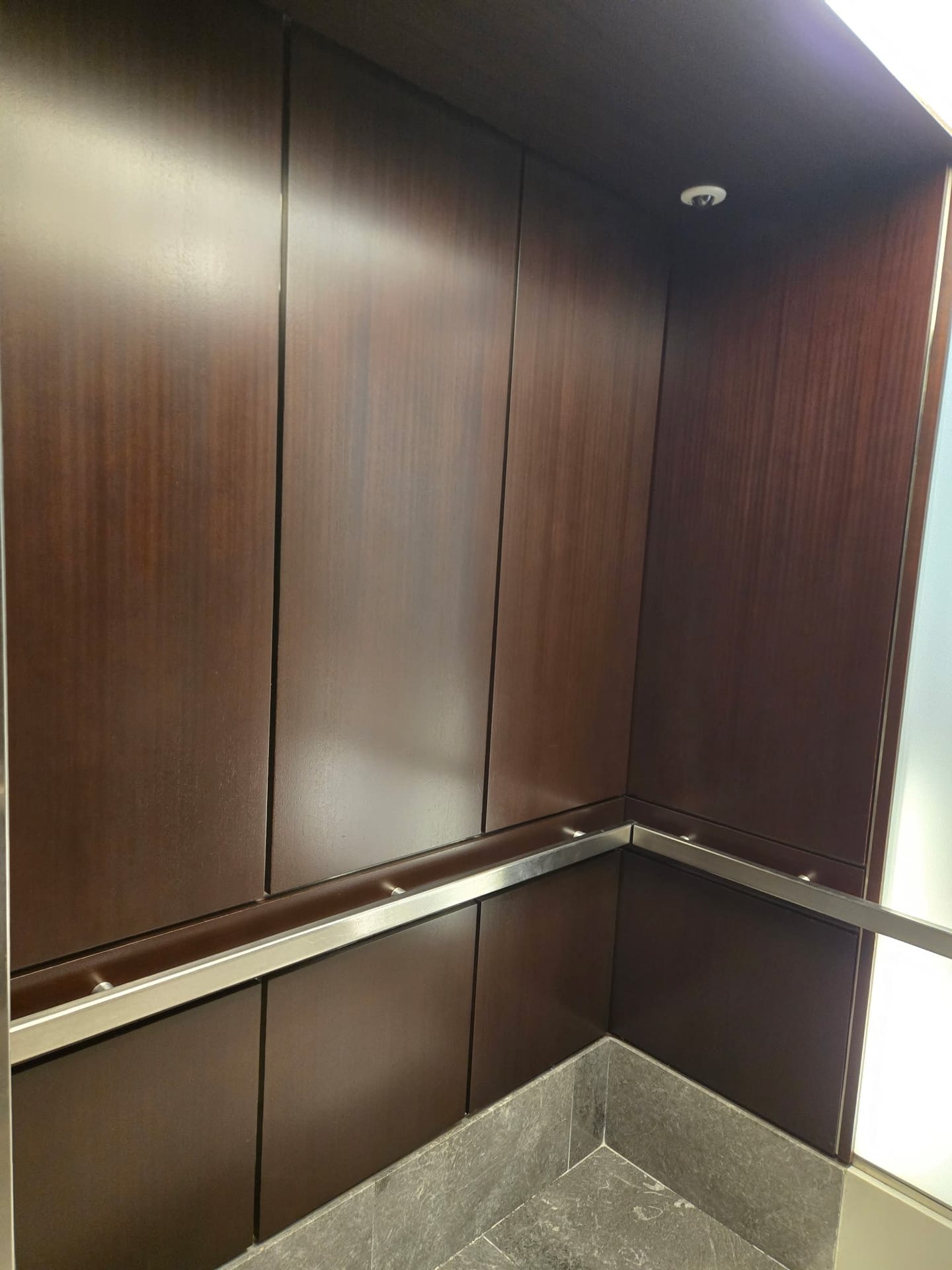
UV-affected walls need the failed clear coat stripped rather than scuffed, because the yellowing is in the coating and no amount of new finish on top corrects it. Once stripped, the faded stain underneath is brought back to match the unfaded walls. This is the part that requires judgement: the target is not the original colour, it is the current colour of the walls that did not fade.
Impact zones are filled, levelled and sanded before any finish work. Filler that is colour-matched at this stage disappears; filler matched after staining does not.
Adhesive damage is often the easiest win in the room. Where the adhesive pulled finish but not wood, a localised strip, stain and recoat blends completely.
Open joints are a decision, not a default. Filling a joint that is still moving guarantees a crack. Where movement has settled, the joint is filled and finished. Where it has not, the honest answer is to leave it and address the humidity.
Matching is the whole difficulty
Any competent finisher can make a panel look good on its own. Making a restored panel disappear next to a forty-year-old neighbour depends on four things landing together: stain colour matched to the aged wood in place, sheen matched to the surrounding run, sanding with the grain, and the same number of topcoat layers so the depth reads the same.
Sheen is the one that catches people out. A satin patch inside a semi-gloss wall is visible from the doorway even when the colour match is perfect, because the eye reads reflection before it reads hue.
Rose approves sample panels on site under the room’s own lighting before the full run starts. A match approved under shop lights will not hold under a boardroom’s warm downlights.
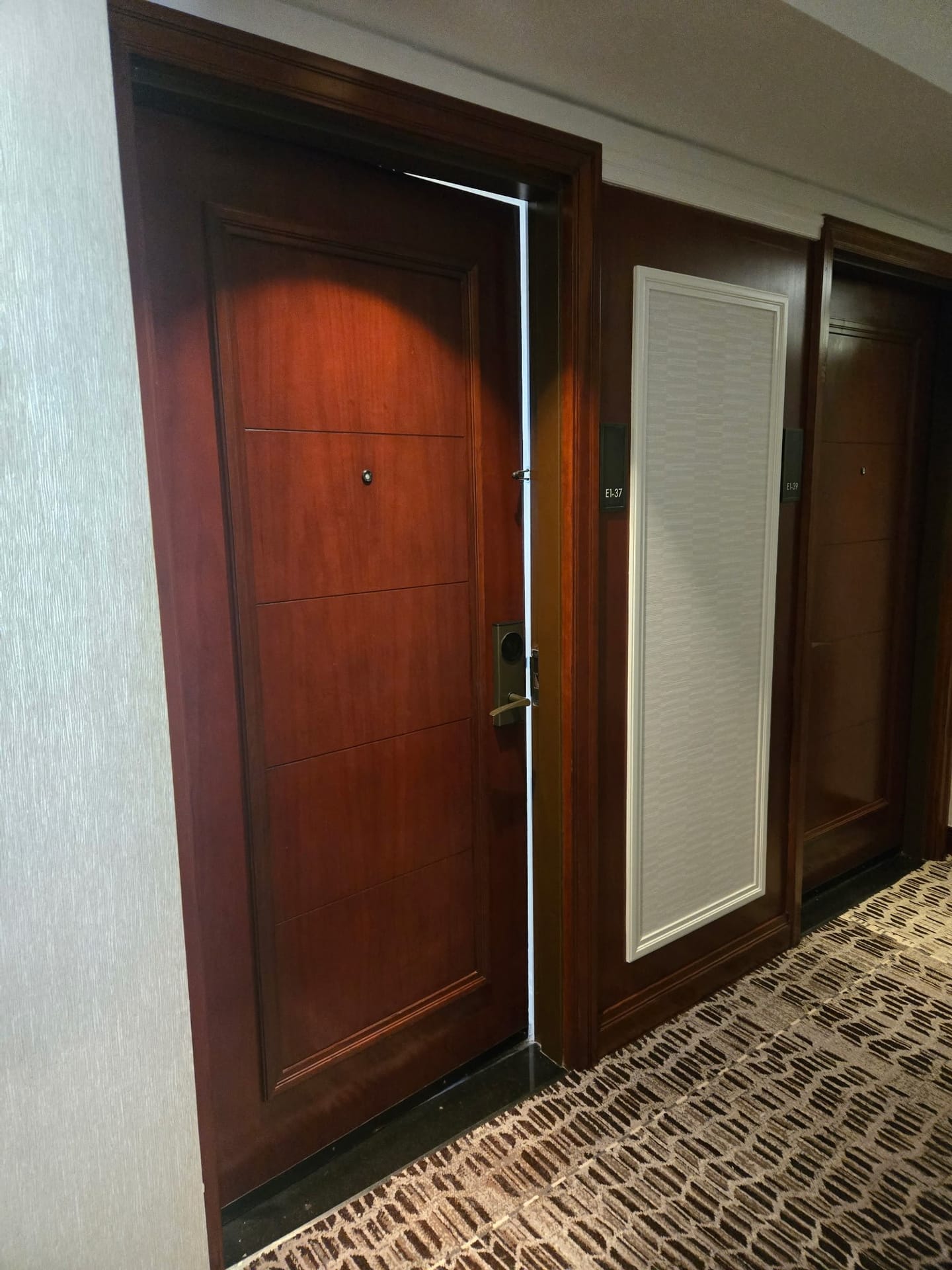
Working in an occupied office
Boardrooms and executive offices are rarely available during business hours, and the work carries odour and dust that an occupied floor will not tolerate.
The practical approach is containment plus scheduling. The room is sealed and put under negative pressure with extraction to the outside, work runs outside business hours, and the room is ventilated and reinstated before the floor reoccupies. Larger scopes are split so one room is always out rather than a whole floor.
Low-odour and waterborne finish systems reduce the problem substantially and are the default on occupied commercial work. They cure faster, which is usually the binding constraint on the schedule.
What it costs, and what moves the number
Published ranges for paneling and millwork are on the wood restoration cost guide. The variables that move a quote most:
- Whether the existing finish must be stripped or can be recoated. This is the single biggest swing, and it is decided by the condition of the existing coating, not by preference.
- Species. Oak, walnut, mahogany and cherry take longer to prepare and match than pine or fir.
- Colour change versus colour match. Matching an existing stain is moderate. Stripping to bare and restaining to a new colour is substantially more.
- Access and hours. Occupied, after-hours work with containment costs more than an empty floor.
- Scale. One wall carries almost the same mobilisation as a whole room.
Frequently asked questions
Can faded paneling be brought back without replacing it?
In nearly all cases, yes. UV damage affects the finish and the top layer of stain, not the wood beneath. Stripping and refinishing restores it. Replacement is warranted mainly where veneer has delaminated across a face or water has reached the core.
Can you restore only the wall that faded?
Technically yes, and it is often the wrong call. A single restored wall next to three aged walls is a match problem rather than a restoration problem. Where budget forces it, the restored wall is matched down to the others rather than taken back to new.
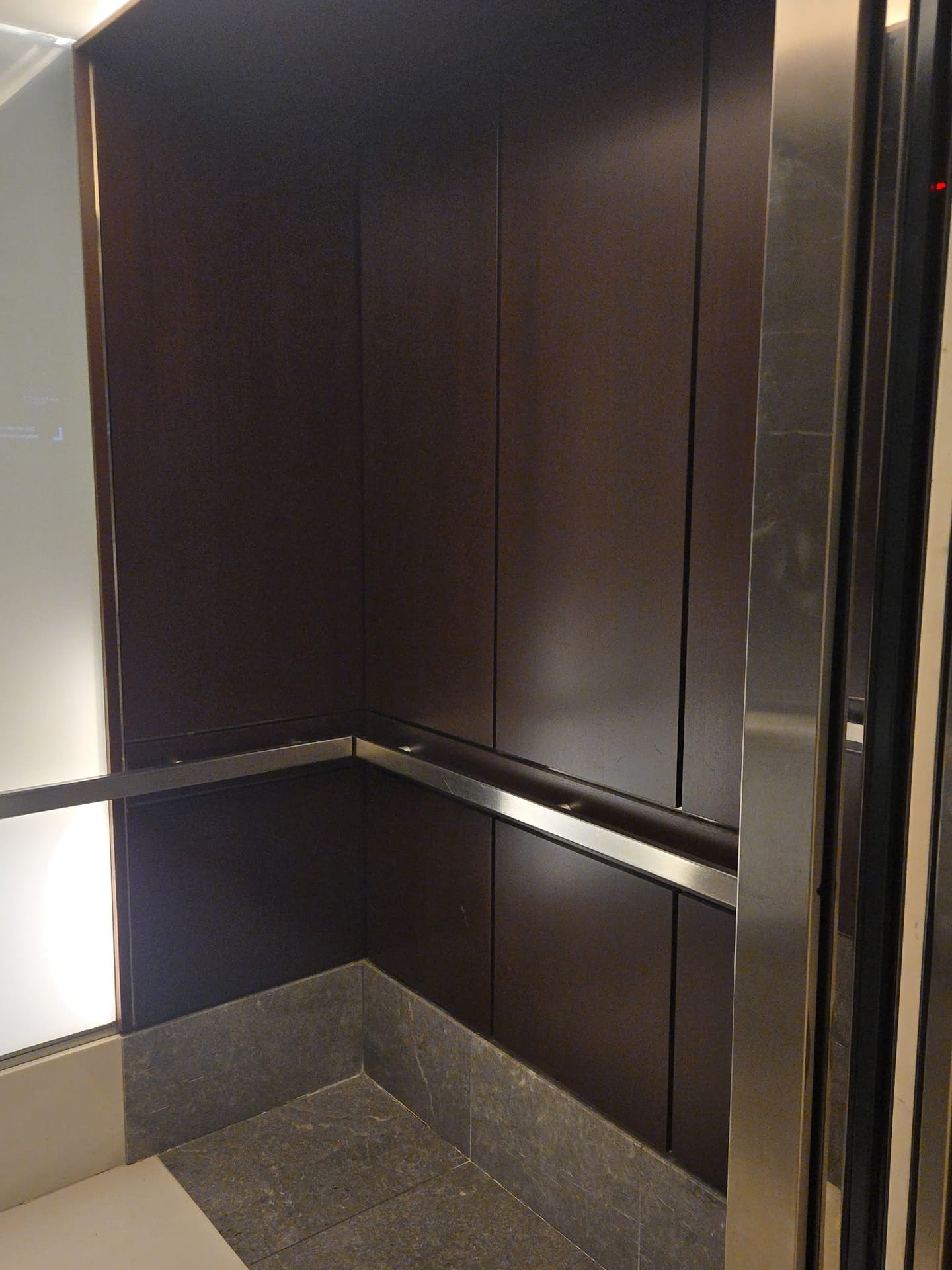
How long does a boardroom take?
Typically a small number of consecutive nights for a single room, set by topcoat cure rather than by sanding. Multi-room scopes are sequenced so occupancy is never fully interrupted.
Will the room smell afterwards?
With low-odour waterborne systems, containment and extraction, rooms are generally reinstated for next-day use. This is confirmed at assessment, not assumed.
Get the room assessed. Rose Restoration has restored paneling, millwork and trim in DC, Maryland and Virginia offices since 1978. Request a free on-site assessment or call 703-327-7676.
Related: Architectural wood restoration · Millwork and paneling · Wood restoration cost guide · Office building restoration
Looking for something else?
Get a Free Assessment from Rose Restoration
Tell us about your marble, stone, terrazzo, or concrete and our senior technicians will recommend the right restoration approach. Family-run and trusted across Washington DC, Maryland, and Virginia since 1978.
Call (703) 327-7676 · Email info@roserestoration.com · schedule a time · or send us photos.
Restore. Don't replace.
48 years of polishing marble, terrazzo, concrete, and tile across Washington DC, Northern Virginia, and Maryland. IMF, Four Seasons, Smithsonian, and the Virginia State Capitol trust us — you can too.