
 By Tom Kuhn, CEO, Rose Restoration
Rose Restoration has restored marble, terrazzo, concrete, and natural stone across DC, MD, and VA since 1978.
Rose Restoration has restored architectural surfaces across DC, Maryland and Virginia since 1978.
When a property manager calls about wood restoration, the first thing worth settling is which wood.
Most search results for “wood restoration contractor” return floor sanders. That is a different trade with different equipment, different dust containment and a different licence. Rose does not sand or refinish wood floors. What Rose restores is the architectural wood — the doors, the millwork, the paneling, the handrails, the boardroom table, the stair treads. In a commercial building that is usually the wood people actually touch, and it is almost always the wood that looks worst.
This article covers what that work involves, how it is scoped, what drives the price, and when the honest answer is replacement.
The wood that fails first is the wood people touch
Walk any office lobby or hotel corridor and the wear pattern is predictable.
Doors fail first. The finish goes around the handle before it goes anywhere else, because that is where skin oil, hand sanitiser and cleaning spray land every day. Then the bottom rail picks up cart and luggage strikes. Then the leading edge frays where it meets the frame. A door can look ruined while the wood underneath is perfectly sound.
Handrails and stair treads are next, for the same reason. Continuous hand contact strips a finish faster than sunlight does.
Paneling fails from the outside in. UV through a window yellows a lacquer and fades the stain under it, so a conference room’s south wall ages years ahead of the north wall. Vacuum strikes chew the bottom eight inches. Tape and adhesive from event signage pulls finish off in patches.
Millwork fails at the joints and the profiles. Crown, casing, wainscoting and chair rail take impact damage at corners, and repeated repainting fills the profile until the detail disappears.
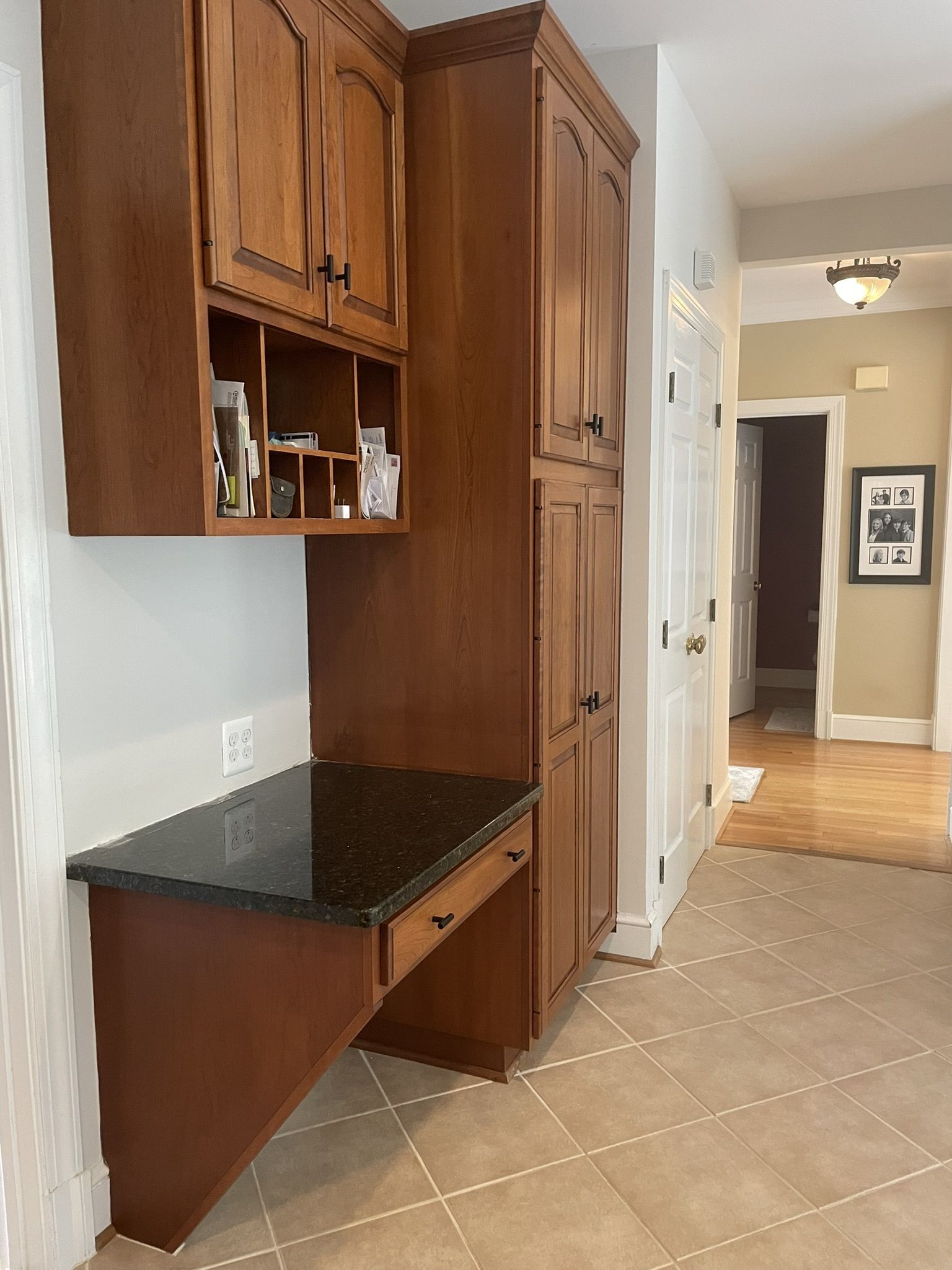
Furniture fails unevenly. A boardroom table shows ring marks and heat damage in a band around each seat and nowhere else.
None of this is structural. In nearly every case the wood is fine and the finish has failed, which is why restoration is usually the cheaper answer by a wide margin.
What restoration actually involves
Wood restoration is matching work. That is the whole difficulty of it.
A new finish is easy. Making a repaired section disappear into forty-year-old paneling next to it is not, and it depends on getting four things right at once:
- Stain colour. Matched to the aged surrounding wood, not to the original formula. Wood darkens; a colour matched to a 1985 spec will read wrong in 2026.
- Sheen level. A satin patch inside a semi-gloss run is visible from across a lobby even when the colour is perfect.
- Grain direction. Sanding across the grain on a repair leaves scratch patterns that show up under the finish, particularly on oak.
- Profile. A replaced section of millwork has to match the original router profile, which on older buildings often means cutting a custom knife.
The sequence for most scopes is: strip the failed finish, repair dents, gouges and delamination, sand to a consistent substrate, apply matched stain, then build a protective topcoat suited to how hard the surface will be used. A conference room door and a public lobby door get different topcoats, because one takes fifty touches a day and the other takes five thousand.
On-site or workshop: the decision that drives the schedule
This is the question that matters most to a facility manager, and it is decided by whether the element comes off the wall.
Workshop restoration applies to anything removable: doors, loose panels, furniture, detachable trim. The element is pulled, restored under controlled temperature and humidity, and reinstalled. The finish is better, the schedule is more predictable, and the cost per unit is usually lower because the workflow is efficient. The trade-off is a gap — a door off its hinges is an opening — so doors are typically pulled and returned overnight, or swapped in batches so no opening stays empty through a business day.
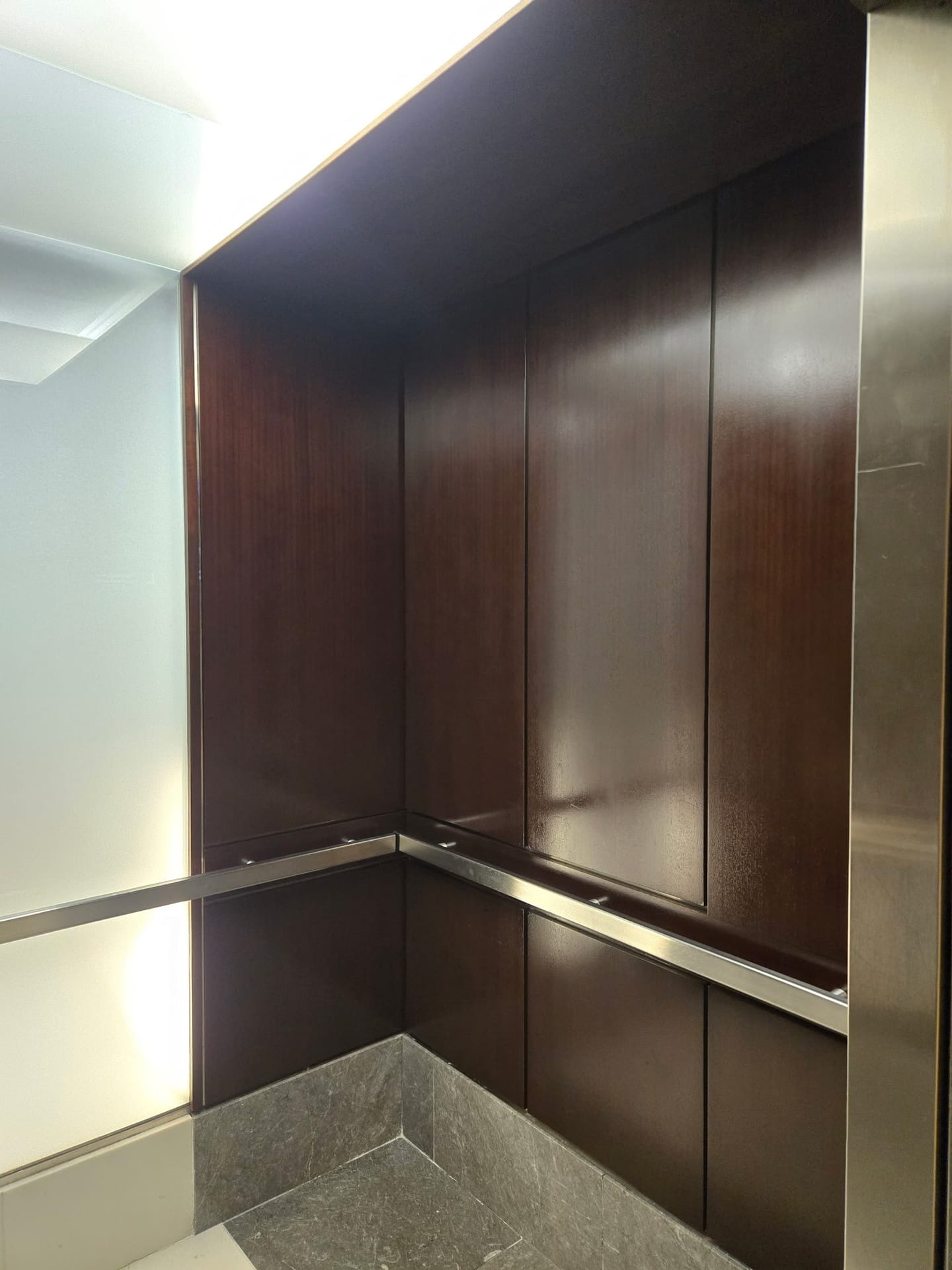
On-site restoration applies to anything fixed: built-ins, paneling, stair treads, installed handrails, crown. The work happens in place, which means containment, ventilation and odour management around occupied space, and it means sequencing around the building’s hours.
Most real projects are both. A hotel corridor package is typically doors to the shop, frames and handrails in place, run floor by floor overnight so no guest room loses its door and no corridor closes during the day.
What drives the cost
Published ranges for the DC metro market sit on the wood restoration cost page. The variables behind them:
| driver | cheaper | more expensive |
|---|---|---|
| Species | Pine, fir | Oak, walnut, mahogany, cherry |
| Condition | Worn finish, sound wood | Deep gouges, water damage, failed previous finishes, delamination |
| Target finish | Re-clear-coat | Match an existing stain, then full strip-and-restain, then hand-rubbed and specialty finishes |
| Scale | Full lobby, whole boardroom, corridor package | A single surface, which carries the same mobilisation as a large one |
| Location | Removable to the shop | Fixed, occupied, restricted access hours |
The scale point is the one that surprises people. Mobilising a finish crew for one door costs nearly what mobilising for twenty costs. If a building has a list of wood problems, doing them together is substantially cheaper per surface than doing them one call at a time.
When replacement is the right answer
Restoration is not always right, and it is worth saying where it is not.
- Structural failure. Rot, insect damage, or a door that has racked out of square is a replacement.
- Delamination across a whole veneer face. Veneer that has lifted over most of a panel cannot be re-adhered invisibly. Patching a face this far gone reads as a patch.
- Water damage that reached the core. Surface staining restores. A swollen, separated core does not.
- A finish schedule change the client wants anyway. If a lobby is being redesigned to a different wood and colour, restoring the old finish first is money spent twice.
Everything else — worn finish, dents, scratches, UV fade, adhesive damage, handle wear, ring marks, chipped profiles — restores, and restores for a fraction of replacement cost with none of the lead time on new millwork.
Frequently asked questions
Does Rose refinish wood floors?
No. Rose restores architectural wood — doors, millwork, paneling, handrails, stair treads, furniture and cabinetry. Floor sanding and refinishing is a separate trade. Stair treads are in scope.
Can wood doors be refinished without removing them?
Yes, and it is done regularly. On-site refinishing avoids the opening a removed door leaves. Workshop restoration produces a better finish under controlled conditions, so most projects pull doors overnight and reinstall before the building opens.
How do you match a stain on forty-year-old paneling?
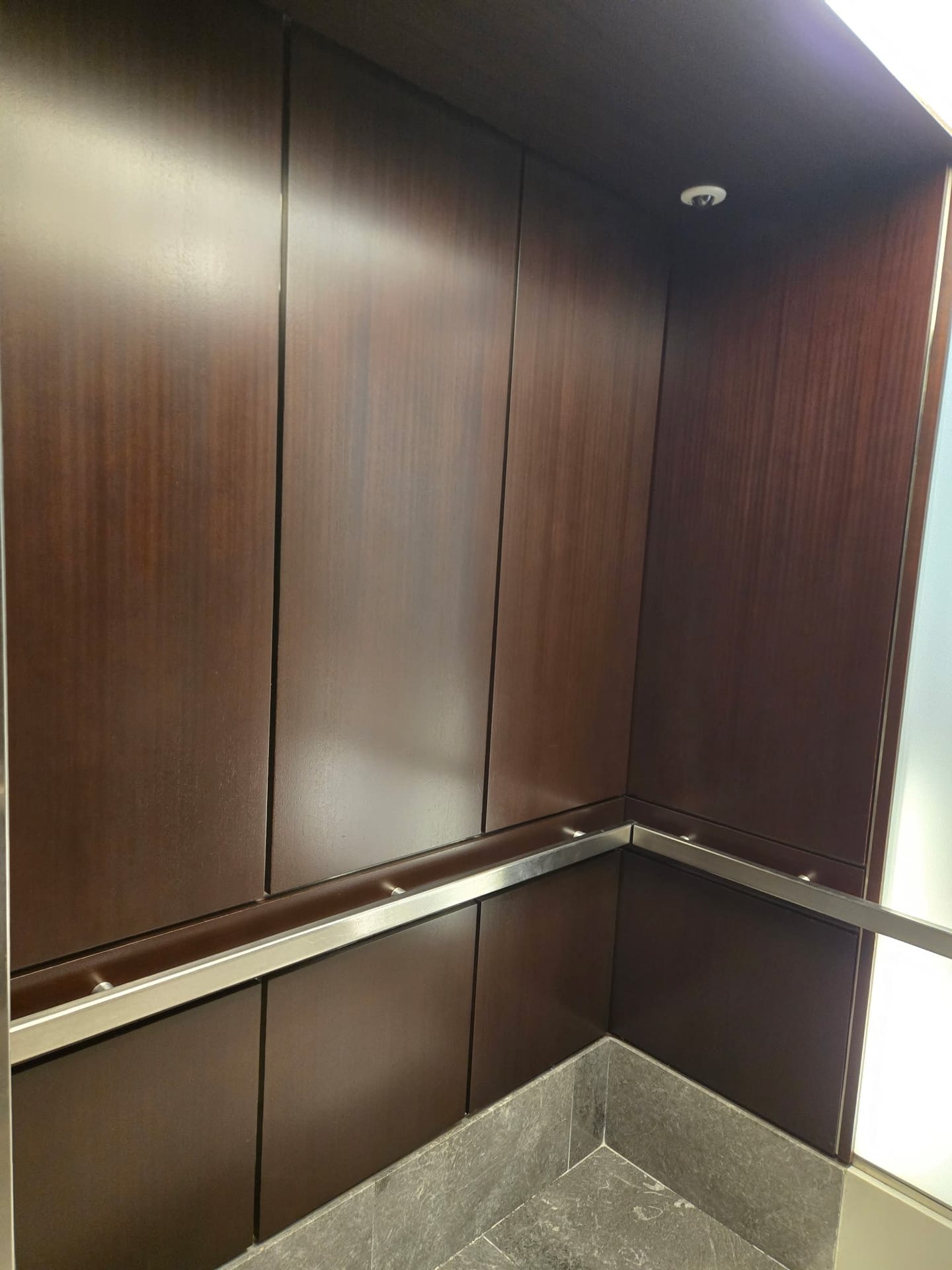
By matching to the aged wood in place rather than to the original specification, using sample panels approved on site before the full run starts. Wood darkens over decades, so a match to the original formula will read wrong.
Can this be done in an occupied building?
Yes. Most commercial wood work is scheduled outside operating hours with containment and ventilation in place. Rose runs overnight scopes across DC, Maryland and Virginia.
How long does a finish last?
It depends almost entirely on contact. A public lobby door handle area will show wear years before an executive office door does. Rose carries a one-year workmanship warranty, and the realistic question for a maintenance budget is which surfaces come back soonest, not whether they come back.
Ready to scope it? Rose Restoration has restored architectural wood across DC, Maryland and Virginia since 1978 with our own finish crews. Request a free on-site assessment or call 703-327-7676.
Related: Architectural wood restoration · Wood door refinishing · Antique furniture restoration · Wood restoration cost guide · Hospitality restoration
Looking for something else?
Get a Free Assessment from Rose Restoration
Tell us about your marble, stone, terrazzo, or concrete and our senior technicians will recommend the right restoration approach. Family-run and trusted across Washington DC, Maryland, and Virginia since 1978.
Call (703) 327-7676 · Email info@roserestoration.com · schedule a time · or send us photos.
Restore. Don't replace.
48 years of polishing marble, terrazzo, concrete, and tile across Washington DC, Northern Virginia, and Maryland. IMF, Four Seasons, Smithsonian, and the Virginia State Capitol trust us — you can too.