
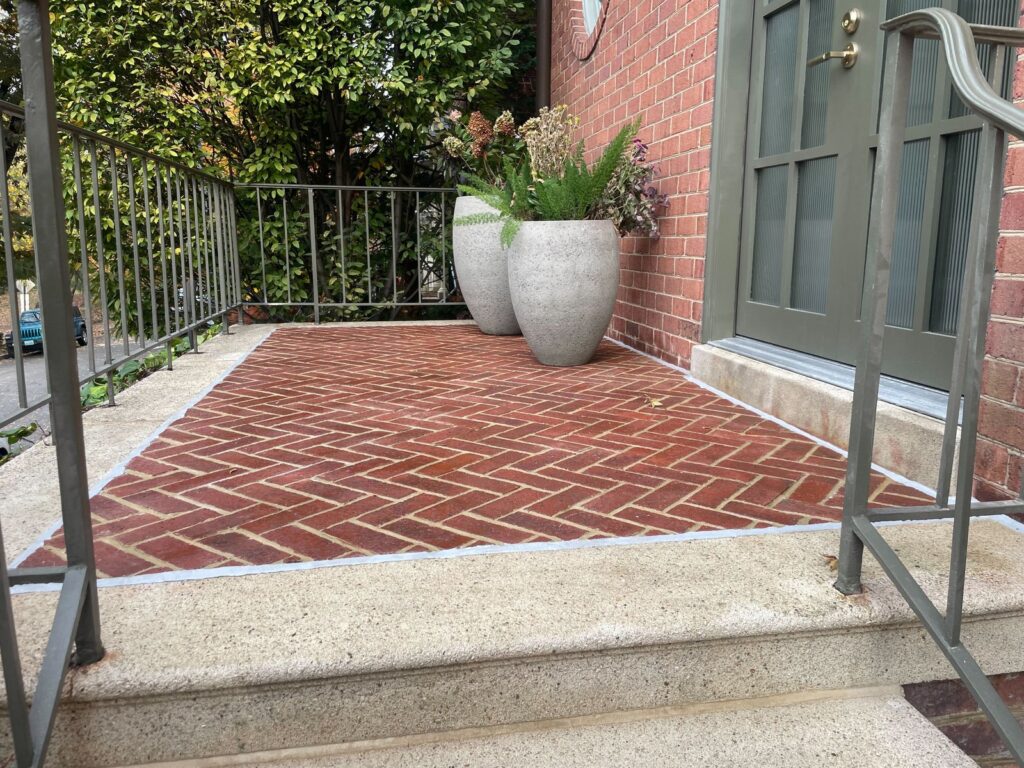

Herringbone brick residential front entry porch restored with aggregate concrete borders by Rose Restoration

Stone Care 101: Best Practices for Maintaining Office Building Stone Facades

Maintaining stone facades on office buildings requires regular inspection, professional cleaning, sealing, and timely repointing to prevent weather damage, staining, and structural deterioration. Neglecting exterior stone maintenance leads to efflorescence, spalling, and costly emergency repairs.

For commercial property owners and facility managers in the Washington DC metro area — including Fairfax, Arlington, Alexandria, and throughout Northern Virginia, Maryland, and DC — a proactive stone maintenance program protects your investment, preserves curb appeal, and avoids far more expensive emergency interventions down the road. Rose Restoration International has provided stone care and building restoration services across the VA/MD/DC region for over 40 years. This guide covers everything you need to know about maintaining office building stone facades the right way.

Why Office Building Stone Facades Need Regular Maintenance

Commercial stone facades face relentless environmental pressure. In the DC metro climate, the combination of freeze-thaw cycling, UV radiation, acid rain, and airborne pollution creates a uniquely aggressive weathering environment for exterior masonry.

Freeze-thaw damage is one of the most destructive forces in our region. Water infiltrates micro-cracks and porous mortar joints, then expands as it freezes, widening those cracks with every cycle. Over several winters, this process leads to visible spalling, delamination, and structural damage that can only be remedied with costly stone replacement or advanced consolidation treatments.

Acid rain and urban pollution react chemically with calcium-based stones like limestone and marble, dissolving the surface over time. Even granite and sandstone are not immune — pollution deposits create crusts that trap moisture and accelerate decay.

Mortar joint deterioration is often the first sign of facade trouble. As mortar ages, it becomes brittle and begins to crack or fall out entirely, allowing water to penetrate behind the stone. Once water reaches the substrate, freeze-thaw damage, biological growth, and efflorescence follow quickly.

Biological growth — algae, moss, lichen, and mold — thrives on shaded, moisture-retaining stone surfaces. Left untreated, biological growth not only stains the stone but the root systems of lichens and mosses physically degrade the surface over time.

Regular professional maintenance interrupts these cycles before they become expensive problems. Most facility managers find that a consistent maintenance program costs a fraction of reactive repair work.

Common Exterior Stone Types in Commercial Buildings

Not all stone weathers the same way. Understanding the material your building’s facade is made from is essential for choosing the right maintenance approach.

Limestone is among the most common commercial cladding materials, especially in government and institutional buildings throughout DC. It is relatively soft (Mohs 3-4) and calcium-based, making it highly susceptible to acid rain etching, biological growth, and surface erosion over time. Regular cleaning and sealing are critical.

Granite is far more durable — hard (Mohs 6-7), resistant to acid, and slow to weather. Office towers frequently use granite for ground-floor cladding and column bases. Even granite, however, requires periodic cleaning and inspection of mortar joints and sealants at panel joints.
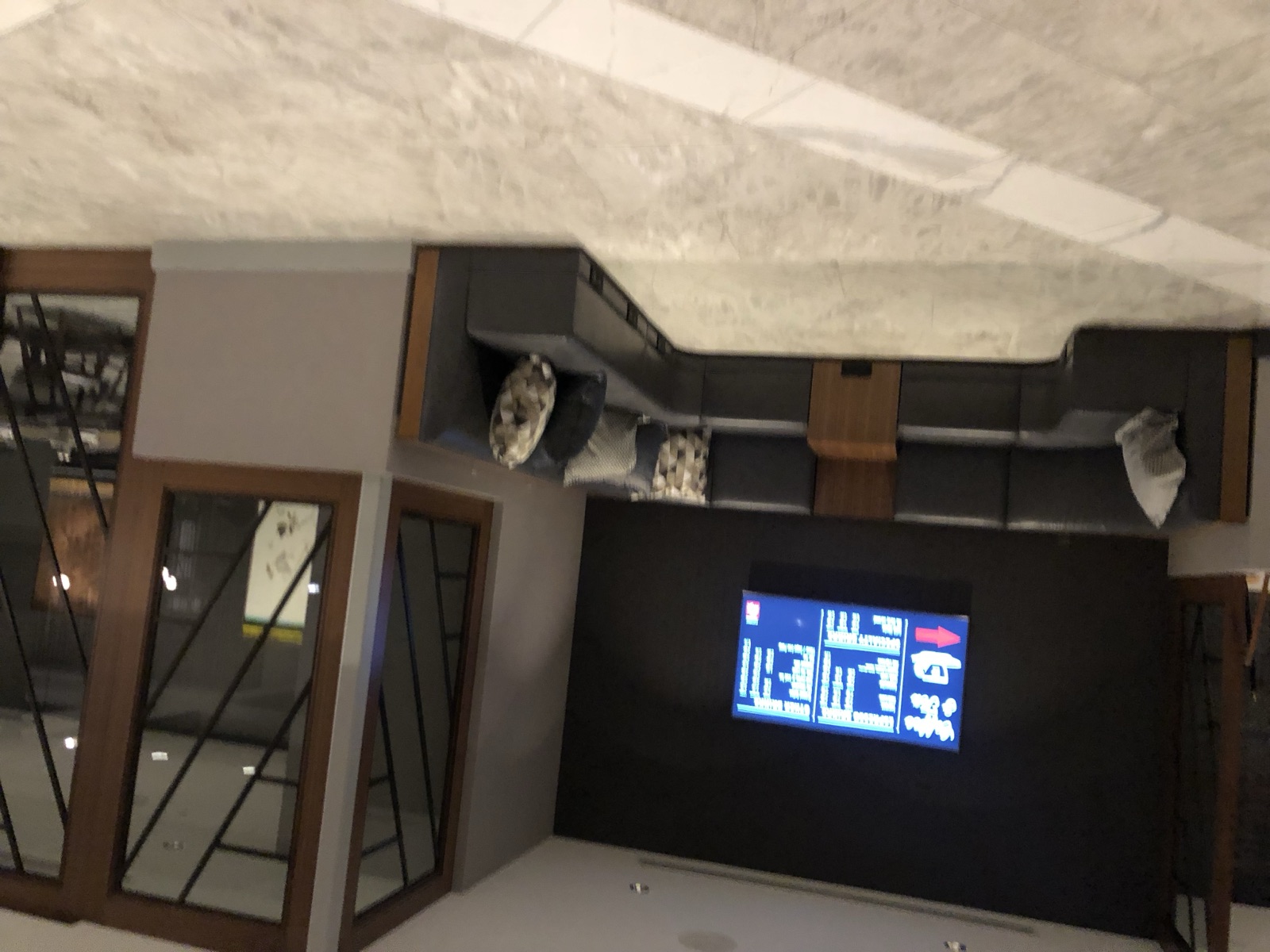
Marble is used in upscale commercial lobbies and some historic building exteriors. Like limestone, it is calcium-based and vulnerable to acid rain and pollution etching. Exterior marble requires more frequent attention than interior marble.

Sandstone is extremely porous and water-absorbent. Many older commercial and institutional buildings in Northern Virginia and DC feature sandstone. It weathers relatively quickly and benefits greatly from appropriate consolidants and water repellents.

Slate is used for roofing and decorative facade elements. It is durable but prone to delamination as it ages. Broken or slipping slate tiles should be addressed quickly to prevent water infiltration.

Brick with stone trim is the most common combination in the DC metro commercial stock. Stone lintels, sills, cornices, and copings are often the first elements to show wear and require repointing or replacement.

Annual Inspection Checklist for Stone Facades

A structured annual inspection catches problems early and creates a record for budget planning. Here is what a thorough stone facade inspection should cover:

  • Mortar joint condition: Look for cracking, crumbling, missing mortar, or joints that have been painted over (which traps moisture). Focus on horizontal joints, copings, and areas where water collects.
  • Cracking and spalling: Hairline cracks can be monitored; wider cracks or spalling stone faces require immediate attention. Note the pattern — diagonal cracks often indicate settlement, while horizontal cracks may suggest water pressure buildup.
  • Efflorescence: White powdery deposits on the stone surface indicate water is moving through the masonry and depositing dissolved salts. Efflorescence is a symptom of water infiltration, not a cosmetic issue alone.
  • Staining: Rust stains (from embedded iron), biological staining (green, black, or orange), oil stains, and pollution crusts each require different treatment approaches. Note locations and approximate area.
  • Sealant failure at windows, expansion joints, and penetrations: Failed caulk and joint sealants are primary water entry points. Inspect all transitions between stone and other materials — window frames, HVAC penetrations, and structural expansion joints.
  • Biological growth: Check shaded areas, north-facing walls, areas below planters, and any surface that retains moisture. Algae and moss are often present before they become visible as discoloration.
  • Previous repairs: Check condition of past patch repairs, injected consolidants, and previously repointed areas. Repairs can fail prematurely if incorrect materials were used.
  • Ground-level drainage: Ensure water is draining away from the building foundation. Ponding water at the base accelerates deterioration of the lowest courses of stone.

Document findings with photographs and GPS coordinates or elevation drawings for reference in future inspections. A good inspection report becomes the foundation for a five-year maintenance budget.

Professional Maintenance Services for Building Stone

Proper stone maintenance requires professional judgment about cleaning methods, products, and repair techniques. The wrong approach can cause irreversible damage — particularly to softer stones like limestone and marble.

Pressure washing and water cleaning: Most commercial stone facades can be cleaned with low-pressure water washing (well below the pressures typically used for concrete). Professional contractors match pressure, temperature, and nozzle selection to the specific stone type. High-pressure washing on limestone or sandstone can erode the surface and open pores to further damage.

Chemical cleaning: Depending on the stain type and stone, professionals use alkaline cleaners (for biological growth and oil stains), biocides (for algae and mold), iron stain removers, or specialized poultice systems. Acid cleaners are never used on calcium-based stones and should only be applied to granite or other siliceous stones by trained technicians under carefully controlled conditions.

Sealing and water repellent treatment: After cleaning, appropriate sealers or penetrating water repellents protect the stone from future staining and slow the rate of water absorption. Product selection is critical — breathable penetrating silane/siloxane systems are appropriate for porous masonry, while topical sealers are typically reserved for interior applications.

Repointing: Failed mortar joints must be cut out and repointed with a mortar that matches the original in color, texture, and — critically — strength. Over-strong portland mortar in historic or soft stone buildings forces movement stress into the stone itself, causing cracking and spalling. The mortar should always be slightly softer than the stone it is protecting.
Crack repair and consolidation: Structural cracks may require injection grouting. Spalled or delaminating stone can sometimes be stabilized with consolidants. In severe cases, individual stones must be reset or replaced.

Rose Restoration International provides the full range of commercial stone facade maintenance services across Northern Virginia, Maryland, and Washington DC. Learn more about our commercial restoration services.

Creating a Stone Maintenance Schedule

A realistic stone maintenance schedule depends on the building’s age, stone type, local environment, and current condition. As a general framework for commercial office buildings in the DC metro area:

Annually: Professional visual inspection of the entire facade. Document mortar joint condition, cracking, staining, and biological growth. Inspect and replace failed caulk and joint sealants at all window frames, penetrations, and expansion joints. This single step prevents the majority of water infiltration damage.

Every 2 to 3 years: Professional cleaning of the stone facade. Frequency depends on the stone type and exposure — a shaded north wall may need more frequent biocide treatment, while a clean granite facade in a low-pollution area may go longer between cleanings. After cleaning, assess whether resealing is needed.

Every 3 to 5 years: Re-application of water repellent sealer or penetrating treatment, depending on product type and stone porosity. Some silane/siloxane systems on dense stone last 7-10 years; others on porous sandstone or limestone may require more frequent application.

Every 10 to 20 years: Comprehensive repointing of mortar joints throughout the facade. The actual interval varies significantly based on original mortar quality, exposure, and stone type. Historic buildings with lime mortar may go longer if the mortar was well-mixed and the building is well-maintained; modern portland mortar joints in high-exposure locations may need attention sooner.

Budget planning guidance: Facility managers should expect annual maintenance costs (inspection + sealant replacement) to run roughly $0.25 to $0.75 per square foot of facade area, with cleaning and resealing cycles adding $1 to $3 per square foot when performed. A full repointing of a large commercial building represents a more significant capital expenditure but, when properly executed, protects the building for the next decade or two.

Getting regular professional assessments — rather than reacting to visible damage — is the single most cost-effective strategy for commercial stone facade longevity.

Frequently Asked Questions: Office Building Stone Facade Maintenance

How much does professional stone facade maintenance cost for an office building?

Costs vary widely based on building size, stone type, facade condition, and scope of work. Annual inspection and sealant maintenance for a mid-size office building typically runs $2,000 to $8,000. Cleaning and sealing projects range from $3 to $8 per square foot depending on method and products. Repointing is typically priced by the linear foot of joint, running $15 to $45 per linear foot. Rose Restoration provides free estimates for commercial properties throughout the VA/MD/DC region — call 703-327-7676 to schedule an assessment.
How often should office building stone facades be professionally inspected?

Annual inspections are recommended as the baseline. Buildings with older masonry, known water infiltration issues, or significant biological growth may warrant semi-annual inspections. After major weather events — particularly winters with heavy freeze-thaw cycling — an additional post-winter walkthrough is a sound practice for owners of older stone buildings.

Should I hire a general contractor or a stone restoration specialist?

Stone facade work requires a specialist. General contractors typically lack the material science knowledge to select appropriate cleaning products, mortars, and sealers for specific stone types. Using too-strong mortar on a soft stone building, or the wrong cleaning chemical on limestone, can cause damage that costs far more to repair than the original work. Always hire a contractor with documented experience in masonry restoration and stone care.

Do historic office buildings require special treatment?

Yes. Historic masonry requires a preservation-focused approach guided by the Secretary of the Interior’s Standards for the Treatment of Historic Properties. Lime-based mortars, low-pressure cleaning, and reversible treatments are typically required. Over-restoration — aggressive cleaning, hard portland repointing, or inappropriate sealers — is a common mistake that causes lasting damage to historic facades. Rose Restoration has extensive experience with historic properties in Washington DC, Alexandria, and throughout the National Register districts of Northern Virginia.

How does the DC metro climate affect stone maintenance schedules?

The DC metro area has one of the more demanding climates for masonry in the eastern US. Hot, humid summers promote aggressive biological growth on stone surfaces. The region averages 20 to 30 freeze-thaw cycles per winter, more than cities further north that remain frozen for longer periods. Elevated urban pollution levels in DC and Northern Virginia accelerate acid rain damage to calcium-based stones. Combined, these factors mean that facades in this region typically require more frequent maintenance than equivalent buildings in drier or more temperate climates.

Protecting the stone facade of your office building is a long-term investment in the building’s value, safety, and appearance. Whether you manage a single-tenant commercial property in Fairfax or a multi-building campus in Northern Virginia, a consistent professional maintenance program is always more economical than reactive emergency repairs.

Rose Restoration International has served commercial property owners, facility managers, and building owners across Virginia, Maryland, and Washington DC for over 40 years. Our team of stone restoration specialists can assess your building’s current condition, develop a tailored maintenance plan, and execute every phase of work — from cleaning and sealing to repointing and structural repair.

Contact us today for a free commercial facade assessment. Call 703-327-7676 or use the form below.

Liam
Written by

Liam

Administration and IT. Keeps systems, tooling, and internal operations running across the Rose team.

Rose Restoration International

Restore. Don't replace.

47 years of polishing marble, terrazzo, concrete, and tile across Washington DC, Northern Virginia, and Maryland. IMF, Four Seasons, Smithsonian, and the Virginia State Capitol trust us — you can too.

One Response

Schedule Online
BBBACCREDITEDBUSINESSA+
BBB Accredited A+ Rating
ABCVIRGINIAMEMBER
ABC Virginia Member
4.8GOOGLE
4.8 Star Rating 118+ Google Reviews
LICENSED& INSURED
Licensed & Insured VA, MD, DC
Leave a Review
Call Now Schedule a Free Assessment
Call Now Get a Quote