
 By Tom Kuhn, CEO, Rose Restoration
Rose Restoration has restored marble, terrazzo, concrete, and natural stone across DC, MD, and VA since 1978.
Most commercial properties have no metal maintenance plan. They have a metal emergency plan, which activates when a lobby looks bad enough that someone above the facility manager mentions it.
That is an expensive way to run it, because restoring neglected metal costs several times what maintaining it does. Rose Restoration has restored and maintained architectural metal across DC, Maryland and Virginia since 1978. Request a free assessment or call (703) 327-7676.
Start by listing what you actually have
Lobby metal is easy to under-count because it is spread across elements nobody thinks of as a category. A typical Class A lobby contains:
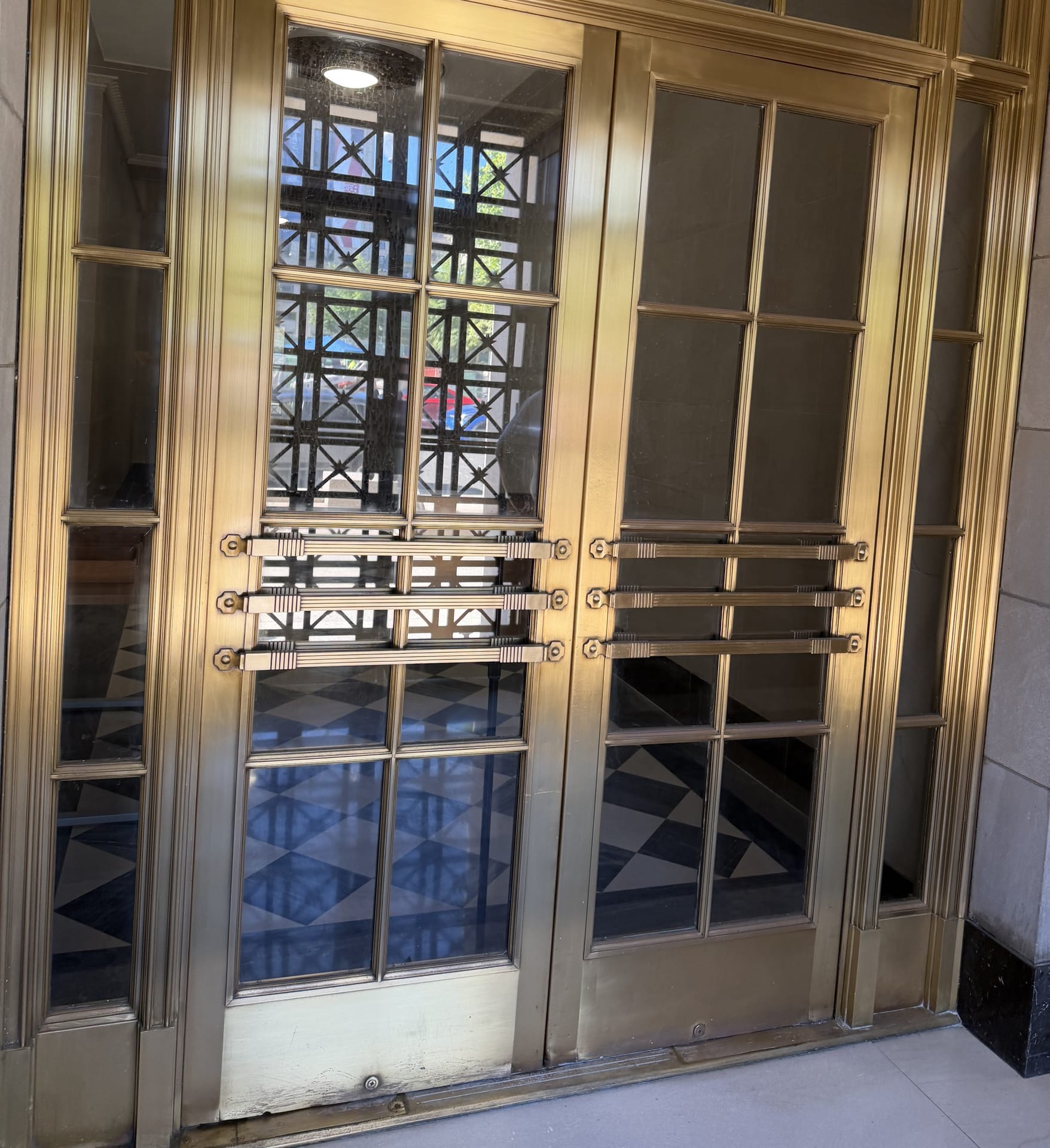
- Entrance doors, frames, pulls and push plates
- Elevator doors, jambs and sills at every floor, not just the lobby
- Elevator cab interiors, which are usually the most damaged metal in the building
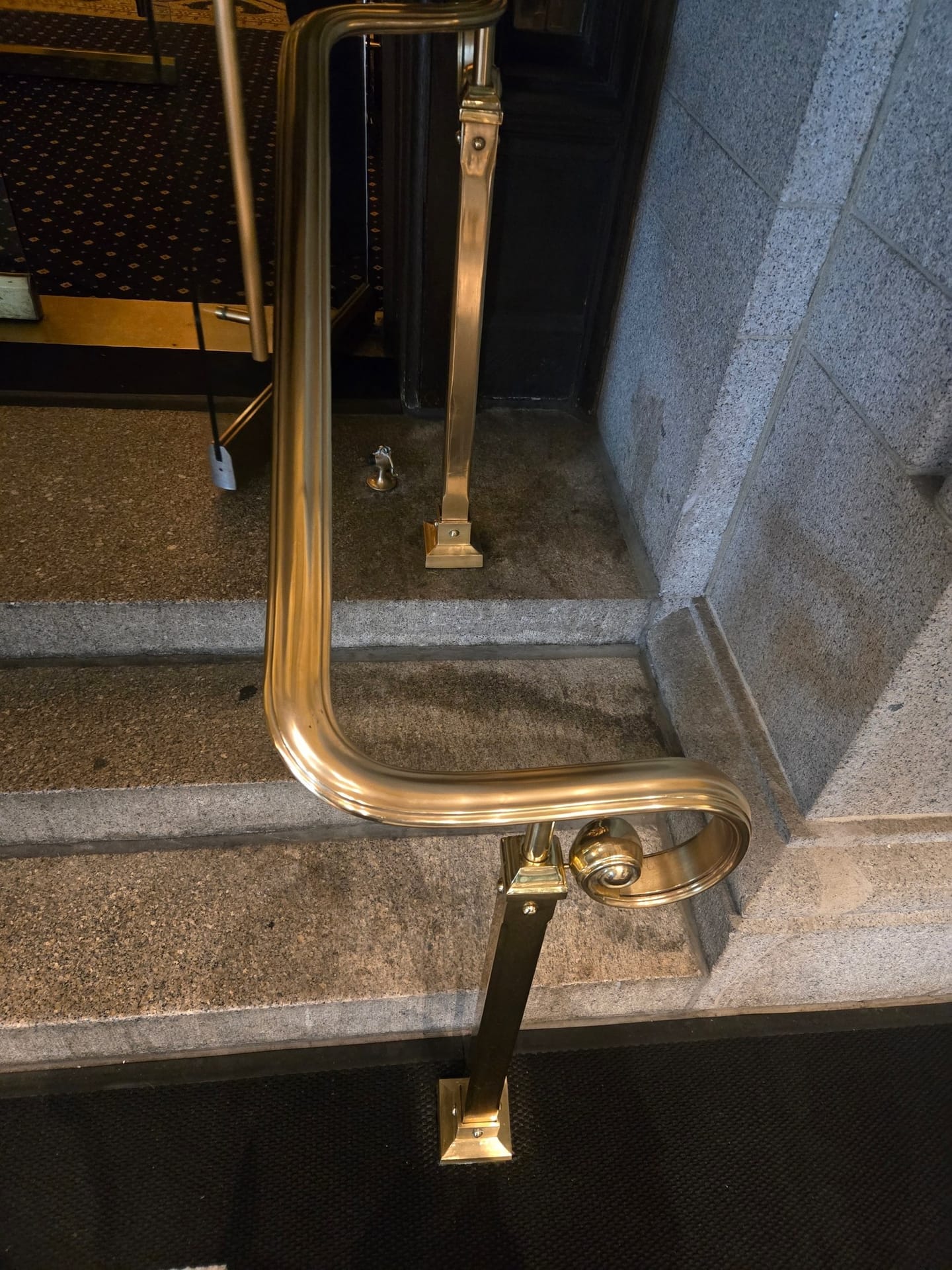
- Handrails and guardrails
- Mailboxes, directories and signage frames
- Kick plates, corner guards and door saddles
- Light fixtures and escutcheons
- Reception desk trim and foot rails
Write it down with the finish and the alloy for each, because the plan is built per finish, not per room. Brass, bronze, stainless, nickel and anodised aluminium do not share a maintenance interval and should not share a line in the budget.
Traffic sets the interval, not the calendar
The useful principle is that metal fails where hands and carts land, and everything else fails far more slowly.
High-contact elements — entrance pulls, push plates, elevator call buttons and jambs, handrails — take the overwhelming majority of the damage and drive the whole programme. In a busy lobby these need attention on a materially shorter cycle than anything else.
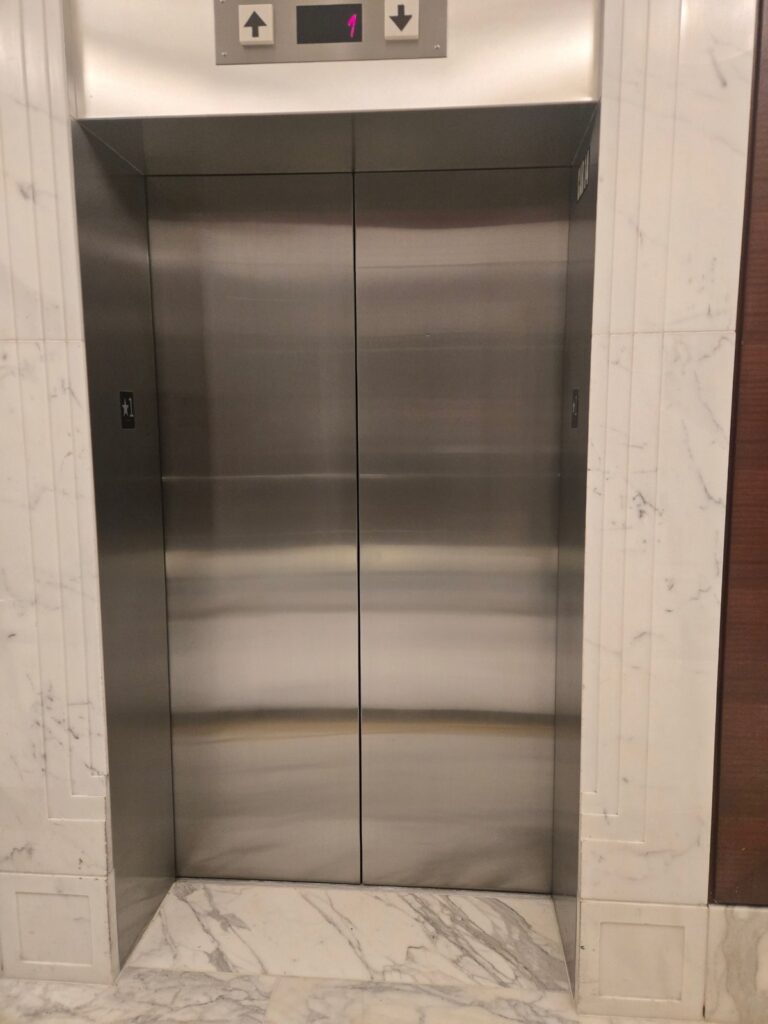
Mid-contact elements — elevator cab walls and doors, kick plates, corner guards — pick up scratches and cart strikes but not the chemical wear that hands cause.
Low-contact elements — upper panels, signage frames, light fixtures, anything above shoulder height — mostly need cleaning and inspection rather than refinishing, and can sit on a long cycle.
A plan that treats all three the same either over-serves the top panels or under-serves the door pulls. Almost always the latter.
The two decisions that shape the budget
Lacquered or living. On brass and bronze this determines whether your costs are lumpy or smooth. A lacquered finish needs nothing until the coating fails, then needs a full strip and recoat. An unlacquered finish needs regular polishing and never produces a step change. Neither is wrong; running a lacquered finish with no reserve for the recoat is.
Who does the routine work. Some of the cycle can be handled in house if janitorial staff are trained and given the correct products. The failure mode is well documented and expensive: brass polish applied to lacquered brass strips the lacquer, and abrasive pads put permanent scratch patterns into satin stainless. If routine care is going in house, the product list and the method should be specified in writing, and abrasives should be off the cart entirely.
What the programme should cover in writing
A programme worth the name specifies:
- An inventory by element, alloy, finish and location.
- A cycle per tier, with high-contact elements separated out.
- A defined scope per visit — clean, polish, spot-repair, or full strip and recoat — so the invoice is comparable year over year.
- A products list for whoever handles routine cleaning, naming what is prohibited as clearly as what is approved.
- Scheduling terms. Most lobby metal work runs outside business hours. Elevator cabs are typically handled per cab overnight with return to service by the next business day, because a building cannot lose a car during the day.
- An annual condition review, which is what catches a lacquer failure before it becomes blotchy across a whole entrance.
Why this pays
Maintained metal stays in the maintenance band. Neglected metal moves into the restoration band, and restoration is a different kind of work: stripping, aggressive polishing to remove pitting and etching, recoating, and in the worst cases panel replacement where corrosion has gone through.
The elements that cross that line first are always the same ones. Entrance hardware and elevator interiors. A programme that protects those two and runs everything else on a longer cycle captures most of the benefit for a fraction of a full-lobby scope.
Frequently asked questions
How often should lobby metal be serviced?
It depends on traffic and finish rather than the calendar, and high-contact hardware needs a materially shorter cycle than everything else. The interval is set at the condition survey, against the specific lobby.
Can our cleaning staff maintain it?
Routine cleaning, yes, with a specified product list and abrasives removed from the cart. Polishing, lacquer work and anything on a satin or brushed finish needs grain matching and should not be handled in house.
Can elevator cabs be done without taking cars out of service during the day?
Yes. Cabs are normally restored per car overnight and returned to service by the next business day. See elevator cab restoration.
What is the single highest-value thing to put on a programme first?
Entrance hardware and elevator interiors. They take the most damage, they are the most visible, and they are the elements that cross from maintenance into restoration first.
Get a condition survey. Rose Restoration maintains and restores architectural metal for offices, hotels and condominiums across DC, Maryland and Virginia. Request a free on-site assessment or call 703-327-7676.
Related: Architectural metal restoration · Elevator cab restoration · Maintenance programmes · For facility managers · Office buildings
Looking for something else?
Get a Free Assessment from Rose Restoration
Tell us about your marble, stone, terrazzo, or concrete and our senior technicians will recommend the right restoration approach. Family-run and trusted across Washington DC, Maryland, and Virginia since 1978.
Call (703) 327-7676 · Email info@roserestoration.com · schedule a time · or send us photos.
Restore. Don't replace.
48 years of polishing marble, terrazzo, concrete, and tile across Washington DC, Northern Virginia, and Maryland. IMF, Four Seasons, Smithsonian, and the Virginia State Capitol trust us — you can too.