Limestone restoration in the DC metro typically runs $8 to $16 per square foot for floors and $300 to $1,200 per project for countertops. Where you land inside that depends on how deep the damage goes, and that is not something anyone can quote from a photo.
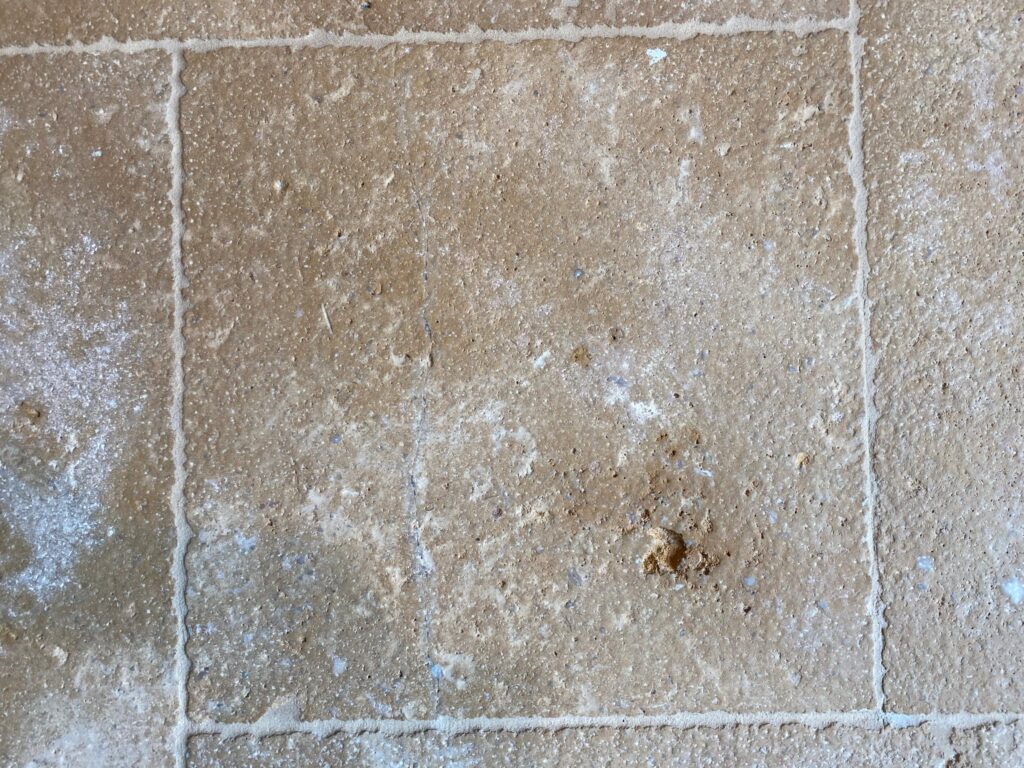
Rose Restoration has restored stone in DC, Maryland and Northern Virginia since 1978, with our own full-time technicians. This guide is the pricing we actually work from, and what moves a limestone number up or down.
Limestone Restoration Cost Ranges (2026)
| Work | Typical range |
|---|---|
| Floor honing and restoration | $8 to $16 per sq ft |
| Countertop restoration | $300 to $1,200 per project |
| Bathroom vanity (10 to 15 sq ft) | $200 to $400 |
| Kitchen countertops (30 to 60 sq ft) | $500 to $1,200 |
| Etch or stain removal, isolated | $200 to $600 per area |
| Sealing | $1 to $3 per sq ft |
These are ranges. Your surface is specific.
Send photos and we will price your actual square footage, condition, and access. Most estimates go out the same day.
Limestone replacement runs $50 to $100 and up per square foot once you count material, tear-out and installation. Restoring what is already there is normally 70 to 90 percent less, and it skips the demolition entirely.
Why Limestone Is Priced by the Grit Pass, Not by the Square Foot Alone
Two limestone floors of identical size can differ by double, and the reason is the number of abrasive passes the floor needs before it is flat and clean.
A floor with light traffic wear may need three passes. A floor with deep scratching, lippage between tiles, or twenty years of topical sealer on it may need seven, plus a grind to flatten the tiles before any honing starts. The square footage did not change. The work did.
We put the starting grit and the finish level in the proposal so you can compare bids on the same basis. A number without those two things is not comparable to anything.
What Drives Limestone Restoration Cost
How deep the damage goes
Surface haze polishes out. Etch marks that have eaten into the stone have to be honed past. Deep scratches set the starting grit for the whole floor, because the floor has to be taken to a single uniform level.
Whether the tiles are flat
Lippage, the height difference between adjacent tiles, has to be ground flat before honing. This is the single biggest swing in a limestone floor quote, and it is invisible in a photograph. It is also the reason a walk on the floor is worth more than three emails.
Old sealer and coatings
Limestone that has been topically sealed, waxed or coated has to be stripped first. Stripping is its own operation with its own labor hours, and the material underneath is often in worse shape than the owner expected.
Honed or polished
Limestone is usually honed, not polished. Most limestone will not hold a true polish the way marble does, because the stone is softer and more porous. Pushing it to a shine it cannot hold costs more and lasts less. If someone quotes you a high polish on a soft limestone, ask what happens in a year.
Staining and what caused it
Oil, rust and organic staining each need a different poultice and different dwell time, sometimes repeated. A stain that has been sitting for years may lighten rather than disappear. We will tell you which one you have before the work starts, not after.
Access and hours
An occupied lobby that can only be worked overnight, an elevator ride for every piece of equipment, or a restricted loading dock all add hours that have nothing to do with the stone.
Limestone Honing: What It Actually Is
Honing is grinding the stone with progressively finer abrasives until the surface is uniform. It removes etching, scratching and dullness because it removes a thin layer of stone rather than covering it. Nothing is applied to the surface, which is why a honed finish does not peel, flake or need stripping later.
A honed limestone floor typically holds its finish for three to five years in a home and one to three in a commercial lobby, depending on traffic and what gets tracked in.
Limestone Showers
Shower limestone is a different job from floor limestone. The stone is wet daily, the grout is usually the failure point before the stone is, and hard water leaves mineral deposits that look like etching but are not. Shower work is quoted per project rather than per square foot because the vertical surfaces, niches and curbs do not scale the way a floor does.
Limestone Fireplaces and Surrounds
Soot, heat discoloration and candle wax on a limestone surround usually respond to cleaning and light honing. Antique surrounds are a separate conversation, because aggressive work destroys the patina that makes them worth restoring in the first place.
Restore or Replace
Limestone is worth restoring in almost every case where the stone is sound. Restoration addresses the surface, and the surface is where nearly all limestone damage lives. Replacement is the right call when the stone is structurally cracked through, when the substrate underneath has failed, or when enough material has been lost that honing would take the tile below its wear layer.
If we think replacement is the honest answer, we will say so. We do not sell installation.
How to Compare Limestone Proposals
Ask every bidder for four things in writing:
- Starting grit and finish level. “Restore the floor” is not a scope.
- Whether flattening is included and what happens to the price if lippage is found.
- Whether stripping is included if there is existing sealer.
- What sealer goes on at the end, and whether it is included or extra.
A proposal that has all four is comparable to another proposal that has all four. One that has none is a number, and numbers without scope are how people end up with change orders.
Assessments Are Free
We look at the stone in person, tell you what it needs, and put the scope in writing. There is no charge for that and no obligation attached to it. Call: (703) 327-7676 or use the contact form.
All work is backed by a one-year written workmanship warranty.
Frequently Asked Questions
How much does limestone floor restoration cost per square foot?
$8 to $16 per square foot in the DC, Maryland and Northern Virginia market. The spread is driven by how many abrasive passes the floor needs, not by the size of the room.
Can etch marks be removed from limestone?
Yes. Etching is a physical loss of stone, not a stain, so it is removed by honing past it rather than by cleaning. Isolated etch removal runs $200 to $600 per area; a whole floor is priced as a floor.
How much does it cost to remove a stain from limestone?
$200 to $600 for an isolated area, depending on what caused it and how long it has been there. Oil, rust and organic stains each take a different poultice.
Can mold be removed from limestone?
Usually, yes. Mold on limestone is generally growing in the pores rather than on the surface, so it needs a penetrating treatment rather than a surface cleaner, and the moisture source has to be found or it comes back.
Is limestone restoration cheaper than replacement?
Normally by 70 to 90 percent. Replacement runs $50 to $100 and up per square foot with material, removal and installation. It also means demolition and downtime.
How often does limestone need to be restored?
A honed limestone floor holds three to five years residentially and one to three commercially. Sealing is more frequent than restoration and much cheaper.
Do you charge for an estimate?
No. Assessments are free, on site, with no obligation attached, and the scope goes to you in writing whether or not you hire us.
Do you work on historic limestone?
Yes. Antique and historic limestone is worked conservatively, because the patina is usually the value.
What is the difference between limestone and marble restoration?
Limestone is softer and more porous, so it hones well and polishes poorly. Marble takes and holds a polish. Anyone quoting the two identically has not looked closely at your stone.
Related Cost Guides
- Marble Restoration Cost
- Terrazzo Restoration Cost
- Granite Restoration Cost
- Concrete Polishing Cost
- Masonry Repointing Cost