Frequently Asked Questions
Can a faded and weathered wood front door be restored?
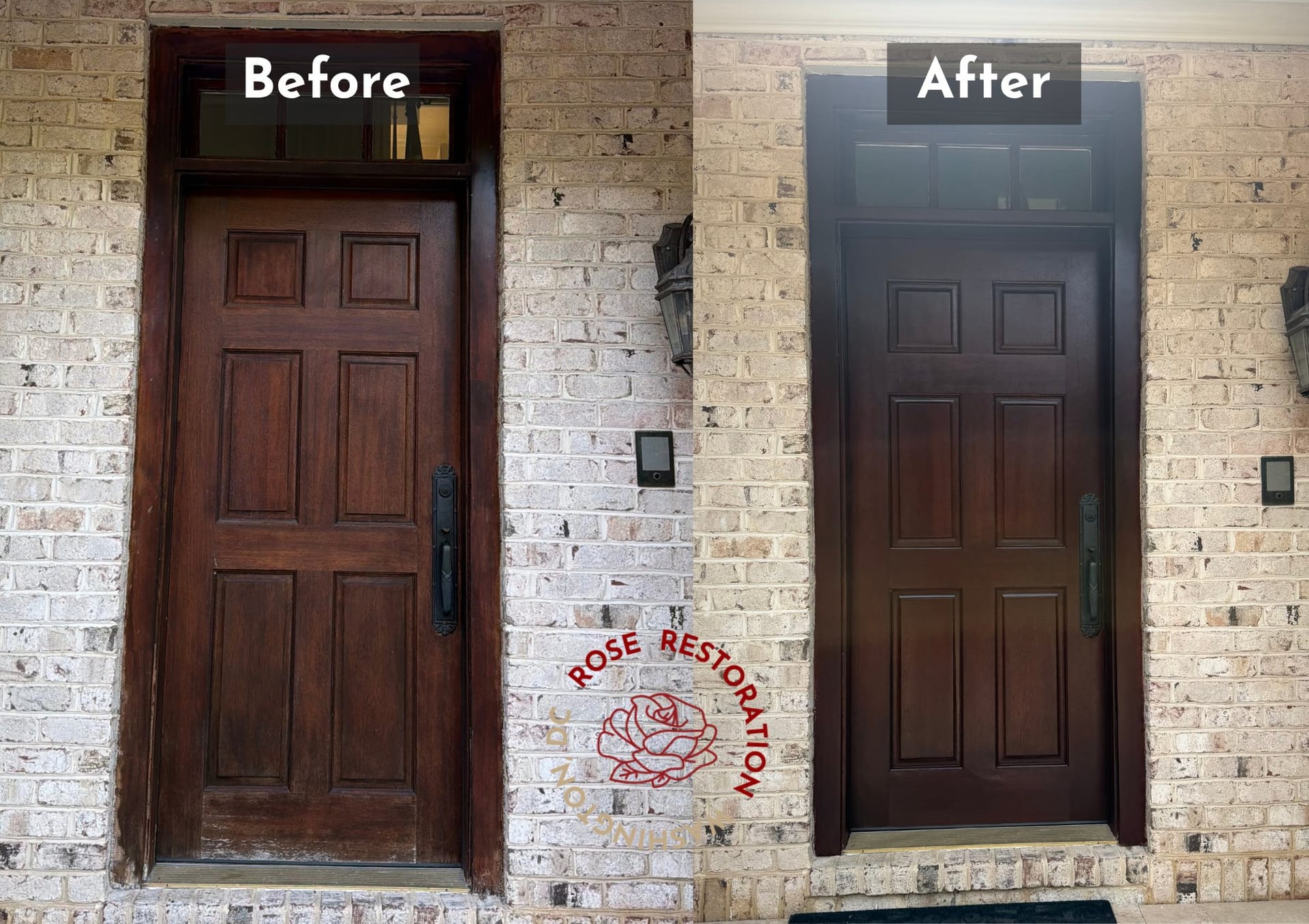
Usually, yes. An entry door takes sun and water on the same surface, so it tends to fail in two ways at once: the clear coat crazes or flakes, and the wood underneath loses color. Those need different answers. The failed coating comes off and is rebuilt. The fading is a color change inside the wood itself, which sanding will not bring back, so it is corrected by toning during the finish build rather than by cutting deeper into the door. We assess which of the two you have, and how far the damage has gone past the finish into the wood, before quoting. Most entry doors are restored in place without leaving the opening unsecured overnight.
Can you match an existing stain color?
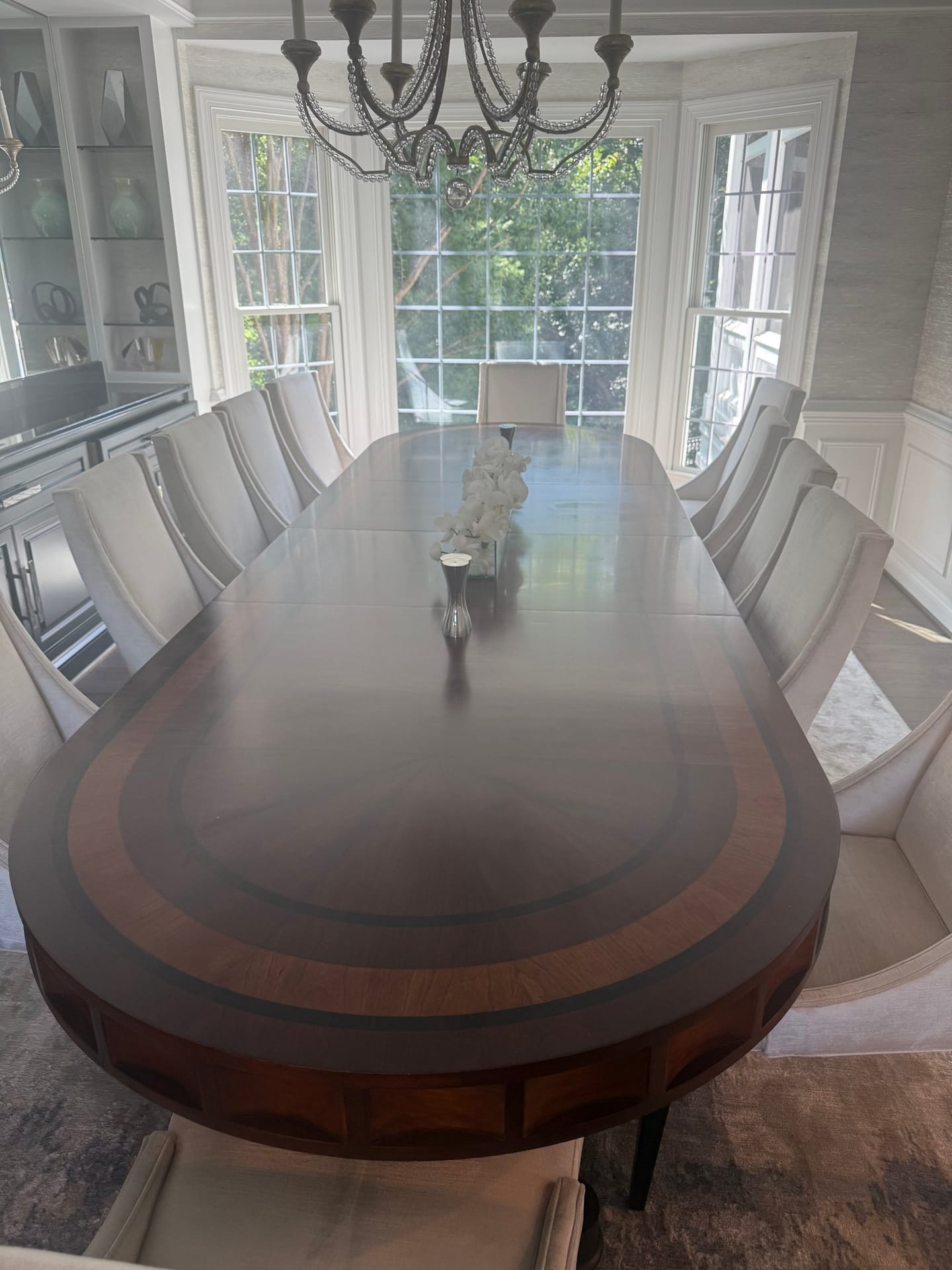
Yes, and matching is most of the skill in this work. The color on your existing woodwork is aged. Sun, oxidation and years of finish have shifted it away from anything in a catalog, so we match the piece next to it rather than a standard color. Color is built in light passes instead of one heavy one, because color can be added but removing it means going back to bare wood. We match in the light the piece actually lives in, check it at two times of day, and look at it from where you stand rather than from six inches away. You approve a sample on the actual piece, or an identical one, before anything goes on the whole element.
Can architectural millwork be refinished on site, or does it have to come out?
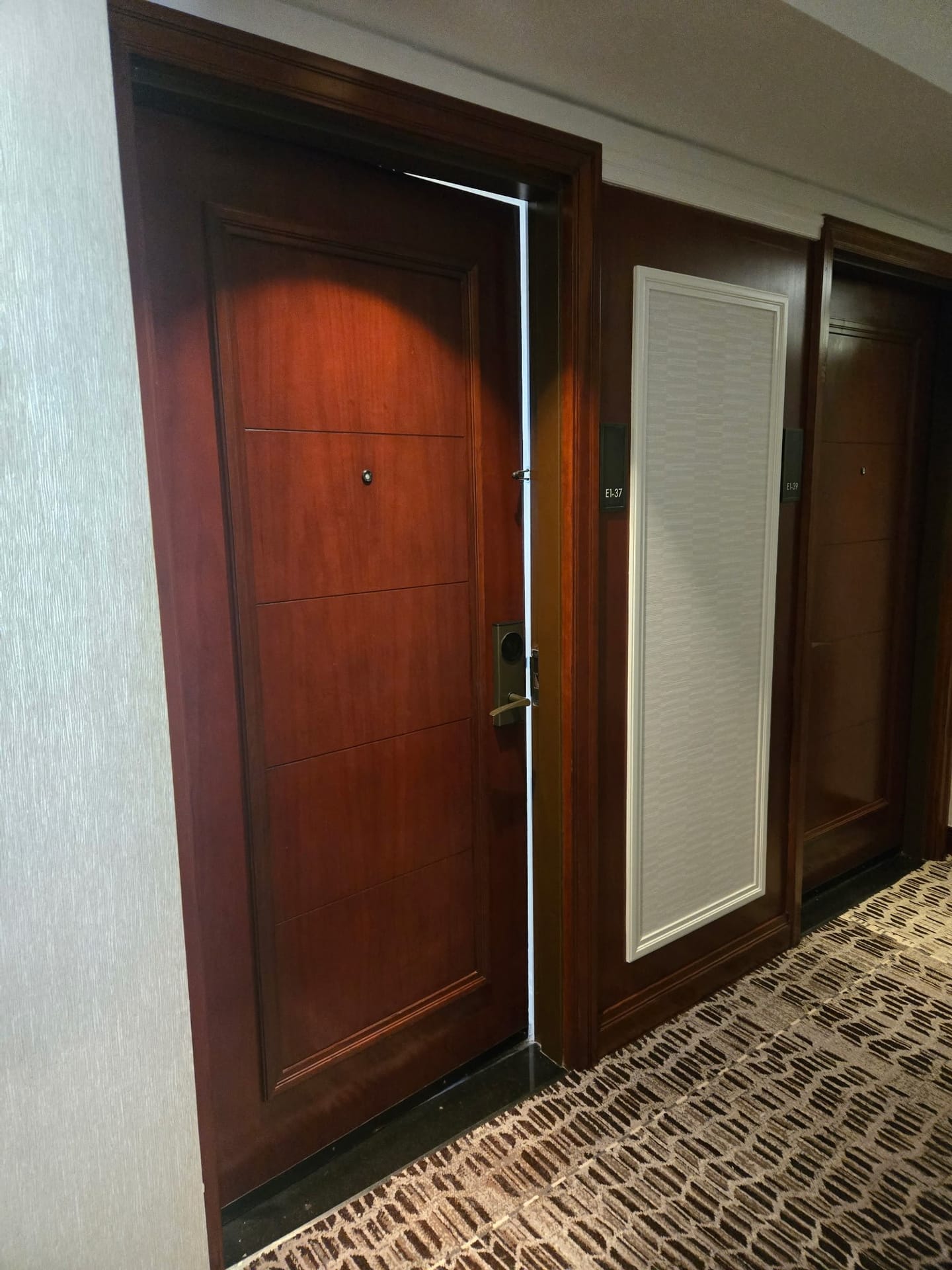
It is refinished in place. Trim, casing, base, paneling and built-ins are installed and scribed to the house, and taking them out usually causes more damage than the finish problem being solved. Working on site does change the method. Profiles are sanded by hand rather than by machine, because sponges and machines round over beads and coves, and once a profile is rounded the detail the millwork was made for is gone. Flats get a block. Edges and corners stay off machines entirely. We contain dust and protect floors, stone, glass and hardware as part of the setup, so the room stays usable around the work.
Can paneling be refinished without stripping the whole room?
Often, yes, and whether it is a good idea depends on how the paneling was made. Most architectural paneling is book matched veneer, which means the panels were cut in sequence to mirror each other. That is what makes a room look deliberate, and it is also what makes a single replaced or heavily corrected panel obvious. Where the damage is limited and the finish is sound elsewhere, we repair and blend into the surrounding panels, feathering at the edges so there is no hard line. Where the finish has failed across the room, doing one wall creates a mismatch you will notice more than the original damage. We tell you which situation you have before starting.
Should old woodwork be restored or replaced?
The question that decides it is whether the damage is in the finish or in the wood. Damage in the finish, meaning worn coatings, white rings, surface scratches, crazing and dulling, is nearly always restorable. Damage in the wood is a longer conversation: black staining means moisture got past the finish and into the timber, deep gouges have removed material, and structural rot is a repair job before it is a finish job. Replacement makes sense when the substrate itself has failed. It rarely makes sense simply because the surface looks bad, and older woodwork is usually worth keeping, since the profiles, the species and the match to everything around it are difficult to reproduce and are the reason the room looks the way it does. We will tell you honestly when replacement is the right answer.
Can water damage in woodwork be repaired, and when can it not?
The color of the mark tells you which one you have. A white ring or cloudy patch is moisture trapped in the finish film, the finish is still doing its job, and it is usually correctable without going near the wood. A black stain means moisture got past the finish into the timber, which needs stripping and chemical treatment and carries an honest element of uncertainty about the result. Where water has been sitting long enough to soften or rot the wood, that is a repair before it is a finish job.
Can white rings and heat marks be taken out of a mantel?
In most cases yes, and it is usually a smaller job than people expect. White rings and heat clouding sit in the finish rather than in the wood, so they are corrected within the existing finish where possible instead of refinishing the whole mantel. If the marks have gone through to bare wood or darkened to black, the scope grows. A mantel shelf is one of the most common places we see this, since it takes heat from below and objects from above.
Can built-in cabinetry be refinished instead of torn out?
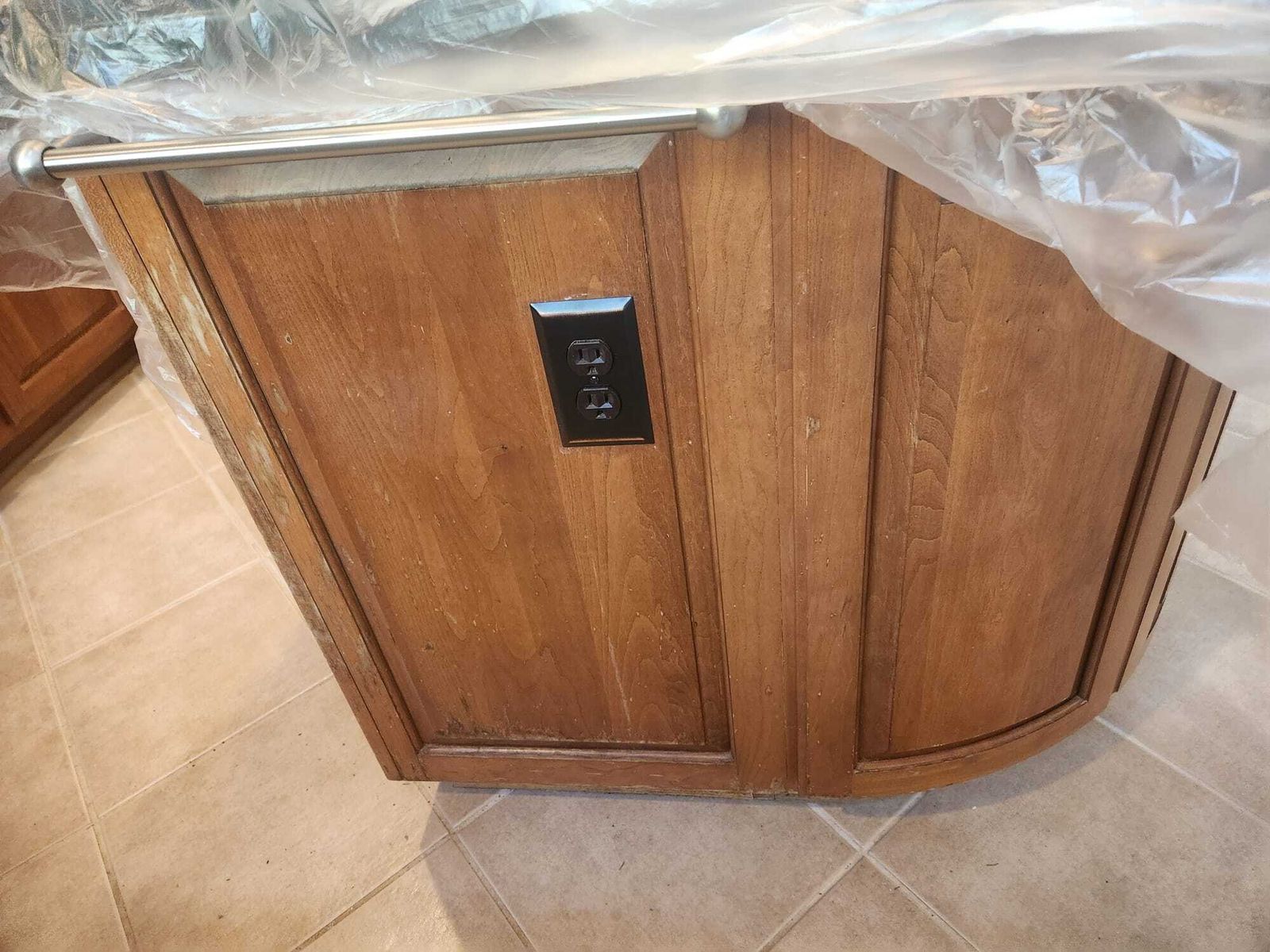
Yes, and it is normally the better answer, because built-ins were fitted and scribed to the room. Taking them out damages the walls, the floor and the trim around them, and the replacement has to be matched to everything that stayed. Doors and drawer faces wear first, particularly around the pulls, so often only those need real work while the carcasses need cleaning and a light refinish. That is a much smaller job than the tear out quote it usually competes with.
Can sun damaged and UV faded wood be brought back to color?
Usually, but not by sanding. Fading is a color change inside the wood itself rather than a layer sitting on top, so cutting deeper just removes material without recovering the color. It is corrected by toning during the finish build, adding color back in light passes until the piece matches what is around it. On a south or west facing door the fading is often uneven across the panels, so the correction has to be graded rather than uniform. We sample it on the piece before committing.
How much dust does on-site refinishing actually create?
Less than a sanding job, because most architectural wood work is not a full sand to bare timber. Where sanding is needed it is contained: the work area is sealed off, extraction runs at the tool, and floors, stone, glass and hardware are protected before anything starts. Dust control is treated as part of the protection rather than as cleanup afterwards, which matters because dust settling into a wet finish is a defect you cannot brush out later.
When is woodwork genuinely beyond restoring?
When the wood itself has failed rather than the finish on it. Three situations make replacement the honest answer: structural rot, where the timber has lost integrity and no finish will address it; veneer that has been sanded through to the core, which cannot be blended back in place; and damage so extensive that the piece would effectively be rebuilt rather than restored. Everything else, including finishes that look beyond saving, is usually recoverable. We would rather tell you it needs replacing than take on work that cannot deliver.
Do you refinish hardwood floors?
No — Rose Restoration does not sand or refinish wood floors. We restore every other wood surface in the home: furniture, cabinetry, built-ins, paneling, millwork, doors, and trim. Floor refinishing is a separate trade that needs different equipment, so that work is best handled by a dedicated flooring contractor.