
National Gallery of Art — Museum Marble Restoration
Rose Restoration has delivered stone and surface preservation at the National Gallery of Art in Washington DC — the East Building (I.M. Pei-designed, 1978) and West Building (John Russell Pope-designed, 1941) both on the National Mall. Scope includes historic and modern marble, terrazzo, architectural metal, and preservation-appropriate facade cleaning coordinated with public-access schedules.
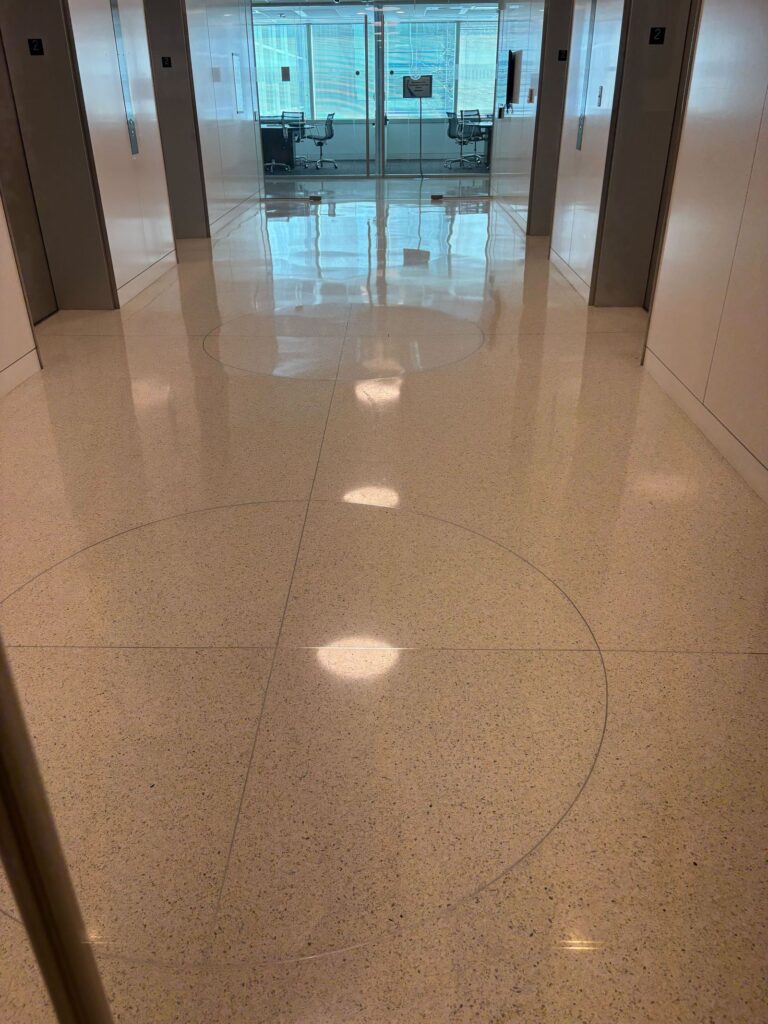
Related Rose Restoration museum and institutional projects
Rose Restoration has delivered National Gallery of Art restoration and related services for:
- Smithsonian Institution — Related museum
- IMF Headquarters — Related institutional
- Marine Barracks Washington — Related historic
- Historical restoration — Landmark methods
- Terrazzo restoration — Full terrazzo services
- All case studies — Project portfolio
National Gallery of Art — Quick Answers
What did Rose Restoration do at the National Gallery of Art?
Rose Restoration has delivered stone and surface preservation at the National Gallery of Art in Washington DC — East Building (I.M. Pei, 1978) and West Building (John Russell Pope, 1941). Scope includes marble floor and wall restoration, terrazzo restoration, architectural metal refinishing, and preservation-appropriate facade cleaning. Work is coordinated with exhibit schedules, conservators, and public-access hours.
How does Rose work around active museum exhibits?
Museum restoration requires careful coordination with curators, conservators, and public-access schedules. Rose Restoration staging plans account for: proximity to exhibits and artwork, exhibit-adjacency dust and vibration controls, HVAC and environmental conditions, public-access closure scheduling (often limited to one gallery at a time), and coordination with preservation and conservation teams. Work is often staged overnight or during low-traffic periods.
Does Rose restore museum terrazzo in Washington DC?
Yes. Rose Restoration restores both historic cementitious terrazzo (common in mid-20th-century museums including the National Gallery of Art West Building) and modern epoxy terrazzo (common in newer construction including East Building additions). Museum terrazzo requires preservation-appropriate methods: pH-neutral chemistry, matched tooling, careful color-matching of replacement aggregate where chips need filling, and coordination with conservation teams.
The National Gallery of Art on the National Mall is one of the premier art institutions in the world — and one of the most architecturally significant marble installations in Washington DC. The West Building’s Tennessee pink marble, the East Building’s Tennessee pink marble paired with modern architectural choices, and the gardens and public spaces all represent a decades-long commitment to material quality. Rose Restoration has supported surface restoration at the NGA as part of our major cultural institution portfolio.
Project type: Museum and cultural institution restoration | Material mix: Marble (Tennessee pink), stone, terrazzo, metal | Location: Washington DC (National Mall) | Scope: Multi-building preservation and ongoing restoration
Why the National Gallery Is an Iconic Marble Project
The NGA’s West Building (1941) features one of the most recognizable marble installations in American architecture — Tennessee pink marble throughout the exterior cladding and key interior spaces. The East Building (1978) was designed to complement while introducing modernist geometric forms using the same distinctive marble. Maintaining this continuous marble identity across two buildings with different architectural eras is a specialized restoration challenge.
Tennessee pink marble has specific restoration characteristics: it’s harder than Italian Carrara, takes a mirror polish beautifully, but shows etching and wear distinctly against its warm pink tone. Period-appropriate restoration chemistry and honing techniques are essential.
Museum-Specific Considerations
- Conservation-grade chemistry. Modern aggressive cleaners would damage original Tennessee pink marble specifications. pH-neutral stone-safe chemistry is mandatory on all work surfaces.
- Artifact and artwork proximity. Work happens near priceless fine art. Dust containment and vibration management are core requirements, not afterthoughts.
- Public operations. The NGA draws millions of visitors annually. Work happens overnight in phased sections; galleries open fresh every public day.
- Architectural preservation. West Building is architecturally significant; East Building is a modernist icon by I.M. Pei. Preservation methodology applies to both.
- Conservation staff coordination. Working with NGA conservation professionals, facilities management, and security throughout every project.
Our Museum Restoration Process
Marble
Tennessee pink marble restoration follows our standard full process adapted to conservation-grade environments:
- Deep cleaning with pH-neutral, museum-appropriate chemistry
- Progressive diamond honing (typically 200 → 400 → 800 → 1500 grit)
- Chip and crack repair with precisely color-matched polyester or epoxy resin
- Progressive polishing to mirror finish
- Penetrating impregnating sealer appropriate to the marble type
- Final inspection with facilities and (where relevant) conservation staff
Terrazzo
Back-of-house, transition, and some public space terrazzo in the NGA complex. Standard grind-hone-polish-seal process with museum-grade dust containment and humidity management.
Metal
Brass and bronze door frames, elevator surrounds, display case hardware, and architectural metalwork. Clean, remove scratches, oxidize to matching patina, lacquer to protect. Period-appropriate finish — not new-looking, but preserved to match the building’s architectural intent.
Natural Stone
Granite and limestone elements, exterior stone details, and sculpture plinths. pH-neutral chemistry, gentle mechanical restoration, appropriate sealers for indoor and outdoor exposure.
Dust and Vibration Control
In a museum environment, dust and vibration aren’t just nuisances — they’re potential artifact-damage risks. Our museum protocols include:
- HEPA extraction on all grinding and polishing equipment.
- Wet grinding for primary dust suppression on marble work.
- Physical containment barriers to isolate work zones from display gallery spaces.
- Equipment speed modification to reduce vibration transmission through building structure near sensitive spaces.
- Pre-work vibration analysis where work is in close proximity to sensitive artifacts.
- Active monitoring during work with the ability to pause or modify technique if conservation concerns arise.
Operational Integration
Major museum restoration projects require exceptional operational integration:
- Phased scheduling. Section-by-section work with each section complete and gallery-ready before moving to next.
- Overnight access windows. All work outside public visitor hours.
- Security coordination. Working with museum security on access windows, movement through building, equipment staging, and final walkthroughs.
- Event awareness. Coordinating around museum openings, special exhibitions, major donor events, and gala functions.
- Communication. Daily check-ins with facilities and operations management throughout multi-night engagements.
Why Rose Restoration for Museum Work
- Institutional portfolio. Our team has worked at Smithsonian museums, the IMF, Marine Barracks, and other DC cultural institutions with similar requirements.
- Preservation-grade methodology as default. Not a special mode — it’s how we work on any significant historic or institutional property.
- In-house crew. Same technicians return on every visit. Continuity builds into the relationship.
- Multi-material capability. One coordinated team for marble + stone + terrazzo + metal.
- Discretion. No photography of restricted spaces. No social-media or promotional sharing of museum project specifics.
- 48 years in DC. We understand how institutions here operate.
Related Museum & Cultural Work
- Smithsonian Institution
- IMF Headquarters
- Marine Barracks Washington
- Virginia State Capitol
- Historic Building Restoration Services
- Government Building Restoration
- Marble Restoration Services
Work With Rose Restoration
Free on-site assessment for museum, cultural institution, historic, and preservation-grade properties throughout the DC metro area.
Call: (703) 327-7676 | Online: request a free assessment
landmark building restoration · marble restoration · stone restoration in Washington DC