Residential Concrete Restoration, Polishing & Repair
Your home’s concrete can be more than just a slab. With the right preparation, process, and finish, residential concrete becomes one of the most durable, low-maintenance, and visually striking floor options available — in basements, garages, living areas, and even countertops.
Rose Restoration provides residential concrete polishing, honing, grinding, sealing, and restoration across Virginia, Maryland, and Washington DC. We evaluate every slab individually, set honest expectations, and deliver a finished product that balances beauty, performance, and long-term durability.
Our Services and Solutions
Recent Residential Concrete Projects
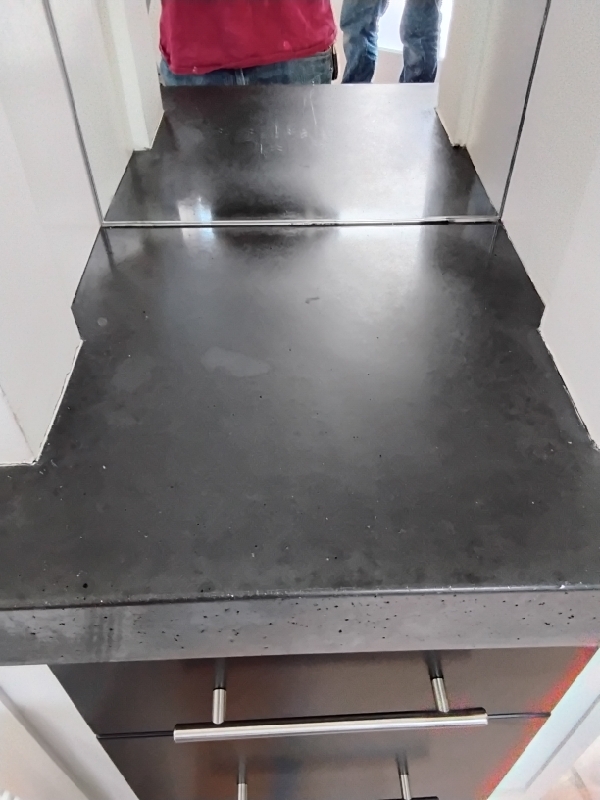
Dyed Concrete Countertop
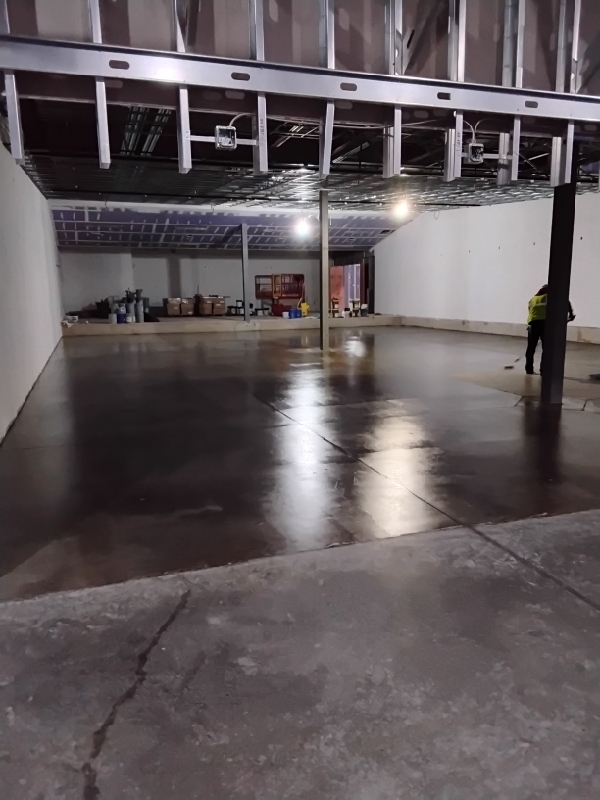
Polished Concrete
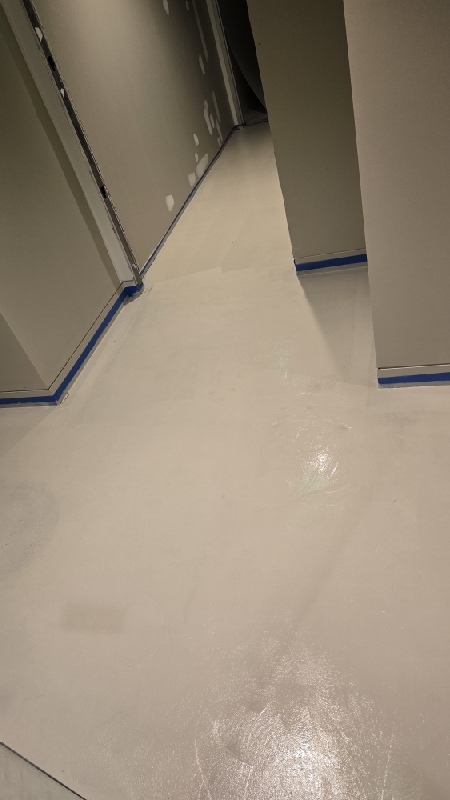
Epoxy Floor
Residential Concrete Restoration and Finishing Services
Concrete is one of the most versatile surfaces in your home. It forms garage floors, basement slabs, patios, pool decks, driveways, walkways, and increasingly, interior living space floors and countertops. While concrete is remarkably durable, it is not maintenance-free. Cracking, staining, spalling, and general wear can leave concrete surfaces looking worn and neglected. The good news is that concrete is also one of the most restorable surfaces, with options ranging from simple sealing to dramatic decorative transformations.
Rose Restoration has been restoring and finishing residential concrete surfaces throughout Virginia, Maryland, and Washington, D.C. since 1978. Our team of 30+ technicians brings the equipment, materials, and experience to handle every type of residential concrete project. Explore our full range of concrete services.
Garage Floor Restoration and Coating
Garage floors take more abuse than almost any other concrete surface in a home. Vehicle fluids, road salt, hot tire marks, chemical spills, and heavy loads all contribute to deterioration. Most garage floors were poured as utilitarian surfaces with minimal finishing, which means they stain easily and degrade over time.
We offer several approaches to garage floor restoration:
- Concrete repair and patching: Cracks, spalls, and damaged areas are repaired to create a sound, level surface.
- Polished concrete: Grinding and polishing transforms a plain garage floor into a smooth, attractive, easy-to-clean surface.
- Epoxy and flake coatings: Multi-layer epoxy coating systems with decorative flake broadcast create a durable, chemical-resistant surface that resists stains and is easy to maintain. Learn more about our epoxy flake garage floor systems.
- Concrete staining: Acid or water-based stains add color and character while preserving the natural texture of the concrete.
The right approach depends on the current condition of your garage floor, your aesthetic preferences, and how you use the space. Our technicians assess the concrete and recommend the best solution for your situation.
Basement Floor Restoration
Basement concrete floors present unique challenges. Moisture vapor transmission from the ground, occasional flooding, high humidity, and generally cooler temperatures all affect which treatments are appropriate. Not every coating system is suitable for below-grade concrete.
Before recommending a finish, we assess moisture conditions to ensure the selected treatment will bond properly and perform long-term. Options for basement floors include:
- Moisture mitigation systems: When moisture vapor transmission is elevated, specialized primers or mitigation systems are applied before any coating or finish.
- Polished concrete: An excellent choice for basements because it does not rely on a coating that moisture can delaminate. The polish is part of the concrete itself.
- Penetrating sealers: These soak into the concrete to provide protection without forming a film that can trap moisture and peel.
- Appropriate coating systems: When conditions allow, epoxy or polyaspartic coatings can transform a basement floor into a finished, attractive surface.
Polished Concrete
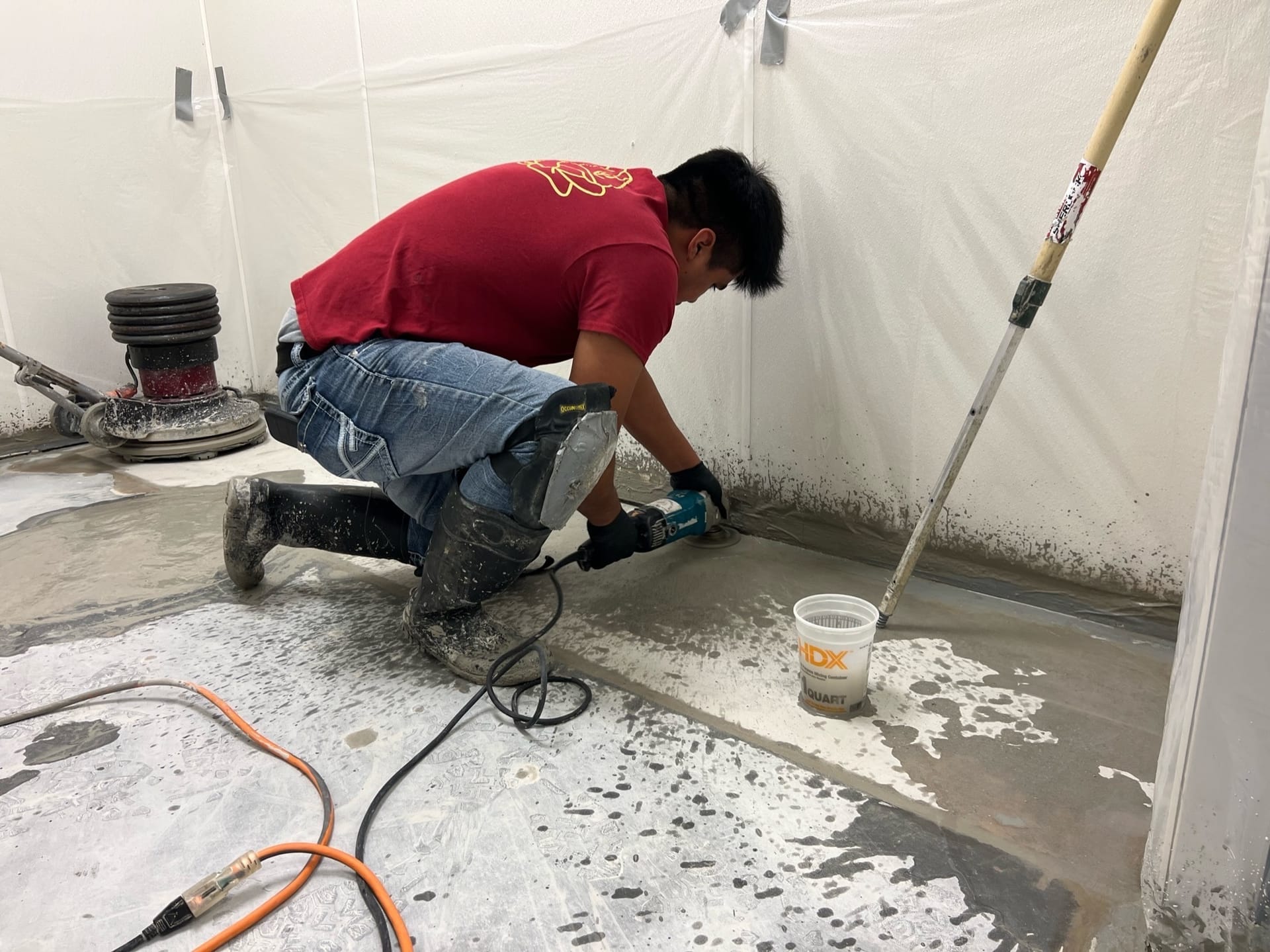
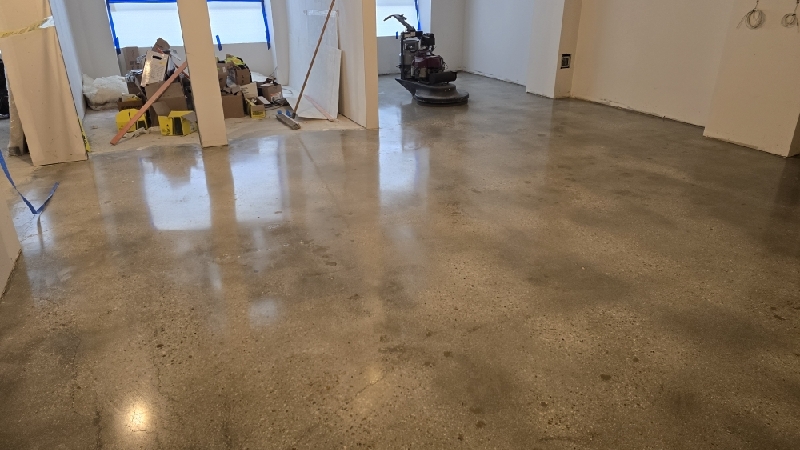
Polished concrete has become a popular interior flooring choice in residential settings, valued for its clean aesthetic, durability, and low maintenance requirements. The process involves mechanically grinding the concrete surface with progressively finer diamond abrasives until the desired level of sheen is achieved, from a low matte to a high-gloss mirror finish.
Benefits of polished concrete in residential settings include:
- Extremely durable and long-lasting
- Easy to clean and maintain
- Does not harbor allergens, dust mites, or mold
- Compatible with radiant floor heating systems
- No coatings to peel, chip, or reapply
- Customizable sheen levels and color options
Polished concrete works on existing slabs in homes, making it an option for renovation projects as well as new construction.
Concrete Staining
Concrete staining adds color and visual depth to interior and exterior concrete surfaces. Two primary types of concrete stain are used in residential applications:
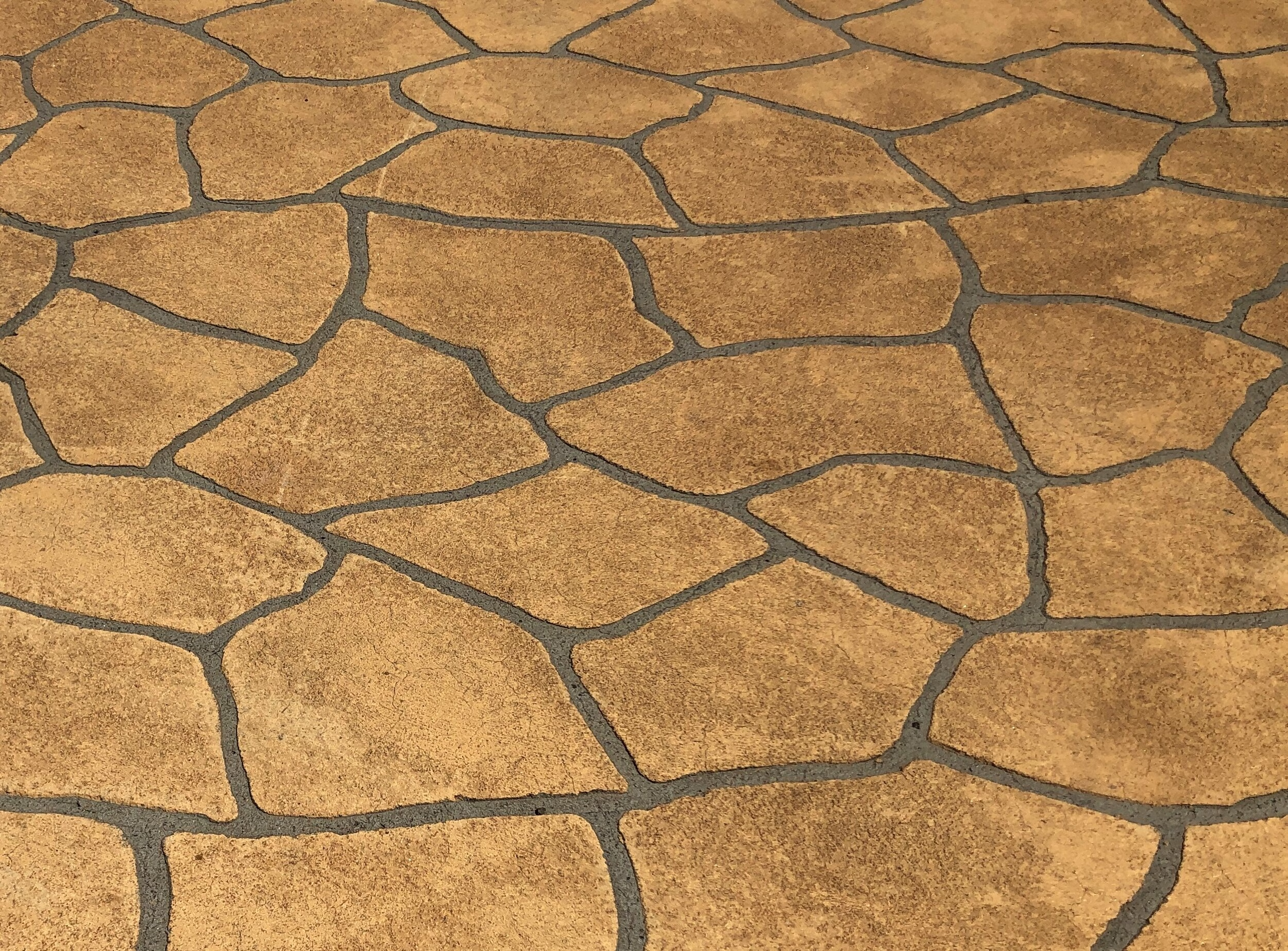
Acid stains react chemically with the minerals in concrete, creating unique, variegated color effects with a mottled, natural appearance. No two acid-stained floors look exactly alike. Colors tend toward earth tones: ambers, browns, greens, and blue-blacks.
Water-based stains offer a broader color palette, including bolder and brighter options. They produce a more uniform, predictable color. Water-based stains can be layered and blended for custom effects.
Both types of stain can be applied to interior and exterior concrete surfaces. Staining is often combined with polishing or sealing for a complete finished floor system.
Concrete Sealing
Sealing is the most fundamental form of concrete protection. A quality sealer protects against staining, moisture absorption, freeze-thaw damage (on exterior surfaces), and general wear. Sealers are available in several formulations:
- Penetrating sealers: Soak into the concrete without changing its appearance. Ideal for driveways, walkways, and natural-look applications.
- Acrylic sealers: Provide a subtle sheen and enhance color. Good for decorative concrete and stamped surfaces.
- Epoxy and polyurethane sealers: Form a thick, durable film for high-performance applications like garage floors and workshops.
The right sealer depends on the location (interior vs. exterior), the concrete finish, exposure conditions, and desired appearance.
Crack Repair and Patching
Concrete cracks for many reasons: settling, shrinkage, thermal expansion, tree root pressure, and heavy loads. Small hairline cracks may be cosmetic, but wider cracks can indicate structural movement and often worsen over time. Water entering through cracks accelerates deterioration, especially in freeze-thaw climates.
Our crack repair methods depend on the type and severity of the crack:
- Epoxy injection: Structural repair for non-moving cracks. Epoxy fills the crack and bonds the concrete together.
- Polyurethane injection: Flexible repair for cracks that may continue to move slightly. Commonly used in basement walls.
- Routing and sealing: The crack is widened with a saw and filled with a flexible sealant to prevent water infiltration.
- Surface patching: Spalled or damaged areas are built up with repair mortars matched to the existing surface.
Concrete Countertops
Concrete countertops offer a custom, handcrafted aesthetic that works in kitchens, bathrooms, and outdoor living spaces. Existing concrete countertops can be restored, refinished, and resealed to bring them back to their original condition. We address common issues including staining, etching from acidic foods, sealer failure, and surface wear.
Outdoor Concrete: Patios, Pool Decks, and Walkways
Exterior residential concrete faces weather exposure, UV radiation, freeze-thaw cycles, and constant foot traffic. Over time, outdoor concrete fades, cracks, spalls, and develops an aged appearance. Our outdoor concrete services include cleaning, crack repair, staining, sealing, and decorative treatments that restore both appearance and function. For detailed information on patio and pool deck restoration, visit our patios and pool decks page.
When to Polish vs. Coat vs. Seal
Choosing the right approach for your concrete depends on several factors:
Choose polishing when: You want a permanent, low-maintenance floor with a modern aesthetic. Best for interior living spaces, basements (with proper moisture conditions), and areas where you want to avoid future recoating.
Choose a coating (epoxy, polyaspartic) when: You need maximum chemical and stain resistance, a decorative finish with color flake or metallic effects, or are coating a garage or workshop floor.
Choose sealing when: You want to protect concrete while preserving its natural appearance, need an economical solution, or are treating exterior concrete where coatings may not perform well.
During our assessment, we discuss these options in detail and help you select the approach that best fits your goals, budget, and the specific conditions of your concrete.
Frequently Asked Questions
Can you polish an old, existing concrete floor?
In most cases, yes. The concrete must be structurally sound and in reasonable condition. We assess the concrete density, hardness, and condition to determine whether polishing will produce good results. Minor cracks and imperfections can often be repaired before polishing. Some homeowners appreciate the character that minor imperfections add to a polished floor.
How long does an epoxy garage floor coating last?
A professionally applied, multi-layer epoxy system with a polyaspartic or polyurethane topcoat is designed to last many years with proper maintenance. Performance depends on how the garage is used, the volume of vehicle traffic, and whether the surface is kept clean. We use professional-grade materials and proper surface preparation to maximize the lifespan of every installation.
Will concrete stain peel or chip?
No. Unlike paint, concrete stain penetrates into the concrete surface rather than sitting on top of it. It becomes part of the concrete and will not peel, chip, or flake. However, stained concrete still needs to be sealed to protect against wear, moisture, and fading.
Can you fix a concrete floor that is flaking or spalling?
Yes. Surface spalling and flaking can be repaired using specialized concrete repair products. Once the damaged material is removed and the surface is repaired, the floor can be finished with polishing, staining, coating, or sealing. The key is addressing the cause of the spalling, which is often moisture, poor original finishing, or freeze-thaw damage.
Do you work on both interior and exterior concrete?
Absolutely. We restore and finish interior concrete (garage floors, basements, living spaces, countertops) and exterior concrete (patios, pool decks, driveways, walkways, steps). The products and methods differ between interior and exterior applications, and we select the appropriate approach for each environment.
Watch: Concrete Floor Restoration
See the concrete floor restoration process from start to finish — grinding, honing, polishing, and sealing for a durable, beautiful residential floor.
Service Areas
Rose Restoration provides residential concrete polishing throughout the Washington DC metropolitan area, including:
- Virginia: McLean, Arlington, Great Falls, Tysons, Fairfax, Alexandria, Reston, Ashburn, Leesburg
- Maryland: Bethesda, Potomac, Rockville, Silver Spring, Columbia
- Washington DC: Georgetown, Capitol Hill, Dupont Circle, Logan Circle, Southwest Waterfront
Ready to Transform Your Concrete?
Rose Restoration provides free in-home consultations for residential concrete polishing. We’ll assess your slab, discuss your options, and give you an honest recommendation — no obligation, no pressure.
Related Rose Restoration Services
See it on the job
Short videos of real Rose Restoration projects — no stock footage.