
 By Tom Kuhn, CEO, Rose Restoration
Rose Restoration has restored marble, terrazzo, concrete, and natural stone across DC, MD, and VA since 1978.
Concrete staining and densification are ideal flooring solutions for clients who want a durable, attractive surface without the thickness or maintenance requirements of heavy coatings. Instead of covering the slab with a thick layer that will eventually peel, chip, or delaminate, these systems enhance the concrete itself — creating floors that look better and last longer than traditional coatings ever could.
By strengthening and refining the existing slab, stained and densified concrete floors create a clean, modern appearance while maintaining exceptional durability. This approach is widely used in commercial environments, retail spaces, hospitality venues, and residential interiors where both appearance and long-term performance matter.
At Rose Restoration, concrete staining and densification are commonly paired with grinding and surface preparation to create floors that are both visually appealing and highly resilient. We’ve been performing this work across the Washington DC metro area for over 30 years — in hotels, restaurants, office buildings, retail stores, and homes throughout Northern Virginia, Maryland, and DC.
This guide covers everything property owners, facility managers, and general contractors need to know about concrete staining and densification — how each process works, why they’re often combined, where they perform best, and what makes them a smarter long-term investment than traditional floor coatings.
What Concrete Staining Does — and Why It Outperforms Paint and Coatings
Concrete staining adds permanent color to the surface of a concrete slab by penetrating into the pores of the material. Unlike paint or surface coatings that sit on top of the concrete and form a separate layer, stains become part of the concrete itself. The color bonds with the slab at a molecular level, which is what gives stained concrete its signature durability.
Because stains penetrate the slab rather than coating it, they will not peel, chip, or flake like many traditional floor finishes. This is the fundamental advantage of staining over painting or coating — there’s no film on the surface to break down.
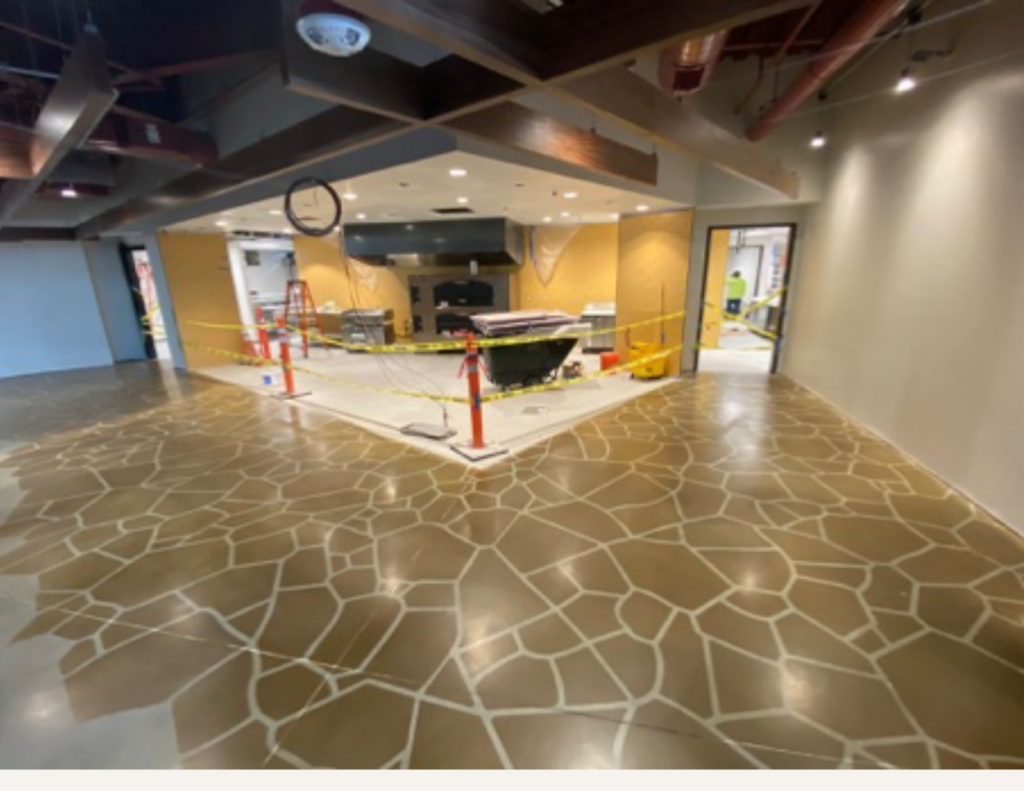
Concrete staining is often used to transform plain, gray concrete into decorative flooring while maintaining the natural texture and character of the slab. The result can range from subtle earth tones and warm ambers to deeper architectural colors depending on the design goals of the space.
Types of Concrete Stains
There are two primary categories of concrete stains, and understanding the difference matters for choosing the right approach:
- Acid-based stains (reactive stains) — these contain metallic salts that chemically react with the minerals in the concrete slab. The reaction produces rich, translucent, variegated color tones that are completely unique to each slab. Acid stains are prized for their organic, natural appearance — no two floors look exactly alike. Common colors include warm browns, terra cottas, blue-greens, and amber tones.
- Water-based stains (non-reactive stains) — these use pigment suspended in a water-based carrier to deposit color into the concrete’s pore structure. Water-based stains offer a much wider color palette — including blues, reds, blacks, and custom colors that acid stains can’t achieve. They produce more consistent, uniform coverage and are often used when a specific design color is required.
Both types penetrate the concrete rather than sitting on top, which means both resist peeling and delamination. The choice between them depends on the desired aesthetic — natural and variegated versus controlled and uniform.
Where Stained Concrete Floors Are Commonly Installed
Stained concrete floors are used across a wide range of commercial and residential applications:
- Retail stores and commercial showrooms — where appearance matters and floors need to handle heavy foot traffic without showing wear
- Restaurants and hospitality venues — where spills, cleaning chemicals, and constant use demand a surface that won’t break down
- Office buildings and lobbies — where a modern, professional aesthetic sets the tone for the entire space
- Residential basements and living areas — where homeowners want a clean, contemporary floor without the hassle of carpet or hardwood
- Garages and utility spaces — where durability is the priority but appearance still matters
- Hotels and conference centers — where large floor areas need to look polished while handling thousands of visitors
- Museums, galleries, and cultural venues — where the floor needs to complement the space without competing with it
Because each concrete slab absorbs stain differently based on its age, composition, porosity, and finishing history, stained floors often develop natural variations in color that give the surface a unique, organic appearance. For many designers and architects, this natural variation is the appeal — it creates a floor with character that manufactured materials simply can’t replicate.
Decorative and Functional Benefits of Stained Concrete
Beyond aesthetics, stained concrete offers several practical advantages that make it a strong choice for both new construction and renovation projects.
Concrete staining allows property owners to upgrade the look of existing concrete without installing new flooring materials. This means no demolition, no subfloor preparation, and no extended downtime — just a transformation of the surface that’s already there. When combined with proper surface preparation and sealing, stained concrete floors are durable enough to withstand heavy commercial foot traffic and everyday residential use for years.
Key Benefits of Stained Concrete Floors
- Long-lasting color that penetrates the slab — stain doesn’t sit on top of the concrete, so it doesn’t wear away in the traditional sense. The color is embedded in the material itself.
- Minimal risk of peeling or delamination — because there’s no film or coating layer, there’s nothing to separate from the slab. This eliminates one of the most common failure modes in traditional floor systems.
- Compatibility with modern design styles — stained concrete fits seamlessly into industrial, contemporary, minimalist, and transitional design schemes. It works equally well in a boutique retail store and a modern home.
- Easy integration with other concrete finishes — staining pairs naturally with polishing, sealing, and densification. These systems can be layered to achieve specific performance and aesthetic goals.
- Cost-effective compared to new flooring installation — staining an existing slab is significantly less expensive than removing old flooring and installing new material. The concrete is already there — it just needs to be enhanced.
- Environmentally friendly — staining uses the existing slab rather than adding new materials. There’s no flooring waste, no adhesives, and no VOC-heavy coatings in most modern stain systems.
Because the color is embedded in the concrete, wear patterns tend to develop gradually and gracefully rather than appearing as sudden, obvious coating failure. A stained floor that’s ten years old doesn’t look “failed” — it looks lived-in, with character that only deepens over time.
The Role of Concrete Densifiers: Strengthening the Slab from Within
Concrete densifiers are chemical treatments designed to strengthen the surface of a concrete slab at a molecular level. When applied to properly prepared concrete, densifiers penetrate into the pore structure and react with the free calcium hydroxide (lime) within the slab. This chemical reaction produces calcium silicate hydrate — a harder, more stable compound that fills microscopic pores and increases the overall density of the surface.
The result is a floor that is measurably harder, more resistant to abrasion and impact, and significantly less prone to surface dusting and wear.
Concrete densification is one of the most important — and most overlooked — steps in professional concrete floor finishing. It’s commonly used in commercial and industrial environments where floors experience constant foot traffic, rolling loads, or equipment movement, but it’s equally valuable in residential, retail, and hospitality settings.
Benefits of Densified Concrete Floors
- Increased surface hardness — densified concrete tests significantly harder on the Mohs scale than untreated concrete. This translates directly to better wear resistance.
- Improved resistance to abrasion and wear — the denser surface structure stands up to foot traffic, rolling carts, furniture movement, and daily use far better than untreated slabs.
- Reduced dusting from untreated concrete — one of the most immediate and noticeable benefits. Densified concrete stops producing the fine powder that plagues untreated slabs.
- Easier maintenance and cleaning — a denser, smoother surface is easier to sweep, mop, and auto-scrub. Dirt and contaminants sit on the surface rather than embedding in the pores.
- Longer lifespan for the concrete surface — by strengthening the slab itself, densification extends the usable life of the floor by years or even decades.
- Improved stain resistance — filled pores mean liquids have fewer pathways to penetrate the surface, giving you more time to clean spills before they set.
Because densifiers strengthen the slab itself rather than adding a separate coating on top, the finished floor maintains the natural durability of concrete without introducing a layer that can fail, peel, or wear through independently of the slab.
Why Densification Solves the Concrete Dusting Problem
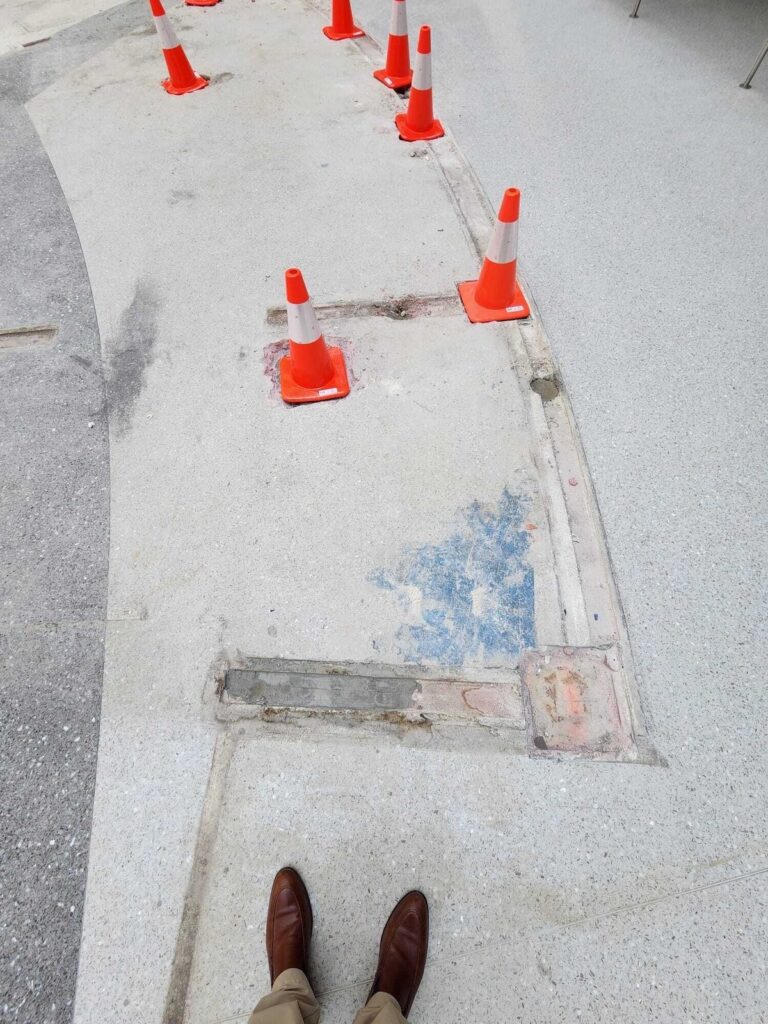
One of the most common complaints about untreated concrete floors is surface dusting. That fine, white-gray powder that seems to appear no matter how often you sweep? It’s not just dirt — it’s the concrete itself slowly deteriorating.
Concrete dusting occurs when the surface of the slab is weak, porous, or improperly cured. Foot traffic, vehicle movement, and even cleaning abrasion gradually wear away the top layer, releasing fine calcium carbonate particles into the air. Over time, this dusting becomes a persistent maintenance headache — covering equipment, inventory, vehicles, and any surface near the floor.
How Densifiers Stop Dusting at the Source
Concrete densifiers solve dusting not by covering the problem but by eliminating its cause. The chemical reaction between the densifier and the concrete’s free lime converts weak, dusty surface material into a harder, more stable compound. This effectively locks in the surface particles that would otherwise be released as dust.
The result is a cleaner environment, better air quality, and dramatically reduced maintenance requirements. This is particularly valuable in:
- Warehouses and distribution centers — where concrete dust contaminates products and equipment
- Commercial buildings and offices — where air quality and cleanliness matter for occupant health and comfort
- Retail facilities — where dust on merchandise and fixtures creates a poor customer experience
- Garages and parking structures — where dusting accelerates wear on vehicles and mechanical equipment
- Food and beverage facilities — where dust contamination creates health code and sanitation concerns
- Residential basements and living spaces — where homeowners simply want a clean floor that doesn’t generate dust
Dust reduction is one of the primary reasons densified concrete floors are increasingly specified in modern construction. For facility managers dealing with chronic dusting issues on existing slabs, densification is often the most cost-effective and permanent solution available.
Combining Staining, Grinding, and Densification: The Complete System
For many projects, staining and densification aren’t used in isolation — they’re combined with concrete grinding to create a complete flooring system that addresses appearance, durability, and maintenance in a single process.
Here’s how the complete system typically works:
Step 1: Concrete Grinding and Surface Preparation
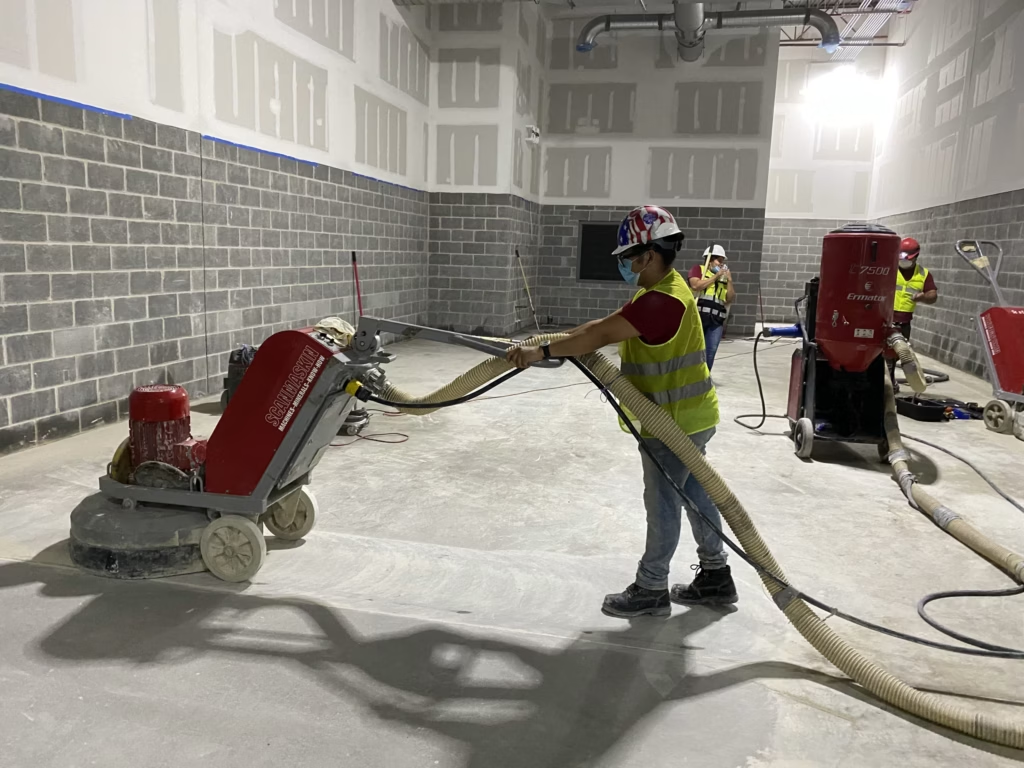
The process begins with concrete grinding using diamond-tooling to remove surface contaminants — old coatings, adhesive residue, stains, efflorescence, and surface damage. Grinding also opens the pore structure of the concrete, which is critical for both stain penetration and densifier absorption. Without proper grinding, neither treatment can perform to its full potential.
The depth and aggressiveness of grinding depends on the condition of the existing slab. A relatively clean slab may only need light surface prep, while a slab with heavy coatings or damage may require more aggressive material removal.
Step 2: Stain Application
Once the slab is properly ground and profiled, stain is applied to introduce color and visual character. The open pore structure created by grinding allows the stain to penetrate deeply and evenly, producing richer, more consistent color than staining an unprepped slab.
Application techniques vary depending on the desired effect — spray application for broad coverage, brush or roller for controlled placement, and scoring or taping for geometric designs and patterns.
Step 3: Densification
After staining, a concrete densifier is applied to strengthen the surface. The densifier penetrates the pores, reacts with the concrete, and creates a harder, denser surface layer. This step locks in the stain, reduces porosity, and dramatically improves the floor’s resistance to wear and dusting.
Step 4: Sealing and Protection
Optional sealing enhances both the appearance and protection of the finished floor. Sealers can add a satin or gloss sheen, improve stain resistance for spills and contaminants, and make the floor easier to clean. The type of sealer depends on the environment — high-traffic commercial spaces may benefit from a more durable topical sealer, while lower-traffic areas may only need a penetrating sealer for basic protection.
This layered approach — grind, stain, densify, seal — creates floors that are visually appealing while maintaining the natural durability and breathability of the concrete. Each step builds on the previous one, and the result is a system that performs as a whole rather than relying on any single treatment.
Where Stained and Densified Concrete Works Best
Stained and densified concrete flooring is particularly effective in spaces that need to balance aesthetics with heavy-duty performance — places where the floor has to look good and work hard at the same time.
Retail Environments
Retail spaces need floors that photograph well, create a pleasant shopping experience, and stand up to constant foot traffic without showing wear. Stained and densified concrete delivers on all three. The design flexibility of staining allows retailers to match their floor to their brand aesthetic, while densification ensures the surface holds up through years of high-traffic use.
Restaurants and Hospitality
Restaurants are brutal on floors — spills, heavy foot traffic, chair movement, cleaning chemicals, and grease. Stained and densified concrete handles all of it. The lack of a surface coating means there’s no film to break down from chemical exposure, and the densified surface resists staining from food and beverage spills better than untreated concrete.
Office Buildings and Commercial Interiors
Modern office design has moved toward exposed, industrial-inspired aesthetics. Stained concrete fits perfectly — it provides the clean, contemporary look that tenants and employees expect while delivering low-maintenance performance that facility managers appreciate.
Residential Homes
Homeowners in Northern Virginia and the DC metro area are increasingly choosing stained concrete for basements, main-level floors, and even kitchens. The appeal is a combination of modern aesthetics, easy maintenance (no carpet to clean, no hardwood to refinish), and durability that handles kids, pets, and daily life without showing wear.
Hotels and Conference Centers
Hotels need floors that look polished and professional while handling enormous volumes of foot traffic, luggage, rolling carts, and cleaning cycles. Stained and densified concrete is increasingly specified in hotel lobbies, corridors, conference areas, and back-of-house spaces for exactly this reason.
Warehouses and Industrial Spaces
For industrial environments, the aesthetic benefit of staining may be secondary — but the performance benefit of densification is critical. Densified warehouse floors resist forklift traffic, pallet jack wear, and heavy equipment loads far better than untreated slabs, and the dust reduction alone justifies the investment for many facility operators.
Long-Term Performance: Why Stained and Densified Concrete Outlasts Coatings
One of the most compelling advantages of stained and densified concrete is its long-term performance compared to traditional coating systems like epoxy, urethane, and acrylic floor finishes.
Traditional coatings work by applying a thick layer on top of the concrete. This layer provides color, gloss, and initial protection — but it’s also the system’s weak point. Over time, coatings wear, scratch, peel, yellow, and delaminate. When they fail, the failure is visible and disruptive — requiring stripping, re-prep, and reapplication.
Stained and densified concrete avoids this failure mode entirely. Because the color and strength are built into the slab rather than layered on top, there’s no film to fail. The floor ages gradually and gracefully rather than reaching a point of sudden, visible breakdown.
Maintenance Requirements
Maintaining stained and densified concrete floors is straightforward:
- Routine sweeping and dust removal — daily or as needed depending on traffic levels
- Periodic auto-scrubbing or mopping — weekly or bi-weekly for commercial spaces, less frequently for residential
- Occasional resealing — every 2 to 5 years depending on traffic volume and use conditions
- Spot cleaning for spills — prompt cleanup of acidic or staining liquids to prevent discoloration
Because the surface remains breathable and structurally integrated with the concrete, the risk of moisture-related coating failure — blistering, bubbling, delamination from hydrostatic pressure — is significantly reduced compared to film-forming coatings.
Expected Lifespan
A properly ground, stained, densified, and sealed concrete floor can perform for 10 to 20 years or more before needing significant maintenance. Compare that to epoxy coatings, which typically need recoating every 3 to 7 years in commercial environments, and the long-term value becomes clear.
Stained and Densified Concrete vs. Other Flooring Systems
How does stained and densified concrete stack up against other common flooring options? Here’s a practical comparison:
vs. Epoxy Coatings
Epoxy provides a thick, glossy, high-build finish that looks impressive when new. However, epoxy coatings can yellow under UV exposure, chip from impact, and delaminate if moisture migrates through the slab. Stained and densified concrete avoids all of these failure modes because there’s no surface film to break down.
vs. Polished Concrete
Polished concrete and stained/densified concrete are complementary systems that are often used together. Polishing takes the process further by mechanically refining the surface to a high sheen. Staining adds color that polishing alone can’t provide. Many projects combine all three — grinding, staining, densifying, and polishing — for maximum visual impact and durability.
vs. VCT (Vinyl Composition Tile)
VCT is common in commercial settings but requires frequent stripping, waxing, and maintenance. Stained and densified concrete eliminates these recurring maintenance cycles entirely, making it more cost-effective over the life of the floor.
vs. Carpet and Hardwood
In residential settings, stained concrete offers dramatic advantages in durability and maintenance over both carpet (staining, wear, allergens) and hardwood (scratching, water damage, refinishing). For homeowners who want a floor they can essentially forget about, stained and densified concrete is hard to beat.
A Smarter Alternative to Traditional Floor Coatings
Concrete staining and densification have become popular alternatives to traditional coating systems because they combine durability with simplicity. Rather than adding layers that will eventually fail, these systems enhance what’s already there — the concrete slab itself.
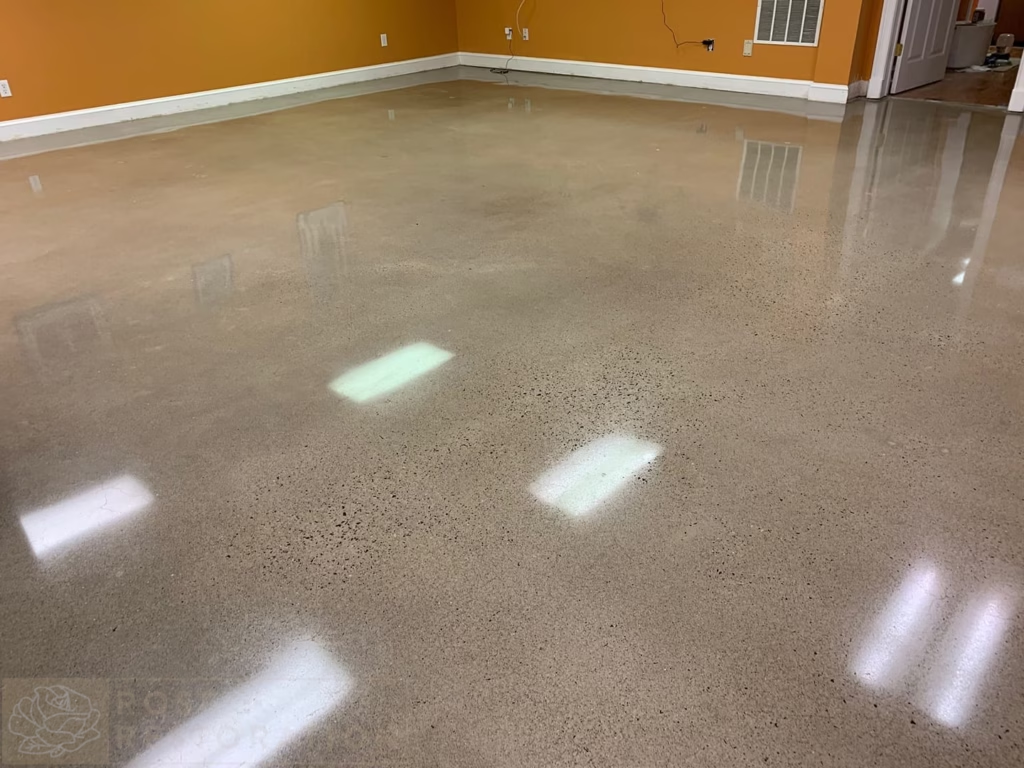
By strengthening the concrete rather than covering it, stained and densified floors maintain their appearance while handling consistent, heavy use. The result is a long-lasting, low-maintenance surface suitable for both commercial and residential environments — one that ages gracefully rather than failing suddenly.
For property owners, facility managers, general contractors, and architects seeking durable flooring with a modern architectural look, stained and densified concrete offers a reliable solution that performs well for years to come.
Related: Learn more about our concrete polishing services for residential and commercial clients in Washington DC, Maryland, and Northern Virginia.
Frequently Asked Questions About Concrete Staining and Densification
How long does concrete staining last?
Because concrete stain penetrates into the slab rather than sitting on top, the color is permanent — it won’t peel, chip, or flake. Over many years of heavy use, the stain may fade gradually in high-traffic areas, but it won’t fail catastrophically like a coating. Periodic resealing helps maintain the color’s vibrancy.
Can you stain old or existing concrete?
Yes. Existing concrete slabs are excellent candidates for staining, provided the surface is properly prepared. Professional grinding removes old coatings, sealers, and contaminants, opening the pores for stain penetration. Even slabs that are decades old can be successfully stained.
What’s the difference between concrete staining and concrete dyeing?
Concrete dyes are similar to stains but use finer pigment particles that penetrate the surface quickly. Dyes typically produce more vibrant, consistent colors and are often used in combination with polished concrete. Stains — particularly acid stains — create more organic, variegated color patterns. Both are permanent and penetrating.
Does densified concrete need to be sealed?
Not always, but sealing is recommended in most applications. Densification strengthens the slab and reduces dusting, but a sealer adds additional stain resistance and can enhance the floor’s appearance with a satin or gloss sheen. For stained floors, sealing also helps protect the color.
Can stained and densified concrete be installed over radiant heating?
Yes. Concrete is one of the best flooring materials for radiant heating systems because it conducts and retains heat efficiently. Staining and densification don’t interfere with the thermal properties of the slab.
How does concrete staining work in high-moisture environments?
Because stained and densified concrete doesn’t rely on a film-forming coating, it handles moisture better than epoxy or urethane systems. The surface remains breathable, which reduces the risk of blistering and delamination from hydrostatic pressure — a common failure in below-grade and slab-on-grade applications.
Is stained concrete slippery?
Stained concrete has a similar slip resistance to other hard-surface flooring. For areas where slip resistance is a concern — commercial kitchens, pool decks, entryways — anti-slip additives can be incorporated into the sealer to increase traction without affecting appearance.
Related: Residential concrete staining and polishing services.
Looking for something else?
Get a Free Assessment from Rose Restoration
Tell us about your marble, stone, terrazzo, or concrete and our senior technicians will recommend the right restoration approach. Family-run and trusted across Washington DC, Maryland, and Virginia since 1978.
Call (703) 327-7676 · Email info@roserestoration.com · schedule a time · or send us photos.
Restore. Don't replace.
48 years of polishing marble, terrazzo, concrete, and tile across Washington DC, Northern Virginia, and Maryland. IMF, Four Seasons, Smithsonian, and the Virginia State Capitol trust us — you can too.