
 By Tom Kuhn, CEO, Rose Restoration
Rose Restoration has restored marble, terrazzo, concrete, and natural stone across DC, MD, and VA since 1978.
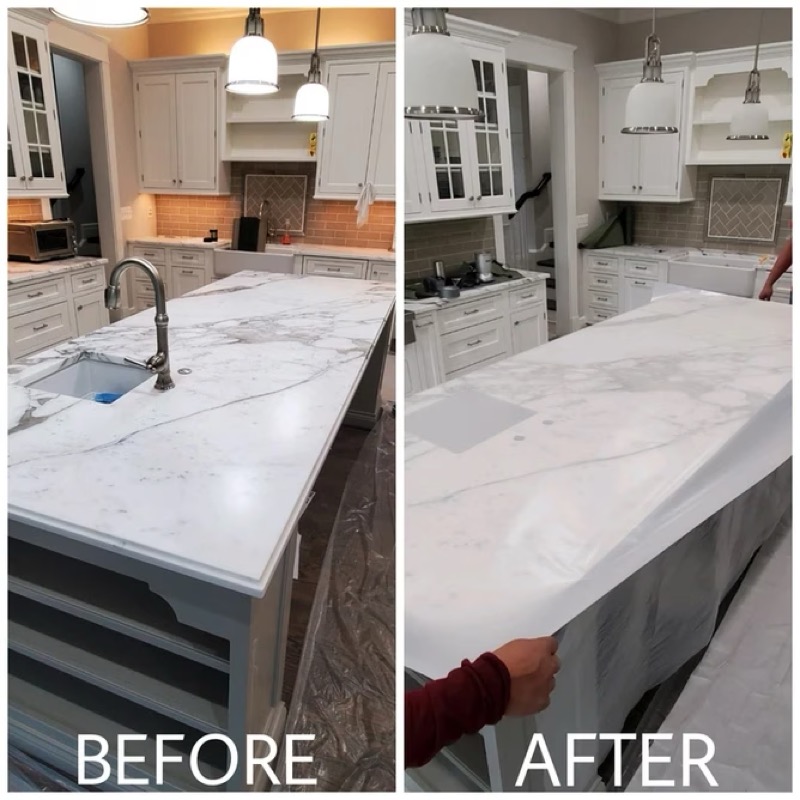
Quartzite has been the design-magazine darling of the last few years — and for good reason. It is harder than marble, more dramatic than granite, and increasingly common in DC-area kitchens, bars, and high-end residential bathrooms. But “harder” does not mean “indestructible,” and most of the quartzite we restore was supposed to be maintenance-free. Here is what restoration actually involves, what it costs, and how to keep your quartzite looking new.
Quartzite is not quartz — the most important distinction
This trips up a lot of homeowners. Quartz countertops are a manufactured product — ground stone bound in resin — and they are impossible to refinish meaningfully (the resin will not repolish). Quartzite is a natural metamorphic stone, formed when sandstone is fused under heat and pressure. It is all-mineral, no resin, and it can absolutely be honed and polished by hand.
Quartzite is harder than marble and needs different tooling to finish properly. Our quartzite restoration service covers honing, polishing, sealing and chip repair on floors and countertops across DC, Maryland and Virginia.
If you are not sure which one you have, two quick tests: a glass-scratch test (real quartzite scratches glass; engineered quartz typically does not) and a UV or ultra-bright light test (engineered quartz often shows a uniform resin sheen that natural quartzite does not). When in doubt, the original quote or installer paperwork should specify.
The three problems we restore
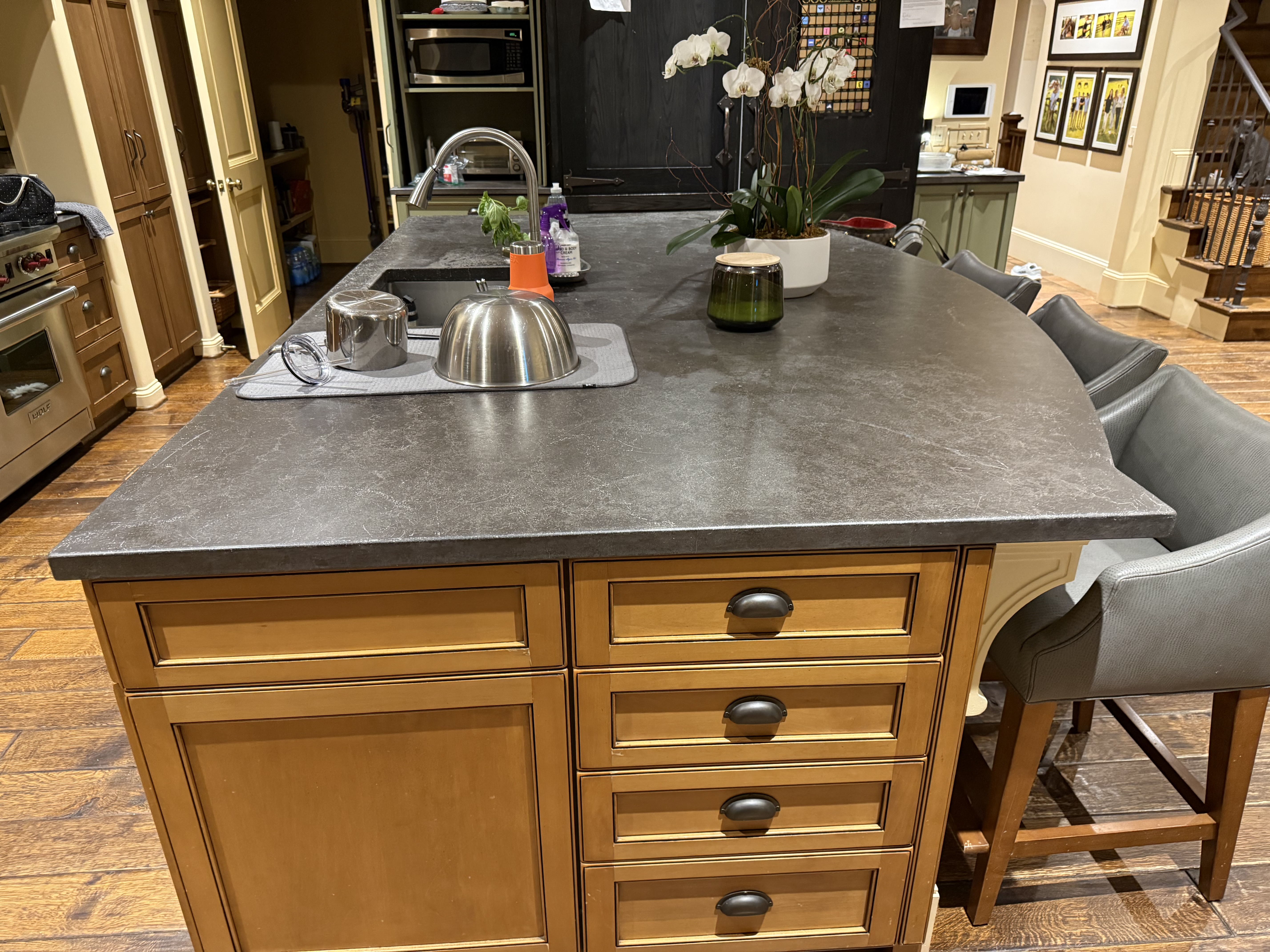
- Scratches and chips — usually from heavy cookware, knife edges (yes, even on quartzite), or dropped objects on edges.
- Etch marks — yes, quartzite can etch, even though it is often sold as etch-proof. We will explain why below.
- Surface haze or dulling — accumulated wear, hard-water residue, or buildup from the wrong cleaners.
Why your quartzite is etching (it should not, but…)
True quartzite — composed almost entirely of recrystallized quartz — is acid-resistant. The catch: a lot of stone sold as “quartzite” in the U.S. market is actually a quartzite-marble blend, sometimes called “soft quartzite” or “dolomitic quartzite.” These contain enough calcium carbonate to etch when exposed to acid (lemon, vinegar, tomato, certain cleaners). It is not your fault — it is a labeling problem in the slab market. If your “quartzite” etches near where you cut citrus, it almost certainly contains marble.
The good news: it still restores like marble. The honing-and-polishing process works on the carbonate component, and a proper impregnating sealer plus a topical protectant slows future etching dramatically.
The restoration process
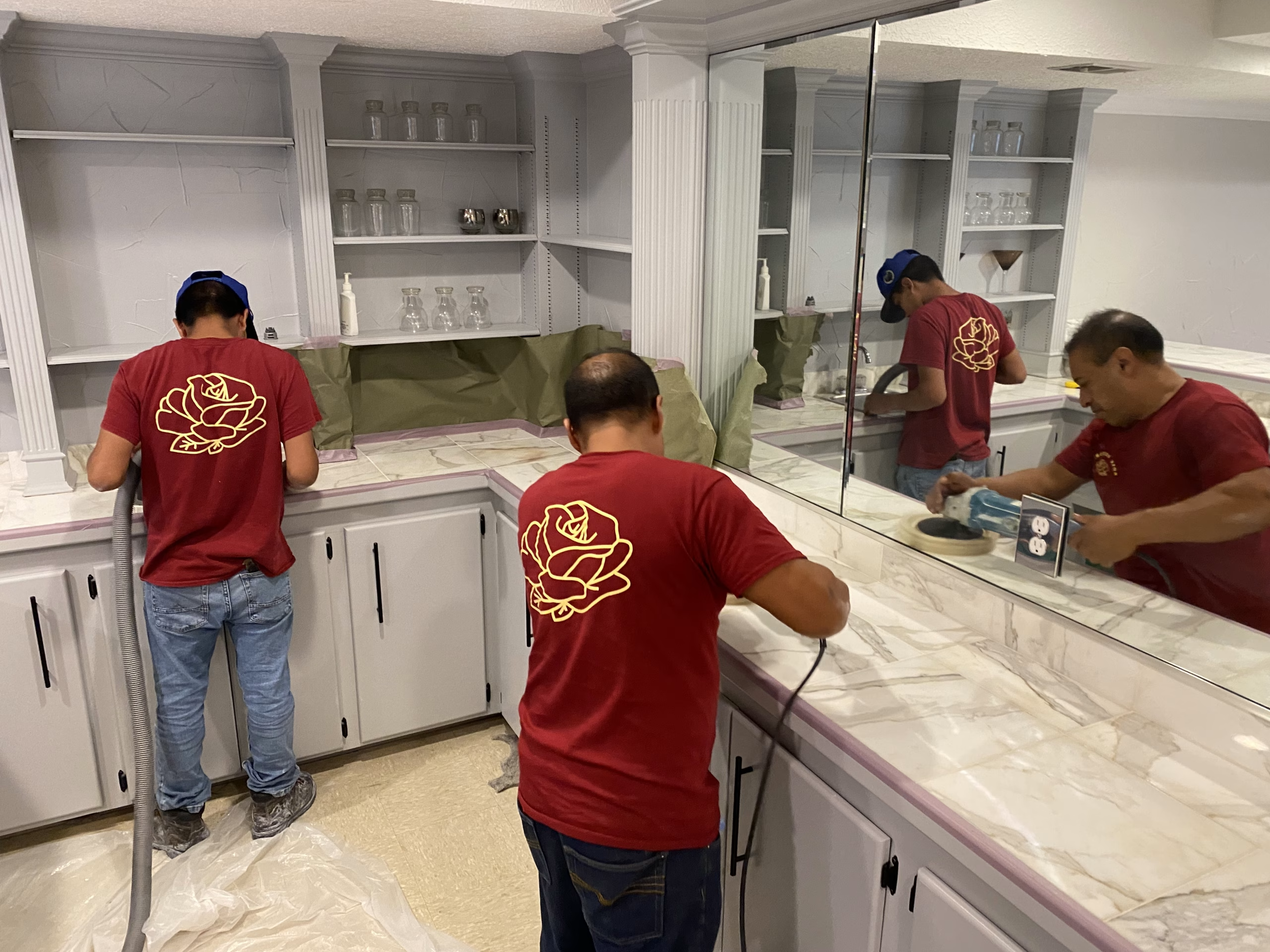
- Hone — progressive diamond pads at successively finer grits (50, 200, 400, 800, 1500, 3000 typical for a full reset) flatten scratches and remove etch shadows. The grit sequence is determined by damage depth, not a fixed recipe.
- Polish — a polishing powder under a weighted pad brings the surface back to its original sheen. For true high-quartz content stone, this can take longer than for marble — the harder the stone, the more polishing time it needs.
- Seal — an impregnating sealer keeps oils and water from absorbing into pores. For higher-use surfaces, we often recommend a topical product like Marble Armor, which sits on top of the stone and takes the damage instead of the stone itself. This is especially worth it on quartzite that contains carbonate.
- Repair chips — small chips can be filled with color-matched resin and re-honed flush. Larger losses sometimes require sourcing a remnant for inlay; this is not always possible.
What it costs
Quartzite restoration in the DC, Maryland, and Virginia market generally runs:
- Single countertop refresh (light scratches, surface haze): roughly $400–$900.
- Full kitchen restoration (multiple etched spots, scratches, full re-polish, seal): typically $1,200–$2,800 depending on stone area.
- Bar tops or large surfaces with deeper damage: assessed on site.
- Chip repair add-on: from $150 per chip for color-matched fill and flush polish.
For most projects we provide a firm number after a free in-person assessment.
Sealing — what works and what does not
Sealers fall into two categories:
- Impregnating sealers — penetrate the stone and block absorption from below. Invisible. Last 1–5 years. Required baseline for any quartzite that absorbs water (drop test: if a water bead darkens in 5 minutes, you need an impregnating sealer).
- Topical protectants — sit on top of the stone. Visible (slight sheen change). Resist etching and staining. Marble Armor, Tuffskin, and Antietch all fall here.
The hardware-store spray sealers labeled “Granite & Quartzite” generally underperform on quartzite that is actively used. For a kitchen island that gets daily acid contact, a topical layer makes a real difference.
Aftercare to keep it looking new
- Wipe spills (especially acidic ones) within a few minutes. Even on true quartzite, residue can dull the polish.
- Use a neutral-pH stone cleaner only. Skip “granite cleaner” sprays that contain abrasives or scented brighteners.
- Cutting boards and trivets for hot pans — quartzite handles heat but thermal shock can crack edges.
- Test your seal annually with the water-bead test.
Quartzite vs marble vs granite for high-use surfaces
| Property | Marble | Quartzite | Granite |
|---|---|---|---|
| Hardness | 3–4 (soft) | 7 (hard) | 6–7 (hard) |
| Acid resistance | Low — etches | High (if true quartzite) | High |
| Scratch resistance | Low | Very high | Very high |
| Refinishable | Yes (excellent) | Yes (slow) | Limited |
| Visual drama | High | Very high | Moderate |
If you want the look of marble with most of the toughness of granite, true quartzite is the right answer — but verify the slab is actually quartzite before you buy.
Working with us
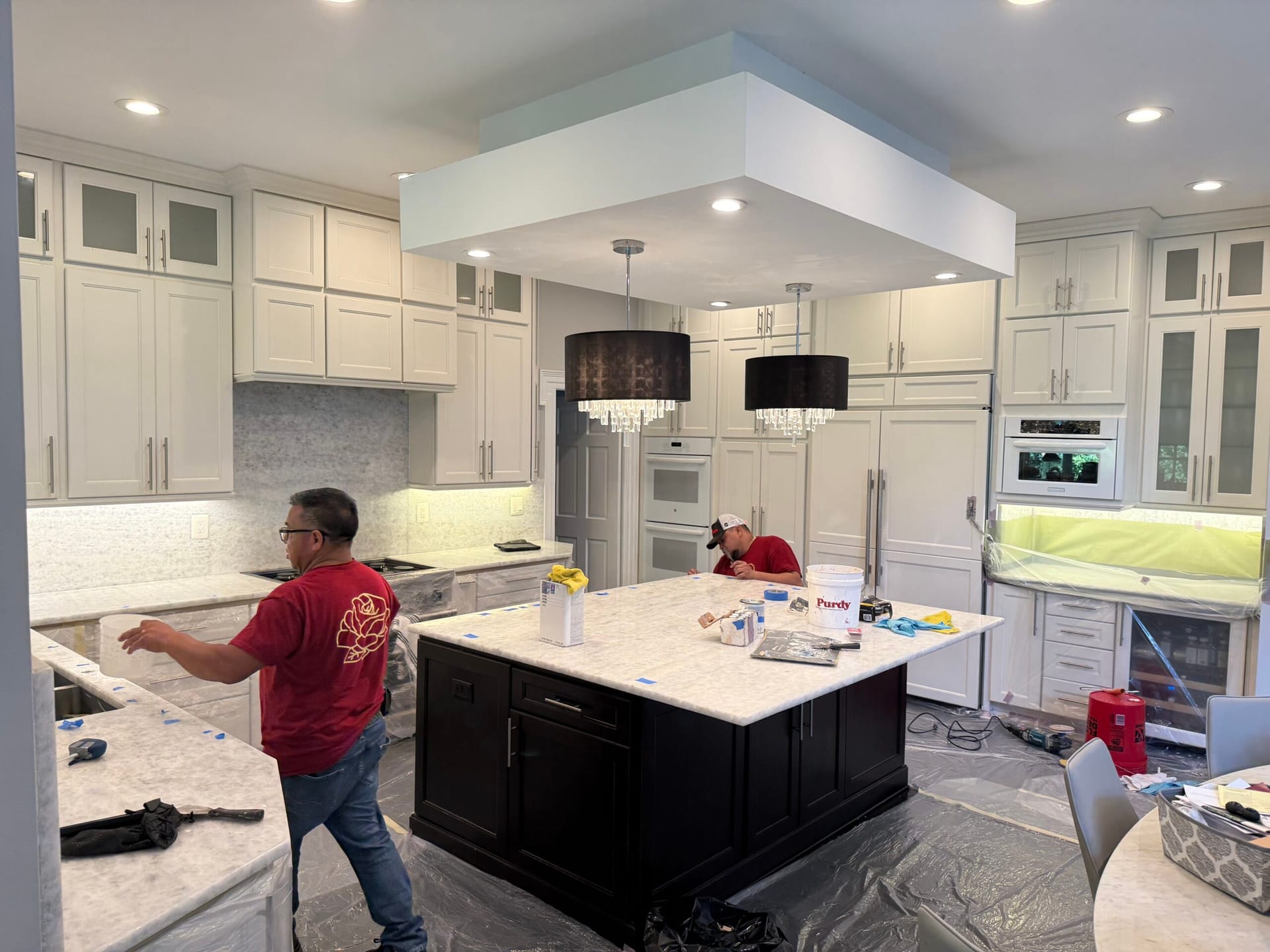
Rose Restoration has restored quartzite in residential kitchens, hotel bar tops, and commercial showrooms throughout DC, Maryland, and Virginia. We carry the diamond progression and the polishing powders for both true high-quartz stone and the softer marble-blend variants. If you are not sure which one you have, we will diagnose it as part of the assessment. See our countertop restoration page for the broader process, or our granite restoration page if you are weighing material options.
Looking for something else?
Get a Free Assessment from Rose Restoration
Tell us about your marble, stone, terrazzo, or concrete and our senior technicians will recommend the right restoration approach. Family-run and trusted across Washington DC, Maryland, and Virginia since 1978.
Call (703) 327-7676 · Email info@roserestoration.com · schedule a time · or send us photos.
Restore. Don't replace.
48 years of polishing marble, terrazzo, concrete, and tile across Washington DC, Northern Virginia, and Maryland. IMF, Four Seasons, Smithsonian, and the Virginia State Capitol trust us — you can too.