
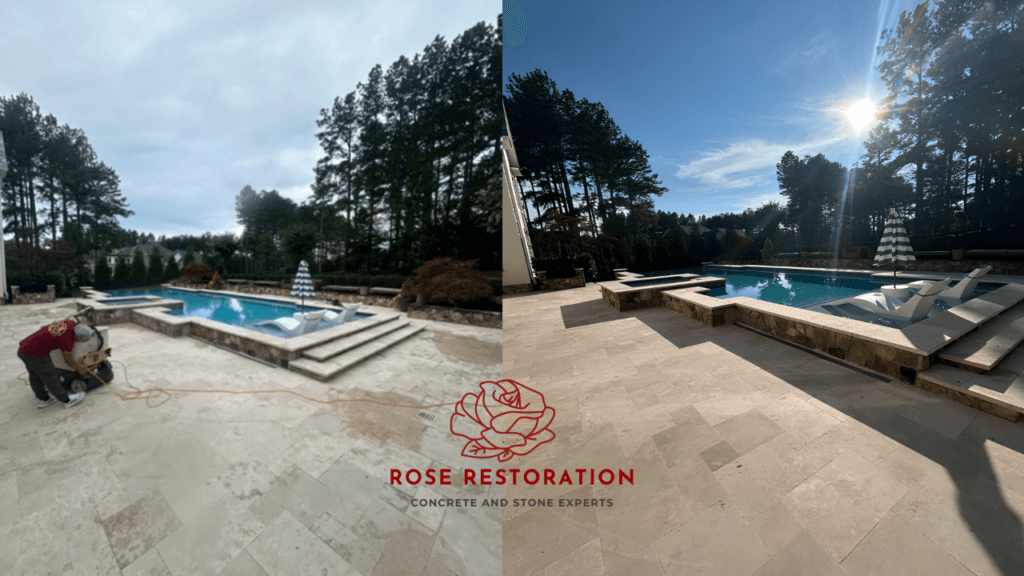
Rose Restoration — a Washington DC stone restoration contractor — compares travertine and marble for homeowners and designers choosing between the two natural stones for floors, countertops, showers, and outdoor patios.
 By Tom Kuhn, CEO, Rose Restoration
Rose Restoration has restored marble, terrazzo, concrete, and natural stone across DC, MD, and VA since 1978.
Travertine and Marble: Two Different Stones
Travertine and marble are both natural stones used extensively in homes throughout the Washington DC metro area, but they are geologically different materials with distinct characteristics. Many homeowners are unsure which stone is in their home — and this matters because each requires different care.
How to Identify Your Stone
Travertine
- Warm, earthy tones — beige, tan, walnut, gold, and cream
- Visible natural holes and pits (may be filled with grout or resin)
- Linear, banded patterns rather than dramatic veining
- Typically has a matte (honed) or tumbled finish in residential settings
- Common in bathroom floors, shower walls, and outdoor patios
Marble
- Wider color range — white, gray, black, green, pink, and red
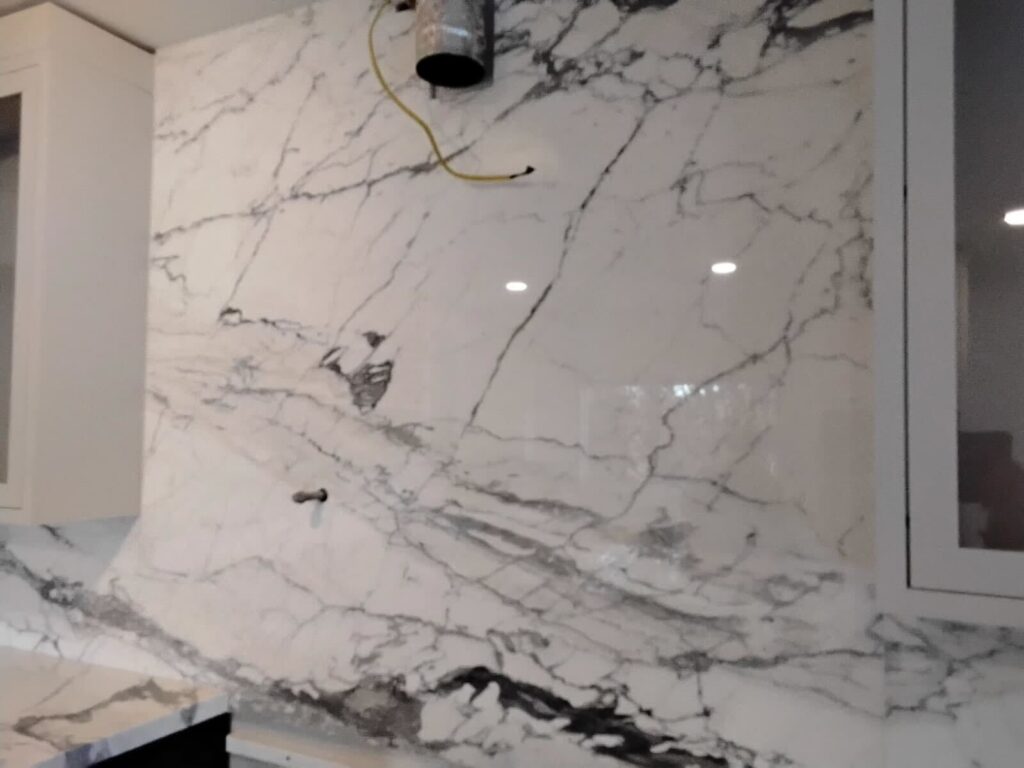
- Distinctive veining patterns (flowing, dramatic lines)
- Smooth, non-porous surface appearance (though still porous)
- Often polished to a high gloss, though honed finishes are also common
- Common in countertops, foyer floors, fireplace surrounds, and bathroom vanities
Key Differences in Care
Porosity
Travertine is significantly more porous than marble. The natural holes and voids in travertine absorb water, stains, and dirt more readily. This means travertine requires more frequent sealing and more careful spill cleanup.
Hardness
Both stones are calcium-based and relatively soft compared to granite, but marble is generally harder and denser than travertine. Travertine scratches and wears more quickly in high-traffic areas.
Acid Sensitivity
Both travertine and marble are highly susceptible to acid etching. Lemon juice, vinegar, wine, and acidic cleaners will damage either stone. Neither should ever be cleaned with vinegar or citrus-based products.
Filling and Repair
Travertine frequently requires hole filling — either during initial installation or as maintenance. The natural voids collect dirt and can enlarge over time. Professional filling with color-matched resin keeps travertine looking clean and prevents further deterioration.
Cost Comparison
- Travertine tile: $4–$15 per square foot (material)
- Marble tile: $10–$50+ per square foot (material)
- Travertine restoration: $8–$20 per square foot
- Marble restoration: $6–$20 per square foot
Which Rooms Suit Which Stone
- Kitchen countertops: Marble (with proper sealing and Marble Armor protection)
- Bathroom floors: Either — travertine offers better slip resistance, marble offers a more luxurious look
- Shower walls: Travertine (popular for its warm, spa-like appearance)
- Outdoor patios: Travertine (stays cooler, more slip-resistant)
- Foyer floors: Marble (more dramatic visual impact)
- Fireplace surrounds: Either — depends on the design aesthetic
Professional Stone Identification and Care
If you are unsure what type of stone is in your home, a professional stone restoration technician can identify it and recommend the appropriate care plan. Rose Restoration serves homeowners throughout Virginia, Maryland, and Washington DC. Contact us at 703-327-7676 or visit roserestoration.com.
The travertine-vs-marble question comes up most often in Bethesda and Potomac home renovations, where the choice affects everything from sealing schedule to long-term maintenance cost.
Looking for something else?
Get a Free Assessment from Rose Restoration
Tell us about your marble, stone, terrazzo, or concrete and our senior technicians will recommend the right restoration approach. Family-run and trusted across Washington DC, Maryland, and Virginia since 1978.
Call (703) 327-7676 · Email info@roserestoration.com · schedule a time · or send us photos.
Restore. Don't replace.
48 years of polishing marble, terrazzo, concrete, and tile across Washington DC, Northern Virginia, and Maryland. IMF, Four Seasons, Smithsonian, and the Virginia State Capitol trust us — you can too.