

Rose Restoration — a Washington DC limestone restoration contractor — explains limestone restoration: cleaning, polishing, sealing, etch and stain removal, and the differences from marble care.
 By Tom Kuhn, CEO, Rose Restoration
Rose Restoration has restored marble, terrazzo, concrete, and natural stone across DC, MD, and VA since 1978.
Understanding Limestone
Limestone is a sedimentary stone prized for its warm, natural appearance. It ranges from creamy whites and soft beiges to rich grays and blues. Popular in fireplaces, flooring, exterior facades, and accent walls, limestone brings a timeless elegance to any space. However, its high porosity and calcium carbonate composition make it more vulnerable to damage than harder stones like granite.
Why Limestone Requires Special Care
Limestone is softer and more porous than marble or granite. This means it scratches more easily, absorbs liquids faster, and is highly susceptible to acid etching. Understanding these properties is essential for proper care and maintenance.
Cleaning Limestone
Safe Cleaning Methods
- Dust mop or vacuum regularly to remove grit that causes scratching
- Damp mop with warm water and a pH-neutral stone cleaner
- Blot spills immediately — do not wipe, which can spread the liquid
- Use soft cloths or microfiber — never abrasive pads
Products to Avoid
- Vinegar, lemon juice, or any acidic cleaner — causes immediate etching
- Bleach — discolors limestone and degrades sealers
- Abrasive cleaners — scratch the soft surface
- Generic floor cleaners — often contain acids or harsh chemicals
Polishing Limestone
Limestone can be finished in several ways:
- Honed (matte) — the most common and practical finish for limestone, especially on floors
- Polished (glossy) — possible with denser limestones but requires more maintenance to keep looking sharp
- Brushed or tumbled — a textured, rustic finish common on exterior limestone
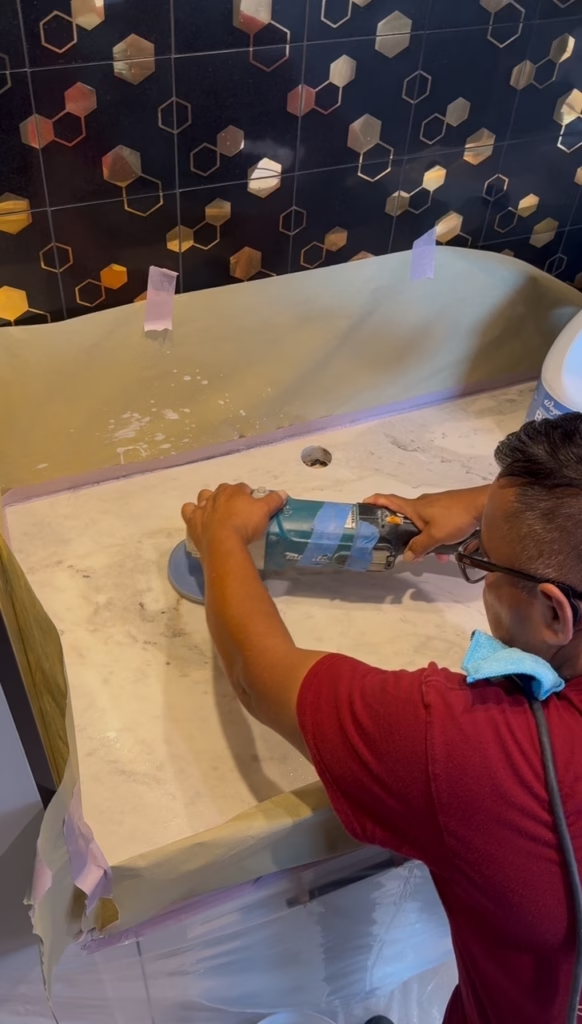
Professional polishing uses diamond pads in progressively finer grits to achieve the desired finish level. This process removes surface scratches, etching, and wear.
Crack and Chip Repair
Limestone chips and cracks are repaired using color-matched polyester resin or epoxy. For floors, chips in high-traffic areas should be repaired promptly to prevent them from growing. For fireplaces and walls, repairs are primarily cosmetic. A skilled technician can make repairs virtually invisible.
Sealing Limestone
Sealing is critical for limestone due to its high porosity. An unsealed limestone surface absorbs water, oil, and stains within seconds.
- Use a penetrating (impregnating) sealer — not a topical coating
- Apply to clean, dry stone and allow full cure time (typically 24 hours)
- Reseal every 1–2 years for countertops and floors, every 2–3 years for walls and low-use surfaces
- Test sealer effectiveness periodically with the water drop test — if water absorbs rather than beading, it is time to reseal
Indoor vs. Outdoor Limestone
Indoor limestone requires protection from acids, stains, and foot traffic wear. Outdoor limestone faces additional challenges from weather, freeze-thaw cycles, UV exposure, and biological growth. Outdoor limestone must be sealed more frequently and may require periodic professional cleaning to remove algae, moss, and mineral deposits.
Professional Limestone Restoration
Rose Restoration provides comprehensive limestone care throughout Virginia, Maryland, and Washington DC — from gentle cleaning and sealing to full grinding and restoration. Contact us at 703-327-7676 or visit roserestoration.com.
Most of our limestone restoration projects happen in Washington DC — federal buildings, embassy interiors, and the older institutional stone that defines the citys monumental architecture.
Looking for something else?
Get a Free Assessment from Rose Restoration
Tell us about your marble, stone, terrazzo, or concrete and our senior technicians will recommend the right restoration approach. Family-run and trusted across Washington DC, Maryland, and Virginia since 1978.
Call (703) 327-7676 · Email info@roserestoration.com · schedule a time · or send us photos.
Restore. Don't replace.
48 years of polishing marble, terrazzo, concrete, and tile across Washington DC, Northern Virginia, and Maryland. IMF, Four Seasons, Smithsonian, and the Virginia State Capitol trust us — you can too.