Limestone Restoration in Washington DC, Maryland, and Northern Virginia
Limestone is one of the most elegant natural stones used in residential and commercial interiors, but it is also one of the most vulnerable. Soft, porous, and calcium-based, limestone etches when it contacts acids, wears down under foot traffic, and stains when liquids are allowed to penetrate its surface. Rose Restoration has specialized in limestone restoration since 1978, serving homeowners, property managers, and commercial clients throughout the DC metro area. Whether your limestone floors are dull and scratched, your countertops have accumulated etch marks, or your exterior limestone has suffered from water infiltration and efflorescence, our team has the tools and expertise to return the stone to its best condition.
What Causes Limestone to Deteriorate
Understanding what damages limestone helps explain why professional restoration is different from simply cleaning the surface — and why the right process matters.
Etching
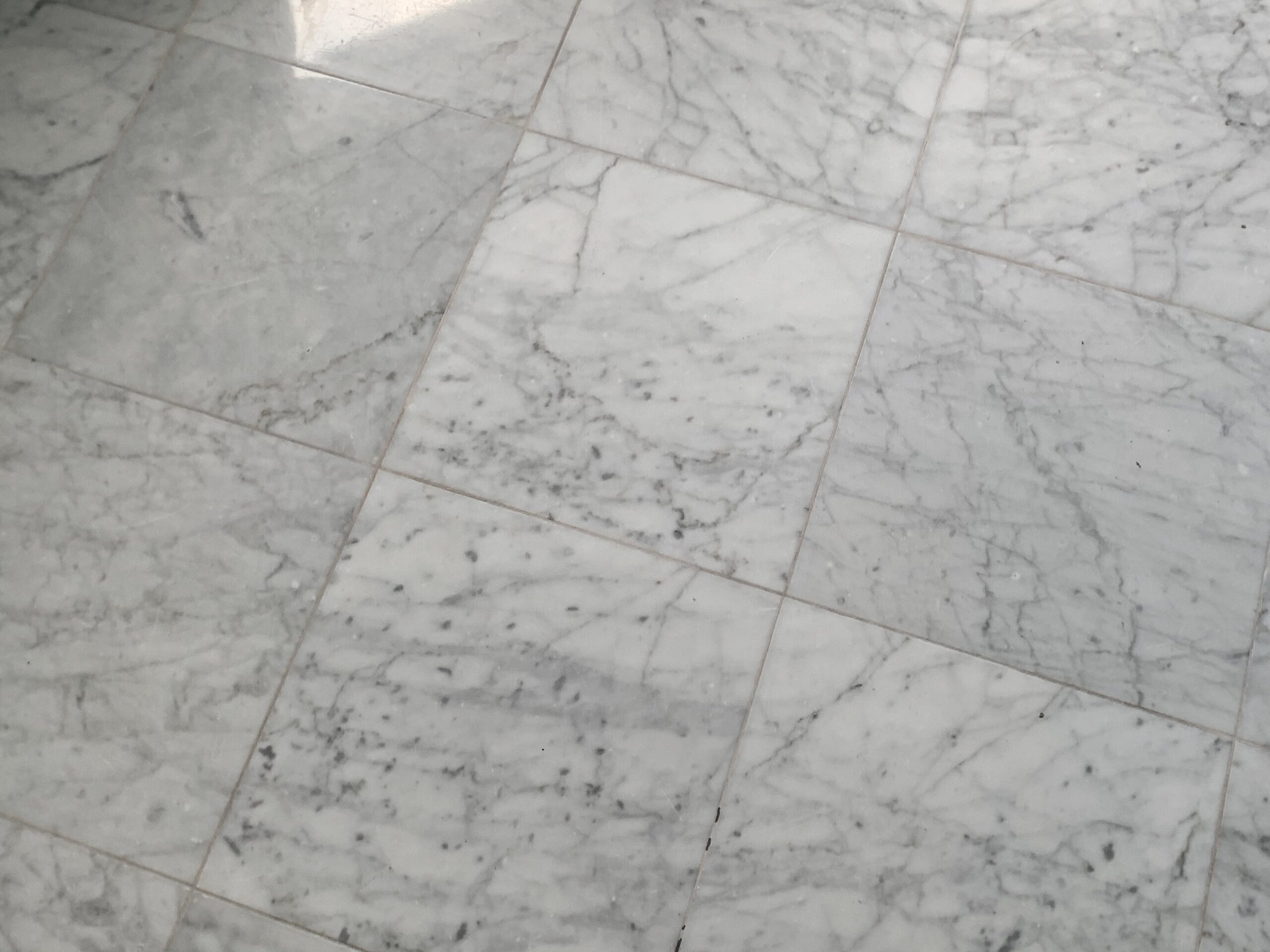
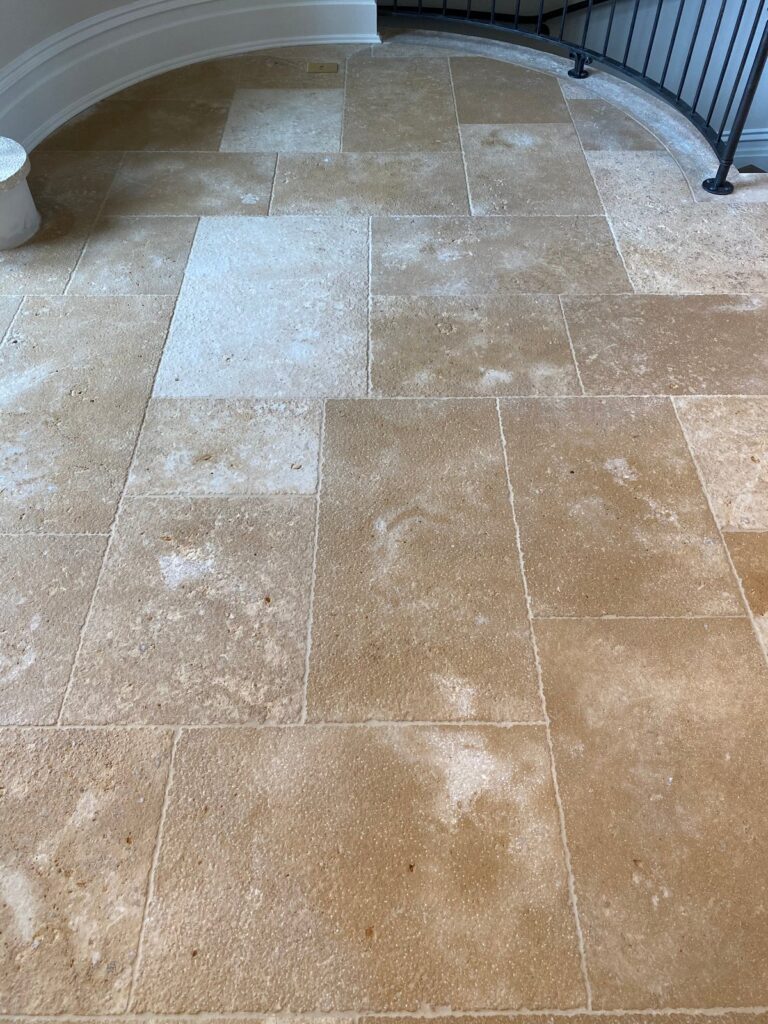
Etching is the most common form of limestone damage in residential settings. Limestone is composed primarily of calcium carbonate, which reacts chemically with acidic substances. Common household acids — lemon juice, vinegar, wine, tomato sauce, coffee, and even many household cleaning products — dissolve the calcium carbonate at the surface, leaving dull, rough patches called etch marks. These marks cannot be removed by cleaning; they require mechanical honing to abrade away the damaged layer and reestablish a smooth, consistent surface. Mild etch marks may appear as faint rings or spots; heavy etching from prolonged exposure can affect large areas and alter the color and texture of the stone.
Wear and Scratch Patterns
In high-traffic areas — foyers, hallways, kitchens, and commercial lobbies — limestone wears down gradually over time. Grit carried in on shoes acts like sandpaper, creating microscopic scratches that accumulate and cause the surface to lose its luster. Traffic patterns become visible as duller areas running through the floor, while low-traffic zones near walls retain their original finish. This type of wear is entirely reversible through professional diamond honing and polishing.
Staining
Limestone’s porosity makes it susceptible to staining from oils, coffee, wine, rust, and biological matter. Surface stains are addressed during cleaning; deeper stains that have penetrated the stone may require poultice treatment — the application of an absorbent material mixed with a chemical agent that draws the stain out of the stone over time. Multiple poultice applications may be needed for severe staining.
Efflorescence
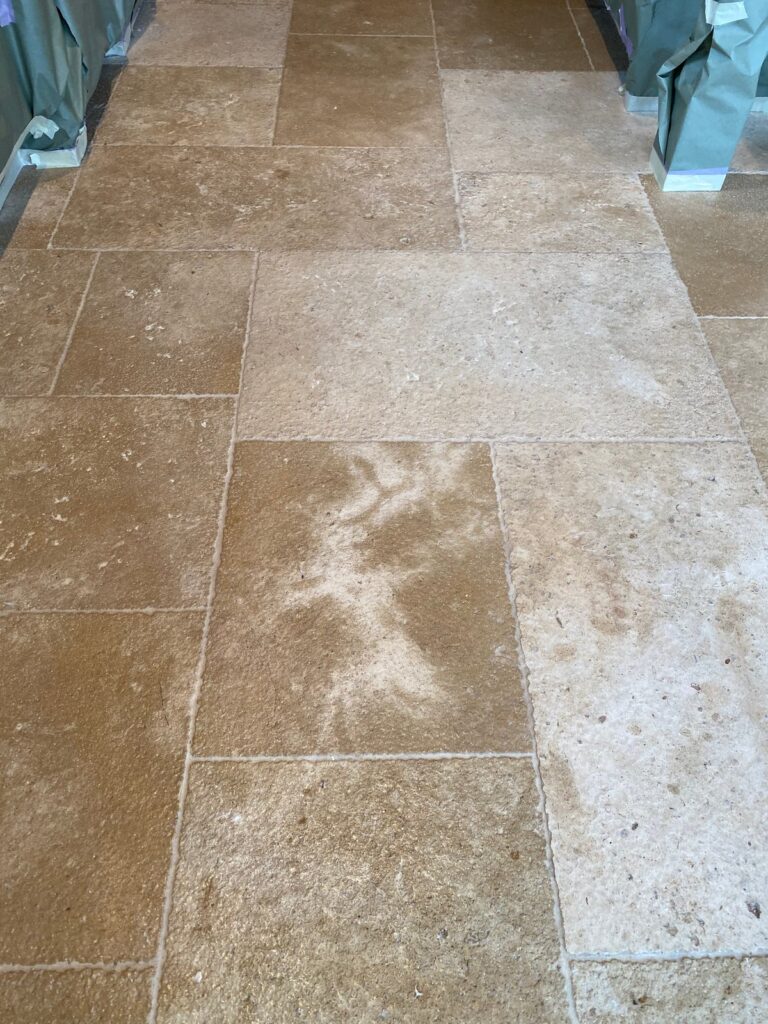
Efflorescence appears as white, powdery deposits on the surface of limestone, particularly on exterior stone, basement floors, or areas near water sources. It is caused by soluble salts migrating to the surface as moisture moves through the stone and evaporates. Efflorescence is primarily an aesthetic issue in mild cases but can indicate more significant moisture problems in severe or recurring cases. Treatment involves removing the deposits mechanically and chemically and addressing the moisture source.
Cracks, Chips, and Lippage
Limestone can crack due to substrate movement, settlement, or impact. Chips occur at edges and corners from impact damage. Lippage — where adjacent tiles are at slightly different heights — is common in older installations and can create both aesthetic and safety issues. Professional restoration addresses all of these through crack filling, chip repair, and grinding to correct lippage and create a uniform plane across the floor.
Our Limestone Restoration Services
Rose Restoration offers a comprehensive range of limestone restoration and maintenance services for residential and commercial clients in Washington DC, Maryland, and Northern Virginia.
Limestone Honing
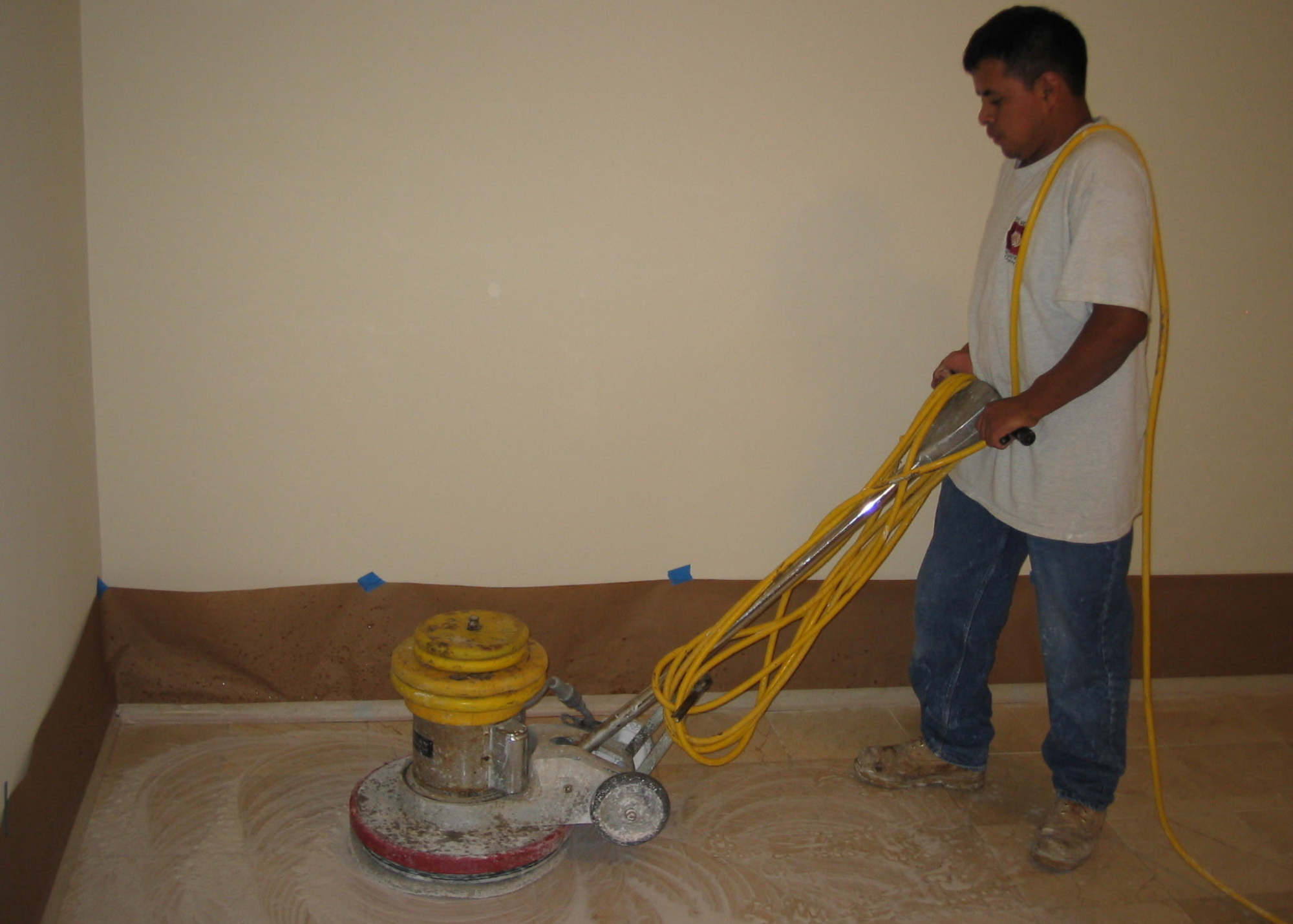
Honing uses diamond abrasive pads in progressively finer grits to remove etch marks, scratches, wear patterns, and surface damage from limestone floors and countertops. The process is methodical — starting with a coarser grit to address damage and moving through a sequence of increasingly fine grits until the surface is smooth and consistent. Honing produces a matte or satin finish that is smooth to the touch and free of visible scratches and etch marks. Many clients prefer a honed finish on limestone for its understated elegance and its tendency to show fewer fingerprints and water spots than a high-gloss surface.
Limestone Polishing
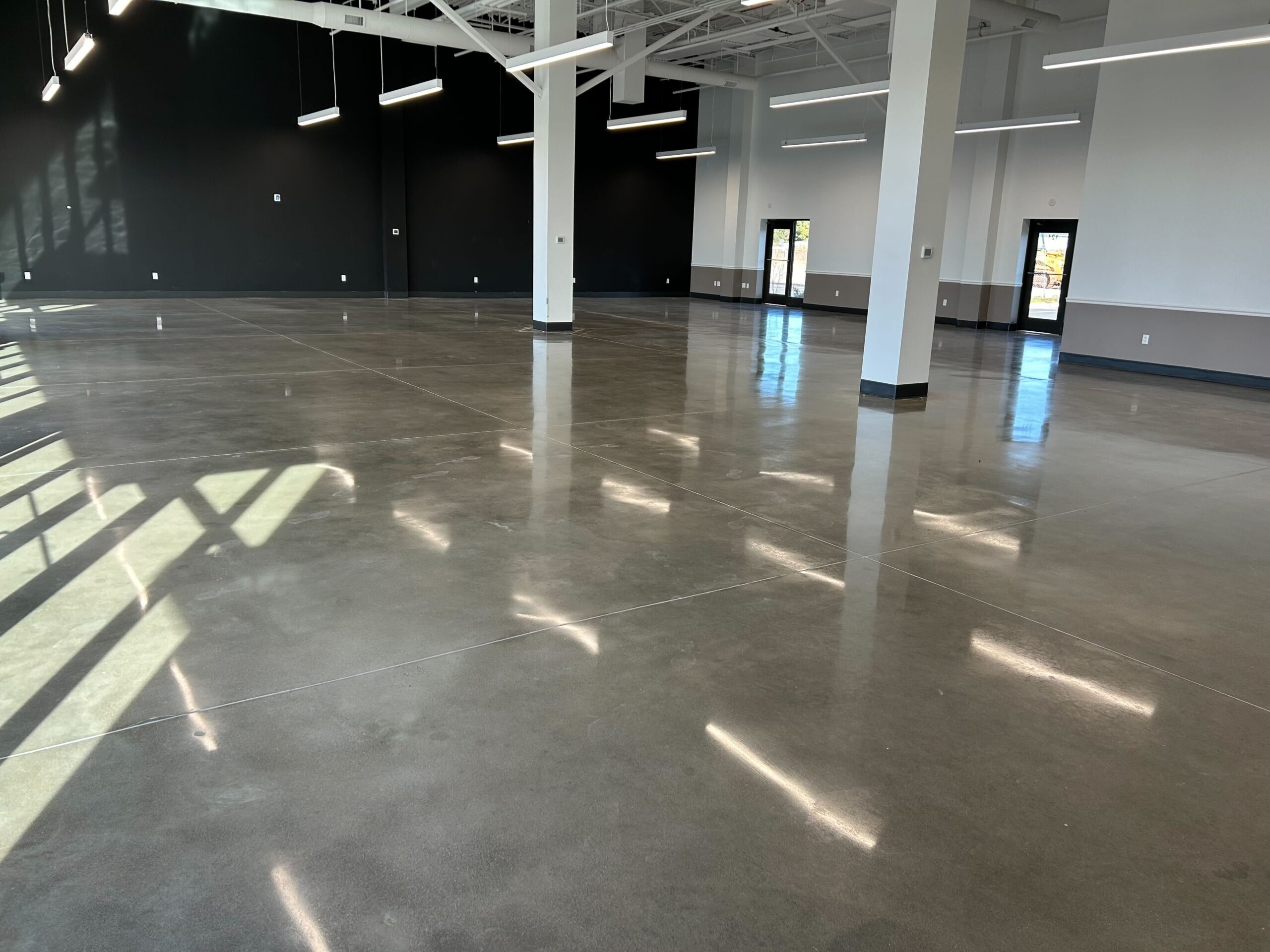
Polishing continues where honing ends, using very fine abrasive pads and polishing powders to build the surface to a reflective gloss. Limestone polishes to a beautiful, soft luster that enhances the natural variation of color and pattern in the stone. High-polish limestone is popular for formal spaces — dining rooms, master bathrooms, and hotel lobbies — where the reflective quality of the stone contributes to the overall design effect. Achieving a high polish on limestone requires more steps than honing alone and is priced accordingly.
Limestone Cleaning
Professional limestone cleaning goes beyond what routine mopping or household cleaning products can achieve. We use pH-neutral, stone-safe cleaning solutions and specialized equipment to remove embedded soils, grout haze, old wax buildup, biological growth, and efflorescence. Deep cleaning is typically the first step in any restoration process and is also offered as a standalone maintenance service.
Limestone Sealing
After honing or polishing, limestone should be sealed with a professional-grade penetrating impregnating sealer. The sealer enters the pores of the stone and provides a barrier against staining without changing the appearance of the surface or creating a film on top of the stone. Sealed limestone is significantly more resistant to oil and water-based stains. Sealing does not prevent etching — etching is a chemical reaction, not a staining process — but it greatly reduces the risk of staining from daily use. We recommend resealing residential limestone floors every one to three years depending on traffic and use.
Crack Repair
Limestone cracks are filled with color-matched epoxy or cementitious materials, depending on the nature and location of the crack. Structural cracks that are growing or shifting require investigation of the underlying cause before repair. Stable surface cracks and stress fractures are filled, finished flush with the surrounding surface, and polished to match the surrounding stone. The goal is an invisible repair that does not draw the eye.
Lippage Correction
Uneven tile edges are corrected through grinding, which levels the surface across multiple tiles to create a uniform plane. Lippage correction is common in older limestone installations and in areas where substrate movement has caused tiles to shift. After grinding, the floor is honed and polished through the normal restoration sequence.
Limestone Floors vs. Limestone Countertops
Limestone is used for both floors and countertops in DC-area homes, and the restoration approach differs between the two.
Limestone Floors
Limestone floors are restored using large floor machines with diamond abrasive pads. The equipment allows for efficient coverage of large areas and consistent results across the entire floor surface. Lippage correction, grout cleaning, and crack repair are all more common on floors than on countertops due to the greater area and the effects of foot traffic and substrate movement over time. Floor restoration is typically priced per square foot.
Limestone Countertops
Limestone countertops are worked by hand and with hand-held equipment, allowing for precise work around sinks, faucets, and edge profiles. Countertop limestone is particularly vulnerable to kitchen acids and bathroom products, making etch marks the primary concern. A kitchen with limestone counters may develop visible etch marks within the first year of use if the stone is not protected and cared for properly. Countertop restoration is typically priced by the job. Note that our Marble Armor coating — which resists etching from acidic liquids on calcium-based stone — is available for limestone countertops, vanities, tabletops, bar tops, backsplashes, and waterfall edges.
Residential Limestone Restoration
Residential limestone restoration projects we commonly handle in the DC area include:
- Foyer and entry hall floors with worn traffic patterns and etch marks
- Master bathroom floors and shower surrounds with soap scum, hard water deposits, and etching
- Kitchen floors with food and beverage stains and wear in front of appliances
- Limestone countertops and backsplashes with accumulated etch marks
- Limestone fireplace surrounds with smoke staining and surface dullness
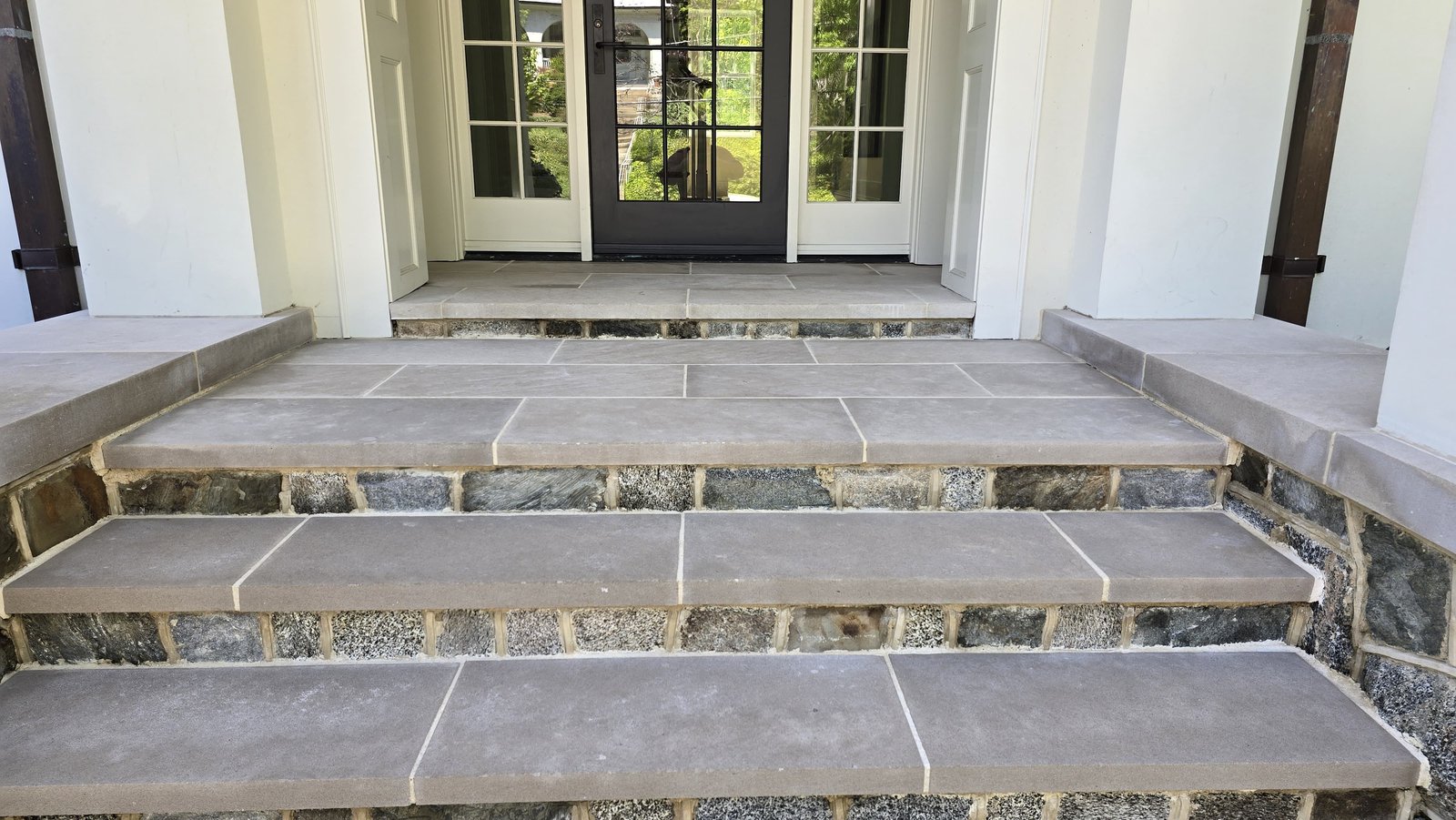
- Exterior limestone steps and thresholds with efflorescence and weathering
Residential limestone restoration is typically completed in a single visit for most floor areas and countertop projects. For larger homes or multi-room projects, we work in phases to minimize disruption. Learn more about our approach to residential marble and limestone restoration.
Commercial Limestone Restoration
Limestone is a popular choice for commercial interiors in Washington DC — office building lobbies, hotel common areas, retail spaces, and government buildings all commonly feature limestone floors and wall cladding. High foot traffic accelerates wear, and commercial limestone often needs attention more frequently than residential stone.
We work with building managers, property management companies, hospitality groups, and contractors throughout the DC metro area. Commercial limestone restoration projects are scheduled to minimize disruption — we commonly perform work after business hours, on weekends, or in phased sections to keep the space accessible. We carry full commercial insurance and are experienced with the access and compliance requirements of Washington DC commercial buildings.
Common Limestone Types in DC Area Homes and Buildings
The DC metro area features a wide variety of limestone species in both residential and commercial settings. Understanding the specific type of limestone in your installation helps us select the correct restoration process and materials.
- Jerusalem Gold (Jerusalem Stone): A warm, cream-colored Israeli limestone widely used in high-end DC-area homes. Dense for a limestone but still vulnerable to etching.
- Jura Beige and Jura Grey: German limestones with subtle fossil inclusions, popular in contemporary interiors. Takes a beautiful polish but requires careful acid management.
- Saturnia: An Italian limestone with a slightly textured surface, often used for floors in a tumbled or brushed finish.
- Crema Marfil: Technically classified as a limestone or calcareous marble depending on its origin, Crema Marfil is extremely common in DC-area bathrooms and foyers. It responds well to polishing but etches easily.
- French Limestone (Burgundy, Bourgogne): Used in historic and high-end properties in DC’s historic districts. Often requires lime-compatible repair materials to avoid damaging the original stone.
- Virginia Limestone: Regional stone used in historic DC-area properties, including some Georgetown and Capitol Hill rowhouses.
For additional guidance on calcium-based stone restoration, see our natural stone restoration hub and our detailed post on how to fix etched, dull, or stained stone before you replace it.
Why Choose Rose Restoration for Limestone
Rose Restoration has been serving the Washington DC metro area since 1978. Our limestone restoration team brings genuine expertise with calcium-based stone — understanding not just the mechanics of honing and polishing but the specific behaviors of limestone under different conditions, with different finishes, and in different installation contexts. We use professional diamond tooling, high-quality sealers, and color-matched repair materials selected for each specific project.
We offer free on-site assessments for all limestone restoration projects. To schedule an evaluation or request a quote, call us at 703-327-7676.
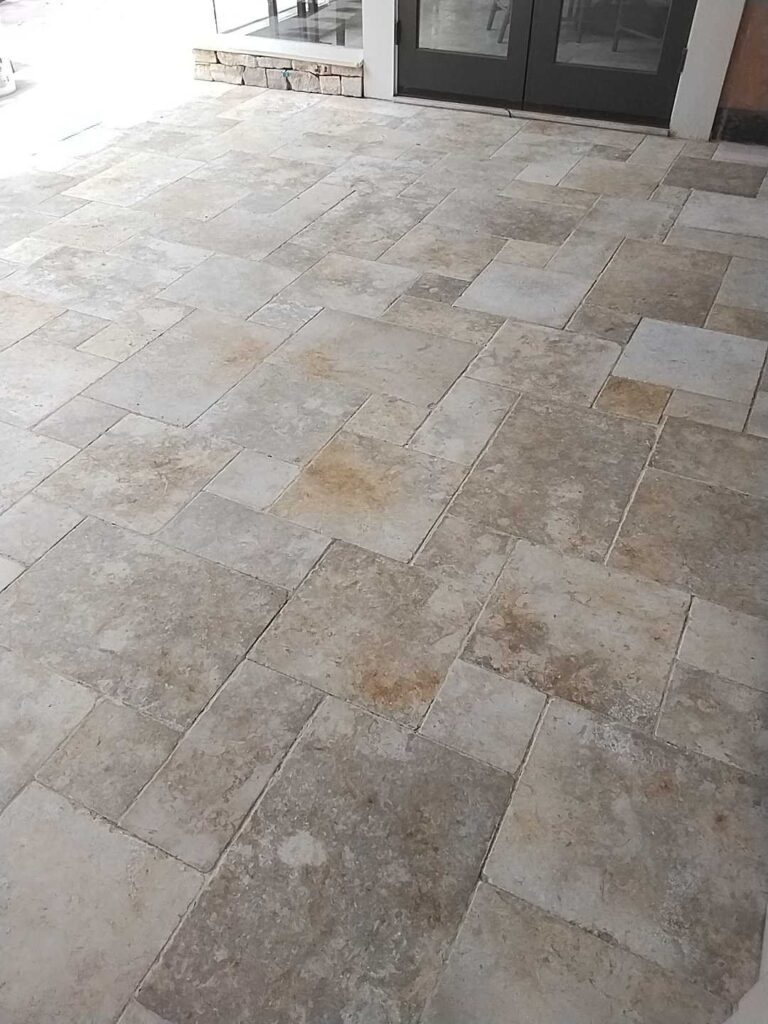
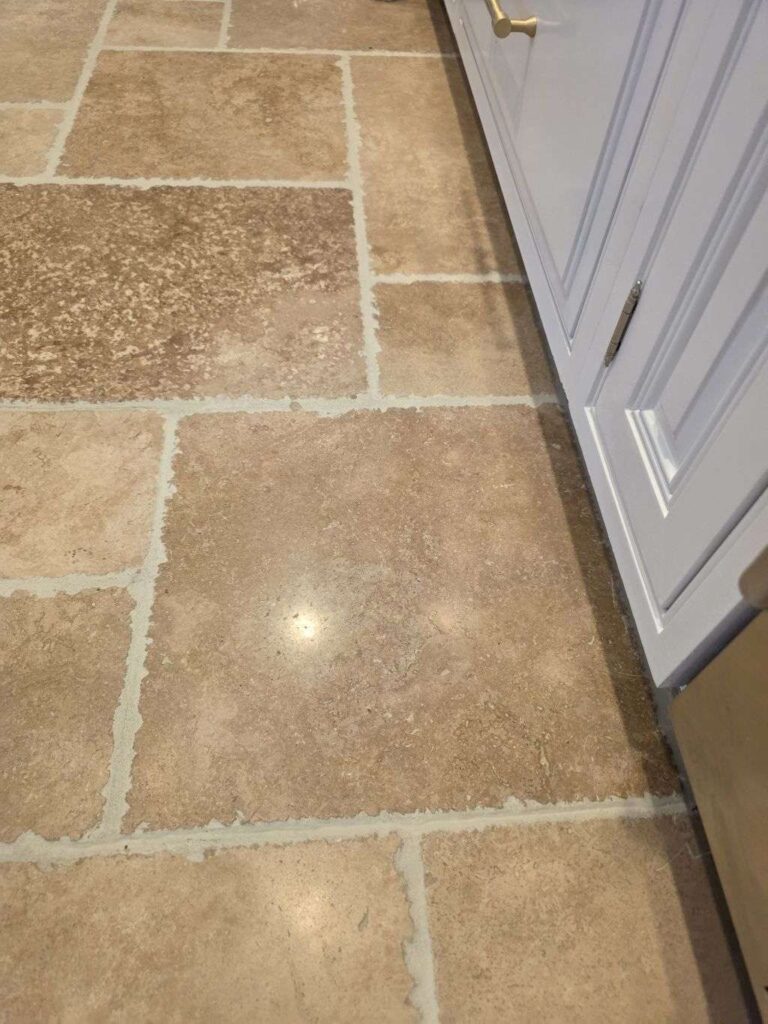
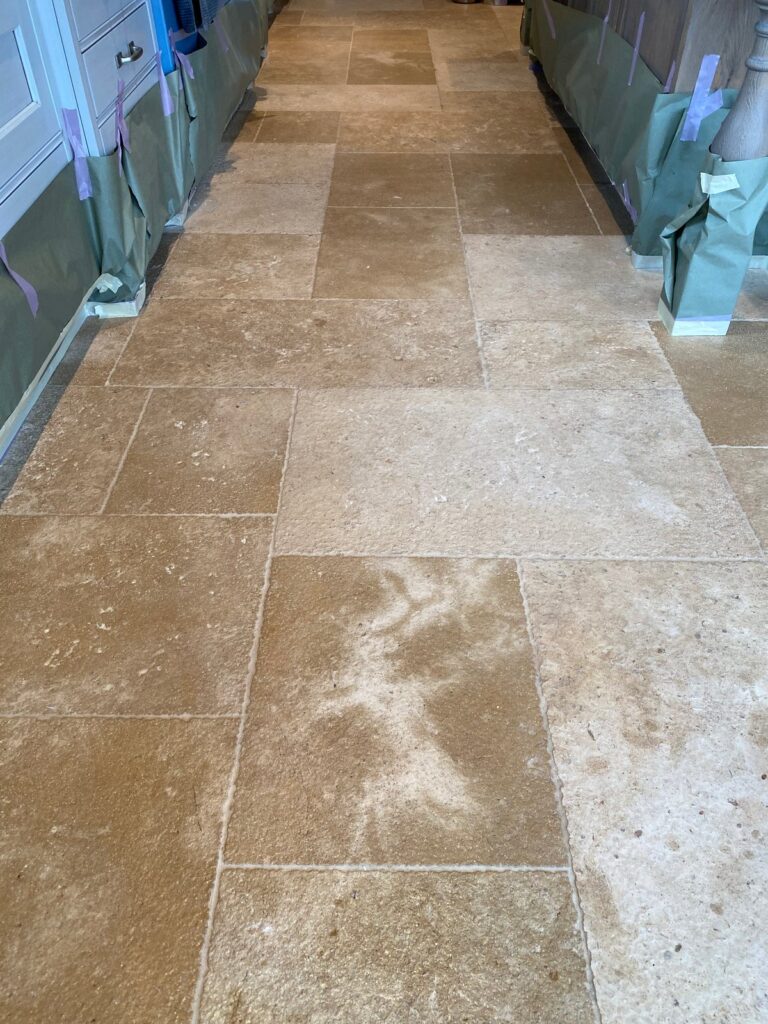
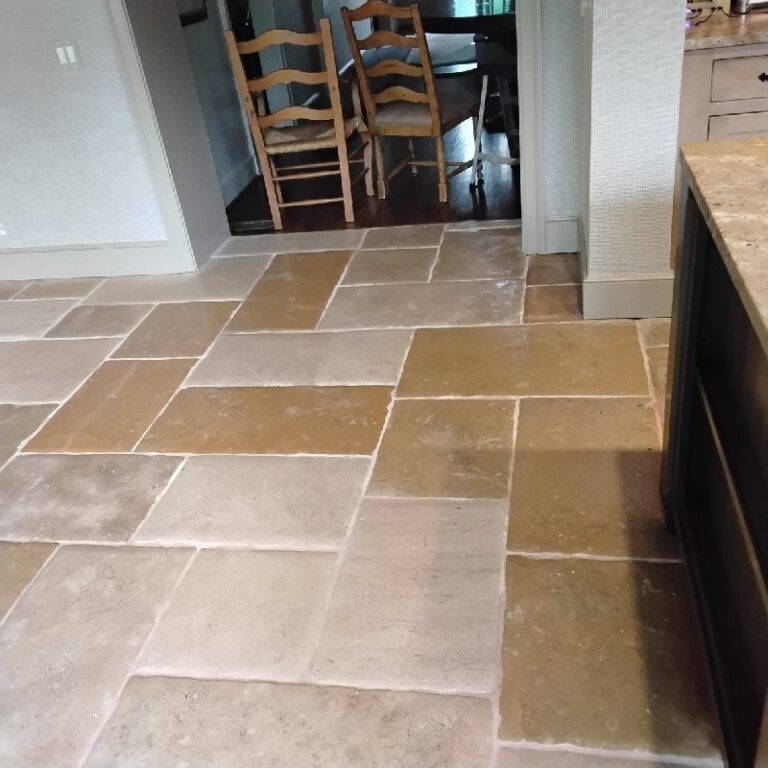
Project photos
Real Rose Restoration jobs, photographed by our crews.
Frequently Asked Questions
Can etch marks be removed from limestone floors and countertops?
Yes. Etch marks are caused by a chemical reaction between the stone’s calcium carbonate and acidic substances, which removes the polish from the surface and roughens the texture at the microscopic level. Professional honing physically removes the damaged layer using diamond abrasives and then rebuilds the surface through polishing. Light etch marks can often be addressed in a single restoration session. Severe etching that has penetrated deeper into the stone requires more intensive honing but can still be fully corrected in most cases. After restoration, sealing and careful maintenance help prevent future etching.
How long does limestone floor restoration take?
A typical residential limestone floor restoration — covering a foyer, hallway, or bathroom — takes four to eight hours and can be completed in a single visit. Larger areas such as open-plan living and dining rooms may require a full day or two days depending on the square footage and the extent of repairs needed. Most residential projects allow homeowners to walk on the floor within a few hours of completion, though full curing of the sealer takes 24 to 48 hours. We will give you a specific timeline estimate during the on-site assessment.
How often should limestone be professionally restored or maintained?
Residential limestone floors in moderate use areas typically need professional maintenance every two to four years. High-traffic areas — busy foyers, kitchen floors — may benefit from attention every one to two years. Between professional visits, proper daily care using pH-neutral stone-safe cleaners will significantly extend the life of the finish. Commercial limestone in high-traffic settings like hotel lobbies may need professional maintenance annually. Limestone countertops benefit from resealing once a year in active kitchens.
What is the difference between limestone and marble restoration?
Limestone and marble are both calcium carbonate-based stones and share many restoration characteristics — both etch from acids, both respond to diamond honing and polishing, and both benefit from penetrating sealers. The key differences are in hardness and crystalline structure. Marble is generally harder and more crystalline than limestone, which allows it to take a higher, more durable polish. Limestone is softer and more porous, which means it typically requires more frequent maintenance and is more susceptible to staining. The restoration process is similar for both, but abrasive selection and polishing compounds are adjusted for each material.
Is limestone good for kitchens and bathrooms?
Limestone can work well in both kitchens and bathrooms, but it requires more careful maintenance than harder, less reactive stones like granite. In kitchens, the risk of etching from acidic foods and cleaning products is significant, and limestone countertops will develop etch marks without careful use. Limestone floors in bathrooms are popular and durable, but soap products, shampoos, and cleaning sprays should be chosen carefully to avoid acids. The key to maintaining limestone in these environments is using pH-neutral cleaners, wiping up spills promptly, and having the surface professionally maintained and resealed on a regular schedule.
Service Areas
Rose Restoration serves homeowners throughout the DC metro area:
Maryland: Bethesda | Chevy Chase | Potomac | North Potomac | Rockville | Silver Spring | Montgomery County | Annapolis | Baltimore | Frederick
Virginia: McLean | Arlington | Great Falls | Alexandria | Reston | Vienna | Tysons | Fairfax County | Loudoun County | Falls Church | Ashburn | Middleburg
Washington D.C.: Washington DC | Georgetown | Capitol Hill | Northwest D.C.
Recent Limestone Restoration Projects
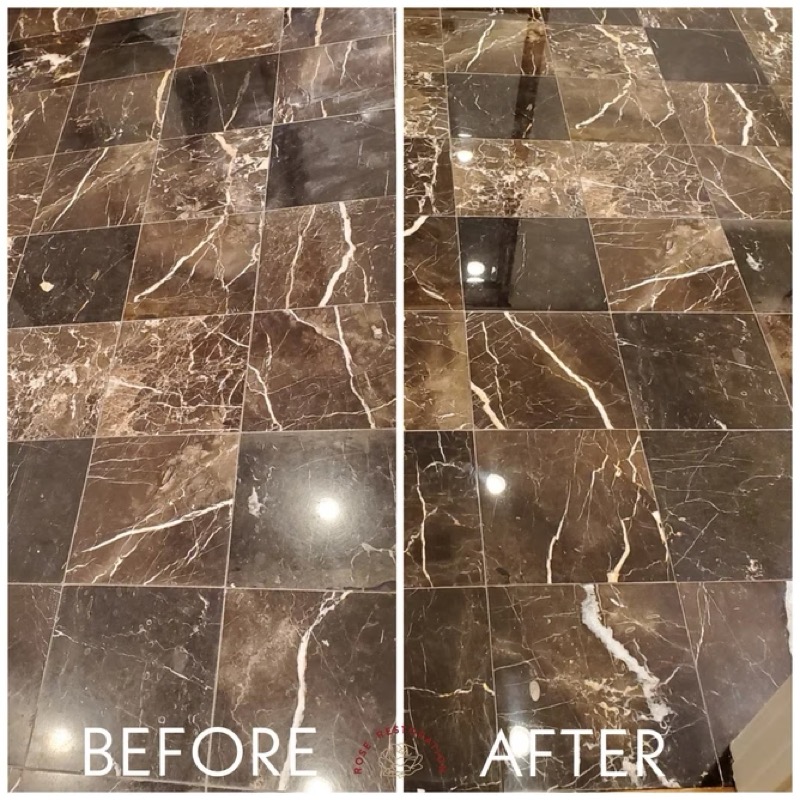
Stone Floor — Before & After
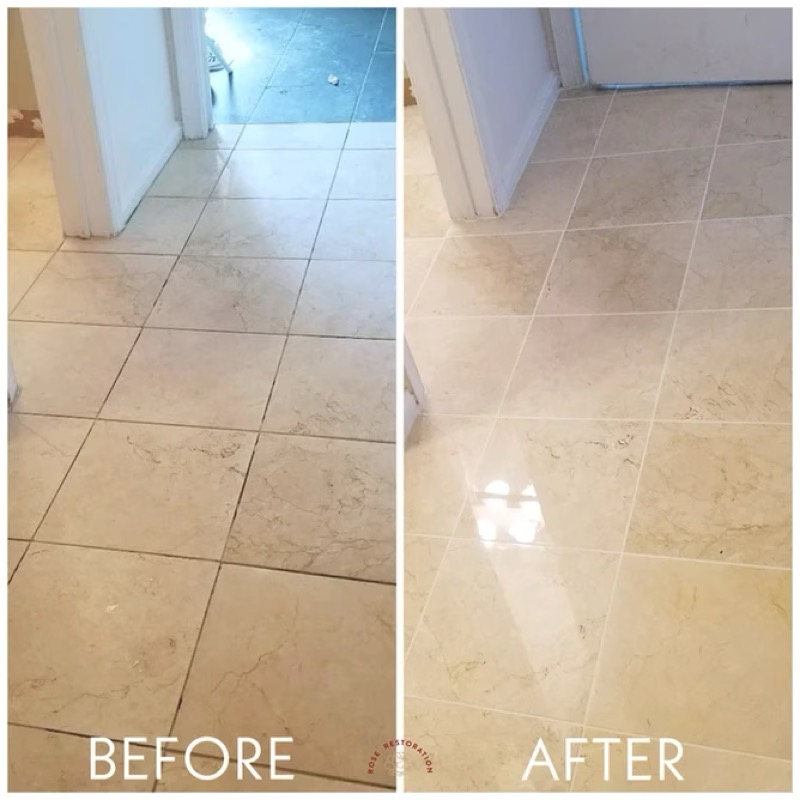
Tile Floor — Before & After
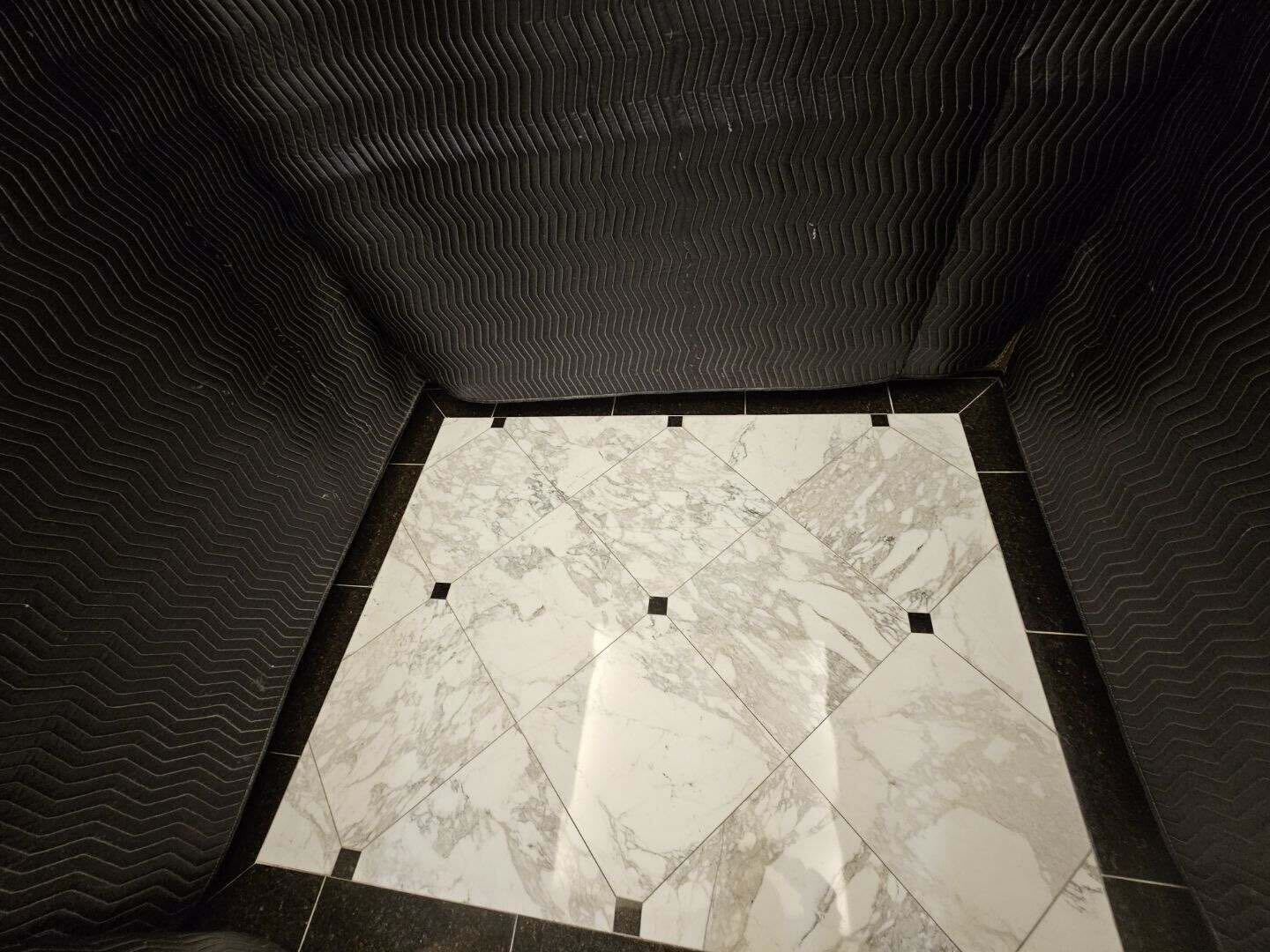
Historic Building Restoration