
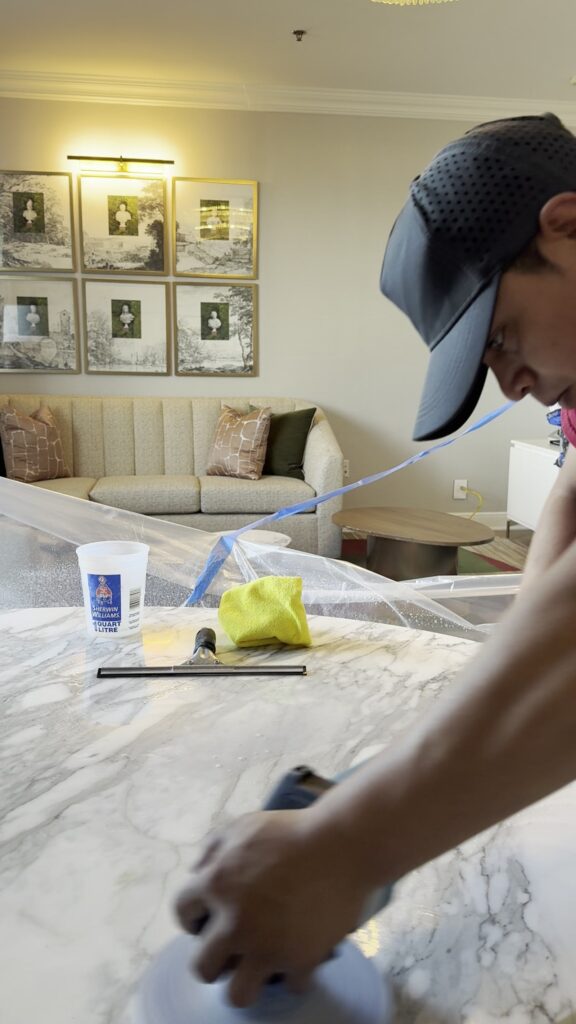
Rose Restoration — a Washington DC marble restoration contractor — explains how to fix etched, dull, or stained marble countertops, floors, and showers without replacement. Most marble damage is repairable in place; replacement is rarely necessary.
| Etch severity | Symptoms | Fix | Scope |
|---|---|---|---|
| Light surface etching | Faint dull spot, smaller than a coin | Spot polish, refined back into the surrounding finish | Single visit |
| Moderate etching | Visible dull patch, palpable texture change | Professional diamond honing through 400–1500 grit | Restoration |
| Deep / widespread etching | Multiple etches, large dull areas | Full restoration: grind + hone + polish + seal | Restoration |
| Very dense black or green marble | Hard stone; standard methods may not work | Specialized abrasives + densifier | Restoration |
| Etching on honed (matte) marble | Less visible by design | Often touch-up only; full re-hone if needed | Single visit |
- Identify the etch type. Run a finger over the spot. Etching feels rougher than the surrounding polished surface; staining feels smooth but discolored. They require different fixes.
- Judge the severity. Light etching is a faint dull spot smaller than a coin. Anything larger, deeper, or repeated across a surface is past spot work and needs the finish refined as a whole so it stays even.
- Have the finish refined. For moderate or deep etching, professional diamond honing removes the damaged surface layer and restores uniform finish. Most countertop work completes in 2–4 hours.
- Protect against future etching. After restoration, apply impregnating sealer to slow stain absorption (sealer does NOT prevent etching). For full etch prevention on polished marble, install Marble Armor invisible 10-year protection.
 By Tom Kuhn, CEO, Rose Restoration
Rose Restoration has restored marble, terrazzo, concrete, and natural stone across DC, MD, and VA since 1978.
If your marble countertop has dull spots from lemon juice, your marble table shows water rings from a wine glass, or your marble floor has lost its shine in high-traffic areas, you are dealing with one of the most common — and most fixable — problems in natural stone care. Marble etching, staining, and dullness affect thousands of homeowners every year, and the good news is that professional restoration can almost always correct the damage completely.
Before you consider replacing your marble — which can cost $5,000 to $15,000 or more for a kitchen countertop — read this guide. Rose Restoration has been fixing etched, dull, and stained marble throughout Washington DC, Maryland, and Northern Virginia since 1978, and we can tell you that replacement is almost never necessary.
Almost nothing described below is a reason to replace the stone. Restoring it in place is the normal outcome, and our residential marble restoration service covers etch removal, stain drawing, honing and polishing for floors, countertops and vanities.
Is It an Etch or a Stain? (They Need Opposite Fixes)
This is the first thing to establish, because the two problems are treated in completely opposite ways and the wrong treatment wastes money.
Published ranges only go so far. Send your details and a senior crew leader will reply with an exact quote within one business day — no salespeople, no obligation.
Prefer photos? Send photos of your project for a same-day reply. Or call 703-327-7676.
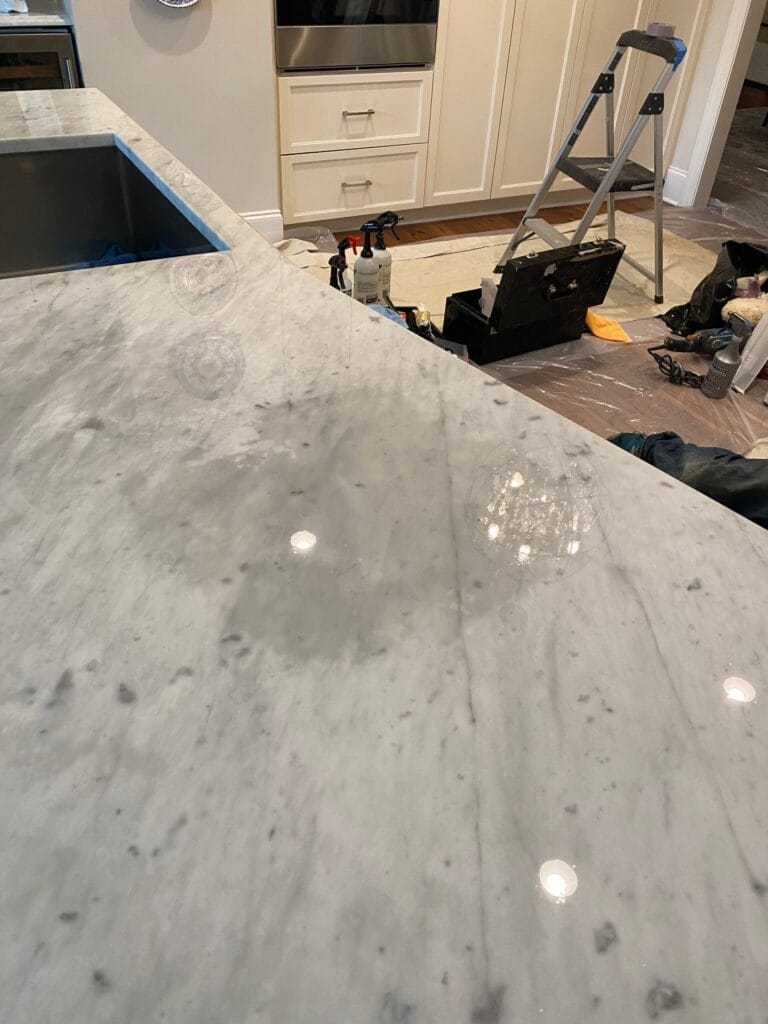
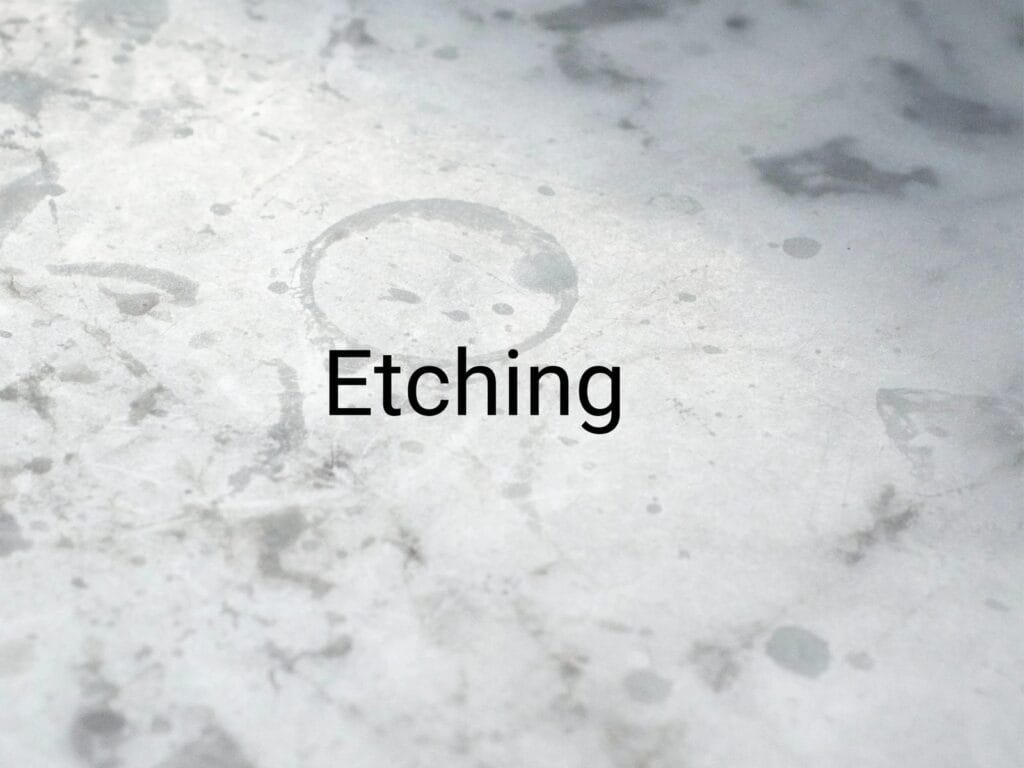
An etch is physical damage. A stain is absorbed material. An etch mark is a dull, lighter patch where acid has dissolved the polished surface of the stone. Run a fingertip over it in raking light and you will usually feel the edge of it, and it will look dull where the surrounding marble looks glossy. A stain is the opposite: the surface is still smooth and still shiny, but something has soaked into the pores and darkened the stone from within.
The practical test: tilt your head so light rakes across the surface. If the mark disappears when viewed straight on and reappears as a dull patch at an angle, it is an etch. If the mark is visible from every angle as a colour change, it is a stain. A ring left by a glass is frequently both — acid etching from the drink plus a darker stain from whatever ran down the outside.
Why it matters: etching is removed mechanically, by honing the surface back and re-polishing it. No cleaner, poultice or sealer will ever remove an etch, because there is nothing to lift out — the stone itself is missing. Staining is drawn out chemically, usually with a poultice matched to whatever caused it. Applying a poultice to an etch does nothing, and polishing a stain simply makes a shiny stain.
Why Sealing Does Not Prevent Etching
This is the most common and most expensive misunderstanding about marble, and it is worth being blunt: a sealer does not stop etching, and no sealer on the market does.
A penetrating sealer works by filling the pores of the stone so that liquids cannot soak in. That is genuinely useful and it is why sealing is worth doing — it buys you time against staining. But etching is not absorption. Etching is an acid reacting with the calcium carbonate that marble is made of, dissolving it on contact. That reaction happens at the surface, above where the sealer sits. Lemon juice on a freshly sealed countertop will etch it just as readily as on an unsealed one.
So the honest position: seal marble to resist stains, and accept that etching is managed rather than prevented — by wiping acids quickly, by choosing a honed finish where etching shows far less, or by a protective film such as Marble Armor, which places a physical barrier above the stone so the acid never reaches it. Anyone selling a sealer as etch protection is selling the wrong product for the problem.
Which Stones Etch, and Which Do Not
Etching is a property of the stone’s chemistry, not its quality or its price.
- Etches: marble, limestone, travertine, onyx and most cream or beige “marble-look” natural stones. All are calcium carbonate based, so all react to acid.
- Does not etch: granite, quartzite and porcelain. These are silicate or fired materials and acid does not dissolve them. They can still be stained, and granite can be dulled by harsh alkaline cleaners, but they do not etch.
- Different failure mode: engineered quartz does not etch, because the quartz aggregate is silicate — but the polymer resin binding it can be damaged by strong cleaners, which produces cloudy patches that look similar and are corrected differently. See engineered stone restoration.
If a surface in your home has dull patches and you are not certain what the stone is, that identification is the first thing our assessment settles, because it determines the entire method.
Water Rings and Glass Rings
A ring left where a glass stood is the single most common marble complaint we are called about, and it is almost always fully correctable.
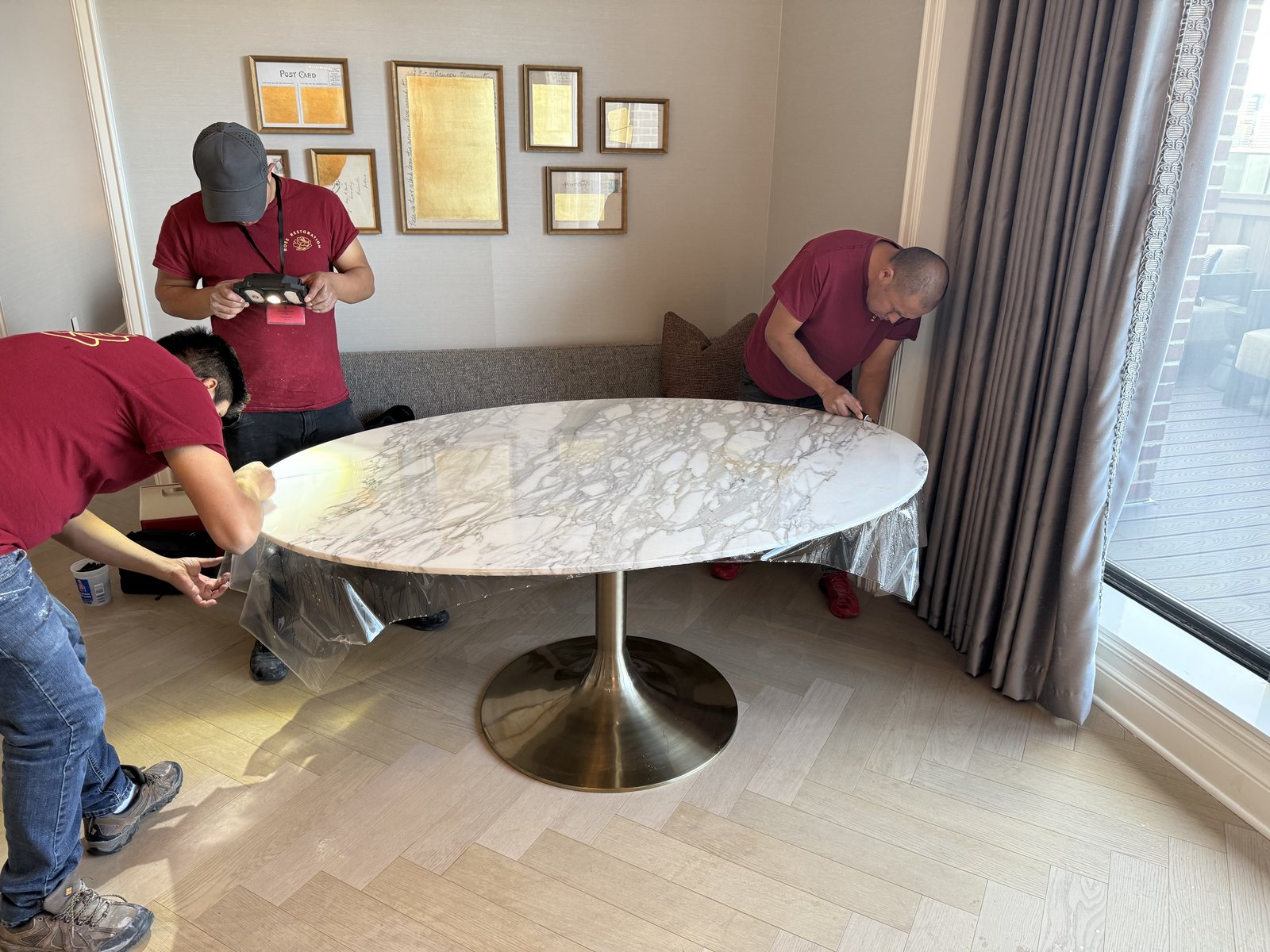
Most rings are etches rather than stains — the acid in wine, citrus, cola or a cocktail dissolves a shallow ring of the polished surface. Some are a light-coloured mineral deposit from hard water sitting on the surface, which lifts with proper cleaning. And some are both, layered. A ring that has been there for years responds the same as one from last week: because the damage is a fixed depth into the surface rather than something that spreads, age does not make an etch harder to remove.
What does change the work is depth. A faint ring may come back with polishing alone. A ring you can clearly feel needs honing through progressive diamond grits before re-polishing, and that area is then blended outward so the repair does not read as a patch.
What Causes Marble Etching?
Marble is a metamorphic rock composed primarily of calcium carbonate. This mineral composition is what gives marble its beautiful veining and warm tone — but it also makes marble chemically reactive to acids. When an acidic substance contacts marble, it dissolves a thin layer of the calcium carbonate on the surface, leaving a dull, rough spot called an etch mark.
Common household substances that cause marble etching include:
- Lemon juice and citrus fruits
- Vinegar and vinegar-based cleaning products
- Wine (especially red wine)
- Tomato sauce and tomato-based foods
- Soda and carbonated beverages
- Many commercial bathroom and kitchen cleaners
- Bleach and ammonia-based products
- Some cosmetics and perfumes
Etch marks are not stains — they are physical changes to the stone’s surface. This is an important distinction because it means etching cannot be removed by cleaning. No amount of scrubbing, poulticing, or chemical treatment will fix an etch mark. The only way to remove etching is to mechanically refinish the stone through honing and polishing.
What Causes Marble Staining?
Unlike etching, staining occurs when a substance penetrates into the pores of the stone and discolors it from within. Marble is porous, and without proper sealing, liquids can absorb into the surface and leave visible marks.
Oil-Based Stains
Cooking oils, body oils, cosmetics, and greasy foods can penetrate marble and leave darkened areas. These stains often respond well to poultice treatments — a paste of absorbent material and solvent that draws the oil out of the stone over 24–48 hours.
Organic Stains
Coffee, tea, wine, fruit juice, and food dyes cause organic stains that typically appear as pinkish-brown discolorations. These stains can often be removed with hydrogen peroxide-based poultice treatments.
Rust Stains
Metal objects left on marble — iron furniture legs, steel wool, nails, or cans — can leave orange-brown rust stains that are among the most difficult to remove. Rust stains require specialized rust-removal poultices and may need professional treatment.
Water Stains and Rings
Water rings on marble are usually etch marks, not stains. The minerals in hard water or the slight acidity of the water itself react with the marble surface and leave dull rings. These are removed through polishing, not through stain-removal techniques.
Where Routine Care Stops and Restoration Begins
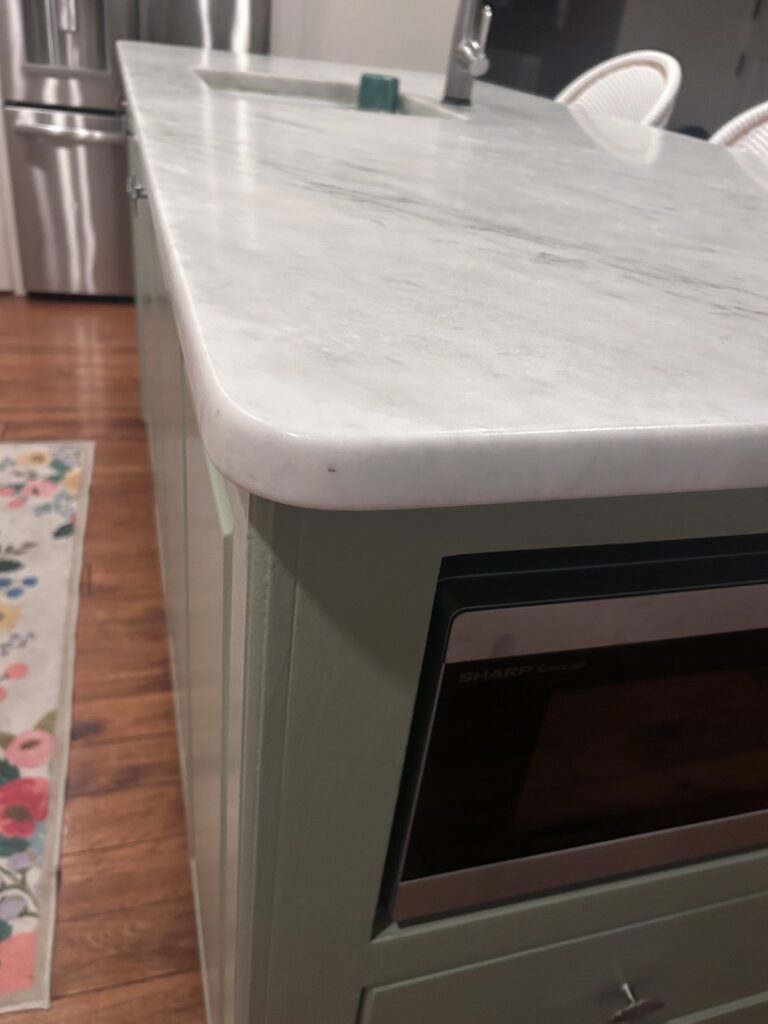
Searching for how to fix etched marble turns up a lot of home remedies. Here is an honest account of the line between what day to day care can hold, and what only refinishing the stone will correct.
What Routine Care Covers
- Preventing the damage: Cleaning with a pH neutral stone cleaner and wiping spills up quickly stops most etching and staining before it starts. It is the single highest value thing an owner can do, and it costs nothing.
- Holding a finish, not rebuilding one: Routine cleaning maintains a finish that is still sound. It cannot bring back one that has been etched away, because the damage is to the stone itself rather than to anything sitting on top of it.
- Knowing what you are looking at: Telling a stain from an etch decides the repair. A stain has soaked in and is drawn back out. An etch is corrosion of the surface and has to be refinished. If you are not sure which one you have, send us photos and we will tell you.
What Requires Professional Restoration
- Multiple or deep etch marks: When a countertop or floor has accumulated many etch marks over months or years, the only effective solution is professional honing and polishing that refinishes the entire surface uniformly.
- Dull or worn floors: Marble floors that have lost their shine from foot traffic require diamond honing across the entire surface — equipment and expertise that are not available to homeowners.
- Scratches: Scratches in marble are removed the same way as etch marks — through progressive diamond honing. Deep scratches may require starting with coarser grits.
- Uneven finish: When some areas of a marble surface are shiny and others are dull, the entire surface needs to be honed and polished to achieve uniform appearance.
- Chip and crack repair: Chips and cracks require color-matched epoxy fills that are ground and polished flush with the surrounding stone.
The Professional Marble Restoration Process
Professional marble restoration follows a systematic process that corrects surface damage and restores the stone to its original finish:
Deep Cleaning
The surface is thoroughly cleaned with pH-neutral stone cleaner to remove oils, soap residue, and surface buildup. This step ensures that the diamond honing process works directly on the stone without interference from surface contaminants.
Honing
Diamond abrasive pads are used to mechanically remove the damaged surface layer of the marble. Honing removes etch marks, scratches, and wear marks by grinding away the compromised material and exposing fresh, undamaged stone beneath. The grit sequence typically starts at 200–400 grit for damaged surfaces and progresses to finer grits.
Polishing
After honing, progressively finer diamond pads (800–3000+ grit) are used to bring the marble surface to the desired finish level. A honed finish produces a smooth, matte appearance. A polished finish produces the classic high-gloss, reflective surface most people associate with marble.
Sealing
A professional-grade impregnating sealer is applied to fill the pores of the marble and resist future staining. Impregnating sealers work below the surface and do not change the appearance or feel of the stone. They provide a critical barrier against oil, water, and food-based stains.
Marble Countertop Restoration vs. Marble Floor Restoration
While the fundamental process is the same — honing and polishing with diamond abrasives — countertops and floors have different practical considerations:
Countertops
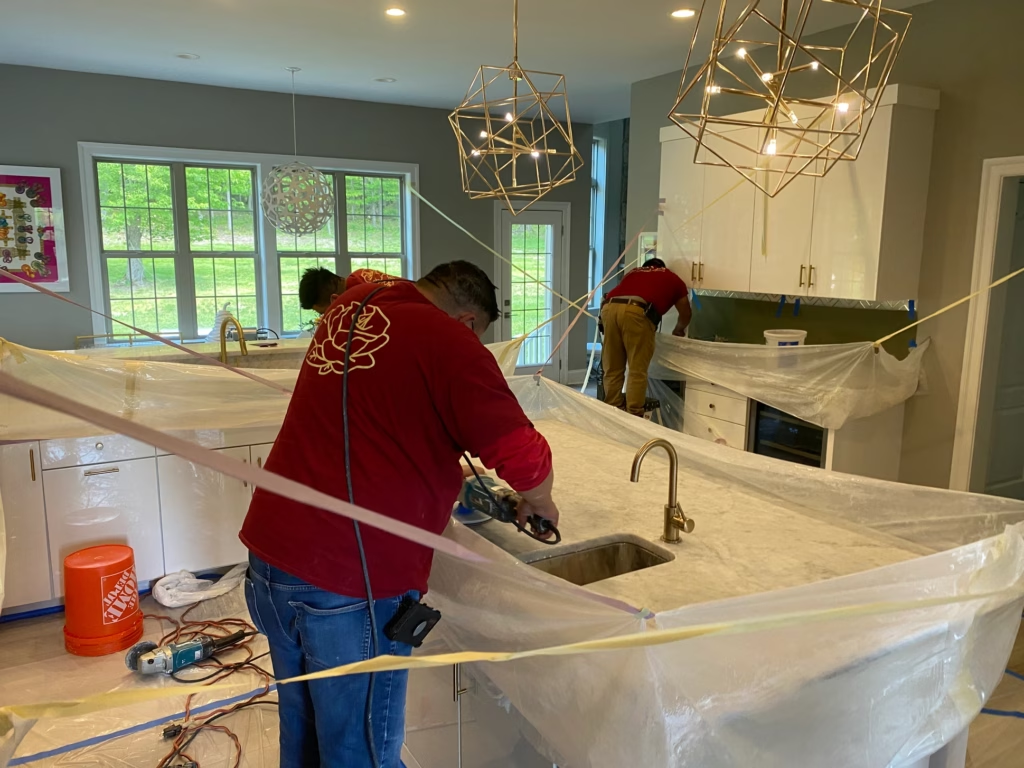
Countertop restoration is performed with hand-held machines and smaller diamond pads that can navigate edges, backsplash transitions, and sink cutouts. Most kitchen countertop restorations are completed in 3–6 hours. The primary damage is usually etching from cooking acids and staining from food and beverages.
Floors
Floor restoration uses larger floor machines that can cover more area efficiently. Floor projects require more time — typically 1–3 days depending on square footage. The primary damage is usually wear patterns from foot traffic, scratching, and accumulated dullness. Floors may also require grout cleaning and repair as part of the restoration.
Marble Armor: Preventing Future Damage on Countertops
After a countertop restoration, many homeowners ask how to prevent the same damage from happening again. This is where Marble Armor provides a solution that traditional sealers cannot.
Standard impregnating sealers protect against staining but do not prevent etching. Acids still react with the marble surface even when it is sealed. Marble Armor is a specialized protective coating that creates an invisible barrier on the surface of the stone, protecting against both staining and etching — the two most common causes of marble countertop damage.
Marble Armor is designed for countertops, vanities, tabletops, bar tops, and backsplashes. It is not designed for floor applications. The coating preserves the natural appearance of the stone and is available in satin or gloss finishes to match your preferred look.
Cost of Marble Restoration vs. Replacement
Marble restoration is dramatically less expensive than replacement:
- Countertop restoration: Most kitchen countertop restorations cost $500–$1,500 depending on size, number of pieces, and extent of damage.
- Countertop replacement: New marble countertop fabrication and installation typically costs $5,000–$15,000+ including demolition, material, fabrication, and installation.
- Floor restoration: Marble floor restoration typically costs $6–$20 per square foot depending on condition and desired finish.
- Floor replacement: New marble floor installation costs $15–$50+ per square foot including demolition, material, and installation.
Restoration also avoids the disruption of demolition, the risk of not finding a matching stone for replacement, and the waste of discarding perfectly good natural stone material.
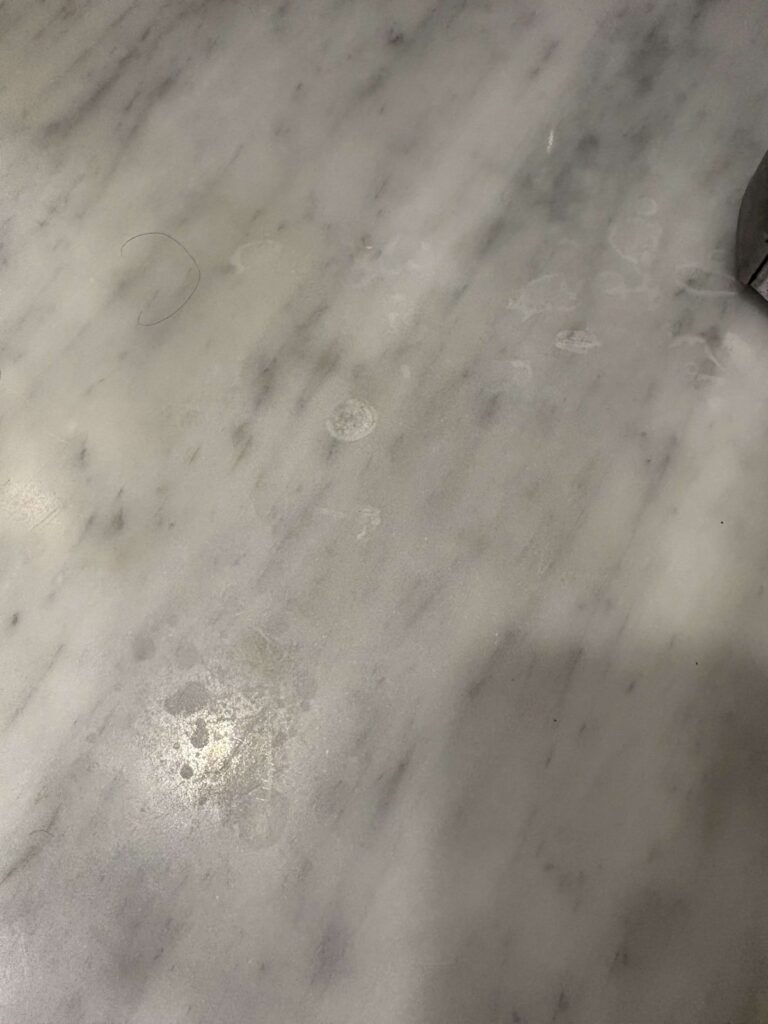
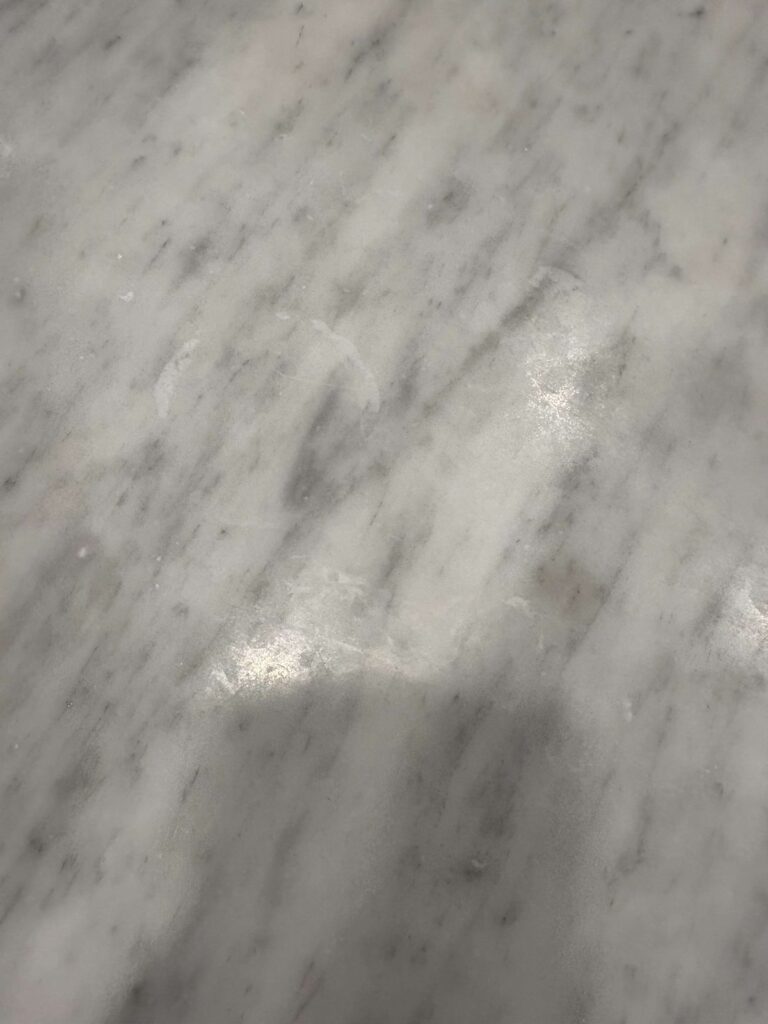
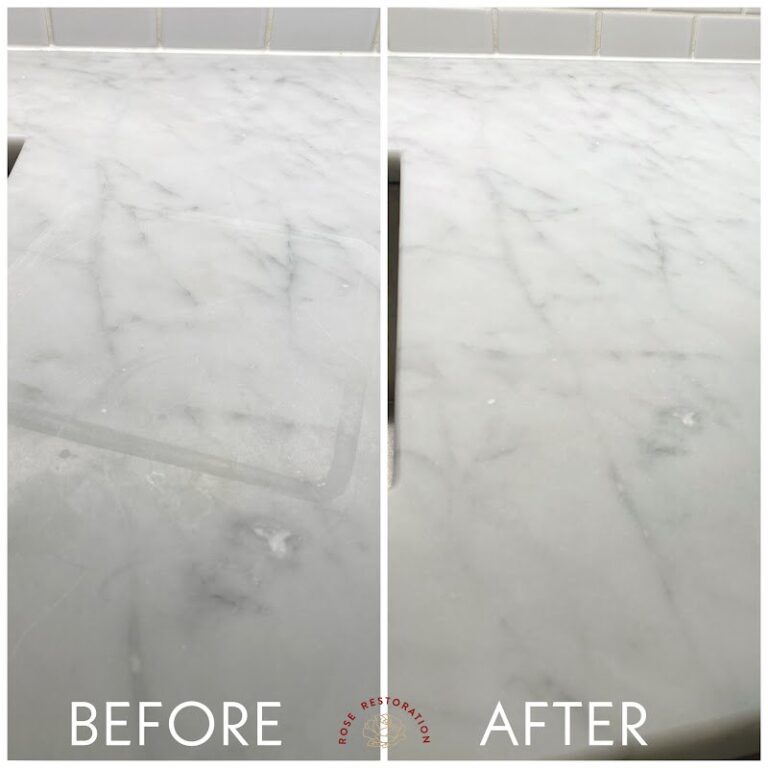
Before and after
The same surface on the same Rose job, photographed by our crew before and after the work.
 BeforeAfter
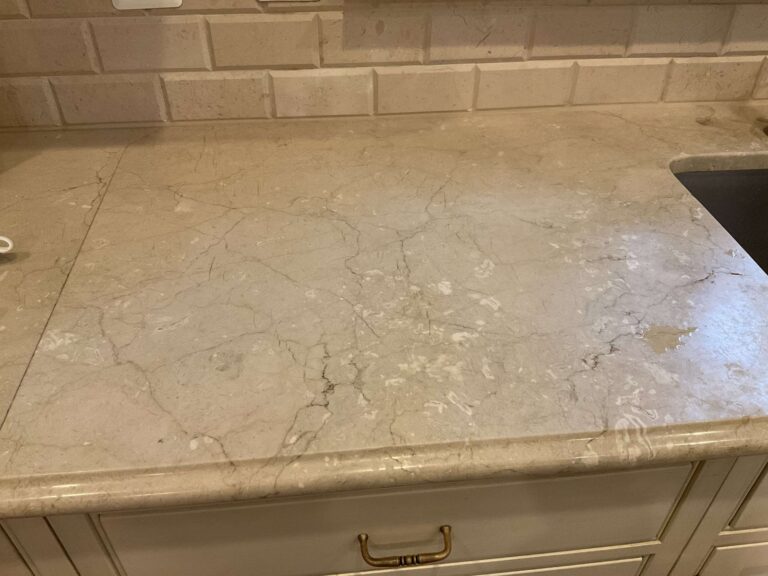
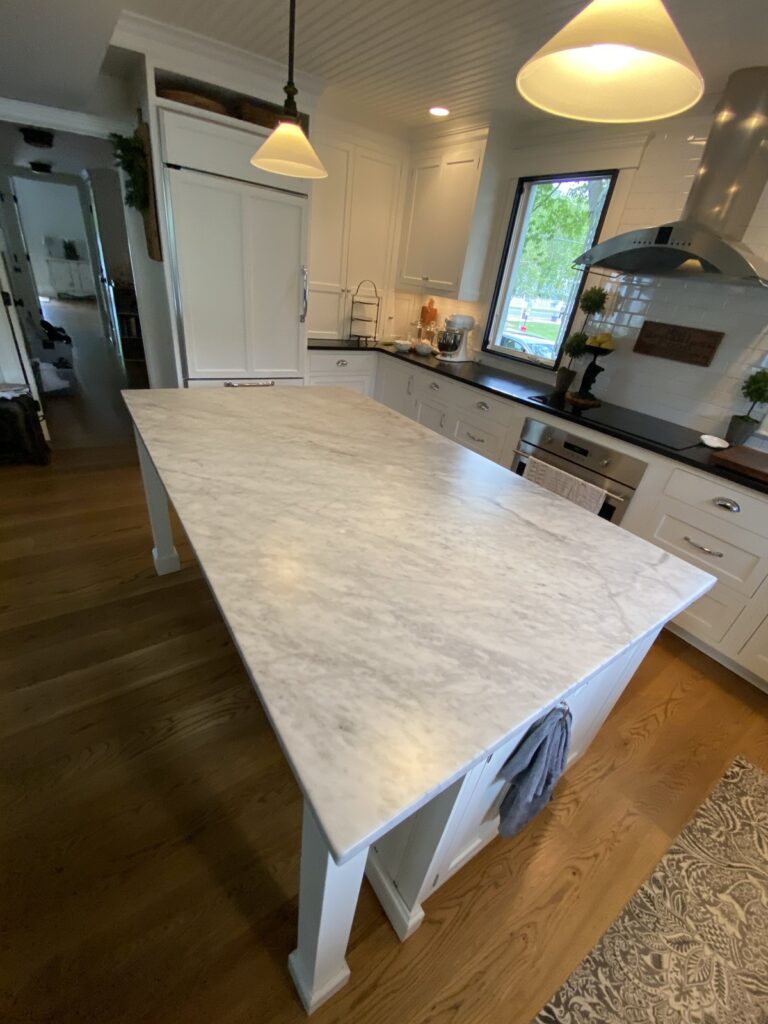
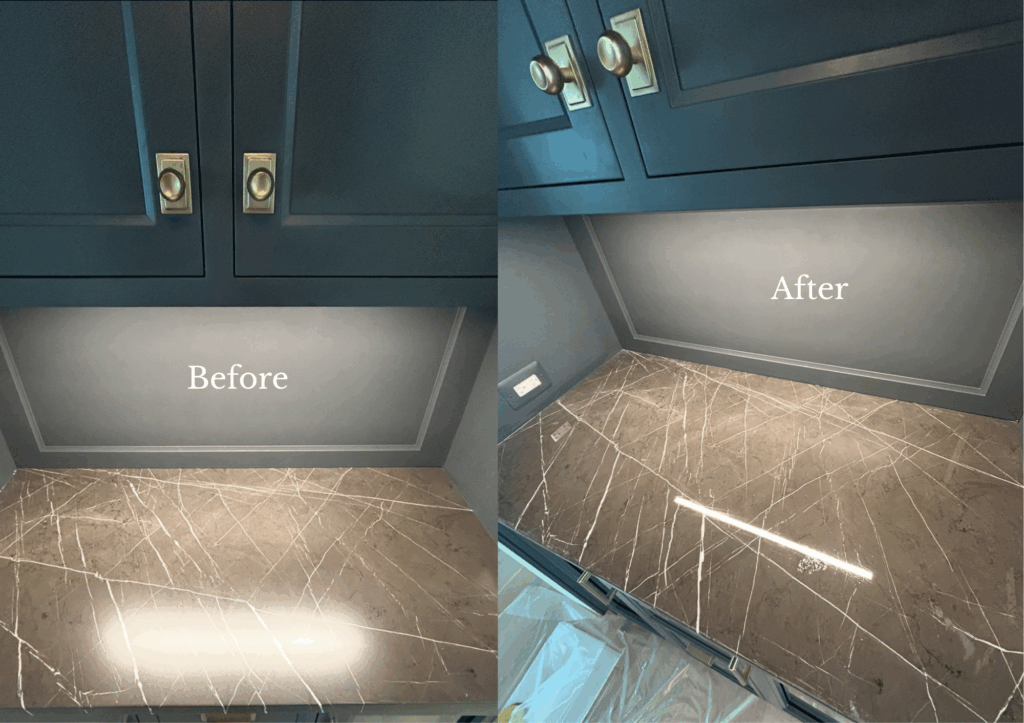
Project photos
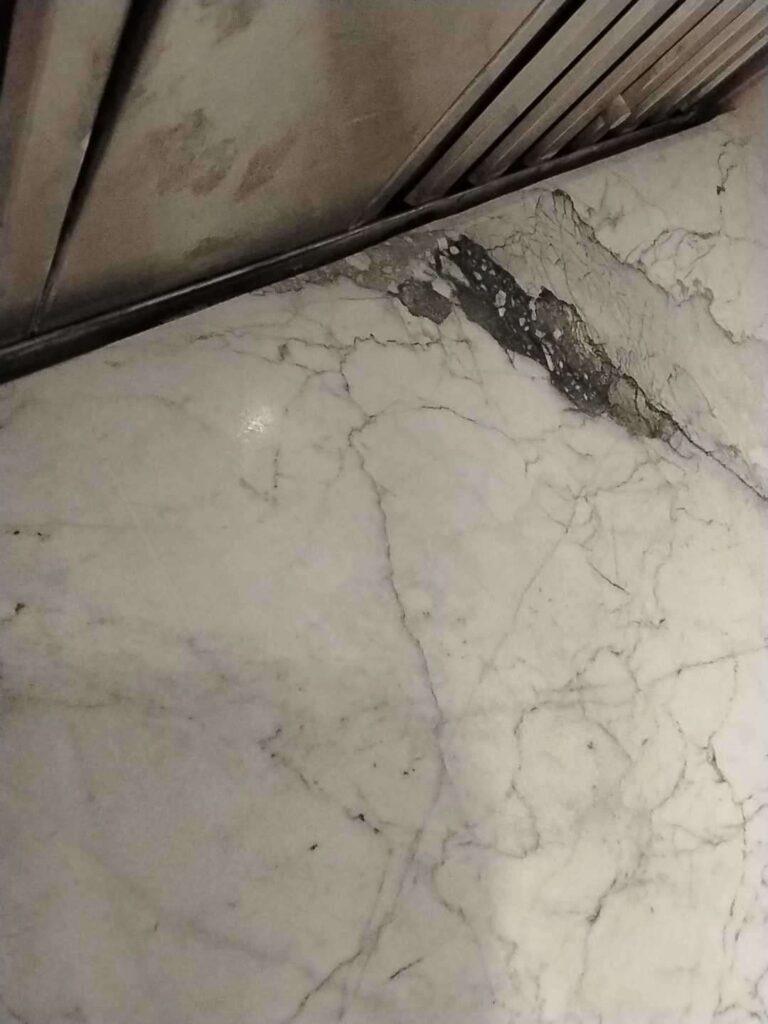
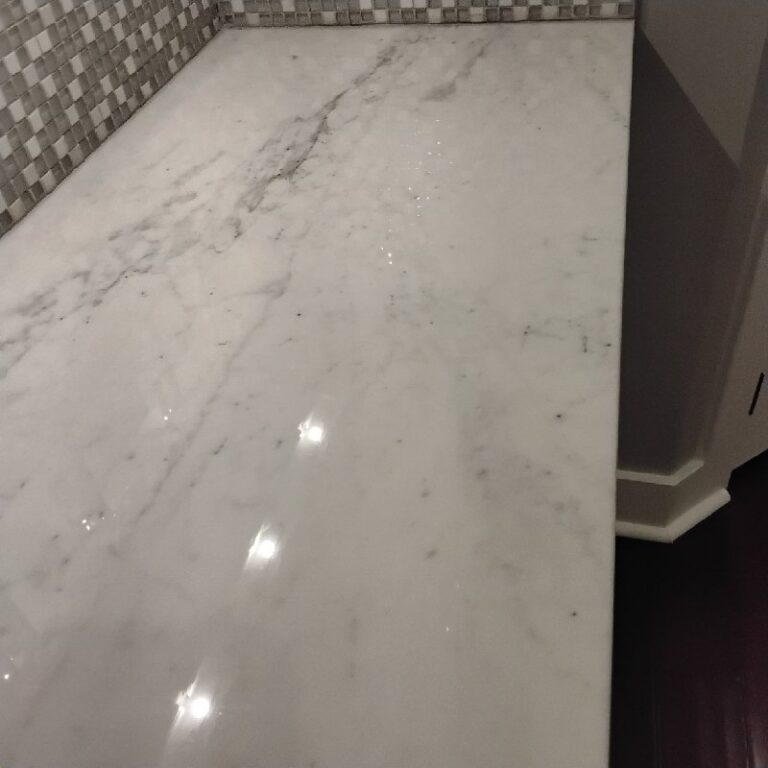
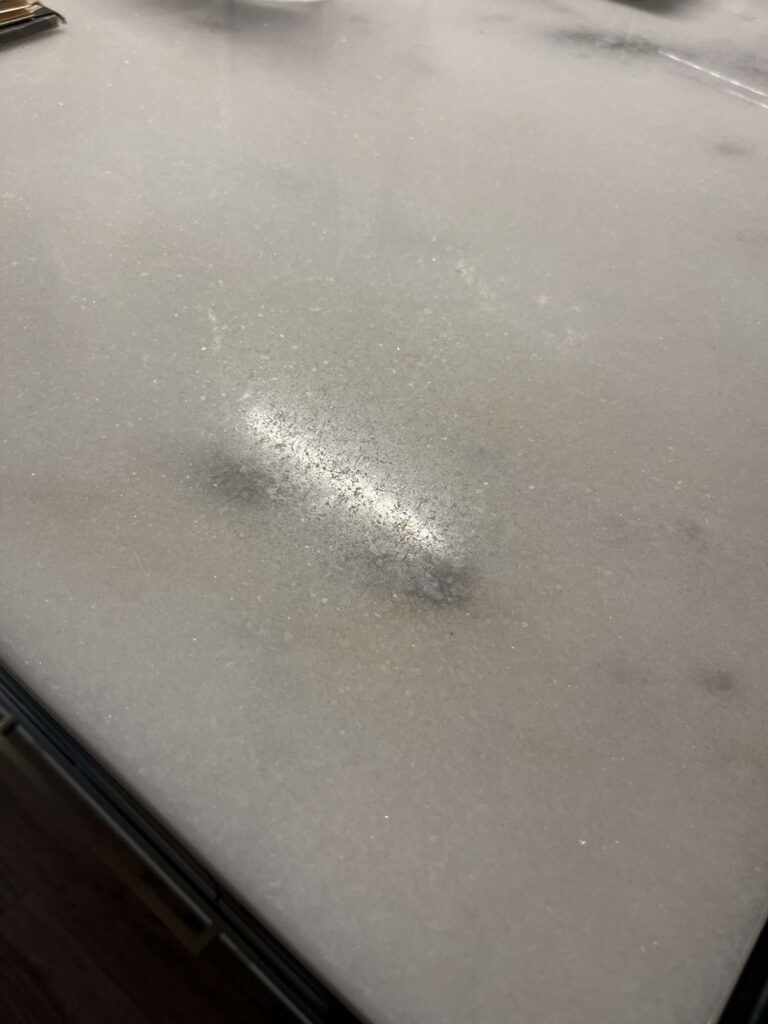
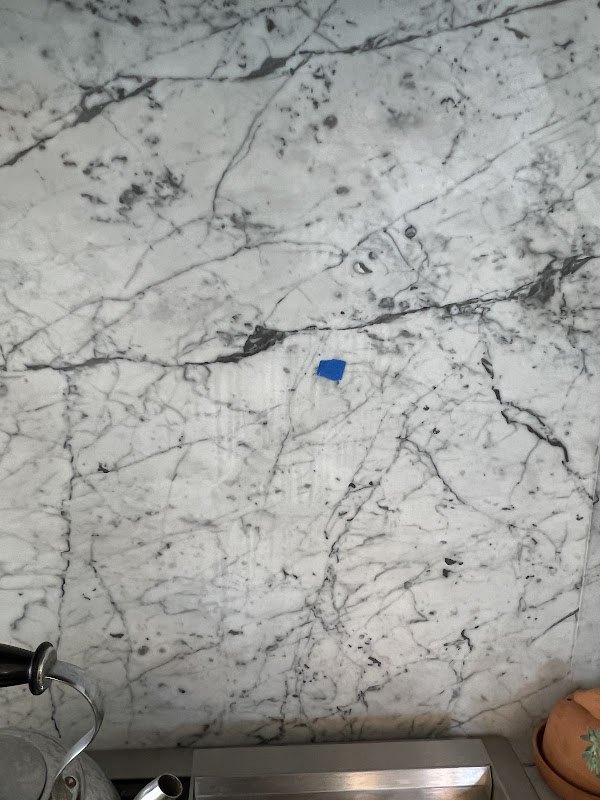
Real Rose Restoration jobs, photographed by our crews.
Frequently Asked Questions About Marble Restoration
Can you remove etch marks from my marble countertop?
Yes — this is one of the most common things we do. Etch marks from lemon, vinegar, wine, and cleaning products are polished out during the restoration process. The surface is then sealed or protected with Marble Armor to prevent recurrence.
Marble Restoration Experts
If your marble looks dull, etched, stained, or worn — we can fix it. Professional diamond polishing, honing, stain removal, and sealing for marble floors, countertops, and surfaces.
How much does marble restoration cost for a kitchen countertop?
Most kitchen countertop restorations range from $500–$1,500 depending on the size, number of pieces, and extent of damage. Compare that to $5,000–$15,000+ for replacement including demolition, fabrication, and installation. We provide a free assessment with a detailed, no-obligation written estimate.
Marble Etch Removal Across Northern Virginia and DC
We remove etch marks from marble countertops and floors throughout the DC metro area every week — in McLean kitchens, Georgetown bathrooms, Bethesda vanities, Great Falls foyers, and Arlington condos. Most residential marble etch removal projects are completed in a single visit. DC marble restoration → | All marble services →
How long does marble restoration take?
A typical countertop restoration takes 3–6 hours. Floor restoration depends on the area — most are completed in 1–2 days. You can use your surfaces the same day in most cases.
Should I seal my marble after restoration?
Yes. We apply a professional-grade impregnating sealer after every restoration. For countertops exposed to cooking acids, we also recommend Marble Armor for the highest level of protection against both staining and etching.
Will the restoration match the rest of my marble?
Absolutely. We restore the entire surface uniformly, so there are no mismatched areas. For chip and crack repairs, we use color-matched fillers that blend seamlessly with the surrounding stone.
What cleaning products should I use on marble?
Use only pH-neutral stone cleaners. Avoid vinegar, lemon-based cleaners, Windex, bleach, and any product with acid. We provide specific care instructions after every project.
Schedule a Free Assessment

Looking for something else?
Related from Rose Restoration: residential marble restoration
Get a Free Assessment from Rose Restoration
Tell us about your marble, stone, terrazzo, or concrete and our senior technicians will recommend the right restoration approach. Family-run and trusted across Washington DC, Maryland, and Virginia since 1978.
Call (703) 327-7676 · Email info@roserestoration.com · schedule a time · or send us photos.
Restore. Don't replace.
48 years of polishing marble, terrazzo, concrete, and tile across Washington DC, Northern Virginia, and Maryland. IMF, Four Seasons, Smithsonian, and the Virginia State Capitol trust us — you can too.
Watch the Process
Real Rose Restoration projects on video — no stock footage, no staged demonstrations.