
| Polished concrete finish | Cost (DC metro) | Best for |
|---|---|---|
| Cream finish (minimal aggregate) | $4–$6/sq ft | Subtle, smooth, residential and light-commercial |
| Salt-and-pepper (medium exposure) | $5–$9/sq ft | Most common commercial finish |
| Full aggregate (terrazzo-like exposure) | $8–$15/sq ft | Lobbies, showrooms, premium retail |
| Grind and seal | $4–$8/sq ft | Lower-cost coating-based alternative |
| Stained and polished | $6–$12/sq ft | Decorative color built into polished surface |
| Surface prep / grinding only | $2–$5/sq ft | Pre-resinous flooring or coating prep |
| Polishable overlay (over damaged slab) | $8–$20/sq ft | Self-leveling overlay + polish on bad substrate |
Reference Guide
Choosing between systems?
 By Tom Kuhn, CEO, Rose Restoration
Rose Restoration has restored marble, terrazzo, concrete, and natural stone across DC, MD, and VA since 1978.
How Much Does Concrete Polishing Cost Per Square Foot in 2026?
If you’re planning a flooring upgrade for your warehouse, retail space, office lobby, garage, or basement, polished concrete remains one of the most cost-effective and durable options available. But before you commit, you need a clear picture of what concrete polishing actually costs per square foot.
Most projects fall between $4 and $24+ per square foot, depending on the finish level, floor condition, and type of service. Here’s the detailed breakdown.
Learn more about our concrete polishing services
Pricing Table by Service Type
| Service Type | Cost Per Sq Ft | Best For |
|---|---|---|
| Basic Concrete Polishing | $4–$10 | Warehouses, utility areas, garages |
| Mid-Range with Staining/Dyeing | $8–$16 | Retail floors, offices, finished basements |
| High-End Decorative Polishing | $14–$24+ | Lobbies, showrooms, upscale residential |
| Epoxy Coating | $6–$14 | Industrial floors, garage floors, labs |
| Grind and Seal | $4–$8 | Budget-friendly commercial and residential |
| Surface Preparation Only | $2–$4 | Pre-treatment before coatings or overlays |
These ranges reflect 2026 pricing in the Virginia, Maryland, and Washington, D.C. market. Your actual cost depends on several project-specific factors.
What Factors Affect Concrete Polishing Pricing?
1. Current Condition of the Concrete
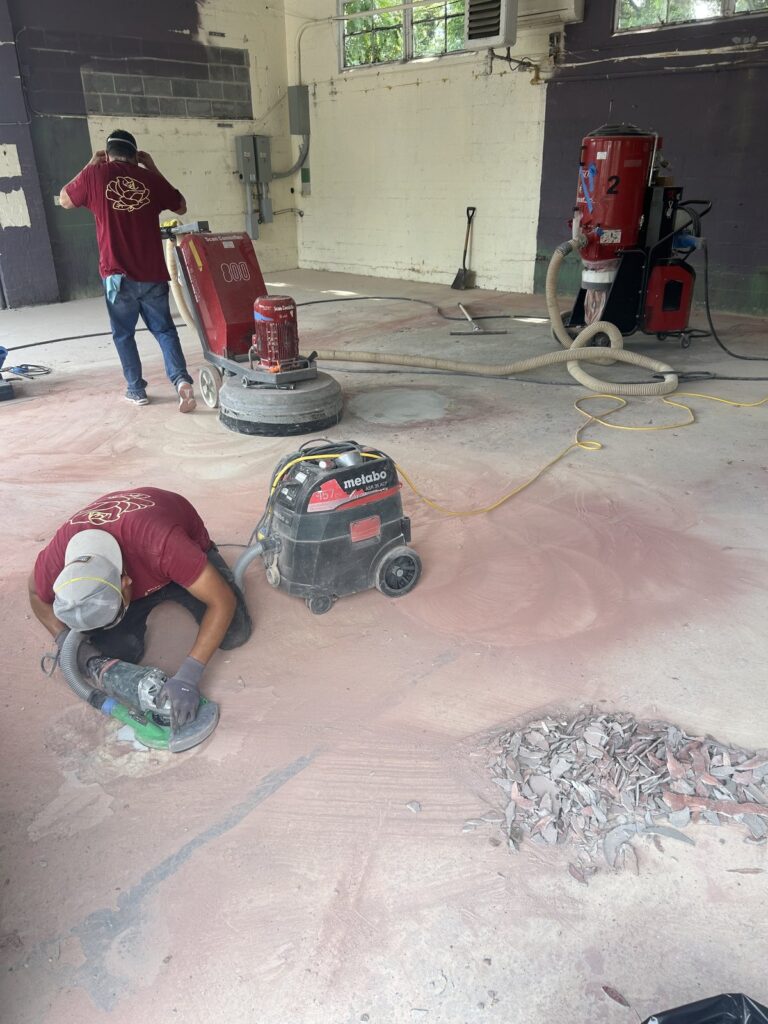
This is the single biggest cost driver. A clean slab in good condition requires far less preparation than an older floor with cracks, coatings, adhesive residue, or uneven surfaces.
2. Square Footage
Larger projects cost less per square foot because setup and mobilization costs spread across more area. A 30,000-square-foot warehouse runs at a lower rate than a 500-square-foot basement.
3. Level of Finish
Each additional polishing step adds time and cost:
- Matte/satin finish — fewer grinding steps, lower cost
- High-gloss finish — multiple diamond polishing stages, mirror-like reflectivity
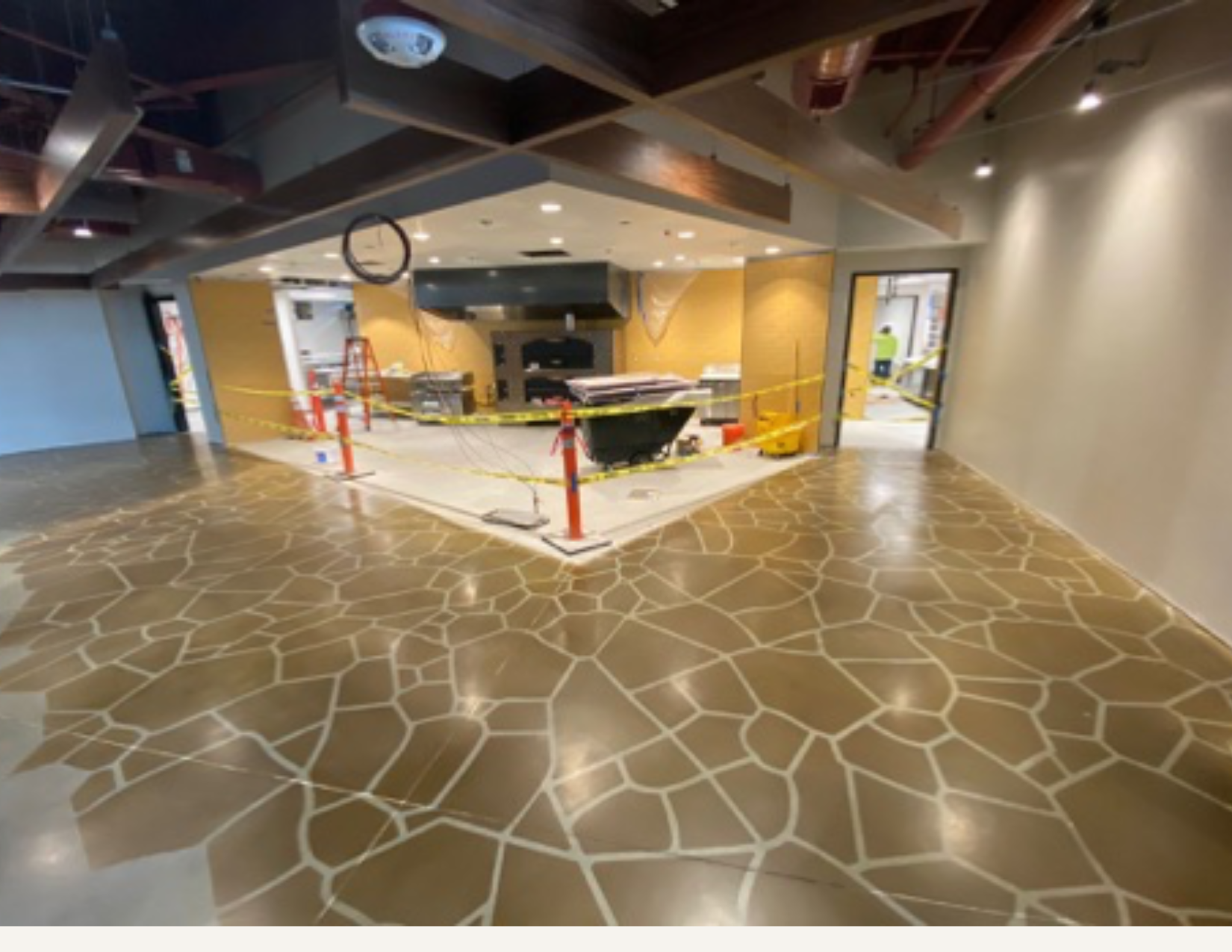
- Dyed or stained concrete — color added before final polish for a custom look
- No waxing or stripping — unlike VCT, polished concrete needs only dust mopping and occasional damp mopping
- No replacement cycles — carpet and VCT need full replacement every 5–10 years
- Energy savings — high-gloss floors reflect light, reducing lighting costs by up to 30%
- Eco-friendly — uses your existing slab, low-VOC sealers, and can contribute to LEED credits
4. Access and Site Conditions
Tight spaces, multi-level buildings, occupied spaces requiring off-hours work, and obstructions like racking all increase labor time.
5. Surface Preparation Requirements
Removing old epoxy, grinding high spots, filling cracks, and leveling uneven sections run $2–$4 per square foot and are sometimes quoted separately.
6. Geographic Location
In the Northern Virginia, Maryland, and D.C. metro area, pricing tends to run slightly above national averages due to higher labor costs.
Polished Concrete vs. Other Flooring Options
| Flooring Type | Installed Cost/Sq Ft | Lifespan | Annual Maintenance |
|---|---|---|---|
| Polished Concrete | $4–$24 | 20+ years | Very low |
| Vinyl Composite Tile | $4–$8 | 5–10 years | Moderate (strip & wax) |
| Commercial Carpet Tile | $6–$14 | 5–8 years | Moderate–high |
| Hardwood | $10–$18 | 10–25 years | Moderate (refinishing) |
| Ceramic/Porcelain Tile | $8–$18 | 15–20 years | Low–moderate |
| Epoxy Coating | $6–$14 | 5–10 years | Low |
Why Polished Concrete Wins on Lifecycle Cost
Tips for Getting the Best Value
Related: Learn more about our residential concrete restoration for residential and commercial clients in Washington DC, Maryland, and Northern Virginia.
Frequently Asked Questions
How long does concrete polishing take?
Most residential projects (garages, basements) take 1–3 days. A typical 5,000–10,000-square-foot commercial floor takes 3–5 days. The floor is walkable almost immediately and fully cured within 24–72 hours.
Is polished concrete slippery?
Polished concrete meets OSHA and ADA slip-resistance requirements. In wet areas, anti-slip treatments or sealers with grit additives provide additional traction.
Can you polish old or damaged concrete?
Yes, in most cases. Cracks and surface damage can be repaired before polishing. Old coatings and adhesives are removed during surface preparation. Some slabs may need overlays that affect the final cost.
Does polished concrete work in basements?
Absolutely. Polished concrete is one of the best basement options — it resists moisture, doesn’t support mold growth, and doesn’t need a subfloor. For basements with moisture concerns, a mitigation system can be installed first.
How does polished concrete compare to epoxy flooring?
Epoxy coatings sit on top of concrete and provide chemical resistance — ideal for industrial and garage floors. Polished concrete is the slab itself, refined to a dense finish. Polished concrete generally lasts longer with less maintenance, while epoxy offers more color/pattern options. Many projects use both.
Get a Free Concrete Polishing Assessment
Every floor is different, and the only way to get an accurate cost is with a professional evaluation. At Rose Restoration International, we’ve spent 48 years finishing concrete floors across Virginia, Maryland, and Washington, D.C.
We offer the full range: polishing, staining, sealing, crack repair, overlays, grind and seal, epoxy coatings, and surface preparation. We use low-VOC, water-based products and support LEED documentation for commercial projects.
Call 703-327-7676 or request a free quote online to schedule your assessment.
—
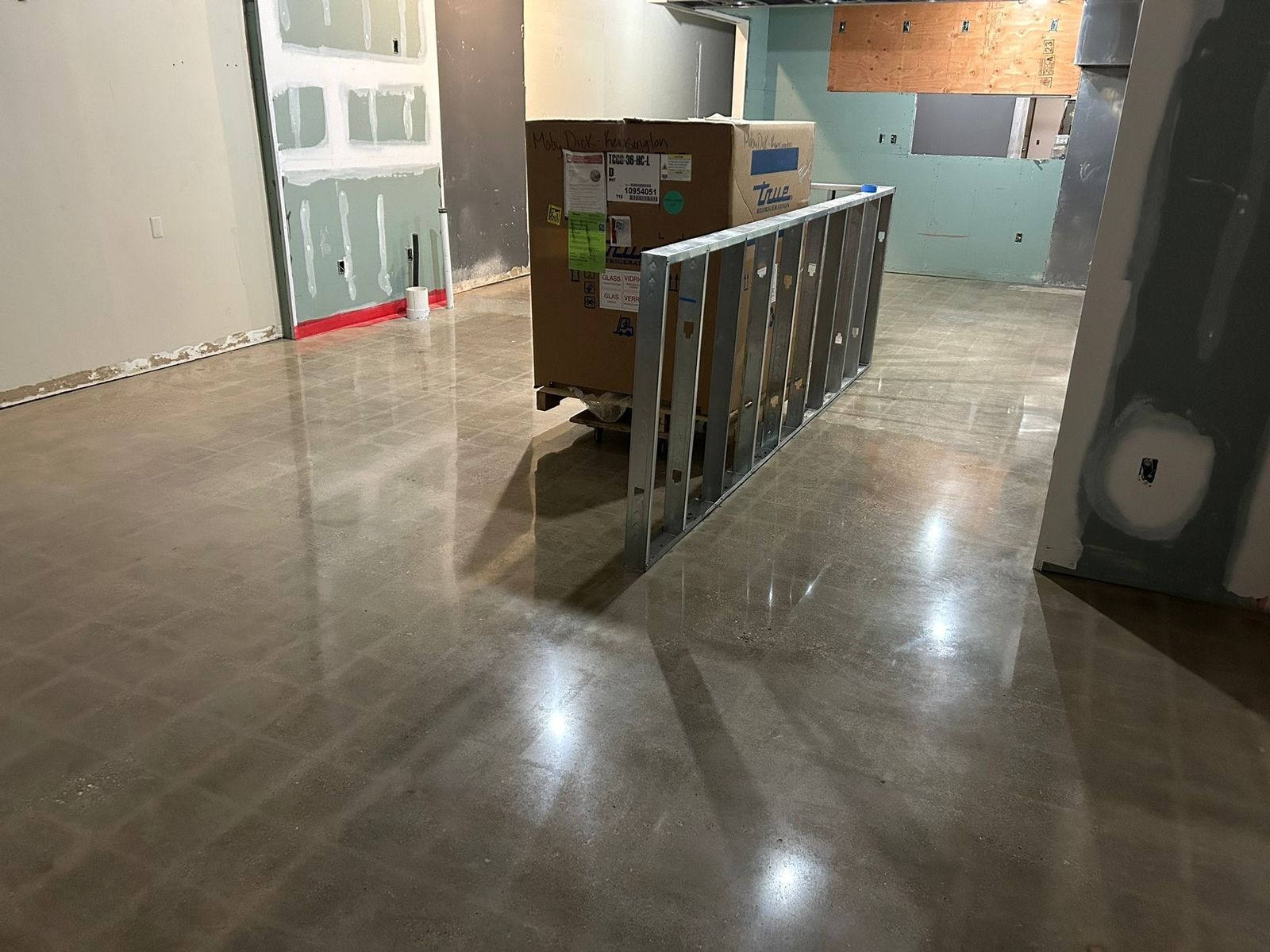
Concrete polishing cost in Washington DC commercial spaces ranges by surface preparation more than by finish level — old concrete with patches and stains takes longer than new pours.
How concrete polishing pricing compares to other concrete contractor work
If you’re getting quotes from multiple sources, it helps to know how concrete polishing cost compares to the other services a concrete contractor typically handles. Polished concrete sits above basic concrete sealing or staining, but well below epoxy floor coatings or terrazzo installation when measured on a 10-year lifecycle basis.
- Concrete sealing only — $1.50 to $3 per square foot, lasts 2 to 5 years
- Acid-stained or dyed concrete — $4 to $9 per square foot, decorative finish only (no abrasion resistance benefit)
- Polishing concrete to a true mechanical finish — $5 to $14 per square foot, lasts 15 to 25 years with minimal maintenance
- Epoxy floor coatings — $8 to $16 per square foot installed, but typically need recoating every 5 to 10 years
- Terrazzo installation — $40 to $90 per square foot for a new pour
Across all of these, the concrete floor cost that holds up best on commercial buildings, retail spaces, and DC-area condominium garages is mechanically polished concrete — the diamond-grinding process described above. It’s why Rose Restoration’s busiest commercial accounts in DC, Maryland, and Virginia are repeat polished-concrete clients, not one-off coating jobs.
Need a polished concrete quote in DC, Maryland, or Virginia?
Send a photo of the floor and rough square footage to roserestoration.com/send-photos or call 703-327-7676. A Rose project manager will walk the space (in person or by video), price the work in writing, and get you on the schedule — typically within one business day of first contact.
Looking for something else?
Rose Restoration — local service areas
Planning a polished concrete project? Rose Restoration serves commercial and industrial floors across DC, MD & VA: Polished concrete · commercial floor restoration.
Get a Free Assessment from Rose Restoration
Tell us about your marble, stone, terrazzo, or concrete and our senior technicians will recommend the right restoration approach. Family-run and trusted across Washington DC, Maryland, and Virginia since 1978.
Call (703) 327-7676 · Email info@roserestoration.com · schedule a time · or send us photos.
Related reading
Restore. Don't replace.
48 years of polishing marble, terrazzo, concrete, and tile across Washington DC, Northern Virginia, and Maryland. IMF, Four Seasons, Smithsonian, and the Virginia State Capitol trust us — you can too.
Watch the Process
Real Rose Restoration projects on video — no stock footage, no staged demonstrations.