Grind & Seal Concrete Floor
At Rose Restoration, we specialize in grind and seal concrete flooring services that restore, protect, and beautify your surfaces. Our expert technicians combine precision grinding with high-quality sealants to create floors that are both durable and visually striking. Whether for residential, commercial, or industrial settings, our grind and seal process delivers a cost-effective solution that enhances the look and longevity of your concrete.
Surface Grinding
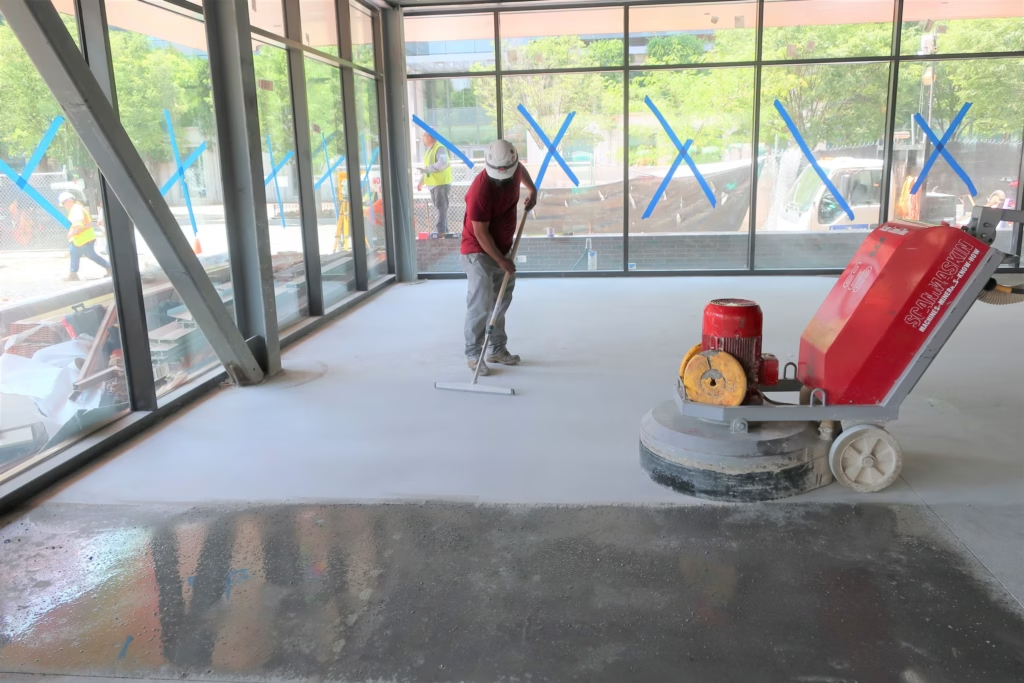
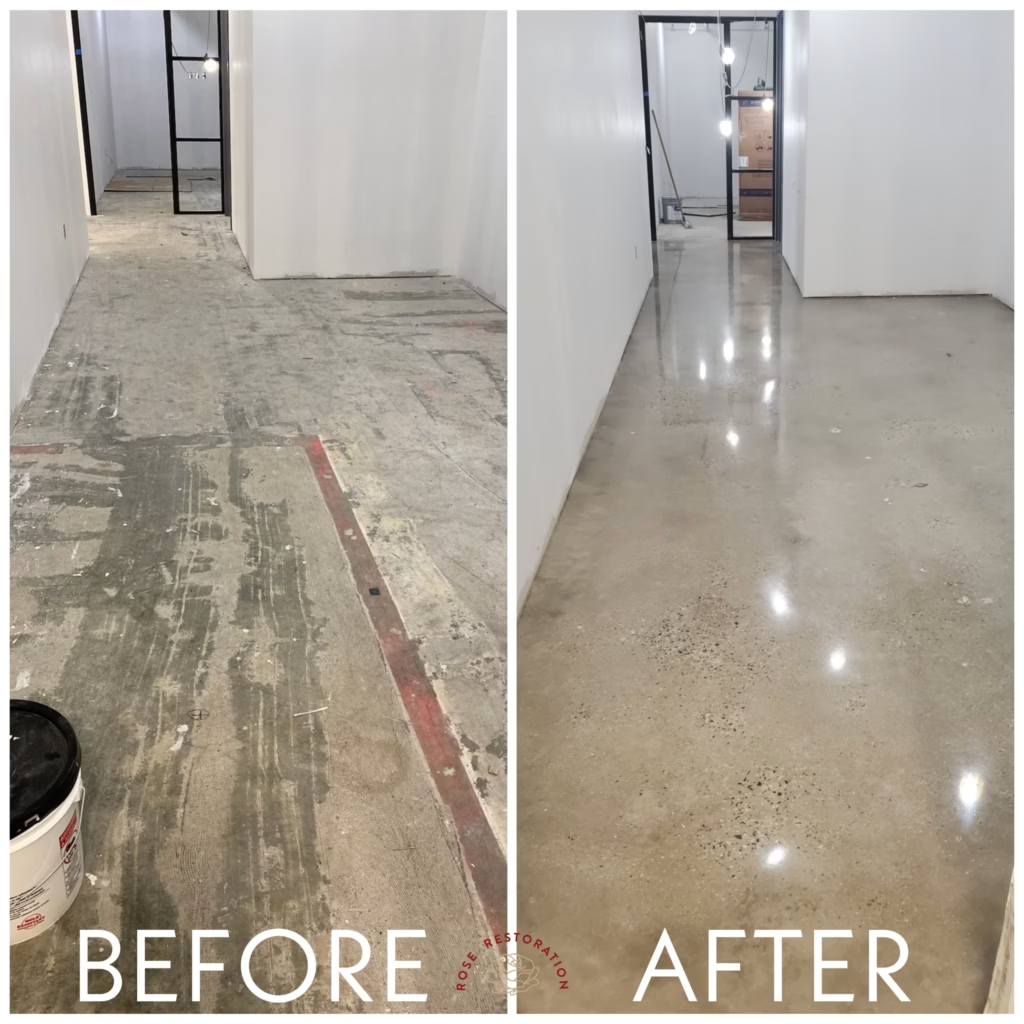
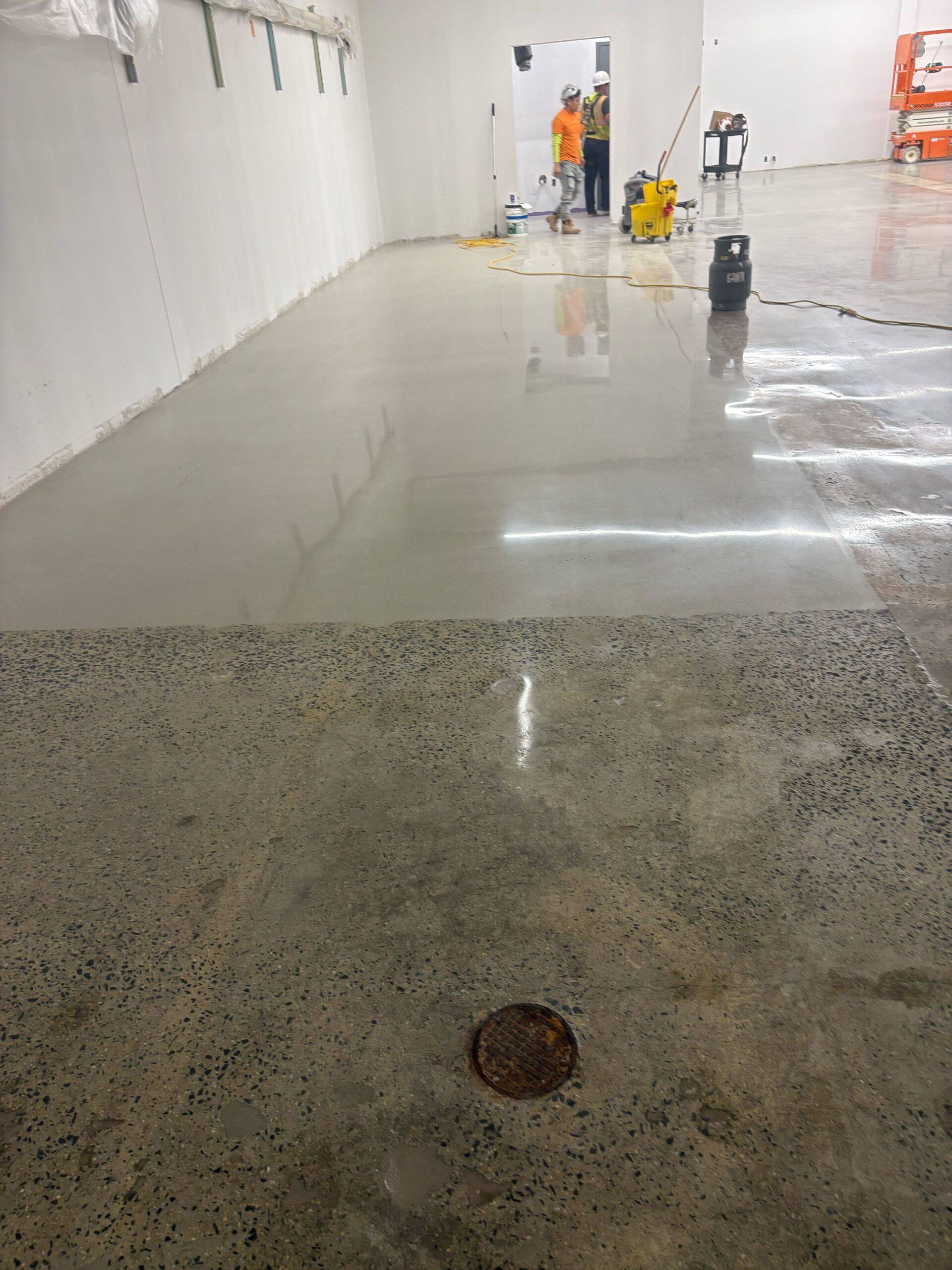
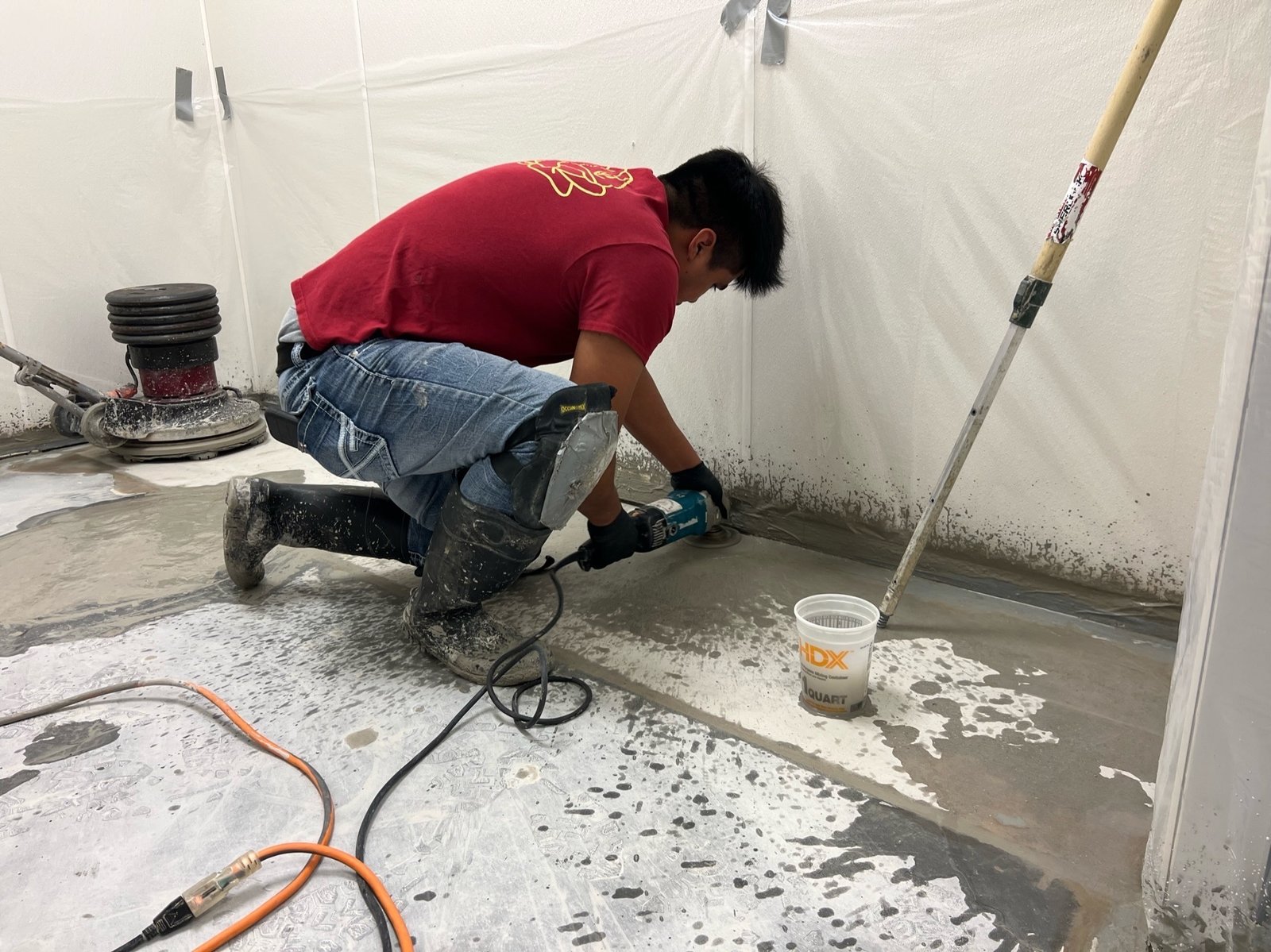
Grinding is the foundation of every grind and seal concrete floor project. Using industrial grinders with diamond attachments, we remove imperfections, level uneven surfaces, and eliminate coatings, adhesives, or stains.
The process begins with coarse grits to remove damage and then transitions to finer grits, producing a smooth, uniform surface. This preparation not only improves the appearance of your concrete but also ensures maximum adhesion for sealants, resulting in a flawless finish.
Applications include:
Residential interiors and garages
Commercial lobbies, retail floors, and restaurants
Industrial warehouses and high-traffic areas
Sealant Application
Once the surface is perfectly prepared, we apply premium-grade sealants to protect your concrete from:
Moisture and water damage
Stains, oils, and chemical spills
Abrasion and surface wear
Freeze-thaw cycles and deicing salts
Sealing also enhances the natural texture and color of concrete while making surfaces easier to clean and maintain. With our professional sealed concrete flooring services, your floors will remain beautiful, functional, and resilient for years.
Customization
Every space has unique design goals. That’s why we offer a variety of sealant finishes to match your style:
Matte finish – Subtle and natural, ideal for modern, understated spaces.
Satin finish – A soft sheen that balances elegance with practicality.
High-gloss finish – Reflective and luxurious, perfect for showrooms, lobbies, and upscale interiors.
Whether you’re looking for a sleek, polished look or a durable industrial finish, our customization options ensure your grind and seal project aligns with both function and design.
Grind & Seal vs. Polished Concrete
Clients often compare grind and seal concrete floors with polished concrete. While polished concrete involves multiple grinding and densifying steps for a reflective finish, grind and seal offers a more cost-effective alternative with similar aesthetic appeal. This makes it ideal for property owners seeking durability and beauty on a more efficient budget.
Complete Grind & Seal Concrete Services
Rose Restoration provides end-to-end grind and seal solutions across Washington D.C., Virginia, Maryland, and beyond. From surface preparation and grinding to custom sealing and finishing, we deliver results tailored to your space.
For those searching “grind and seal concrete contractors near me”, Rose Restoration is the trusted partner for durable, low-maintenance, and attractive concrete flooring.
Why Choose Rose Restoration?
Time in Business: Rose Restoration has over 40 years of industry leadership and experience in the field of stone and concrete restoration. Our long-standing presence in the industry highlights the depth of expertise and reliability we have earned over the years. Showing ourselves as a trusted leader in the field, consistently delivering superior results, and earning the confidence of our clients.
Stone Professionals: Our restoration team is composed of knowledgeable technicians who are skilled in approaching various stone restoration challenges. We have the experience to handle different types of stones and are adept at finding safe and efficient ways to manage projects.
Personalized Scopes: We provide personalized scopes to our clients. Rose Restoration offers a range of services, including stone, wood, and metal restoration, one-time projects, and maintenance services. We take pride in maintaining and restoring commercial spaces and have the resources to handle projects of different scales. Whatever your stone needs, we are here to help.
Grind and Seal Concrete Floors in Virginia, Maryland & DC
A grind and seal concrete floor delivers a clean, durable, and attractive finish by combining mechanical surface grinding with a high-performance protective sealer. Unlike multi-step polished concrete or thick-build coating systems, grind and seal offers a streamlined path to a finished floor that looks professional, resists wear, and requires minimal ongoing maintenance. Rose Restoration has provided grind and seal concrete floor services across Virginia, Maryland, and Washington, DC for over 40 years, working in commercial facilities, residential properties, and industrial environments alike.
Whether you are finishing a new warehouse, refreshing a residential basement, or upgrading a retail space, our team of 30+ technicians has the equipment and expertise to deliver a grind and seal floor tailored to your performance requirements and aesthetic preferences.
When Grind and Seal Is the Right Choice
Grind and seal is not the only concrete finishing option available, and choosing the right system depends on your facility, traffic levels, and budget. Understanding how grind and seal compares to alternatives will help you make an informed decision.
Grind and Seal vs. Polished Concrete
Polished concrete involves multiple progressive grinding steps using increasingly fine diamond tooling, ultimately producing a high-gloss finish from the concrete itself. It is an excellent option for high-traffic commercial spaces that demand a mirror-like appearance. However, polished concrete requires more labor, more time, and a higher budget. Grind and seal achieves an attractive, consistent finish in fewer steps because the sealer provides the final sheen rather than the concrete surface itself. For spaces where you want a clean, uniform look without the investment of full mechanical polishing, grind and seal is the practical choice.
Grind and Seal vs. Epoxy and Resinous Coatings
Epoxy and resinous coatings build a thick protective layer on top of the concrete, which is ideal for chemical exposure environments, commercial kitchens, or facilities that need heavy-duty impact resistance. Grind and seal, by contrast, uses a thinner sealer that penetrates or bonds to the concrete surface without creating a thick film. This makes grind and seal faster to install, less prone to peeling or delamination in certain conditions, and easier to maintain and recoat over time. If your floor does not face harsh chemical exposure but you still want protection and an improved appearance, grind and seal is often the better fit.
Ideal Applications for Grind and Seal
- Garages: Residential and commercial garages benefit from a sealed surface that resists tire marks, oil stains, and road salt while providing a clean appearance.
- Basements: Grind and seal transforms bare basement concrete into a finished living space, adding moisture resistance and an attractive look.
- Warehouses and distribution centers: Sealed concrete reduces dusting, withstands forklift traffic, and simplifies cleaning in large facilities.
- Retail spaces and showrooms: A satin or gloss sealed floor provides a polished appearance without the cost of full mechanical polishing.
- Restaurants and breweries: Sealed concrete in front-of-house areas provides a modern industrial aesthetic that is easy to maintain.
- Office buildings and lobbies: Grind and seal offers a professional finish suitable for corporate environments.
The Grinding Process Explained
The quality of a grind and seal floor depends entirely on how well the grinding phase is executed. Rushing this step or using the wrong tooling leads to uneven surfaces, sealer adhesion problems, and premature wear. Rose Restoration follows a methodical grinding process on every project.
Diamond Tooling and Equipment
We use planetary grinding machines equipped with diamond-segmented tooling to mechanically abrade the concrete surface. The grit level of the diamonds determines the aggressiveness of the cut and the resulting surface profile. For most grind and seal applications, we grind to a Concrete Surface Profile (CSP) of 2 to 3, which provides enough texture for the sealer to bond properly while creating a smooth, uniform appearance.
Coarser diamond tooling (16- to 40-grit) is used for initial passes to remove existing coatings, adhesives, thin-set, paint, or surface contamination. Medium-grit tooling (60- to 120-grit) refines the surface and eliminates scratches from the coarse pass. The final grit level depends on the desired finish and sealer type being applied.
Concrete Surface Profile (CSP) Levels
The International Concrete Repair Institute (ICRI) defines CSP levels from 1 through 10, with higher numbers indicating a rougher profile. For grind and seal applications:
- CSP 1-2: Suitable for thin-film sealers such as acrylics that need a relatively smooth surface.
- CSP 2-3: The most common range for grind and seal, providing a balance of smoothness and mechanical bond for penetrating and film-forming sealers.
- CSP 3-4: Used when applying thicker sealers or when the concrete has significant surface defects that require more aggressive removal.
Dust Containment
Concrete grinding generates significant dust if not properly managed. Rose Restoration uses industrial vacuum systems with HEPA filtration connected directly to our grinding equipment. In occupied buildings, we implement full dust containment with plastic barriers and negative air pressure to protect adjacent spaces. This is especially critical in commercial environments, residential homes, and any project in an occupied building where air quality matters.
Surface Repair During Grinding
Grinding exposes the true condition of the concrete. Cracks, spalls, pitting, and joints become visible once the surface layer is removed. Before sealing, we fill cracks with color-matched epoxy or polyurea fillers, patch spalled areas, and address any joint issues. Skipping this step leads to sealer pooling in low spots and an uneven final appearance.
Sealer Types for Grind and Seal Floors
The sealer you choose determines the look, durability, chemical resistance, and maintenance schedule of your finished floor. Rose Restoration works with multiple sealer categories and will recommend the best option based on your specific environment and performance needs.
Acrylic Sealers
Acrylic sealers are a cost-effective option that provides a clean, consistent finish with good UV stability. They are available in water-based and solvent-based formulations and can be applied in matte, satin, or gloss sheens. Acrylic sealers are easy to recoat, making them a practical choice for spaces where periodic maintenance is expected. They are commonly used in residential garages, basements, and light commercial spaces.
Polyurethane Sealers
Polyurethane sealers provide superior abrasion resistance and chemical resistance compared to acrylics. They are available in water-based and solvent-based formulations, with options ranging from matte to high gloss. Polyurethane is an excellent choice for commercial spaces with moderate to heavy foot traffic, retail environments, and spaces that need to withstand regular cleaning with commercial-grade products.
Epoxy Sealers
Epoxy sealers create a hard, durable film that bonds aggressively to properly prepared concrete. They provide excellent chemical resistance and can be applied in thicker builds than acrylic or polyurethane. However, epoxy sealers can yellow with UV exposure, making them better suited for interior spaces or areas not exposed to direct sunlight. They are commonly used in warehouses, mechanical rooms, and industrial facilities.
Polyaspartic Sealers
Polyaspartic sealers are a high-performance option that cures rapidly, often allowing return to service within hours rather than days. They offer excellent UV stability, abrasion resistance, and chemical resistance. Polyaspartic sealers are ideal for projects with tight timelines, such as commercial spaces that cannot afford extended downtime. They are also well-suited for garage floors and exterior applications where UV exposure is a factor.
Customization and Appearance Options
Grind and seal floors offer more aesthetic flexibility than many property owners realize. Beyond choosing the sheen level, several options allow you to create a floor that complements your space.
Sheen Levels
- Matte finish: A low-sheen, natural look that minimizes glare. Popular in modern residential spaces and industrial environments.
- Satin finish: A subtle sheen that adds warmth and depth to the concrete without being overtly glossy. The most popular choice for commercial and residential applications.
- Gloss finish: A high-sheen reflective surface that brightens a space and gives a polished appearance. Common in retail, showrooms, and upscale residential interiors.
Color Options with Tinted Sealers
Tinted sealers allow you to add color to a grind and seal floor without the complexity of acid staining or dye application. Translucent tints enhance the natural tones of the concrete while adding a subtle color wash, while more opaque tints can provide consistent color coverage across concrete that has uneven coloring or patching. Popular tint choices include warm grays, tans, charcoal, and earth tones that complement commercial and residential interiors.
For clients who want more dramatic color effects, we can combine concrete dyes applied during the grinding process with a clear sealer topcoat. This approach allows for richer, more varied color options while still maintaining the benefits of the grind and seal system.
Commercial vs. Residential Applications
Commercial Grind and Seal
Commercial grind and seal projects often involve large square footages, tight schedules, and coordination with other trades. Rose Restoration has completed grind and seal projects in office buildings, retail centers, restaurants, breweries, warehouses, and government facilities throughout Virginia, Maryland, and the District of Columbia. We work off-hours and on phased schedules to minimize disruption to your operations, and our crews are equipped to handle areas from a few hundred square feet to tens of thousands.
Residential Grind and Seal
Homeowners choose grind and seal for basements, garages, sunrooms, and even main living areas. In residential settings, we pay particular attention to dust containment, noise management, and protecting finished surfaces in adjacent rooms. Grind and seal provides homeowners with a finished floor that is easy to clean, resistant to moisture, and far more attractive than bare concrete, all at a fraction of the cost of tile, hardwood, or polished concrete.
Maintenance and Resealing Schedule
One of the key advantages of grind and seal floors is their straightforward maintenance requirements. With proper care, your sealed floor will retain its appearance and protection for years.
Routine Maintenance
- Dust mop or sweep regularly to prevent abrasive particles from scratching the sealer.
- Damp mop with a neutral pH cleaner as needed. Avoid harsh chemicals, vinegar, or ammonia-based cleaners that can degrade certain sealers.
- Clean up spills promptly, particularly acidic substances like coffee, wine, or citrus juice.
- Use walk-off mats at entry points to reduce the amount of grit tracked onto the floor.
Resealing Schedule
The frequency of resealing depends on traffic levels and sealer type:
- Acrylic sealers: Recoat every 2 to 4 years in commercial settings, every 4 to 6 years in residential settings.
- Polyurethane sealers: Recoat every 4 to 7 years depending on traffic.
- Epoxy sealers: Typically last 5 to 10 years before recoating is needed.
- Polyaspartic sealers: Recoat every 5 to 10 years, often the longest interval of any sealer type.
Recoating a grind and seal floor is significantly simpler and less expensive than recoating a thick-build coating system. In most cases, the existing surface needs only light cleaning and scuff sanding before the new coat is applied.
Frequently Asked Questions About Grind and Seal Floors
How long does a grind and seal project take?
Most residential projects (garage, basement) are completed in 1 to 2 days. Commercial projects vary based on square footage and complexity, but a typical 2,000- to 5,000-square-foot space is usually completed in 2 to 3 days, including grinding, repair, and sealer application with cure time.
Is grind and seal slippery when wet?
A gloss-sealed floor can be slippery when wet. We offer anti-slip additives that can be incorporated into the sealer to increase traction without significantly affecting the appearance. For commercial spaces, we recommend anti-slip treatment in any area exposed to water or foot traffic from exterior entrances.
Can you grind and seal a floor that has existing paint or coatings?
Yes. The grinding process removes existing coatings, paint, adhesives, thin-set, and other surface materials. This is one of the advantages of the grind and seal approach: diamond grinding provides a fresh, clean surface regardless of what was previously on the floor. Our technicians assess the existing conditions and select the appropriate diamond tooling to efficiently remove the old material.
Will grind and seal work on a basement floor with moisture issues?
Moisture must be evaluated before any sealer is applied. We perform moisture testing to determine whether vapor is migrating through the slab. If moisture levels are within acceptable limits, a breathable penetrating sealer may be appropriate. If moisture levels are high, we will discuss mitigation options before proceeding. Applying a film-forming sealer over a slab with excessive moisture will result in delamination and failure.
How does grind and seal pricing compare to other concrete finishes?
Grind and seal typically falls between bare concrete and full mechanical polishing in terms of cost. It is generally less expensive than polished concrete because it requires fewer grinding steps, and it is often comparable to or less than a full epoxy coating system. Pricing varies based on the condition of the existing concrete, the sealer type selected, and the size of the project. Contact us for a free estimate tailored to your specific space.
Get a Free Estimate for Your Grind and Seal Project
Rose Restoration brings over four decades of concrete finishing expertise to every grind and seal project. Our experienced concrete technicians work with property owners, facility managers, general contractors, and designers throughout Virginia, Maryland, and the District of Columbia to deliver durable, attractive sealed concrete floors on schedule and within budget.
Contact Rose Restoration today or call 703-327-7676 to schedule a consultation and free estimate for your grind and seal concrete floor project.