
Rose Restoration — a Washington DC stone restoration contractor — explains post-renovation stone care: cleaning, sealing, scratch repair, and finish restoration on newly-installed marble, granite, and natural stone surfaces.
 By Tom Kuhn, CEO, Rose Restoration
Rose Restoration has restored marble, terrazzo, concrete, and natural stone across DC, MD, and VA since 1978.
Your Renovation Is Done — But Your Stone Care Is Just Beginning
You have just completed a kitchen renovation, bathroom remodel, or new construction project featuring beautiful natural stone. The contractor has packed up, the final walkthrough is done, and everything looks perfect. But there are critical stone care steps that most contractors never mention — and skipping them can lead to damage within weeks.
Construction Dust and Residue
Renovation projects generate enormous amounts of fine dust — drywall compound, concrete dust, sawdust, and grout particles. This dust settles on stone surfaces and, when walked on or wiped, acts like fine sandpaper. The result is micro-scratches that dull polished surfaces surprisingly quickly.
What to do: Before using your new stone surfaces normally, have them professionally cleaned to remove all construction residue. Do not simply wipe them with a damp cloth — this grinds the particles into the surface.
Grout Haze
After tile or stone installation, a thin film of grout residue often remains on the surface. This haze may not be immediately visible, but it dulls the stone’s appearance and can become permanently bonded if not removed promptly.
What to do: Professional grout haze removal should be performed within the first week after grouting. The longer haze remains, the more aggressive the removal process must be — which increases the risk of surface damage.
Sealing After Installation
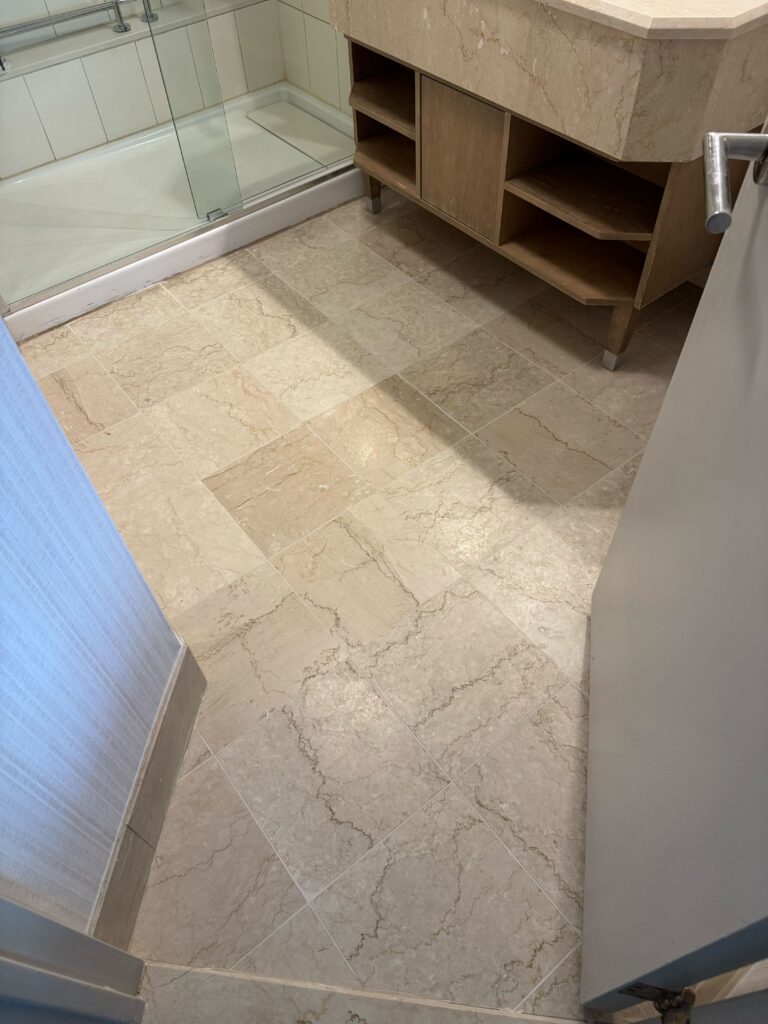
This is the single most important step that contractors frequently skip or perform incorrectly. Natural stone is porous and absorbs liquids — water, oil, wine, and cleaning products will penetrate unsealed stone and cause staining.
What to do:
- Wait 48–72 hours after grouting for moisture to fully evaporate before sealing
- Apply a professional-grade penetrating (impregnating) sealer — not a topical coating
- Seal all stone surfaces: countertops, floors, shower walls, and vanities
- Reseal every 1–3 years depending on the stone type and usage
Construction Scratches
Tools, ladders, appliance installations, and plumbing work frequently scratch newly installed stone. These scratches may be hidden under protective coverings during construction but become visible once the protection is removed.
What to do: Inspect all stone surfaces carefully after construction. Document any scratches and address them with your contractor or hire a stone restoration professional to hone and polish them out before you begin using the space.
Adhesive and Caulk Residue
Tape, adhesive, silicone caulk, and construction sealants often leave residue on stone surfaces. Some of these materials can stain or etch stone if left in contact too long.
What to do: Remove tape and protective films promptly after construction. Use a plastic scraper (never metal) and a stone-safe adhesive remover to clean any residue.
When to Schedule Your First Professional Service
We recommend scheduling a professional stone assessment 2–4 weeks after your renovation is complete. This allows time for:
- Grout to fully cure
- Any installation issues to become visible
- Construction dust to settle
During this first professional visit, your stone restoration specialist will clean the surfaces, remove any haze or residue, repair minor scratches, and apply a proper sealer. This sets the foundation for years of trouble-free enjoyment.
Protect Your Investment
Your natural stone surfaces represent a significant investment. Taking these post-renovation steps ensures they look beautiful from day one and stay that way. Rose Restoration provides post-construction stone care throughout Virginia, Maryland, and Washington DC. Contact us at 703-327-7676 or visit roserestoration.com to schedule your post-renovation stone service.
If you just finished a renovation in Bethesda or anywhere in the Maryland suburbs and your contractor said nothing about sealing or care, the next 90 days will tell — that is when grout haze, etching, and stains usually appear.
Looking for something else?
Get a Free Assessment from Rose Restoration
Tell us about your marble, stone, terrazzo, or concrete and our senior technicians will recommend the right restoration approach. Family-run and trusted across Washington DC, Maryland, and Virginia since 1978.
Call (703) 327-7676 · Email info@roserestoration.com · schedule a time · or send us photos.
Restore. Don't replace.
48 years of polishing marble, terrazzo, concrete, and tile across Washington DC, Northern Virginia, and Maryland. IMF, Four Seasons, Smithsonian, and the Virginia State Capitol trust us — you can too.