
Rose Restoration — a Washington DC marble restoration contractor — explains the main marble colors and types: Carrara, Calacatta, Statuary, Nero Marquina, Emperador, Crema Marfil, Arabescato, and how each affects installation, care, and restoration.
 By Tom Kuhn, CEO, Rose Restoration
Rose Restoration has restored marble, terrazzo, concrete, and natural stone across DC, MD, and VA since 1978.
Understanding Marble Colors and Varieties
Marble forms when limestone is subjected to intense heat and pressure deep within the earth. This metamorphic process creates the veining, swirls, and color variations that make every marble slab unique. The color of marble depends on the mineral impurities present during formation — iron produces reds and browns, serpentine creates greens, and graphite gives gray and black tones.
Whether you are choosing marble for a new project or trying to identify the stone already in your home, this guide covers every major marble color family and variety.
If the marble you are identifying already looks dull, etched or stained, our marble restoration and polishing service covers honing, polishing and sealing for every stone type described below.
White Marble
White marble is the most iconic and sought-after variety. Its clean, luminous appearance has been prized since ancient Rome and remains the top choice for luxury homes and commercial spaces.
Carrara Marble
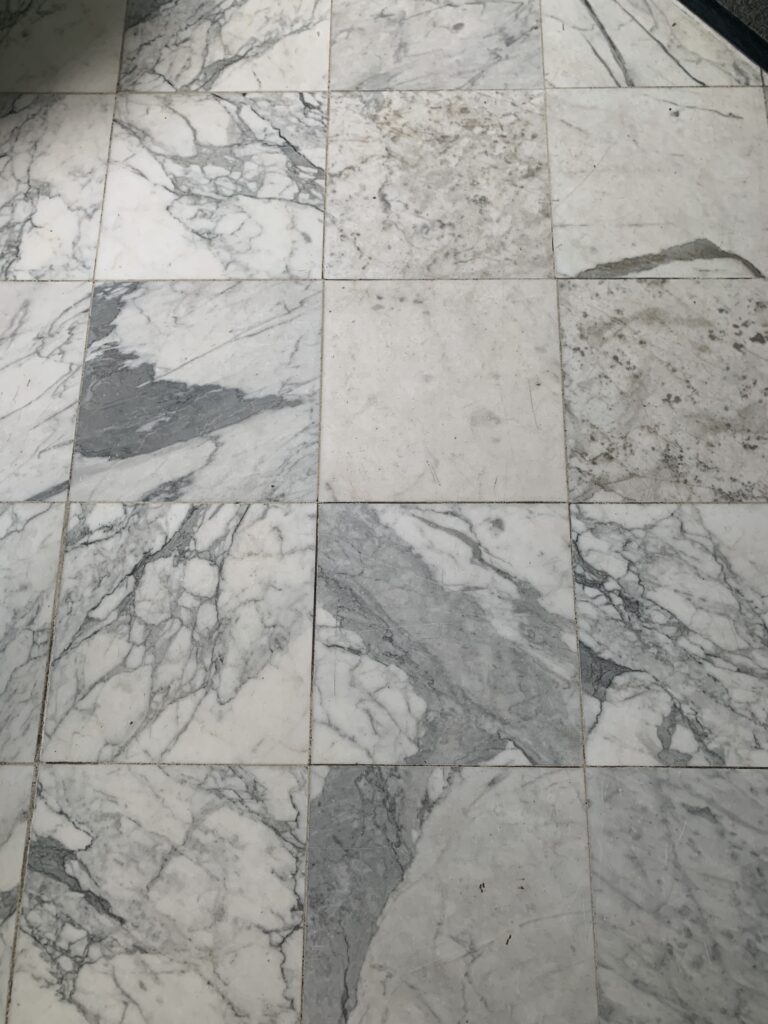
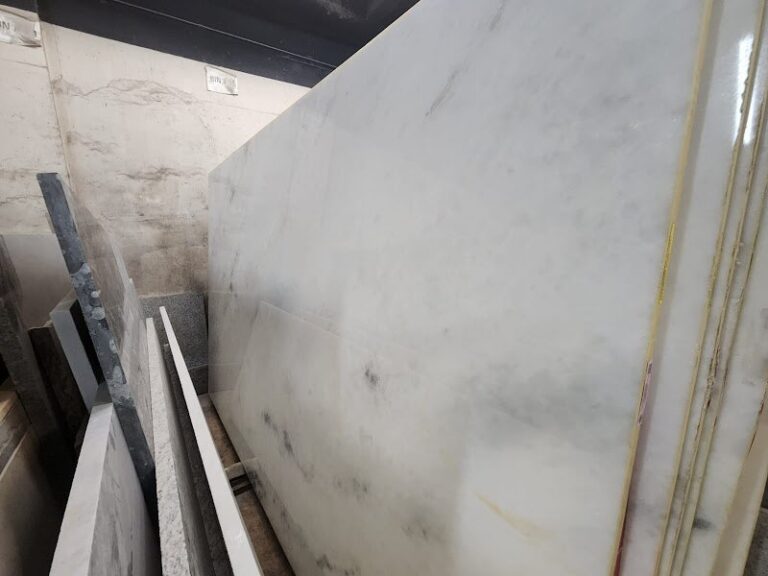
Quarried in Tuscany, Italy, Carrara is the most widely used white marble in the world. It has a soft white to blue-gray background with fine, feathery gray veining. Carrara is popular for countertops, bathrooms, and flooring because of its relatively moderate price compared to other Italian marbles.
Calacatta Marble
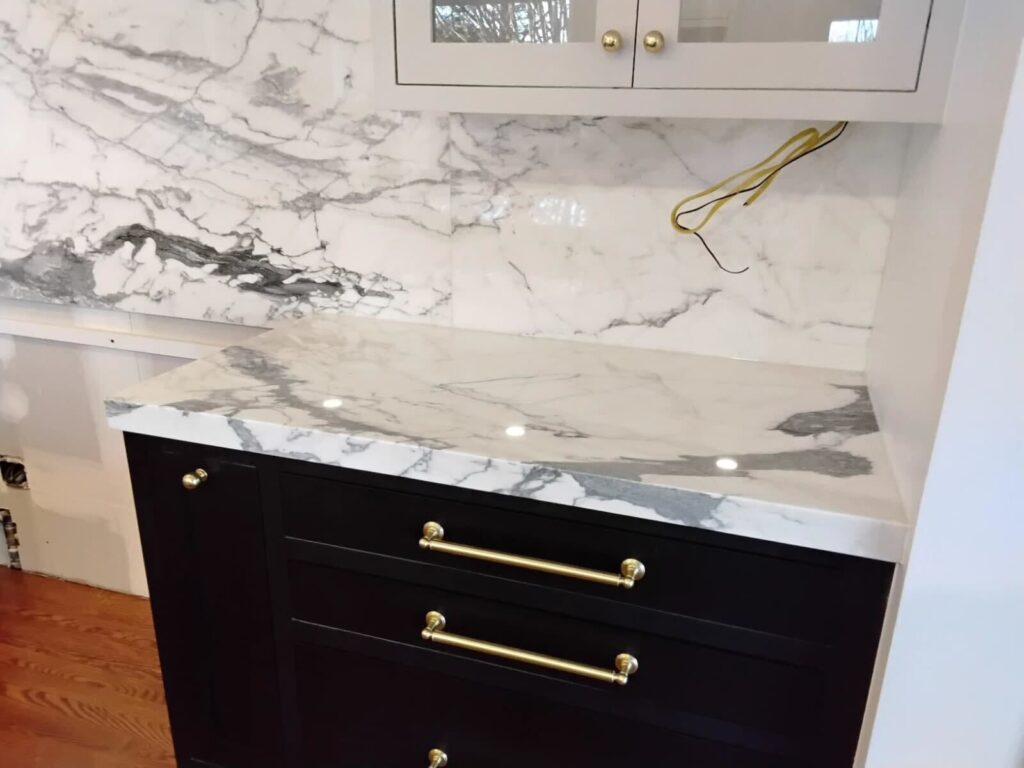
Also from the Carrara region but far rarer, Calacatta features a bright white background with bold, dramatic gold and gray veining. It is considered one of the most luxurious marbles and commands premium pricing. Common in high-end kitchen islands and statement walls.
Statuario Marble
The marble Michelangelo used to sculpt David. Statuario has a pure white background with striking gray veining, often with a slightly warmer tone than Calacatta. Extremely rare and expensive.
Thassos Marble
Quarried in Greece, Thassos is one of the whitest marbles available — almost pure white with minimal veining. Popular for modern, minimalist designs and bathroom applications.
Gray Marble
Gray marble ranges from soft silver to deep charcoal and creates sophisticated, contemporary spaces.
Bardiglio Marble
An Italian marble with a rich, deep gray background and subtle white veining. Bardiglio works beautifully in bathrooms and as an accent to lighter marbles.
Pietra Gray Marble
Quarried in Iran, this marble features a dark gray background with fine white veining. Popular for modern kitchens and commercial lobbies.
Black Marble
Black marble creates dramatic, luxurious spaces and is often used for statement pieces, fireplaces, and accent walls.
Nero Marquina
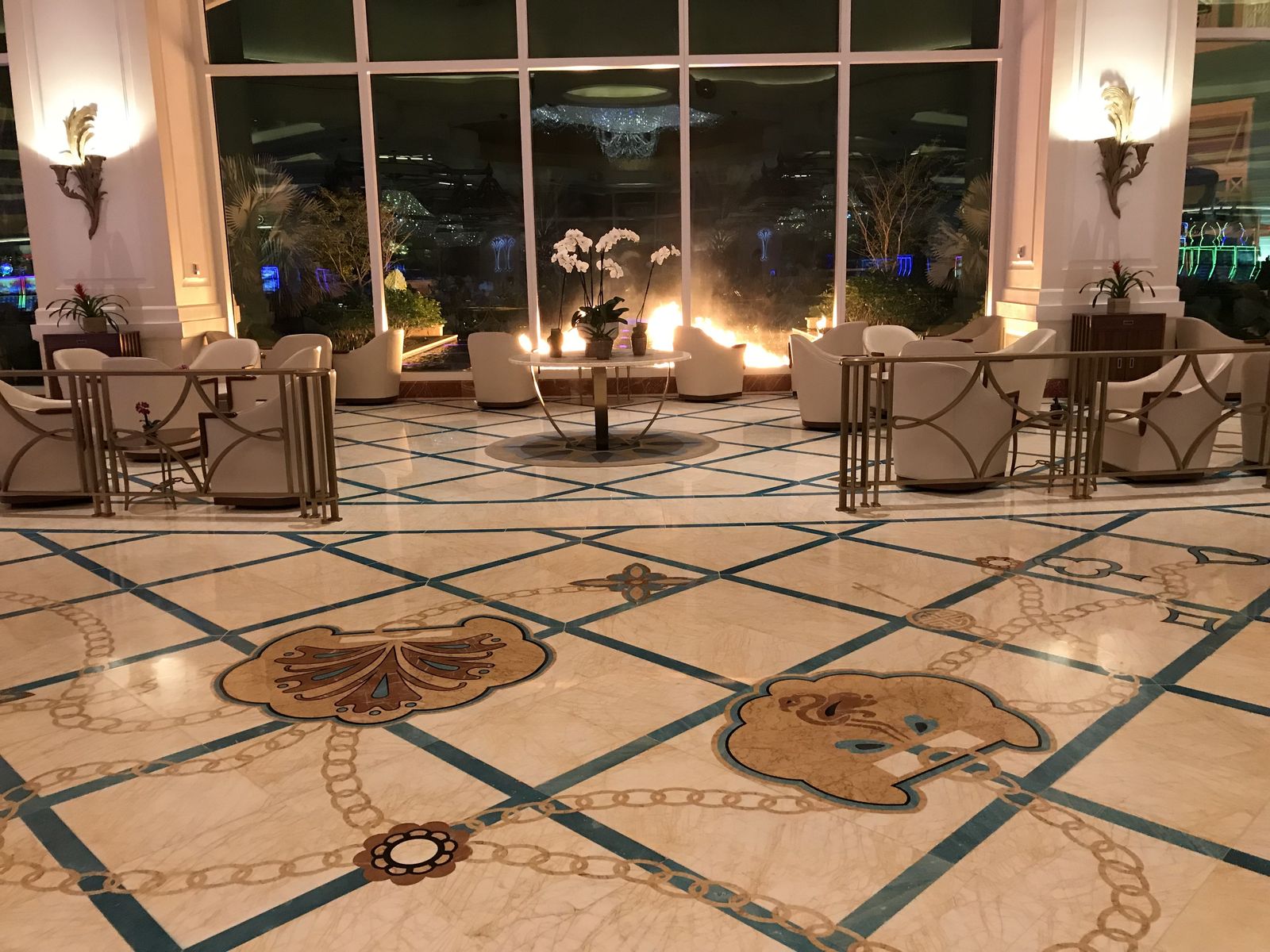
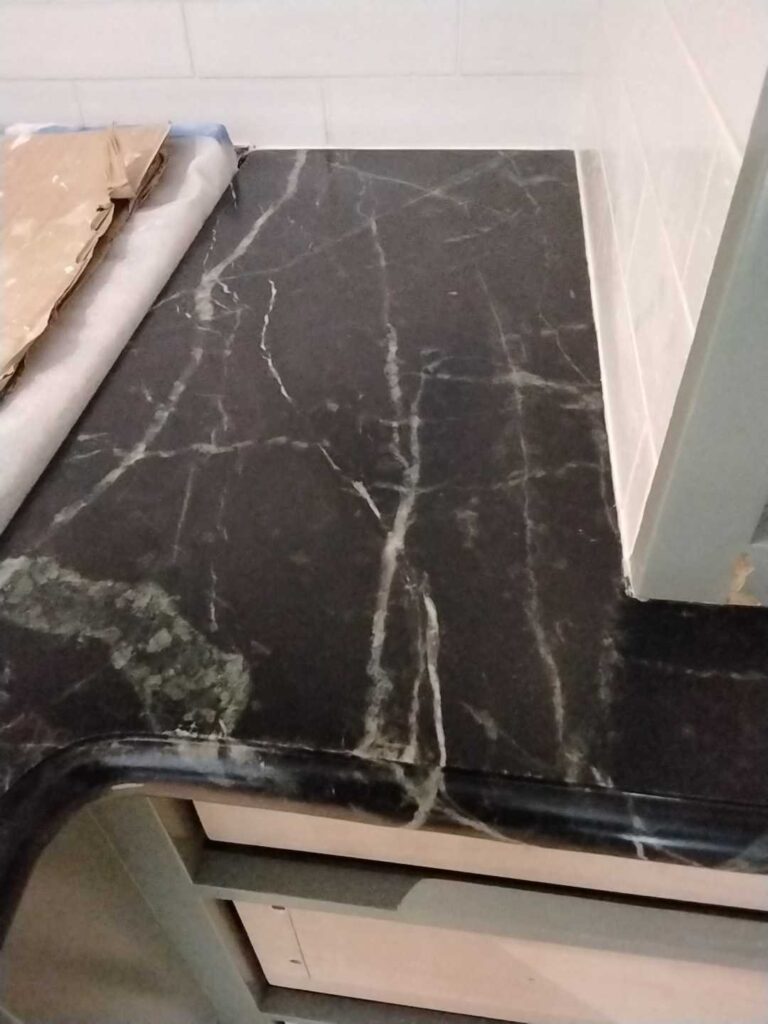
A Spanish marble with a jet-black background and distinctive white veining. One of the most popular black marbles worldwide, commonly used in hotel lobbies, bathroom vanities, and flooring.
Black Marquina
Similar to Nero Marquina but with more pronounced, spider-web-like white veining. A dramatic choice for countertops and accent pieces.
Portoro Marble
An Italian marble with a black background and gold veining. Extremely rare and luxurious, Portoro is found in the finest hotels and residences.
Beige and Cream Marble
Warm, inviting tones that complement both traditional and transitional design styles.
Crema Marfil
A Spanish marble with a creamy beige background and light veining. One of the most popular marbles for residential flooring and bathroom projects due to its warm, consistent color.
Botticino Marble
An Italian marble with a light beige background and subtle veining. Classic and understated, popular in traditional homes.
Emperador
Available in light and dark varieties, Emperador is a Spanish marble with rich brown and golden tones. Dark Emperador is a deep chocolate brown with cream veining — popular for masculine spaces and luxury bathrooms.
Green Marble
Green marble gets its color from serpentine or chlorite minerals and ranges from soft sage to deep forest green.
Verde Guatemala
A deep green marble with white and lighter green veining. Stunning for countertops, accent walls, and commercial spaces.
Connemara Marble
An Irish marble with distinctive green patterns, traditionally used in jewelry and decorative objects but also available in slab form.
Pink and Red Marble
Iron oxide creates the warm pink and red tones in these marble varieties.
Rojo Alicante
A Spanish marble with a rich red-brown background and white veining. Bold and dramatic, used in statement floors and feature walls.
Rosa Portugues
A soft pink marble from Portugal with delicate veining. Elegant in bathrooms and powder rooms.
How to Identify the Marble in Your Home
If you are unsure what type of marble is in your home, look for these clues:
- Color and veining pattern — compare to the descriptions and photos above
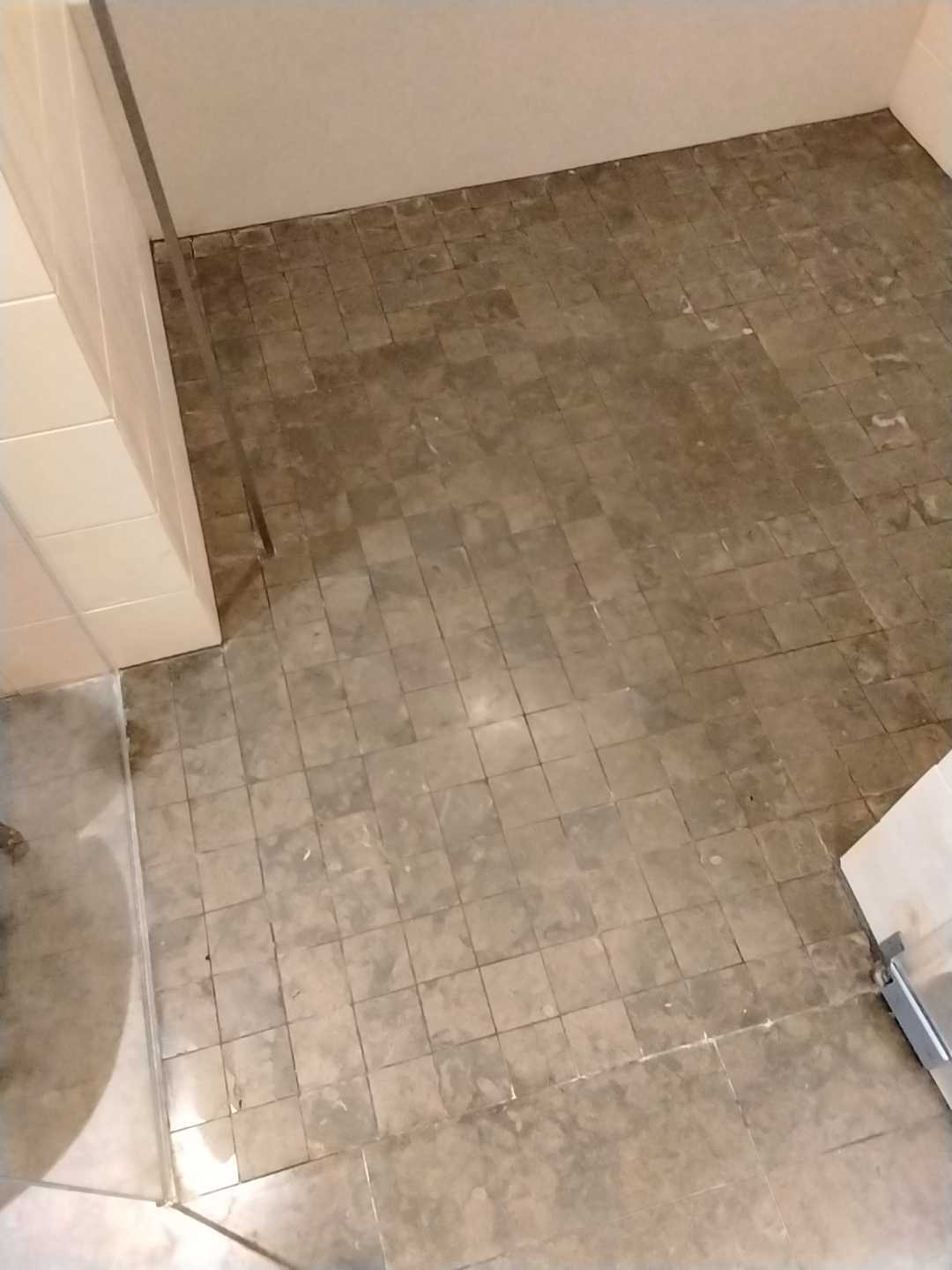
- Finish — polished (glossy), honed (matte), or tumbled (textured)
- Location — certain marbles are more common in specific applications (Carrara in bathrooms, Crema Marfil in floors)
- Age of installation — trends change over time. Crema Marfil was dominant in the 2000s, Calacatta surged in the 2010s, quartzite rose in the 2020s
A professional stone restoration technician can identify your marble type during a free assessment — this matters because different marbles require different care approaches.
Caring for Different Marble Colors
All marble requires the same basic care — pH-neutral cleaners, prompt spill cleanup, and regular sealing. However, color affects some care decisions:
- White and light marble — shows stains more readily. Seal every 6-12 months for kitchen countertops. Avoid hydrogen peroxide poultices on dark marble, as they can lighten the stone.
- Dark marble — shows water marks and hard water deposits more readily. Dry surfaces after cleaning to prevent water spots.
- Green marble — can be sensitive to moisture. Avoid saturating with water during cleaning.
Professional Marble Care for Every Color
Rose Restoration works with every marble variety — from common Carrara to rare Calacatta and everything in between. Our technicians understand the unique properties of each stone and tailor their approach accordingly. Whether you need a white Carrara kitchen polished, a Nero Marquina fireplace restored, or a Crema Marfil lobby maintained, we deliver results that honor the natural beauty of your stone.
Contact us at 703-327-7676 or visit roserestoration.com for a free estimate.
The most common marble varieties we see across DC properties are Carrara, Calacatta, and Statuario — but the regional mix shifts based on the era of the building and the original architect.
Looking for something else?
Get a Free Assessment from Rose Restoration
Tell us about your marble, stone, terrazzo, or concrete and our senior technicians will recommend the right restoration approach. Family-run and trusted across Washington DC, Maryland, and Virginia since 1978.
Call (703) 327-7676 · Email info@roserestoration.com · schedule a time · or send us photos.
Project photos
Real Rose Restoration jobs, photographed by our crews.
Restore. Don't replace.
48 years of polishing marble, terrazzo, concrete, and tile across Washington DC, Northern Virginia, and Maryland. IMF, Four Seasons, Smithsonian, and the Virginia State Capitol trust us — you can too.