

 By Tom Kuhn, CEO, Rose Restoration
Rose Restoration has restored marble, terrazzo, concrete, and natural stone across DC, MD, and VA since 1978.
If you have a marble floor that used to gleam and now looks flat, foggy, or streaky, you are seeing one of three problems — and they all have different fixes. The bad news: most “marble cleaners” make at least one of them worse. The good news: a polished marble floor that has lost its shine almost always comes back with the right diagnosis.
The short answer
A cloudy marble floor is almost always caused by etching (acid damage), traffic wear (a path of micro-scratches), or a buildup film from wax, sealer, or the wrong cleaner. Etching and wear need a professional honing and re-polishing pass. Film usually comes off with the right alkaline stripper and a clean re-polish. The trick is knowing which one you are looking at before you start.
A cloudy marble floor is usually a failed finish or a residue rather than damaged stone, and both are correctable. Marble restoration and polishing strips what is on the surface and refinishes the stone itself.
What “cloudy” actually means on marble
Polished marble looks shiny because its surface is microscopically flat — light bounces off in one direction. Anything that disrupts that flatness scatters light and looks “hazy” or “dull.” Three things disrupt it:
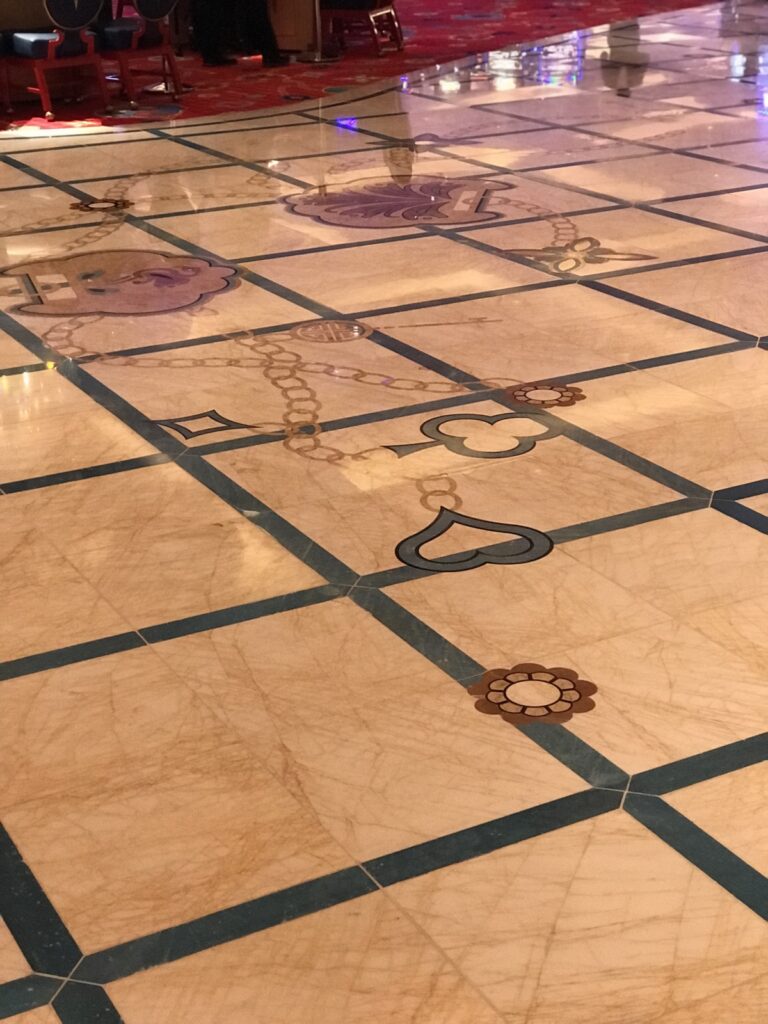
- Etching — acid (vinegar, citrus, wine, tomato, many cleaners) reacts with calcium carbonate in marble and dissolves the surface in tiny pits. Etched areas look lighter or whiter and feel slightly rougher.
- Traffic wear — fine grit ground in by foot traffic over months or years creates a network of micro-scratches, usually in the walking path. You will see it most clearly under raking light (low sun in a window).
- Film or residue — soap, mop water, wax, and many “marble safe” cleaners leave a thin film. It looks like dirt that will not come off. It is not dirt — it is the cleaner itself.
The 3-minute diagnosis you can do today
Get down at eye level with the floor and look across it toward a window. If you see:
- Patches that look whitish or lighter, often near where someone sets a wine glass or a vase — that is etching.
- A duller path running through the room (door to kitchen, sofa to chair) — that is wear.
- A general fogginess everywhere, sometimes with streaks where the mop went — that is film.
You can have all three at once. In our experience, most “cloudy floor” calls in DC, Maryland, and Virginia are a combination of wear and film, with localized etching near entry tables and kitchen islands.
What you can fix yourself (and what you cannot)
Film sometimes comes off with a neutral-pH stone cleaner, plenty of clean water, and a microfiber mop. If a film comes back every time the floor dries, you have buildup that needs an alkaline stripper — that is a job we do because the wrong stripper will etch the marble.
Etching and wear are not DIY fixes. They require diamond abrasives that progressively flatten the surface — typically a 50, 200, 400, 800, 1500, and 3000-grit sequence depending on severity — followed by a powder polish. We have seen homeowners try countertop “etch removers” on floors; they generally do not work on more than a six-inch spot and they create an uneven sheen that is harder to fix than the original problem.
The professional process
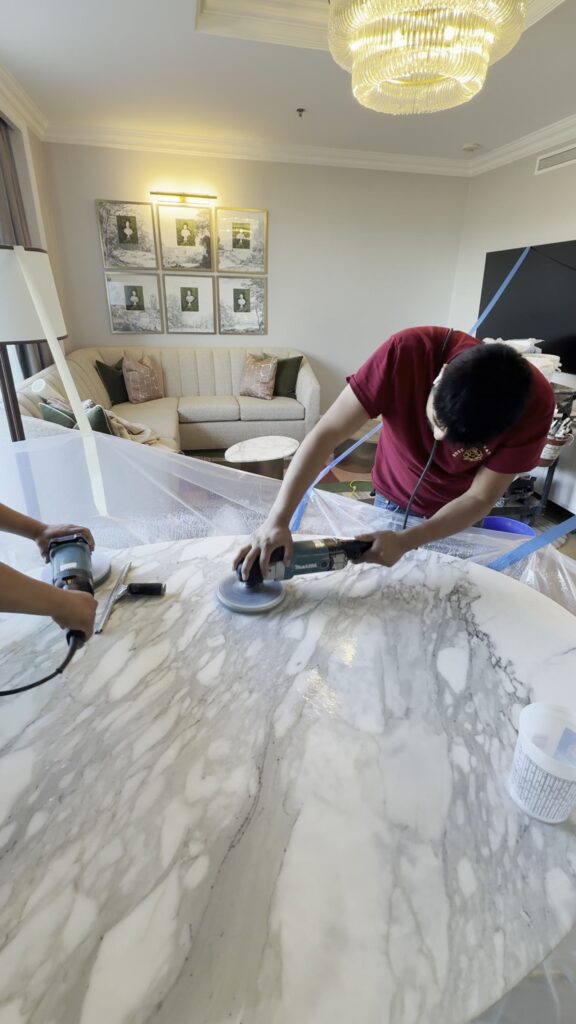
Honing and polishing a marble floor is mechanical, not chemical:
- Hone — diamond pads at successive grits flatten out etching and scratches. This removes a few thousandths of an inch and resets the surface.
- Polish — a fine powder (typically tin or aluminum oxide-based) under a weighted pad creates a chemical-mechanical reaction that yields the high gloss.
- Protect — for residential floors, an impregnating sealer keeps oils and acids from soaking in. For premium protection, a coating like Marble Armor sits on top and takes the etching instead of the marble.
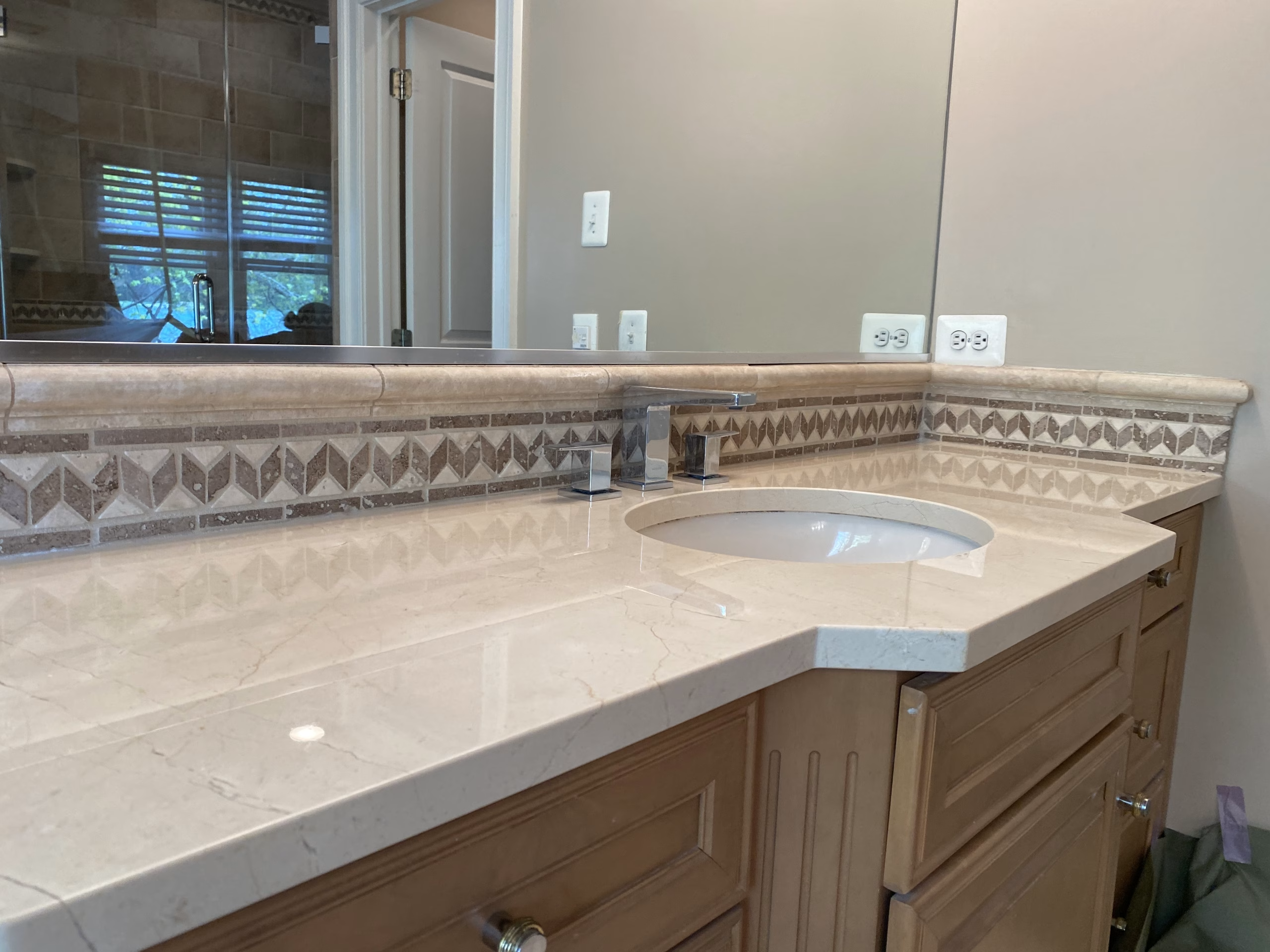
Done right, the floor looks like the day it was installed. Done wrong — wrong grit jumps, the wrong polish for the marble type — it looks streaky or uneven.
What it costs
Rose’s marble restoration runs roughly $6–$20 per square foot in the DC/MD/VA area depending on the floor’s condition, the marble type, and access. A 400-square-foot kitchen and dining run is typically a one-day job; a full foyer plus hallway plus living room is usually two. We give a firm number after a free on-site assessment — no surprise change orders.
How to keep it polished afterward
- Use a neutral-pH stone cleaner only. Skip “shines and polishes” sold for tile or vinyl.
- Wipe spills immediately, especially anything acidic.
- Walk-off mats at every exterior door — most damage is the grit that comes in on shoes.
- Re-polish high-traffic paths every three to seven years, not the whole floor every time.
When to call us
If the cloudiness is across the room and the floor is more than five years old, or if you can see a clear duller path through it, a restoration pass is the right answer. If it just appeared after a new cleaner, try a clean-water mop with no detergent for a week first — sometimes that is all it takes. Either way, we will tell you honestly during the assessment.
Looking for something else?
Get a Free Assessment from Rose Restoration
Tell us about your marble, stone, terrazzo, or concrete and our senior technicians will recommend the right restoration approach. Family-run and trusted across Washington DC, Maryland, and Virginia since 1978.
Call (703) 327-7676 · Email info@roserestoration.com · schedule a time · or send us photos.
Restore. Don't replace.
48 years of polishing marble, terrazzo, concrete, and tile across Washington DC, Northern Virginia, and Maryland. IMF, Four Seasons, Smithsonian, and the Virginia State Capitol trust us — you can too.