
Quick Answer
How are chips in granite countertops repaired?
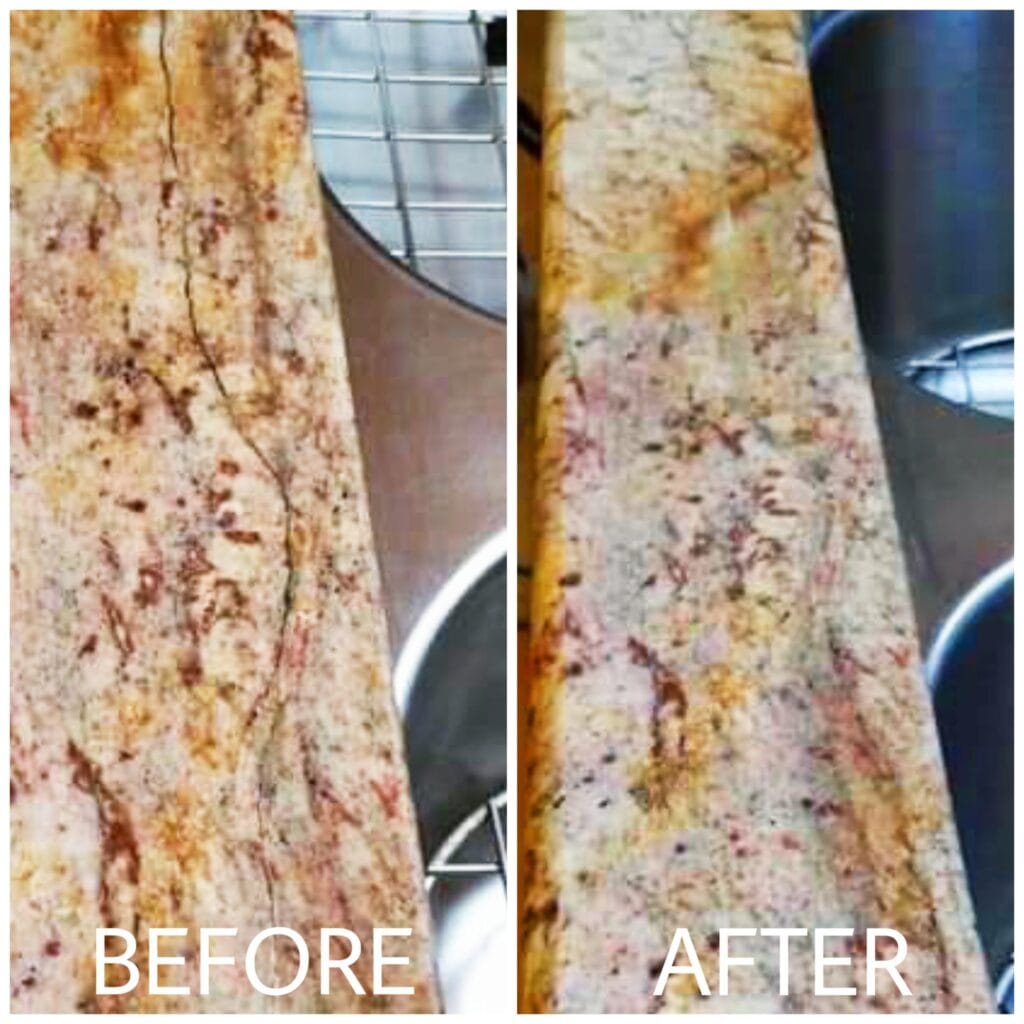
Granite chips are repaired with color-matched epoxy filler — pigments are mixed to match the surrounding granite color and any metallic flecks. The cavity is cleaned, filled slightly proud, then razor-trimmed flush after cure and polished to match. The repaired area is structurally as strong as the original stone and invisible from standing height.
Granite countertop chips happen at the points where granite meets the rest of your kitchen — sink edges, dishwasher openings, range cutouts, mitered corners, and the leading edges where pots and pans get dropped or slid. Granite is harder than marble, but it is also brittle. A single high-impact event — a heavy cast iron pot dropped on an unsupported edge, a coffee carafe falling against the sink edge — can take a chip out of an otherwise pristine slab.
Granite chip repair is one of the most common residential calls Rose Restoration handles in DC, Maryland, and Virginia. Most chips can be repaired without removing or replacing the slab — typically in a single visit, for a fraction of the cost of refabricating the countertop. This guide explains how chip repair actually works, what to expect for cost, and when chip repair is and is not the right answer.
What a chip repair actually fixes
“Chip” covers a wide range of damage on granite countertops. Rose Restoration handles all of these as part of standard chip repair work:
- Edge chips: material missing from the front edge of a counter, typically from impact
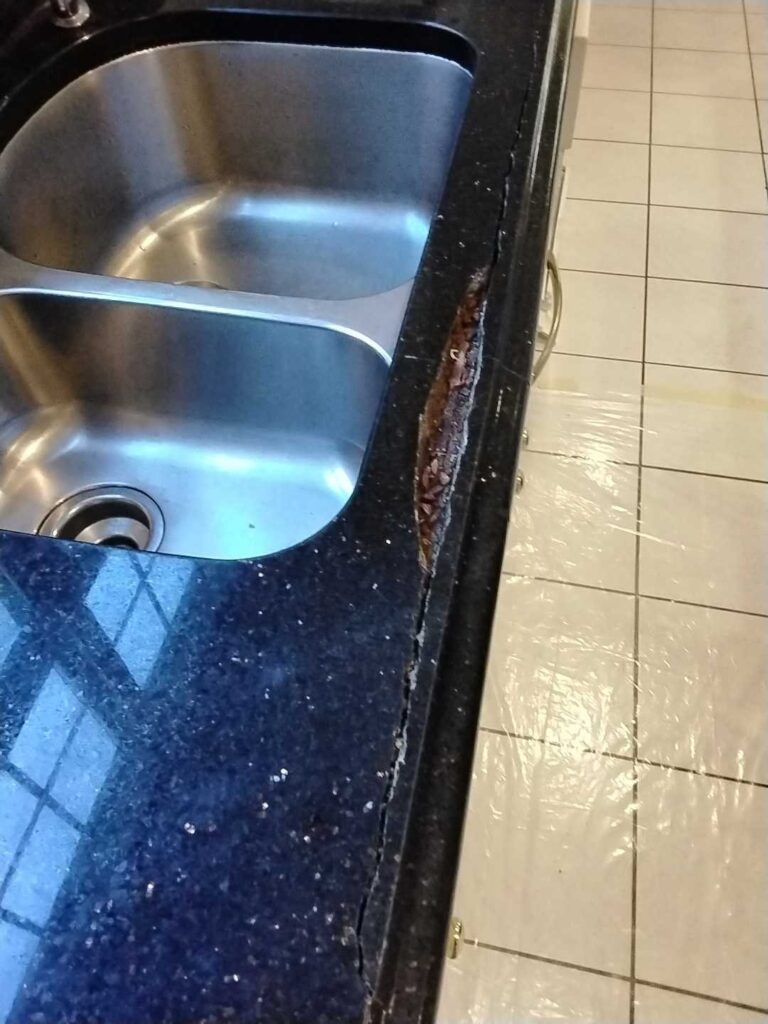
- Sink-edge chips: chips along the cutout where the sink meets the counter — caused by pots, pans, knives, and sliding cast iron
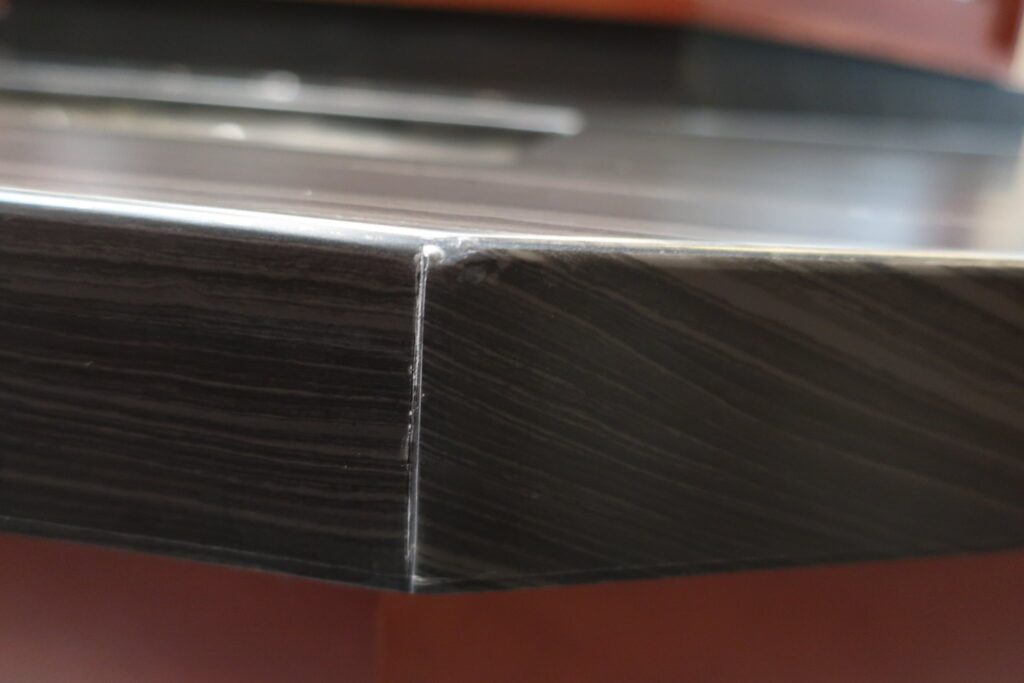
- Corner breaks: the front corners of a counter or island, often where mitered seams have failed under impact
- Range / cooktop edge chips: heat-related stress and impact damage near the cutout
- Backsplash chips: often caused during cabinet or appliance install
- Pinhole pits: small voids in the granite surface that develop over time as filler erodes out
- Seam separations: when the original color-matched epoxy at a slab seam shrinks or fails
What chip repair does not fix: full slab cracks (separate problem — see crack repair), broken-off cantilevered overhangs (those need structural reinforcement before repair), or extensive damage from water infiltration where the substrate underneath has rotted.
What causes granite to chip
- Impact: dropped pots, pans, glass jars, knives. Granite is hard but brittle; a sharp impact at an edge will chip cleanly.
- Sliding heavy cookware: dragging a 12-pound cast iron skillet across the surface, especially over a leading edge.
- Improper installation: seams not fully supported, edges with insufficient overhang support, or counters installed under tension.
- Edge profile: sharp eased edges and ogee profiles chip more easily than full bullnose or honed edges.
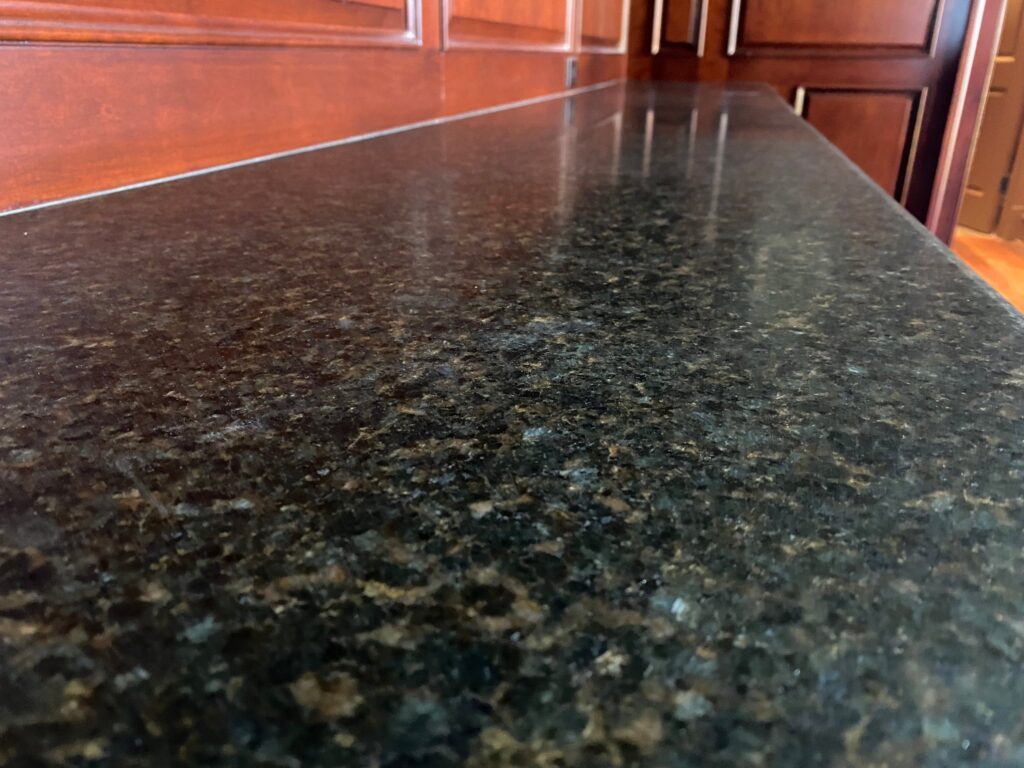
- Granite type: some granites — particularly heavily veined or fissured varieties (Blue Bahia, Volga Blue, certain Indian granites) — chip more readily along natural fault lines.
- Hairline manufacturing fissures: fissures that are invisible at install but propagate into chips after years of thermal cycling and use.
Can you repair a granite chip yourself?
We do not recommend it. Hardware-store chip kits rarely get the color right: granite has several mineral colors that the eye reads as one pattern, and a two-part epoxy kit cannot approximate that. The kit repairs we are called to fix usually show one of these:
- Epoxy fills the void but the color is wrong (too gray, too brown, too monochrome)
- Filler shrinks below the surface, leaving a dimple
- Filler stands proud and is sanded incorrectly, leaving a flat spot in the polish
- The repair cures matte while the surrounding granite is polished, leaving a visible patch
- Wrong product — silicone, super glue, or grout used instead of structural epoxy, all of which fail within months
Once a failed kit repair is in place, professional repair becomes more expensive because the failed material has to be removed first.
For dark monochromatic granites (absolute black, certain dense Brazilians) homeowners can get acceptable results with a high-quality kit and careful technique. For everything else — multi-colored granites, kitchen island front edges, anywhere the chip is at eye level — professional repair is the right call.
How professional granite chip repair works
- Assessment. A senior technician evaluates the chip — depth, surrounding stone condition, granite type, and whether other repairs (sealing, polish refresh, additional chips) should be combined into the same visit.
- Surface preparation. The chip is cleaned of debris, oils, and any prior repair material. The surrounding area is masked.
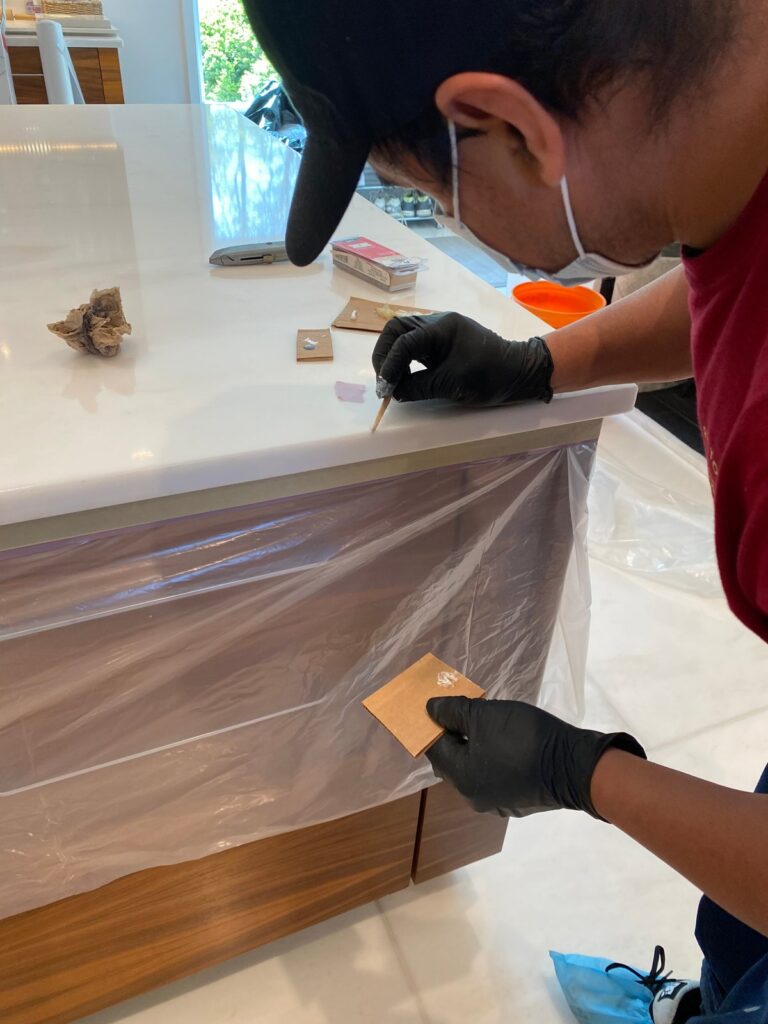
- Color-matched fill. Rose uses pigmented structural epoxy (or polyester resin for outdoor / heat-exposed applications) hand-tinted on-site to match the granite. For multi-colored granites, multiple pigments are layered to replicate the visual pattern of the surrounding stone.
- Cure. Most fills cure to handling strength within 30 minutes and full strength within 2-4 hours.
- Leveling. Excess filler is sanded flush with progressively finer abrasives.
- Finish matching. The repair is polished to match the surrounding finish — high gloss, honed, or leathered. For polished granite, a final crystallization pass restores reflectivity.
- Sealing. The repaired area and surrounding zone are sealed to slow future staining.
Cost: what granite chip repair costs in 2026
- Single chip repair (small, simple color): $150–$350; large or complex chips can run up to $500.
- Multiple chips on the same countertop: $250–$700 depending on count and complexity.
- Sink edge restoration (multiple chips along sink cutout): $400–$900.
- Full kitchen chip + seam restoration: $500–$1,500.
- Mitered corner break / large edge chip rebuild: $500–$2,000 depending on size and granite scarcity.
- Pinhole pit fill across a full island: $400–$1,200.
Compare to refabrication: a typical replacement granite countertop runs $4,000–$15,000 once you include demo, fabrication, install, and re-tiling. Chip repair is usually 5-15% of replacement cost — and finishes the same day in most cases.
Preventing chips in the future
- Use trivets and cutting boards. Knives slid against an edge will chip granite over time.
- Don’t drop pots into the sink. Set them down — sink edges take more chip damage than any other surface in the kitchen.
- Add edge protection at high-impact zones. Discreet rubber or felt strips applied to the inside of cabinet doors near granite edges absorb impact during cabinet operation.
- Inspect the seams once a year. If the color-matched seam epoxy starts to crack or shrink, address it before the granite at the seam edge starts chipping out.
- For new installs: specify a more chip-resistant edge profile (full bullnose, demi-bullnose) instead of sharp eased edges.
Where Rose Restoration repairs granite chips
We perform granite chip repair across DC, Maryland, and Virginia, including Washington DC granite restoration, Arlington, Alexandria, Bethesda, McLean, Potomac, Chevy Chase, Falls Church, Vienna, Tysons, Reston, Loudoun County, Fairfax County, and Montgomery County. Most residential chip repairs are completed in a single 2–4 hour visit. Send photos and we can review them and send a proposal the same day.
Before and after
The same surface on the same Rose job, photographed by our crew before and after the work.
 Before
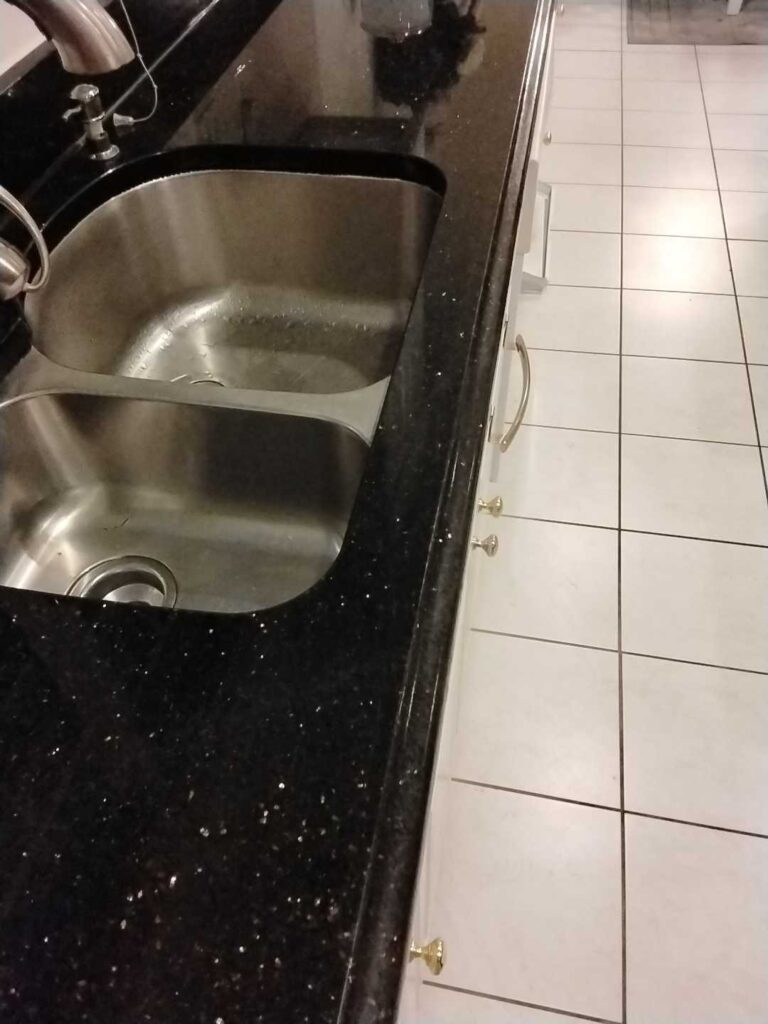 After
AfterProject photos
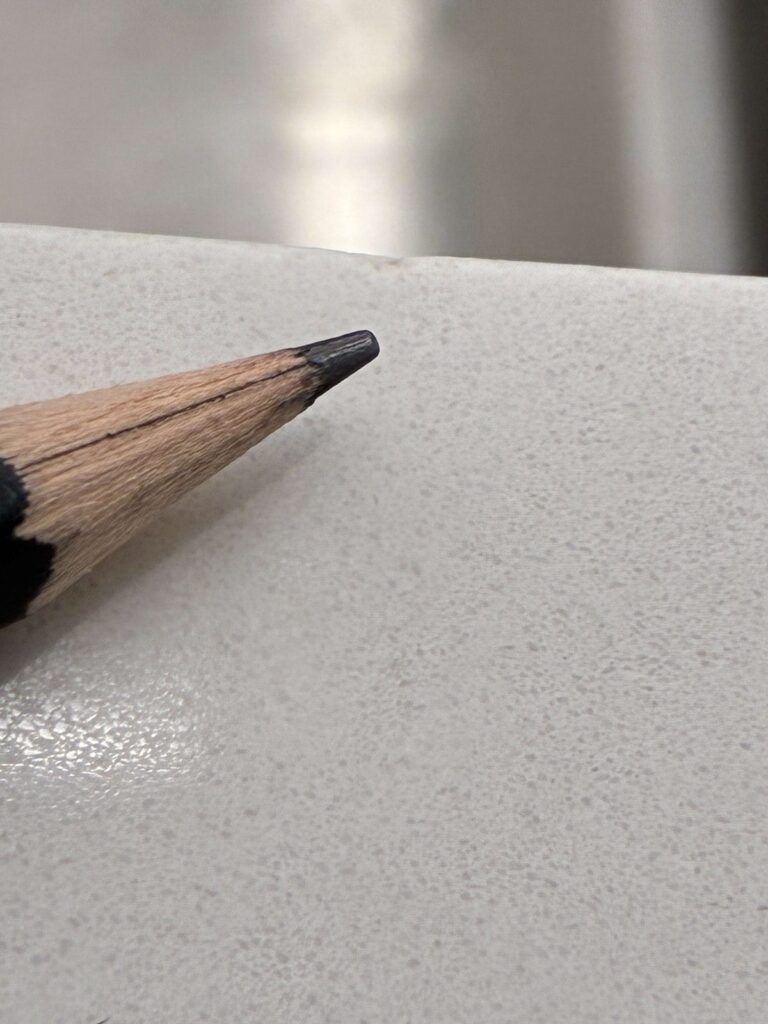
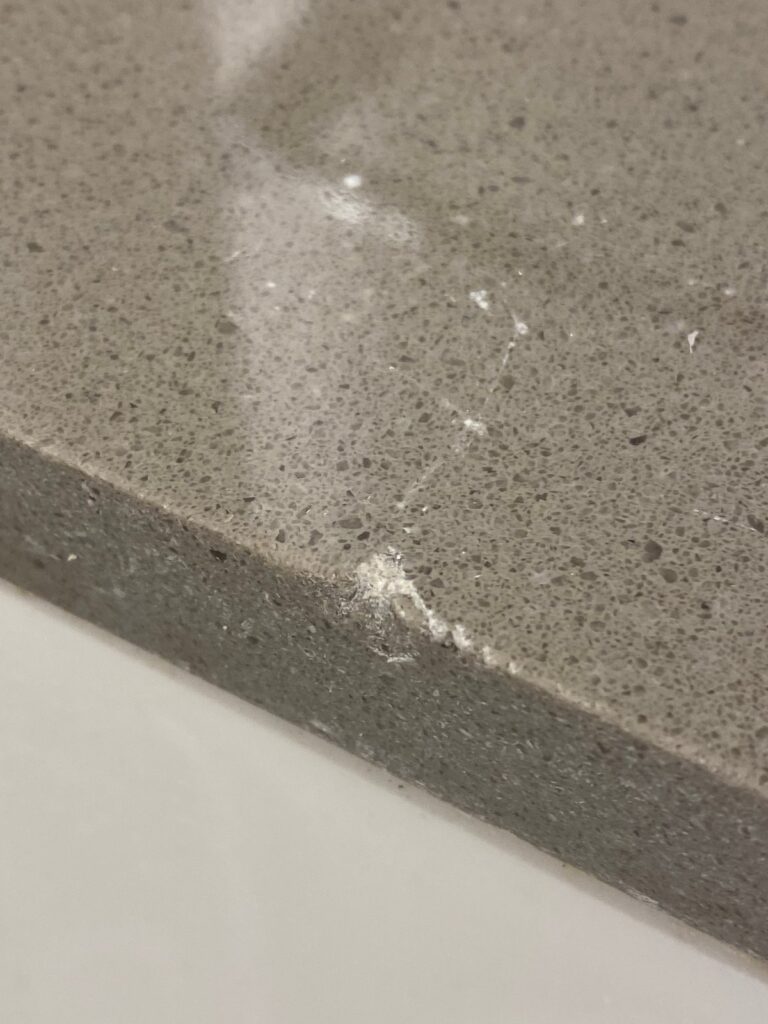
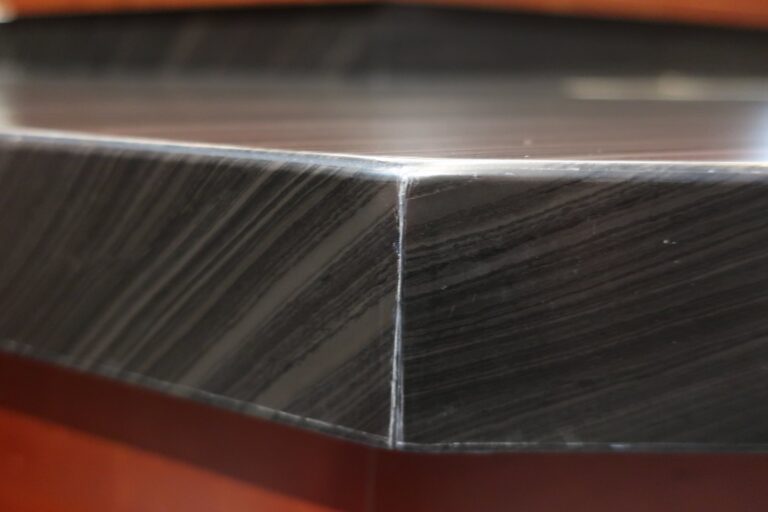
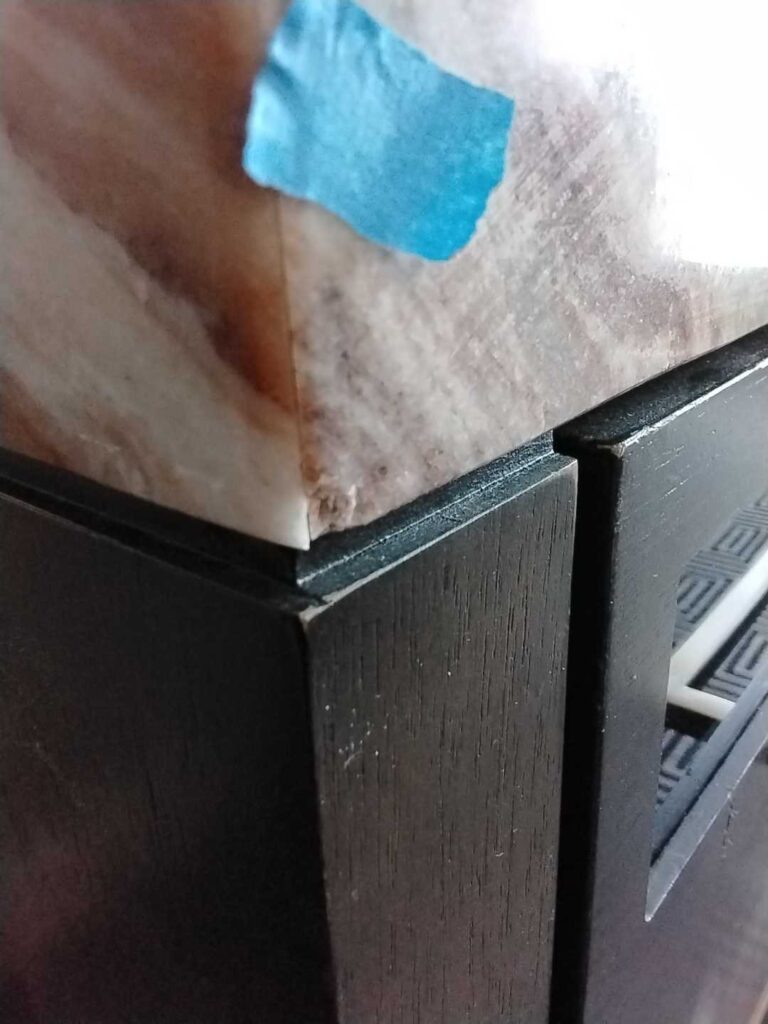
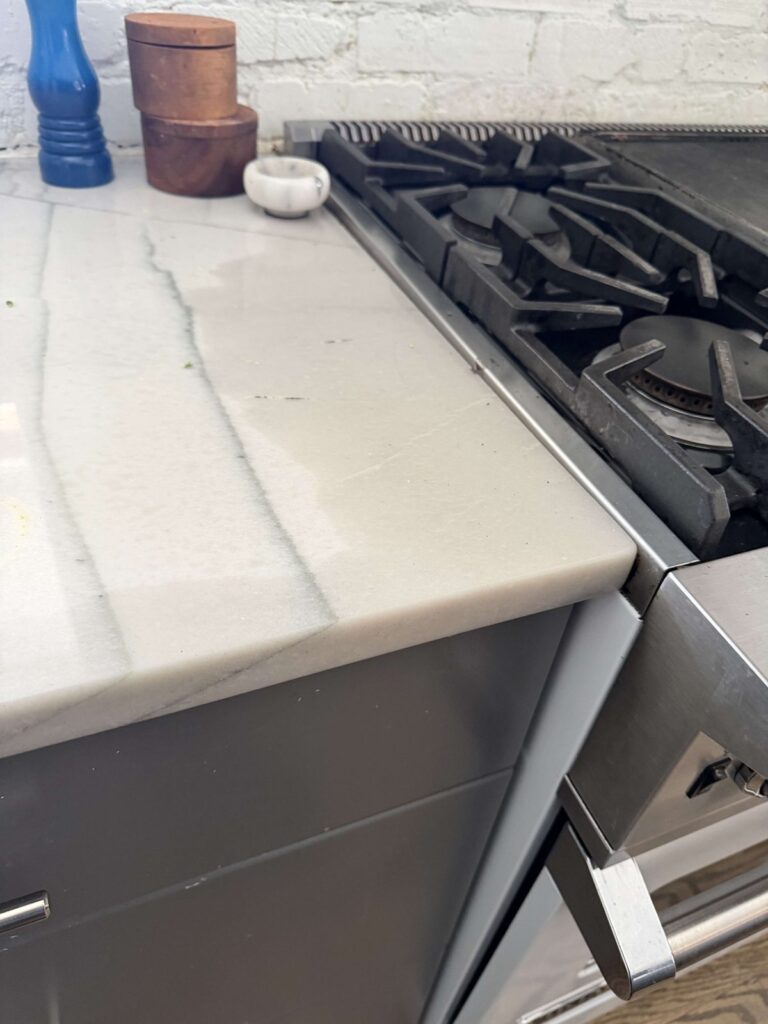
Real Rose Restoration jobs, photographed by our crews.
Frequently asked questions
How long does granite chip repair take?
Most single-chip repairs are completed in 2 to 4 hours. Multi-chip and edge-rebuild repairs may take a half day. Full kitchen chip-and-seam restorations typically complete in a single visit.
Will the repaired chip be visible?
For monochromatic granites, repairs are virtually invisible at normal viewing distance. For complex multi-colored granites, expert pigment-mixing produces repairs that blend extremely well, but very close inspection may reveal subtle differences. Rose’s technicians prepare a small mock-up before committing to the final fill on prominent locations.
Can a chipped granite countertop be repaired, or does the whole slab need replacing?
Almost all chips can be repaired. Replacement is only required when structural failure has occurred (a major slab crack with separation), or when extensive water damage has compromised the substrate. Edge chips, corner breaks, sink-edge chips, and pinholes are all standard repair work.
What about a chip in dark granite — is that harder to fix?
Dark monochromatic granites are actually easier to color-match than complex multi-colored varieties. Black, dark green, and dark brown granites typically yield invisible repairs.
How long do granite chip repairs last?
Properly executed chip repairs using structural epoxy last indefinitely under normal kitchen use. Rose warranties workmanship for 12 months and the structural integrity of the fill for 5 years.
Do you repair chips in granite shower walls and floors?
Yes. Bathroom granite chip repair uses the same process with water-resistant epoxy formulations rated for continuous moisture exposure.
Can you fix a chip that someone else already tried to repair badly?
Yes. We remove the previous failed repair material first, prepare the original chip, and execute a proper color-matched fill. Failed prior repairs add modestly to the cost but do not prevent a clean final result.
Should I have my granite re-sealed when you do the chip repair?
Usually yes, especially if the granite has not been sealed in 2 or more years. We include a full sealer application as part of the chip repair visit when needed at a small additional cost. Learn more about granite sealing.
Schedule a free assessment
For granite chip repair in DC, Maryland, or Virginia: call 703-327-7676 or request a quote online. Senior technicians respond within 2 business hours. Most single-chip residential repairs are quoted between $150 and $700.