Quick Answer
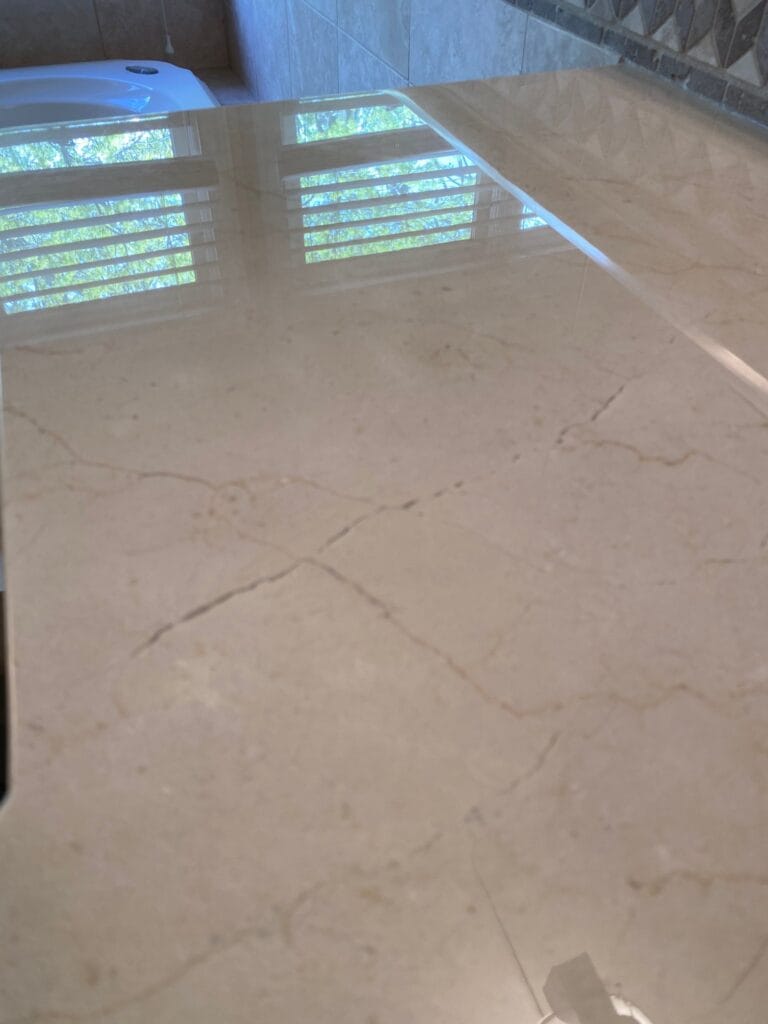
Can cracks in marble be repaired without replacing the slab?
Yes. Hairline and small structural cracks in marble are repaired with color-matched epoxy filler that bonds chemically to the surrounding stone, restoring both the appearance and structural integrity. The repaired area is honed and polished to match the surrounding finish, making the repair invisible from standing height. Replacement is rarely required.
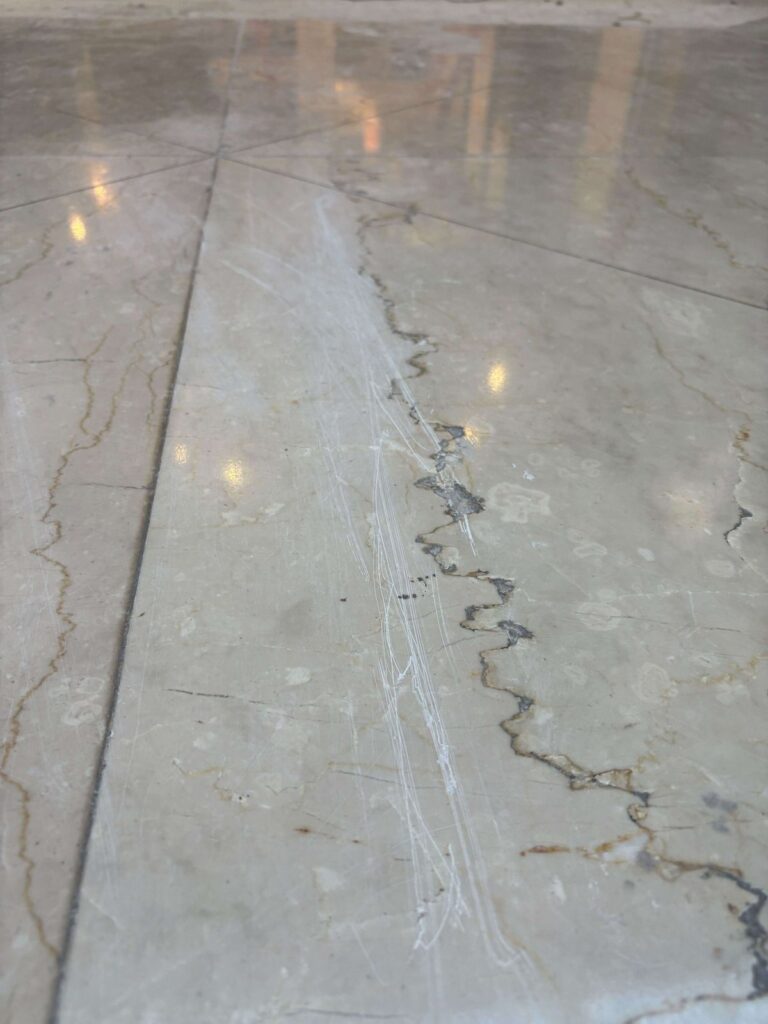
A crack on marble is a linear separation in the stone — different from a chip (where material is missing) and different from a scratch (a surface groove). Cracks can be hairline (visible only on close inspection) or full-thickness (visible on both sides of a slab). Most marble cracks can be repaired without replacing the stone, using structural epoxy injection and color-matched filling. The key is addressing cracks early, before water, dirt, or movement widens them into structural failure.
Rose Restoration repairs marble cracks on countertops, floors, vanities, fireplace surrounds, and commercial installations across DC, Maryland, and Virginia. This guide covers what causes cracks, the difference between cosmetic and structural cracks, what is fixable, and what professional crack repair costs in 2026.
Types of marble cracks
- Hairline cracks: visible as thin lines, sometimes only catching certain light. Usually cosmetic, can be stabilized with vacuum-injected resin.
- Surface fissures: natural geological lines in the marble that have opened slightly. Common in highly veined marbles and not always defects.
- Stress cracks: cracks caused by improper support, settlement, or thermal cycling. Often start at cutouts (sink, range) and propagate outward.
- Impact cracks: radiating cracks from a single impact point, common around dropped objects.
- Through cracks: cracks visible on both top and bottom of a slab. Most concerning structurally; require careful evaluation before repair.
- Seam failures: color-matched epoxy at original slab seams shrinks or fails over years, exposing the seam line and allowing it to widen.
What causes marble cracks
- Inadequate support. Cantilevered overhangs, unsupported sink cutouts, or slabs spanning gaps without proper bracing.
- Settlement. Cabinets shifting, foundations moving, or the slab itself flexing under floor movement.
- Impact. A heavy object dropped on the surface or against an edge.
- Thermal stress. Hot pots placed directly on stone, especially near appliance cutouts or sink edges where thermal mass differs.
- Manufacturing defects. Hairline fissures present at install that propagate over time under normal use.
- Improper installation. Slabs installed under tension, with insufficient adhesive coverage, or on uneven substrate.
- Vibration. Long-term exposure to vibration from dishwashers, garbage disposals, or neighboring construction.
- Freeze-thaw on outdoor stone. Water in micro-fissures freezes and expands, widening cracks over winter cycles.
Why DIY crack repair almost always fails
Marble crack repair is genuinely difficult and forgiving products do not exist for it. Common DIY failures:
- Super glue / cyanoacrylate: creates a brittle bond that fails within months and leaves a yellow line that cannot be cleanly removed
- Silicone: remains flexible (which sounds good but) accumulates dirt at the crack edge, creating a permanent dark line
- Hardware-store epoxy: not designed for stone, often leaves a milky appearance, fails on color match
- Grout: sometimes used incorrectly to fill cracks; cosmetically wrong and has no structural value
- No prep: applying any filler to a dirty crack traps debris that prevents the filler from bonding to clean stone
Once a botched DIY repair is in place, professional repair becomes more expensive because the failed material has to be removed first, and any damage to surrounding stone has to be addressed.
How professional marble crack repair works
- Assessment. A senior technician evaluates whether the crack is cosmetic (no structural concern, fixable in place) or structural (requires evaluation of support and possible reinforcement). Through-cracks and cracks at unsupported overhangs need additional engineering consideration.
- Cleaning. The crack is opened slightly with diamond tooling if needed, then cleaned of debris, oils, and any prior failed repair material using compatible solvents and gentle vacuum extraction.
- Vacuum injection. Low-viscosity structural epoxy is drawn into the crack under reduced pressure, ensuring full penetration to the depth of the crack rather than only filling the visible surface.
- Color-matched topping. A pigmented epoxy or polyester resin matched to the marble color is layered into the visible portion of the crack. For multi-colored marbles, multiple pigment layers replicate the visual pattern.
- Cure. Most fills cure to handling strength within an hour and full strength within 4-8 hours. Heat-accelerated cure is used for outdoor work.
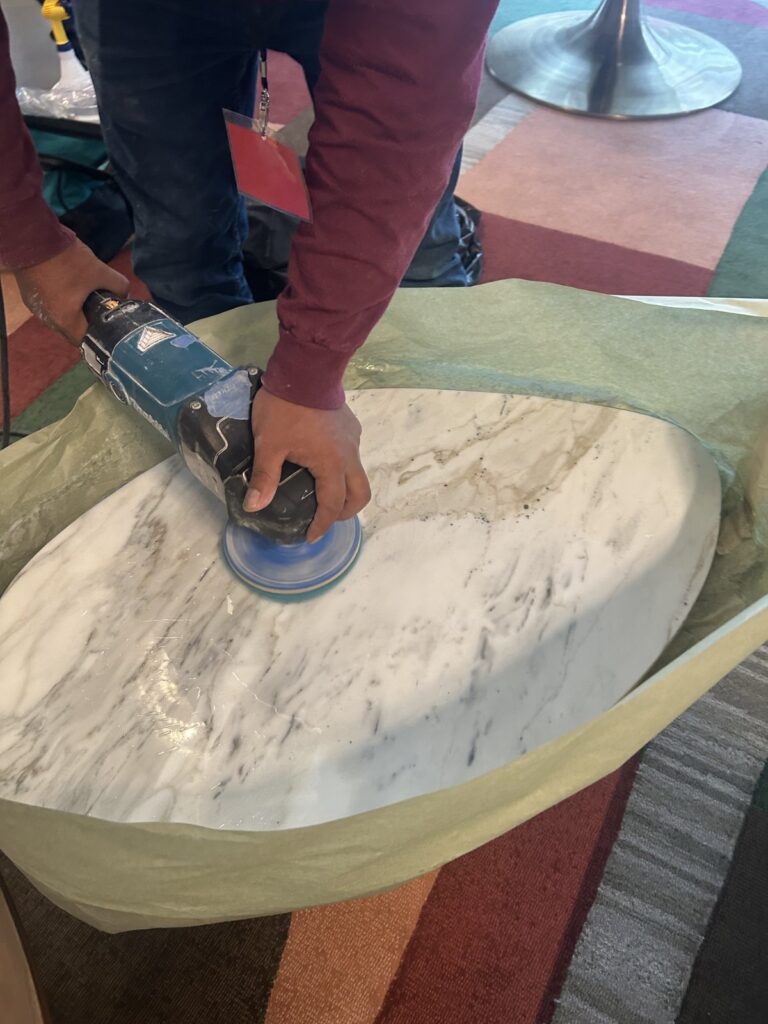
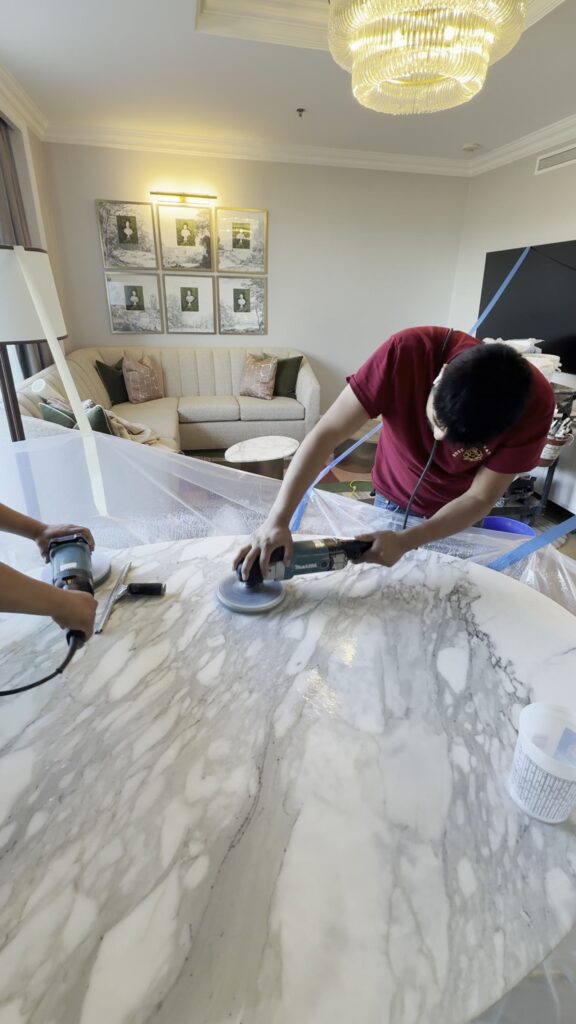
- Surface leveling. Excess filler is sanded flush with progressively finer abrasives.
- Polish matching. The repair is polished to match the surrounding finish — high-gloss, honed, or matte — using diamond pads.
- Sealing. The repaired area and surrounding zone are sealed to slow future staining and moisture entry.
Cost: what professional crack repair costs in 2026
- Single hairline crack, simple repair: $250–$600 minimum visit charge.
- Single surface crack on countertop (visible, cosmetic): $400–$1,200.
- Multiple cracks on the same piece: $600–$2,000.
- Through-crack on a kitchen island: $800–$2,500 depending on size and reinforcement requirements.
- Crack repair plus structural reinforcement (rodding, bracketing under a slab): $1,500–$4,000.
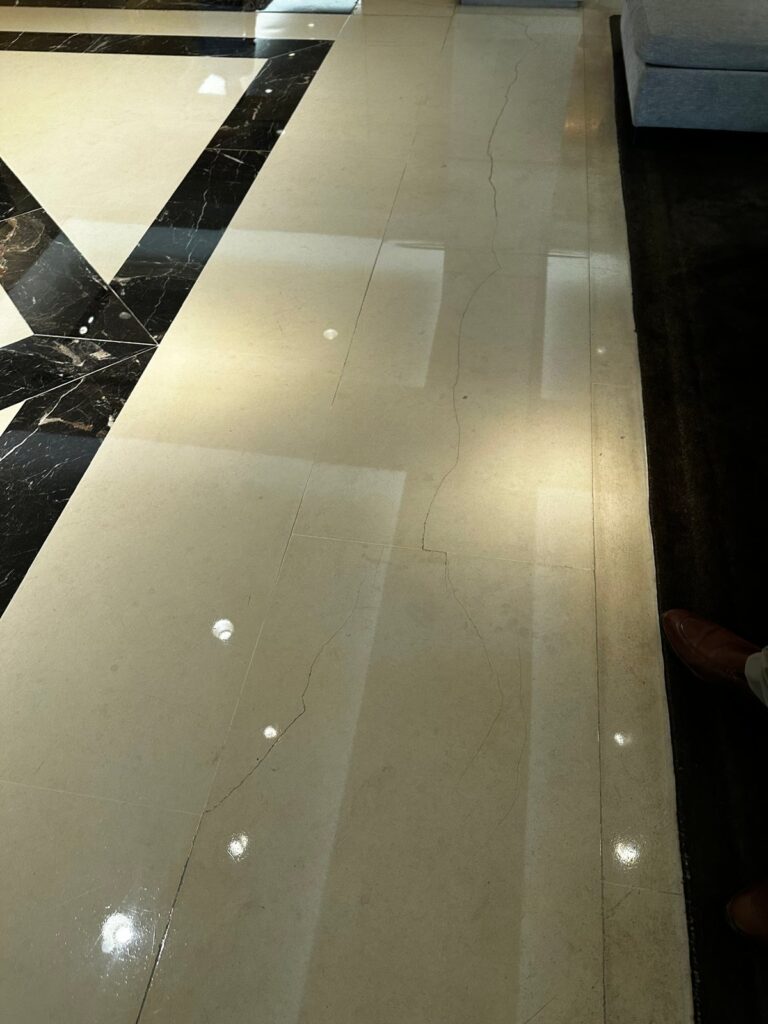
- Marble floor crack repair (per crack): $300–$900 plus restoration of surrounding finish if the polish is degraded.
- Fireplace surround crack repair: $400–$1,500.
- Outdoor and historic marble crack repair: $500–$3,000+ depending on size and access.
Compare to replacement: replacing a kitchen marble countertop runs $5,000–$15,000+ once you include demolition, fabrication, install, and re-tile. Crack repair is typically 5-15% of replacement cost.
Preventing future cracks
- Use trivets — never place hot pans directly on stone, especially near sink cutouts or edges where thermal stress is concentrated.
- Avoid sitting or standing on countertop overhangs.
- Address any visible hairline cracks early. Open cracks accumulate water, debris, and stress; closed cracks remain stable.
- For outdoor marble, apply a moisture-permeable sealer and re-apply every 2-3 years.
- For aged seams, have a professional re-evaluate the original color-matched epoxy every 5-10 years; failing seam material can lead to slab edges chipping.
- Address underlying causes: cabinet stability, dishwasher mounting, range support — anything that introduces vibration or settlement to the slab.
Where Rose Restoration repairs marble cracks
We perform marble crack repair across DC, Maryland, and Virginia, including Washington DC marble restoration, Arlington, Alexandria, Bethesda, McLean, Potomac, Chevy Chase, Vienna, Tysons, Loudoun County, Fairfax County, Montgomery County, and the broader Mid-Atlantic. Most residential crack repair projects complete in a single visit.
Watch the work
Short videos from real Rose jobs. Tap to play.
Before and after
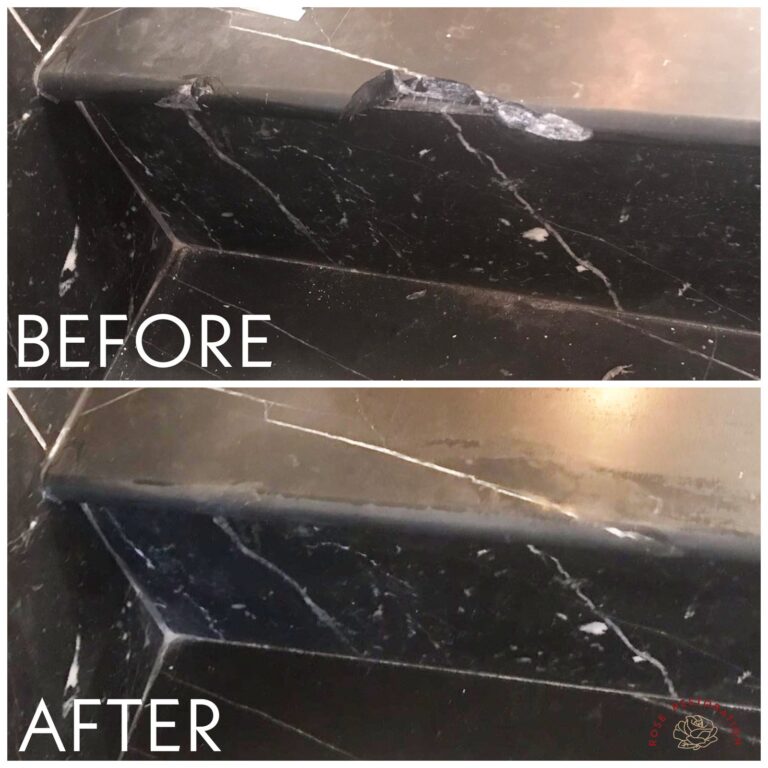
The same surface on the same Rose job, photographed by our crew before and after the work.
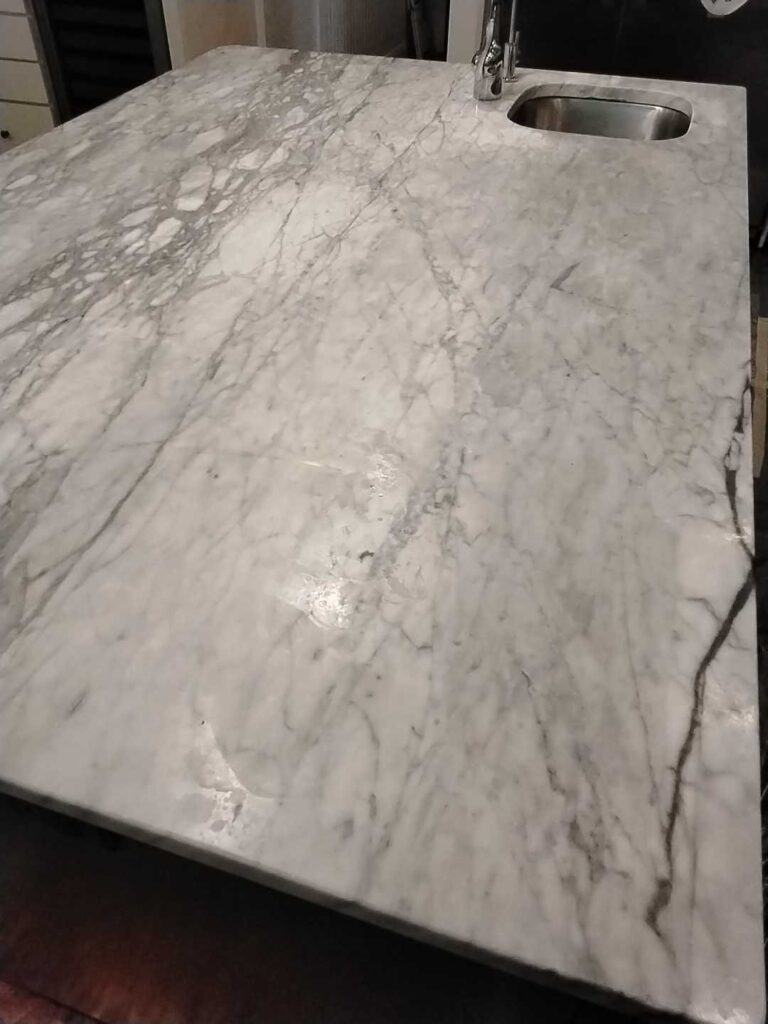 Before
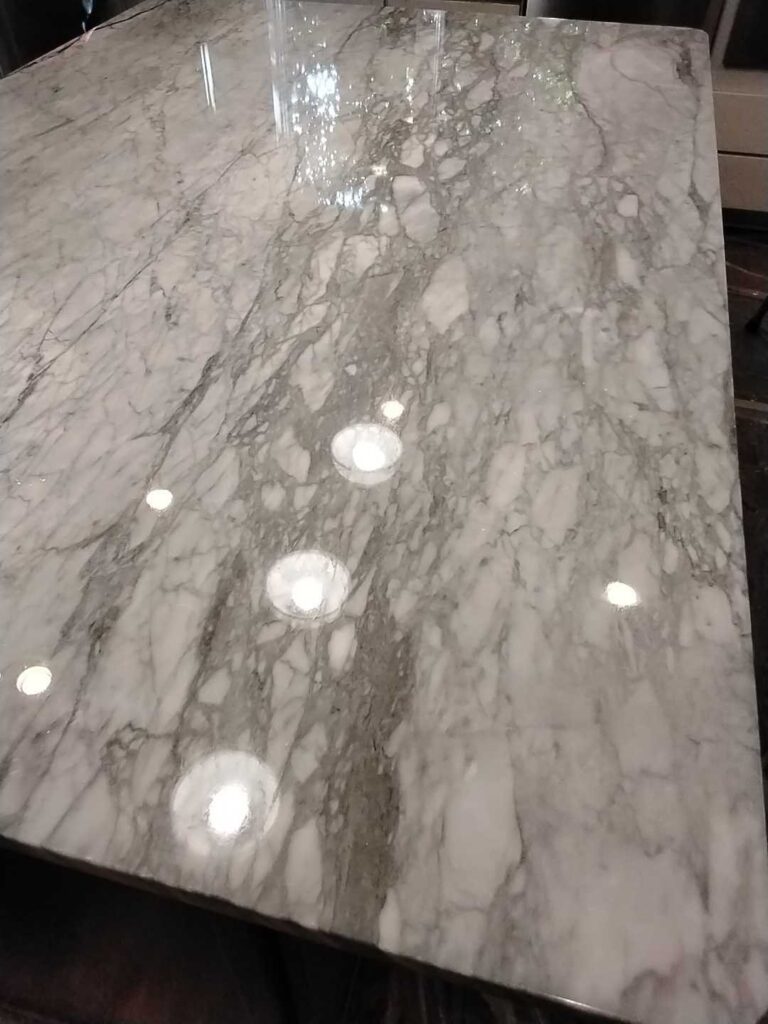 After
AfterProject photos
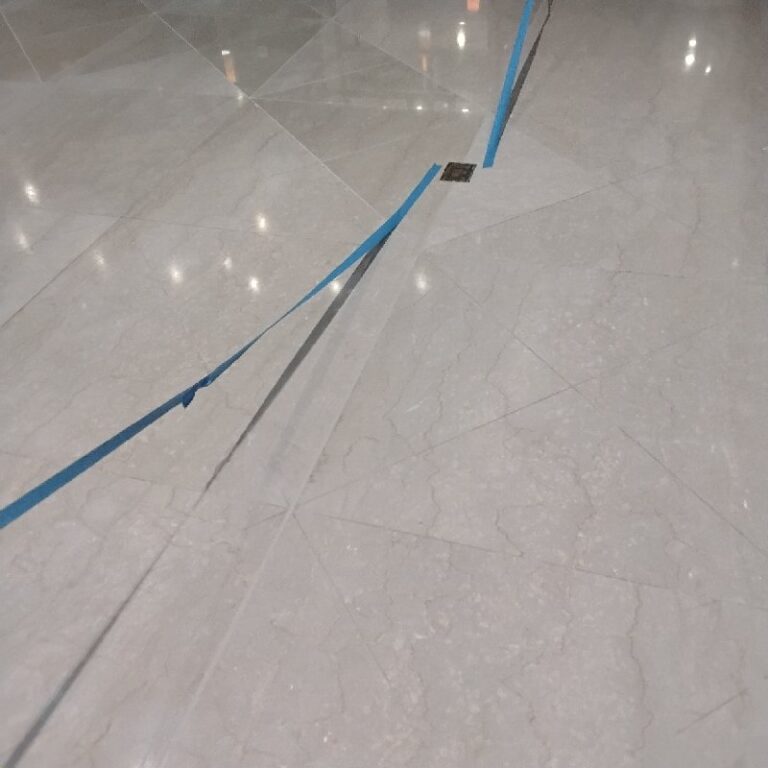
Real Rose Restoration jobs, photographed by our crews.
Frequently asked questions
How long does marble crack repair take?
Most single-crack residential repairs are completed in 3 to 5 hours. Multi-crack and structural-reinforcement repairs may span a half day to a full day.
Will the repaired crack be visible?
For monochromatic and lightly veined marbles, properly executed repairs are virtually invisible at normal viewing distance. For complex multi-colored marbles, the repair blends very well but may be visible on close inspection. Rose can prepare a small mock-up before committing to the visible portion of the fill.
Can a marble countertop with a long crack be saved?
Almost always yes. Even cracks that span the full width of an island can be stabilized and repaired. The cosmetic result depends on marble type and crack location.
How long do crack repairs last?
Properly executed crack repairs using structural epoxy last indefinitely under normal use. Rose warranties workmanship for 12 months and the structural integrity of the fill for 5 years on residential projects.
Can you fix a crack that someone already tried to fix with super glue?
Yes. We remove the previous failed repair using compatible solvents, prepare the original crack, and execute proper structural and cosmetic repair. Failed prior repairs add modestly to the project cost.
What about cracks in marble shower walls or floors?
Yes. Bathroom marble crack repair uses water-resistant epoxy formulations rated for continuous moisture exposure and follows the same general process.
Are hairline cracks worth fixing if they are not visibly bothering me?
Yes — small cracks expand. Once water and debris enter, the crack widens through freeze-thaw and dirt-wedging. Stabilizing a hairline now costs a fraction of a full crack repair later.
Can a cracked outdoor stone (patio, step, statue) be repaired?
Yes. Outdoor marble crack repair uses UV-stable, weather-rated epoxy formulations and may include consolidation of surrounding stone if the area is at risk of further damage.
Schedule a free assessment
For marble crack repair in DC, Maryland, or Virginia: call 703-327-7676 or request a quote online. Senior technicians respond within 2 business hours. Most residential crack repairs are quoted between $250 and $2,500.
Our Work