
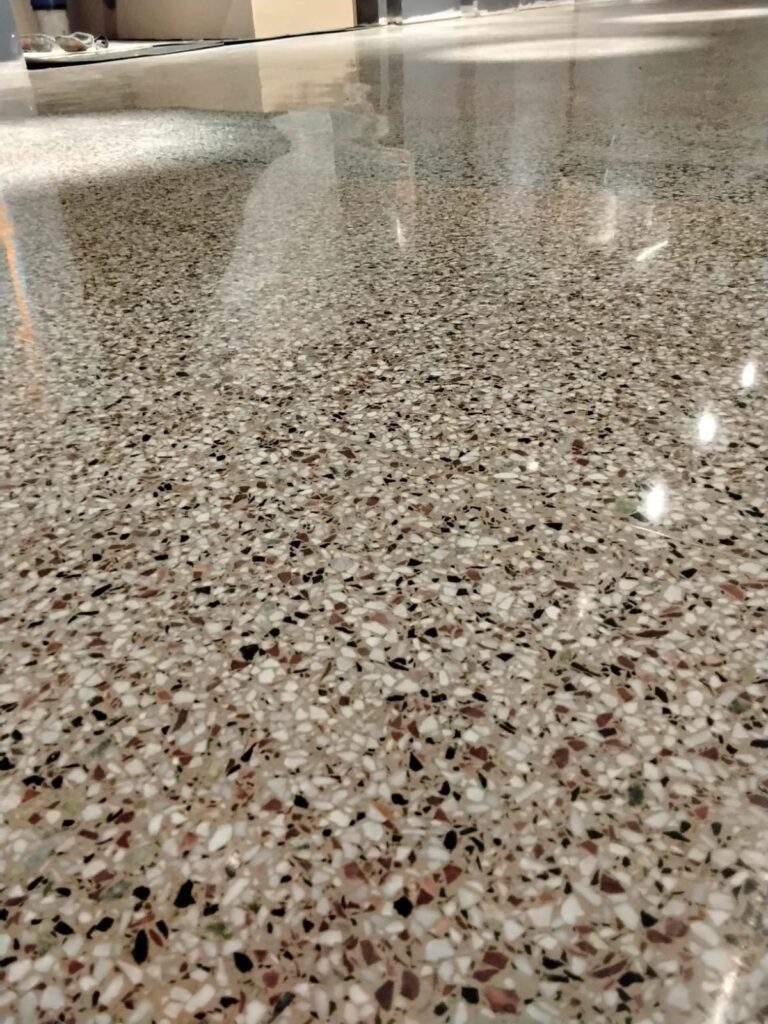
Rose Restoration — a Washington DC terrazzo restoration contractor — explains professional terrazzo cleaning, polishing, crack repair, and long-term protection for historic cementitious and modern epoxy terrazzo floors in DC, Maryland, and Virginia.
- Deep clean and strip. Strip old wax/coatings with stripper, then deep-clean with pH-neutral chemistry. Acidic cleaners damage cementitious terrazzo permanently.
- Crack and chip repair. Fill cracks with color-matched epoxy resin. Replace missing aggregate chips with custom-sourced matches. Color-match is critical for invisibility after polishing.
- Diamond grind to flatten. Grind through coarse diamond grits (50–120) to flatten the surface, expose fresh aggregate, and remove damaged top layer.
- Hone and polish. Progress through 200, 400, 800, 1500, 3000 grit to build the final reflective finish. Higher grit = higher gloss.
- Densify and seal. Apply lithium silicate densifier (chemical hardener) followed by impregnating sealer. Densifier permanently strengthens; sealer repels stains.
| Terrazzo restoration scope | Cost (DC metro) |
|---|---|
| Straight polish (well-maintained terrazzo) | $6–$9/sq ft |
| Standard restoration (cleaning + polish + seal) | $8–$12/sq ft |
| Full restoration (crack repair + grinding + polish) | $10–$15/sq ft |
| Historic landmark terrazzo with extensive matching | $12–$20+/sq ft |
 By Tom Kuhn, CEO, Rose Restoration
Rose Restoration has restored marble, terrazzo, concrete, and natural stone across DC, MD, and VA since 1978.
Updated April 2026 — The Complete Terrazzo Restoration Guide
This is Rose Restoration’s full guide to terrazzo floor cleaning, restoration, polishing, and crack repair. We’ve maintained, restored, and rebuilt terrazzo floors across DC, Maryland, and Virginia for over 48 years — including for federal buildings, historic homes, schools, and commercial lobbies.
Looking for something specific? Jump to: Buffing terrazzo floors · Historic terrazzo restoration · Terrazzo restoration cost (2026) · Terrazzo pros & cons · Terrazzo services.
Terrazzo is one of the most durable flooring materials ever created — a composite of marble, granite, glass, or other decorative chips set in a cementitious or epoxy matrix, then ground and polished to a smooth, luminous finish. It’s been used in public buildings, homes, and commercial spaces for centuries. But even the toughest floor needs care, and terrazzo that hasn’t been properly maintained will lose its luster, develop stains, and show its age.
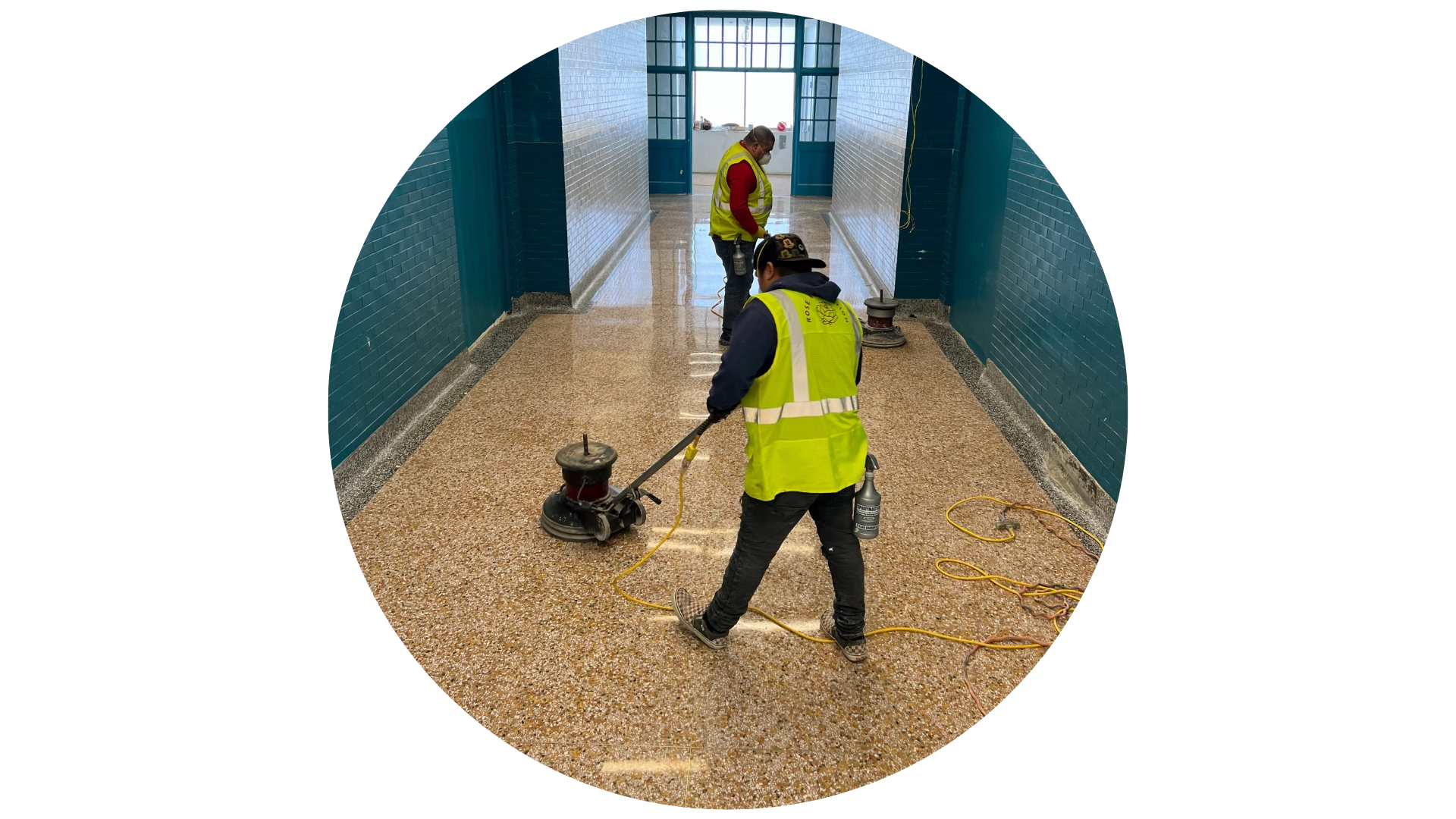

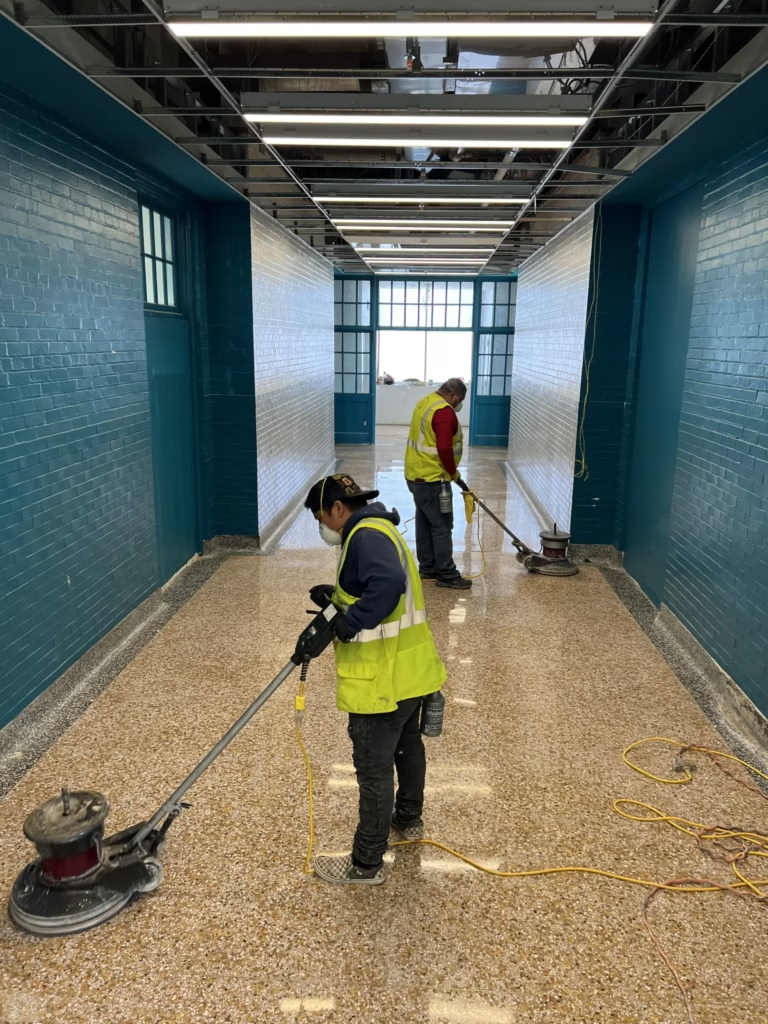

At Rose Restoration International, we’ve been cleaning, restoring, and polishing terrazzo floors across Northern Virginia, Maryland, and Washington DC since 1978. This guide walks you through everything you need to know about terrazzo restoration — from recognizing when your floor needs professional attention to understanding the process, costs, and ongoing maintenance that keeps terrazzo looking its best for decades.
What Is Terrazzo?
For a project-specific number rather than ranges, our terrazzo restoration service page covers pricing for commercial floors and how we quote them.
Terrazzo originated in 15th-century Venice, where workers discovered they could create beautiful, seamless floors by embedding marble chips in clay and grinding the surface smooth. The technique was both practical (using leftover stone) and stunning — and it hasn’t changed much in principle since then.
Modern terrazzo comes in two main types:
- Cementitious (traditional) terrazzo — Marble, granite, or other stone chips are set in a Portland cement matrix, poured over a concrete substrate, then ground and polished. This is the type found in most mid-century homes, schools, hospitals, government buildings, and airports.
- Epoxy (thin-set) terrazzo — Decorative chips (marble, glass, recycled materials) are set in a resin-based epoxy matrix. Epoxy terrazzo is thinner, lighter, and available in a wider range of colors. It’s the standard for new commercial installations and renovation projects.
Both types feature divider strips — thin metal (brass, zinc, or aluminum) or plastic strips that separate sections of the floor. These strips serve as expansion joints, design elements, and pour boundaries. They’re also one of the areas most prone to damage over time.
Regardless of type, terrazzo is prized for its longevity, seamless appearance, and low lifecycle cost. A properly maintained terrazzo floor can last 75 years or more — far outlasting carpet, vinyl, or even hardwood.
Signs Your Terrazzo Needs Restoration
Terrazzo is forgiving, but it’s not indestructible. Over time, foot traffic, improper cleaning, moisture, and settling can take their toll. Here are the most common signs that your terrazzo floor needs professional restoration:
Dullness and Loss of Shine
The most common complaint. Foot traffic gradually wears away the polished surface, and the floor loses its reflective sheen. Years of wax buildup can also trap dirt and create a hazy, yellowed appearance that no amount of mopping will fix.
Scratches and Wear Patterns
High-traffic areas — entryways, hallways, in front of service counters — develop visible wear paths. Light scratches scatter light and make the floor look cloudy. Deeper scratches from furniture legs, rolling carts, or grit tracked in from outside can penetrate the polish and reach the aggregate.
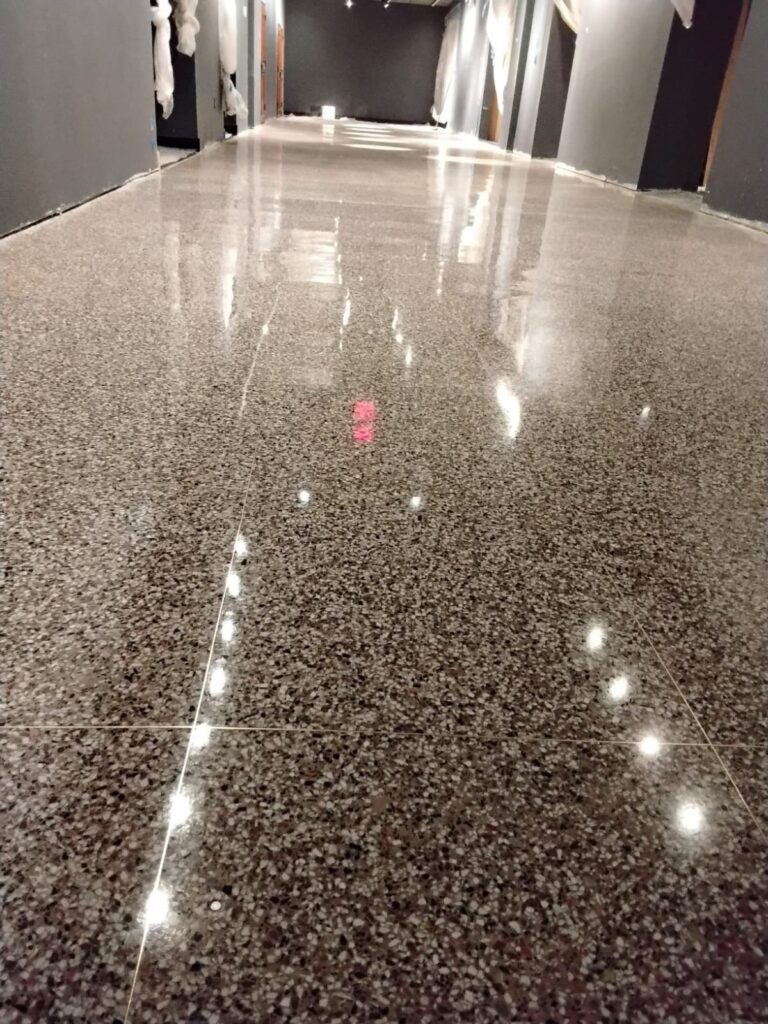
Cracks and Chips
Cracks in terrazzo are usually caused by movement in the substrate beneath — settling, structural shifts, or thermal expansion. Chips can result from heavy impacts (dropped equipment, rolling heavy loads). Both cracks and chips allow moisture to penetrate, which can lead to further deterioration if left unrepaired.
Stains and Discoloration
Cementitious terrazzo is porous enough that acidic liquids (coffee, juice, wine, cleaning chemicals) can etch the surface and leave permanent marks. Rust stains from metal furniture legs, planters, or old divider strips are also common. Epoxy terrazzo is more stain-resistant but not immune.
Divider Strip Damage
Brass and zinc divider strips can loosen, bend, corrode, or separate from the surrounding terrazzo over time. Damaged strips create trip hazards and allow dirt and moisture to collect in the gaps. Replacing or resetting divider strips is a skilled repair that should be part of any comprehensive restoration.
The Terrazzo Restoration Process
This is the same process our crews run on commercial and institutional floors; see the full professional terrazzo restoration service for scope, photos, and scheduling.
Professional terrazzo restoration is a multi-step process that brings a worn, damaged floor back to like-new condition. Here’s what’s involved when Rose Restoration takes on a terrazzo restoration project:
1. Inspection and Assessment
Every project starts with a thorough evaluation of the floor’s condition — the type of terrazzo (cementitious or epoxy), the extent of damage, moisture issues, existing coatings or wax layers, and the desired final result. This assessment determines the scope of work and the right approach for each floor.
2. Deep Cleaning and Stripping
Before any mechanical work begins, the floor is deep cleaned to remove surface dirt, grime, and any existing wax or acrylic coatings. Old wax buildup is stripped using specialized stripping agents and floor machines. This step reveals the true condition of the terrazzo underneath.
3. Crack and Chip Repair
Cracks are routed (widened slightly with a diamond blade), cleaned, and filled with a color-matched epoxy or cement fill. Chips and spalls are rebuilt with matching terrazzo material — aggregate chips in a tinted matrix — so the repair blends seamlessly with the surrounding floor. For structural cracks, flexible fillers are used to accommodate ongoing movement.
4. Divider Strip Repair and Replacement
Loose or damaged divider strips are reset, soldered, or replaced entirely. New strips are matched to the original material (brass, zinc, aluminum) and installed flush with the surrounding terrazzo. This step is critical both for appearance and for preventing future cracking along the strip lines.
5. Grinding
Using heavy planetary grinders fitted with diamond tooling, the floor is ground to remove the damaged surface layer. Grinding starts with coarser grits (30 to 80) to level the floor, remove scratches, and expose fresh aggregate. Successive passes with finer grits (100, 200, 400) begin smoothing the surface.
6. Honing and Polishing
After grinding, the floor is honed with progressively finer diamond pads (800, 1500, 3000) to achieve a smooth, reflective surface. For terrazzo polishing, the final grit level determines the sheen — from a soft satin hone to a high-gloss mirror finish. A densifier or crystallizer may be applied between passes to harden the surface and enhance the polish.
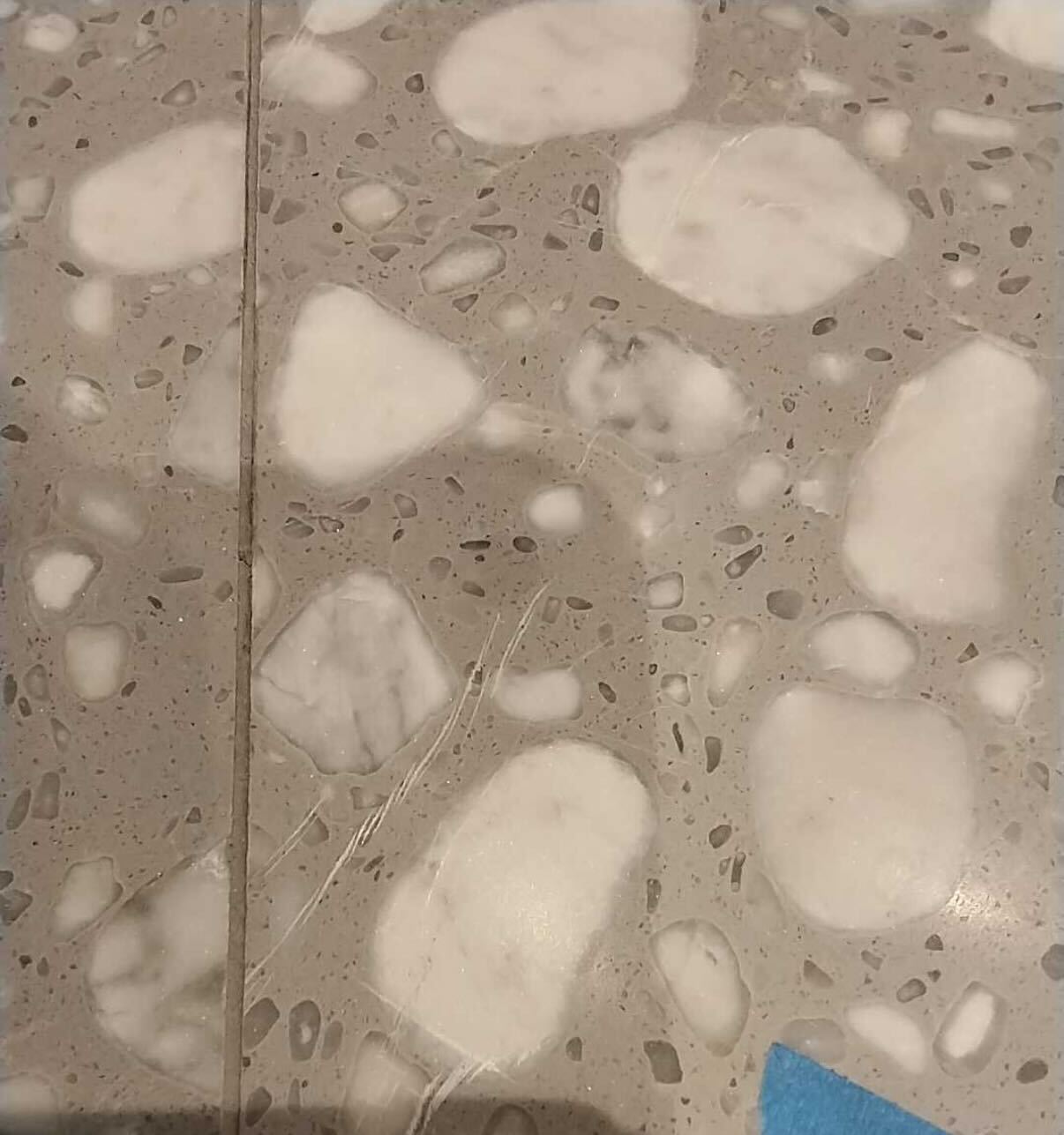
7. Sealing and Protection
The finished floor is sealed with a penetrating sealer or topical guard that protects against stains and makes ongoing maintenance easier. For cementitious terrazzo, sealing is especially important because the cement matrix is naturally porous. The type of sealer is selected based on the terrazzo type, the environment (residential vs. commercial), and the client’s maintenance preferences.
Terrazzo Maintenance Between Restorations
Proper day-to-day care dramatically extends the life of a terrazzo floor and pushes the next full restoration further into the future. Here’s what we recommend:
Daily and Weekly Care
- Dust mop daily — Use a microfiber dust mop to remove grit and debris. Sand and dirt act like sandpaper under foot traffic, gradually dulling the polish.
- Damp mop weekly — Use a neutral pH cleaner (pH 7–10) and clean water. Wring the mop thoroughly — excess water can seep into cracks and cause issues in cementitious terrazzo.
- Clean spills promptly — Acidic liquids (coffee, juice, vinegar, wine) can etch cementitious terrazzo if left sitting. Wipe them up immediately.
- Use walk-off mats — Place quality entrance mats at all exterior doors to capture grit, sand, and moisture before they reach the terrazzo.
What to Avoid
- Acidic cleaners — Vinegar, citrus-based cleaners, and any product with a pH below 7 will etch cementitious terrazzo.
- Harsh abrasives — Scouring powders and stiff-bristle brushes scratch the polished surface.
- Black rubber-backed mats — These can stain light-colored terrazzo permanently. Use mats with non-staining backings.
- Wax and acrylic floor finishes — While traditional, wax builds up over time, yellows, and traps dirt. Modern terrazzo maintenance has moved away from wax toward polishing and sealing systems that don’t require stripping.
When to Call a Professional
If your terrazzo has lost its shine despite regular cleaning, or if you notice cracks, chips, loose divider strips, or persistent stains, it’s time for professional attention. Rose Restoration offers both full restorations and periodic maintenance polishing programs for commercial and residential clients throughout the DC metro area.
Schedule Your Terrazzo Restoration
Ready to restore your terrazzo floors? Rose Restoration provides free on-site assessments with detailed written proposals. We serve the entire Washington DC metro area.
Terrazzo Restoration Cost
Terrazzo restoration costs vary widely based on the condition of the floor, the scope of work, and the size of the area. Here are general ranges for professional terrazzo restoration in the Virginia, Maryland, and DC market:
- Light restoration (cleaning, honing, sealing — floor in fair condition): $4–$6 per square foot
- Moderate restoration (stripping, grinding, crack repair, polishing, sealing): $6–$10 per square foot
- Heavy restoration (extensive grinding, major crack/chip repair, divider strip replacement, full polishing): $10–$15 per square foot
Factors that influence cost include the type of terrazzo (epoxy terrazzo is generally easier to restore than cementitious), the amount of repair work needed, accessibility of the space, and whether the project requires off-hours or phased scheduling to keep a building operational.
While the upfront cost of restoration may seem significant, it’s almost always far less expensive than removing and replacing terrazzo — a process that typically costs $15 to $30 per square foot or more and generates enormous waste. Restoring rather than replacing is both the economical and environmentally responsible choice.
Commercial vs. Residential Terrazzo
Most of our terrazzo work is commercial terrazzo restoration in museums, universities, and federal buildings across DC, Maryland, and Virginia.
While the restoration process is fundamentally the same, commercial and residential terrazzo projects come with different considerations:
Commercial Terrazzo
Hotels, hospitals, airports, schools, office lobbies, and retail spaces often have large expanses of terrazzo that see thousands of footsteps daily. Commercial terrazzo restoration typically involves:
- Working around business operations (nights, weekends, phased sections)
- Coordinating with facility managers and general contractors
- Addressing ADA compliance for slip resistance
- Managing dust and noise in occupied buildings
- Setting up ongoing maintenance polishing programs to extend the restoration’s lifespan
Rose Restoration has extensive experience in commercial restoration and hospitality projects, including terrazzo work in hotels, government buildings, and high-traffic retail environments throughout the DC metro area.
Terrazzo Restoration Across the DC Metro
We restore terrazzo floors in schools, government buildings, hospitals, and homes throughout Northern Virginia, Washington DC, and Maryland. From the federal buildings along the National Mall to mid-century apartment lobbies in Silver Spring and Arlington, our team has restored thousands of terrazzo floors across the region. DC terrazzo services →
Residential Terrazzo
Many mid-century homes in the DC region feature original terrazzo floors — often hidden under carpet, tile, or vinyl that was installed decades later. Residential terrazzo restoration is typically smaller in scope but requires the same level of craftsmanship. Key considerations include:
- Careful removal of existing flooring to avoid damaging the terrazzo underneath
- Matching repair materials to the original aggregate and color palette
- Minimizing disruption to the household
- Selecting finishes and sealers appropriate for a home environment
- Educating homeowners on proper ongoing maintenance
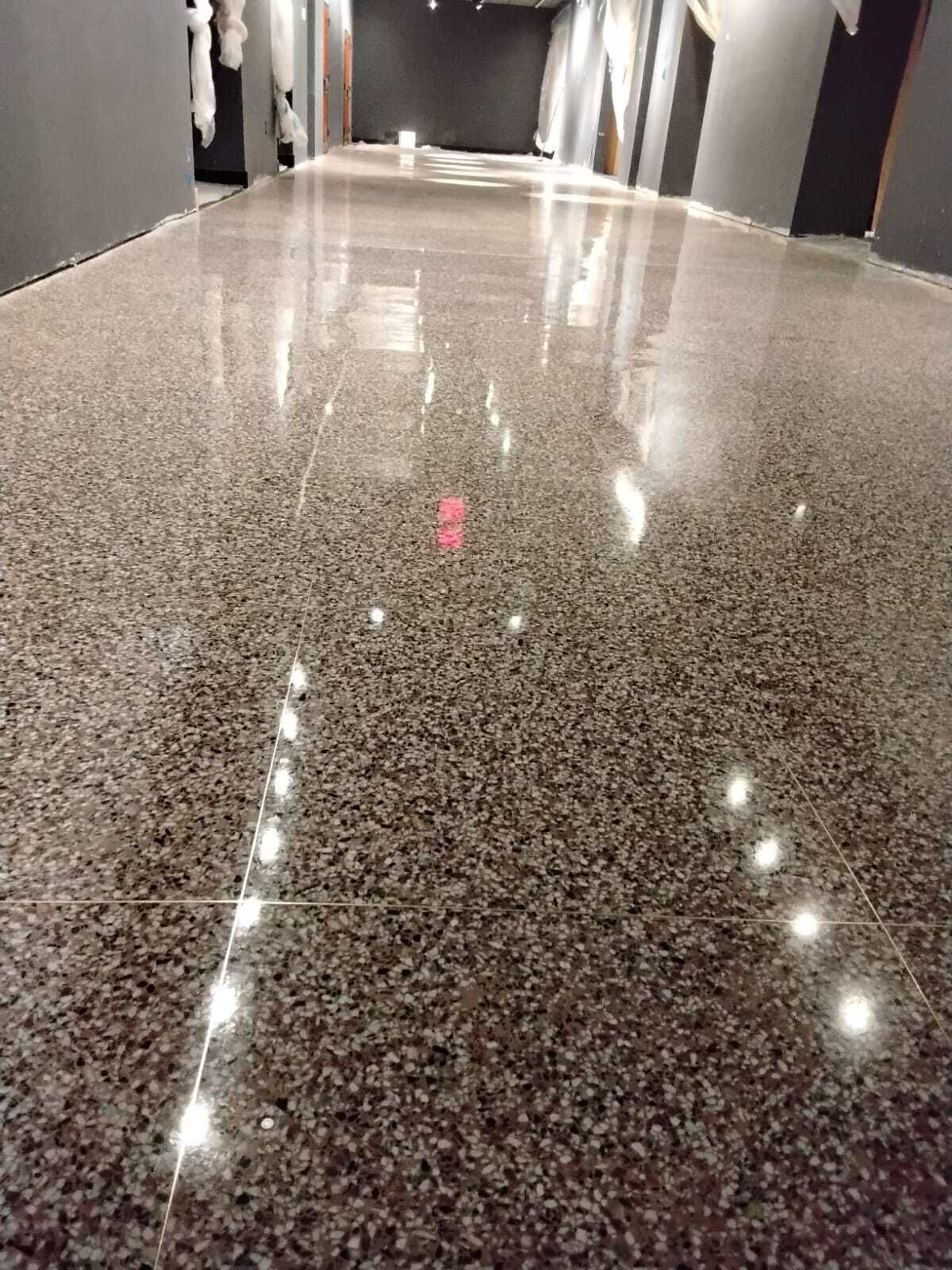
Whether your terrazzo floor is in a 1960s ranch home or a historic commercial building, the restoration process brings it back to a condition that rivals — or exceeds — its original appearance.
Frequently Asked Questions
How long does terrazzo floor restoration take?
A typical residential terrazzo restoration (500–1,000 square feet) takes 3 to 5 days, including grinding, repair, polishing, and sealing. Larger commercial projects can take 1 to 3 weeks depending on the floor’s condition and scheduling constraints. Cure time for sealers is usually 24 hours before light foot traffic is allowed.
Can you restore terrazzo that’s been covered by carpet or tile?
Yes — and this is one of the most rewarding types of restoration. Terrazzo floors hidden under carpet or tile for decades are often in surprisingly good condition. The covering material is carefully removed, adhesive residue is ground away, and the terrazzo is restored through the standard grinding, honing, polishing, and sealing process. Some repairs to cracks, chips, or tack strip holes are usually needed, but the result is a beautiful floor that was there all along.
Is terrazzo restoration dusty and disruptive?
Modern terrazzo grinding and polishing is done wet or with dust-extraction equipment that captures the vast majority of airborne particles. While the process does generate some noise and requires the work area to be cleared, it’s far less disruptive than a full floor replacement. In commercial settings, we routinely phase our work to keep portions of the building operational throughout the project.
Should I wax my terrazzo floor after restoration?
We generally recommend against it. Traditional wax finishes build up over time, yellow, attract dirt, and require periodic stripping — which is harsh on the floor. Modern terrazzo polishing combined with a quality penetrating sealer gives you a durable, high-gloss finish that’s maintained with simple dust mopping and damp mopping. No wax needed.
How often should terrazzo floors be professionally restored?
A full restoration (grinding and repolishing) is typically needed every 10 to 20 years, depending on traffic levels and maintenance. Light maintenance polishing — a less aggressive process that refreshes the surface gloss without heavy grinding — can be done every 2 to 5 years to extend the life of a full restoration. Commercial floors with heavy foot traffic will need attention more frequently than residential floors.
Restore Your Terrazzo Floor Today
Rose Restoration International has been restoring terrazzo, marble, stone, and concrete floors throughout Virginia, Maryland, and Washington DC since 1978. With a team of 35+ in-house technicians and decades of experience on projects ranging from private homes to landmark commercial buildings, we have the expertise to bring your terrazzo floor back to life.
Learn more about our terrazzo restoration services and terrazzo polishing services, or call us today at 703-327-7676 for a free on-site consultation and estimate.
Looking for something else?
Rose Restoration — local service areas
Need professional terrazzo work? Rose Restoration restores and polishes terrazzo across the DC region: Terrazzo restoration in Washington, DC · McLean, VA · Bethesda, MD · commercial floor restoration.
Get a Free Assessment from Rose Restoration
Tell us about your marble, stone, terrazzo, or concrete and our senior technicians will recommend the right restoration approach. Family-run and trusted across Washington DC, Maryland, and Virginia since 1978.
Call (703) 327-7676 · Email info@roserestoration.com · schedule a time · or send us photos.
Restore. Don't replace.
48 years of polishing marble, terrazzo, concrete, and tile across Washington DC, Northern Virginia, and Maryland. IMF, Four Seasons, Smithsonian, and the Virginia State Capitol trust us — you can too.