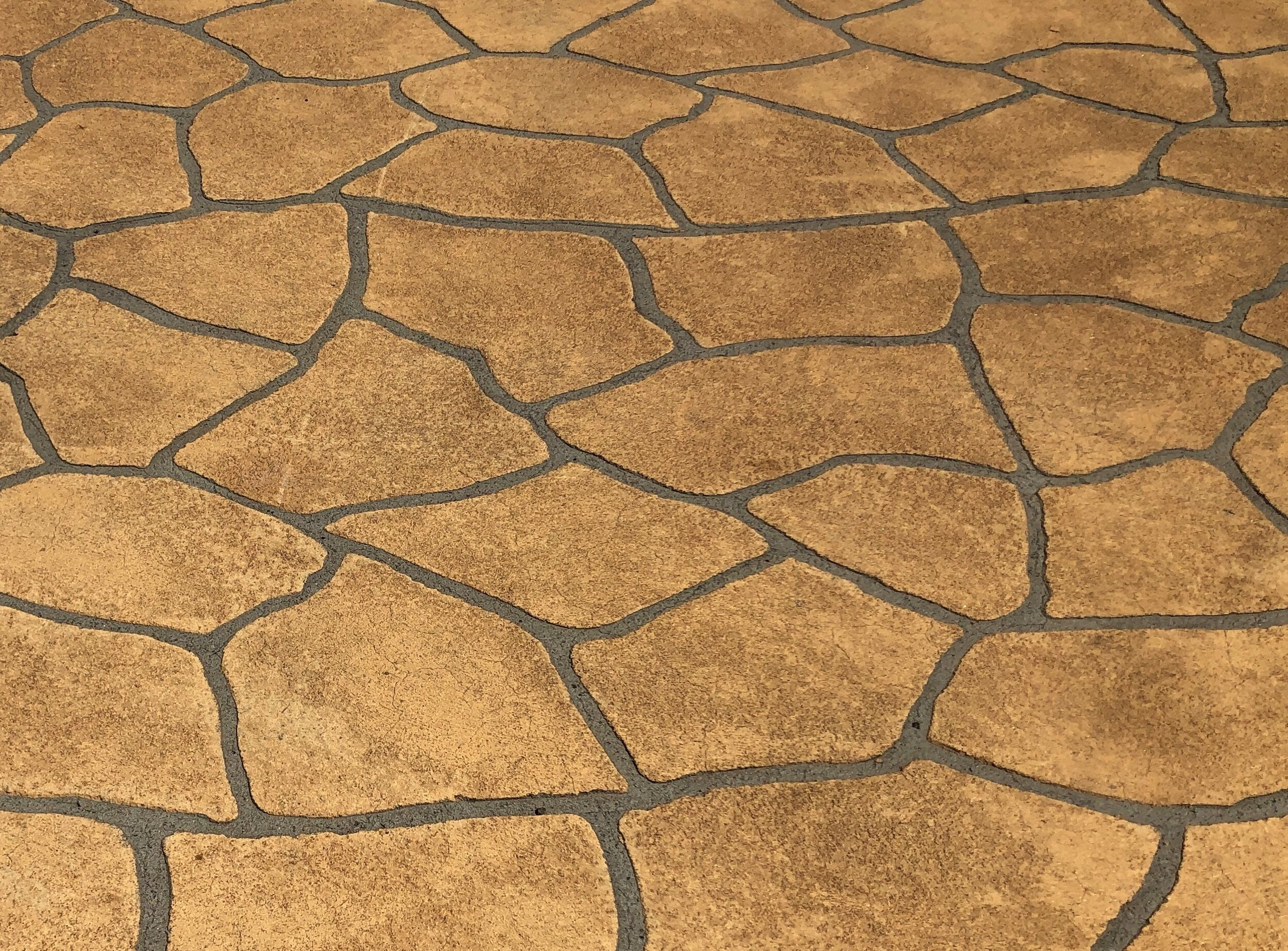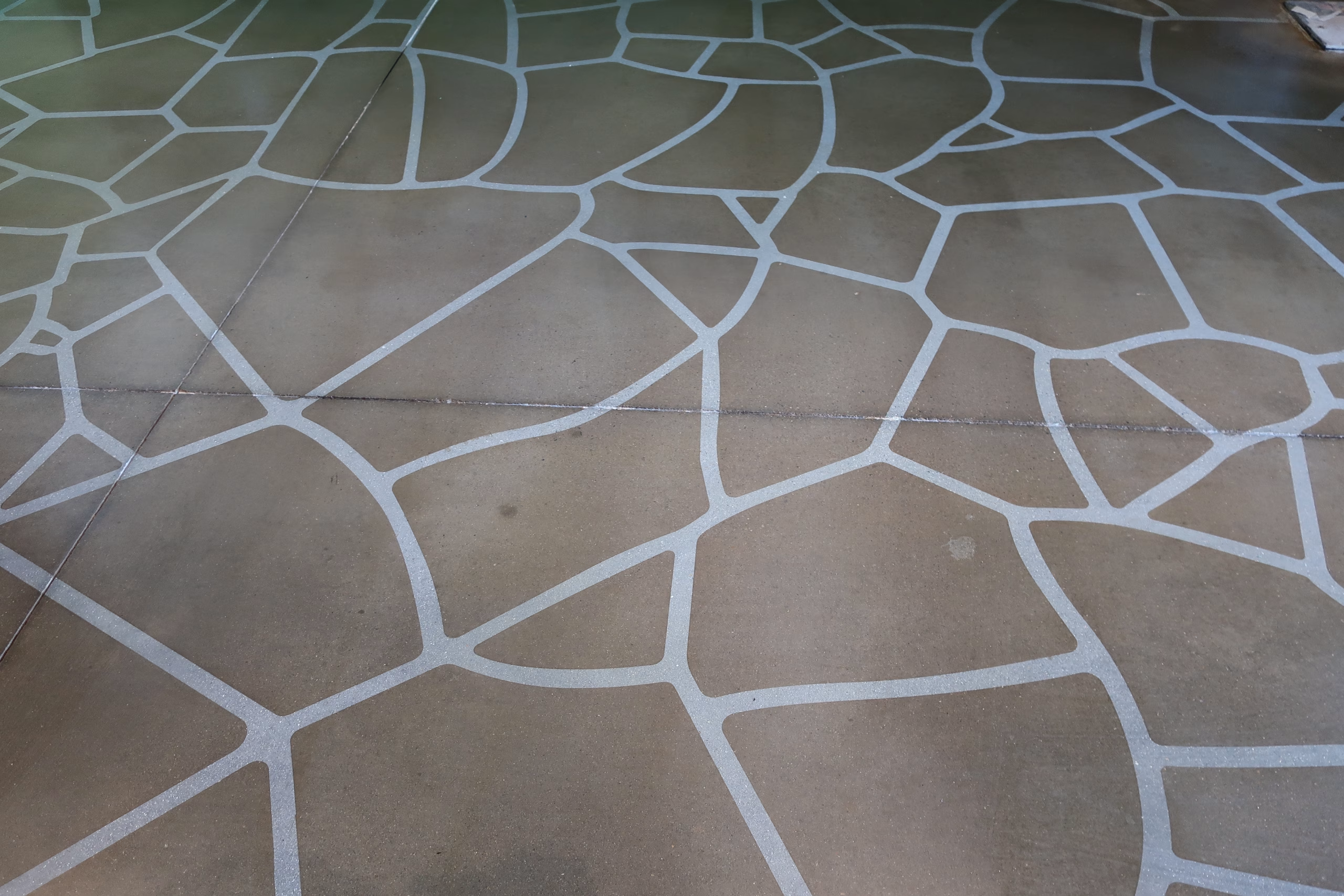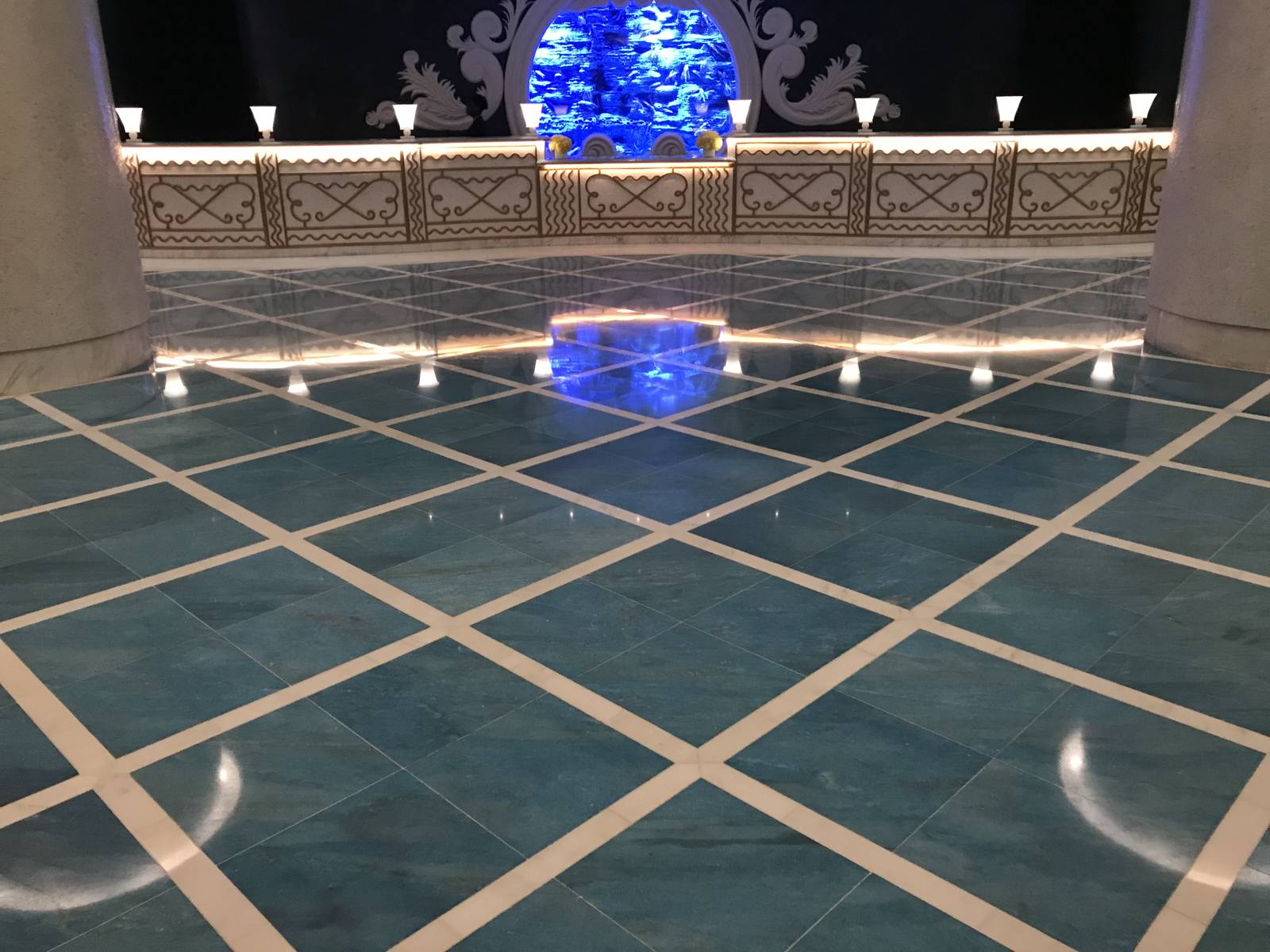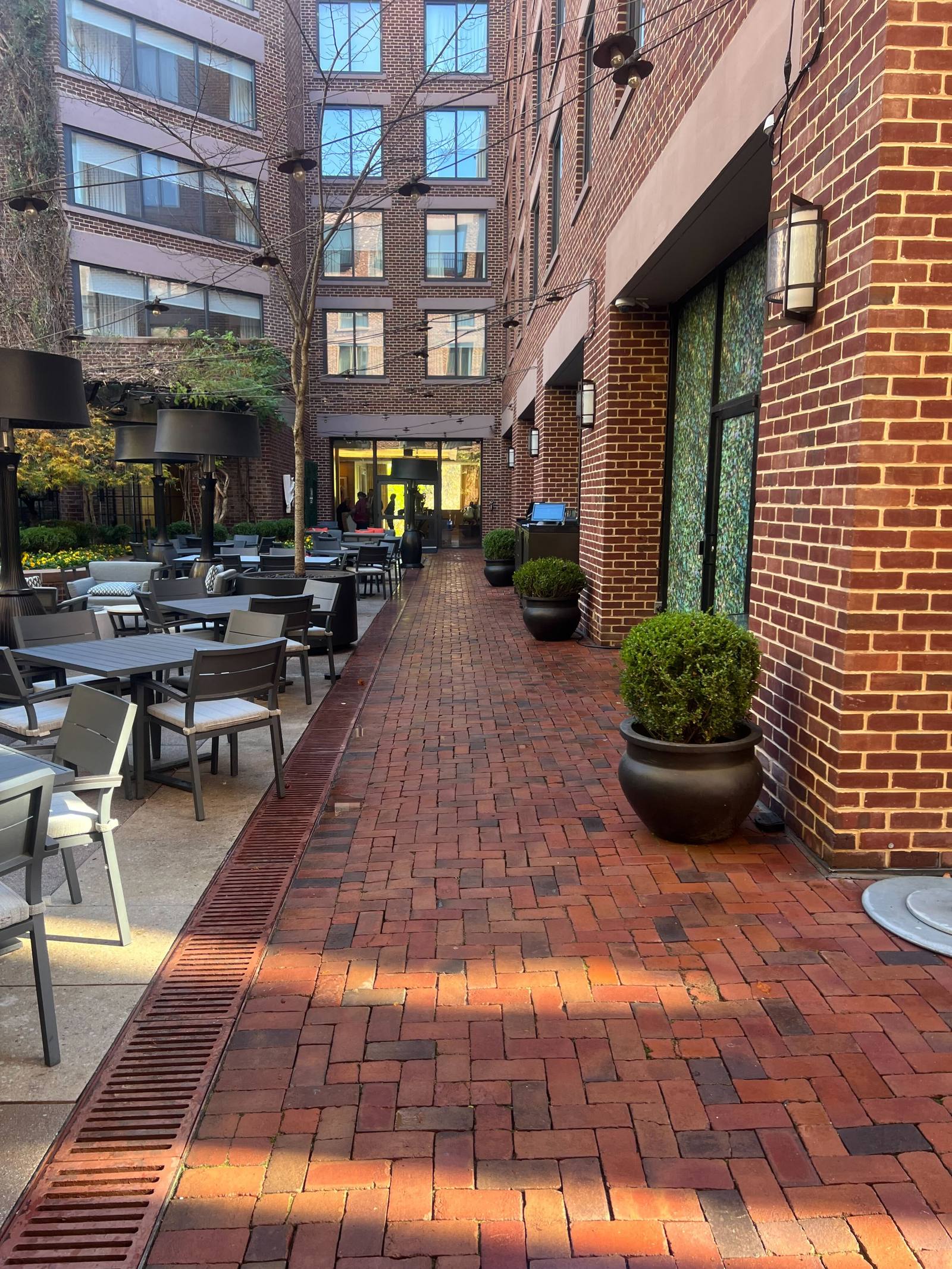
Pool decks and outdoor patios in DC, Maryland, and Northern Virginia take heavy weather punishment — freeze-thaw cycles, chlorine exposure, salt residue, organic staining from leaves and tannins, and the slow-motion mineral migration that produces efflorescence. Rose Restoration restores slate, flagstone, bluestone, travertine, limestone, and concrete pool decks and patios across the DC metro area, with a particular focus on McLean, Great Falls, Potomac, Bethesda, and Northern Virginia estate properties.
What Is Efflorescence and Why Does It Show Up on Pool Decks?
Efflorescence is the white, chalky residue that appears on the surface of stone and concrete pool decks. It’s caused by water moving through the substrate, dissolving mineral salts (typically calcium and sodium compounds in the setting bed or substrate), then evaporating at the surface and depositing those minerals as a white film. Pool decks are particularly prone to it because the substrate is constantly being wetted and dried, and pool water itself has dissolved minerals that contribute to the deposit.
Efflorescence isn’t just cosmetic — long-standing efflorescence indicates moisture migration that can also lead to spalling, joint degradation, and stone failure if left untreated.
What Pool Deck Stone We Restore
- Slate — color-enhancing cleaning, efflorescence removal, sealing
- Flagstone — pressure-controlled cleaning, joint restoration, color enhancement
- Bluestone — efflorescence removal, deep cleaning, sealing
- Travertine — hole repair, honing, polishing where applicable, sealing
- Limestone — cleaning, hole filling, sealing
- Stamped or stained concrete — re-staining, joint repair, sealing
- Brick or pavers — joint sand replacement, cleaning, sealing
The Rose Pool Deck Restoration Process
- Step 1 — Assessment. We identify the stone type, the source of the problem (efflorescence vs. organic staining vs. mineral deposit vs. surface wear), and any underlying issues (joint failure, drainage problems).
- Step 2 — Strip prior sealers. If a previous sealer has failed or yellowed, it gets stripped off before any cleaning. Cleaning over a failed sealer just locks the stains in place.
- Step 3 — Efflorescence removal. We use stone-specific efflorescence removers (acidic on calcium-tolerant stones, neutral on calcium-sensitive stones like limestone) to dissolve the surface deposit.
- Step 4 — Deep clean. Pressure-controlled cleaning (low PSI to avoid stone damage) with appropriate cleaners for organic vs. mineral staining.
- Step 5 — Joint repair. Cracked or missing joint sand and mortar gets repaired before sealing — sealing over a failed joint just preserves the failure.
- Step 6 — Color enhance and seal. Where appropriate, we apply a color-enhancing sealer that brings out the natural color of slate, flagstone, or bluestone. Sealer options include penetrating (invisible) and topical (gloss).
- Step 7 — Walkthrough and care instructions. We brief the homeowner on what to expect for the next 7 days (cure window) and what cleaners are safe going forward.
Common Problems We Solve
- White efflorescence on slate or flagstone after a rainy season
- Bluestone that’s lost its rich blue-grey color and looks faded grey
- Travertine pool decks with cosmetic holes that have opened up
- Limestone coping that’s chalky and worn around pool edges
- Stamped concrete pool decks where the stain has faded and joint sand has washed out
- Algae or mildew staining in shaded patio areas
- Salt deposit on slate or flagstone from de-icing chemicals tracked from driveways
Frequently Asked Questions
How much does pool deck restoration cost?
Pool deck and patio stone restoration runs $8–$16 per square foot through Rose Restoration. Most residential pool deck and patio projects fall between $2,000 and $6,500 depending on stone type, condition, and square footage. Free on-site assessment included.
Can you remove efflorescence permanently?
We remove the visible efflorescence and apply a sealer that significantly reduces future migration. Whether efflorescence returns depends on the underlying moisture path — if there’s a drainage issue or substrate problem, we’ll identify it and recommend a fix. In most cases, post-restoration efflorescence stays at a manageable level for years.
Will pressure washing damage my stone pool deck?
Aggressive pressure washing absolutely damages stone. Slate spalls, flagstone surfaces erode, travertine fills get blown out, and softer limestones develop pitting. We use pressure-controlled cleaning calibrated to the specific stone — typically 500–1,500 PSI rather than the 3,000+ PSI common in DIY or generic pressure-washing services.
What’s the best sealer for a pool deck?
It depends on the stone and the desired aesthetic. For slate, flagstone, and bluestone, a color-enhancing penetrating sealer typically gives the best result — restores the rich color without making the surface slippery. For travertine and limestone, a neutral penetrating sealer protects without changing the look. Topical glossy sealers should be avoided around pools because they’re slippery when wet.
How long does pool deck restoration last?
Properly restored and sealed stone pool decks typically need re-sealing every 3–5 years and a deeper restoration every 7–10 years. Annual cleaning between restorations extends the lifecycle significantly.
Schedule a free assessment or send photos of your pool deck for a same-day budget range. Phone (703) 327-7676.
Related: Efflorescence explained · How we restore slate, flagstone & bluestone · All residential services · How to clean travertine floors