Mold, Mildew, and Organic Stain Removal for Stone and Masonry
Rose Restoration removes mold, mildew, algae, lichen, and organic staining from natural stone, concrete, brick, and masonry surfaces. We use professional-grade cleaning methods that eliminate biological growth without damaging the underlying material — then seal or treat the surface to slow regrowth.
Professional Mold and Organic Stain Removal for Stone and Masonry
Mold, mildew, algae, lichen, and other organic growths do more than compromise the appearance of stone and masonry surfaces. Left untreated, biological colonization actively deteriorates the material beneath it, etching into porous substrates, widening micro-fractures, and accelerating the weathering cycle. At Rose Restoration, we have spent nearly five decades developing cleaning protocols that eliminate organic staining without damaging the underlying stone — a critical distinction that separates professional restoration from the aggressive DIY methods that often cause more harm than the stains themselves.
Our team of 35+ in-house technicians serves residential, commercial, and government clients throughout Virginia, Maryland, and the District of Columbia. Whether the problem is black mold spreading across a limestone facade, green algae staining a flagstone patio, or lichen slowly pitting the surface of a historic granite monument, we bring the expertise, equipment, and materials to resolve it properly.
Understanding Stain Types on Stone and Masonry
Effective stain removal begins with accurate identification. Not all discoloration on stone is organic, and the wrong treatment for the wrong stain type can set the stain permanently or damage the surface. Our technicians categorize staining into three broad families before selecting a treatment approach.
Biological Stains
Biological stains are caused by living organisms — mold, mildew, algae, lichen, moss, and bacteria. These are the most common stains on exterior stone and masonry surfaces in the Mid-Atlantic region, where humidity, seasonal rainfall, and moderate temperatures create ideal growing conditions. Key characteristics include:
- Mold and mildew: Typically appear as dark black or gray patches, often in shaded areas or where moisture is trapped. Common on north-facing walls, foundation stone, and interior surfaces with poor ventilation.
- Algae: Green or greenish-black films that thrive on surfaces receiving intermittent moisture. Frequently found on patios, walkways, retaining walls, and fountain surrounds.
- Lichen: A symbiotic combination of algae and fungus that forms crusty, tightly adhered patches on stone. Lichen sends root-like structures (rhizines) into the stone surface, making removal more complex than surface cleaning alone.
- Moss: Thrives in persistently damp, shaded areas and can cause significant mechanical damage as root structures penetrate joints and porous stone.
Mineral Stains
Mineral stains are often mistaken for biological growth but require entirely different treatment. These include efflorescence (white salt deposits caused by moisture migrating through masonry), rust staining from embedded iron or adjacent metal fixtures, and copper staining that leaves green or blue-green residue. Applying a biocide to a mineral stain wastes time and money. Applying an acid-based mineral stain remover to biological growth can damage stone without resolving the problem. Proper diagnosis is essential.
Chemical and Environmental Stains
Oil, grease, tannin stains from leaves or mulch, hard water deposits, and atmospheric soiling from vehicle exhaust or industrial pollutants all create discoloration on stone surfaces. These stains may appear similar to biological growth at first glance but require poultice treatments, specialized solvents, or surfactant-based cleaning systems rather than biocidal agents.
Why DIY Bleach and Vinegar Treatments Fail on Stone
Homeowners and facility managers often attempt to address organic staining with household bleach (sodium hypochlorite) or white vinegar before calling a professional. While understandable, both approaches create problems on natural stone and many masonry surfaces.
Bleach is a strong oxidizer that can lighten or discolor natural stone, particularly darker varieties like slate, bluestone, and dark-hued granites. On marble and limestone — both calcium carbonate-based stones — bleach can cause surface etching and leave a hazy, roughened finish. Bleach also kills surface organisms without addressing the root structures embedded in the stone, meaning regrowth typically occurs within weeks. Perhaps most importantly, bleach runoff damages landscaping, contaminates soil, and can corrode adjacent metal fixtures.
Vinegar is an acid. Any acid, even a mild one, will chemically react with calcium carbonate stones (marble, limestone, travertine) and cement-based materials (concrete, mortar, stucco). The reaction dissolves the surface of the stone, creating etching, dullness, and increased porosity — which ironically makes the surface more susceptible to future staining and biological colonization.
Pressure washing without proper training and equipment settings is another common DIY approach that frequently damages stone. Excessive pressure can erode soft stone surfaces, drive water deep into wall assemblies, dislodge mortar joints, and create surface roughness that accelerates future soiling. Our technicians calibrate pressure, flow rate, water temperature, and nozzle selection for each specific stone type and condition.
Our Mold and Organic Stain Removal Process
Rose Restoration follows a systematic, four-phase approach to organic stain removal that prioritizes both effectiveness and surface preservation.
Phase 1: Assessment and Diagnosis
Every project begins with a thorough on-site evaluation. We identify the stone or masonry type, assess its current condition and porosity, determine the specific organism or stain type, and evaluate the environmental factors contributing to growth. This assessment also identifies whether the staining is symptomatic of a larger moisture problem — a critical finding that affects the entire treatment plan.
Phase 2: Cleaning and Stain Removal
Based on our assessment, we select the appropriate combination of cleaning agents and methods. For biological stains, we typically use professional-grade biocidal cleaners that are formulated specifically for use on natural stone. These products kill organisms at the root level without the harsh oxidizing effects of household bleach. Depending on the surface and stain severity, we may employ controlled low-pressure washing, steam cleaning, or poultice applications. For delicate stones like polished marble or historic limestone, we often use extended dwell-time biocidal treatments that allow chemistry to do the work rather than relying on mechanical action.
Phase 3: Sealing and Protection
Once the surface is clean and dry, we apply appropriate penetrating sealers that reduce moisture absorption without altering the stone’s appearance or trapping moisture within the material. Sealer selection varies by stone type — a dense granite requires a different product and application method than a porous limestone or sandstone. Properly sealed stone resists biological colonization because it limits the moisture availability that organisms need to establish themselves.
Phase 4: Prevention Recommendations
We provide clients with specific, actionable recommendations for preventing recurrence. These may include improving drainage away from affected surfaces, modifying irrigation patterns, increasing air circulation, addressing grading issues, or establishing a periodic maintenance cleaning schedule. Prevention is always more cost-effective than repeated remediation.
Stone Types and Their Vulnerabilities
Different stone types respond differently to biological colonization and require tailored treatment approaches. Our experience across thousands of projects in the DC metro area has given us deep familiarity with the stones most commonly used in this region.
- Limestone: Highly porous and calcium carbonate-based, limestone is particularly vulnerable to biological growth and acid-based damage. It requires gentle, pH-neutral to mildly alkaline cleaning agents and must never be treated with acidic products.
- Marble: Like limestone, marble is calcium carbonate and etches easily. Polished marble surfaces show staining and etching more prominently than honed finishes. Biological growth on marble often indicates a moisture issue that needs to be resolved alongside the cleaning.
- Sandstone: Extremely porous and relatively soft, sandstone readily absorbs moisture and provides an ideal substrate for algae and lichen. Cleaning must be performed at low pressures with extended chemical dwell times to avoid surface erosion.
- Granite: Denser and less porous than most stones, granite is more resistant to biological growth but not immune — particularly in joints, textured finishes, and areas of persistent moisture exposure.
- Slate: Its layered structure can trap moisture between laminations, making lichen and moss removal more complex. Aggressive cleaning can delaminate slate surfaces.
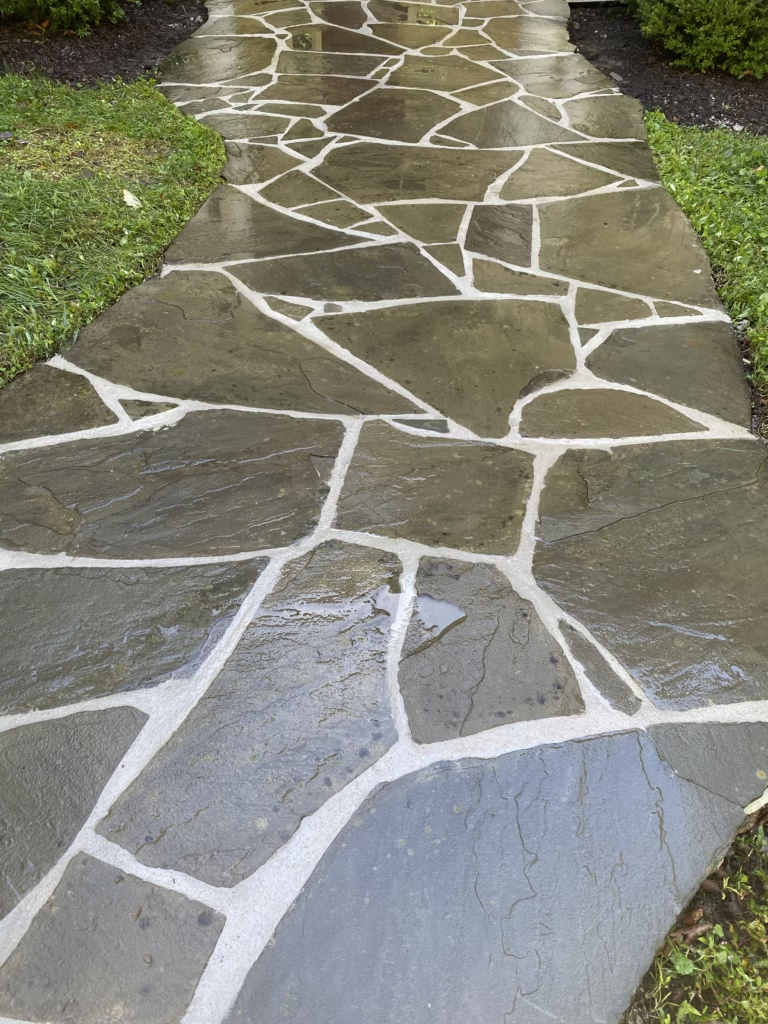
- Bluestone: Common in Mid-Atlantic patios and walkways, bluestone develops algae and lichen readily in shaded, damp conditions. Its relatively dense structure responds well to professional cleaning when performed correctly.
Exterior vs. Interior Stain Removal
The approach to organic stain removal differs significantly between exterior and interior applications.
Exterior Surfaces
Exterior stone and masonry are exposed to the full range of environmental conditions that promote biological growth — rain, humidity, shade, soil contact, and organic debris. Exterior cleaning projects often involve larger surface areas and can utilize more aggressive rinse methods, including controlled pressure washing. However, environmental containment remains important: we manage chemical runoff, protect landscaping, and comply with local stormwater regulations.
Interior Surfaces
Interior mold and mildew on stone surfaces typically indicate a moisture intrusion problem — a leaking pipe, foundation seepage, inadequate ventilation, or condensation. Simply cleaning the visible mold without addressing the moisture source guarantees recurrence. Interior work also requires strict containment to protect indoor air quality, furnishings, and occupants. We use HEPA-filtered equipment, containment barriers, and low-odor cleaning agents for all interior biological stain removal work.
When Staining Indicates a Bigger Problem
Organic staining on stone is frequently a symptom rather than the primary problem. Persistent or recurring mold and mildew growth on interior stone surfaces almost always points to an unresolved moisture condition. On exterior surfaces, concentrated biological growth in specific areas can indicate failed flashing, deteriorated mortar joints, clogged weep holes, improper grading, or malfunctioning drainage systems.
Our assessment process is designed to identify these underlying conditions. When we find evidence of a systemic moisture problem, we communicate that finding clearly and recommend appropriate remediation — either through our own capabilities or by referring the client to a qualified waterproofing or drainage specialist. Cleaning the stain without fixing the cause is a disservice to the client.
Common Applications
Our mold and organic stain removal services are regularly performed on:
- Building facades and exterior cladding (limestone, marble, granite, sandstone)
- Retaining walls and garden walls
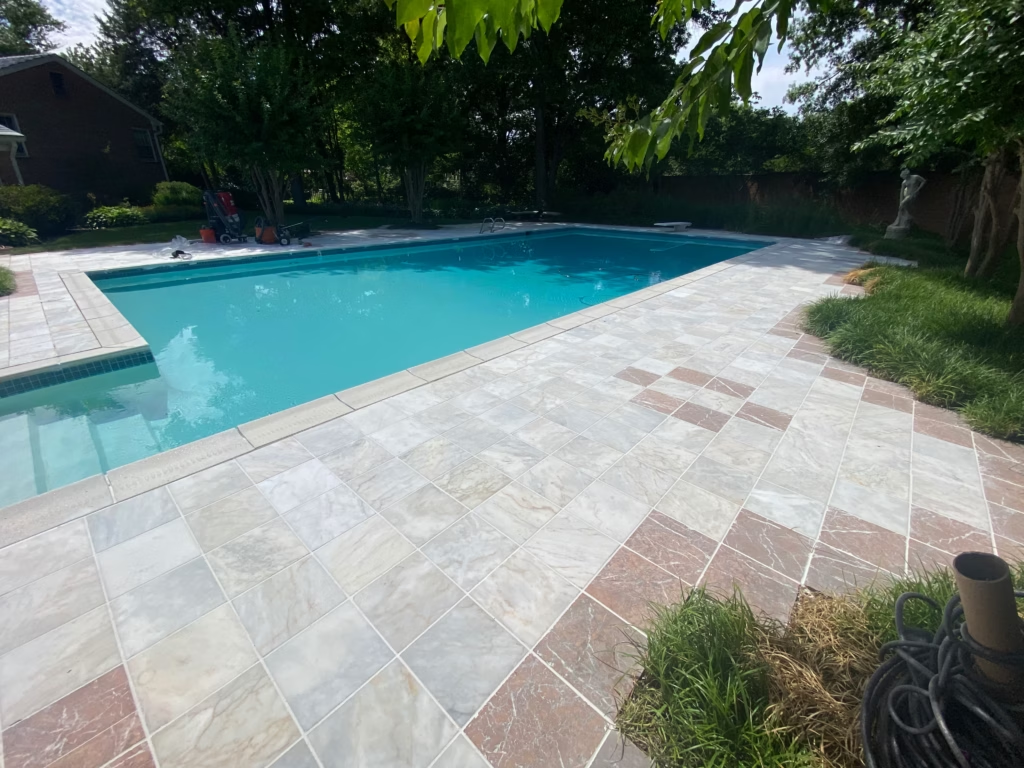
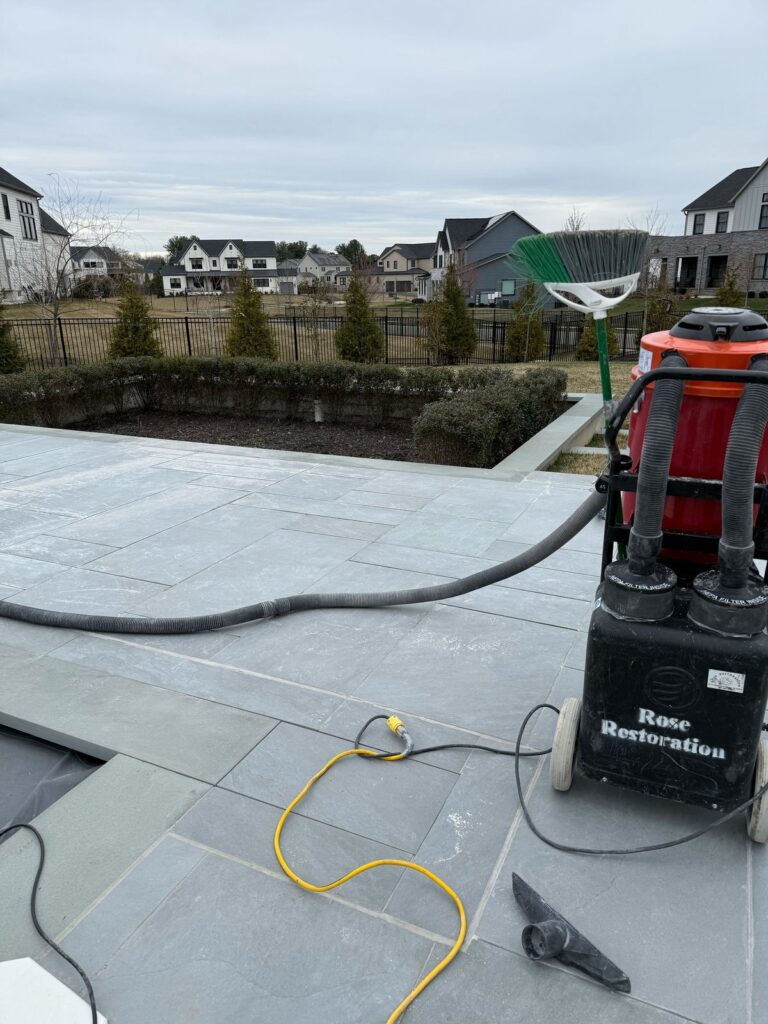
- Patios, pool decks, and walkways
- Monument and memorial stone
- Historic structures and landmarks
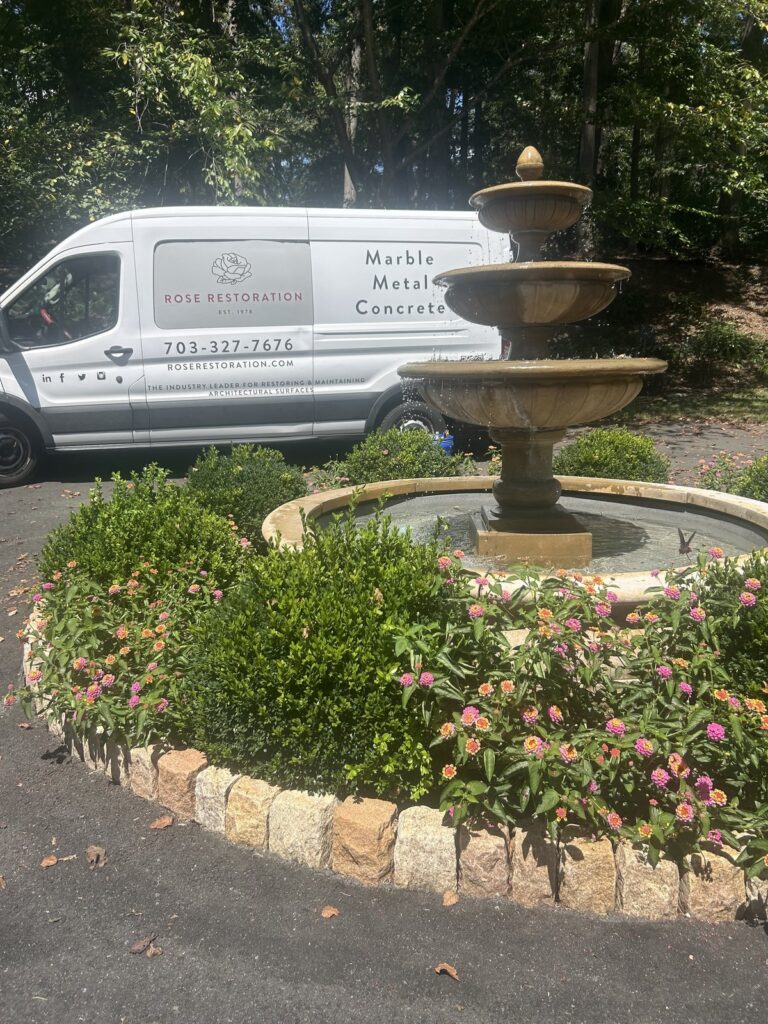
- Fountain surrounds and water feature stonework
- Interior stone floors, walls, and countertops affected by moisture
- Chimneys and stone veneer
- Cemetery monuments and mausoleums
- Commercial building entrances and lobbies
Frequently Asked Questions
How long does professional mold and stain removal take on stone surfaces?
Project timelines vary based on the type and extent of staining, the stone material, and the surface area involved. A residential patio with moderate algae growth may be completed in a single day. A large commercial facade with heavy lichen colonization may require several days, including chemical dwell time between treatment phases. During your initial assessment, we provide a clear project timeline so you can plan accordingly.
Will the cleaning process damage my stone or change its appearance?
No. Our entire approach is built around removing the stain without harming the stone. We select cleaning agents and methods specifically matched to your stone type and finish. In fact, aggressive DIY methods are far more likely to cause damage than professional treatment. After cleaning, your stone should look like it did before the staining occurred — its natural color and texture restored, not altered.
How often should stone surfaces be cleaned to prevent biological growth?
In the Mid-Atlantic climate, exterior stone surfaces in shaded or moisture-prone areas typically benefit from professional cleaning every two to three years, combined with a quality penetrating sealer applied on the manufacturer’s recommended schedule. Surfaces in full sun with good drainage may go significantly longer between cleanings. We can recommend a maintenance interval specific to your situation.
Is mold on exterior stone a health concern?
Exterior mold on stone is generally a cosmetic and material-preservation concern rather than a direct health risk. However, mold on interior stone surfaces can contribute to indoor air quality problems and should be addressed promptly, particularly in occupied spaces. If you are seeing mold on interior stone, we recommend scheduling an assessment soon — both for health reasons and to identify the moisture source driving the growth.
Can you remove stains from historic or landmarked stone without violating preservation guidelines?
Yes. We have extensive experience working on historic and landmarked structures throughout the DC metro area, including projects subject to oversight by the State Historic Preservation Office (SHPO) and the National Park Service. Our cleaning methods comply with the Secretary of the Interior’s Standards for the Treatment of Historic Properties, and we are experienced in preparing the documentation and submittals that historic preservation projects require.
Get a Professional Assessment
If organic staining is compromising the appearance or integrity of your stone or masonry surfaces, the first step is a professional evaluation. Rose Restoration provides on-site assessments throughout Virginia, Maryland, and the District of Columbia. We will identify the stain type, evaluate the underlying conditions, and recommend a treatment plan tailored to your specific material and situation.
Call us at 703-327-7676 or request a consultation online to schedule your assessment.
Get a Free Stain Assessment
We evaluate your surfaces, recommend the right approach, and provide a detailed written proposal.
Our Work