Fireplace Stone Restoration in Washington DC, Maryland, and Northern Virginia
A fireplace is typically the most architecturally significant element in the rooms it occupies. Whether it is a carved white marble mantel in a Victorian rowhouse in Capitol Hill, a limestone chimneypiece in a Federal-period Georgetown home, a slate hearth in a Craftsman bungalow in Chevy Chase, or a granite surround in a contemporary Northern Virginia residence, the fireplace anchors the room visually and carries significant value — both aesthetic and financial. When soot staining, heat discoloration, etching, mechanical damage, or mortar deterioration degrades that presence, professional restoration is the correct response.
Rose Restoration performs expert fireplace stone restoration throughout the DC metropolitan region. Our technicians are trained in the specific requirements of each stone type and the unique challenges of fireplace environments, including the effects of heat cycling, combustion byproducts, and the cleaning history that most fireplace surrounds carry by the time restoration becomes necessary.
Types of Fireplace Stone We Restore
Marble Fireplace Surrounds
White and cream marble — particularly Carrara, Statuary, and Calacatta — are the dominant materials in the carved fireplace mantels of the 18th, 19th, and early 20th century homes that define much of the DC metropolitan area’s architectural heritage. Marble’s workability made it the preferred material for the carved decorative details — reeded pilasters, carved friezes, dentil moldings, and overmantel panels — that characterize period fireplace design.
Marble fireplace surrounds are subject to a specific set of damage mechanisms: soot and smoke infiltration that darkens the surface and penetrates into the stone; etching from acidic cleaning products applied in attempts to remove the soot; yellowing and heat discoloration near the firebox opening; and mechanical damage in the form of chips, cracks, and missing sections that accumulate over a century or more of use.
Marble surround restoration involves thorough chemical cleaning using soot-specific cleaners and poultice treatments to draw embedded combustion deposits from the stone; honing and polishing to remove etching and surface degradation; chip and crack repair using color-matched epoxy fills; and sealing to reduce future penetration of soot and moisture. Where significant yellowing has occurred near the firebox, controlled bleaching treatments using stone-safe oxidizing agents can substantially reduce the discoloration. For more information about our marble services, visit our residential marble restoration page.
Limestone Fireplace Mantels
Limestone — a sedimentary calcium carbonate rock — shares marble’s vulnerability to acid etching while presenting a different aesthetic character: typically more textural, more matte, and with warmer cream, buff, and grey tones that suited the Georgian, Federal, and Colonial Revival styles common throughout the region. Limestone fireplace mantels are frequently found in older homes in Georgetown, Alexandria, and the historic neighborhoods of downtown DC.
Limestone mantels accumulate soot more visibly than dark stones because of their light, porous surfaces. Cleaning is more complex than on polished marble because the textured, honed, or tooled surface traps combustion deposits in micro-pores and surface irregularities. Professional cleaning uses pH-appropriate chemical cleaners applied with soft brushing and rinsed carefully to avoid driving deposits deeper into the stone or causing surface etching.
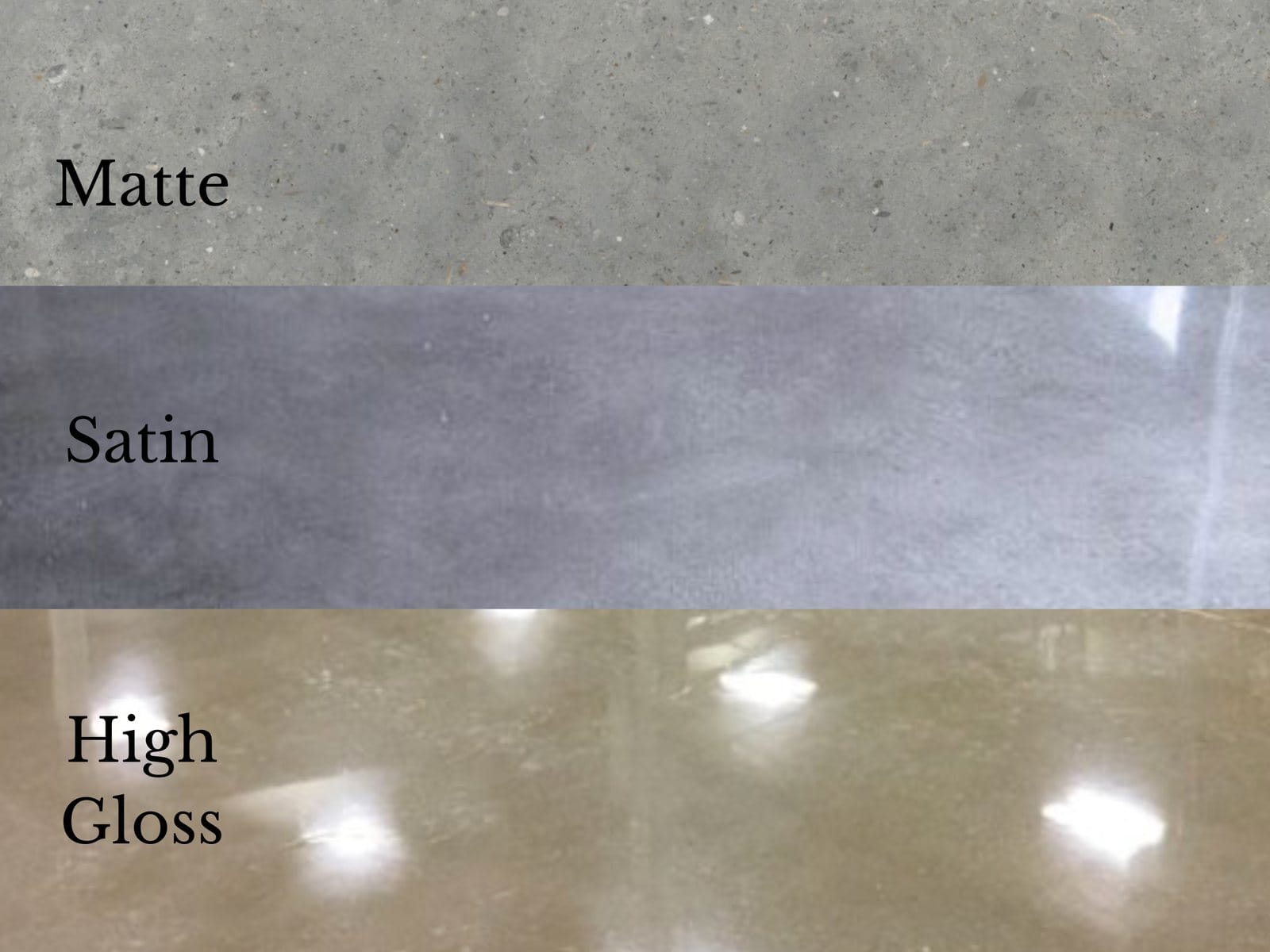
Limestone is typically finished at a hone rather than a high polish, which means that the refinishing process after cleaning focuses on surface consistency and stain removal rather than re-establishing a reflective polish.
Granite Fireplace Hearths and Surrounds
Granite is commonly used for fireplace hearths — the horizontal or slightly elevated stone surface immediately in front of the firebox opening — and for surround panels in contemporary and transitional fireplace designs. Its hardness and heat tolerance make it an appropriate hearth material, and its acid resistance means that cleaning products are less likely to cause surface damage.
Common damage to granite hearths includes mechanical impact damage from dropped firewood or tools, scratch marks from metal grates or andirons, deep sooting and carbon deposition in the immediate surround area, and dullness from years of cleaning with abrasive products. Granite restoration involves mechanical cleaning of carbon deposits, scratch removal through diamond polishing when warranted, chip repair with color-matched epoxy, and sealing. Visit our granite services page to learn more.
Slate Fireplace Hearths
Slate is one of the most historically common hearth materials in American domestic architecture. Its flat cleavage planes produced naturally smooth, thin slabs well suited to hearth applications before the era of precision stone cutting, and its dark color concealed soot and ash accumulation that would be conspicuous on lighter stones. Slate hearths are found in homes of nearly every period in the DC region.
Slate’s primary restoration challenges are surface delamination — slate’s layered structure can allow surface laminations to loosen and lift under repeated thermal cycling — mineral bloom or whitening from salt migration through the stone, and deep sooting in the texture of the cleaved surface. Slate is not polished in the same way as marble or granite; its natural finish is a textured hone, and restoration focuses on cleaning, stabilizing any loose laminations, and treating the surface with an appropriate slate enhancer or sealer that restores the stone’s natural dark color without creating an artificial plastic sheen.
Brick Fireplace Surrounds
Brick fireplaces are the most common residential fireplace type in the Washington DC area. The vast majority of the region’s mid-20th century housing stock has a brick fireplace, and many 19th and early 20th century homes have either all-brick fireplace surrounds or brick construction behind applied stone or tile facing.
Brick fireplace surrounds accumulate soot on and within the brick face and in the mortar joints. Standard cleaning involves dry brushing to remove loose deposits, followed by application of a soot-dissolving chemical cleaner with appropriate dwell time and mechanical agitation, and thorough rinsing. For severe sooting that has penetrated deep into the brick, multiple cleaning applications or poultice treatment may be required.
The mortar joints in brick fireplace surrounds are subject to the same deterioration mechanism as any masonry — moisture, heat cycling, and age break down mortar over time — but the thermal cycling near a firebox accelerates joint deterioration. Repointing of fireplace brick is an important component of fireplace maintenance for both aesthetic and functional reasons. Visit our masonry services page for more information about repointing services.
Common Fireplace Damage and How We Address It
Soot Staining and Carbon Deposits
Soot is the most universal fireplace stone problem. Carbon particles and combustion byproducts deposit on all surfaces in and around the firebox opening, penetrating porous stone and accumulating in surface texture. Fresh soot is relatively easy to remove; set soot that has been present for years and has been subjected to repeated wetting and drying, cleaning product application, and additional combustion cycles becomes deeply embedded and requires more intensive treatment.
Professional soot removal begins with dry methods — soft brushing and low-pressure vacuuming to remove loose surface deposits without pushing them into the stone. Chemical cleaners appropriate to the specific stone type are then applied, with dwell time and mechanical agitation adjusted to the severity of the staining. For severely stained stone, poultice treatments using soot-specific solvents or oxidizing agents draw embedded carbon deposits out of the stone over an extended period. Multiple cleaning cycles are common on heavily sooted historical fireplaces.
Heat Discoloration and Yellowing
Prolonged heat exposure causes chemical changes in some stone types that produce yellowing or browning, particularly in white marble and limestone near the firebox opening. This heat yellowing is distinct from soot staining — it is a change within the mineral structure of the stone rather than a surface deposit. As a result, it cannot be cleaned away; it must be addressed through either mechanical abrasion to remove the affected layer or chemical treatment.
Controlled bleaching using stone-safe oxidizing agents — hydrogen peroxide-based systems at appropriate concentrations — can reduce or eliminate heat yellowing in marble and limestone in many cases. The treatment is applied as a poultice, covered to prevent rapid evaporation, and allowed to work over 12 to 24 hours. Multiple applications are often needed for severe discoloration. Where yellowing extends deeply into the stone or where chemical treatment does not achieve satisfactory results, honing to remove the affected surface layer followed by polishing is the definitive solution.
Etching from Cleaning Products
Many homeowners, confronted with a sooty marble or limestone fireplace, reach for the most powerful cleaner at hand — often a tile cleaner, bathroom spray, or diluted bleach. These products contain acids, alkaline compounds, or bleaching agents that damage calcium carbonate stone. The result is a fireplace that is simultaneously cleaner of soot and covered with fresh etch marks and acid attack damage. White marble that has been repeatedly cleaned with acidic products often shows a roughened, dull, matte surface with visible texture change.
Addressing combined soot staining and acid etching requires a sequenced approach: first, thorough but stone-safe cleaning to address the soot, then mechanical honing and polishing to remove the etched surface layer and restore the original finish. This is a professional-only procedure — attempting to address either problem without the correct materials and equipment is likely to worsen the condition.
Chips, Cracks, and Mechanical Damage
Fireplace surrounds accumulate mechanical damage over time. Chipped edges and corners from impact, hairline cracks in marble panels from structural movement or thermal stress, and missing sections from previous repairs or renovation work are all addressable through professional stone repair techniques. Chips and missing sections are filled with color-matched epoxy or cementitious repair mortars, built up in layers to achieve full profile, and finished to match the surrounding surface texture and sheen. Structural cracks in marble panels that are actively moving require assessment of the substrate and support conditions before surface repair alone is undertaken.
Mortar Deterioration in Brick and Stone Fireplaces
The mortar joints in fireplace surrounds — both in exposed brick fireplaces and in stone facing installations — are subject to accelerated deterioration from heat cycling and the chemical environment of combustion byproducts. Failed mortar in a fireplace is both an aesthetic problem and, in some configurations, a structural and safety concern. Repointing fireplace brick requires mortar that is compatible with the thermal environment of a working fireplace — standard Portland-based mortars can be used in the surround area, but firebrick in the firebox itself requires refractory mortar specifically formulated for high-temperature applications.
Gas vs. Wood-Burning Fireplaces: Restoration Differences
The restoration requirements of a fireplace depend in part on its fuel type. Wood-burning fireplaces produce far more soot, creosote, and combustion deposit than gas appliances. The stone surrounding a wood-burning firebox that has been in active use for 20 years will typically have significantly more embedded carbon and surface staining than a comparable gas fireplace of the same age.
Gas fireplaces produce less particulate soot but can produce a different type of deposit — a fine, greasy film from the combustion of natural gas that coats stone surfaces in the immediate vicinity of the firebox. This deposit has different chemical characteristics than wood soot and responds to different cleaning approaches. Gas fireplace glass and immediate surround cleaning is a distinct procedure from wood fireplace cleaning.
The thermal dynamics also differ. Wood-burning fireplaces produce high radiant heat at the firebox opening, which is the primary driver of heat discoloration in nearby stone. Gas fireplaces, particularly sealed gas inserts, direct more of their heat output through the flue and produce less radiant heating of the surround stone. Heat discoloration in gas fireplace stone surrounds is less common as a result.
Historic Fireplace Preservation
Washington DC and its surrounding area have an exceptional concentration of architecturally significant historic fireplaces. The marble chimneypieces in Georgetown’s Federal-period townhouses, the carved limestone overmantels in Capitol Hill Victorians, and the modest but historically intact brick fireplaces of working-class rowhouses are all part of the region’s architectural heritage.
Preservation of historic fireplaces requires a conservative, minimal-intervention approach consistent with the Secretary of the Interior’s Standards for the Treatment of Historic Properties. The goal is to conserve existing fabric — original carved marble, original brick faces, original period-appropriate mortar — rather than to remove and replace it. Consolidation of deteriorating stone, reversible cleaning methods, and compatible mortar formulation for repointing are the appropriate interventions. Rose Restoration’s technicians understand these principles and apply them in historic fireplace work throughout the region.
For properties within DC historic districts or subject to Maryland and Virginia historic preservation review, documentation of existing conditions before treatment and approval of proposed methods may be required. We are familiar with these processes and can advise on documentation and approval requirements as part of the project scope.
Frequently Asked Questions
Can soot stains be removed from a marble fireplace surround?
Yes, in most cases. Fresh and moderate soot staining responds well to professional cleaning using stone-safe soot dissolvers and poultice treatments. Deep, long-term soot penetration that has been in place for decades may require multiple cleaning cycles and in severe cases may be followed by light honing to remove the most deeply discolored surface layer. Complete reversal is not guaranteed in all cases — very deep carbon penetration into porous stone may leave some residual darkening — but professional cleaning typically produces a dramatic improvement. The key is using the correct cleaning chemistry for the specific stone type, which is why attempting this with household products often worsens the condition.
Is it safe to use a fireplace with damaged mortar joints?
It depends on the location and severity of the damage. Deteriorated mortar in the brick or stone surround area — outside the firebox itself — is primarily an aesthetic and water infiltration concern. Deteriorated refractory mortar inside the firebox, or cracked firebrick in the firebox interior, is a more serious safety concern: the integrity of the firebox lining is important to contain combustion and prevent heat transfer to adjacent combustible materials. A chimney sweep inspection will assess the condition of firebox refractory mortar and firebrick. Surround repointing is a maintenance item; firebox refractory repairs are a safety item that should be addressed before using the fireplace.
How do you repair a chip in a marble fireplace mantel?
Chips in marble are repaired using a color-matched epoxy fill system. The epoxy is mixed to match the base color and veining of the marble, applied in layers to build up to the original profile, and cured. After curing, the fill is shaped and finished to match the surrounding surface — sanded and polished to match the sheen of the adjacent marble. A well-executed epoxy fill on a chipped mantel is nearly invisible in ambient light. Under close raking examination it may be detectable, but it fully restores the visual presence and integrity of the piece in normal viewing conditions.
How often should a fireplace stone surround be professionally cleaned?
For an actively used wood-burning fireplace in the DC area, professional cleaning every 3 to 5 years is appropriate for light-colored marble and limestone surrounds. Darker stone — slate, dark granite, dark marble — shows soot less prominently and can go longer between cleanings. Gas fireplace surrounds with less heavy sooting typically need professional attention every 5 to 10 years, depending on the stone type and the amount of use. Between professional cleanings, regular dry brushing with a soft-bristled brush to remove loose surface deposits is the most important preventive practice.
Can you restore a painted brick fireplace surround?
Removing paint from brick is possible but is among the more demanding masonry cleaning procedures. The appropriate method depends on the paint type, the age and number of paint layers, and the condition of the underlying brick. Chemical paint strippers formulated for masonry, low-pressure steam cleaning, and controlled mechanical abrasion are the available options. The brick condition after paint removal varies — brick that was painted in good condition will typically present well after paint removal, but brick that was painted to conceal damage or staining may show those underlying conditions after the paint is gone. An honest assessment of likely outcomes is part of any paint removal proposal we provide.
Call Rose Restoration at 703-327-7676 to schedule an assessment of your fireplace stone condition.
Service Areas
Rose Restoration serves homeowners throughout the DC metro area:
Maryland: Bethesda | Chevy Chase | Potomac | Rockville | Silver Spring | Montgomery County | Annapolis | Baltimore | Frederick
Virginia: McLean | Arlington | Great Falls | Alexandria | Reston | Vienna | Tysons | Fairfax County | Loudoun County | Falls Church | Ashburn | Middleburg
Washington D.C.: Washington DC | Georgetown | Capitol Hill | Northwest D.C.
Recent Fireplace Restoration Projects
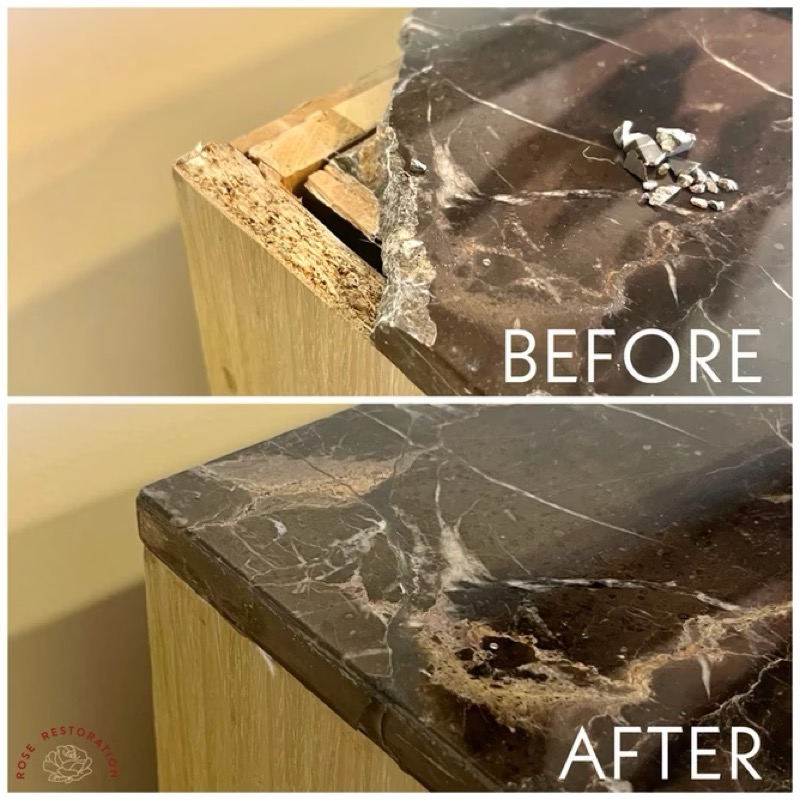
Marble Chip Repair — Before & After
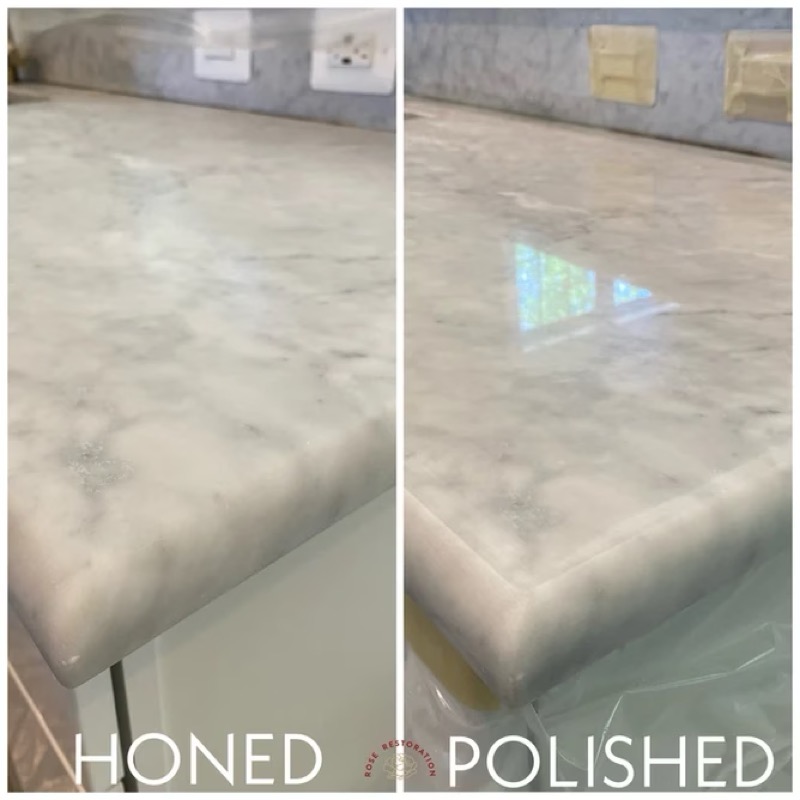
Honed vs Polished Finish

Historic Stone Restoration