
Reference Guide
For the restoration process if you have existing terrazzo:
 By Tom Kuhn, CEO, Rose Restoration
Rose Restoration has restored marble, terrazzo, concrete, and natural stone across DC, MD, and VA since 1978.
What Is Terrazzo Flooring?
Before weighing the advantages and disadvantages, it helps to understand what terrazzo actually is. Terrazzo is a composite flooring material made by embedding chips of marble, granite, quartz, glass, or other aggregates into a cementitious or epoxy binder. The surface is then ground and polished to a smooth, seamless finish.
There are two main types:
- Cementitious terrazzo — the traditional method, typically poured in place over a concrete substrate. This is what you’ll find in most mid-century buildings and historic properties.
- Epoxy terrazzo — a thinner, more modern system that offers greater color flexibility and can be installed over a wider range of substrates.
Both types share the same core characteristics that have made terrazzo a mainstay in commercial and institutional architecture for generations. Learn more
The Pros of Terrazzo Flooring
Exceptional Durability
Terrazzo is extraordinarily long-lasting. When properly installed and maintained, a terrazzo floor can last 75 years or more — and many floors from the 1920s through the 1960s are still in active service today. The material resists scratching, chipping, and heavy foot traffic in ways that most flooring alternatives simply cannot match.
This is why terrazzo remains the flooring of choice in high-traffic environments like schools, hospitals, government buildings, and hotel lobbies.
Low Long-Term Maintenance
Once a terrazzo floor is properly polished and sealed, day-to-day maintenance is straightforward. Regular dust mopping and occasional damp mopping are typically all that’s required. There are no grout lines to trap dirt, no wax layers to strip and reapply, and no planks or tiles that can shift or separate.
Over a 40- or 50-year lifespan, the total cost of maintaining terrazzo is significantly lower than most alternatives — a factor that building managers and property owners frequently underestimate during initial cost comparisons. Learn more
Design Versatility
Few flooring materials can match terrazzo for sheer design flexibility. The combination of aggregate type, aggregate size, binder color, and layout pattern means the possibilities are virtually limitless. Custom logos, medallions, borders, and color zones can all be incorporated directly into the floor.
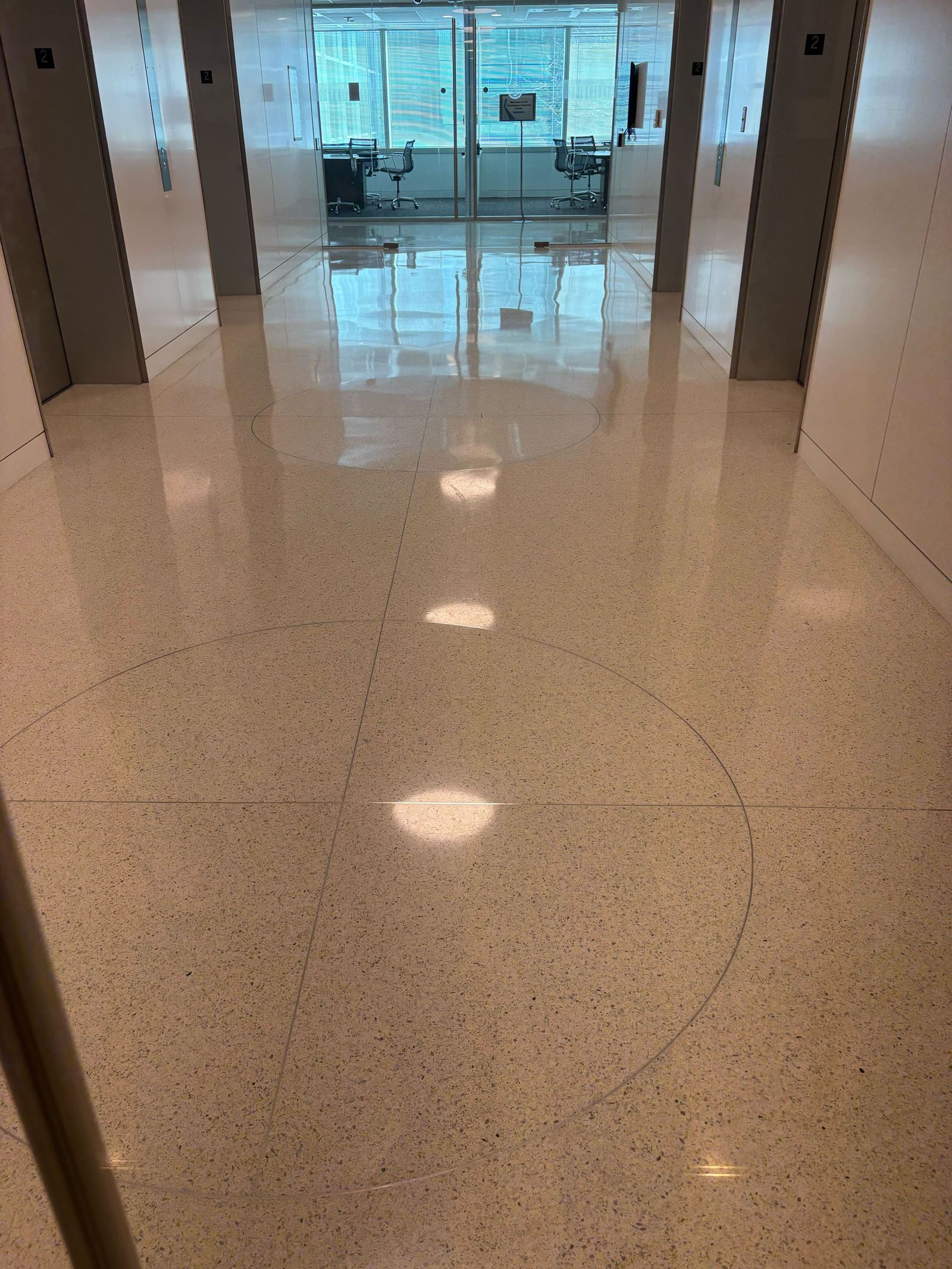
Epoxy terrazzo, in particular, opens up a wide palette of vibrant colors and allows the use of recycled glass and other decorative aggregates.
Sustainability
Terrazzo is one of the more environmentally responsible flooring choices:
- Longevity — A floor that lasts 75+ years doesn’t need replacement every 10-20 years
- Recycled content — Many mixes incorporate recycled marble, glass, or porcelain aggregates
- No VOC concerns — A polished terrazzo floor doesn’t off-gas volatile organic compounds
- Refinishable — Rather than tearing out a worn floor, terrazzo can be ground down and repolished multiple times
Hypoallergenic and Hygienic
Because terrazzo is seamless and non-porous when properly sealed, it doesn’t harbor dust mites, mold, or bacteria the way carpet or grouted tile can. This makes it excellent for healthcare facilities, schools, and any environment where indoor air quality matters.
The Cons of Terrazzo Flooring
High Upfront Cost
This is the most common objection, and it’s legitimate. New terrazzo installation typically costs between $18 and $60 per square foot — significantly more than most tile, vinyl, or carpet installations.
However, the upfront number doesn’t tell the whole story. When you calculate total cost of ownership over 30-50 years — factoring in replacement cycles, maintenance costs, and downtime — terrazzo frequently comes out ahead.
Hard and Cold Underfoot
Terrazzo is a hard surface with no give, which can be uncomfortable for people who stand on it for extended periods. It’s also cold underfoot in winter unless paired with radiant heating.
In residential settings, area rugs and anti-fatigue mats can mitigate this. In commercial settings, consider the specific use of each space.
Slippery When Wet
A highly polished terrazzo surface can be slippery when wet. This is manageable — slip-resistant sealers and proper entrance matting go a long way — but it must be addressed during the finishing process, not after.
Susceptible to Cracking
Terrazzo floors, particularly cementitious systems, can develop cracks over time from building settlement, substrate movement, or thermal expansion. Cracks don’t mean the floor is failing, but they need prompt attention.
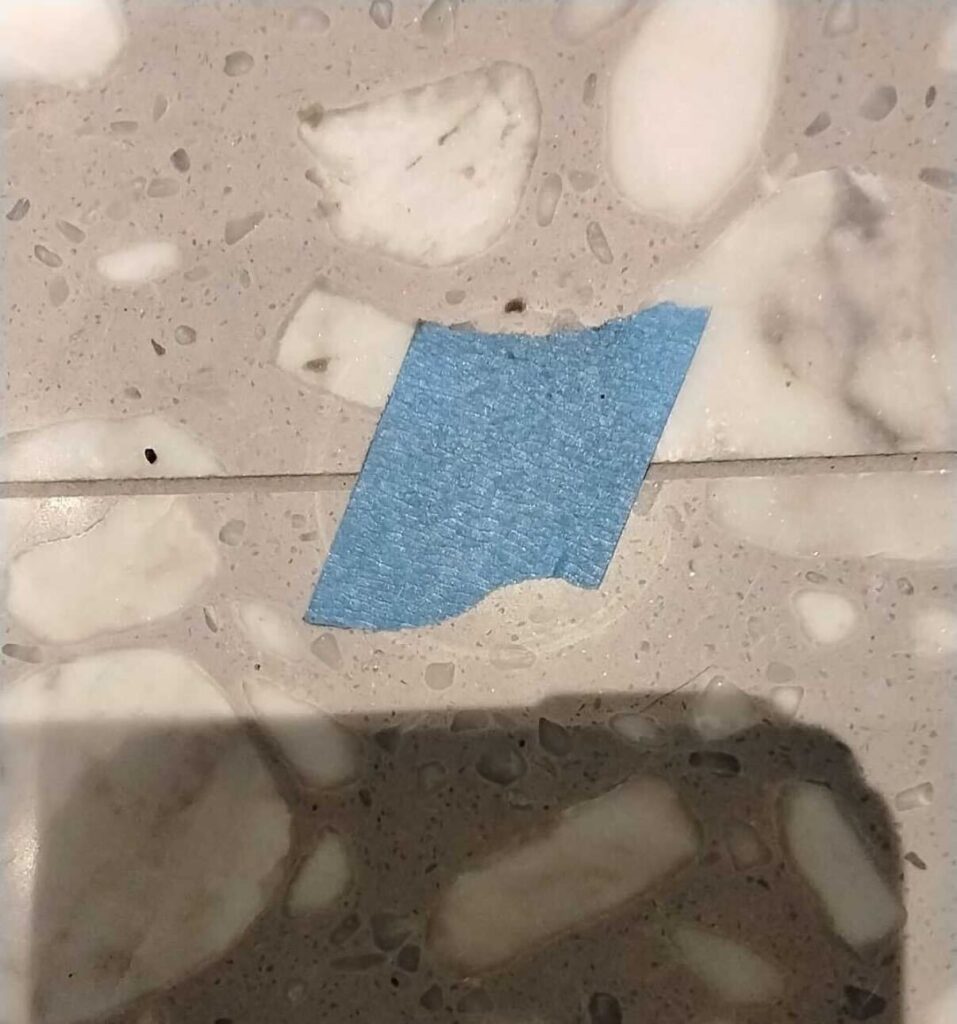
The good news: terrazzo cracks are repairable. Skilled restoration professionals fill cracks with color-matched resin that blends seamlessly with the surrounding floor. Learn more

Installation Complexity
Terrazzo is not DIY-friendly. Proper installation requires experienced craftspeople, specialized equipment, and careful substrate preparation. Your choice of installer matters enormously.
Terrazzo vs. Other Flooring Options
| Factor | Terrazzo | Ceramic Tile | Hardwood | Polished Concrete | Luxury Vinyl |
|---|---|---|---|---|---|
| Lifespan | 75+ years | 20–30 years | 20–40 years | 30–50 years | 10–20 years |
| Upfront Cost/sq ft | $18–$60 | $6–$24 | $10–$30 | $6–$18 | $4–$12 |
| Maintenance | Low | Moderate (grout) | Moderate–High | Low | Low–Moderate |
| Design Flexibility | Excellent | Good | Limited | Limited | Good |
| Sustainability | Excellent | Moderate | Variable | Good | Poor |
| Seamless Surface | Yes | No (grout lines) | No (seams) | Yes | No (seams) |
| Repairability | Excellent | Moderate | Moderate | Difficult | Replace only |
| Comfort Underfoot | Hard | Hard | Moderate | Hard | Comfortable |
Who Should Choose Terrazzo?
Terrazzo makes the most sense when:
- You plan to own or occupy the building for 20 years or more
- The space sees heavy foot traffic (schools, lobbies, corridors, retail)
- Design impact matters — you want a floor that makes a statement
- You value low lifecycle cost over low upfront cost
- The building has historic terrazzo that deserves preservation Learn more
Terrazzo may not be ideal when:
- Budget constraints demand the lowest possible upfront cost
- The space requires a warm, cushioned surface (bedrooms, play areas)
- The project timeline is very short
Restoring Existing Terrazzo: An Often-Overlooked Option
Many buildings across Virginia, Maryland, and the DC metro area already have terrazzo floors hiding under carpet, vinyl tile, or layers of old wax. Before committing to a new flooring installation, investigate whether there’s terrazzo underneath that can be restored.
Professional terrazzo restoration — grinding, honing, polishing, crack repair, and sealing — brings a neglected floor back to life at a fraction of the cost of new installation. Learn more
At Rose Restoration International, we’ve spent 48 years restoring terrazzo floors in schools, hotels, government buildings, museums, condominiums, and historic properties throughout the greater DC area. Our lab-matched color and aggregate repairs ensure that fixes are invisible, and we use eco-friendly materials whenever possible.
Frequently Asked Questions
How long does a terrazzo floor last?
A properly installed and maintained terrazzo floor can last 75 years or longer. Many terrazzo floors installed in the mid-20th century are still in excellent condition today. Quality installation, appropriate maintenance, and timely crack repair are the key factors.
Restore Your Terrazzo Floors
If you have terrazzo floors that need restoration, our team can bring them back to life. Diamond grinding, crack filling, and polishing — no coatings or waxes. Serving residential and commercial clients across VA, MD, and DC.
Is terrazzo flooring expensive?
New installation ranges from $18 to $60 per square foot — higher than most alternatives upfront. However, terrazzo’s exceptional lifespan and low maintenance requirements often make it the most cost-effective option over the long term. Restoring existing terrazzo is significantly less expensive than new installation.
Is terrazzo hard to maintain?
No. Regular dust mopping and periodic damp mopping are the primary requirements. The floor should be professionally repolished every few years depending on traffic levels, and cracks should be repaired promptly.
Can cracked terrazzo be repaired?
Yes. Cracked terrazzo can be repaired using color-matched resin fills that blend with the surrounding floor. When performed by an experienced specialist, these repairs are virtually undetectable. We use lab-matched color and aggregate formulations to ensure seamless results. Learn more
Is terrazzo flooring slippery?
It can be slippery when wet if not finished with an appropriate slip-resistant sealer. Modern finishing techniques and sealers achieve safe slip resistance while maintaining a polished appearance.
Ready to Explore Terrazzo for Your Space?
Whether you’re considering new terrazzo, evaluating an existing floor for restoration, or deciding if terrazzo is the right material for your project, we’re here to help.
Rose Restoration International has terrazzo restoration experience since 1978 serving Virginia, Maryland, and Washington, DC. Contact us at 703-327-7676 for a professional terrazzo assessment.
—
Looking for something else?
Get a Free Assessment from Rose Restoration
Tell us about your marble, stone, terrazzo, or concrete and our senior technicians will recommend the right restoration approach. Family-run and trusted across Washington DC, Maryland, and Virginia since 1978.
Call (703) 327-7676 · Email info@roserestoration.com · schedule a time · or send us photos.
Restore. Don't replace.
48 years of polishing marble, terrazzo, concrete, and tile across Washington DC, Northern Virginia, and Maryland. IMF, Four Seasons, Smithsonian, and the Virginia State Capitol trust us — you can too.