
Rose Restoration — a Washington DC commercial flooring contractor — compares urethane cement and epoxy flooring systems for commercial kitchens, breweries, food processing, and industrial facilities. System choice directly affects floor life and operational reliability.
 By Tom Kuhn, CEO, Rose Restoration
Rose Restoration has restored marble, terrazzo, concrete, and natural stone across DC, MD, and VA since 1978.
Urethane Cement vs. Epoxy Flooring: How to Choose the Right System for Your Commercial Facility
Epoxy and urethane cement are the two dominant resinous flooring systems specified for commercial and industrial environments. Both are durable, seamless, and long-lasting when properly installed — but they are engineered for fundamentally different operating conditions. Specifying the wrong system leads to premature failure, costly removal, production downtime, and reinstallation expenses that far exceed the upfront material cost difference.
This guide provides a straightforward, technical comparison of both systems across every performance dimension that matters in a commercial facility: thermal shock, moisture, chemical resistance, impact durability, application environment, surface preparation, cost, cure time, and aesthetics. Rose Restoration International has installed both epoxy and urethane cement flooring systems in commercial facilities throughout Virginia, Maryland, and Washington, DC since 1978.
Understanding the Two Systems
Epoxy Flooring
Epoxy flooring consists of two-component materials (resin and hardener) that chemically cross-link to form a rigid, high-strength surface. Once installed, epoxy creates a seamless protective layer that strengthens the concrete and provides strong adhesion to properly prepared substrates, resistance to chemicals and cleaning agents, a smooth surface that is easy to clean, and excellent durability in high-traffic environments. Epoxy systems can incorporate slip-resistant textures, colored finishes, metallic pigments, and quartz broadcast for both safety and aesthetics. Because the coating forms a continuous surface, it prevents dirt, liquids, and contaminants from penetrating the concrete slab beneath.
Urethane Cement (Urethane Mortar) Flooring
Urethane cement combines polyurethane resin with Portland cement and graded aggregates, creating a dense monolithic topping installed at 1/4 to 3/8 inch thickness — substantially thicker than epoxy coatings. Originally developed for food and beverage processing environments, this system handles thermal cycling, moisture exposure, and aggressive chemical cleaning that would compromise epoxy systems. Urethane cement is fundamentally different from thin polyurethane floor coatings (3–8 mils) — it is a cementitious mortar system engineered for extreme duty.
Thermal Shock Resistance: The Single Biggest Differentiator
Thermal shock represents the most critical performance difference between these two systems.
Epoxy is rigid and susceptible to cracking when exposed to rapid temperature swings — such as 200-degree steam washdowns on ambient-temperature floors, or hot grease spills in commercial kitchens. The thermal expansion mismatch between the rigid epoxy and the concrete substrate causes delamination, cracking, and eventual system failure in environments with regular thermal cycling.
Urethane cement’s coefficient of thermal expansion closely matches concrete, allowing both materials to expand and contract together. This maintains system integrity through temperature fluctuations exceeding 50 degrees Fahrenheit — making urethane cement the only viable choice for environments with steam cleaning, hot liquid spills, or significant temperature variation.
Moisture Tolerance and Vapor Drive
Epoxy systems require concrete moisture testing below 3–5 pounds per 1,000 square feet per 24 hours (calcium chloride test) before installation. Slabs with higher moisture vapor transmission rates can push epoxy coatings off the substrate from below, causing blistering and delamination.
Urethane cement accommodates higher moisture levels due to its cementitious component, which is inherently more breathable. This advantage proves critical in facilities built on grade, in cold storage environments where condensation cycles are constant, and in high-water-table regions where slab moisture cannot be cost-effectively reduced.
Chemical Resistance: Matching the System to the Exposure
Both systems offer strong chemical resistance, but the profile differs by chemical type:
- Epoxy excels against: Solvents, fuels, oils, petroleum products, and concentrated industrial chemicals. This makes epoxy the preferred choice for automotive facilities, aircraft hangars, manufacturing floors, and mechanical rooms.
- Urethane cement excels against: Organic acids (citric, lactic, acetic), caustic cleaning agents, and hot-water washdowns. This profile matches the chemical exposure in food and beverage processing, dairy operations, breweries, commercial kitchens, and pharmaceutical manufacturing.
The key is matching the system to the specific chemicals your facility encounters — not simply asking which product has “better” chemical resistance in the abstract.
Impact and Abrasion Resistance
Urethane cement’s thicker, cementitious matrix absorbs impact energy more effectively than epoxy’s harder but more brittle structure. In environments where heavy equipment traffic, dropped tools, loaded pallets, and rolling steel carts are routine, urethane cement’s impact tolerance prevents the cracking and chipping that would damage a thinner epoxy coating.
Epoxy remains highly durable for pedestrian traffic, light wheeled equipment, and standard commercial use. For most warehouse, retail, and office applications, epoxy’s abrasion resistance is more than adequate.
Where Each System Fits Best
Urethane Cement Is the Right Choice For:
- Commercial kitchens and food preparation areas
- Food and beverage processing facilities
- Breweries and beverage production
- Dairy and pharmaceutical manufacturing
- Cold storage facilities with thermal cycling
- Any environment with steam cleaning or hot-water washdowns
- Industrial processing with heavy impact loads
Epoxy Is the Right Choice For:
- Warehouses and distribution centers
- Automotive service garages and maintenance bays
- Aircraft hangars
- Retail showrooms and commercial lobbies
- Mechanical rooms and utility spaces
- Parking structures
- Laboratories and clean rooms
- Light manufacturing and assembly areas
Hygienic Flooring for Commercial Kitchens and Food Facilities
Commercial kitchens and food production areas require flooring that withstands daily cleaning, constant water exposure, grease buildup, and health and safety inspections. Both epoxy and urethane cement provide seamless surfaces that eliminate grout joints and cracks where bacteria collect. However, for kitchens with steam cleaning equipment or regular hot-water washdowns, urethane cement is the safer specification. For lighter-duty kitchen environments without extreme thermal cycling, epoxy with appropriate topcoat can perform adequately.
Surface Preparation: The Foundation of Both Systems
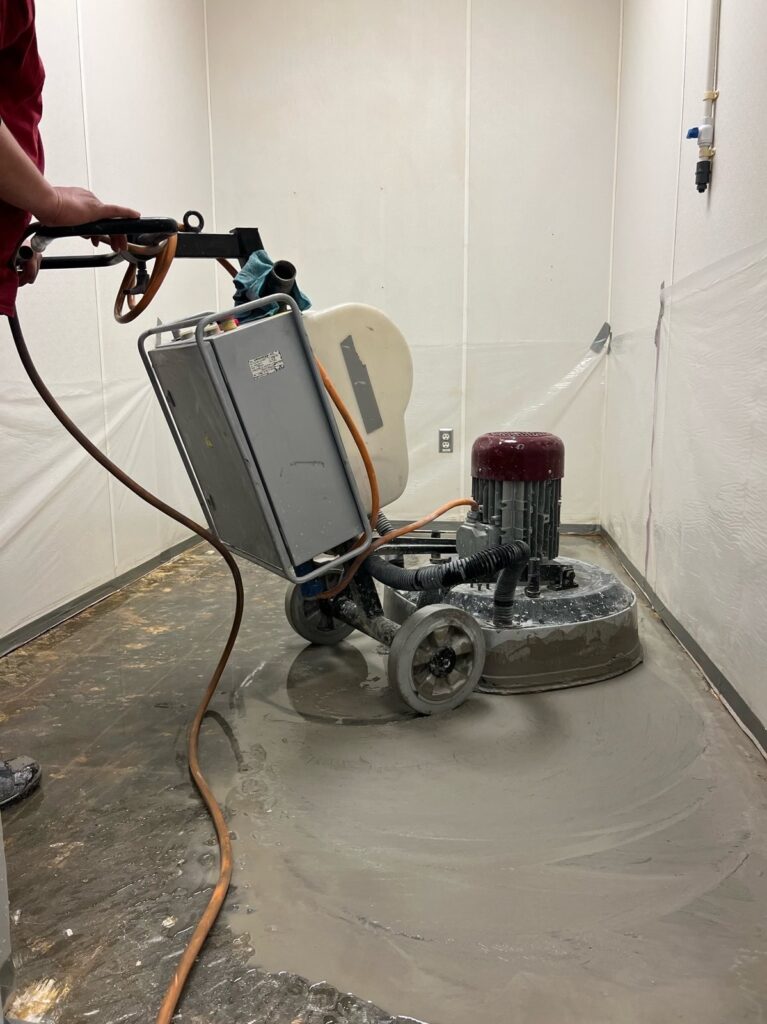
The performance of any resinous floor system begins with proper concrete surface preparation. Before any coating is applied, the concrete slab must be mechanically prepared to ensure the system bonds correctly.
- Epoxy typically requires a concrete surface profile (CSP) of 3–5, achieved through diamond grinding or shot blasting.
- Urethane cement requires a more aggressive CSP of 4–5 or higher due to its greater thickness and the need for mechanical interlock with the substrate.
Surface preparation accounts for 40–60 percent of total project labor for both systems. Moisture levels, existing coatings, surface contaminants, and structural cracks must all be evaluated before system selection. Without proper preparation, coatings fail prematurely from poor adhesion — regardless of the material chosen.
Cost Considerations
Urethane cement costs two to three times more than epoxy on an installed-per-square-foot basis, reflecting both higher material costs and the specialized installation process.
However, the true cost comparison must account for the floor’s service life and the consequences of failure. In environments where epoxy is the wrong specification — commercial kitchens, breweries, cold storage — the epoxy will fail prematurely, requiring removal, re-preparation, production downtime, and reinstallation. The total cost of that failure cycle almost always exceeds the upfront premium for urethane cement.
The most expensive floor is one that fails prematurely. Correct initial specification prevents costly remediation.

Cure Times and Scheduling
Cure time can be a deciding factor in operational environments where production downtime has direct financial consequences.
- Epoxy: 24–72 hours before light traffic. 5–7 days for full chemical resistance cure.
- Urethane cement: Foot traffic within 12–24 hours. Full chemical resistance in 3–5 days.
Urethane cement’s faster return-to-service time offers significant operational advantages in production facilities where every hour of downtime carries a cost.
Appearance and Aesthetics
If visual appearance is a priority, epoxy dominates. Epoxy systems offer unlimited color options, metallic pigments, quartz broadcast finishes, decorative flake systems, and high-gloss mirror finishes that make them ideal for showrooms, lobbies, and client-facing spaces.
Urethane cement offers standard industrial colors and sealed or textured finishes. It is engineered for performance, not decoration. In environments where the floor’s job is to survive, not impress, this is an acceptable trade-off.
Long-Term Performance and Maintenance
Both systems, when properly specified and installed, deliver 10–20+ year service lives. Longevity depends on matching the material to the environmental conditions rather than inherent product superiority. Both systems provide increased durability over bare concrete, chemical and stain resistance, simplified cleaning, and improved safety with slip-resistant finishes.
Routine maintenance for both systems involves regular cleaning and periodic inspection. Neither system requires waxing, stripping, or periodic recoating under normal conditions. Both resist staining far better than bare or sealed concrete.
Frequently Asked Questions
Can epoxy flooring be used in commercial kitchens?
Epoxy can work in commercial kitchens that do not use steam cleaning or experience frequent hot-water washdowns. For heavy-duty kitchen environments with thermal shock exposure, urethane cement is the safer and more durable specification. Evaluate your specific cleaning protocols and temperature exposure before deciding.
Is urethane cement the same as polyurethane floor coating?
No. Polyurethane coatings are thin topcoats (3–8 mils) applied over epoxy or other base coats. Urethane cement is a full cementitious mortar system installed at 1/4 inch or more — a fundamentally different product category with dramatically different performance characteristics.
How long does urethane cement flooring last compared to epoxy?
Both systems deliver 10–20+ year service lives when installed in the correct environment. The critical variable is matching the system to operating conditions, not comparing material longevity in the abstract. Epoxy in a brewery fails in 2–3 years. Urethane cement in that same brewery lasts 15+. The reverse is true in applications where epoxy’s chemical resistance profile is the better match.
Can you install epoxy or urethane cement over existing coatings?
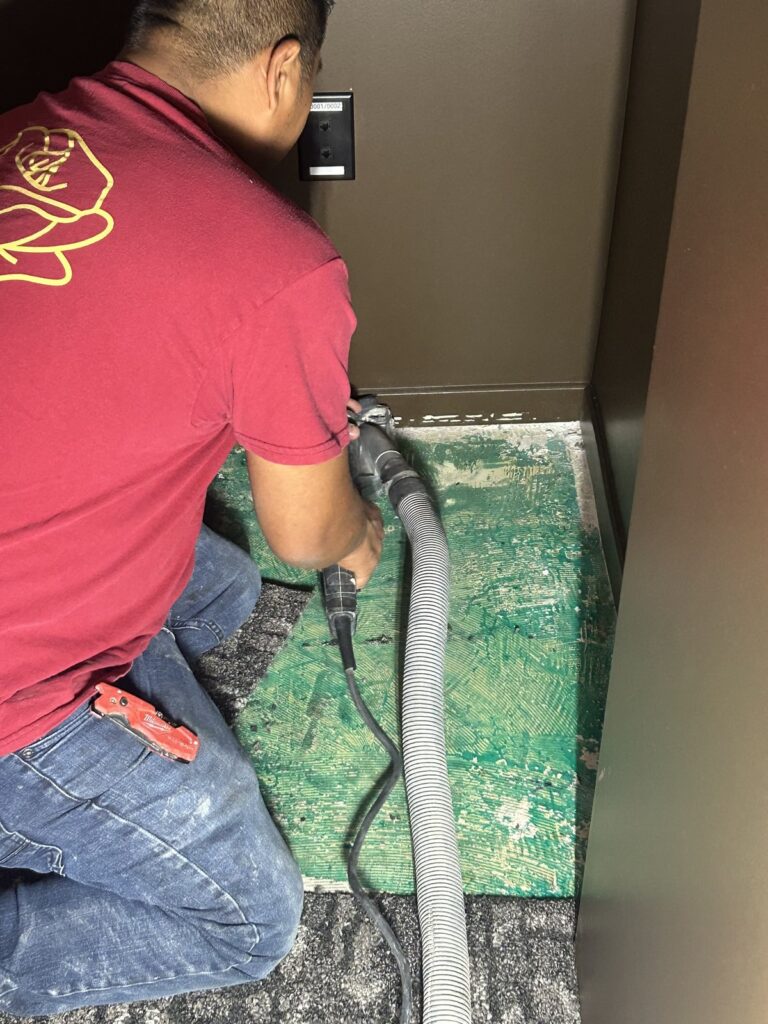
Existing coatings typically require removal before installing either system. Bonding a new resinous floor over an existing coating is unreliable because adhesion depends on the unknown condition and compatibility of the existing material. Proper removal and surface preparation ensures the new system bonds directly to sound concrete.
How do I know which system my facility needs?
Start with an honest assessment of your operating conditions: What temperatures does the floor experience? What chemicals does it contact? How often is it washed, and with what? What type of traffic and impact loads does it handle? A qualified flooring contractor should conduct an on-site evaluation and recommend the system based on actual conditions — not a product catalog.
How long does installation take for a commercial space?
Timeline depends on square footage, slab condition, and system type. A typical 5,000-square-foot epoxy installation takes 3–5 days. Urethane cement installations of similar size take 4–7 days due to the more aggressive preparation and thicker application. Rose Restoration can phase installations to keep portions of the facility operational during the project.
Is urethane cement flooring food-safe?
Yes. Urethane cement flooring is widely specified in FDA-regulated food processing environments. Its seamless surface, chemical resistance, and ability to withstand the aggressive cleaning protocols required in food-safe environments make it one of the most specified flooring systems in the food and beverage industry.
Rose Restoration International installs both epoxy and urethane cement flooring systems in commercial facilities throughout Virginia, Maryland, and Washington, DC. If you need help determining which system is right for your facility, contact us at 703-327-7676 for a free on-site evaluation.
For commercial flooring decisions in Arlington and the Northern Virginia industrial corridor, the urethane-vs-epoxy choice usually comes down to operating temperature and chemical exposure.
Looking for something else?
Get a Free Assessment from Rose Restoration
Tell us about your marble, stone, terrazzo, or concrete and our senior technicians will recommend the right restoration approach. Family-run and trusted across Washington DC, Maryland, and Virginia since 1978.
Call (703) 327-7676 · Email info@roserestoration.com · schedule a time · or send us photos.
Restore. Don't replace.
48 years of polishing marble, terrazzo, concrete, and tile across Washington DC, Northern Virginia, and Maryland. IMF, Four Seasons, Smithsonian, and the Virginia State Capitol trust us — you can too.