Concrete Staining & Dyeing Services
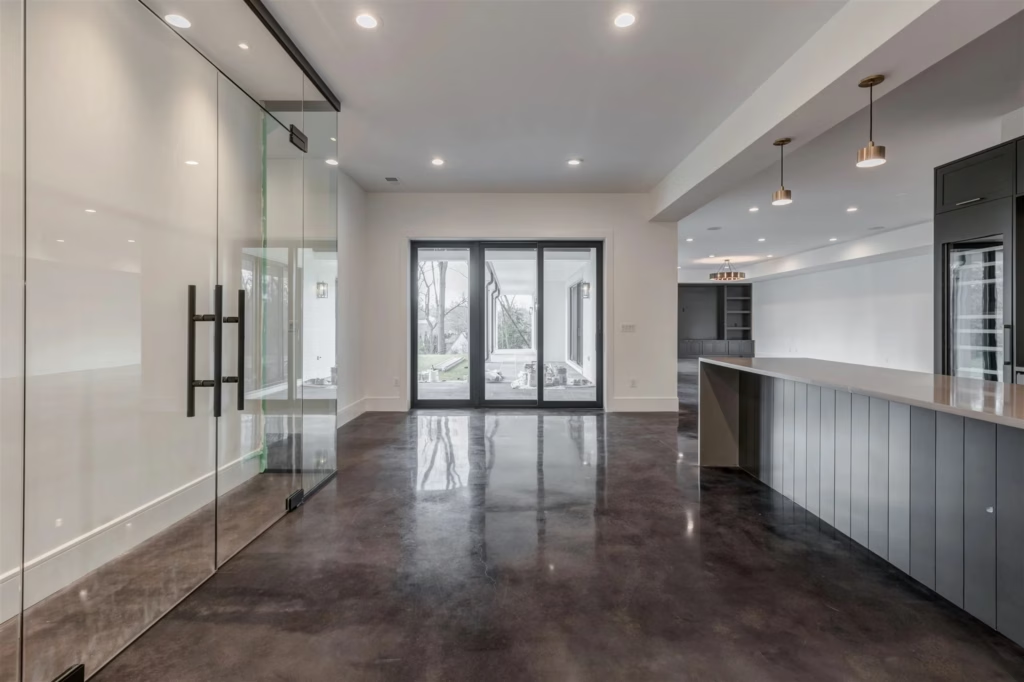
Rose Restoration provides expert concrete dyeing and staining services, transforming plain concrete into colorful, decorative surfaces with lasting vibrancy. Our skilled team uses advanced techniques and premium materials to create customized designs for residential, commercial, and industrial spaces. Whether you want bold colors, natural tones, or unique patterns, we deliver decorative concrete finishes that are as durable as they are beautiful.
Concrete Dyeing
Concrete dyeing offers a modern, efficient way to add vibrant, long-lasting color to your concrete. Using translucent dyes that penetrate deep into the surface, we provide a wide range of hues—from subtle earth tones to bold, dramatic shades.
Perfect for interior floors, restaurants, showrooms, outdoor patios, and walkways, our dyes deliver consistent, fade-resistant finishes that stand up to daily use. Options like red concrete dye or warm brown and tan tones allow you to achieve anything from a rustic natural look to a striking modern effect.
For clients searching “concrete floor dye near me” or “decorative concrete dye services”, Rose Restoration is the trusted provider of both beauty and durability.
Concrete Staining
Concrete staining provides a timeless, elegant finish that enhances natural concrete textures. We offer two main types:
Reactive acid stains – Chemically react with minerals in concrete to create unique, marbled patterns and variegated color depth. Popular for acid-stained concrete floors in restaurants, lobbies, and patios.
Non-reactive stains – Deliver uniform, consistent color across large areas. Available in many shades, including black concrete stain for a bold, sleek finish.
Both methods elevate surfaces like driveways, patios, interior floors, and commercial spaces, adding sophistication and character that only stained concrete can provide.
Surface Preparation
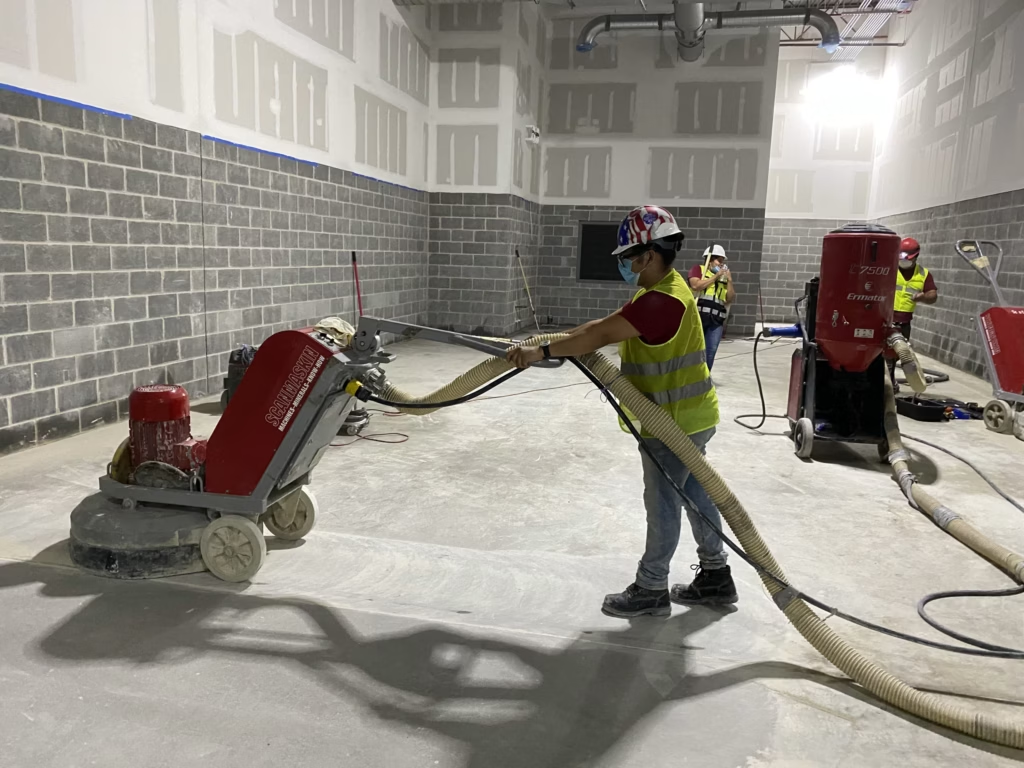
Proper preparation ensures flawless results. Before applying dyes or stains, we:
Clean surfaces to remove dirt, grease, or old coatings.
Repair cracks and imperfections to create an even base.
Test moisture levels to guarantee optimal absorption.
This meticulous preparation maximizes color penetration and durability, whether using decorative dye, acid stain, or concrete stain and sealer systems.
Protective Sealing
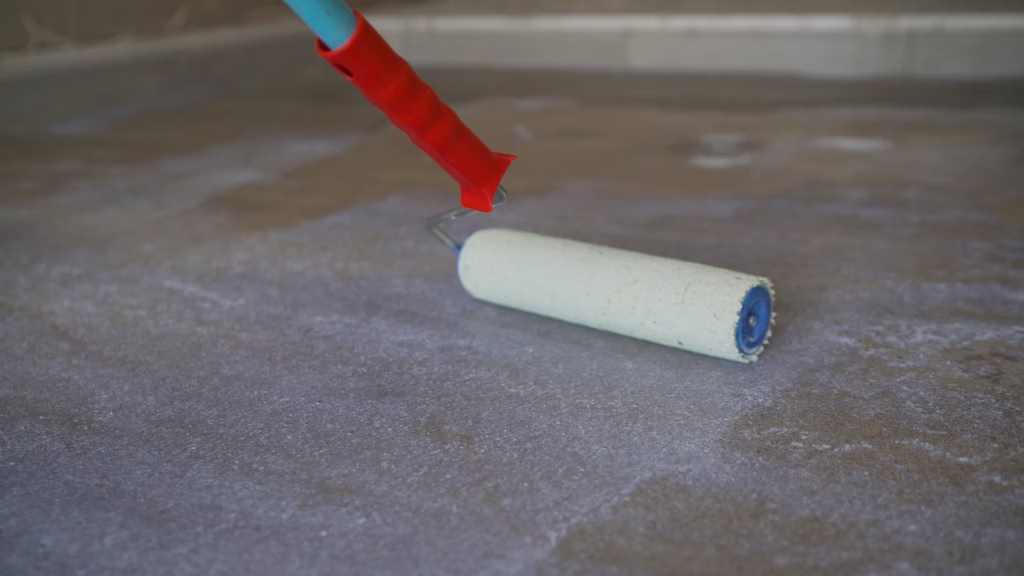
After dyeing or staining, we apply high-quality protective sealers that lock in vibrant colors and protect against stains, chemicals, and wear. Sealing also makes surfaces easier to clean, preventing dirt or spills from penetrating.
Our sealed stained concrete floors maintain their beauty and strength for years, with minimal upkeep required. This final step is essential for both indoor and outdoor concrete staining projects, ensuring long-lasting results.
Tailor Pricing With Materials
At Rose Restoration, we understand that every project is unique. That’s why we offer custom pricing options based on the dyes, stains, overlays, and sealers chosen. Whether you prefer:
Premium solvent-based dyes for bold, vibrant finishes.
Durable sealers for high-traffic commercial areas.
Custom decorative overlays paired with staining for added design.
We work with you to create solutions that fit your aesthetic vision and budget.
Complete Decorative Concrete Solutions
From patios and driveways to basements, restaurants, and showrooms, Rose Restoration provides concrete dyeing and staining services that combine artistry with performance. Our eco-friendly materials, detailed preparation, and expert sealing ensure results that are stunning, durable, and tailored to your needs.
For those searching for “stained concrete floors near me” or decorative concrete dye specialists, Rose Restoration is the partner you can trust.
Why Choose Rose Restoration?
Rose Restoration Offers Professional Natural Stone, Concrete, Wood, Metal, And Terrazzo Restoration Services. There Are Several Reasons Why You Should Choose Us.
Time in Business: Rose Restoration has over 40 years of industry leadership and experience in the field of stone and concrete restoration. Our long-standing presence in the industry highlights the depth of expertise and reliability we have earned over the years. Showing ourselves as a trusted leader in the field, consistently delivering superior results, and earning the confidence of our clients.
Stone Professionals: Our restoration team is composed of knowledgeable technicians who are skilled in approaching various stone restoration challenges. We have the experience to handle different types of stones and are adept at finding safe and efficient ways to manage projects.
Personalized Scopes: We provide personalized scopes to our clients. Rose Restoration offers a range of services, including stone, wood, and metal restoration, one-time projects, and maintenance services. We take pride in maintaining and restoring commercial spaces and have the resources to handle projects of different scales. Whatever your stone needs, we are here to help.
Concrete Staining and Dyeing Services
Color transforms concrete from a utilitarian gray slab into a design element. Staining and dyeing are the two primary methods for adding permanent color to concrete floors, and each produces distinctly different results. Rose Restoration International applies concrete stains and dyes in commercial, hospitality, retail, restaurant, and residential settings throughout Virginia, Maryland, and the Washington, DC metro area, drawing on more than 40 years of concrete finishing experience to deliver consistent, lasting color.
Choosing the right coloring method — and applying it correctly — requires understanding how each system interacts with the concrete, what surface preparation is needed, how the color will age, and what protection the finished floor requires. This page explains those factors so you can make an informed decision for your project.
Acid Stain vs. Water-Based Stain vs. Concrete Dye
These three coloring systems differ fundamentally in how they work, what they look like, and where they perform best:
Acid Stain (Reactive Stain)
Acid stains are solutions of metallic salts (typically iron, copper, or manganese compounds) dissolved in a mild acid carrier, usually hydrochloric acid. When applied to concrete, the acid etches the surface slightly, allowing the metallic salts to penetrate and react chemically with the calcium hydroxide (free lime) in the cement paste. This reaction produces permanent, insoluble color that becomes part of the concrete itself.
- Appearance — Acid stains produce variegated, mottled, translucent color with natural-looking depth and variation. No two slabs stain identically because the color depends on the cement content, finishing method, porosity, and age of the concrete. This unpredictability is the aesthetic appeal of acid staining — it creates an organic, one-of-a-kind look.
- Color range — Limited to earth tones: ambers, browns, tans, blue-greens, and black. The chemical reaction constrains the available palette.
- Durability — Exceptional. Because the color results from a chemical reaction within the concrete, it cannot chip, peel, or flake. It will, however, wear as the concrete surface itself wears.
- Best applications — Residential living areas, restaurant dining rooms, retail floors, and any space where a natural, warm, variegated appearance is desired.
Water-Based Stain (Non-Reactive Stain)
Water-based stains use pigment particles suspended in a water or acrylic carrier to deposit color into the concrete surface. Unlike acid stains, they do not react chemically with the concrete — they penetrate the pores and lodge in them, with an acrylic binder helping to anchor the color.
- Appearance — Water-based stains produce more uniform, consistent color than acid stains. They are semi-translucent, allowing some of the concrete’s texture to show through, but with significantly less mottling and variation.
- Color range — Virtually unlimited. Because the color comes from pigments rather than chemical reactions, water-based stains are available in the full spectrum, including blues, reds, greens, whites, and custom blends that acid stains cannot achieve.
- Durability — Good, though not as inherently permanent as acid stain since the color is deposited rather than chemically bonded. Proper sealing is essential for longevity.
- Best applications — Commercial spaces where consistent color is important across a large area, logos and graphic designs, spaces requiring colors outside the acid stain palette, and projects where predictable results outweigh the desire for natural variation.
Concrete Dye
Concrete dyes are solutions of very fine colorant particles dissolved in a solvent (acetone or alcohol) or water carrier. The particles are small enough to penetrate the concrete’s pore structure deeply and evenly without a chemical reaction.
- Appearance — Dyes produce vibrant, intense, highly saturated color that can be translucent to nearly opaque depending on concentration and number of applications. They can be layered, blended, and cut to create detailed artistic effects.
- Color range — Extremely broad, with vivid options not available in any stain system.
- UV stability — Solvent-based dyes are generally not UV-stable and will fade with prolonged sunlight exposure. They are best used in interior spaces without significant natural light. Water-based dyes offer improved UV resistance but are still not recommended for exterior applications.
- Best applications — Interior commercial spaces, polished concrete floors where vibrant color is desired, artistic and decorative installations, and retail environments. Dyes are frequently used on polished concrete because their fine particle size penetrates densified surfaces that stains cannot color effectively.
Concrete Staining for Commercial Spaces
Stained concrete has become a preferred flooring choice in commercial environments for compelling practical reasons: it eliminates the cost of separate flooring materials, requires less maintenance than carpet or VCT, and lasts the life of the building when properly maintained. In retail stores, stained concrete creates a modern, upscale aesthetic. In restaurants, it provides a durable, easy-to-clean surface that handles spills and heavy foot traffic. In office buildings, it contributes to a contemporary, low-maintenance environment.
For large commercial projects, consistency and scheduling are critical. We coordinate staining work with the general contractor’s schedule, other trades, and the building’s occupancy timeline, applying color in phases when necessary to keep portions of the space operational.
Color Selection and Testing
Color selection for concrete staining is not like choosing paint. The final color depends on the interaction between the staining product and the specific concrete in your facility. Variables include:
- Cement type and content in the concrete mix
- Concrete age and curing history
- Previous sealers, coatings, adhesives, or surface treatments
- Troweling technique and finish texture
- Porosity variations across the slab
Because of these variables, we always perform test applications on the actual project slab before committing to a full installation. Test areas show the true color result on your concrete, under your lighting, and eliminate the risk of unpleasant surprises across thousands of square feet. Color charts and sample boards from manufacturers are useful starting points, but they are never exact predictors of the final result on your floor.
Staining Over Existing Concrete
New concrete is the ideal canvas for staining, but most projects involve existing slabs with a history. Previous coatings, sealers, adhesive residue, patching materials, oil contamination, and surface wear all affect how stain will absorb and react. Surface preparation is the critical factor:
- All existing coatings and sealers must be completely removed. Even microscopic sealer residue will block stain penetration and create blotchy, uneven color.
- Adhesive residue from removed carpet, tile, or VCT must be stripped. These residues are often invisible but block stain absorption in distinct patterns.
- Concrete patches and repairs will stain differently than the surrounding original concrete because their cement content and porosity differ. This must be understood and either accepted as part of the character or addressed with techniques like layering multiple stain colors to blend variations.
- Oil-contaminated concrete will not accept stain in the contaminated areas. Deep oil penetration may require grinding through the contaminated layer before staining is feasible.
Honest assessment of the existing slab’s condition — and honest communication about what staining can and cannot achieve on that slab — is essential. We will tell you before the project starts if the slab has conditions that will limit the staining result.
Staining and Polished Concrete
Staining and polishing are complementary processes that produce some of the most striking commercial and residential floors. However, their combination requires careful sequencing:
For acid and water-based stains, the stain is typically applied before the final polishing steps. The concrete is ground to the desired aggregate exposure level, the stain is applied and allowed to react or cure, and then the final honing and polishing steps bring the stained surface to a high sheen. The densifier and sealer are applied after staining.
For concrete dyes, the application often occurs during the polishing sequence — after densification but before the final polishing steps. Dye particles penetrate the densified surface and become locked in during the final polish. This is one reason dyes are the preferred coloring method for polished concrete: their fine particle size allows penetration into the tightened, densified pore structure that would reject stain.
Learn more about our concrete polishing and finishing capabilities.
UV Stability
Ultraviolet light affects different coloring systems in different ways, and understanding this is critical for spaces with significant sun exposure:
- Acid stains — Excellent UV stability. The metallic salt reaction that produces the color is inherently resistant to fading from sunlight.
- Water-based stains — Good UV stability with quality products. Some pigments are more lightfast than others; reds and yellows tend to be more vulnerable than earth tones.
- Solvent-based dyes — Poor UV stability. They will fade noticeably in areas receiving direct or prolonged sunlight. Interior use away from large windows is recommended.
- Water-based dyes — Improved UV stability compared to solvent-based, but still not recommended for exterior use or high-UV interior environments.
UV-protective sealers can provide a supplemental layer of fade resistance, but they are not a substitute for choosing the right coloring system for the light conditions in your space.
Maintenance Requirements
Stained and dyed concrete floors are low-maintenance compared to most flooring systems, but they are not no-maintenance:
- Routine dust mopping removes the fine grit that abrades both the sealer and the stained surface over time.
- Damp mopping with a pH-neutral cleaner keeps the surface clean without degrading the sealer. Acidic or harsh alkaline cleaners will damage or strip the protective sealer.
- Periodic resealing is required. The frequency depends on traffic levels and the sealer type — high-traffic commercial spaces may need resealing annually, while residential floors may go three to five years between applications.
- Burnishing or buffing may be required periodically to maintain the sheen on polished and sealed stained floors.
- Spot treatment of stains and spills should be done promptly before they penetrate the sealer and reach the colored concrete beneath.
Common Mistakes Contractors Make
Concrete staining looks simple in concept but is demanding in execution. Mistakes made during installation are often permanent. The most common errors we see — and correct — include:
- Inadequate surface preparation — Staining over residual sealer, adhesive, or contaminants produces blotchy, uneven color that cannot be fixed without stripping and starting over.
- No test application — Committing to a color based on a manufacturer’s chart without testing on the actual slab leads to disappointment when the final color does not match expectations.
- Over-application — Applying stain too heavily, especially acid stain, creates pooling that produces dark, unnatural splotches and excessive residue.
- Sealing too soon — Applying sealer before the stain has fully reacted (acid stain) or dried (water-based stain and dye) traps moisture and unreacted chemicals beneath the sealer, causing haze, cloudiness, and adhesion failure.
- Wrong sealer selection — A sealer that is incompatible with the staining system or unsuitable for the traffic and exposure conditions will fail, requiring costly removal and reapplication.
- Ignoring moisture conditions — Staining a slab with elevated moisture levels leads to sealer failure, efflorescence, and color inconsistency.
Staining for Retail, Restaurant, and Residential Spaces
Each environment presents unique requirements:
- Retail — Durability under shopping cart and foot traffic, visual consistency across large open floor plans, integration with branding colors, and the ability to maintain appearance with minimal disruption to business operations.
- Restaurants — Resistance to food and beverage spills, ease of cleaning and sanitization, slip resistance when wet, and an aesthetic that contributes to the dining atmosphere.
- Residential — Color harmony with interior design, warmth and visual comfort underfoot, and long-term beauty in spaces that will be lived in daily for years or decades.
We tailor our product selection, preparation methods, and sealing systems to the specific demands of each environment, ensuring that the finished floor performs as well as it looks.
Frequently Asked Questions
What is the difference between staining and painting concrete?
Paint sits on top of the concrete as a film and is vulnerable to peeling, chipping, and wear. Stains and dyes penetrate into the concrete itself, becoming part of the surface. Stained concrete cannot peel because there is no film to peel. This fundamental difference makes staining far more durable and natural-looking than paint, particularly in high-traffic environments.
Can you stain concrete that has already been sealed or coated?
Not directly. The existing sealer or coating must be completely removed before staining, because the stain must make direct contact with the concrete to penetrate and color it. We strip existing sealers and coatings as part of the surface preparation process.
How long does concrete staining take?
A typical residential project of 500 to 1,500 square feet takes three to five days, including surface preparation, stain application, neutralization and cleaning (for acid stains), drying, and sealer application. Larger commercial projects take longer and are often phased. We provide a project-specific timeline after evaluating your slab.
Will the stain color match the sample exactly?
Acid stains in particular will never match a sample exactly because the color results from a chemical reaction with the unique characteristics of your specific concrete. Water-based stains and dyes produce more predictable results but still vary with the slab’s porosity and condition. This is why on-site test applications are an essential part of our process.
Can stained concrete be used outdoors?
Acid stains and UV-stable water-based stains can be used on exterior concrete. Solvent-based dyes should not be used outdoors due to UV fading. Exterior stained concrete requires a UV-resistant sealer and more frequent maintenance than interior applications. Contact us to discuss whether staining is the right choice for your outdoor concrete project.
Get Started with Concrete Staining
Whether you are finishing a new commercial build, renovating a restaurant, or adding character to your home’s concrete floors, Rose Restoration International has the experience and technical knowledge to deliver beautiful, lasting stained and dyed concrete. Call us at 703-327-7676 or request a consultation to discuss your project and schedule a test application on your slab.