
Stone restoration subcontractor working on government building

Working with a Specialty Restoration Subcontractor on Government and Commercial Projects

Working with a Specialty Restoration Subcontractor on Government and Commercial Projects: What Every General Contractor Needs to Know

You are three weeks from substantial completion on a federal renovation. The flooring is down, the paint is done, the mechanical systems are commissioned. And then your project manager flags a line item that has been sitting in the specs since day one but never got properly scoped: 4,200 square feet of terrazzo restoration in the main corridor, marble honing and polishing in the lobby, and masonry repointing on the exterior facade.

These are not scopes you can hand to your flooring sub. They are not scopes your painter can absorb. They require specialized diamond abrasive equipment, material-specific chemical knowledge, trained technicians who understand how to work natural stone and cementitious surfaces without causing damage, and a production schedule that accounts for cure times, phased access, and coordination with every other trade still on site.

This is the scenario that plays out on government and commercial renovation projects across Washington DC, Maryland, and Northern Virginia every month. Restoration scopes — marble floor restoration, terrazzo polishing, concrete grinding and densifying, masonry repointing, historic stone preservation — are embedded in the construction documents from the start. But because they are specialty scopes that do not fall neatly into a general trade category, they get overlooked during estimating, underscoped during buyout, or pushed to the end of the schedule where compressed timelines turn manageable work into a crisis.

The general contractors who consistently deliver these projects on time and on budget have learned the same lesson: bring your restoration subcontractor in early. Not during punch list. Not during the last two weeks of the schedule. During estimating — when scope can be properly identified, accurately priced, and sequenced into the project plan before it becomes a problem.

This guide explains how specialty restoration subcontracting works on government and commercial projects, what scopes are involved, why early engagement matters, and what to look for in a restoration partner.

What Is a Specialty Restoration Subcontractor?

A specialty restoration subcontractor is a trade contractor that focuses exclusively on the restoration, repair, and refinishing of architectural surfaces — primarily natural stone (marble, granite, limestone, travertine, slate), terrazzo, concrete, masonry (brick, block, mortar), and architectural metals and wood. These are not general cleaning services. They are material-specific technical trades that require specialized equipment, trained labor, and deep knowledge of how different materials respond to mechanical and chemical treatment.

On a commercial construction or renovation project, the restoration subcontractor is typically responsible for scopes that fall outside the capabilities of the standard flooring, painting, and masonry trades on the job. A flooring contractor installs new flooring. A restoration subcontractor takes existing flooring — terrazzo that has been neglected for thirty years, marble that was damaged during construction, concrete that needs grinding and polishing to spec — and returns it to a specified finish condition.

The distinction matters because the skills, equipment, and approach are fundamentally different. Installing new carpet requires different knowledge than restoring a 1960s terrazzo floor with cracked divider strips and decades of wax buildup. Laying new tile is a different trade than honing and polishing a marble lobby floor to a 1,500-grit mirror finish. Pouring new concrete is a different trade than grinding, densifying, and polishing an existing slab to meet an architect’s Level 2 Satin specification.

General contractors who understand this distinction — and who bring the right specialty subcontractor onto the project early — avoid the scope gaps, schedule conflicts, and cost overruns that come from treating restoration work as an afterthought.

Restoration Scopes in Government and Commercial Construction Documents

Government and institutional bid sets are where restoration scopes most commonly appear, and where they are most commonly missed during estimating. The scopes are there — in the finish schedules, the specification sections, the responsibility matrices — but they are often written in language that does not immediately register as “restoration work” unless you know what to look for.

Where Restoration Scopes Hide in the Documents

Restoration requirements can appear in several places across a bid set, and missing any one of them can result in a scope gap that surfaces later as an unfunded change order or a punch list item with no subcontractor assigned to it.

Finish schedules and finish plans.

The architectural finish schedule — typically found on sheet A4.0 or in the A-series drawings — defines the finish type for every room and area in the building. Finish codes like PC-1 (Polished Concrete), FS-1 (Floor Seal), TZ-1 (Terrazzo), or NF-1 (Natural Stone Floor) indicate scopes that require a restoration subcontractor. The corresponding finish plan (often A1.4 or similar) shows where each finish code is applied and the square footage involved. If you are estimating a project and you see finish codes that reference polishing, honing, sealing, grinding, or restoration of existing surfaces, those are restoration scopes.

Specification sections.

Division 03 (Concrete), Division 04 (Masonry), Division 09 (Finishes), and Division 12 (Furnishings) can all contain restoration specifications. Concrete polishing specs typically appear in Section 03 35 00 or 03 35 43. Terrazzo restoration appears in Section 09 66 00. Natural stone restoration may appear in Section 04 01 00 or 09 63 00. These sections specify the exact methods, products, grit levels, finish standards, and testing requirements that the restoration subcontractor must meet.

Responsibility matrices.

On larger government projects, the responsibility matrix (often on sheet A0.2 or in the project manual) defines which contractor is responsible for each scope. Restoration scopes may be assigned to the general contractor, to a specific subcontractor, or left ambiguous — which is exactly the situation that causes problems during construction.

Historic preservation requirements.

On projects involving historic buildings — common in the DC metro area with its concentration of federal, institutional, and landmark properties — restoration scopes may be governed by additional requirements from the State Historic Preservation Office (SHPO), the National Park Service, or the building’s own historic preservation plan. These requirements can dictate specific restoration methods, prohibit certain chemicals or techniques, and require approval of test areas before full-scale work proceeds.

Common Finish Codes That Indicate Restoration Scopes

  • PC-1, PC-2, PC-3 — Polished Concrete at various grit levels (400, 800, 1500). Requires grinding, honing, densifying, polishing, guarding, and burnishing.
  • TZ-1, TZ-R — Terrazzo (new or restored). Restoration includes stripping, grinding, honing, polishing, divider strip repair, crack filling, and sealing.
  • NF-1, NS-1, MF-1 — Natural Stone Floor or Marble Floor. Typically requires honing, polishing, and sealing to a specified sheen level.
  • FS-1, CS-1 — Floor Seal or Clean and Seal. May indicate concrete densifying and sealing or natural stone sealing.
  • RF-1, EP-1 — Resinous Flooring or Epoxy. Requires surface preparation (grinding) plus coating installation.
  • JF-1 — Joint Fill. Polyurea or epoxy joint filling in concrete slabs, typically specified alongside polished concrete.
  • MR-1, MP-1 — Masonry Repair or Masonry Pointing. Mortar removal and repointing with compatible mortar, often on historic exteriors.

If you are a general contractor estimating a project and you see any of these codes in the finish schedule, you need a restoration subcontractor on your bid team.

Core Restoration Scopes on Commercial and Government Projects

Understanding what each restoration scope involves — the equipment, the process, the production rates, and the coordination requirements — helps general contractors plan accurately and avoid the surprises that come from underestimating specialty work.

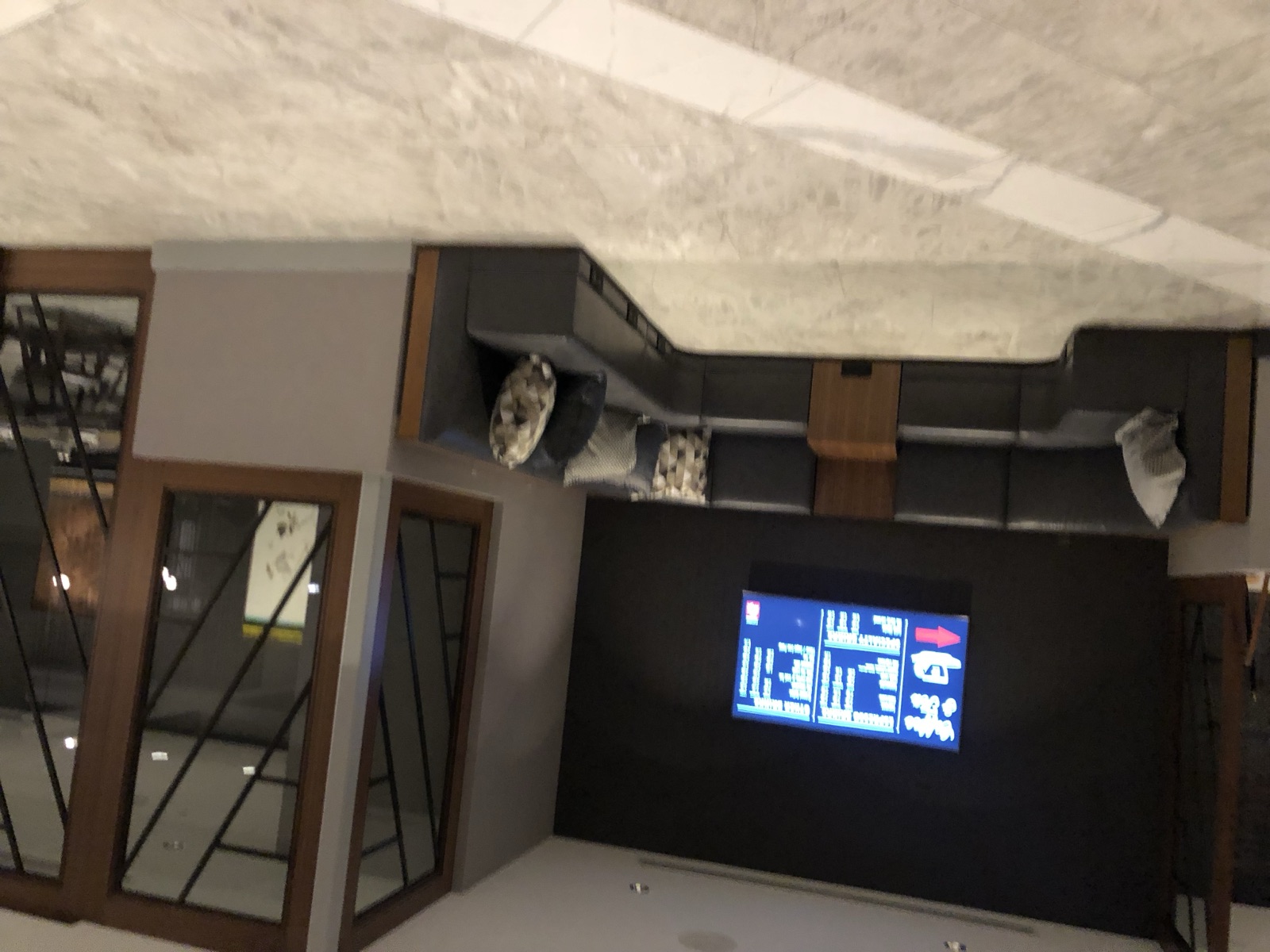
Marble and Natural Stone Restoration

Natural stone restoration on commercial projects typically involves honing (smoothing the surface with progressively finer diamond abrasives to remove scratches, etching, and wear), polishing (bringing the surface to a specified sheen level using fine diamond abrasives or polishing compounds), and sealing (applying a penetrating impregnating sealer to protect against staining). On projects with significant damage or lippage (uneven tile edges), the process may also include grinding — the most aggressive step, which levels the surface and removes the most material.

The specific stone type dictates the approach. Marble (calcite-based, relatively soft) responds differently to diamond abrasives than granite (quartz-based, much harder). Limestone requires different chemical considerations than travertine. A qualified restoration subcontractor identifies the stone type during the estimating phase and adjusts their methods, production rates, and pricing accordingly.

Common commercial natural stone restoration scopes include lobby floors, elevator surrounds, restroom vanity tops, staircase treads and risers, and exterior facade panels. 
Terrazzo Floor Restoration

Terrazzo is one of the most common flooring materials in government buildings, schools, hospitals, and institutional facilities built between the 1920s and 1970s. It is also one of the most commonly underscoped restoration items on renovation projects, because estimators who are not familiar with terrazzo restoration tend to underestimate the work involved.

A full terrazzo restoration scope typically includes stripping existing wax or coating buildup (often decades of accumulated layers), grinding to remove surface damage and level the floor, honing through a series of diamond abrasive grits, polishing to the specified finish, and sealing. If the terrazzo has cracked divider strips, missing sections, or areas where the matrix has deteriorated, the scope also includes repair work — removing and replacing damaged divider strips, filling cracks with color-matched epoxy, and patching missing areas with new terrazzo that matches the original aggregate and matrix color.

Terrazzo repair and color matching is a specialized skill. The aggregate in terrazzo — marble chips, glass, granite, or other materials — varies by installation, and matching the original requires sample preparation and client approval before full-scale work begins. This is not something that can be figured out in the field on day one. It requires advance planning during the estimating and submittal phase.

Concrete Polishing and Surface Preparation

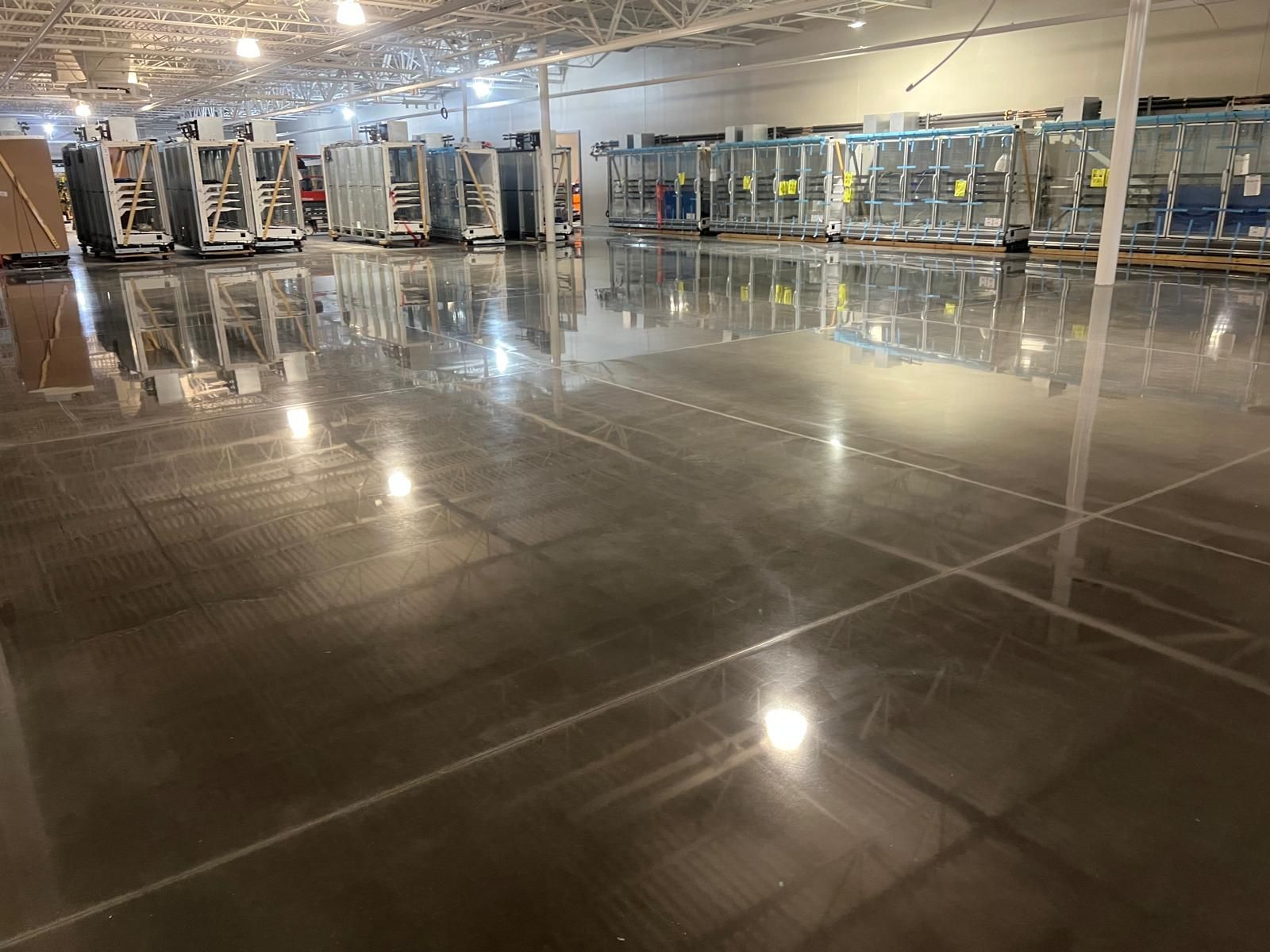
Polished concrete has become one of the most common commercial floor finishes, and concrete polishing specs appear on nearly every new construction and major renovation project. The scope typically includes grinding the concrete slab with coarse diamond abrasives to achieve the specified aggregate exposure class (Class A through Class D, from no exposure to large aggregate), honing through progressively finer grits, densifying (applying a chemical hardener that reacts with the concrete to increase surface hardness and density), polishing to the specified grit level (commonly 400, 800, or 1500), applying a guard (a protective topical coating), and burnishing to final sheen.

Concrete polishing also commonly includes joint filling — filling saw-cut control joints and random cracks with semi-rigid polyurea or epoxy — which is specified as a separate line item but must be performed between specific steps of the polishing process. Getting the timing wrong (filling joints too early or too late in the grinding sequence) creates rework.

Masonry Repointing and Exterior Stone Repair

Masonry repointing — removing deteriorated mortar from the joints between bricks or stone units and replacing it with new mortar — is one of the most common restoration scopes on government and institutional buildings in the DC area. The region’s building stock includes thousands of brick and stone structures where mortar joints have deteriorated due to age, moisture infiltration, freeze-thaw cycling, and environmental exposure.

Proper repointing is not simply filling joints with new mortar. It requires removing the old mortar to a specified depth (typically two to two-and-a-half times the joint width) without damaging the adjacent brick or stone, selecting a mortar that is compatible with the original in composition, strength, color, and texture, and tooling the new joints to match the original profile. On historic buildings, mortar compatibility is critical — using modern Portland cement mortar on a building originally constructed with lime mortar can cause accelerated deterioration of the brick or stone because the harder modern mortar forces moisture and thermal stress into the softer masonry units.

Exterior stone repair scopes may also include stone reset (removing and resetting stones that have shifted or loosened), Dutchman repairs (cutting out damaged sections of stone and replacing them with matching stone patches), crack injection, and stone cleaning (using appropriate methods — chemical, steam, or low-pressure water — depending on the stone type and the nature of the soiling).

Metal and Wood Refinishing

Architectural metal and wood surfaces are frequently included in restoration scopes on historic and institutional projects. Elevator interiors with brass or stainless steel panels, bronze door hardware, wrought iron railings, wood paneling, historic bench frames, and ornamental metalwork all require cleaning, stripping, refinishing, and protective coating.

Metal restoration typically involves cleaning to remove oxidation and surface contamination, sanding or mechanical preparation, priming or treating the base metal, applying the finish coat (paint, stain, lacquer, or clear coat depending on the original finish), and applying a protective sealant. Wood refinishing follows a similar sequence: stripping, sanding, staining or finishing, and sealing.

These scopes are often smaller in dollar value than stone or concrete work but are highly visible — a refinished elevator interior or a restored bronze handrail is something that building occupants and visitors see and touch every day. The quality of the work is immediately apparent, and poor execution is equally obvious.

Why Restoration Should Be Scoped During Estimating, Not During Punch List

The single most common mistake general contractors make with restoration scopes is waiting too long to engage a specialty subcontractor. The consequences of late engagement are predictable and expensive:

Inaccurate pricing.

If restoration scopes are not properly identified and priced during estimating, the GC either carries an allowance that may not cover the actual work, or worse, does not carry the cost at all. Either way, the budget is wrong before the first shovel hits the ground. A restoration subcontractor who reviews the drawings during estimating can provide an accurate, production-based price that the GC can carry with confidence.

Schedule compression.

Restoration work almost always occurs near the end of the construction sequence — after flooring is installed, after walls are painted, after MEP rough-in is complete. If the restoration scope is not planned into the schedule from the start, it gets squeezed into the final weeks before substantial completion, when every other trade is also trying to finish. Compressed restoration timelines mean overtime labor costs, phasing complications, and the risk of surface damage from other trades still working in the space.

Scope gaps.

Construction documents are not always perfectly clear about restoration responsibilities. A finish schedule may call for “polished concrete” without specifying the grit level, aggregate exposure class, or joint fill requirements. A spec section may reference “restore existing terrazzo to original condition” without defining what “original condition” means in terms of sheen level, crack repair, or divider strip replacement. A restoration subcontractor who reviews the documents during estimating identifies these ambiguities and resolves them through RFIs before they become field disputes.

Trade coordination failures.

Restoration work is affected by what happens before, during, and after the restoration crew is on site. Concrete polishing cannot begin if the slab has not been properly cured. Marble polishing is wasted if painters drip on the floor afterward. Terrazzo restoration cannot proceed if the plumbing contractor is still cutting into the floor for rough-in. Early engagement allows the restoration subcontractor to communicate their sequencing requirements so the GC can build them into the project schedule.

Protection planning.

Finished restoration surfaces are vulnerable to damage from other trades. A freshly polished concrete floor can be scratched by a scaffold being dragged across it. A restored marble surface can be etched by a drop of acidic cleaning solution. A repointed masonry facade can be stained by runoff from a window installation above. A restoration subcontractor engaged early can specify the protection requirements — what type of protective covering, when it needs to go down, and who is responsible for maintaining it — before the work is performed, not after the damage is done.

Coordinating Restoration Work on Active Government and Commercial Job Sites

Restoration subcontractors on government and commercial projects do not work in isolation. They work on active job sites with multiple trades, strict security protocols, phased construction schedules, and occupied-building constraints that require a level of coordination and professionalism beyond simply showing up and doing the work.

Multi-Trade Coordination

On a typical government renovation project, the restoration subcontractor must coordinate with the flooring contractor (sequencing — who goes first, and what happens to the transition between flooring types), the painting contractor (protection — paint drips on a freshly polished floor are a rework issue for both trades), mechanical and plumbing contractors (access — floor cuts, pipe penetrations, and equipment pads that affect the restoration area), the electrical contractor (timing — light fixtures and receptacles that affect access to walls adjacent to restoration areas), and the general contractor’s project manager (scheduling — when the restoration crew can access each area and how long they will need it).

An experienced restoration subcontractor has worked through these coordination sequences on hundreds of projects and can communicate their requirements clearly during preconstruction meetings and weekly scheduling calls. They know which questions to ask, which conflicts to flag, and how to adjust their sequence when the inevitable schedule change occurs.
Security and Access on Government Projects

Government buildings — federal offices, military installations, courthouses, intelligence facilities — have security requirements that affect every aspect of how a subcontractor operates on site. Crews may need security clearances or background checks completed weeks or months before mobilization. Tool and material deliveries may need to go through security screening. Work hours may be restricted to specific windows. Certain areas may require escorts. Photography may be prohibited.

A restoration subcontractor with experience on government projects understands these requirements and builds them into their project planning from the start. They submit crew lists and background check documentation early. They plan material deliveries around security screening schedules. They communicate with building security about after-hours access. None of this is difficult, but all of it needs to happen proactively — a subcontractor who shows up on day one without cleared personnel or proper documentation delays the project immediately.

Occupied Building Work

Many government and commercial renovation projects take place in buildings that remain partially or fully occupied during construction. This means the restoration crew must control dust, noise, and vibration to minimize impact on building occupants. It means work areas must be properly barricaded and signed. It means equipment and materials must be stored securely and transported through the building without damaging finished areas. And it means the crew must conduct themselves professionally in an environment where building occupants, tenants, or the public may be present.

Restoration equipment — floor grinders, polishers, and auto-scrubbers — uses water to control dust, but the water and slurry must be contained and properly disposed of. Diamond grinding generates noise that carries through concrete floor slabs. These are manageable issues for an experienced crew, but they require planning and communication with the GC and the building management team.

Historic Preservation and Restoration on Government Projects

The Washington DC metro area has one of the highest concentrations of historic buildings in the country. Federal buildings, courthouses, museums, libraries, universities, and landmark commercial properties throughout DC, Maryland, and Northern Virginia contain original marble floors, terrazzo corridors, limestone facades, ornamental metalwork, and masonry walls that are irreplaceable. When these buildings undergo renovation, the restoration scope is not just about making surfaces look better — it is about preserving historic materials that cannot be replicated.

Preservation vs. Replacement

The fundamental principle of historic preservation is that original materials should be preserved rather than replaced whenever possible. A terrazzo floor that has been in a federal building since 1947 can be restored to excellent condition through proper grinding, honing, polishing, and repair. Replacing it with new terrazzo or a different material destroys the historic integrity of the building and may violate preservation requirements.

A restoration subcontractor working on historic projects must understand this principle and apply it in practice. That means using the least aggressive restoration method that achieves the specified result. It means selecting repair materials (mortar, epoxy, patching compounds) that are compatible with the original materials in composition, color, and physical properties. It means matching original finishes — not imposing a modern high-gloss polish on a floor that was originally finished to a matte hone.

Compliance and Approval Processes

Historic preservation projects often involve approval processes that add time to the restoration schedule. Test areas may need to be completed and approved by the architect, the owner’s representative, or the State Historic Preservation Office before full-scale work can proceed. Material submittals for mortar, sealers, patching compounds, and other products may require review and approval. Changes to the specified restoration approach may require formal RFIs and approval responses.

A restoration subcontractor experienced in historic work builds these approval timelines into their schedule. They know that a mortar sample for a historic repointing project may take two to three weeks to prepare, submit, and receive approval on — and they start that process during the submittal phase, not after mobilization.

Common Historic Restoration Scopes

  • Marble floor restoration — Honing, polishing, and sealing original marble floors in lobbies, corridors, and public spaces to match the building’s original finish level
  • Terrazzo corridor restoration — Stripping decades of wax buildup, repairing cracks and divider strips, and polishing to the original specification
  • Limestone and granite facade cleaning — Removing soiling, biological growth, and atmospheric staining from exterior stone using methods approved for the specific stone type
  • Masonry repointing — Removing deteriorated mortar and repointing with lime-based mortar compatible with the original construction
  • Bronze and brass restoration — Cleaning, patinating, and lacquering ornamental metalwork including door hardware, elevator panels, railings, and plaques
  • Wood refinishing — Stripping, sanding, staining, and sealing historic wood paneling, millwork, and furniture

What to Look for in a Restoration Subcontractor for Government and Commercial Work

Not every restoration company is equipped to work on commercial construction projects, and not every company that does commercial work is equipped for government projects. The requirements are specific, and the consequences of choosing the wrong partner range from rework and schedule delays to damaged historic materials that cannot be replaced.

Government and Commercial Project Experience

Ask specifically about the contractor’s experience with government and commercial renovation projects — not just residential work or standalone restoration projects. The logistics, coordination, documentation, and security requirements of working as a subcontractor on a multi-trade construction project are fundamentally different from performing a standalone marble polishing job in a residential kitchen. How many government projects have they completed in the last five years? Can they provide references from general contractors they have worked with? Have they worked on projects with SHPO or historic preservation oversight?

Accurate, Detailed Pricing

A restoration subcontractor should provide clear, detailed pricing — not vague allowances or gut-feel estimates. When you receive a bid, it should be obvious that the subcontractor has reviewed the actual drawings and understands the specific conditions of your project. The bid should include scope inclusions and exclusions, sequencing requirements, and a clear breakdown of each restoration scope as a separate line item. This level of detail allows the GC to evaluate the bid intelligently and carry it in their estimate with confidence.

Government Stone Restoration in Washington DC

Rose Restoration has restored marble, terrazzo, and stone surfaces in federal buildings, military installations, and government facilities throughout the Washington DC area. We understand the procurement process, security requirements, and scheduling constraints of government work. Our team serves facilities across DC, Arlington (Pentagon corridor), Alexandria, and Northern Virginia. DC masonry services → | DC terrazzo services →

Drawing Review and Scope Identification

A good restoration subcontractor does not just price the scopes you send them. They review the full drawing set and identify restoration scopes that may have been missed or mischaracterized. They catch the finish code on sheet A4.0 that calls for terrazzo restoration in a corridor you thought was getting new carpet. They flag the spec section that requires joint filling as a separate line item from the polished concrete scope. They ask the RFI about the ambiguous aggregate exposure class before it becomes a field dispute. This proactive scope review is one of the most valuable services a restoration subcontractor provides during estimating.

Reliable Field Execution

Pricing and planning are only valuable if the subcontractor can execute in the field. That means showing up when scheduled, mobilizing the crew and equipment they committed to in their bid, staying on schedule, coordinating effectively with other trades, and delivering the specified finish quality consistently across the entire project — not just in the test area.

Ask references specifically about field execution: Did the restoration sub mobilize on time? Did they hit their production schedule? Did they coordinate well with other trades? Were there quality issues that required rework? How did they handle unexpected conditions? The answers to these questions tell you more about a restoration subcontractor than their marketing materials ever will.

Clean Project Closeout

Restoration scopes on government projects often involve documentation requirements at closeout: warranty letters, product data sheets, maintenance manuals, before-and-after photographs, and as-built records. A restoration subcontractor experienced in government work knows what closeout documentation is required, prepares it throughout the project rather than scrambling at the end, and delivers it in the format the GC and owner require.

Frequently Asked Questions

When should a general contractor engage a restoration subcontractor on a project?

During the estimating phase — before the bid is submitted. A restoration subcontractor who reviews the drawings during estimating can identify all restoration scopes in the documents, flag ambiguities that need RFIs, provide accurate pricing, and communicate sequencing requirements that affect the project schedule. Engaging a restoration sub after the project is awarded, or worse, after construction is underway, almost always results in higher costs, schedule compression, and scope disputes.
What restoration scopes are most commonly missed during estimating?

Joint filling on polished concrete projects is one of the most frequently missed line items — it is often specified in the concrete polishing section but overlooked during takeoff. Terrazzo divider strip repair and crack filling are commonly underscoped because estimators assume the terrazzo only needs polishing when it actually needs structural repair. Masonry repointing quantities are frequently underestimated because the deterioration is not fully visible until close inspection. And historic preservation requirements — test areas, material submittals, SHPO approvals — add time and cost that are easy to miss if you have not worked on historic projects before.

How does a restoration subcontractor coordinate with other trades on an active job site?

Through proactive communication during preconstruction and weekly scheduling meetings. The restoration subcontractor communicates which areas they need access to, for how long, and what conditions must be met before they can start (slab cured, walls painted, no overhead work in progress). They also communicate protection requirements — what type of floor protection needs to go down after restoration work is complete, and who is responsible for maintaining it. On well-run projects, these coordination items are resolved in the schedule before they become field conflicts.

What is the difference between restoration and replacement for terrazzo and marble floors?

Restoration uses diamond abrasives and specialized techniques to remove surface damage (scratches, etching, wear, staining) and return the existing material to a specified finish condition. The original stone or terrazzo remains in place. Replacement involves demolishing the existing floor, disposing of it, and installing new material. Restoration is almost always less expensive, less disruptive, and faster than replacement. For historic buildings, restoration is typically required rather than optional, because the original materials are part of the building’s historic significance.

How should general contractors evaluate a restoration bid?

Look for a bid that demonstrates the subcontractor has actually reviewed the drawings and understands your specific project. The proposal should include a clear breakdown of each restoration scope as a separate line item, scope inclusions and exclusions, sequencing requirements, and protection recommendations. Be cautious of single-line-item lump sums with no detail — on restoration work, vague bids often lead to change orders and scope disputes once the work is underway.

Can a restoration subcontractor work in occupied government buildings?

Yes — experienced restoration subcontractors routinely work in occupied federal offices, courthouses, military facilities, schools, and hospitals. The work requires dust containment, noise management, secure material storage, proper barricading of work areas, and professional conduct around building occupants. It also requires coordination with building security for crew access, tool screening, and after-hours work scheduling. A restoration subcontractor with government project experience has established protocols for all of these requirements.

What makes a good restoration subcontractor different from a bad one?

The difference shows up in three places: during estimating (do they review the full drawing set and catch scopes you missed?), during construction (do they mobilize on time, stay on schedule, and coordinate cleanly with other trades?), and at closeout (do they deliver complete documentation without being chased?). Ask references about all three. A restoration sub who is strong in one area but weak in another will still cause problems on your project.


Ready to Scope Your Next Government or Commercial Restoration Project?

If you are a general contractor bidding a government, institutional, or commercial renovation project in the Washington DC, Maryland, or Northern Virginia area that includes marble restoration, terrazzo polishing, concrete grinding and polishing, masonry repointing, or historic preservation work, bring Rose Restoration into the conversation during estimating — not during punch list.

Rose Restoration has been the specialty restoration subcontractor of choice for general contractors across the DC metro region for over 40 years. We review drawing sets, identify restoration scopes, provide accurate pricing, and execute in the field with the reliability and professionalism that government and commercial projects demand.

We provide free bid consultations and scope reviews for general contractors during the estimating phase. Send us the drawing set, and we will identify every restoration scope in the documents, clarify ambiguities, and return a detailed proposal you can carry in your bid with confidence.

Get in touch:

Phone: 703-327-7676

Service area: Washington DC, Maryland, Northern Virginia, and surrounding areas

Whether you need a restoration subcontractor for a single terrazzo corridor or a multi-phase historic renovation with marble, masonry, concrete, and architectural metal scopes, Rose Restoration has the experience, equipment, and field execution capability to deliver.

Contact us today for a bid consultation and scope review.

Leave a Reply

Schedule Online
BBBACCREDITEDBUSINESSA+
BBB Accredited A+ Rating
ABCVIRGINIAMEMBER
ABC Virginia Member
4.8GOOGLE
4.8 Star Rating 117+ Google Reviews
LICENSED& INSURED
Licensed & Insured VA, MD, DC
Leave a Review
Call Now Schedule a Free Assessment
What Stone Do I Have?
Call Now Get a Quote