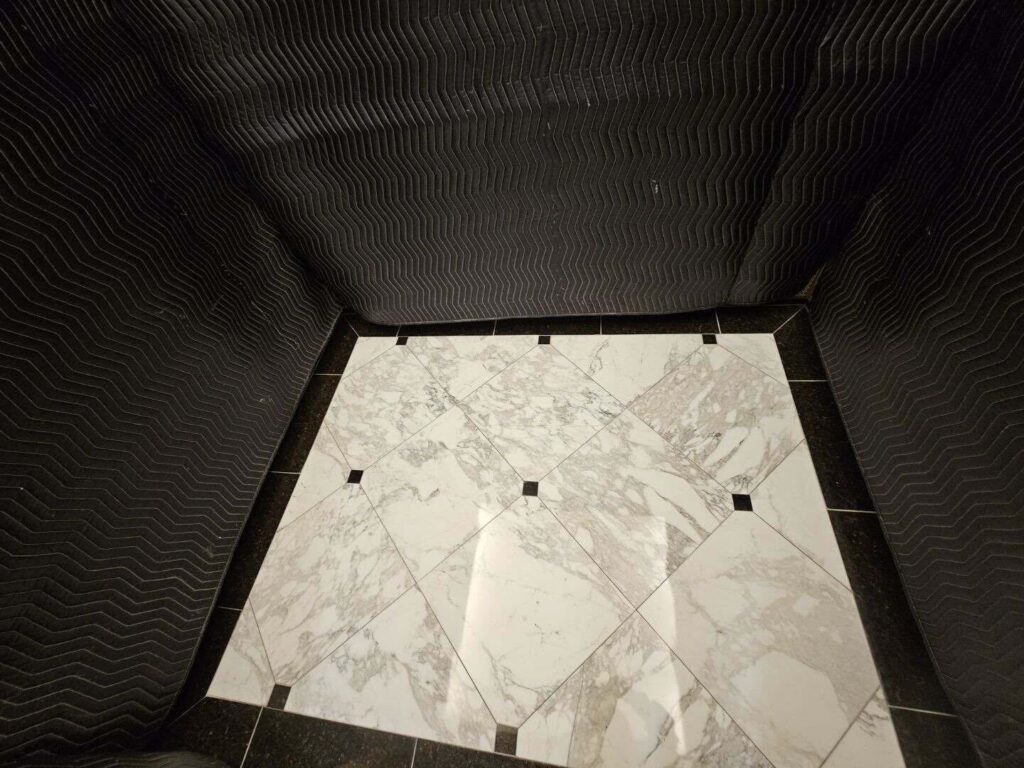
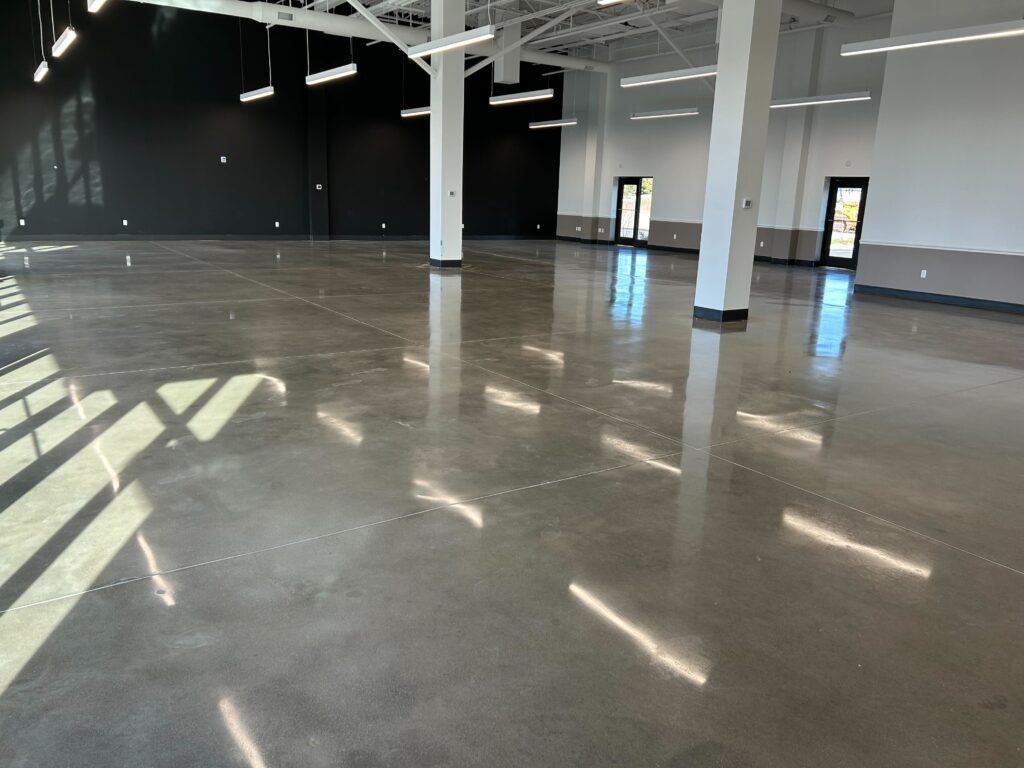
Polished concrete and marble flooring are both premium hard-surface flooring options — but they occupy very different ends of the aesthetic and functional spectrum, and choosing between them requires a clear understanding of what each material delivers.
Polished concrete is mechanically refined concrete that has been ground, honed, and polished using industrial diamond tooling to create a smooth, reflective surface. It is durable, low-maintenance, and modern in appearance, with a clean, industrial-luxe aesthetic that has made it a favorite in contemporary residential and commercial design. Installed cost typically ranges from $6–$15 per square foot depending on the level of polish, aggregate exposure, and any staining or scoring work.
Marble flooring is natural stone quarried from the earth, cut into tiles or large-format slabs, and installed over a prepared substrate. Marble is the classic symbol of luxury, elegance, and permanence — found in palaces, museums, and high-end homes for thousands of years. Its natural veining and color variation are irreplaceable by any manufactured product. Installed cost typically ranges from $15–$50+ per square foot depending on marble variety, tile size, installation complexity, and finish.
Both flooring types are beautiful, long-lasting, and capable of transforming a space. The right choice depends on your design vision, building type, traffic levels, maintenance preferences, and budget. At Rose Restoration International, we install, restore, and maintain both polished concrete and marble flooring throughout Fairfax, VA, Northern Virginia, Maryland, and Washington DC. Call 703-327-7676 to discuss your project.
What Is Polished Concrete Flooring?
Polished concrete is not a coating or overlay applied to concrete — it is the concrete itself, mechanically processed to achieve a smooth, dense, and reflective surface. The polishing process uses a series of progressively finer diamond-impregnated grinding and polishing pads to refine the concrete surface, removing surface irregularities and compressing the concrete’s pores to create a harder, more durable finish.
The process typically involves multiple stages: initial grinding to remove surface imperfections and open the concrete, densifier application to chemically harden the surface, and progressive polishing steps up to 800, 1500, or 3000-grit depending on the desired sheen level. The result ranges from a matte satin finish to a high-gloss mirror polish.
One of the most distinctive design elements of polished concrete is the ability to control aggregate exposure — how much of the sand, stone, and other aggregate within the concrete mix is visible at the surface. Minimal grinding creates a “cream” finish (smooth surface, little aggregate visible); deeper grinding exposes the full aggregate for a terrazzo-like appearance with visible stone chips.
Polished concrete can also be enhanced with integral or topical stains and dyes in a virtually unlimited color palette, decorative scoring and saw cuts to create geometric patterns, and embedded materials like glass, metal, or aggregate. This flexibility makes polished concrete suitable for both austere minimalist spaces and richly detailed custom installations.
Polished concrete is widely used in commercial spaces (retail, restaurants, offices, warehouses), modern residential homes, industrial-chic lofts, and contemporary renovations. Learn more about our concrete polishing services throughout the Northern Virginia and DC area.
What Is Marble Flooring?
Marble is a natural metamorphic rock formed when limestone is subjected to heat and pressure within the earth, causing its calcium carbonate crystals to recrystallize into larger, interlocking grains. The result is a dense, fine-grained stone with a characteristic crystalline sparkle — and when polished, a depth and luminosity that no manufactured product has fully replicated.
Marble flooring is installed as tiles (typically 12″×12″, 18″×18″, 24″×24″, or custom sizes) or as large-format slabs for seamless, dramatic installations. The stone is quarried from deposits around the world — the most prized sources include Carrara, Calacatta, and Statuario regions in Italy, as well as quarries in Turkey, Greece, Spain, Portugal, and the United States.
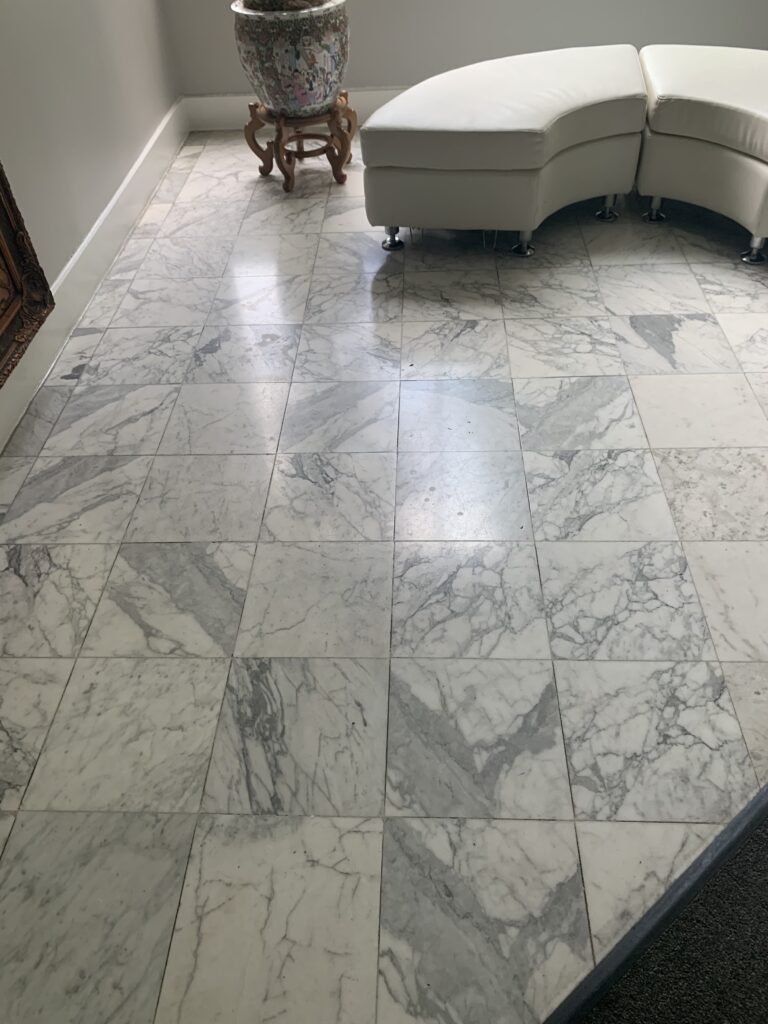
Popular marble varieties for flooring include:
- Carrara — white to light grey with subtle, feathery grey veining; the most abundant and widely used Italian marble
- Calacatta — brighter white with bold, dramatic gold or grey veining; rarer and more expensive than Carrara
- Statuario — striking white with intense grey veining; among the most sought-after and valuable marble varieties
- Emperador — rich brown with white veining; widely used for dramatic flooring
- Nero Marquina — deep black with sharp white veining; bold and elegant
- Crema Marfil — warm ivory/cream tones; widely used in traditional and transitional designs
Marble flooring can be finished in polished (high gloss), honed (matte/satin), brushed (textured), or tumbled (aged, rustic) finishes. Each finish has different aesthetic and maintenance implications. Learn more about our marble flooring services in Northern Virginia and DC.
Polished Concrete vs Marble: Detailed Comparison
| Factor | Polished Concrete | Marble Flooring |
|---|---|---|
| Cost (Installed) | $6–$15/sqft | $15–$50+/sqft |
| Durability | Extremely high; resists heavy traffic | High; can chip or scratch |
| Maintenance | Low — dust mop, damp mop, periodic re-seal | Moderate — sweep, damp mop, periodic sealing, professional re-polish |
| Appearance | Modern, industrial-luxe, customizable | Classic, luxurious, unique natural veining |
| Slip Resistance | Can be slippery when wet (add grip treatment) | Can be slippery when polished; honed finish improves grip |
| Moisture Tolerance | Good when sealed; can crack with extreme moisture movement | Good when sealed; avoid prolonged standing water |
| Heat Resistance | Excellent | Excellent |
| Resale Value | Moderate; appeals to modern buyers | High; widely recognized as premium material |
| Environmental Impact | Utilizes existing concrete substrate; minimal new material | Quarried natural material; significant transport footprint |
| Restoration Options | Re-polishing, re-staining, crack repair, re-sealing | Honing, polishing, stain removal, chip repair, sealing, Marble Armor |
Cost: Polished concrete is significantly less expensive per square foot than marble, largely because it uses the existing concrete substrate rather than requiring the purchase, shipping, and installation of stone tile. For large commercial or residential projects, this cost difference can be substantial. However, marble’s higher price reflects its scarcity, quarrying and fabrication costs, and the prestige of a natural material that has been valued for thousands of years.
Durability: Both surfaces are highly durable, but in different ways. Polished concrete in a commercial or high-traffic environment is remarkably resilient — it resists heavy foot traffic, wheeled equipment, and abrasion extremely well. Marble is strong but more susceptible to chipping and cracking from impact, and its polished surface can scratch over time in high-traffic areas, requiring periodic professional re-polishing.
Maintenance: Polished concrete is low-maintenance — regular dust mopping and damp mopping with a neutral cleaner, plus periodic re-sealing, keeps it looking sharp. Marble requires a similar cleaning routine but also needs periodic professional attention: re-polishing as the surface dulls, stain removal, resealing, and protection from acid etching in kitchen applications.
Appearance and Design: This is ultimately where most decisions are made. Polished concrete’s clean, contemporary look is excellent for modern and industrial-inspired spaces. Marble’s timeless, natural beauty — with its unique veining and luminous depth — remains unmatched for traditional, classical, and high-end luxury applications.
When to Choose Polished Concrete
Polished concrete is the superior choice in several key scenarios:
Modern and contemporary design: Polished concrete’s clean lines, minimalist character, and reflective finish are perfectly suited to modern architecture, loft-style spaces, and contemporary residential design.
High-traffic commercial applications: Retail stores, restaurants, offices, showrooms, warehouses, and other commercial spaces benefit from polished concrete’s exceptional durability and low maintenance requirements. It holds up to foot traffic, rolling carts, and heavy equipment far better than most natural stone.
Budget-conscious projects: When covering large floor areas — commercial spaces, open-plan ground floors, basements — polished concrete’s lower cost per square foot makes it significantly more affordable than marble while still delivering a premium appearance.
Industrial-chic and urban aesthetics: The raw, honest beauty of polished concrete is a defining element of industrial, loft, warehouse, and urban-inspired design. In these contexts, concrete isn’t just a budget choice — it’s the right aesthetic choice.
Existing concrete substrates: If you have an existing concrete slab in good condition, polishing it is far more cost-effective and environmentally friendly than covering it with another material.
When to Choose Marble
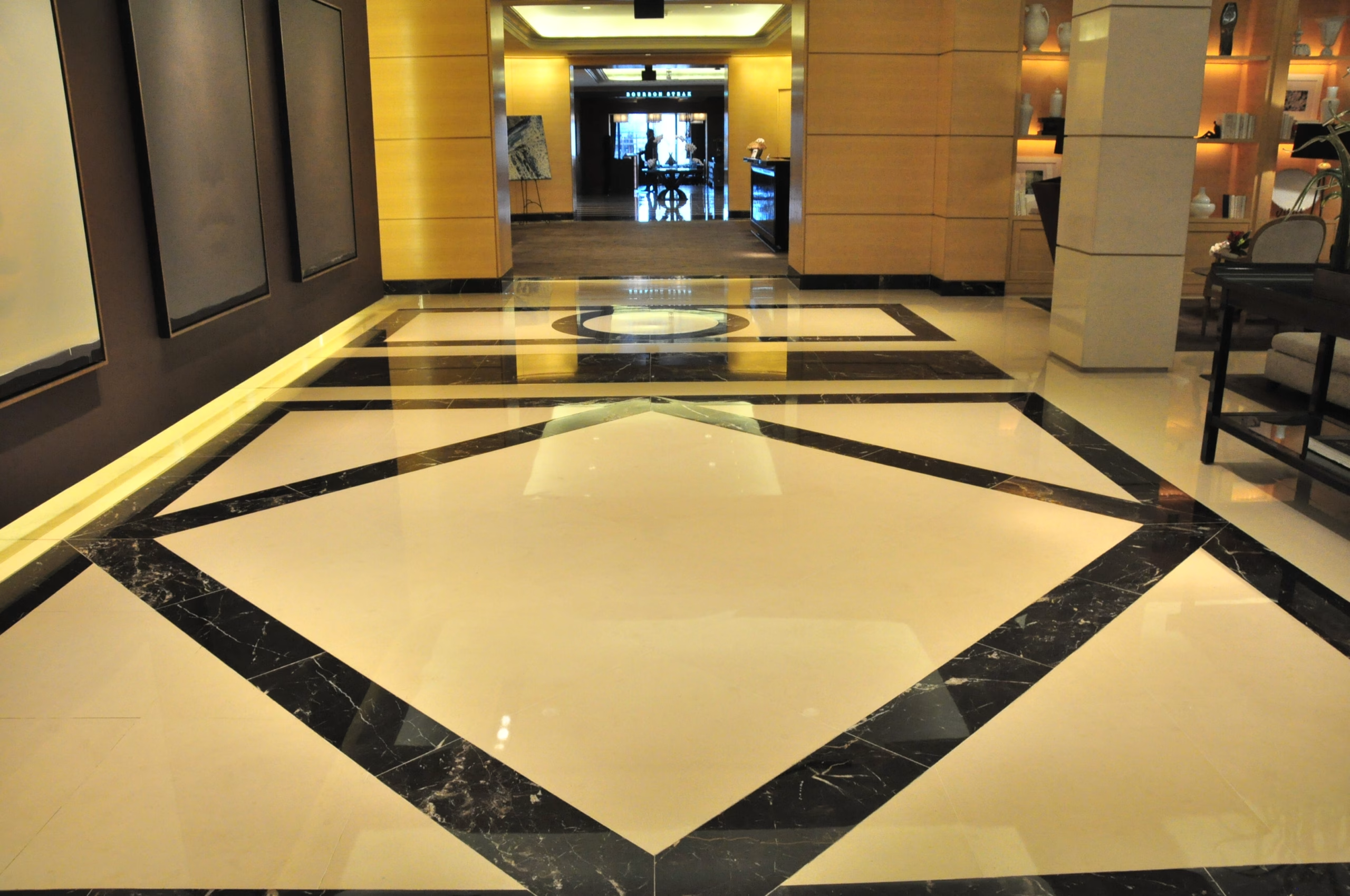
Marble flooring remains the benchmark for luxury and elegance in several important contexts:
Luxury residential applications: Master bathrooms, formal entry foyers, living rooms, and dining rooms in high-end homes benefit enormously from marble’s visual weight, natural beauty, and associations with quality and permanence. Few materials make a first impression the way a polished marble foyer does.
Classic and traditional design: Georgian, Federal, Mediterranean, French Country, and other traditional architectural styles are naturally complemented by marble. Concrete, however beautiful in contemporary settings, can feel out of place in a home designed with classical proportions and traditional detailing.
High-end commercial spaces: Hotel lobbies, luxury retail environments, law firms, financial institutions, and premium office spaces use marble to signal quality, permanence, and prestige to clients and visitors.
Historic buildings and renovations: When restoring or renovating a historic property, marble is often the historically appropriate material choice — and may be required by preservation guidelines. Rose Restoration International has extensive experience working on historic marble floors throughout the DC, Maryland, and Virginia region.
Maximizing resale value: In the residential real estate market, marble flooring is widely recognized as a premium upgrade that adds tangible value to a property — particularly in high-end neighborhoods throughout Northern Virginia, Bethesda, and the DC area where buyers expect premium finishes.
Can Both Polished Concrete and Marble Be Restored?
Yes — both polished concrete and marble flooring can be professionally restored when they become dull, scratched, stained, or damaged. This is one of the key advantages both materials share over softer flooring options like hardwood or luxury vinyl: they can be brought back to like-new condition through professional restoration rather than replacement.
Concrete restoration services include re-grinding and re-polishing to restore the surface sheen, crack and joint repair, re-staining if the decorative color has faded, and re-sealing or densifier application to maintain surface hardness and stain resistance. In many cases, a dull or damaged polished concrete floor can be fully restored in a single day.
Marble floor restoration services include diamond honing to remove scratches, etching, and surface wear, followed by polishing to restore the original gloss. Additional services include stain removal using professional poultice treatments, chip and crack repair, deep cleaning and grout restoration, sealing, and the application of protective coatings like Marble Armor to prevent future etching and staining.
Rose Restoration International provides both concrete and marble floor restoration throughout Fairfax, VA, Northern Virginia, Maryland, and Washington DC. Contact us to schedule an assessment of your floors and receive a restoration estimate. We’ve been restoring premium hard-surface floors in the DMV region for over 40 years — call 703-327-7676 today.
Frequently Asked Questions: Polished Concrete vs. Marble Flooring
Is polished concrete cheaper than marble flooring?
Yes, in most cases. Polished concrete typically costs $6–$15 per square foot installed, while marble flooring generally runs $15–$50+ per square foot installed depending on the variety, tile size, and installation complexity. On large projects, the cost difference can be significant. However, higher-end polished concrete installations with decorative staining, custom scoring, and premium aggregate can approach the cost of entry-level marble.
Which is more durable — polished concrete or marble?
Both are highly durable, but in different ways. Polished concrete is exceptionally resistant to heavy traffic, abrasion, and impact — making it ideal for commercial applications. Marble is strong but more susceptible to chipping from impact and to surface scratching in high-traffic areas. Both surfaces can be professionally restored when they show wear. For raw durability under commercial conditions, polished concrete generally has the edge.
Is marble flooring worth the cost?
For the right application, yes. Marble flooring adds significant aesthetic value, timeless elegance, and real estate value to a property. In luxury residential and high-end commercial settings throughout the DC, Maryland, and Northern Virginia market, marble is widely considered a worthwhile investment. The key is understanding its maintenance requirements — particularly in kitchens and wet areas — and budgeting for periodic professional care.
Can polished concrete look like marble?
Somewhat, but not fully. Advanced decorative concrete techniques — including the use of overlays, stains, dyes, and artistic scoring — can create marble-inspired patterns in concrete. However, the natural veining, crystalline depth, and luminosity of real marble cannot be truly replicated in concrete. If you want the look of marble, the most authentic result is to use marble.
How long does each floor type last?
Both polished concrete and marble floors can last for decades — or even centuries — with proper care. Historic marble floors in European cathedrals and government buildings have endured for hundreds of years. Polished concrete floors in well-maintained commercial environments regularly last 20–30+ years before requiring major restoration. The key factor in longevity for both materials is proper maintenance and periodic professional restoration as needed.
Does Rose Restoration install and restore both polished concrete and marble?
Yes. Rose Restoration International provides installation, restoration, and ongoing maintenance for both polished concrete and marble flooring throughout Fairfax, VA, Northern Virginia, Maryland, and Washington DC. With over 40 years of experience in premium hard-surface flooring, we have the expertise and equipment to handle projects of any size — from single-room residential restoration to large commercial installations. Call 703-327-7676 or contact us online to discuss your project.
Whether you’re choosing between polished concrete and marble for a new installation, or you need restoration work on an existing floor, Rose Restoration International is the DMV region’s trusted expert in premium hard-surface flooring. We bring over 40 years of specialized experience to every project — from historic marble restoration in Washington DC to contemporary polished concrete in Fairfax, VA and throughout Northern Virginia and Maryland.
Contact us today for a free consultation and estimate. We serve residential and commercial clients throughout the greater Virginia, Maryland, and DC area.