
Reference Guide
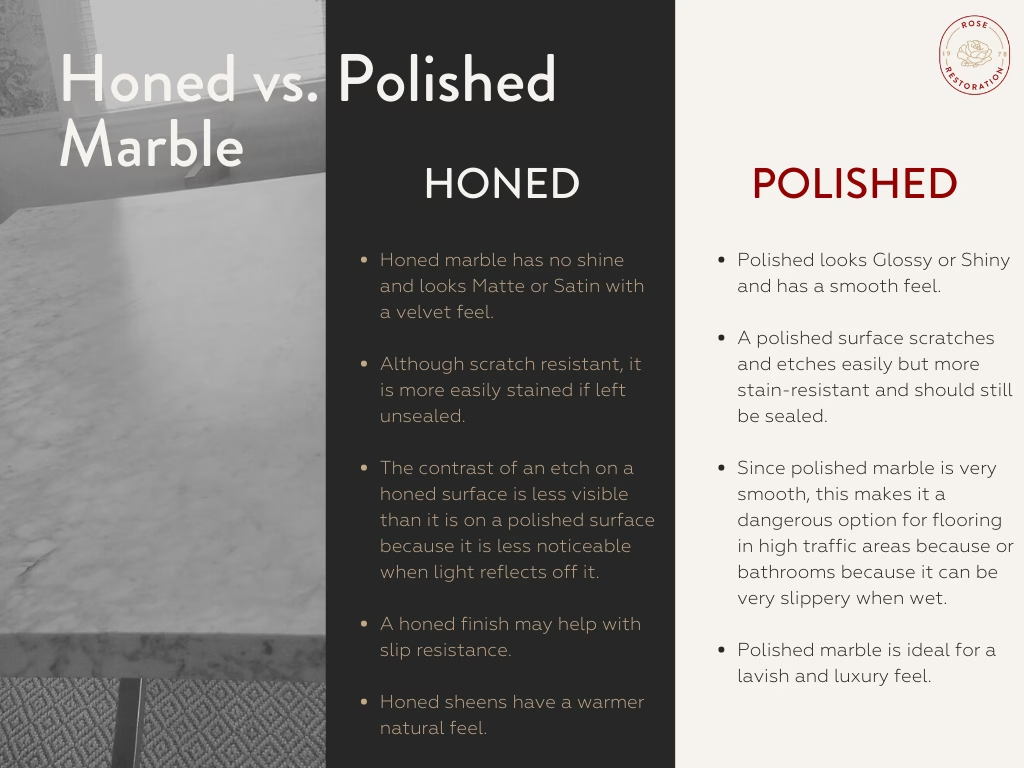
For the comparison — when to choose honed vs. polished marble — see Rose’s reference guide:
 By Tom Kuhn, CEO, Rose Restoration
Rose Restoration has restored marble, terrazzo, concrete, and natural stone across DC, MD, and VA since 1978.
Honing marble is the single most important step in any marble restoration. It’s the step that actually removes damage — etching, scratches, and wear — and produces the uniform surface that polishing can then bring to mirror finish. Here’s what professional honing actually involves, how it’s different from what you can do at home, and when honing (rather than just polishing) is the right call.
Rose Restoration has been professionally honing marble throughout Washington DC, Maryland, and Virginia since 1978. Free on-site assessment: online form or (703) 327-7676.
What Honing Actually Does
Marble honing is a mechanical process using diamond abrasives to grind the surface of the stone. Unlike cleaning (which removes soil) or polishing (which produces gloss), honing physically removes material from the top layer of the marble — taking the damage with it.
This is why honing is the key step in:
- Etch removal. Acidic spills (wine, juice, cleaning products) chemically damage the surface layer of marble. Only physical removal of that layer restores the stone. Polishing alone puts gloss over damaged marble — looks good for a week, dull within a month.
- Scratch removal. Progressive honing grits remove scratches left by metal furniture, abrasive contact, or worn traffic patterns.
- Lippage elimination. Minor height differences between tiles can be ground flat with honing (assuming the marble has enough thickness to accept the removal).
- Surface uniformity. Areas that have had localized damage or previous repair can be honed back to uniform appearance.
The Professional Honing Sequence
Professional marble honing uses diamond abrasive pads in a progressive sequence — coarse to fine:
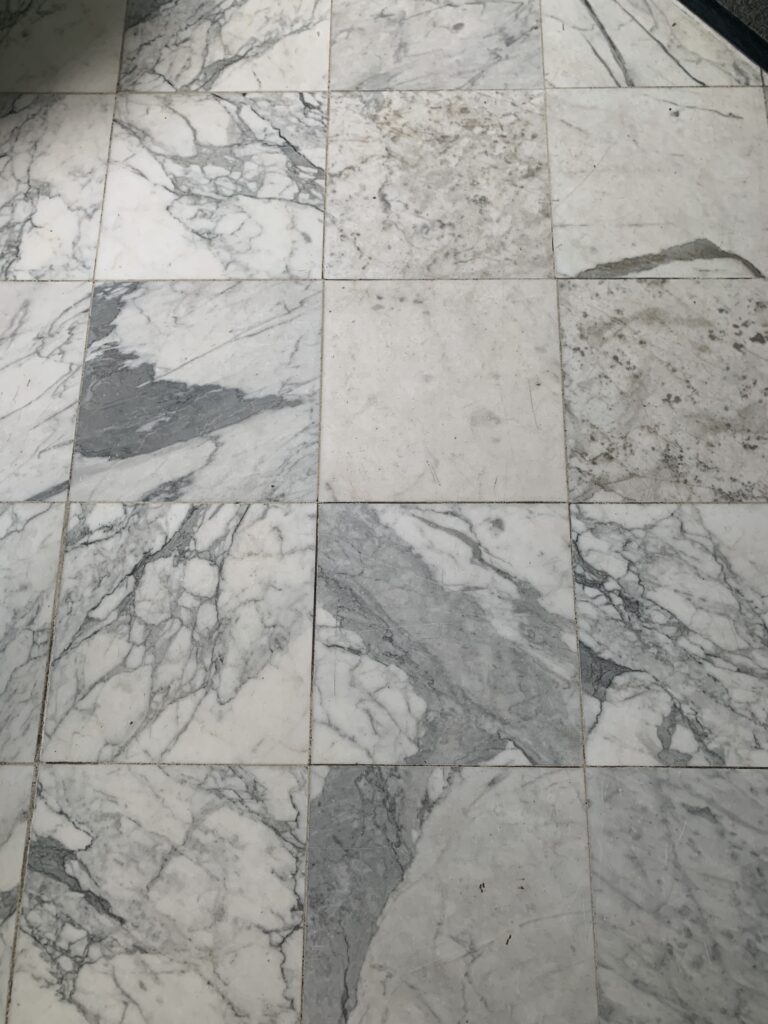
- 50–100 grit: aggressive cutting for badly damaged marble. Used rarely; too aggressive for most restoration work.
- 200 grit: standard starting point for marble with significant etching or scratching.
- 400 grit: next step; removes 200-grit scratches and begins producing satin surface.
- 800 grit: satin / semi-gloss range. Many commercial marble floors are finished at 800 grit (not polished further) for the modern matte look.
- 1500 grit: light honing into polishing territory. Substantial shine starts to develop.
- 3000 grit: finest honing grit. Mirror-level clarity.
Beyond 3000 grit, polishing compounds (not diamond pads) take over to produce the final mirror finish.
Each grit removes the scratches from the previous one. Skipping a grit leaves scratches that polishing can’t fix — which is why amateur honing produces streaky, uneven results.
Honing Equipment
Professional marble honing uses:
- Floor-mounted rotary machines. For floors — rotate diamond pads at controlled speeds with water feed.
- Hand-held rotary polishers. For countertops, vanities, and detail work.
- Water feed systems. Keeps pads cutting cleanly and suppresses dust.
- HEPA extraction. Captures any airborne dust — critical in occupied buildings.
- Diamond pads. Resin-bonded diamond particles in specific grits. Different brands (Cuturi, Klindex, Diamonite) have different characteristics; professional technicians know which to use for which marble type.
How Long Does Honing Take?
For a 200 SF residential marble foyer needing full restoration (200 → 400 → 800 → 1500 grit):
- Setup and containment: 30 minutes
- 200 grit honing: 1 hour
- 400 grit honing: 1 hour
- 800 grit honing: 45 minutes
- 1500 grit honing: 45 minutes
- Polishing compound + buff: 45 minutes
- Crack/chip repair + seal: 45 minutes
- Final cleanup: 30 minutes
Total: roughly 6-7 hours for a full restoration. Larger areas scale proportionally.
Can You Hone Marble Yourself?
Technically yes, practically no. DIY-marketed “marble honing kits” exist, but the quality gap between DIY and professional work is dramatic:
- Consumer-grade diamond pads cut slower and produce uneven results.
- Skipping grits or using wrong grit sequence leaves scratches.
- Handheld amateur use produces streaky patterns that amateur polishing can’t hide.
- Water feed and dust control are hard to manage without proper equipment.
- Getting a uniform finish across a large area requires experience.
For a single small countertop section with minor etching, DIY could potentially work. For anything else, professional honing produces results that justify the cost.
Honing vs Polishing — The Difference
Honed finish and polished finish are different deliberate end-points of the same process:
- Honed: stopped at 200-800 grit. Matte or satin appearance. No (or very little) gloss. Smooth to touch but doesn’t reflect light.
- Polished: taken to 1500-3000 grit plus polishing compounds. Mirror-like reflection. Classic luxury marble finish.
Honing happens first either way — it’s the damage-removal step. Whether to stop at honed or continue to polished is a finish choice. See our guide on polishing honed marble.
Professional Marble Honing Cost
In the DC metro area, typical 2026 pricing for professional honing:
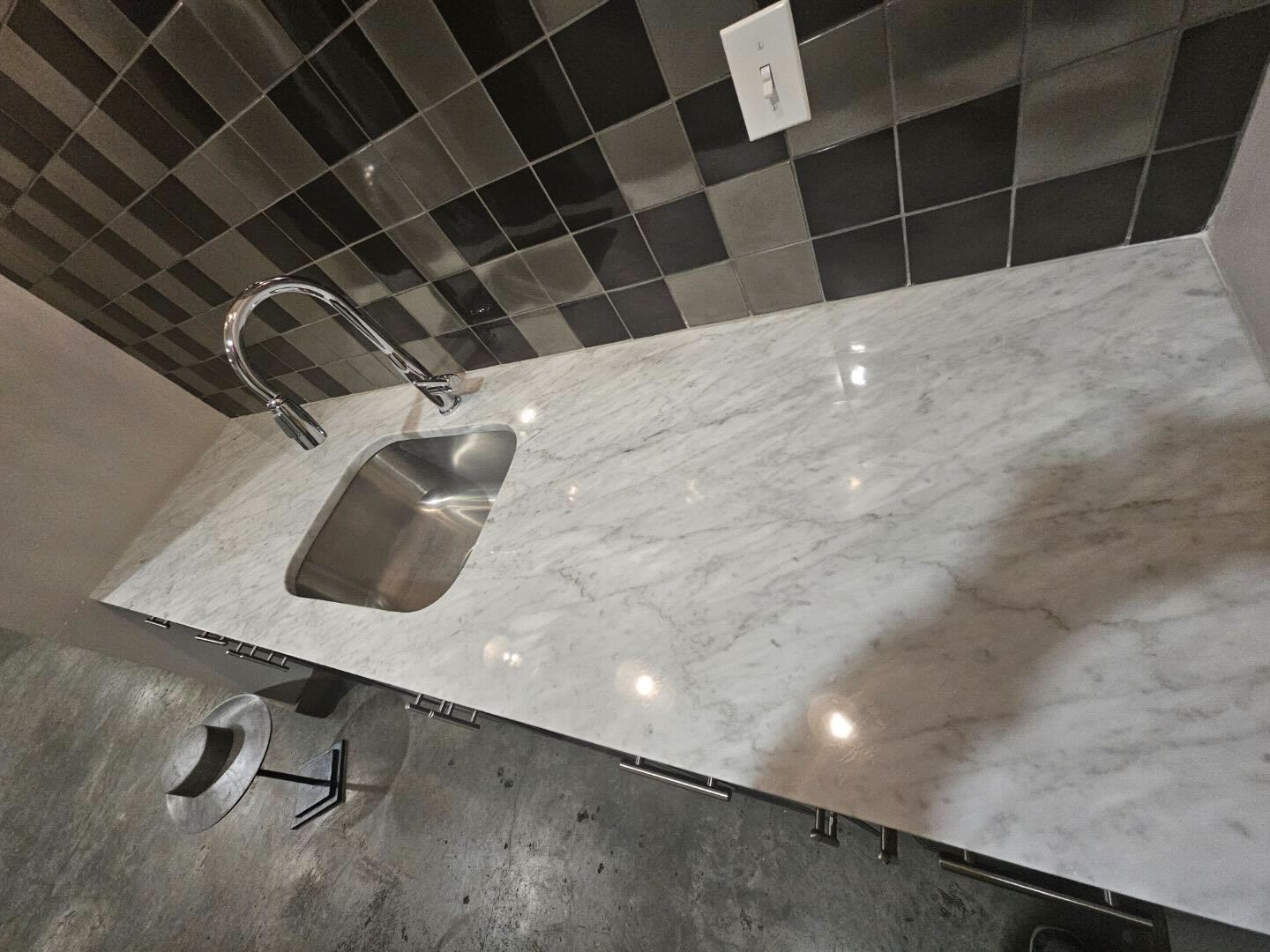
- Residential countertop honing (full honing + polish + seal): $300–$800
- Residential floor honing: $6–$15 per SF
- Commercial marble floor honing: $6–$20 per SF depending on condition
- Hotel lobby honing and polishing: $10,000–$50,000+ depending on size
See our full 2026 marble cost guide.
Related Reading
- Honed vs Polished Marble — Full Comparison
- Can You Polish Honed Marble?
- How to Polish and Buff Marble Floors
- Fix Etched or Stained Marble
- Stone Finishes Explained
- Main Marble Restoration Services
- Marble Cost Guide
Ready to Restore Your Marble?
Free on-site assessment for marble honing, polishing, and full restoration in DC, MD, and VA.
Call: (703) 327-7676 | Online: request a free assessment
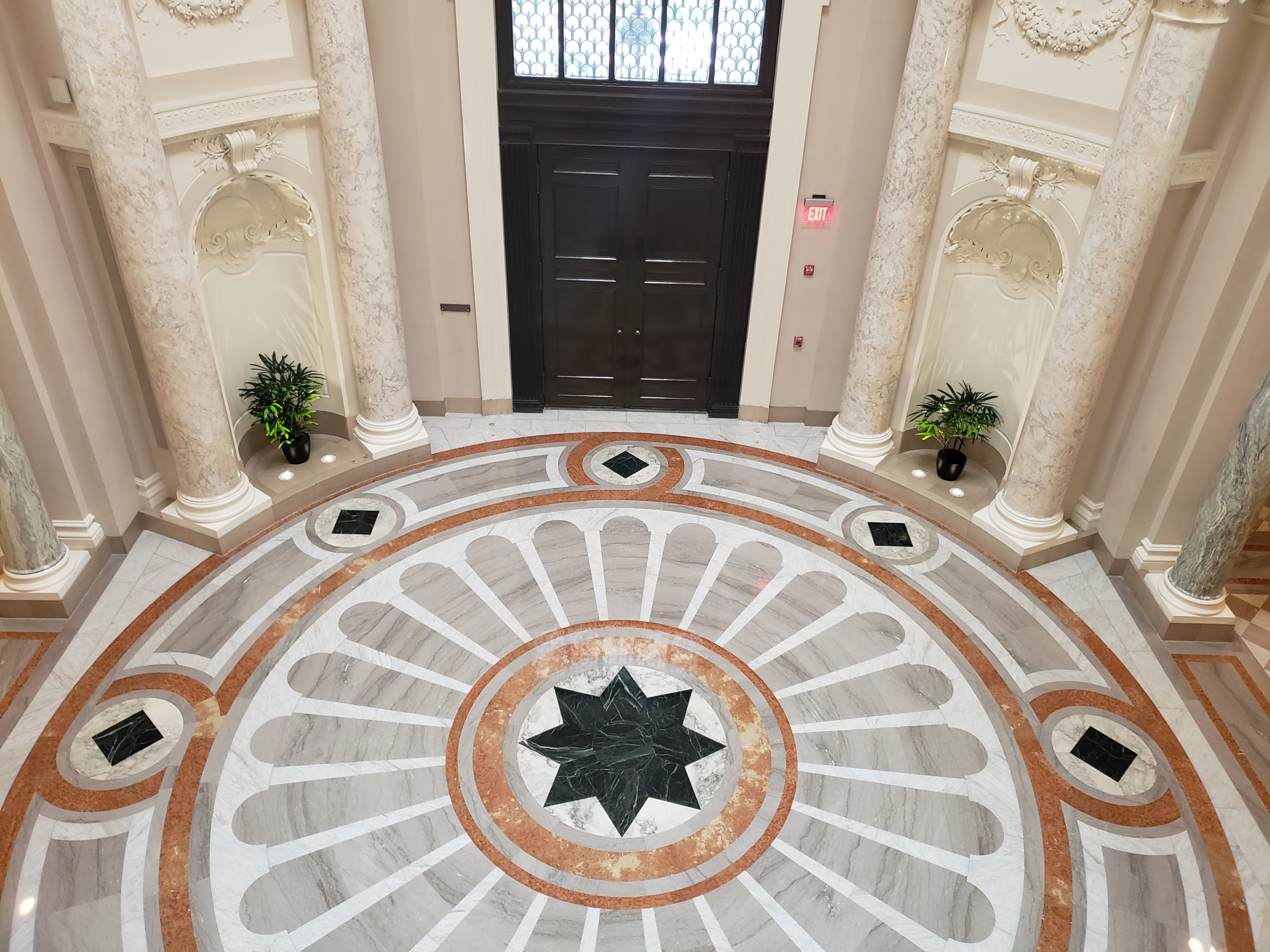
We hone marble across the region — including a steady stream of Arlington high-rise lobbies and condo projects where etching from cleaning chemicals is the most common reason owners call us.
Looking for something else?
Get a Free Assessment from Rose Restoration
Tell us about your marble, stone, terrazzo, or concrete and our senior technicians will recommend the right restoration approach. Family-run and trusted across Washington DC, Maryland, and Virginia since 1978.
Call (703) 327-7676 · Email info@roserestoration.com · schedule a time · or send us photos.
Restore. Don't replace.
48 years of polishing marble, terrazzo, concrete, and tile across Washington DC, Northern Virginia, and Maryland. IMF, Four Seasons, Smithsonian, and the Virginia State Capitol trust us — you can too.