Quick Answer
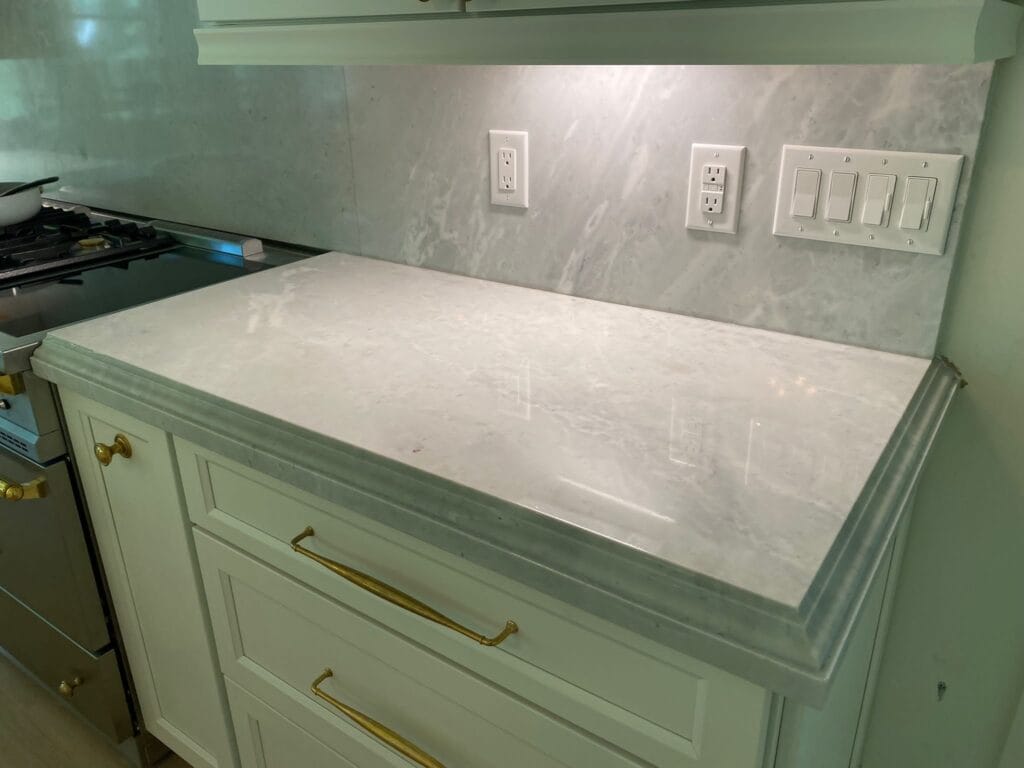
How is quartzite countertop restored when worn or stained?
Quartzite restoration uses chemical polishing compounds formulated for the harder mineral structure (Mohs ~7 vs marble Mohs ~3-4). The process is similar to granite, not marble. Quartzite-specific impregnating sealer is then applied — quartzite is less porous than marble but still benefits from quality sealing every 5-7 years.
Quartzite is one of the hardest and most beautiful natural stones available for countertops and flooring — but it is also one of the most misunderstood. If you invested in quartzite for your home, you chose a material that can last a lifetime with the right care. Rose Restoration International has experience since 1978 restoring natural stone, including the specialized techniques that quartzite demands.
This is important, because there is enormous confusion in the market. Quartzite is a natural metamorphic rock formed when sandstone is subjected to extreme heat and pressure deep within the earth. The quartz grains in the original sandstone recrystallize and fuse together, creating one of the hardest natural stones on the planet — a 7 on the Mohs hardness scale, harder than granite and dramatically harder than marble.
Quartzite is NOT quartz. Quartz countertops (brands like Caesarstone, Silestone, Cambria) are engineered products — ground stone mixed with polymer resins and manufactured in a factory. Quartzite is quarried from the earth as a solid slab of natural stone. The two materials look different, perform differently, and require completely different care and restoration approaches.
If your countertop was sold to you as “quartzite” but seems to etch from lemon juice or wine, it may actually be a dolomitic marble that was mislabeled at the slab yard. This happens more often than it should. Our technicians can identify your actual stone type during an assessment and recommend the correct restoration approach.
Quartzite’s extreme hardness is both its greatest strength and the reason it requires specialized restoration techniques. The same hardness that makes quartzite resistant to scratching and etching also makes it resistant to polishing — you cannot use the same diamond abrasives and techniques that work on marble or even granite.
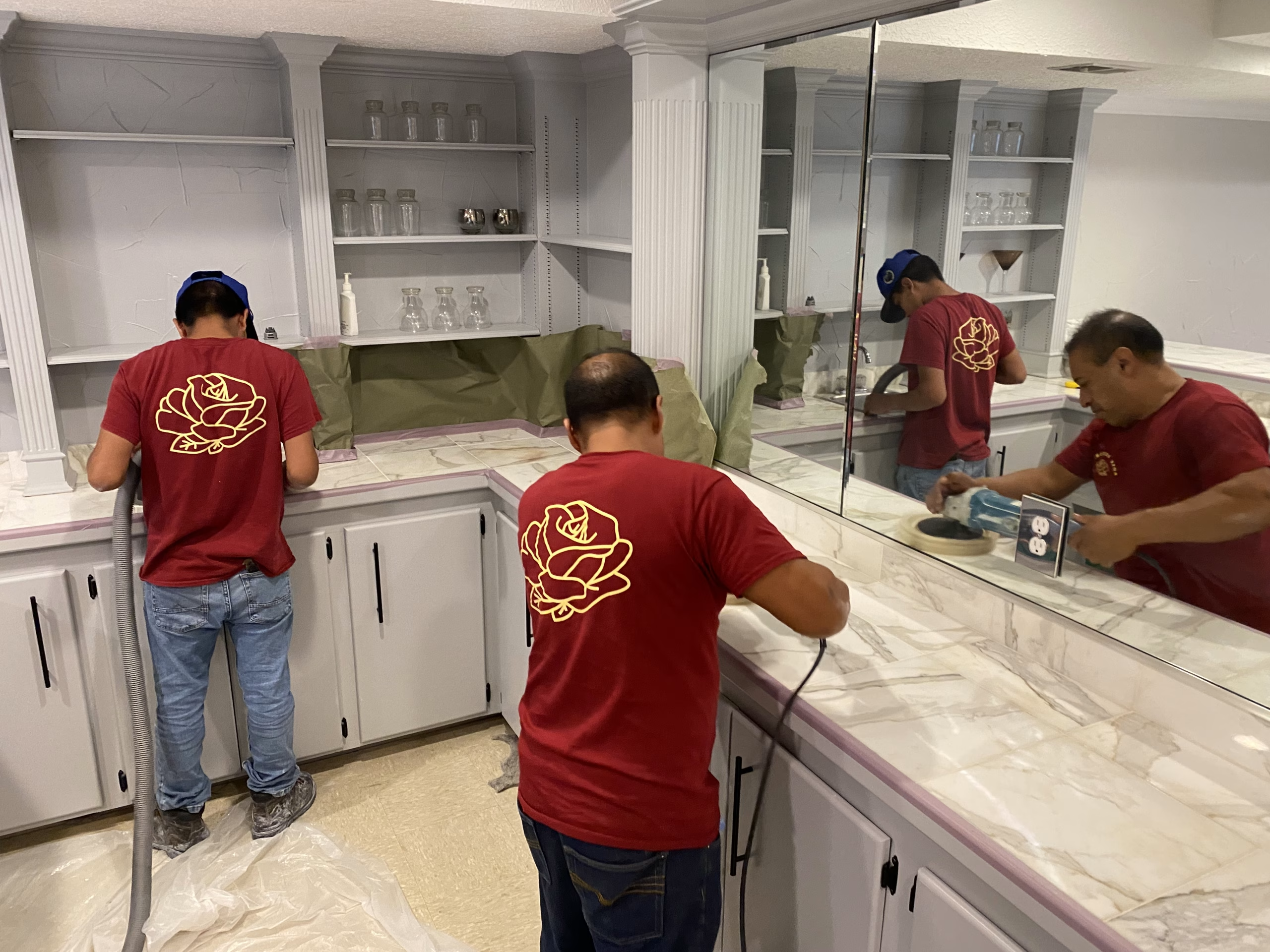
Restoring quartzite requires higher-grit diamond tooling, more time, and more experience. Many stone restoration companies either decline quartzite work or deliver mediocre results because they apply granite techniques to a harder stone. Our technicians are trained specifically in quartzite restoration and have the equipment to do it properly.
Even at a Mohs hardness of 7, quartzite surfaces will eventually show wear. High-traffic floor areas develop dull paths. Countertops around sinks and prep areas lose their luster over years of daily use. Fine scratches accumulate and scatter light instead of reflecting it.
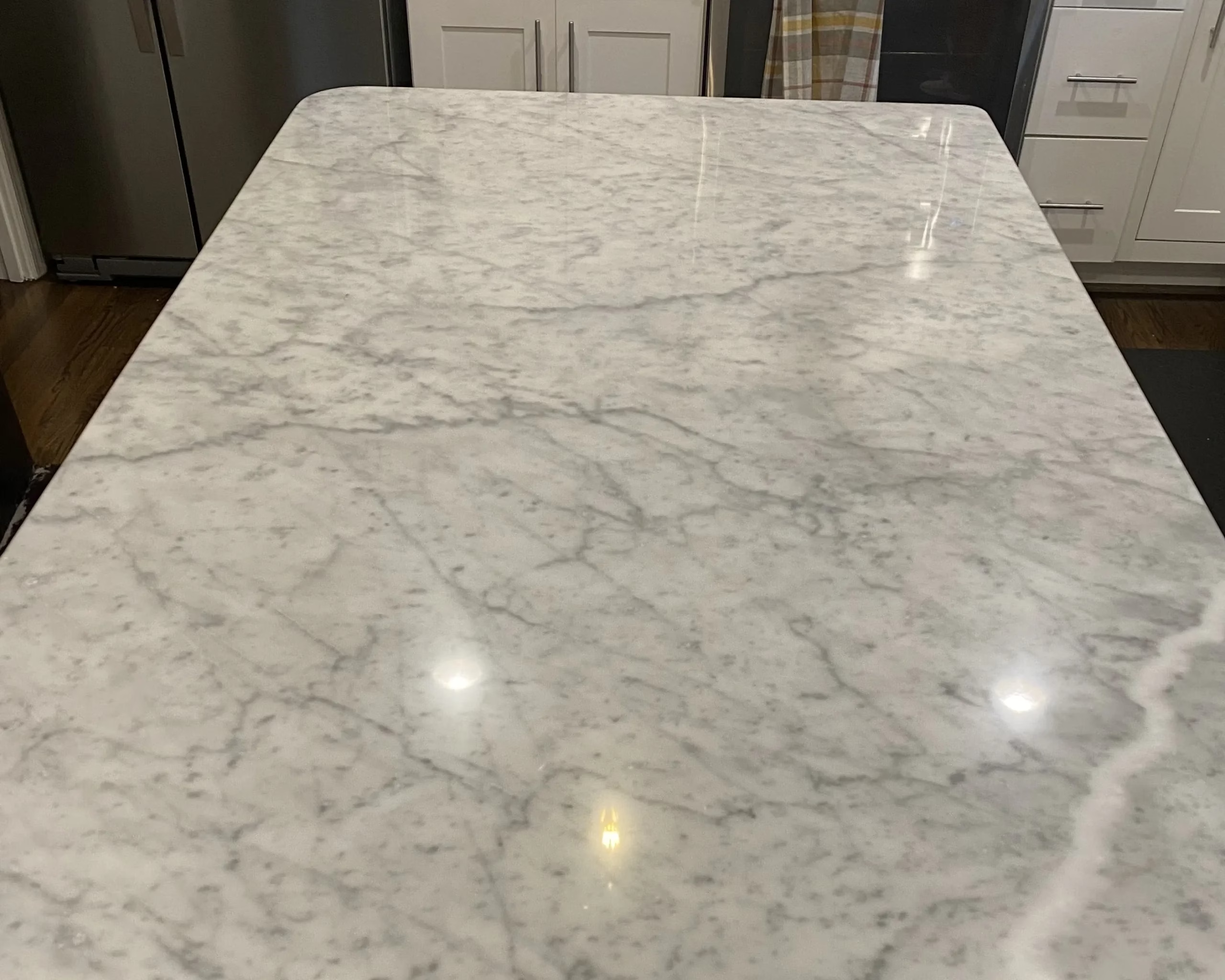
We restore quartzite surfaces through a progressive diamond polishing process using abrasive pads specifically rated for metamorphic stone at this hardness level. The process is slower than marble or granite polishing, but the results are exceptional — a deep, clear polish that highlights quartzite’s dramatic veining and translucency.
We can also hone quartzite to a matte or satin finish if you prefer a more understated look. Honed quartzite is increasingly popular for both countertops and flooring.
Quartzite is denser than marble and most granites, which means it absorbs liquids more slowly. However, it is not non-porous. Quartzite countertops and floors should still be sealed with a professional-grade impregnating sealer to protect against oil-based stains and provide an extra margin of safety against spills.
We use sealers formulated specifically for dense, hard stones. These products penetrate effectively even into tight-grained quartzite without leaving surface residue or altering the stone’s natural appearance. For countertop applications, we recommend resealing every two to three years.
Quartzite is hard, but it can be brittle. Impact damage — a dropped cast iron pan, a heavy object striking a countertop edge — can chip or crack quartzite. Because quartzite is so hard, these chips tend to have sharp, clean edges rather than the softer fractures you see in marble.
Our technicians repair quartzite chips and cracks using color-matched epoxy systems, shaped and polished to blend with the surrounding stone. For countertop edges, we can rebuild the profile to match the original fabrication. Most repairs are virtually invisible once completed.
Quartzite’s heat resistance is one of its standout qualities for kitchen use. Unlike engineered quartz, which can scorch or discolor from hot pans, natural quartzite can handle high temperatures without damage. This does not mean you should use it as a trivet — thermal shock from extreme temperature changes can still cause issues — but quartzite is far more forgiving than marble, granite, or engineered surfaces.
Combined with its scratch resistance and chemical resistance, quartzite is arguably the most durable natural stone you can put in a residential kitchen. When properly maintained, a quartzite countertop will outlast the kitchen itself.
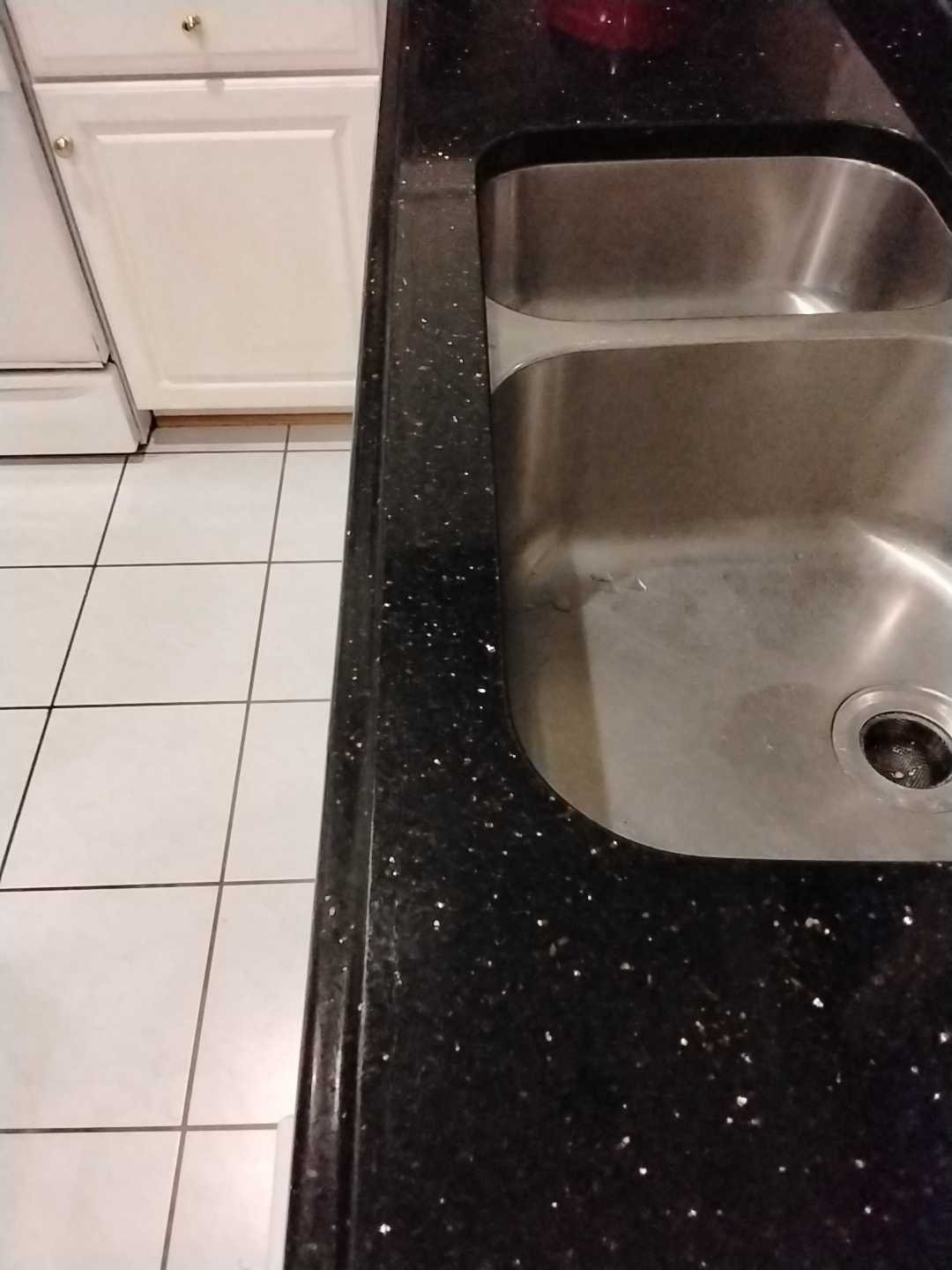
The same surface on the same Rose job, photographed by our crew before and after the work.
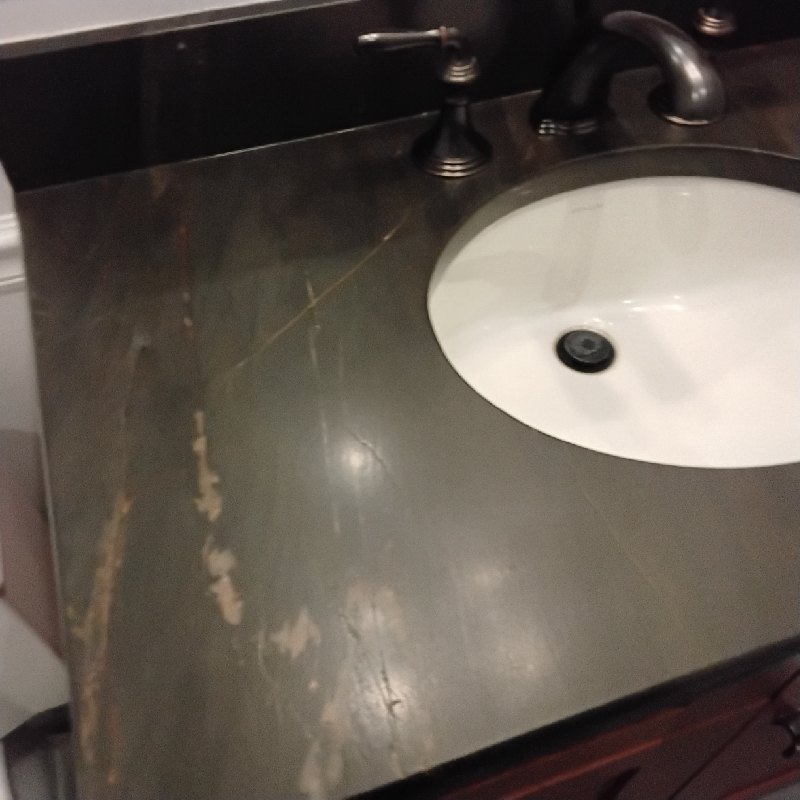 Before
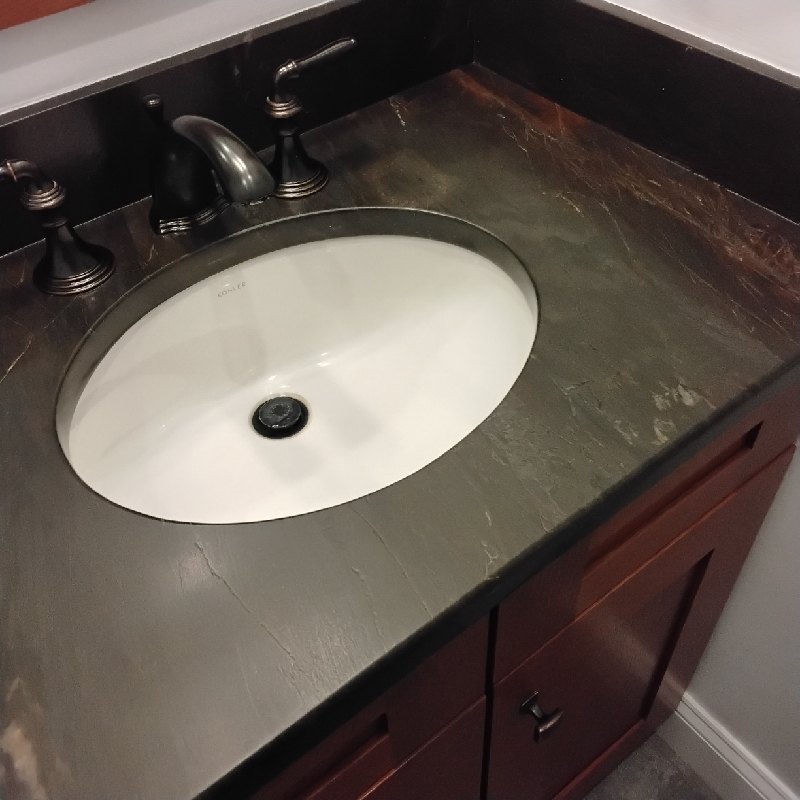 After
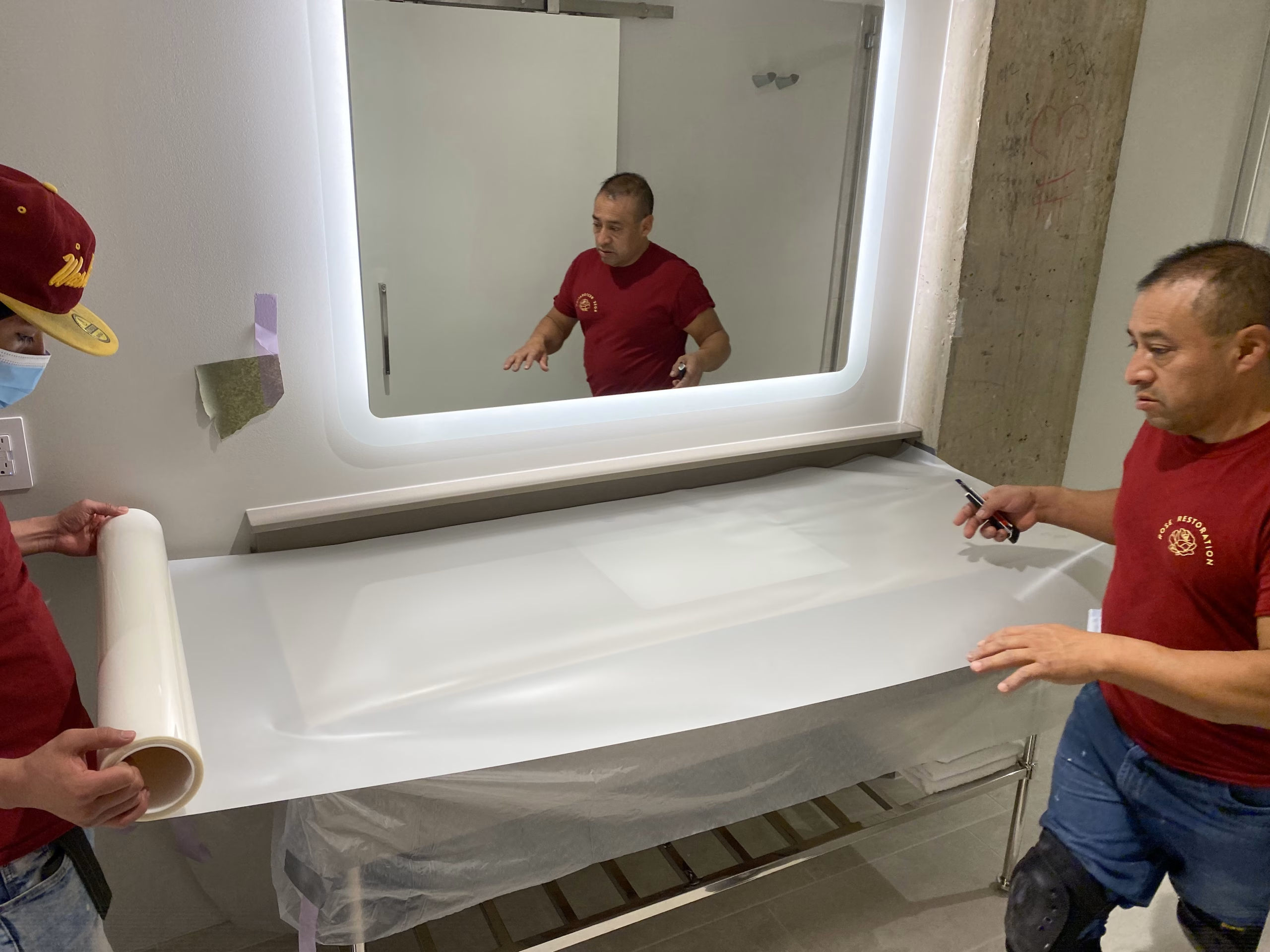
AfterReal Rose Restoration jobs, photographed by our crews.
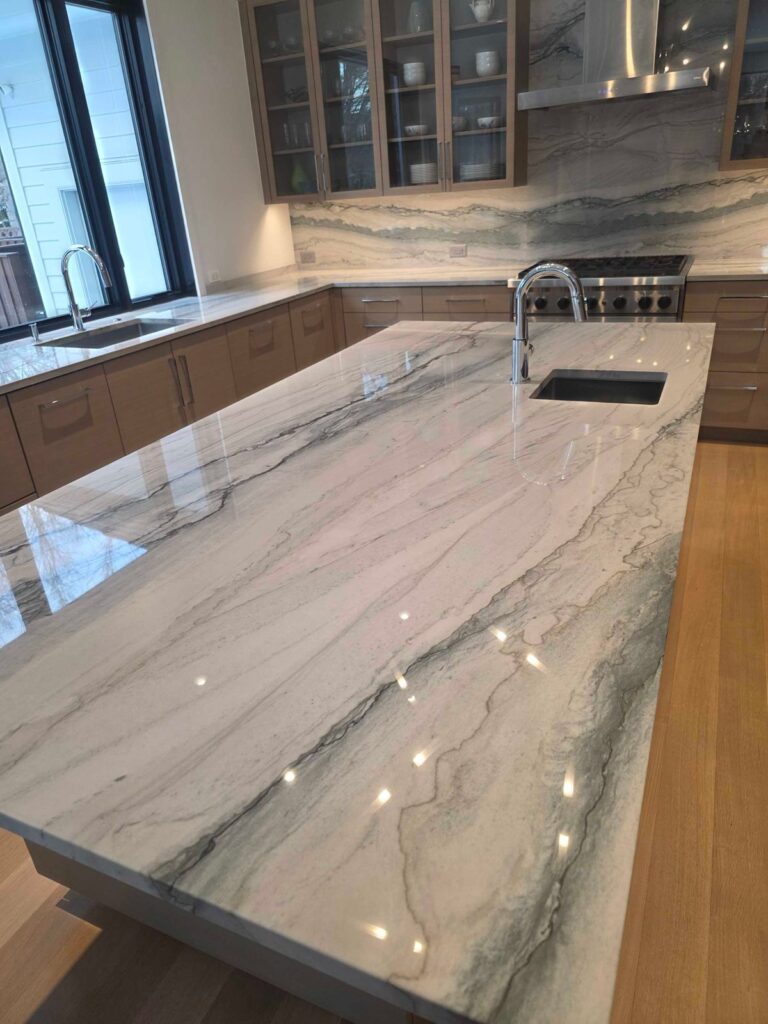
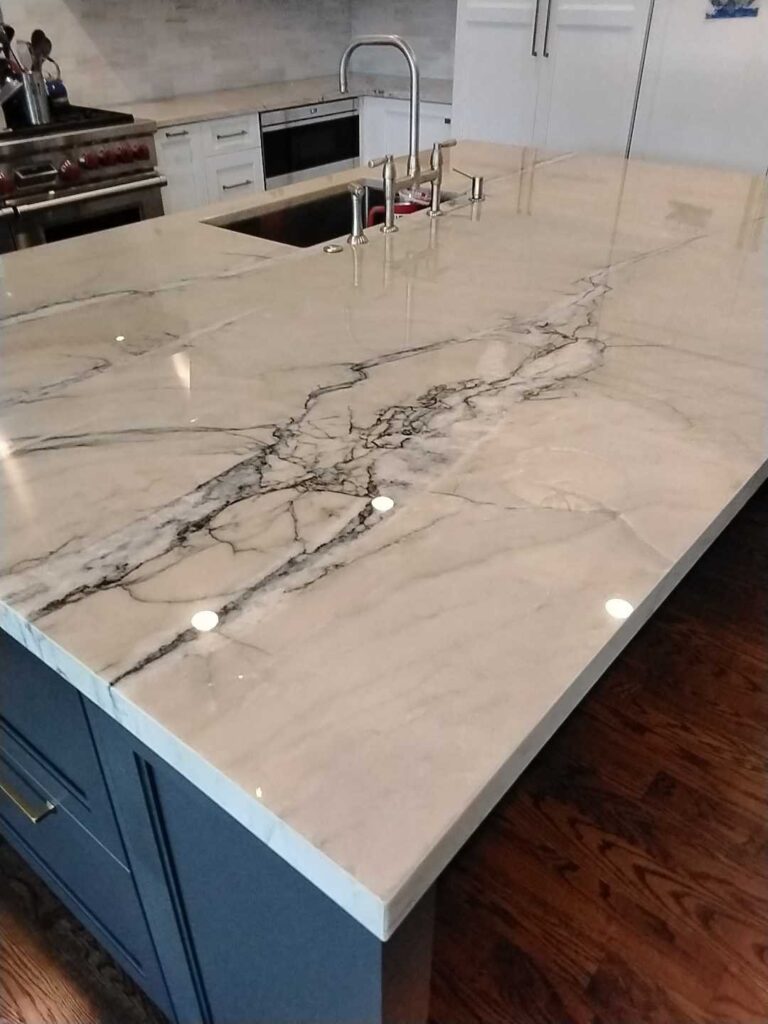
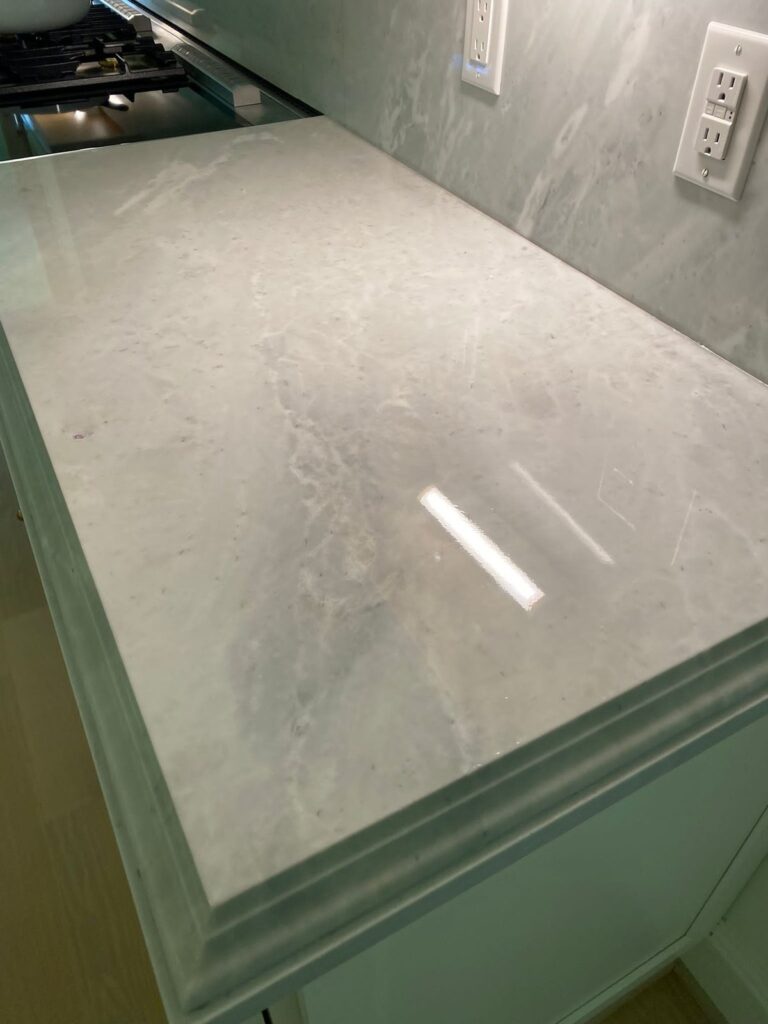
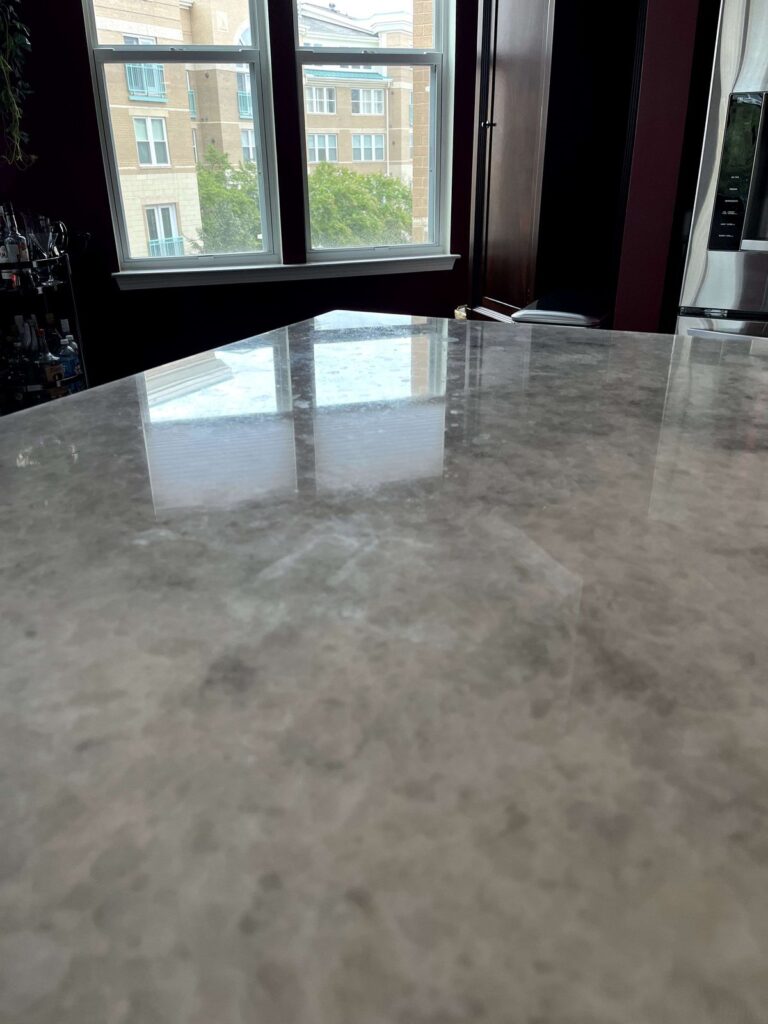
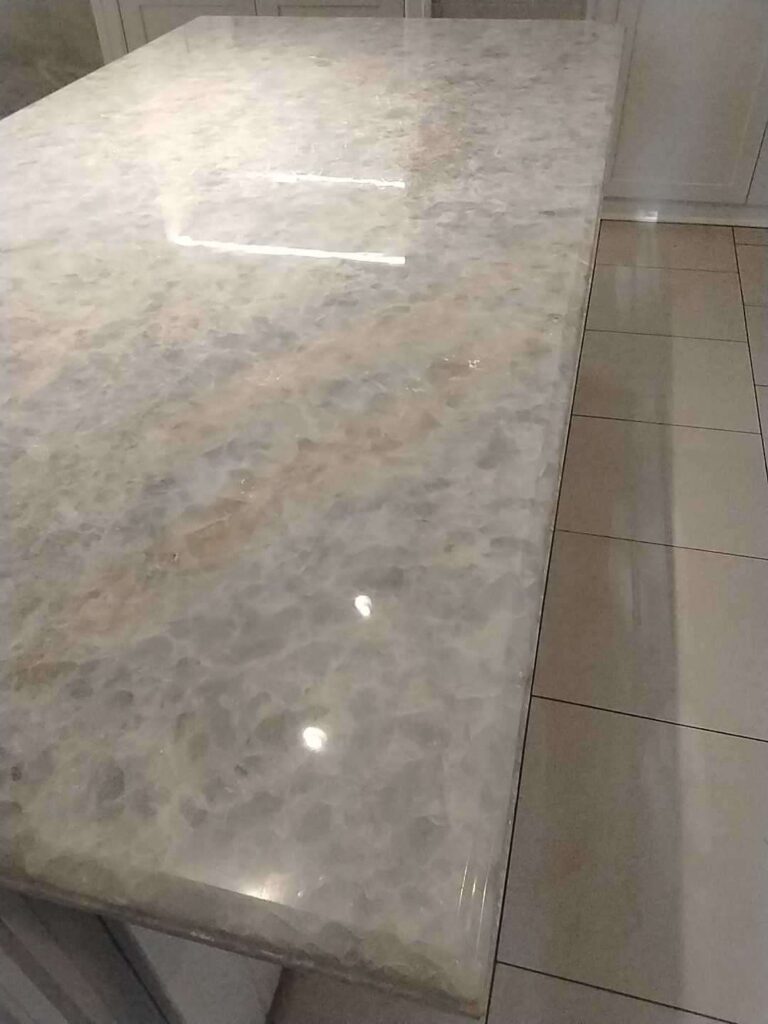
Place a few drops of lemon juice on an inconspicuous area and wait five minutes. If the surface etches (develops a dull spot), your stone is likely marble or dolomite, not true quartzite. True quartzite will not react to acids. Our technicians can definitively identify your stone type during a free on-site assessment.
Yes. Quartzite sits at a 7 on the Mohs hardness scale compared to granite’s 6 to 6.5. This means restoration requires more specialized equipment, finer diamond abrasives, and more time. Not every stone restoration company has the tools or experience for quartzite — we do.
We recommend sealing quartzite countertops every two to three years. Quartzite is denser than most natural stones, so it does not require the annual sealing that marble demands. Your usage patterns and the specific quartzite variety will influence the ideal schedule.
Absolutely. We restore quartzite floors using the same diamond polishing systems we use on countertops, scaled for larger areas. Quartzite flooring is less common but increasingly popular in high-end homes, and it responds beautifully to professional restoration.
You chose quartzite because it is the best. Make sure it is maintained by a team that understands what makes it different. Rose Restoration International has been restoring natural stone across Virginia, Maryland, and Washington DC since 1978. Call us at 703-327-7676 or request a free assessment online to keep your quartzite surfaces performing and looking their best.
Stone Care Glossary
Application of a penetrating impregnator that fills the porosity of stone to slow absorption of liquids and stains.
The final refinishing step that brings stone to a high-gloss reflective finish using very fine-grit diamond abrasives or polishing compounds.
Topical coatings sit on the surface and form a film; penetrating sealers absorb into pores and protect from below the surface without changing appearance.
See the full Stone Care Glossary for 40+ industry terms.
Recent Project
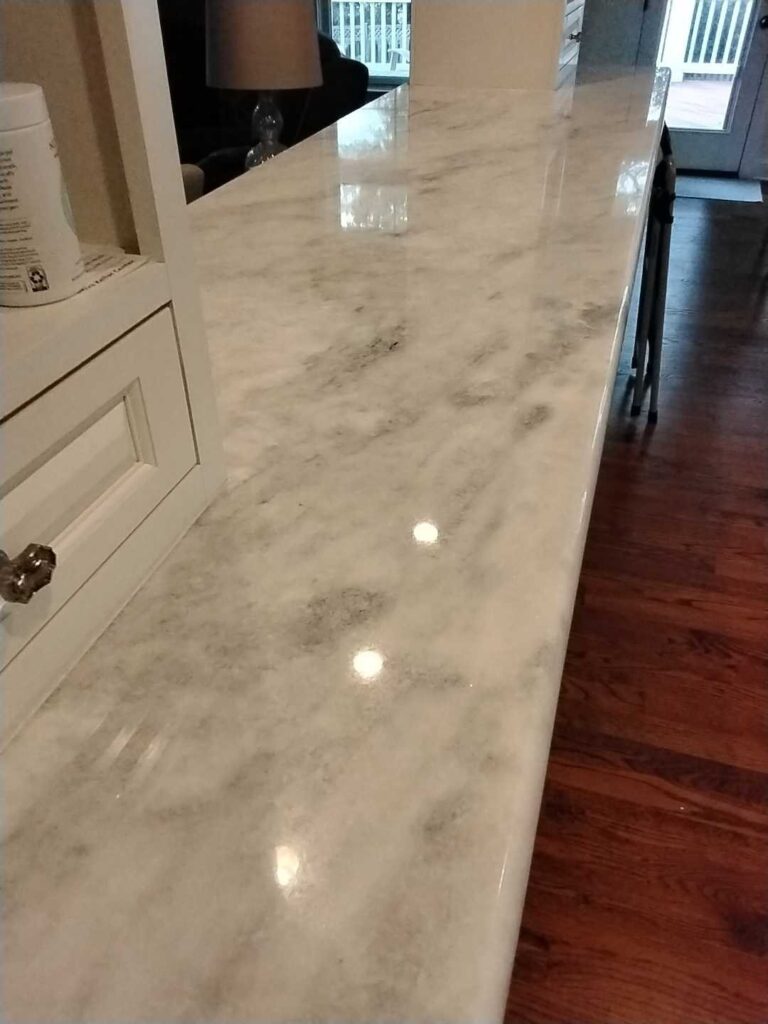
65 sf Taj Mahal quartzite kitchen, misidentified as marble for 18 months and over-cared-for. Restored polish, removed stains, and reset homeowner care plan.
Our Workmanship Guarantee
One-year written warranty on all restoration work. If a repair fails, a polish dulls prematurely, or a sealer breaks down within 12 months under normal residential use, we return and re-do the work at no cost.