
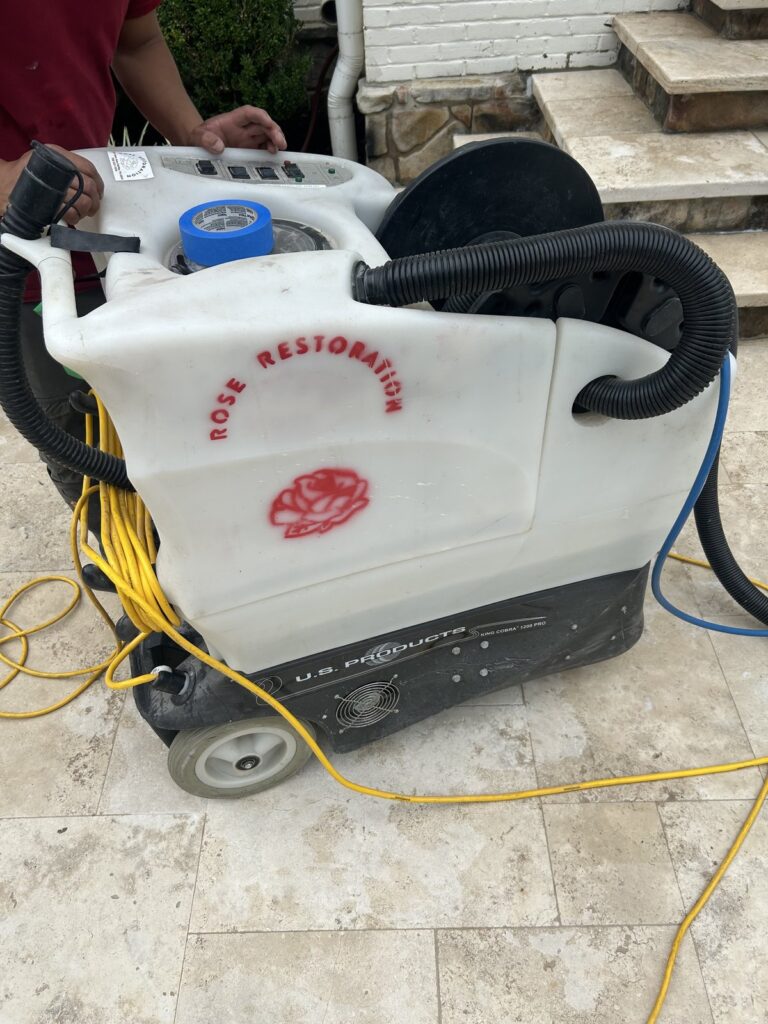
Rose Restoration — a Washington DC travertine restoration contractor — explains how to properly clean travertine floors, showers, and outdoor patios. Travertine is a porous natural stone that requires pH-neutral care and specific methods for filled versus unfilled finishes.
 By Tom Kuhn, CEO, Rose Restoration
Rose Restoration has restored marble, terrazzo, concrete, and natural stone across DC, MD, and VA since 1978.
Understanding Travertine
Travertine is a natural limestone formed in hot springs and geothermal areas, where mineral-rich water deposits layers of calcium carbonate over thousands of years. The result is a stone with warm, earthy tones — creams, beiges, walnut browns, and rusty reds — and the characteristic holes and voids that make travertine visually distinctive.
Travertine is available in several finishes, each requiring slightly different care:
- Filled and honed — the most common residential finish. Voids are filled with grout or epoxy; the surface is smooth and matte. Easier to maintain than unfilled.
- Unfilled — the natural look with open pores and holes. Beautiful but requires more attentive cleaning to prevent debris from accumulating in voids.
- Polished — a high-gloss finish that shows more reflectivity but also shows etching and scratches more readily.
- Tumbled — an intentionally aged, rough surface with a rustic appearance. The texture hides wear well but can be harder to clean thoroughly.
As a limestone, travertine is softer than granite or quartzite. This means it is more susceptible to scratching from grit and abrasives, and critically, more susceptible to chemical etching from acids. Understanding this vulnerability is essential to maintaining travertine properly.
Daily Travertine Cleaning
The most important daily habit for travertine floors is removing grit before it can cause scratches. Use a dust mop or vacuum — without a beater bar — before any wet cleaning. Grit and sand particles act like sandpaper under foot traffic, gradually dulling polished or honed surfaces. This step takes two minutes and prevents a problem that costs hundreds of dollars to correct.
After dust mopping, damp mop with a pH-neutral stone cleaner diluted according to the manufacturer’s instructions. The choice of cleaner is critical. Never use the following on travertine:
- Vinegar or lemon juice — these acids etch travertine on contact, leaving permanent dull spots
- Bleach — damages the stone and can discolor grout
- Ammonia-based cleaners — strip sealers and can damage the stone over time
- Acidic bathroom or tile cleaners — even brief contact causes etching
- Abrasive scrubbing pads or powders — scratch the surface and remove the polished finish
For countertops, use a soft cloth or sponge and the same pH-neutral cleaner. Blot spills immediately rather than wiping — wiping can spread a spill and drive it into pores. Because travertine is porous, liquids can be absorbed within minutes if not addressed promptly.
Deep Cleaning Travertine
Occasional deep cleaning is necessary when routine mopping is not removing embedded dirt, grout haze, or buildup from cleaning product residue. For floors with embedded dirt, a professional alkaline stone cleaner can lift deep soils that pH-neutral cleaners miss — but alkaline cleaners must still be formulated for natural stone. Check the label carefully.
Grout cleaning between travertine tiles is a particular challenge. The grout lines trap dirt, soap scum, and biological growth (especially in bathrooms). DIY scrubbing with stiff brushes and grout cleaner is often too aggressive — grout cleaners frequently contain acids that damage the adjacent travertine, and aggressive scrubbing can chip or abrade the edges of the stone.
Professional steam cleaning or hot water extraction with appropriate stone-safe chemistry is far safer for deep grout cleaning. For heavy soil buildup on the stone itself, professional cleaning is the recommended approach. Travertine does not respond well to the aggressive DIY methods that work on ceramic tile or porcelain.
Travertine Stain Removal
Stain removal from travertine uses poultices — pastes that draw the staining substance out of the stone as they dry. Different stains require different chemistry:
Oil stains (cooking oil, body oil, grease): make a poultice with baking soda or diatomaceous earth mixed with acetone or a commercial alkaline degreaser. Apply 1/4 inch thick, cover with plastic wrap, tape the edges, and leave for 24–48 hours. Remove, clean, and repeat if necessary.
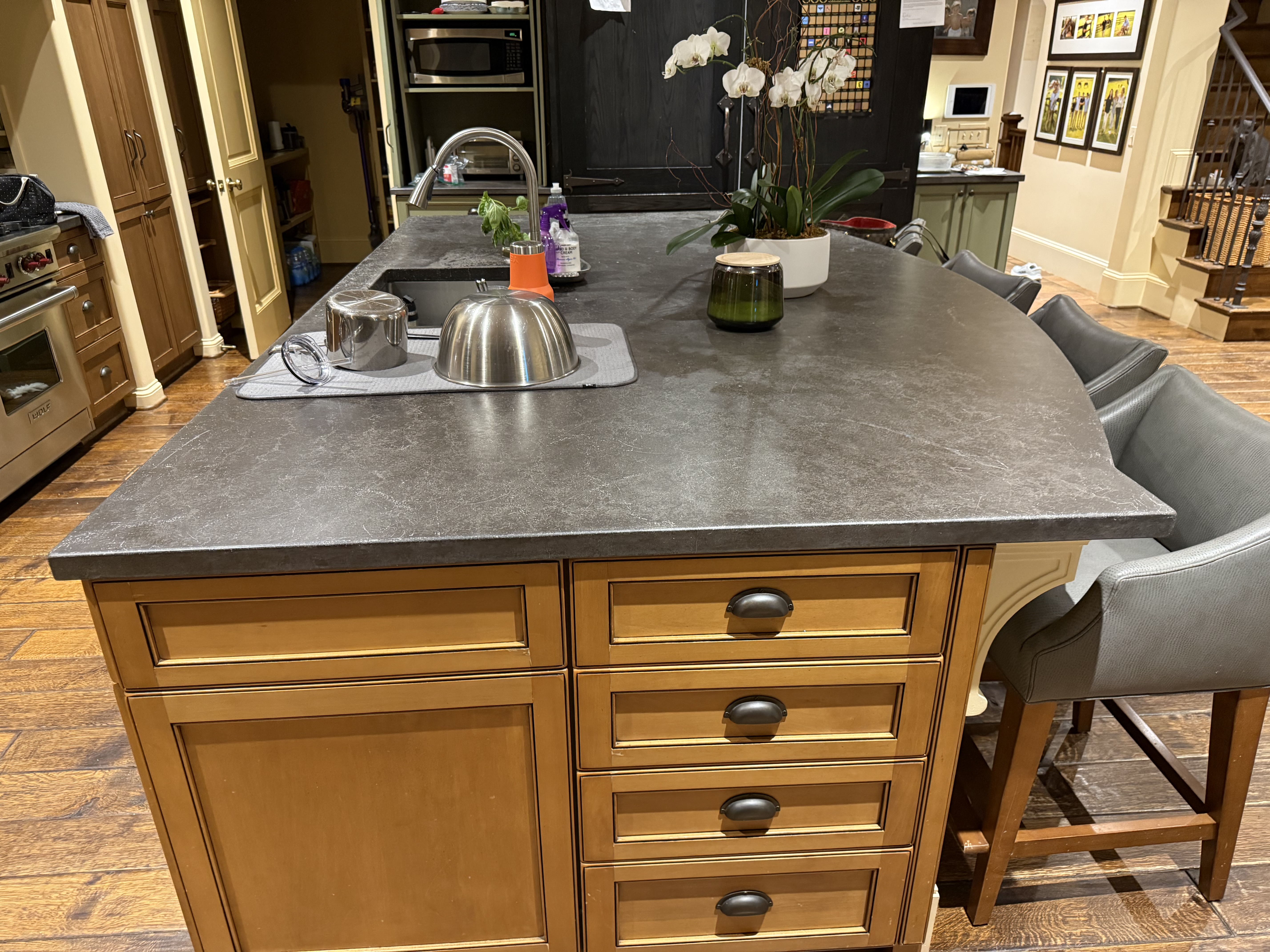
Organic stains (coffee, tea, wine, food): make a poultice with a white absorbent material mixed with hydrogen peroxide (12% or stronger). The same application method applies. For fresh stains, straight hydrogen peroxide applied to the stain and covered may be sufficient.
Rust stains: professional treatment is strongly recommended. Commercial rust removers and DIY rust treatments typically contain oxalic acid or other acids that can damage travertine. A professional can treat rust stains using methods that minimize damage to the surrounding stone.
Hard water deposits: carefully scrape off mineral buildup with a plastic scraper, then clean with pH-neutral cleaner. Do not use acidic descalers, limescale removers, or vinegar — these will etch the travertine. Stubborn hard water deposits often require professional treatment.
Important rule for all poultice applications: always test in an inconspicuous area first — a corner, behind a door, inside a cabinet. Some travertine is more reactive than others, and testing prevents a repair from creating a more visible problem than the original stain.
Sealing Travertine
Sealing is not optional for travertine — it is essential maintenance. As a highly porous stone, unsealed travertine absorbs liquids rapidly. Without a sealer, even water can leave mineral deposits; cooking oil stains permanently within minutes; wine and coffee penetrate deeply and become nearly impossible to remove.
The right sealer for travertine is a penetrating (impregnating) sealer, also called an impregnator. These products soak into the stone’s pore structure and cure below the surface, leaving no visible coating. They allow the stone to breathe while blocking the absorption of liquids and oils. Avoid topical sealers, coatings, and waxes — these products sit on the surface, alter the appearance, and eventually yellow, peel, or build up unevenly.
How often to reseal depends on use:
- Kitchen countertops and floors: every 1–2 years, or more frequently in very active kitchens
- Bathroom floors and shower surrounds: every 1–2 years
- Entryway floors: every 2 years
- Low-traffic interior floors: every 3–5 years
A simple test tells you when resealing is needed: place a few drops of water on the surface in an inconspicuous area. If the water beads up and does not absorb within 5 minutes, the sealer is still working. If the water absorbs into the stone and darkens it within a few minutes, it is time to reseal.
Travertine Restoration
When cleaning and maintenance are no longer sufficient to restore appearance — when the surface is etched, scratched, or worn — professional restoration is the answer. Travertine restoration involves honing the surface to remove damage, followed by re-polishing or re-honing to the desired finish.
Travertine is most commonly maintained at a honed (matte or satin) finish rather than a high-gloss polish. The honed finish hides minor scratches better and is more forgiving of light etching. If your travertine was originally installed with a honed finish, that finish can be fully restored through professional honing.
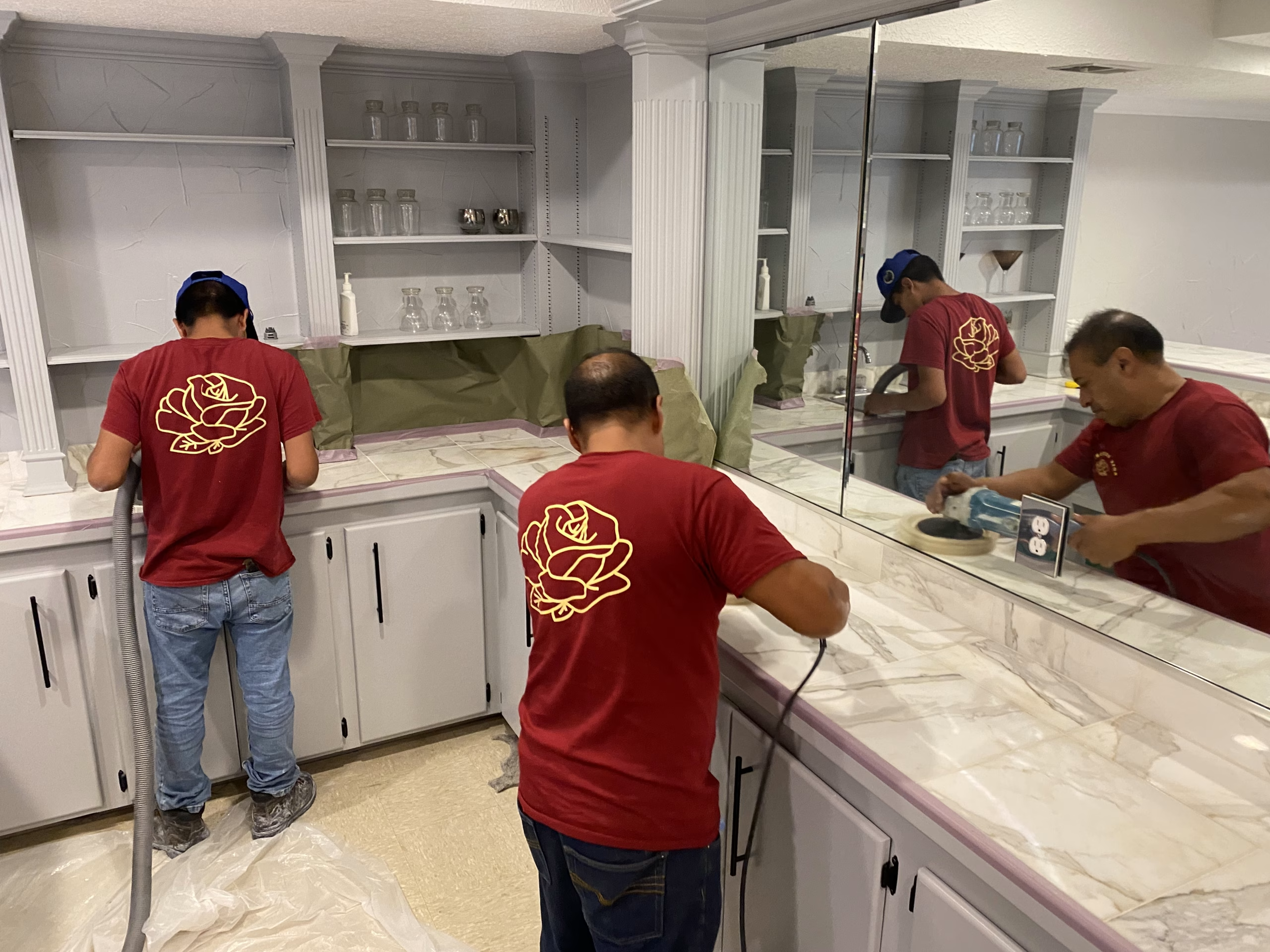
Filled travertine may develop voids over time as the filler material shrinks or dislodges. Professional restoration includes re-filling these voids with color-matched grout or epoxy filler before re-honing the surface. Attempting to fill travertine voids with standard tile grout often results in color mismatches and poor adhesion.
Cracks and chips are addressed with color-matched polyester or epoxy filler, blended carefully to match the surrounding stone. When done well, repairs are nearly invisible. Learn more about our residential stone restoration services.
Common Travertine Mistakes
Most travertine damage is preventable. The most common mistakes we see:
Using vinegar or natural cleaners — vinegar is acid. Lemon-based cleaners are acid. Natural does not mean safe for stone. These products etch travertine and cause permanent damage with every use.
Using grout cleaner on the stone itself — grout cleaners are formulated for ceramic or porcelain grout and contain acids or strong alkalines that damage natural stone.
Pressure washing travertine — pressure washing is too aggressive for travertine. It can pit the surface, dislodge void fillers, and force water deep into the stone structure, potentially causing damage from freeze-thaw cycles in exterior applications.
Ignoring sealer maintenance — many homeowners seal their travertine once at installation and never reseal. Without periodic resealing, protection degrades and staining becomes increasingly difficult to prevent.
Using wax or topical sealers — these products build up over time, yellow, and create an uneven, dull appearance that is difficult to remove without professional stripping.
Frequently Asked Questions: Travertine Maintenance
How often should travertine be sealed?
For most residential travertine, resealing every 1–2 years is appropriate. Kitchen and bathroom surfaces may need more frequent attention, while low-traffic interior floors may go 3–5 years between applications. The water absorption test — does a drop of water absorb within 5 minutes? — is the most reliable indicator of when resealing is needed.
Can you polish travertine to a high gloss?
Yes, travertine can be polished to a fairly high sheen, though it typically does not achieve the mirror finish that marble or granite can reach. Many homeowners and designers prefer travertine’s natural honed finish. Be aware that a polished finish will show etching and scratches more prominently than a honed finish.

What’s the best cleaner for travertine?
A pH-neutral stone cleaner specifically formulated for natural stone is the safest choice. Brands like StoneTech, Miracle Sealants, and Aqua Mix offer appropriate products. Avoid any cleaner not specifically labeled safe for natural stone, and never use vinegar, bleach, ammonia, or abrasive cleaners.
Can you restore travertine that’s been damaged by vinegar?
Yes — acid etching from vinegar or other acidic cleaners is a surface condition, not deep structural damage. Professional honing removes the etched layer and restores the surface to a clean, uniform finish. This is one of the most common restoration jobs we perform. After restoration, we recommend resealing and, in kitchens or high-acid-exposure areas, discussing Marble Armor protection to prevent future etching.
Get Professional Travertine Care
Whether you need routine maintenance guidance, professional sealing, stain removal, or full restoration, Rose Restoration International serves homeowners and commercial properties throughout Virginia, Maryland, and Washington DC.
Call us: (703) 327-7676
Explore our residential stone services | Request a free consultation
Want a complete care guide? Download our free Guide to Natural Stone Care — 13 pages of expert advice on cleaning, stain removal, sealing, and maintenance.
For homeowners maintaining travertine in Bethesda, Chevy Chase, or anywhere in the Maryland suburbs, the daily cleaning routine matters more than how often you have the floor professionally sealed.
Looking for something else?
Get a Free Assessment from Rose Restoration
Tell us about your marble, stone, terrazzo, or concrete and our senior technicians will recommend the right restoration approach. Family-run and trusted across Washington DC, Maryland, and Virginia since 1978.
Call (703) 327-7676 · Email info@roserestoration.com · schedule a time · or send us photos.
Restore. Don't replace.
48 years of polishing marble, terrazzo, concrete, and tile across Washington DC, Northern Virginia, and Maryland. IMF, Four Seasons, Smithsonian, and the Virginia State Capitol trust us — you can too.