
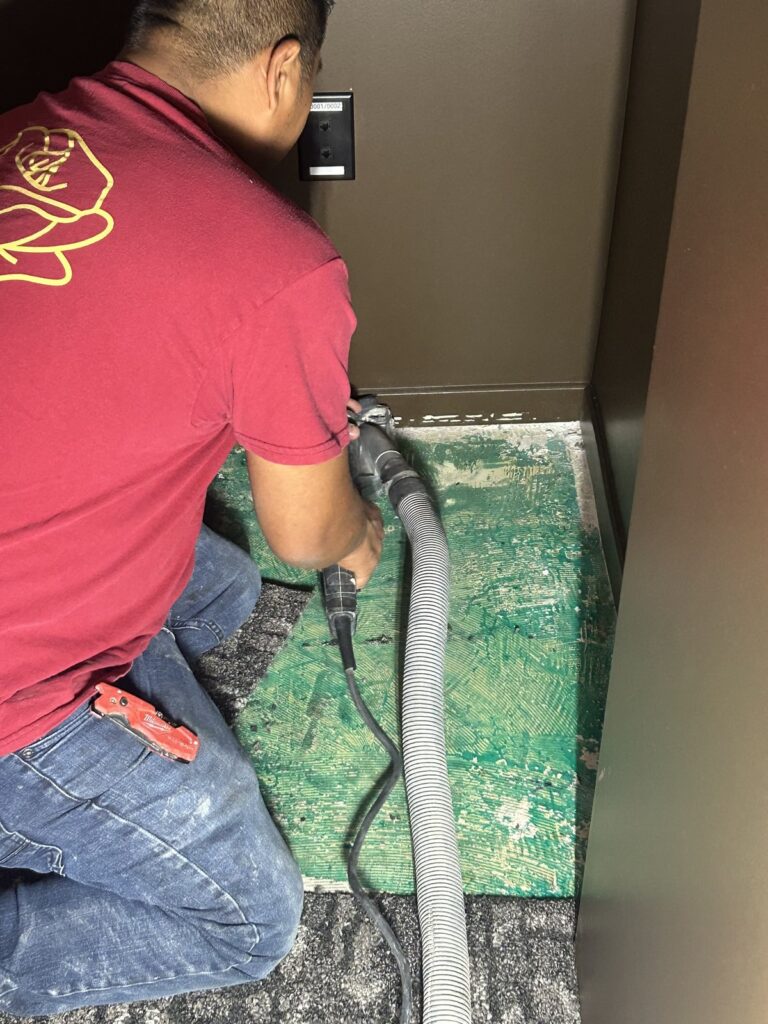
Rose Restoration — a Washington DC epoxy and concrete flooring contractor — explains why epoxy floors peel and how to fix the underlying cause. Most peeling is preventable with proper substrate preparation.
 By Tom Kuhn, CEO, Rose Restoration
Rose Restoration has restored marble, terrazzo, concrete, and natural stone across DC, MD, and VA since 1978.
Why Is My Epoxy Floor Peeling? Common Causes of Epoxy Floor Failure and How to Fix It
You invested in an epoxy floor expecting years of durable, seamless performance. Now sections are lifting at the edges, bubbling in high-traffic lanes, or peeling away from the concrete in sheets. It is a frustrating and costly problem, and it rarely fixes itself.
If you are a facility manager, property manager, or general contractor staring at a failing epoxy floor, you need answers fast. This guide walks through the most common causes of epoxy floor peeling and epoxy floor delamination, explains how to diagnose the root cause in your facility, and lays out your realistic options for repair or replacement.
What Epoxy Floor Failure Actually Looks Like
Before diving into causes, it helps to define what we mean by epoxy floor failure. Delamination is the technical term: the coating loses its bond to the concrete substrate and separates. In practice, it shows up in several ways:
- Peeling or lifting — Large sections of the coating curl up from the slab, often starting at joints, cracks, or edges near walls.
- Bubbling or blistering — Small to medium raised areas appear across the surface, sometimes filled with moisture or air.
- Chipping and flaking — The topcoat or entire system fractures under traffic and breaks away in pieces.
- Soft or tacky spots — Areas that never fully cured, remaining sticky or impressionable weeks after installation.
- Wholesale sheet delamination — The entire coating lifts off the concrete in large, intact sheets, indicating zero bond to the substrate.
Each symptom points toward different root causes. Understanding what you are seeing is the first step toward an effective fix.
The 6 Most Common Causes of Epoxy Floor Peeling
1. Moisture Vapor Transmission (MVT)
This is the single most common reason epoxy floors peel, and it is the one most frequently overlooked during the original installation. Concrete is porous. Moisture from the ground migrates upward through the slab as water vapor. When a coating system is applied over a slab with excessive moisture vapor transmission, that vapor pressure builds beneath the coating until the bond fails.
The result: blistering, bubbling, and eventually full delamination, often appearing weeks or months after the floor was installed.
How to identify MVT as the cause:
- Failure appears in random areas across the slab, not just at joints or edges.
- The underside of peeled coating is damp or shows white mineral deposits (efflorescence).
- Blisters contain moisture when punctured.
- The problem worsens during seasonal changes or after heavy rain.
- The facility is on a slab-on-grade (ground level) without a functioning vapor barrier beneath the concrete.
The standard test: ASTM F1869 (calcium chloride test) measures moisture vapor emission rate (MVER) in pounds per 1,000 square feet over 24 hours. Most standard epoxy systems require an MVER below 3 lbs. ASTM F2170 (relative humidity probe test) measures in-situ RH within the slab and is increasingly preferred for its accuracy. Many epoxy manufacturers specify a maximum of 75% RH, though this varies by product.
Key point: If moisture testing was not performed before the original coating was applied, MVT should be your primary suspect. It is the cause of the majority of premature epoxy floor failures we see in the field.
2. Inadequate Surface Preparation
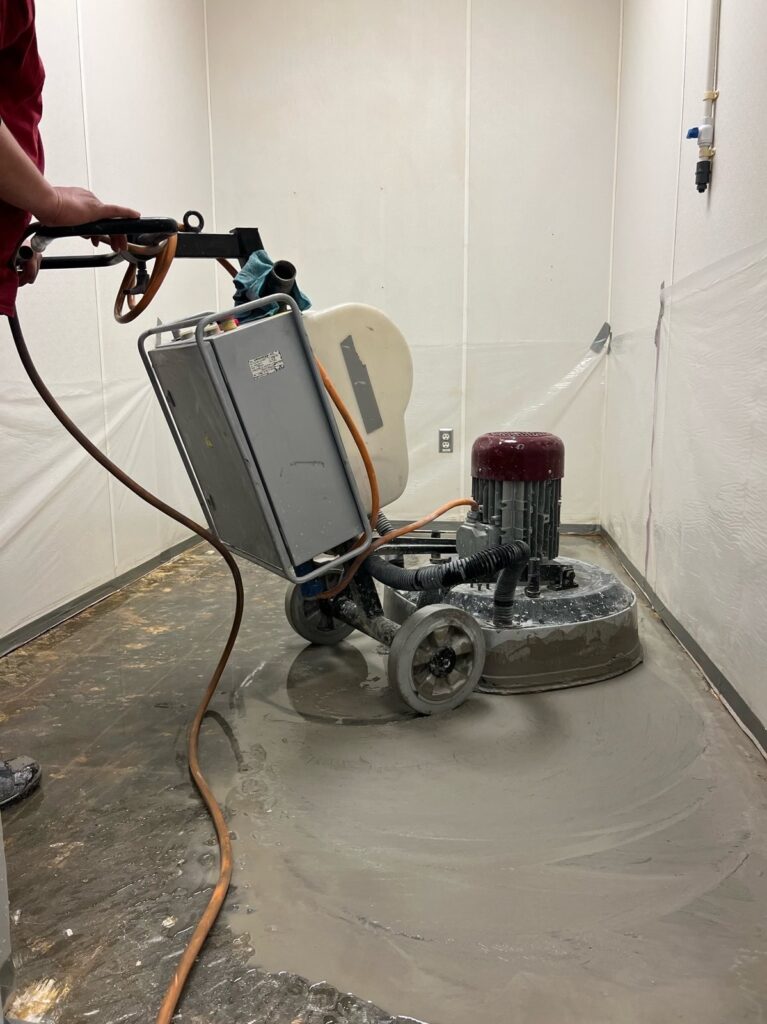
Epoxy does not bond to smooth, sealed, or contaminated concrete. It bonds to a clean, profiled substrate. The most reliable methods for achieving proper surface profile are mechanical: shot blasting, diamond grinding, or scarification. Each method produces a specific Concrete Surface Profile (CSP), and the required CSP depends on the coating system being applied.
Failures from poor surface prep typically look like this:
- The coating peels away cleanly, and the concrete underneath looks smooth and untouched.
- Delamination occurs in areas that were not mechanically prepared (corners, edges, around columns).
- The original installer used acid etching as the sole prep method on a commercial or industrial floor.
Acid etching alone is rarely sufficient for commercial and industrial environments. It does not produce a consistent profile, it cannot remove existing sealers or curing compounds, and it introduces moisture into the slab. If your failed floor was acid-etched rather than mechanically prepared, that is very likely a contributing factor.
3. Surface Contamination
Even with proper mechanical preparation, contaminants on or within the concrete surface will prevent adhesion. Common culprits include:
- Oil and grease — Especially in automotive, manufacturing, and food processing facilities. Oil can penetrate deep into concrete pores and migrate back to the surface over time.
- Curing compounds and sealers — Applied during original concrete placement, these create a barrier between the slab and any subsequent coating.
- Dust and debris — Residual dust from grinding or shot blasting that was not properly vacuumed before coating application.
- Silicone or mold release agents — Common in manufacturing environments, extremely difficult to fully remove.
Contamination-related failures tend to be localized. If the peeling is concentrated in specific zones, especially near drains, machinery, or former chemical storage areas, contamination is a strong suspect.
4. Wrong System Selection
Not all epoxy systems are the same, and not every commercial resinous flooring application calls for epoxy at all. System selection failures happen when:
- A thin-mil coating (2-4 mils) is specified where a high-build system (20+ mils) is needed for heavy traffic or chemical exposure.
- A rigid epoxy is used in an environment with thermal cycling, where a more flexible urethane or polyaspartic system would perform better.
- A water-based epoxy is applied in an industrial setting that demands 100% solids performance.
- Chemical resistance requirements are not matched to the resin chemistry. Standard bisphenol-A epoxies fail under exposure to certain solvents, acids, or caustics that novolac epoxies would handle.
- No topcoat or UV-stable finish is applied on an exterior or UV-exposed surface, leading to chalking, yellowing, and eventual failure.
If your floor is failing under conditions it was supposedly designed for, ask what system was specified and whether it actually matches the exposure conditions in your facility.
5. Improper Application Conditions
Epoxy coatings are sensitive to environmental conditions during application and cure. The installation window is narrower than many people realize:
- Temperature: Most epoxies require concrete surface temperatures between 50 degrees F and 90 degrees F during application. Below 50 degrees F, the chemical reaction slows dramatically and the coating may never fully cure. Above 90 degrees F, pot life shortens and the material can flash off before proper wetting of the substrate.
- Humidity: Relative humidity above 85% during application can cause amine blush (a waxy surface film) on epoxy coatings, compromising intercoat adhesion.
- Dew point: If the concrete surface temperature is within 5 degrees F of the dew point, condensation can form on the slab during application, destroying the bond.
- Recoat windows: Applying a second coat outside the manufacturer’s recoat window (either too soon or too late) leads to intercoat delamination, where the topcoat peels from the basecoat rather than from the concrete.
Application-condition failures often manifest as intercoat adhesion problems. If the topcoat is peeling but the primer or basecoat remains firmly bonded to the concrete, the issue likely occurred during the application of the upper layers.
6. Structural Movement and Substrate Defects
Epoxy coatings are not structural. They cannot bridge active cracks, accommodate significant slab movement, or compensate for a deteriorating substrate. Common substrate issues that lead to coating failure include:
- Active cracks that continue to move with thermal expansion or structural settling.
- Spalling or delaminating concrete beneath the coating.
- Control joints or saw cuts that were coated over without proper joint treatment.
- Weak or deteriorated concrete with low tensile strength (the coating pulls the surface of the concrete off with it).
If your epoxy is peeling and bringing chunks of concrete with it, the problem may not be the coating at all. It may be the substrate. A qualified concrete contractor services provider should evaluate the slab integrity before any recoating work begins.
How to Diagnose the Root Cause
Effective repair starts with accurate diagnosis. Here is a practical approach to determining why your epoxy floor is peeling:
Step 1: Visual assessment. Document where the failure is occurring. Is it random across the slab (likely MVT)? Concentrated in specific zones (likely contamination)? At joints and edges (likely substrate movement or poor edge prep)? Between coating layers (likely application error)?

Step 2: Adhesion testing. ASTM D4541 (pull-off adhesion testing) quantifies the bond strength and identifies the failure plane. This tells you whether the coating failed at the concrete interface, between coats, or cohesively within the concrete itself.
Step 3: Moisture testing. Perform ASTM F2170 (relative humidity) and/or ASTM F1869 (calcium chloride) testing on the exposed concrete. If MVT is elevated, it must be addressed before any new coating is applied.
Step 4: Concrete evaluation. Assess the compressive and tensile strength of the concrete. If the concrete surface is pulling apart, no coating system will perform until the substrate is repaired or replaced.
Step 5: Review the original specification and installation records. If available, compare the installed system to the manufacturer’s technical data sheet. Check surface prep method, material batch numbers, application temperatures, and recoat intervals.
Recoat vs. Full Replacement: Making the Right Call
This is the decision that matters most, and getting it wrong means paying for the same floor twice.
When Recoating May Be Sufficient
- The failure is limited to less than 10-15% of the total floor area.
- The failure is intercoat (topcoat separation) rather than at the concrete bond line.
- Moisture testing confirms MVT is within acceptable limits.
- The concrete substrate is sound and in good condition.
- The existing basecoat or primer can be properly abraded and recoated within the manufacturer’s specifications.
When Full Removal and Replacement Is Necessary
- Delamination is widespread (more than 15-20% of the floor area, or spreading).
- The failure is at the concrete-to-coating interface, indicating a systemic bond problem.
- Moisture vapor transmission exceeds the limits of the original system and a moisture mitigation system must be installed first.
- Contamination has penetrated the concrete and cannot be fully removed by surface preparation alone.
- The wrong system was originally specified, and the replacement must be a fundamentally different product.
- The concrete substrate requires structural repair before recoating.
A word of caution: Applying a new coating over a failing one is not a repair. It is a temporary patch that will fail again, often faster than the original. If the root cause is not identified and corrected, any recoat is money wasted.
What a Proper Epoxy Floor Repair Looks Like
Whether you are recoating or doing a full replacement, the repair process should include:
- Complete removal of all failed and poorly adhered coating, typically by diamond grinding or shot blasting.
- Concrete repair of any cracks, spalls, or deteriorated areas using appropriate patching compounds that are compatible with the new coating system.
- Moisture testing of the exposed slab to establish current conditions and determine whether moisture mitigation is required.
- Moisture mitigation (if needed) using a purpose-built vapor barrier system rated for the measured MVT levels.
- Proper mechanical surface preparation to achieve the correct CSP for the specified coating system.
- Application of a properly specified resinous flooring system under controlled environmental conditions, with strict adherence to manufacturer recoat windows and film thickness requirements.
- Quality assurance testing including wet film thickness checks during application and adhesion testing after cure.
How to Avoid Epoxy Floor Failure on Your Next Project
Whether you are repairing the current failure or planning a new installation elsewhere, these steps dramatically reduce the risk of epoxy floor delamination:
- Always test for moisture before specifying or applying any coating system. No exceptions.
- Require mechanical surface preparation. Acid etching is not sufficient for commercial or industrial floors.
- Match the system to the environment. Chemical exposure, thermal cycling, UV exposure, traffic type, and cleaning protocols all influence system selection.
- Verify environmental conditions at the time of application. Monitor concrete temperature, air temperature, humidity, and dew point.
- Hire experienced installers. Resinous flooring installation is a specialty trade. The difference between a floor that lasts two years and one that lasts ten often comes down to the crew doing the work.
- Get a written specification that details the system, surface prep method, required CSP, moisture limits, and application conditions. If your installer cannot or will not provide this, that is a red flag.
Frequently Asked Questions
Why is my epoxy floor peeling so soon after installation?
Premature peeling, within days to weeks, almost always points to a surface preparation or application error. Either the concrete was not properly profiled, contaminants were present on the surface, or the material was applied outside acceptable temperature and humidity conditions. Moisture vapor transmission is also a common cause, particularly on slab-on-grade floors where no vapor barrier exists beneath the concrete. The only way to determine the exact cause is through adhesion testing and moisture testing on the exposed substrate.
Can I fix delaminating epoxy myself, or do I need a professional?
For small areas of cosmetic damage in non-critical spaces, a patch repair may be feasible with the right materials and surface preparation. However, for any commercial, industrial, or institutional floor where performance matters, professional diagnosis and repair is strongly recommended. Without identifying and correcting the root cause, whether that is moisture, contamination, or wrong system selection, any repair is likely to fail again. A professional evaluation with adhesion and moisture testing typically costs far less than a second failed repair.
How long should an epoxy floor last before it needs to be recoated?
A properly specified and installed commercial epoxy floor system should provide 5 to 10 years of service in most environments before requiring maintenance recoating, and longer in lighter-duty applications. If your floor is failing in less than 2 to 3 years, something went wrong with the specification, installation, or both. Heavy-use industrial environments with chemical exposure or constant forklift traffic may require more frequent maintenance, but premature wholesale delamination is never normal wear and tear.
Does moisture in concrete always cause epoxy to fail?
Not always. All concrete contains some moisture, and most coating systems are designed to tolerate moisture vapor transmission within a specified range. The problem arises when MVT exceeds the tolerance of the coating system. Standard epoxies typically require MVER below 3 lbs per 1,000 sq ft per 24 hours or relative humidity below 75% within the slab. If MVT is elevated but the right mitigation system is installed first, a successful coating application is absolutely achievable. The failure is not moisture itself. The failure is applying a coating without testing for moisture first.
What is the difference between epoxy peeling from the concrete versus peeling between coats?
This distinction is critical for diagnosis. When the coating separates from the concrete surface (adhesive failure at the substrate), the cause is typically moisture, contamination, or inadequate surface preparation. The concrete surface under the peeled coating often looks smooth or damp. When the topcoat peels from the basecoat but the basecoat remains bonded to the concrete (intercoat adhesive failure), the cause is usually related to application conditions: the recoat window was exceeded, amine blush was not removed between coats, or contamination occurred between coat applications. The repair approach differs significantly depending on which type of failure has occurred.
Get Expert Help With Your Failing Epoxy Floor
If you are dealing with epoxy floor peeling, delamination, or any form of coating failure, the most important next step is an accurate diagnosis. Applying a new coating over a failing system without understanding why it failed is a recipe for repeated failure and wasted budget.
Rose Restoration provides professional assessment, moisture testing, surface preparation, and commercial resinous flooring installation for facilities across the region. We identify the root cause, recommend the right system, and install it correctly the first time.
Contact us to schedule an evaluation or call 703-327-7676 to discuss your floor failure with our team.
If your epoxy floor in an Arlington garage or commercial space is peeling, the issue is almost always traceable to surface preparation — not the coating product itself.
Looking for something else?
Related from Rose Restoration: epoxy flooring cost
Get a Free Assessment from Rose Restoration
Tell us about your marble, stone, terrazzo, or concrete and our senior technicians will recommend the right restoration approach. Family-run and trusted across Washington DC, Maryland, and Virginia since 1978.
Call (703) 327-7676 · Email info@roserestoration.com · schedule a time · or send us photos.
Restore. Don't replace.
48 years of polishing marble, terrazzo, concrete, and tile across Washington DC, Northern Virginia, and Maryland. IMF, Four Seasons, Smithsonian, and the Virginia State Capitol trust us — you can too.