
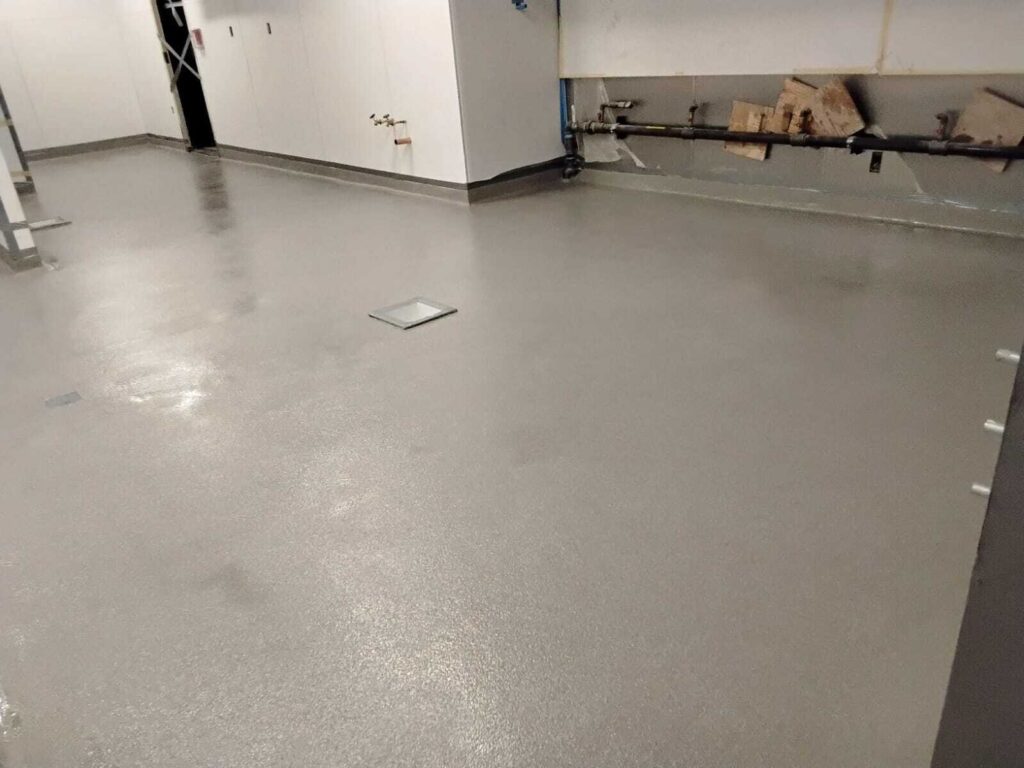
Rose Restoration — a Washington DC commercial flooring contractor — explains the flooring systems that work in commercial kitchens: urethane cement, epoxy, MMA, and slip-resistant quartz-broadcast systems. Proper system choice determines how a kitchen floor holds up to heat, grease, cleaning chemistry, and daily traffic.
 By Tom Kuhn, CEO, Rose Restoration
Rose Restoration has restored marble, terrazzo, concrete, and natural stone across DC, MD, and VA since 1978.
Commercial Kitchen Flooring: What Facility Managers Need to Know Before Choosing a System
A commercial kitchen floor endures more punishment per square foot than almost any other surface in a building. Between thermal shock from boiling water and steam cleaning, constant exposure to grease and acidic foods, heavy rolling loads from equipment, and daily chemical washdowns, the flooring in a commercial kitchen operates under conditions that would destroy a standard concrete coating in months.
Yet facility managers are routinely asked to make flooring decisions based on incomplete information, misleading product claims, or budget constraints that ignore the true cost of failure. A kitchen floor that cracks, delaminates, or loses its slip resistance does not just create a maintenance headache. It creates a health code violation, a slip-and-fall liability, and an operational shutdown that costs far more than the original installation.
This guide is written for facility managers, restaurant owners, food service directors, and hospitality managers who need to understand what separates a kitchen floor system that lasts from one that fails within two years.
Why Commercial Kitchens Are the Hardest Flooring Environment
Before evaluating specific products or systems, it is important to understand why commercial kitchen flooring is fundamentally different from flooring in any other commercial space. Kitchens combine multiple extreme conditions simultaneously, and a floor system must withstand all of them at once, not just one at a time.
Thermal Shock
Commercial kitchens routinely subject floors to rapid, extreme temperature swings. A pot of boiling water spills on a floor that may be at ambient temperature. Minutes later, that same area is hit with cold rinse water during cleanup. Steam cleaning equipment can push surface temperatures well above 200 degrees Fahrenheit before the floor returns to room temperature.
This repeated thermal cycling causes rigid floor coatings to expand and contract at different rates than the concrete substrate beneath them. The result is cracking, delamination, and eventually full system failure. Any kitchen floor coating that cannot handle thermal shock will fail in a commercial kitchen, and most standard epoxy systems cannot.
Grease, Acid, and Chemical Exposure
Kitchen floors are constantly exposed to a harsh chemical cocktail: animal fats, vegetable oils, vinegar, citrus juice, tomato-based sauces, dairy products, wine, and industrial cleaning chemicals. Each of these substances attacks flooring differently. Fats and oils penetrate porous surfaces and weaken adhesion. Organic acids etch and erode coatings. Alkaline degreasers and sanitizing chemicals break down certain resin systems over time.
The challenge is that a commercial kitchen floor must resist all of these exposures simultaneously, day after day, for years. A coating that resists chemicals but not grease, or handles acids but fails under alkaline cleaners, is not adequate for this environment.
Mechanical Abuse and Impact
Heavy equipment on casters, loaded sheet pan racks, stainless steel prep tables, dropped pots and pans, dragged rubber mats — commercial kitchen floors absorb constant mechanical abuse. Point loads from equipment legs and caster wheels concentrate enormous pressure on small areas of the floor surface. Impact from dropped heavy objects chips and cracks rigid coatings.
This mechanical abuse compounds the damage caused by thermal and chemical exposure. A micro-crack caused by impact becomes an entry point for grease and moisture, which then accelerate delamination from beneath the coating.
Moisture and Washdown Requirements
Health codes require commercial kitchens to be thoroughly cleaned on a daily basis, and in many jurisdictions, this means full washdown with hose-directed water, chemical sanitizers, and sometimes pressure washing. The floor system must tolerate standing water, directed water pressure, and repeated wet-dry cycling without degradation.
This requirement eliminates many flooring options that perform well in dry commercial environments but fail when subjected to daily saturation. It also means the floor must be properly sloped to drains, and the coating system must be seamless to prevent water from migrating beneath the surface.
Health Code and Regulatory Requirements
Facility managers must understand that commercial kitchen flooring is not just a design or durability decision. It is a regulatory compliance issue. Health departments across the country require kitchen floors to meet specific standards:
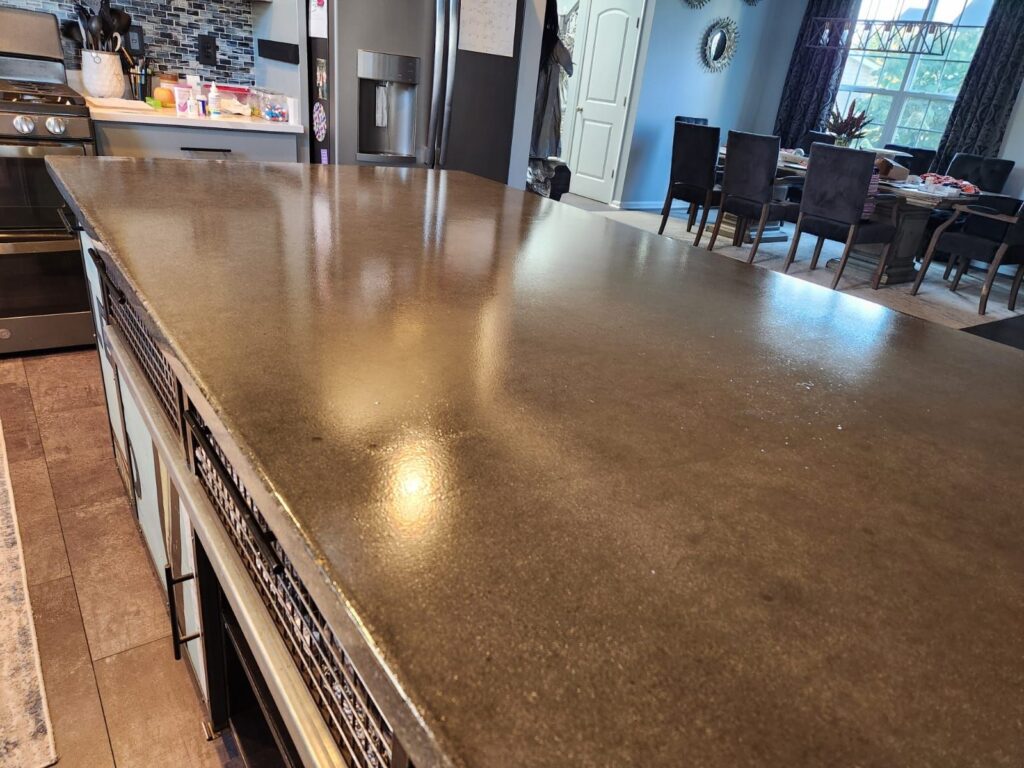
- Seamless and non-porous: Floors must not have joints, seams, or pores where bacteria, grease, or moisture can accumulate. Tile with grout lines is increasingly being scrutinized or rejected by health inspectors for this reason.
- Cleanable and sanitizable: The floor surface must be able to be effectively cleaned and sanitized using approved methods and chemicals without degrading.
- Slip resistant: Floors must provide adequate traction when wet. A floor that becomes dangerously slippery when exposed to grease and water creates both a code violation and a liability exposure.
- Coved base required: Most health codes require an integral coved base where the floor meets the wall. This radiused transition eliminates the 90-degree corner where debris and bacteria collect and makes thorough cleaning possible.
- Sloped to drains: Kitchen floors must be pitched to floor drains to prevent standing water. The floor coating must maintain adhesion and performance on sloped surfaces.
Failure to meet these requirements can result in health code violations, failed inspections, mandatory shutdowns, and significant fines. Choosing the wrong flooring system is not just an operational risk. It is a regulatory risk.
Common Kitchen Flooring Failures and Why They Happen
Understanding how kitchen floors fail helps facility managers ask the right questions before selecting a system. The most common failures include:
Delamination
The coating separates from the concrete substrate, often starting at edges or around drains and expanding outward. This is typically caused by moisture vapor transmission from below, inadequate surface preparation, or a coating system that cannot handle the thermal cycling in a kitchen environment. Once delamination begins, it accelerates rapidly because moisture and contaminants infiltrate the gap between the coating and the concrete.
Cracking
Rigid coatings crack under thermal shock, impact, or substrate movement. Standard epoxy coatings are particularly vulnerable because they cure to a hard, inflexible film. When the concrete substrate expands and contracts with temperature changes, a rigid coating cannot move with it. The result is cracking that compromises the seamless, sanitary surface the coating was supposed to provide.
Chemical Degradation
The coating gradually breaks down from exposure to kitchen chemicals, losing its surface integrity, gloss, and eventually its bond to the substrate. This is a slow failure that often goes unnoticed until the floor is visibly deteriorating and bacteria are colonizing the damaged surface.
Loss of Slip Resistance
Some coatings lose their texture and traction over time as the surface wears smooth. Others were never adequately textured for a commercial kitchen environment. In either case, the floor becomes a slip hazard, particularly when wet or contaminated with grease. This is one of the most dangerous and liability-creating failures in a kitchen environment.
Cove Base Failure
The coved base separates from the wall, cracks at the radius, or was never properly installed in the first place. Failed cove base creates exactly the kind of bacterial harbor that health codes are designed to prevent.
Why Urethane Cement Is the Standard for Commercial Kitchen Floors
After decades of experience with various restaurant floor systems, the commercial kitchen industry has largely converged on urethane cement (also called cementitious urethane or urethane mortar) as the standard for high-performance kitchen flooring. Understanding why requires comparing it to the alternatives.
Standard epoxy coatings, while excellent for many commercial and industrial applications, lack the thermal shock resistance and flexibility needed in kitchen environments. They cure to a rigid film that cracks under rapid temperature changes and cannot tolerate the sustained chemical exposure found in food service operations.
An urethane cement kitchen floor system solves these problems through its fundamental chemistry. The cementitious component gives the material a coefficient of thermal expansion very close to that of the concrete substrate. This means the coating and the concrete expand and contract at nearly the same rate, dramatically reducing the stress that causes delamination and cracking under thermal shock.
The urethane component provides chemical resistance, flexibility, and durability that pure cement or epoxy cannot match. The result is a monolithic, seamless floor system that can handle boiling water spills, steam cleaning, chemical sanitizers, and heavy mechanical abuse without failure.
Key performance characteristics of a properly installed urethane cement system include:
- Thermal shock resistance: Tolerates rapid temperature swings from sub-freezing to above 250 degrees Fahrenheit without cracking or delaminating.
- Chemical resistance: Withstands exposure to organic acids, animal fats, caustic cleaners, and sanitizing chemicals found in commercial kitchens.
- Steam cleaning tolerance: Handles daily high-temperature, high-pressure washdown without degradation.
- Impact resistance: Absorbs impact from dropped equipment and heavy rolling loads without chipping or cracking.
- Integral coved base: Can be formed into a seamless coved base that meets health code requirements and eliminates bacterial harboring points.
- Customizable slip resistance: Surface texture can be specified to provide appropriate traction for the specific kitchen environment.
Rose Restoration installs resinous flooring systems including urethane cement, and our project managers can help you evaluate whether your kitchen requires a full urethane cement mortar system or whether a high-build urethane coating may be appropriate for your specific conditions and budget.
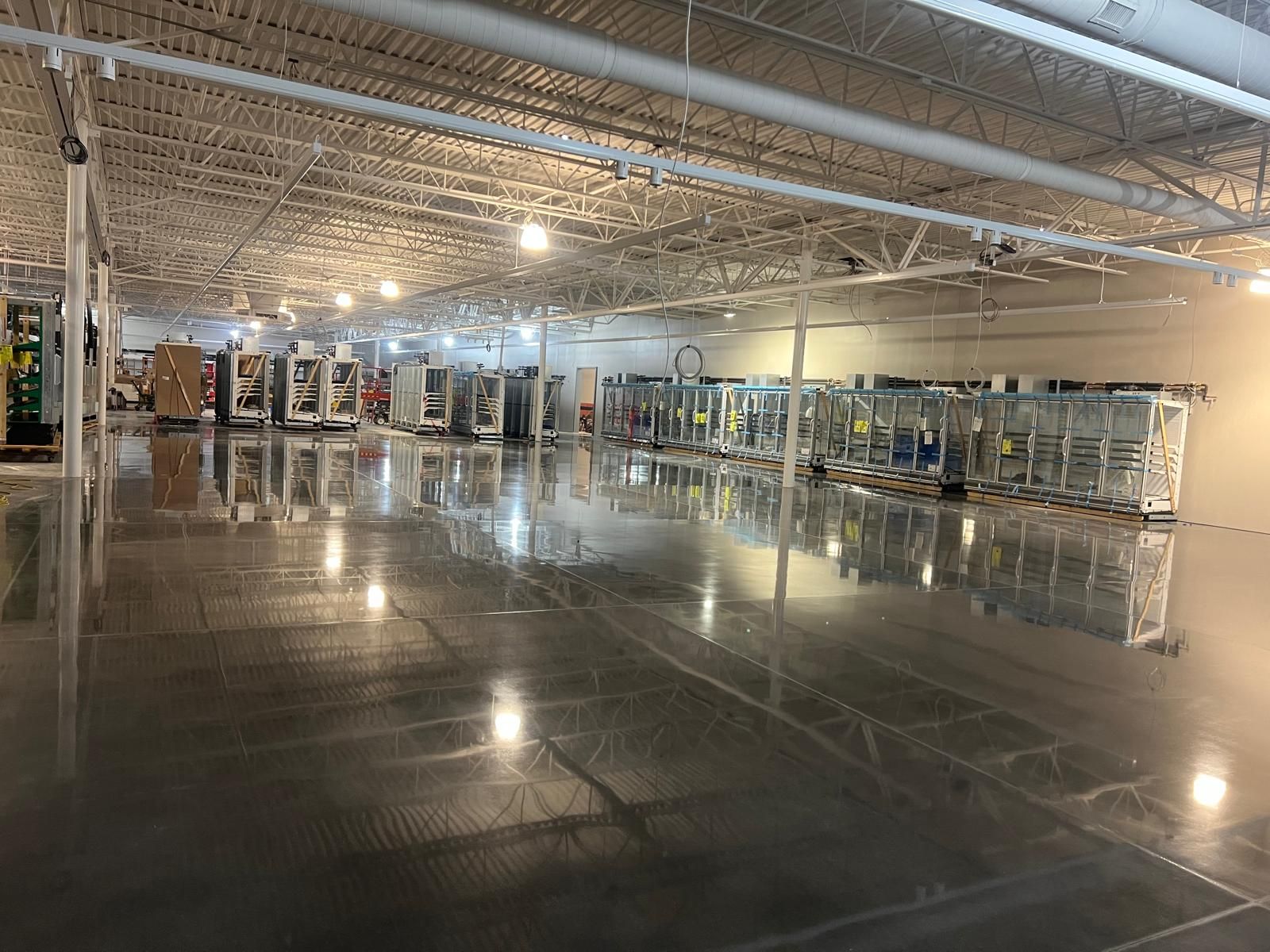
Slip Resistance: The Detail That Cannot Be Overlooked
Slip-and-fall incidents are among the most common and costly workplace injuries in food service operations. Choosing a commercial kitchen flooring system with inadequate slip resistance is not just a safety failure. It is a decision that exposes the facility to significant legal and financial liability.
Slip resistance in a kitchen floor is achieved through surface texture, typically by broadcasting aggregate into the wet coating during installation. The size and density of the aggregate determines the degree of traction. However, there is a balance to strike: a floor that is too aggressive will be difficult to clean and uncomfortable for staff who stand on it for extended shifts. A floor that is too smooth will be dangerously slippery when wet or greasy.
The appropriate slip resistance profile depends on the specific kitchen environment. A high-volume fry station where grease is constantly on the floor requires more aggressive texture than a prep area where the primary contaminant is water. An experienced installer will discuss these variables and recommend a texture profile that balances safety, cleanability, and worker comfort.
It is also critical that slip resistance be maintained over the life of the floor. Some systems lose their texture as they wear, becoming progressively more slippery. A well-installed urethane cement system with properly selected aggregate will maintain its slip resistance characteristics for years under normal use and maintenance.
Coved Base: More Than a Cosmetic Detail
The coved base — the curved transition between the floor and the wall — is one of the most important details in a kitchen floor coating installation, and one of the most commonly done poorly. A proper integral coved base eliminates the 90-degree angle where the floor meets the wall, replacing it with a smooth, radiused curve that can be effectively cleaned and sanitized.
Health inspectors look specifically at the cove base during inspections. Cracked, separated, or missing cove base is a common citation. Beyond code compliance, a properly installed coved base prevents moisture from migrating behind the wall covering, prevents pest harborage, and dramatically improves the effectiveness of daily cleaning.
The coved base must be made from the same material system as the floor and applied as an integral part of the installation, not as an afterthought or a separate product. It must be properly radiused, fully adhered to both the floor and the wall substrate, and finished to the same sanitary standard as the floor surface.
Installation Realities Facility Managers Should Understand
Even the best restaurant floor systems will fail if they are poorly installed. Facility managers should understand several key installation realities:
- Surface preparation is everything. The concrete substrate must be properly profiled, typically through shot blasting or diamond grinding, to achieve mechanical adhesion. Skipping or rushing surface preparation is the single most common cause of premature floor failure.
- Moisture testing is not optional. Concrete moisture vapor transmission must be tested before installation. Excess moisture in the slab will cause delamination regardless of the coating system used. If moisture levels are too high, a moisture mitigation system must be installed first.
- Temperature and humidity matter. Resinous floor systems are sensitive to ambient conditions during installation. Temperature, humidity, and substrate temperature all affect cure times and final performance.
- Downtime is unavoidable but manageable. A kitchen floor installation requires the space to be out of service. Depending on the system and the conditions, this can range from a long weekend to a full week. Phased installations can sometimes reduce the operational impact, but they add complexity and cost.
- Drain details require expertise. The transitions around floor drains, trench drains, and equipment curbs are the most failure-prone areas in any kitchen floor installation. These details require experienced installers who understand both the material and the functional requirements.
Our team has extensive experience with food service and hospitality restoration services, and we understand the operational constraints that make kitchen floor projects uniquely challenging.
Total Cost of Ownership: Looking Beyond the Bid Price
Facility managers are often under pressure to select the lowest-cost flooring option. In a commercial kitchen, this approach almost always results in higher total costs over time. A floor system that fails after two years costs more than a premium system that lasts ten — not just in material and labor for replacement, but in operational downtime, health code violations, slip-and-fall claims, and the ongoing maintenance costs of managing a deteriorating floor.
When evaluating bids for commercial kitchen flooring, facility managers should consider:
- The expected service life of the system under actual kitchen conditions, not laboratory conditions.
- The maintenance requirements and costs over the life of the floor.
- The cost and disruption of replacement when the floor fails.
- The liability exposure from slip-and-fall incidents on an inadequate floor.
- The risk and cost of health code violations and failed inspections.
A properly specified and installed urethane cement kitchen floor system represents a higher upfront investment than a standard epoxy coating. But in a commercial kitchen environment, it is almost always the lower-cost option when measured over the full life of the floor.
Frequently Asked Questions
How long does a commercial kitchen floor installation take?
Most commercial kitchen floor installations take between three and seven days depending on the size of the space, the condition of the existing substrate, and the specific system being installed. Urethane cement systems generally require a minimum of 24 to 48 hours of cure time before the space can be returned to service. Your installer should provide a detailed timeline that accounts for surface preparation, moisture mitigation if needed, coating application, cure time, and final inspection.
Can a new floor coating be applied over existing kitchen flooring?
In some cases, yes, but it depends entirely on the condition and type of the existing flooring. If the existing coating is well-adhered, in reasonable condition, and compatible with the new system, an overlay may be possible after proper preparation. However, if the existing floor is delaminating, contaminated with grease that has penetrated the substrate, or is a material that is incompatible with the new system, it must be removed first. A thorough evaluation of the existing floor is essential before making this determination.
What is the difference between epoxy and urethane cement for kitchen floors?
Epoxy coatings cure to a hard, rigid film that provides excellent chemical resistance and durability in many commercial environments. However, they lack the thermal shock resistance needed in commercial kitchens and can crack and delaminate when subjected to rapid temperature changes from boiling water, steam cleaning, and other kitchen exposures. Urethane cement systems combine a cementitious component that matches the thermal expansion of concrete with a urethane binder that provides chemical resistance and flexibility. This makes urethane cement the preferred system for environments with extreme thermal cycling.
How do I maintain a urethane cement kitchen floor?
Daily maintenance typically involves sweeping or scraping to remove food debris, followed by washing with a neutral or mildly alkaline cleaner and rinsing with clean water. The floor should be squeegeed to drains after washing. Avoid using harsh abrasive cleaning tools that can damage the surface texture. Periodic deep cleaning with an auto-scrubber and appropriate detergent is recommended. Your flooring installer should provide specific maintenance guidelines for the system they install, as different products may have different chemical compatibility requirements.
Is quarry tile still an acceptable option for commercial kitchen floors?
Quarry tile has been a traditional kitchen flooring material for decades, and it is still permitted by most health codes. However, the grout lines between tiles are a significant maintenance and sanitation concern. Grout is porous, difficult to keep clean, and prone to cracking and deterioration under the thermal and chemical conditions in a commercial kitchen. Many facility managers and health inspectors are moving away from quarry tile in favor of seamless, monolithic systems that eliminate the sanitation challenges associated with grout joints. If you currently have quarry tile that is in good condition, a seamless coating system can sometimes be applied over it after proper preparation.
Next Steps
Choosing the right commercial kitchen flooring system is a decision that affects food safety, worker safety, regulatory compliance, and long-term operational costs. It is not a decision that should be driven solely by the lowest bid or the shortest installation timeline.
If you are planning a kitchen renovation, building a new food service facility, or dealing with a failing kitchen floor, we encourage you to consult with a flooring contractor who specializes in food service environments and can evaluate your specific conditions, requirements, and operational constraints.
Contact Rose Restoration to discuss your commercial kitchen flooring project. Call us at 703-327-7676 or request a consultation online. We serve facility managers and property owners across the region with expert assessment, specification guidance, and professional installation.
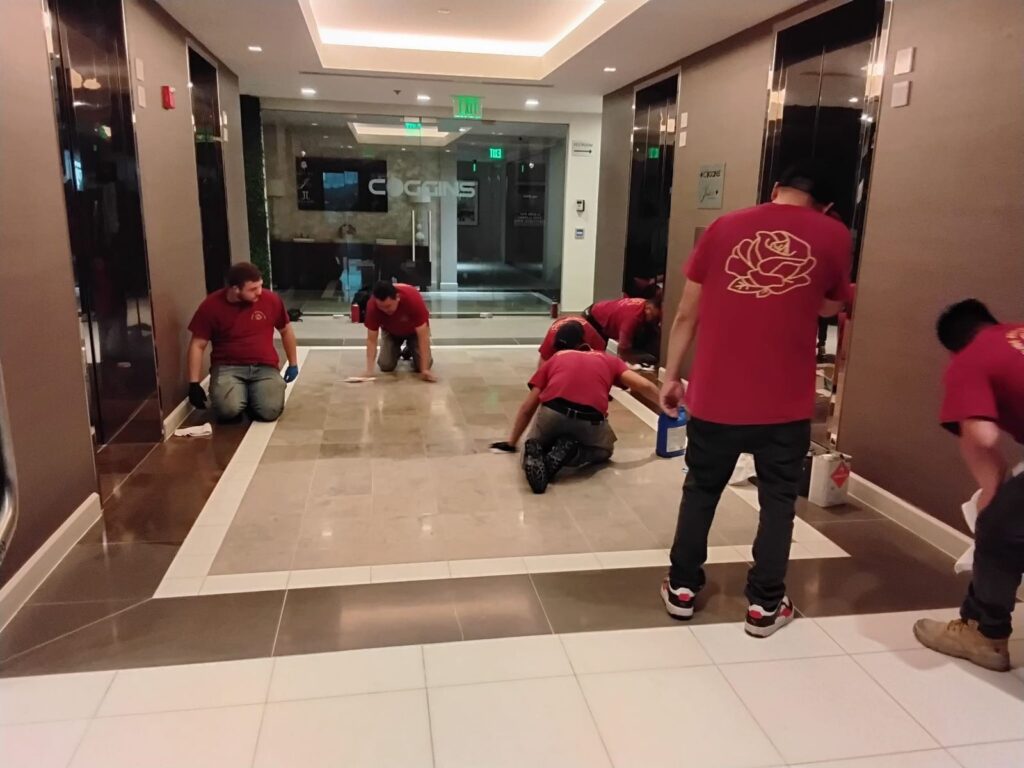
Commercial kitchen floors in Washington DC hotels and restaurants face conditions that residential coatings simply cannot survive — heat, grease, sanitizer chemicals, and constant impact.
Looking for something else?
Get a Free Assessment from Rose Restoration
Tell us about your marble, stone, terrazzo, or concrete and our senior technicians will recommend the right restoration approach. Family-run and trusted across Washington DC, Maryland, and Virginia since 1978.
Call (703) 327-7676 · Email info@roserestoration.com · schedule a time · or send us photos.
Restore. Don't replace.
48 years of polishing marble, terrazzo, concrete, and tile across Washington DC, Northern Virginia, and Maryland. IMF, Four Seasons, Smithsonian, and the Virginia State Capitol trust us — you can too.