Stone Care Glossary
The Rose Restoration stone care glossary defines the terms that appear on proposals, scopes of work, and specifications — restoration, polishing, honing, densifying, etching, efflorescence, grind-and-seal, aggregate exposure, gloss level, sealer, poultice, color sealing, regrouting, spalling, lippage, and more. Compiled by Rose Restoration, a Washington DC stone, marble, terrazzo, and concrete restoration contractor with DC-area experience since 1978.
Related Rose Restoration services and guides
Rose Restoration has delivered stone care glossary and related services for:
- Marble polishing & restoration — Marble services
- Terrazzo restoration — Terrazzo services
- Concrete polishing — Concrete services
- Granite restoration — Granite services
- Grout services — Grout & tile services
- How to choose a stone restoration company — Contractor selection guide
Stone Care Glossary — Quick Answers
What is the difference between honing and polishing marble?
Honing is the process of refining a marble surface using diamond abrasives at intermediate grit levels (typically 200–800 grit), producing a matte to low-sheen finish. Polishing continues the diamond-refinement process through finer grits (1500–3000+) to produce a reflective high-gloss finish. The shine in both cases comes from the stone itself — no coating or wax is applied. Honed finishes are common in high-traffic residential areas where etching is a concern; polished finishes are common in lobbies and showrooms.
What is densifying in concrete polishing?
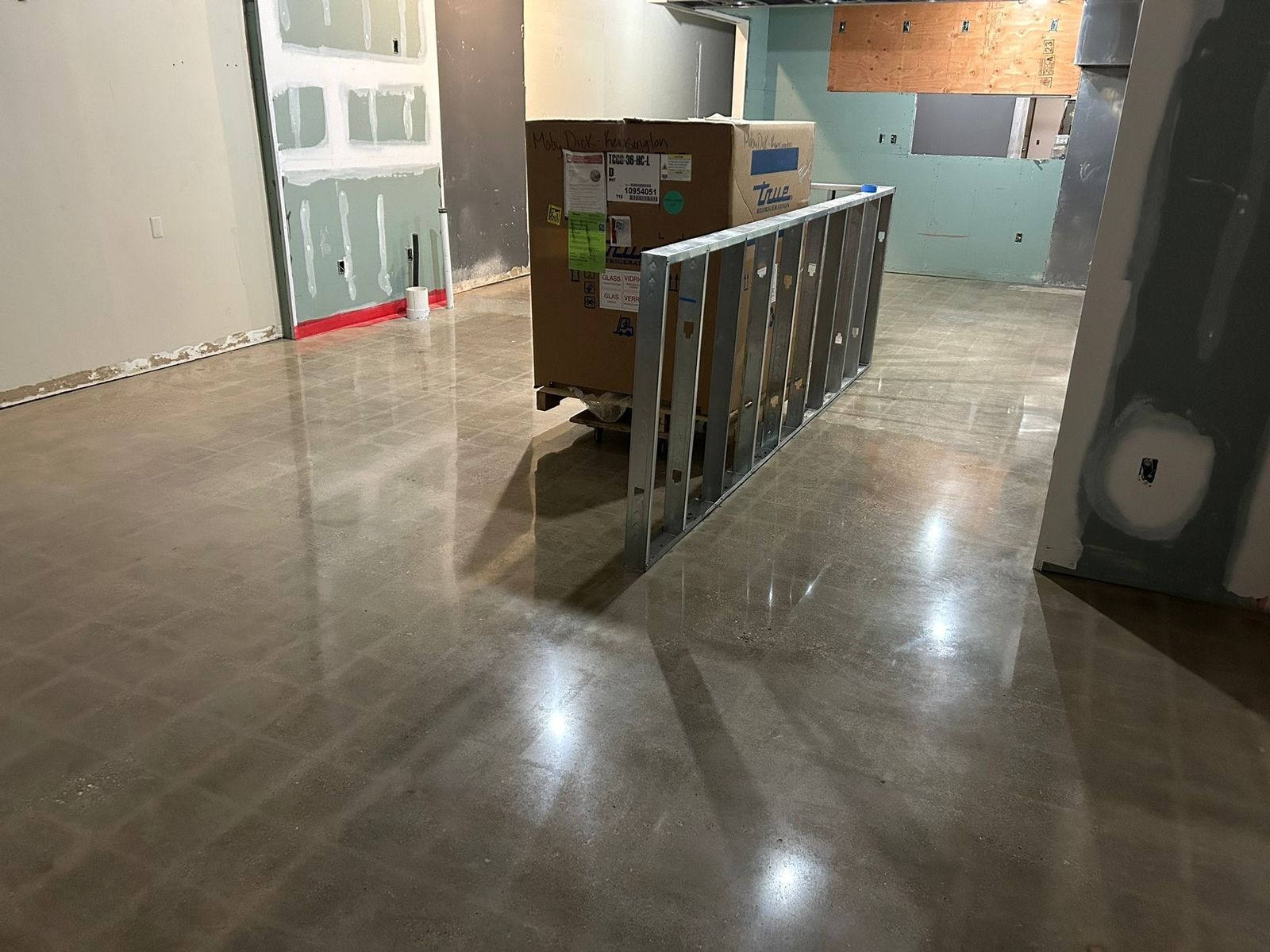
Densifying is the application of a liquid chemical hardener during the concrete polishing process. The densifier penetrates the concrete and reacts with free calcium hydroxide in the slab to form calcium silicate hydrate, making the concrete harder, more abrasion-resistant, and less porous. Densifying is critical for long-term polished concrete performance — it determines how well the floor accepts final polish and how long it maintains appearance under traffic.
What is etching on marble?
Etching is a dulled, matte spot on marble caused by acidic substances (lemon juice, wine, vinegar, coffee, tomato sauce, cleaning chemistry with low pH) reacting with the calcium carbonate in the stone. Etching is a chemical change to the surface, not a stain or scratch. Deep etches require professional diamond honing and re-polishing to restore. Light etching may be addressable with marble etch remover pastes. Sealers do not prevent etching — only a surface-protection layer like Marble Armor fully prevents it.
What is efflorescence on stone or masonry?
Efflorescence is a white, powdery, or crystalline deposit on the surface of stone, brick, concrete, or masonry caused by water-soluble salts migrating to the surface as moisture evaporates. It is cosmetic rather than structural, but can be persistent. Removal requires a mild acidic treatment matched to the substrate, followed by rinsing. Addressing the underlying moisture source is essential to prevent recurrence.
What does restoration mean in stone care?
Restoration is the process of returning a stone, concrete, or terrazzo surface to a like-new condition without removal or replacement. It typically includes condition assessment, crack and chip repair, stain and etch removal, grinding/honing/polishing to re-establish the finish, densifying (for concrete) or sealing (for most natural stone), and a guard or protective treatment. Restoration preserves the original substrate, costs 10–30% of replacement, and works around occupied spaces.