
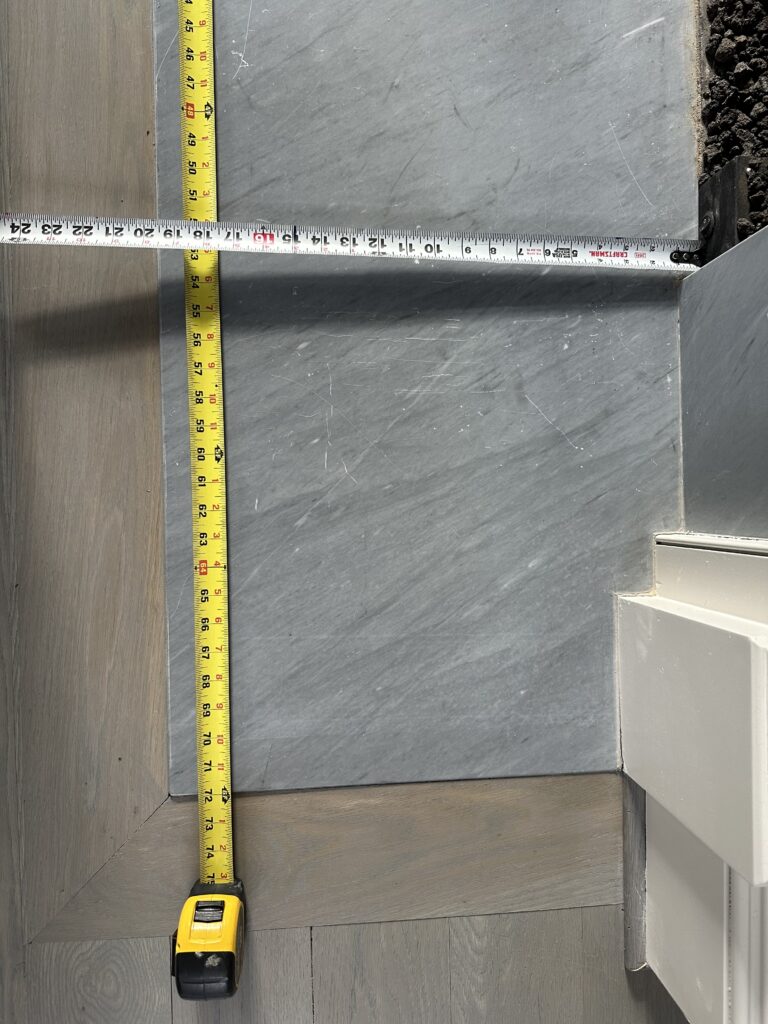

In Northern Virginia, homes are more than just places to live. They’re long-term investments, reflections of personal style, and often carefully designed spaces where every material choice matters. From marble kitchens in McLean to limestone entryways in Fairfax, from terrazzo foyers in Georgetown to granite steps in Arlington, natural stone plays a major role in how homes look, feel, and function.
That’s why more homeowners and interior designers across the Washington DC metro area are turning to Rose Restoration — not just for stone repair, but for comprehensive surface care that respects both design intent and the realities of daily living.
This isn’t about quick fixes or cosmetic cover-ups. It’s about understanding how natural stone behaves in a residential environment, knowing how to restore it without compromising its character, and delivering results that hold up under the scrutiny of both design professionals and the families who live with these surfaces every day.
A Local Presence You've Probably Already Seen
If you live in Northern Virginia, you may already recognize the Rose Restoration name. We’ve been featured in McLean Magazine, highlighting our residential work and long-standing presence in the community. You may also have seen our banner at a Fairfax high school, supporting local programs and reinforcing what we’ve always believed: strong communities are built by local businesses that show up — not just for jobs, but for the neighborhoods they serve.
That local commitment isn’t marketing. It’s how we’ve operated for over 30 years. Our shop is in Fairfax. Our crews live in the same communities where they work. When we restore a marble floor in Great Falls or seal a limestone fireplace in Vienna, we’re working in our own backyard — and that proximity creates accountability that matters.
Why Local Matters for Stone Restoration
Stone restoration isn’t like hiring a plumber or an electrician. The work is visible, permanent, and deeply tied to the aesthetic of the home. Homeowners need to trust that the people in their home understand not just the technical process, but the context — the neighborhood, the architecture, the design standards, and the expectations that come with high-end residential work in this area.
Northern Virginia homes feature an unusually wide variety of natural stone — Carrara and Calacatta marble in kitchens and bathrooms, honed limestone on fireplaces and floors, polished granite on exterior steps and thresholds, terrazzo in mid-century and renovated homes, travertine in bathrooms and outdoor spaces, and bluestone and flagstone on patios and walkways. Each of these materials behaves differently, wears differently, and requires a different restoration approach.
Having a local team that has worked with all of these materials — in homes that look like yours, in neighborhoods like yours — is a meaningful advantage. There’s no learning curve. There’s no guesswork about what works in this climate, with these materials, in these types of homes.
How Interior Designers and Architects Use Rose Restoration
Interior designers and architects throughout Northern Virginia, Washington DC, and Maryland regularly bring us into their residential projects. Sometimes we’re involved early in the design process — consulting on material selection, advising on what can be restored versus what needs replacement, or providing realistic expectations for how a particular stone will perform over time. Other times, we’re called in when a problem needs solving quickly — a marble countertop that arrived damaged, a limestone floor that wasn’t sealed properly, or an existing stone surface that needs to be brought up to the standard of a new renovation.
What designers and architects value most about working with us is flexibility and breadth of capability.
The Materials Designers Bring Us Into
Designers often work with materials that require specialized knowledge and hands-on expertise that most general contractors simply don’t have:
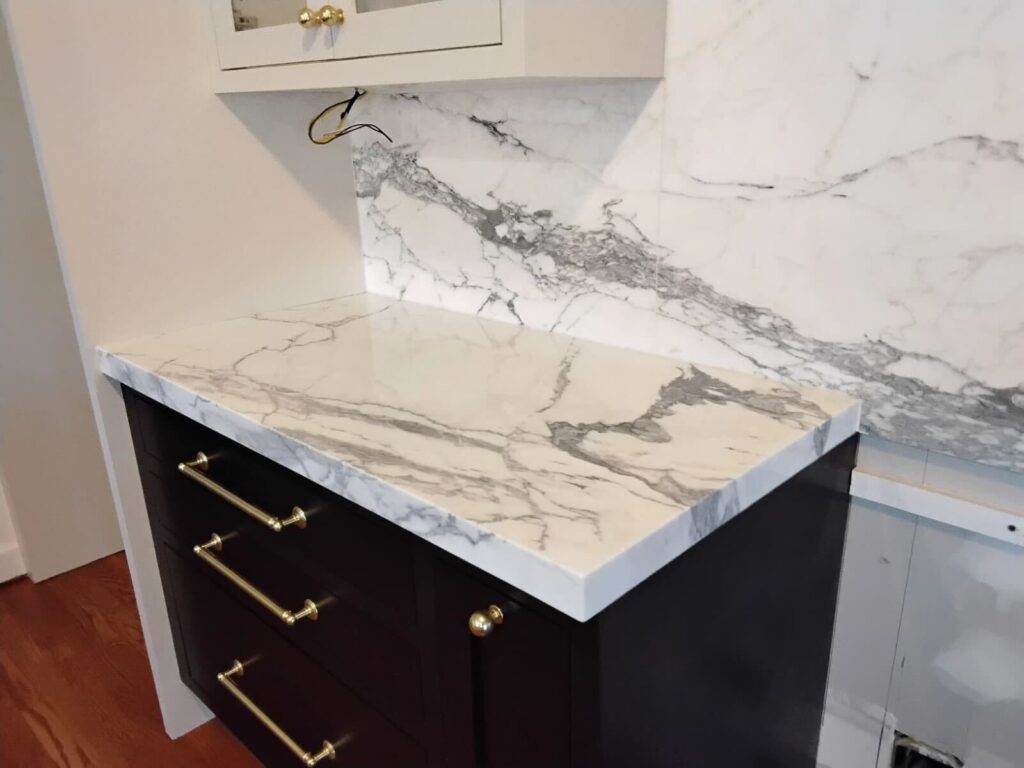
- Marble countertops and bathroom floors — honing, polishing, sealing, stain removal, etch repair, and edge refinishing. Marble is beautiful but reactive — it etches from acidic contact and stains if not properly sealed. Proper restoration requires understanding the specific marble variety and its characteristics.
- Limestone fireplaces and staircases — cleaning, honing, filling, and sealing. Limestone is softer and more porous than marble, which means it requires different tooling, different chemicals, and a gentler touch. Getting the finish right — maintaining the soft, matte warmth that makes limestone so appealing — takes experience.
- Terrazzo entryways and basements — stripping old coatings, grinding, honing, polishing, and sealing. Terrazzo restoration is a specialty within a specialty. The material is a composite of marble or granite chips set in a cement or epoxy matrix, and restoring it requires understanding both the aggregate and the binder.
- Granite thresholds and exterior steps — cleaning, polishing, chip repair, and sealing. Granite is the hardest common natural stone, but it still shows wear — especially on high-traffic thresholds and outdoor steps exposed to weather, salt, and freeze-thaw cycles.
- Travertine floors and shower walls — filling, honing, polishing, and sealing. Travertine’s characteristic holes and voids require specific fill techniques that match the stone’s natural appearance.
- Custom tile installations with complex grout and caulk details — grout cleaning, color sealing, re-grouting, and recaulking. Tile work is only as good as its grout and caulk — and those components fail long before the tile itself.
- Bluestone and flagstone patios — cleaning, sealing, color enhancement, mortar joint repair, and resetting. Outdoor stone requires different techniques than interior work, accounting for drainage, weather exposure, and movement.
One Team Instead of Five
Rather than coordinating multiple specialty trades — a marble guy, a grout company, a terrazzo specialist, a metal restoration firm — designers rely on Rose Restoration because we handle multiple scopes of work under one roof. That means fewer scheduling delays, fewer communication breakdowns, fewer handoffs between trades, and results that stay aligned with the original design vision from start to finish.
For designers managing complex residential renovations with tight timelines and demanding clients, that consolidation of trades is enormously valuable. One phone call, one point of contact, one team that understands the full scope of surface work in the home.
Residential Projects Rarely Fit in One Box
Homes don’t behave like commercial spaces. Every house has its quirks — tight access through finished hallways, walls that can’t be scratched, rooms that are occupied during work, furniture that needs protection, and surfaces that serve both aesthetic and practical purposes simultaneously.
Commercial restoration work often happens in empty buildings during off-hours. Residential restoration happens in someone’s home, while they’re living in it, surrounded by the things they care about. That requires a completely different mindset — not just technical skill, but awareness, respect, and communication.
The Reality of Multi-Scope Residential Work
A single residential project in Northern Virginia might involve:
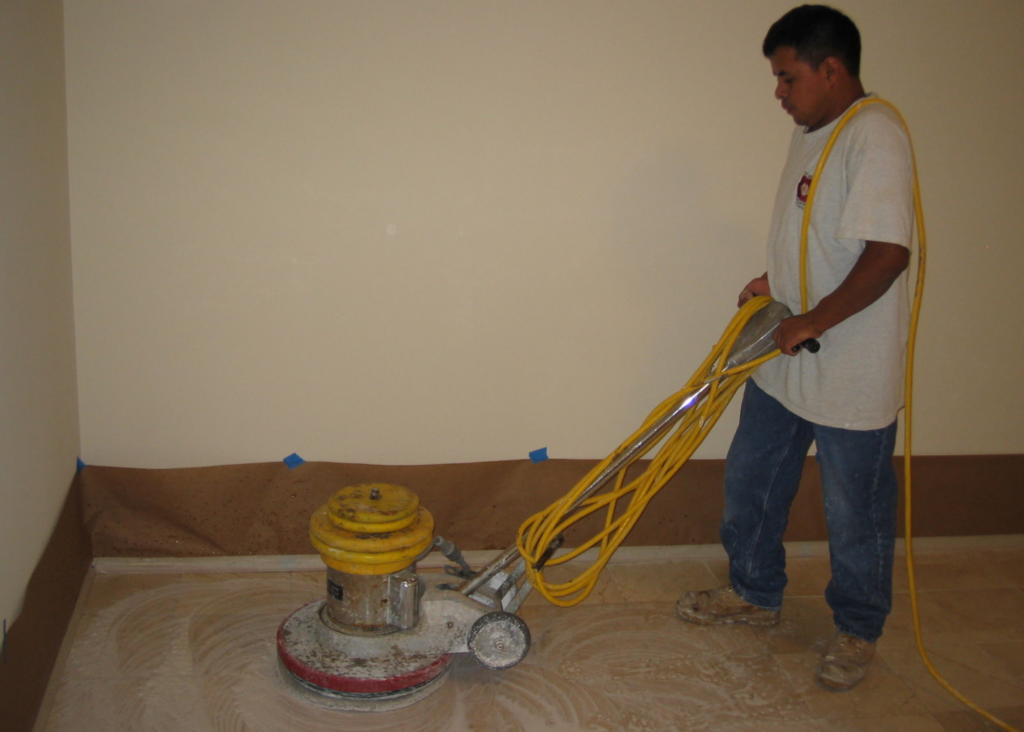
- Restoring a marble floor while protecting surrounding hardwood — this means careful masking, controlled water use, and edge work that doesn’t damage adjacent materials
- Repairing chipped stone edges in a kitchen — matching the existing finish, color, and profile so the repair is invisible
- Cleaning and sealing limestone in a bathroom — working around fixtures, glass, and finishes that can’t be replaced
- Addressing grout, caulk, and joint issues throughout the home — removing deteriorated caulk, cleaning and resealing grout, and replacing failed joints without disturbing surrounding tile
- Refreshing terrazzo without changing its character — bringing back the polish and vibrancy while preserving the patina and warmth that makes vintage terrazzo so appealing
- Polishing a granite entryway threshold — restoring the high-gloss finish that foot traffic has worn down over years
- Sealing and color-enhancing an outdoor flagstone patio — bringing out the natural color variation while protecting against weather and staining
Being able to perform all of these tasks cohesively — with one crew, one schedule, and one consistent standard of quality — matters enormously. It keeps the home functional during work, minimizes disruption to the family’s daily routine, and ensures the finished result feels intentional and unified rather than pieced together by different trades who never communicated with each other.
Understanding Natural Stone: Why Material Knowledge Matters
One of the most common mistakes in residential stone care is treating all stone the same way. Marble, limestone, granite, travertine, terrazzo, and slate are fundamentally different materials with different properties, different vulnerabilities, and different restoration requirements.
Marble
Marble is a metamorphic rock composed primarily of calcite. It’s beautiful, elegant, and one of the most popular choices for kitchen countertops, bathroom floors, vanities, and fireplace surrounds in Northern Virginia homes. It’s also one of the most reactive stones — acidic substances like lemon juice, vinegar, wine, and many common cleaning products will etch the polished surface on contact, leaving dull marks that can’t be wiped away.
Proper marble restoration involves honing or polishing the surface to remove etching and scratches, then sealing to reduce staining. The specific approach depends on the marble variety — a soft, porous Carrara requires different handling than a dense, hard Thassos.
Limestone
Limestone is a sedimentary rock that’s softer and more porous than marble. It’s prized for its warm, matte appearance and is commonly used on fireplaces, floors, staircases, and exterior facades in the DC area. Because of its porosity, limestone absorbs stains more readily than harder stones and requires careful sealing.
Limestone restoration focuses on gentle cleaning, honing to remove surface wear, filling any pits or voids, and applying an appropriate sealer. Over-aggressive grinding or polishing can damage limestone’s characteristic soft texture — which is why experience with this specific material matters.
Granite
Granite is an igneous rock and the hardest common natural stone used in residential applications. It’s extremely durable, resistant to scratching, and less prone to etching than marble or limestone. Granite is commonly used for countertops, exterior steps, thresholds, and high-traffic floors.
While granite is tough, it’s not indestructible. Over time, polished granite can lose its sheen from foot traffic, and outdoor granite can be damaged by freeze-thaw cycles, salt exposure, and weathering. Professional restoration brings back the original polish and can address chips, cracks, and surface damage.
Travertine
Travertine is a form of limestone deposited by mineral springs. Its signature characteristic is the natural holes and voids in the surface — some filled during fabrication, some left open for a more rustic look. Travertine is popular in bathrooms, shower walls, floors, and outdoor spaces throughout Northern Virginia.
Restoring travertine requires careful fill work — matching the color and texture of the fill material to the surrounding stone — along with honing, polishing, and sealing. In shower environments, travertine is especially vulnerable to moisture damage and requires proper sealing and maintenance.
Terrazzo
Terrazzo is a composite material — marble, quartz, granite, or glass chips set in a cement or epoxy binder, then ground and polished smooth. It was enormously popular in mid-century construction and is experiencing a major design revival. Many Northern Virginia homes, especially those built in the 1950s through 1970s, feature original terrazzo floors that are still structurally sound but cosmetically worn.
Terrazzo restoration involves stripping any existing coatings, grinding the surface to expose fresh aggregate, honing and polishing to build up the sheen, and sealing for protection. When done properly, restored terrazzo is stunning — vibrant, durable, and completely unique.
Why Homeowners Appreciate the Difference
For homeowners, restoration is fundamentally about preserving what they already love. Many of the homes we work in feature materials that were chosen with care, installed with intention, and carry emotional as well as financial value. These aren’t surfaces that can simply be ripped out and replaced without major disruption, significant expense, and often a loss of character that can’t be replicated.
What Professional Stone Restoration Delivers
Professional natural stone restoration allows homeowners to:
- Maintain the original character of their home — the specific marble, the particular limestone, the terrazzo pattern that makes their entryway unique. Restoration preserves these materials rather than replacing them with something different.
- Extend the life of existing materials by decades — properly restored and sealed natural stone can last another 20, 30, or 50 years. The material itself is essentially permanent — it’s the finish and protection that need periodic renewal.
- Avoid unnecessary demolition and construction — removing and replacing stone is messy, expensive, time-consuming, and often damages surrounding materials. Restoration achieves the same visual result without the destruction.
- Keep surfaces safe, clean, and easy to maintain — sealed stone resists staining, cleaned stone is hygienic, and properly finished stone is easier to maintain than worn, porous, unsealed surfaces.
- Increase property value — well-maintained natural stone is a recognized premium feature in Northern Virginia real estate. Buyers notice the difference between neglected stone and professionally maintained surfaces.
Trust and Respect in Lived-In Spaces
Beyond the technical work, there’s something more fundamental at play. Inviting a restoration team into your home requires confidence — confidence that they understand not just materials, but how to work respectfully in lived-in spaces. That means protecting furniture and finishes, communicating clearly about timelines and disruptions, cleaning up thoroughly at the end of each work day, and treating the home the way you’d want someone to treat yours.
This is something we take seriously. Our crews have worked in some of the finest homes in Northern Virginia — and the families who live in those homes have trusted us because we consistently demonstrate that we understand the difference between a job site and someone’s home.
The Restoration Process: What Homeowners Can Expect
One of the most common questions we get from homeowners is simply: “What does the process actually look like?” Here’s a general overview of how residential stone restoration works from initial contact through completion.
Assessment and Consultation
Every project starts with an on-site assessment. We examine the stone, identify the material type, evaluate the current condition, and discuss the homeowner’s goals. Sometimes the goal is a full restoration to like-new condition. Sometimes it’s maintenance-level work to extend the life of a previous restoration. Sometimes it’s targeted repair — fixing specific damage without touching the rest.
We provide a clear scope of work, realistic expectations for the outcome, and a straightforward estimate before any work begins.
Surface Preparation
Before any restoration work begins, surrounding surfaces and fixtures are carefully protected. Masking, drop cloths, and edge guards prevent damage to adjacent materials — hardwood floors, painted walls, cabinetry, fixtures, and anything else in the work area.
Restoration Work
The specific restoration process depends on the material and the scope of work, but it generally involves some combination of:
- Cleaning — deep cleaning to remove embedded dirt, soap residue, hard water deposits, and surface contaminants
- Grinding or honing — mechanical refinement of the surface to remove scratches, etching, stains, and wear patterns
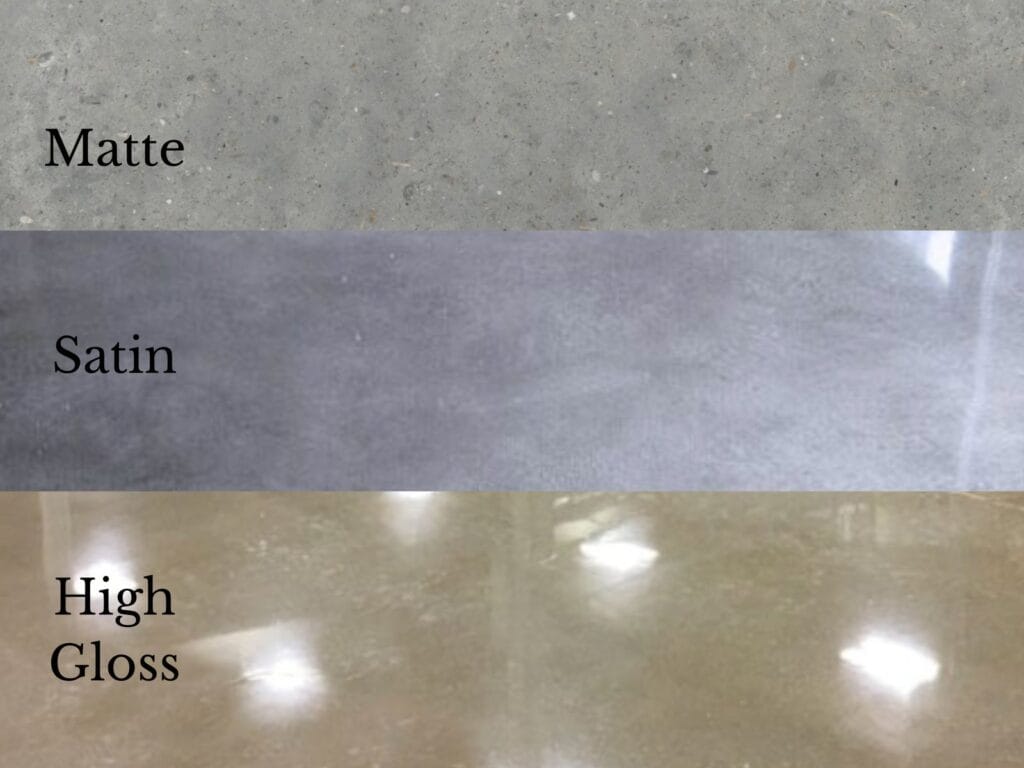
- Polishing — building up the sheen to the desired finish level, from a soft hone to a high gloss
- Filling and repair — addressing chips, cracks, voids, and damaged areas with color-matched materials
- Caulk and grout work — removing and replacing failed caulk, cleaning and sealing grout, and addressing joints
- Sealing — applying appropriate sealers to protect against staining, moisture penetration, and daily wear
Cleanup and Walkthrough
When the work is complete, we clean the entire work area thoroughly and do a final walkthrough with the homeowner. We point out what was done, explain any maintenance recommendations, and make sure the homeowner is completely satisfied with the result before we leave.
Design-Friendly, Homeowner-Focused: The Rose Restoration Approach
Designers appreciate that we can execute complex, multi-scope projects with precision and design sensitivity. They know we’ll follow their specifications, match their vision, and deliver work that meets the standard their clients expect.
Homeowners appreciate that we explain the process clearly, set realistic expectations, answer questions honestly, and focus on long-term performance rather than quick fixes that won’t last. We’d rather tell a homeowner that a particular surface needs more work than expected than deliver a result that doesn’t hold up.
That balance — technical capability that satisfies designers combined with communication and care that resonates with homeowners — is what keeps designers coming back project after project, and homeowners recommending us to friends, neighbors, and family.
What Sets Professional Restoration Apart from DIY
Homeowners sometimes ask whether they can handle stone care themselves. For basic cleaning and maintenance, absolutely — and we’re happy to recommend the right products and techniques. But for restoration-level work — grinding, honing, polishing, filling, and sealing — professional equipment, materials, and experience make a dramatic difference in the outcome.
Professional diamond-tooling, calibrated machinery, commercial-grade sealers, and years of hands-on experience with different stone types produce results that consumer products and YouTube tutorials simply can’t match. More importantly, professional restoration avoids the risk of damage — over-grinding, uneven polishing, improper sealer application, or chemical reactions that can permanently discolor stone.
Rooted in the Community, Focused on the Home
From magazine features to school sponsorships to three decades of working in homes across Northern Virginia, Rose Restoration has always believed that being visible and present locally matters. But what matters more — what has kept us in business for over 30 years — is delivering work that stands up to daily use and design scrutiny inside the home.
We’ve watched neighborhoods evolve, seen design trends come and go, and worked on the same homes multiple times as families renovate, update, and maintain their spaces over the years. Many of our clients are repeat customers — not because something failed, but because they trust us to handle whatever surface challenge comes up next.
Whether you’re updating a kitchen, refreshing a bathroom, preserving the stone features that make your home unique, or working with a designer on a comprehensive renovation, having a restoration partner who understands both design and durability makes all the difference.
Rose Restoration is proud to be part of the homes, neighborhoods, and design community that make Northern Virginia such a special place to live.
Frequently Asked Questions About Residential Stone Restoration
How often does natural stone need professional restoration?
It depends on the material, the location, and how much use the surface gets. Kitchen countertops and bathroom floors typically need professional attention every 3 to 5 years. Floors in lower-traffic areas may go 5 to 10 years. Proper sealing and regular maintenance extend the intervals significantly.
Can you restore marble that has been badly etched or stained?
In most cases, yes. Professional honing and polishing remove etching and surface stains from marble. Deep stains that have penetrated below the surface may require poultice treatment. Even marble that looks severely damaged can often be restored to excellent condition.
Do you work with interior designers and architects directly?
Yes. We regularly collaborate with designers and architects on residential projects throughout Northern Virginia, DC, and Maryland. We can consult on material selection, provide restoration assessments, and execute multi-scope work aligned with the design vision.
How long does residential stone restoration take?
Most residential projects are completed in one to three days, depending on the scope. A single countertop or bathroom floor might take half a day. A whole-home project involving multiple rooms and surfaces might take two to four days. We provide timeline estimates during the initial assessment.
Is stone restoration messy? Will it damage my home?
Professional stone restoration generates some dust and water, but modern equipment with dust containment systems and wet-processing techniques keep it manageable. We carefully protect all surrounding surfaces, fixtures, and finishes before work begins, and we clean up thoroughly when the work is complete.
Can you match the existing finish on partially damaged stone?
Yes. Matching the existing finish — whether it’s a high polish, a soft hone, or a natural matte — is a core part of what we do. Our goal is always to make the restoration seamless, so the repaired or restored area blends with the surrounding stone.
What’s the difference between sealing and polishing?
Polishing is a mechanical process that refines the stone surface to create sheen and smoothness. Sealing is a chemical process that fills the stone’s pores to protect against staining and moisture penetration. They serve different purposes and are often done together — polish for appearance, seal for protection.