
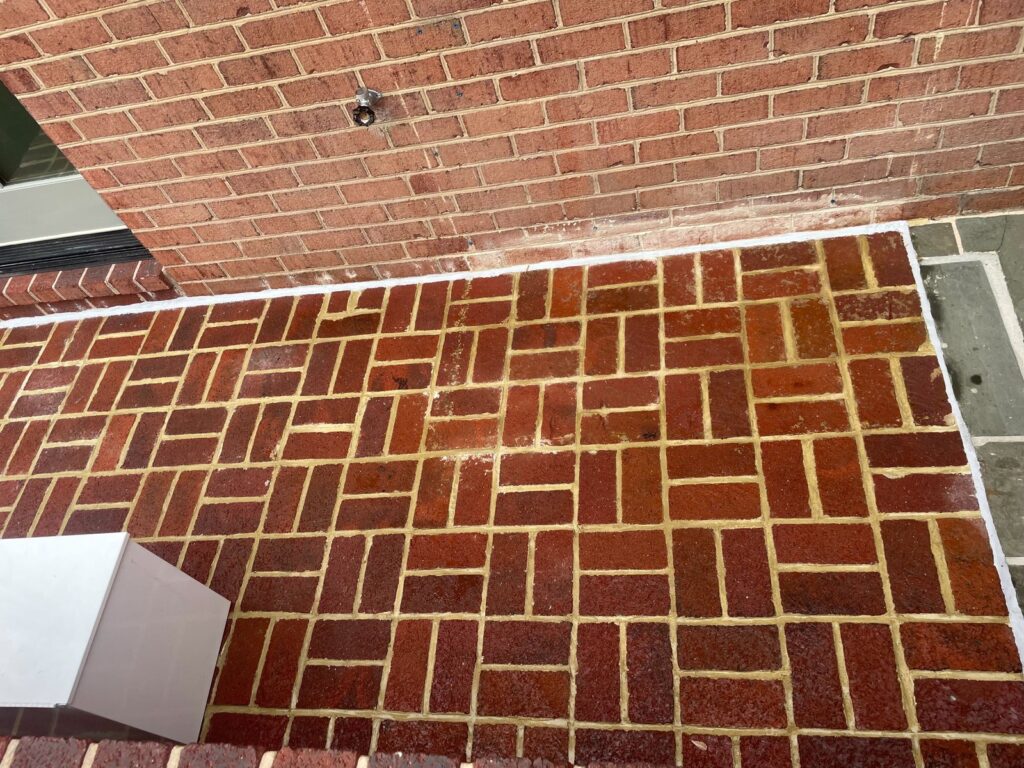
Rose Restoration — a Washington DC masonry and repointing contractor — explains the difference between mortar types M, S, N, O, and K, and which to use for historic brick, chimneys, foundations, and exterior masonry repair.
 By Tom Kuhn, CEO, Rose Restoration
Rose Restoration has restored marble, terrazzo, concrete, and natural stone across DC, MD, and VA since 1978.
The American Society for Testing and Materials (ASTM) classifies mortar into five standard types based on compressive strength, bond strength, and flexibility. Each type is appropriate for specific applications. Using the wrong type is a common and costly mistake.
Type N — General Purpose (Most Common for Above-Grade Residential)
Type N mortar has a compressive strength of approximately 750 psi. It is the most versatile and widely used mortar for above-grade exterior applications, including chimneys, garden walls, and standard residential repointing. Type N balances durability with enough flexibility to handle normal building movement. It is the correct choice for most Northern Virginia homeowner repointing projects.
Type S — High Bond Strength (Below-Grade and Structural)
Type S achieves compressive strengths around 1,800 psi. It is specified for below-grade applications, retaining walls, foundations, and anywhere the masonry is subject to significant lateral pressure or soil contact. Type S is also used in areas with high seismic risk. It is too rigid for most historic above-grade masonry repairs.
Type O — Soft Mortar (Interior and Historic Above-Grade)
Type O has a compressive strength of only about 350 psi. It is appropriate for interior non-load-bearing applications and, critically, for historic exterior masonry where the brick is soft and the original mortar was lime-rich. Many pre-1940 homes in the DC area require Type O or a custom lime-based mix. Type O allows the mortar to flex and sacrifice itself before damaging aged brick.
Type M — Very High Strength (Foundations and Hardscaping)
Type M mortar reaches 2,500 psi or more. It is reserved for foundations, manholes, retaining walls below grade, and masonry in contact with earth. Its extreme hardness makes it unsuitable for any residential repointing application above grade.
Type K — Historic Restoration Only (Very Soft)
Type K is rarely used outside of historic preservation work. With compressive strength below 75 psi, it is extremely soft and sacrificial. It is appropriate only for the most fragile historic masonry—18th and early 19th century structures where even Type O would be too rigid. Rose Restoration uses Type K on select preservation projects in Old Town Alexandria and the DC historic districts.
Choosing the correct type requires examining the existing masonry, testing or estimating the original mortar strength, and understanding the application. This is not a decision that should be made at the hardware store.
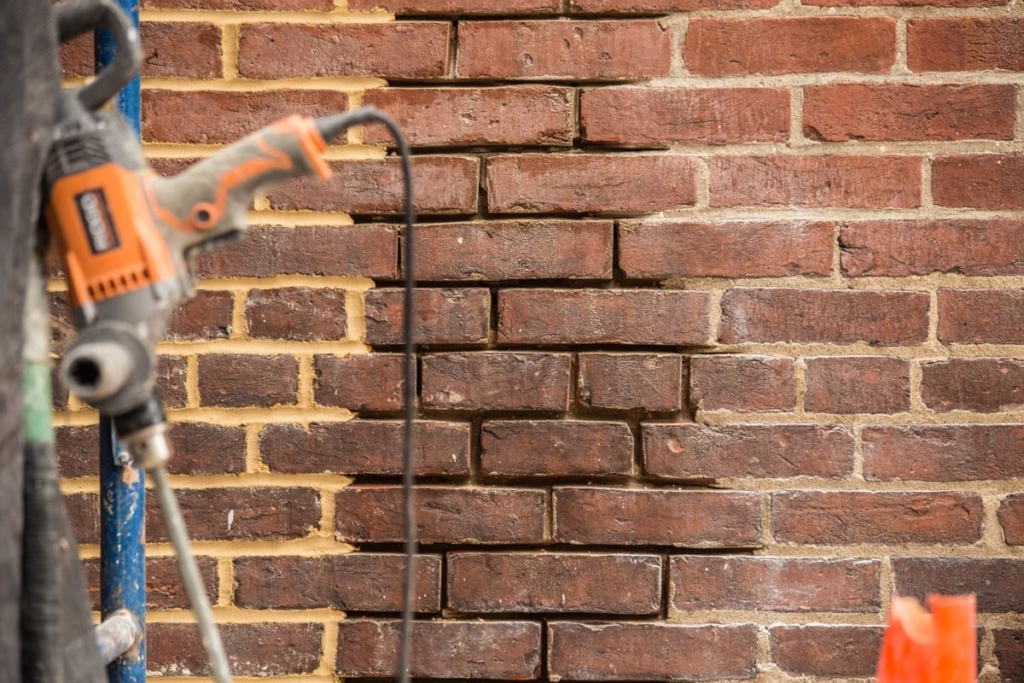
Structural correctness is only half the challenge. Color matching is the craft that separates a professional restoration from a patchwork repair. A structurally sound but visually mismatched repoint is immediately obvious and diminishes both curb appeal and property value.
Rose Restoration’s color matching process begins with sampling. We take a small sample of the existing mortar joint—ideally from a sheltered location where the original color has not been bleached by UV or stained by moisture. We examine the sample under magnification to identify the sand type, grain size, and any pigmentation.
Sand selection is the single biggest factor in final joint color. Sand accounts for roughly 70–75% of the mortar volume. Yellow sand produces a warm tan joint. Gray sand produces a cooler, stone-like appearance. White silica sand produces very light joints common in 20th century construction. We source regionally appropriate sand to match the original material.
Portland cement ratio directly affects color: more Portland produces darker, grayer joints. We adjust the mix proportions to match the original appearance as closely as possible. More lime in the mix lightens the color and affects how it weathers over time—lime-rich mortars often develop a bright white surface patina that is characteristic of historic masonry.
Pigment additives are used sparingly when natural aggregates alone cannot achieve a close enough match. We use iron oxide pigments rated for exterior masonry use. The pigment must be mixed precisely by weight—even small variations produce inconsistent results across a large project.
We always produce test panels and allow them to cure for at least 28 days before final approval. Wet mortar looks very different from cured mortar. Color-matching fresh mortar to existing weathered joints requires experience and a calibrated eye developed over years of work.
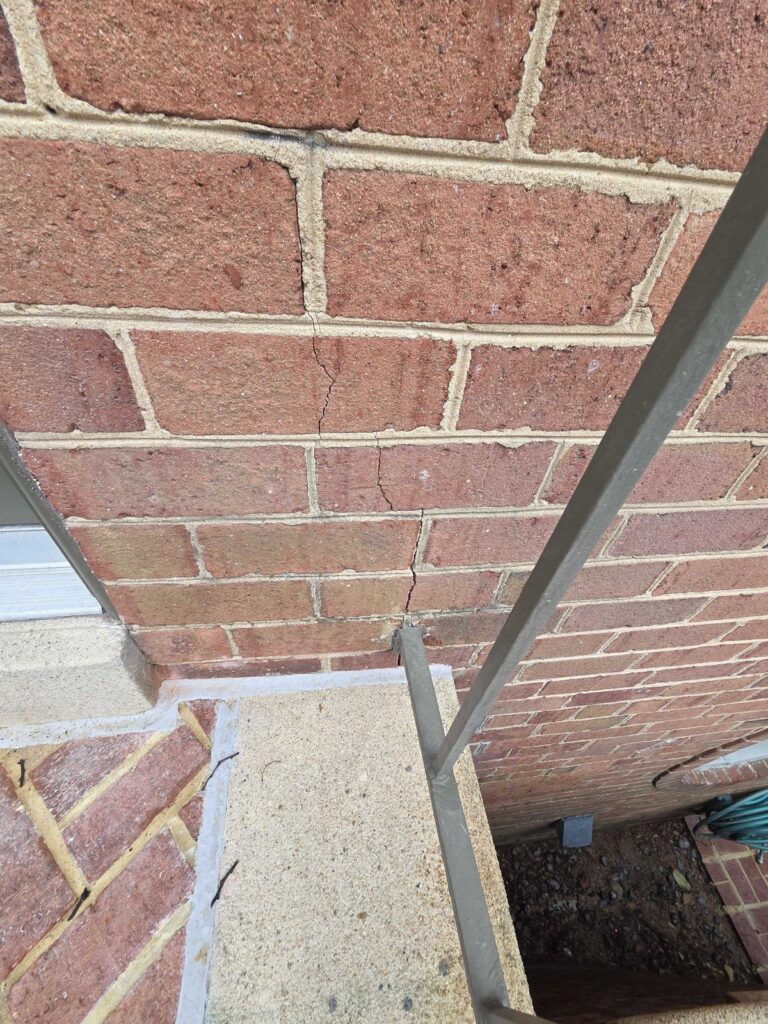
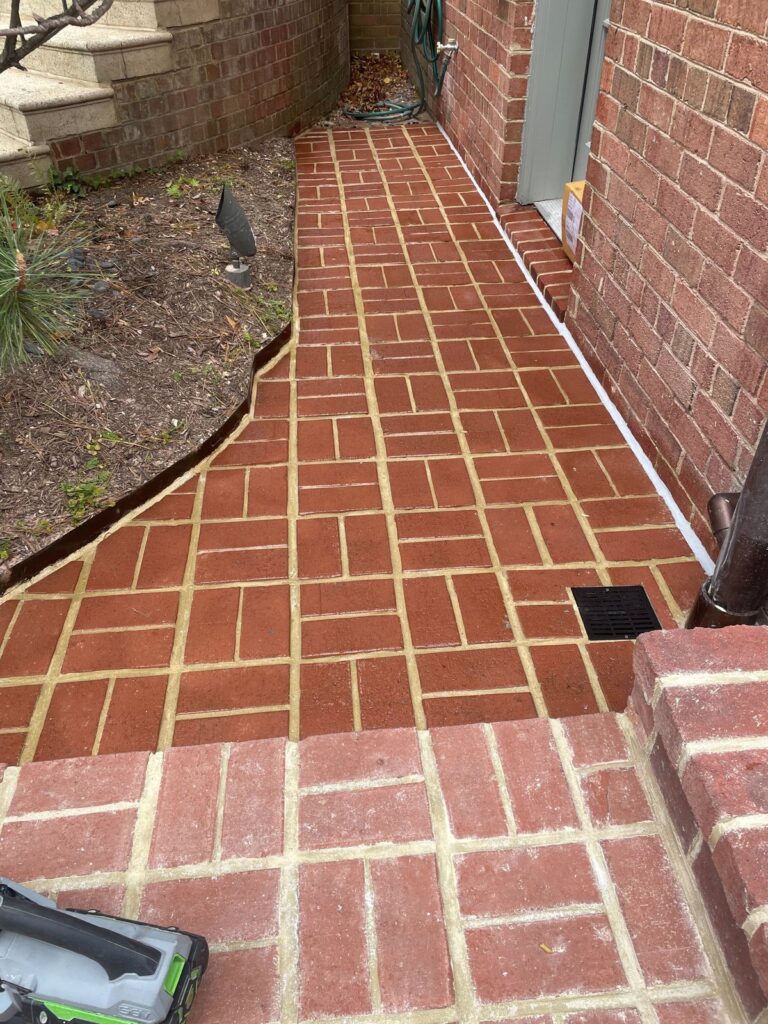
Residential repointing costs vary significantly depending on the scope, accessibility, and mortar matching requirements. A straightforward chimney repoint for a single-family home in Northern Virginia typically ranges from $800 to $2,500. Full exterior wall repointing on a two-story brick home can range from $5,000 to $25,000 or more depending on the square footage and complexity. Historic mortar matching adds cost because of the additional labor in material sourcing, sample analysis, and test panel preparation. Rose Restoration provides detailed written estimates after a free on-site assessment—we never quote repointing from photos alone, because the condition of the existing mortar must be evaluated in person. Call us at (703) 327-7676 to schedule your assessment.
Custom Mortar Matching Services
Need mortar matched for a repointing project? Our team analyzes existing mortar composition and creates custom blends that match color, texture, and strength. Serving historic and modern buildings across the DC metro.
Looking for something else?
Get a Free Assessment from Rose Restoration
Tell us about your marble, stone, terrazzo, or concrete and our senior technicians will recommend the right restoration approach. Family-run and trusted across Washington DC, Maryland, and Virginia since 1978.
Call (703) 327-7676 · Email info@roserestoration.com · schedule a time · or send us photos.
Restore. Don't replace.
48 years of polishing marble, terrazzo, concrete, and tile across Washington DC, Northern Virginia, and Maryland. IMF, Four Seasons, Smithsonian, and the Virginia State Capitol trust us — you can too.