
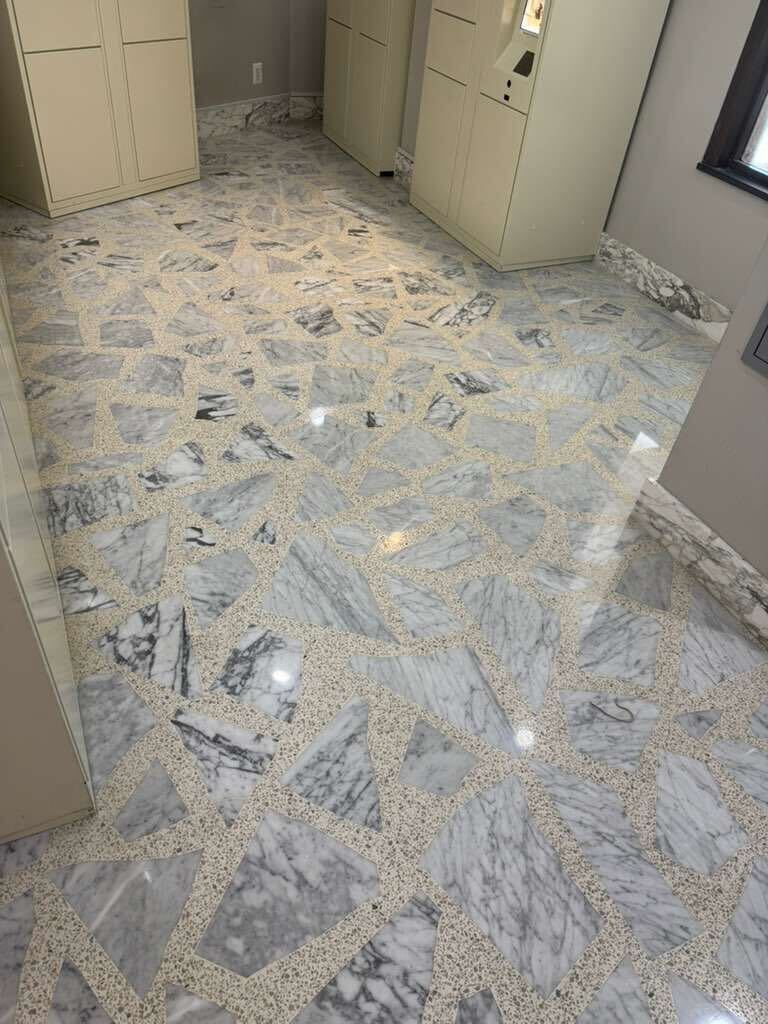
 By Tom Kuhn, CEO, Rose Restoration
Rose Restoration has restored marble, terrazzo, concrete, and natural stone across DC, MD, and VA since 1978.
Behind the Scenes: How Rose Restoration Keeps Every Project Efficient and On Schedule
Stone and masonry restoration work is highly visible — the before-and-after transformation of a honed marble lobby or a repointed historic brick facade speaks for itself. What is less visible is the operational infrastructure that makes those results possible on time, on budget, and with minimal disruption to the building occupants, general contractors, or property managers involved.
Over the years, Rose Restoration has grown into one of the most operationally capable specialty restoration contractors in the Washington DC, Maryland, and Northern Virginia market. That capability is not accidental. It is the product of deliberate systems — for scoping, scheduling, crew assignment, material procurement, site protection, and quality control — that allow us to take on complex, multi-phase commercial projects and sensitive residential work simultaneously without compromising performance on either end.
This post pulls back the curtain on how we actually run projects, from the first site visit through final walkthrough and closeout.
Pre-Project Assessment and Scoping
Every project begins with a thorough on-site assessment. For restoration work, this step is non-negotiable — the condition of the stone or masonry, the nature of the damage, and the specific requirements of the installation cannot be adequately evaluated from photographs alone.
During an assessment, our team evaluates the material type and condition, the extent of damage or soiling, access constraints, substrate and base conditions where relevant, and any special considerations related to the building’s age, historic status, or ongoing occupancy. For commercial projects, we also assess logistics: truck access, elevator availability, loading dock restrictions, building operating hours, and whether any phasing is required to keep critical areas of the facility operational during work.
From that assessment, we develop a detailed scope of work. This document forms the backbone of the project — it specifies what is being done, how it is being done, what materials will be used, what the sequence of operations will be, and what the client can expect in terms of timeline. A well-written scope prevents scope creep, protects both parties from misunderstandings, and gives the project manager a clear reference point for managing the work in the field.
For larger commercial projects, we often participate in pre-construction meetings with the general contractor and other trades. These meetings allow us to coordinate our work sequence with adjacent trades — carpet installers, millwork contractors, painters — and to identify any conflicts early before they affect scheduling.
Equipment and Fleet: What It Takes to Do This Work at Scale
Specialty stone and masonry restoration requires industrial-grade equipment operated by people who know how to use it correctly. Rose Restoration maintains a fleet of trucks and a full complement of professional equipment: industrial wet grinders, planetary floor machines, high-speed and low-speed polishers, diamond tooling in multiple grits for different stone types, dust containment systems with HEPA filtration, pressure washing equipment, and the full range of hand tools required for mortar work, joint preparation, and detail work on delicate surfaces.
The fleet is maintained on a regular schedule. Equipment failure mid-project is not just an inconvenience — it disrupts crew schedules, delays material curing timelines, and can leave a job site in a partially completed state that is difficult to manage. Our maintenance protocols keep equipment in reliable condition so that when a crew shows up to a job site, everything works.
We also maintain relationships with equipment rental sources for specialized tools required on specific projects — large-format diamond saws for stone fabrication, articulating lifts for high-reach facade work, and industrial vacuums for particularly dusty environments. Having those relationships established in advance means we can mobilize specialized equipment quickly when a project requires it.
Crew Size, Assignment, and Specialization
Rose Restoration operates with a team of more than 30 crew members, and the assignment of the right people to the right projects is one of the most important decisions we make on any given job.
Our crews are not generalists who do everything adequately. They develop deep specialization in specific areas: marble and stone floor restoration, masonry repointing and repair, historic masonry work, tile and grout restoration, and commercial project supervision. A crew member who has spent years working exclusively on marble floors has an intuitive understanding of how different marbles respond to abrasive work, how moisture affects curing, and how to manage the sequence of grinding, honing, and polishing operations to achieve a consistent result. That expertise is not interchangeable with masonry repointing skill, and we staff projects accordingly.
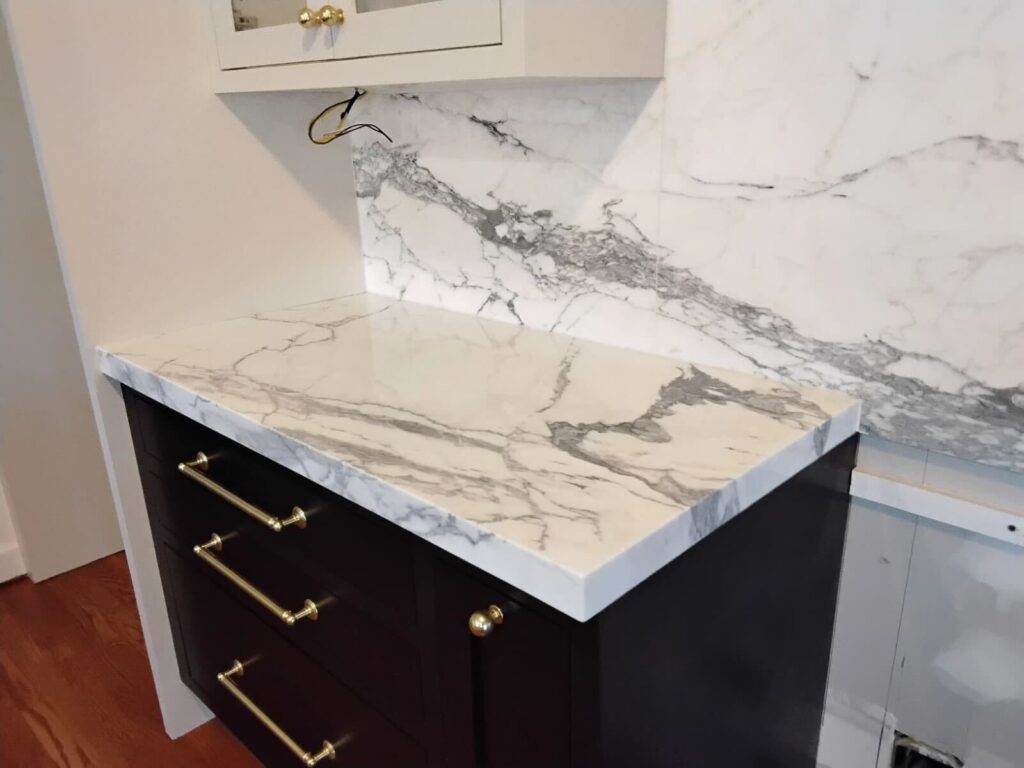
For large commercial projects, a dedicated project supervisor is assigned to manage the crew on site full-time. This person is responsible for maintaining communication with the client or general contractor, managing the day-to-day sequence of work, troubleshooting unexpected conditions, and ensuring that quality standards are met throughout the project. On residential projects, the crew lead typically fills this role and maintains direct communication with the homeowner.
Scheduling: Residential, Commercial, and Overnight Work
Scheduling is one of the most operationally complex aspects of running a specialty restoration business. The nature of the work — and the nature of the facilities we work in — creates scheduling constraints that require careful planning and real flexibility.
Residential Scheduling
Residential restoration projects are typically scheduled during normal business hours, with start times that accommodate homeowners’ daily routines. For multi-day projects, we plan the sequence of work to minimize disruption to high-traffic areas of the home. In a kitchen floor restoration, for example, we typically complete and seal the work in logical sections so that the client has access to essential areas of the kitchen at the end of each workday rather than losing access to the space for the entire duration of the project.
Commercial Scheduling
Commercial projects often involve occupied buildings — office buildings, hotels, healthcare facilities, multi-unit residential properties — where work must be coordinated around building operations. We work closely with property managers and building engineers to develop schedules that minimize impact on tenants and building operations. This frequently means working in phases: completing one floor or section at a time so the building can remain operational throughout.
Overnight and Off-Hours Work
Some commercial environments cannot accommodate restoration work during business hours at all. Hotel lobbies, retail spaces, hospital corridors, and government facilities often require overnight or weekend scheduling to avoid disruption to guests, customers, or staff. Rose Restoration has extensive experience with overnight work. Our crews are equipped and trained to operate efficiently in off-hours conditions — working through the night, managing lighting requirements, communicating clearly with building security, and leaving the space in a clean, usable condition by the time business hours resume.
Overnight scheduling requires a higher level of logistical coordination than standard daytime work: equipment staging must be completed before the crew arrives, material deliveries must be timed appropriately, and there must be clear communication protocols with building management in case any issues arise during off-hours. We handle all of that coordination as part of our standard project management process.
Material Procurement and Staging
Restoration work requires a wide range of specialized materials: diamond tooling for grinding and honing, crystallization and densification chemistries, sealing products matched to specific stone types and applications, mortars formulated for specific masonry repairs, color-matched grouts, and replacement stones or tiles sourced to match existing installations.
We pre-procure materials before the project starts rather than ordering as we go. This practice prevents delays caused by back-ordered products, allows us to verify that materials are correct before they arrive on site, and enables us to stage everything needed for a given phase of work so that crews can move efficiently rather than waiting on deliveries.
For projects that require replacement stone — matching a broken marble tile in a lobby floor, replacing damaged pavers on a historic terrace — sourcing can require significant lead time. We initiate sourcing for replacement materials as early in the project planning process as possible, often before a contract is even finalized, so that the availability of materials does not become a scheduling bottleneck.
Dust Containment and Site Protection
Stone grinding and masonry work generates significant dust. In an occupied building, uncontrolled dust is not just a nuisance — it is a liability, a health concern for building occupants, and a potential source of damage to adjacent finishes and furnishings.
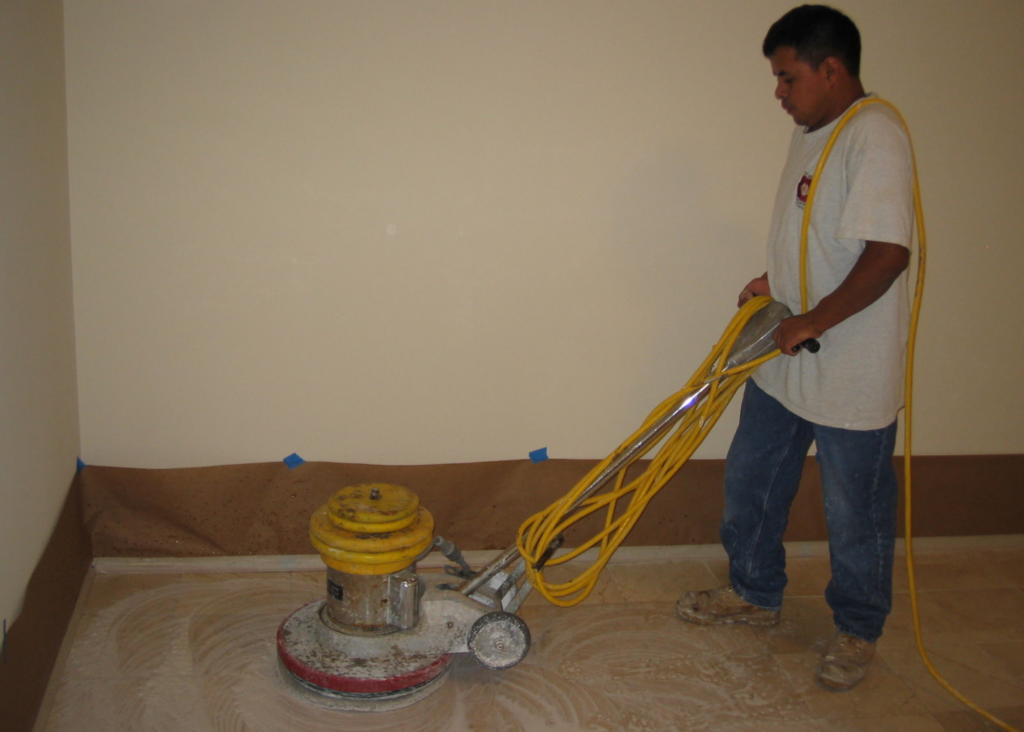
Our dust containment protocols are a core part of how we operate on every project. Before grinding or cutting work begins, we establish a containment perimeter using plastic sheeting, tape, and barrier systems appropriate to the scope of the work. HEPA-filtered vacuums are run continuously during grinding operations, with vacuum heads positioned at the tool to capture dust at the point of generation before it becomes airborne. Floors and surfaces adjacent to the work area are protected with appropriate coverings — paper, plastic, or rigid protection boards depending on the sensitivity of the surface.
We also protect non-stone surfaces within the work area: wooden millwork, metal thresholds, carpet edges, and glass receive appropriate masking before chemical treatments are applied, preventing any possibility of staining or etching from restoration chemistries.
On particularly sensitive projects — occupied luxury residential properties, healthcare facilities with infection control requirements, government buildings with strict cleanliness protocols — we develop a project-specific site protection plan in advance and review it with the client before work begins.
Communication with Clients and General Contractors
Clear, proactive communication is one of the things that most consistently differentiates a reliable contractor from an unreliable one. At Rose Restoration, we operate on the premise that clients and general contractors should never have to call us to find out what is happening on their project — we communicate first.
At the start of each project, we establish the preferred communication channel and frequency with the client or GC: daily progress reports, end-of-phase summaries, or real-time updates via a shared project management tool, depending on the client’s preference and the complexity of the project. Any conditions discovered during the work that differ from what was anticipated — unexpected substrate conditions, damage that was hidden behind a surface finish, or material that turns out to be a different type than originally assessed — are communicated immediately, with a clear explanation of the options and their implications for schedule and cost.
For general contractors managing complex construction projects with multiple trades, we understand that our work is one piece of a larger puzzle. We provide GCs with accurate progress information and clear projections for when specific areas will be ready for adjacent trades. When scheduling needs to shift — because a prior trade ran long, or because conditions in the field require a change in our sequence — we communicate that quickly and work collaboratively to find a solution that minimizes impact on the broader project schedule.
You can learn more about our commercial project capabilities on our commercial services page.
Quality Control and Final Walkthroughs
Quality control at Rose Restoration is not a final inspection — it is a continuous process that runs throughout the project. Crew leads monitor work quality in real time, catching and correcting issues as they arise rather than discovering problems at the end when they are harder and more expensive to address.
Specific quality checkpoints include: verification of grinding sequence and grit progression on stone floor restoration work, inspection of mortar joints for proper depth, fill, and finish before surrounding areas are cleaned, review of chemical treatment coverage and dwell times on cleaning and sealing operations, and assessment of color and sheen consistency across a restored surface before any final sealing is applied.
At the conclusion of every project, we conduct a formal final walkthrough with the client or the client’s representative. This walkthrough covers the full scope of work, confirms that all specified work has been completed, and gives the client an opportunity to identify anything that does not meet their expectations. Issues identified during the walkthrough are addressed before we demobilize from the project.
Project Closeout and Maintenance Recommendations
Project closeout is not just about collecting the final payment — it is an opportunity to set the client up for long-term success with their restored surfaces.
At closeout, we provide the client with written maintenance recommendations specific to the materials that were restored or repaired. For a honed marble floor, this might include guidance on appropriate cleaning products (and which common household cleaners to avoid), a recommended resealing schedule, and instructions for managing spills that could stain the stone. For a repointed masonry facade, it might include guidance on annual inspection to catch early signs of mortar deterioration and notes on any areas to watch that showed signs of ongoing moisture infiltration.
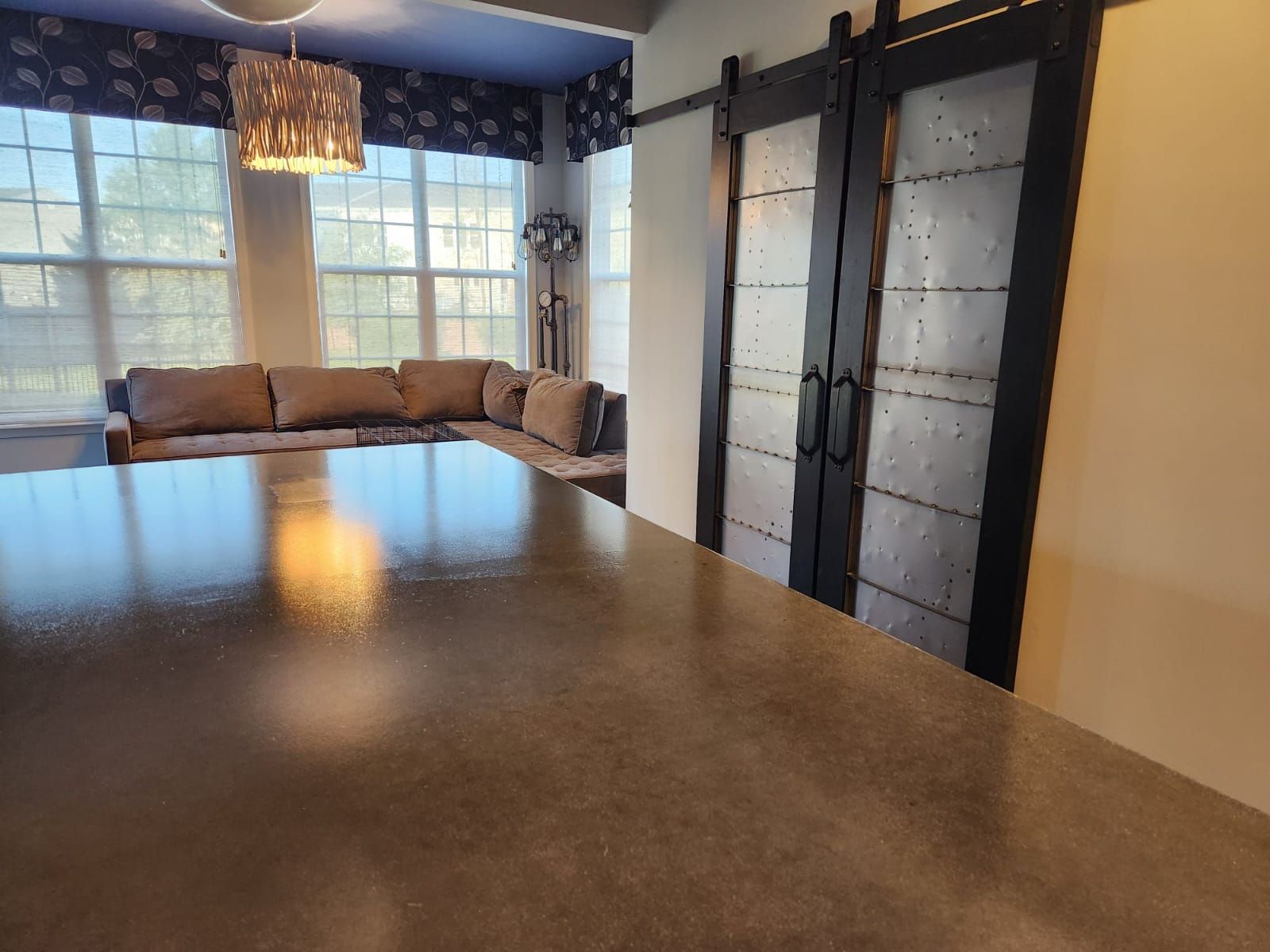
We also document the materials used — sealer type, mortar formulation, any specialty products applied — so that future contractors can work with the surfaces without accidentally applying incompatible products. For large commercial projects, this documentation is provided in a formal closeout package that becomes part of the building’s operations and maintenance records.
This final step is, in many ways, where a short-term project relationship becomes a long-term one. Clients who understand how to maintain their restored surfaces get better long-term results and are far more likely to call us when those surfaces need attention again in the future.
Frequently Asked Questions
How do you handle projects in occupied buildings without disrupting tenants or guests?
Occupied building work requires careful scheduling and robust dust containment. We work with building management to develop a phasing plan that keeps critical areas operational, establish containment zones before any grinding or cutting begins, and run HEPA-filtered vacuums continuously during dusty operations. For facilities that cannot accommodate daytime work, we schedule overnight or weekend shifts and coordinate with building security to ensure smooth access and a clean handoff each morning. Proactive communication with building management about daily progress and any access needs is a standard part of how we operate in occupied facilities.
How large of a project can Rose Restoration handle?
With a team of more than 30 crew members, a fully equipped fleet, and established relationships with specialty subcontractors and suppliers, we are equipped to handle large-scale commercial restoration projects — multi-floor office buildings, hotel lobbies and corridors, major institutional facilities — as well as high-end residential work. Our project management infrastructure is designed to support multiple concurrent projects without compromising quality or scheduling on any individual project. Call us at 703-327-7676 to discuss the specific requirements of your project.
How do you ensure that the crew assigned to my project has the right skills for the work?
Crew assignment is a deliberate process, not a first-available approach. We match crew members to projects based on their specific areas of expertise — marble and stone floor restoration, masonry repointing, tile and grout work, historic masonry — and on the complexity and requirements of the project. Complex or high-visibility projects receive an experienced project supervisor who manages the crew on site and maintains direct communication with the client. We do not assign generalists to specialized work.
What happens if unexpected conditions are discovered during the project?
We communicate immediately and clearly. If we discover conditions in the field that differ from what was anticipated during scoping — unexpected substrate damage, a different stone type than originally assessed, hidden moisture infiltration — we stop, document what we found, and contact the client or general contractor to discuss the options before proceeding. We provide a clear explanation of what we found, why it matters, and what the available paths forward are, including their implications for schedule and cost. We do not make significant scope decisions unilaterally, and we do not proceed past a changed condition without client awareness and direction.
Do you provide maintenance recommendations after the project is complete?
Yes, written maintenance guidance is a standard part of our project closeout for every project. We provide specific recommendations tailored to the materials involved — appropriate cleaning products and methods, resealing schedules, and indicators of conditions that should prompt a professional inspection. For commercial projects, we provide a closeout documentation package that includes the specific materials and products used, so future contractors have the information they need to work with the surfaces safely and compatibly. We want our work to perform well over the long term, and that requires giving clients the information they need to maintain it properly. Contact us to learn more about our approach.
Looking for something else?
Get a Free Assessment from Rose Restoration
Tell us about your marble, stone, terrazzo, or concrete and our senior technicians will recommend the right restoration approach. Family-run and trusted across Washington DC, Maryland, and Virginia since 1978.
Call (703) 327-7676 · Email info@roserestoration.com · schedule a time · or send us photos.
Restore. Don't replace.
48 years of polishing marble, terrazzo, concrete, and tile across Washington DC, Northern Virginia, and Maryland. IMF, Four Seasons, Smithsonian, and the Virginia State Capitol trust us — you can too.